There are stories that live in the ink of a manga page, flicker to life on a screen, and then there are stories that breathe in the quiet corners of a real city. March Comes in Like a Lion, the masterpiece by Chica Umino, is one of those rare tales. It’s a story not just about the silent, intense world of professional shogi, but about the fragile, fierce journey of a young boy named Rei Kiriyama finding his way out of a monochrome loneliness into a world painted with the warm colors of kindness, family, and a place to call home. And that home, that heart of the story, isn’t a fantasy. It’s a tangible, walkable, breathtakingly real neighborhood in Tokyo. It’s the place where the Sumida River cradles old traditions against a backdrop of glittering skyscrapers, a place where the water reflects both the cold moonlight of solitude and the warm lantern glow of belonging. This is a journey into the world of Rei Kiriyama and the Kawamoto sisters, a pilgrimage to the soul of the series: the riverside districts of Shinkawa and Tsukuda. We will walk the bridges that carried Rei’s heavy heart, stand on the riverbanks where he found moments of peace, and feel the gentle, persistent spirit of the community that slowly, surely, saved him. This isn’t just about seeing the backdrops of an anime; it’s about stepping into its emotional landscape and understanding, with every breath of river air, why this specific place was the only place this story could unfold.
If you are inspired to explore other literary pilgrimages, you might also enjoy a journey through the world of The Tale of Genji.
The Riverside Towns: Shinkawa & Tsukuda, The Heart of the Story
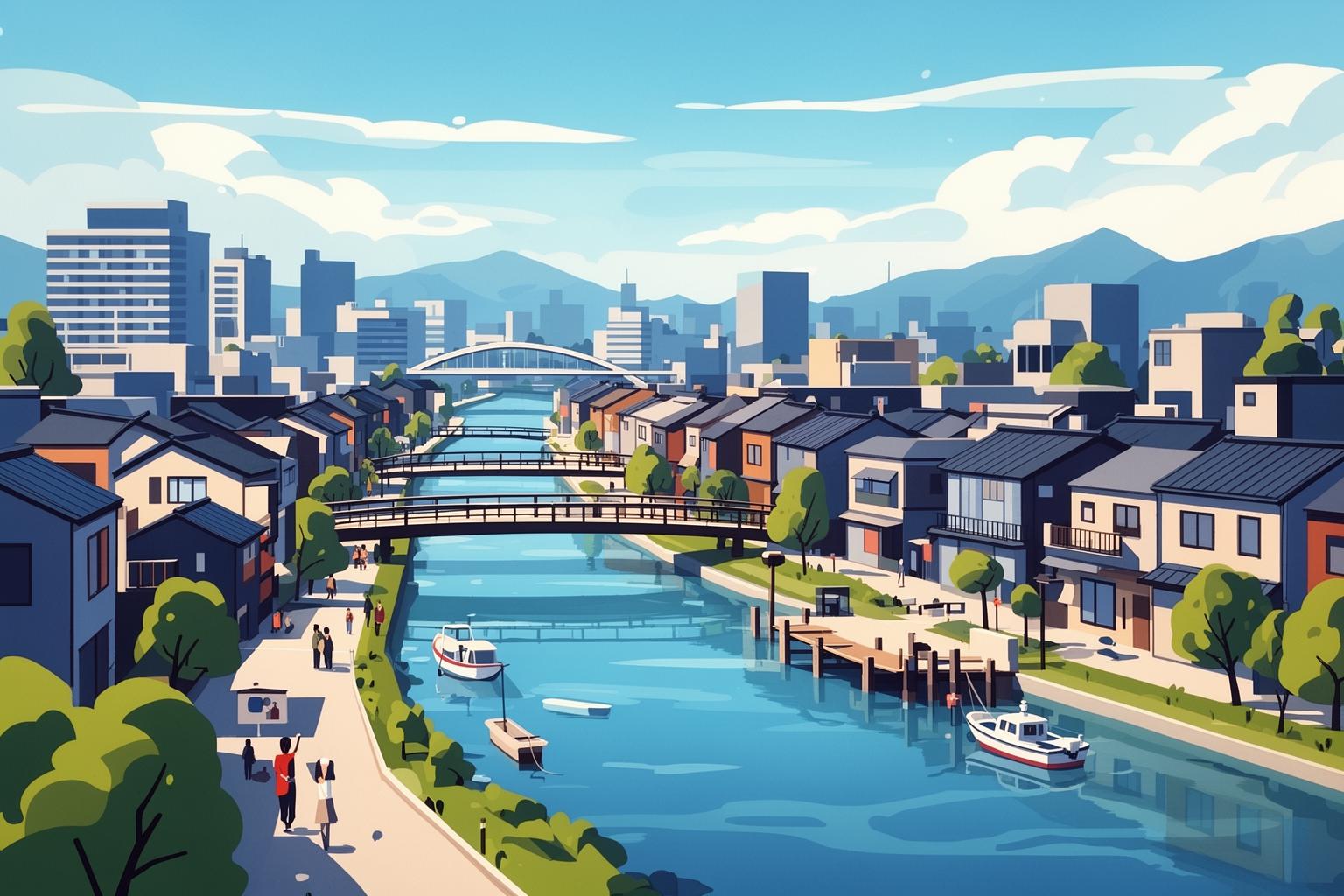
The essence of March Comes in Like a Lion lies along the Sumida River. This isn’t the bustling, neon-lit Tokyo of popular imagination, but rather a quieter, more intimate city—one of low-rise residences, peaceful shrines, and expansive bridges that link not only land but people. The neighborhoods of Shinkawa, on the mainland where Rei leads his solitary life, and Tsukuda, the island where the Kawamoto sisters fill their home with warmth and laughter, serve as the main settings for this human drama. Walking here allows you to follow the emotional trajectory of the entire series. The journey begins, as it does for Rei, by crossing a bridge. The best way to undertake this pilgrimage is on foot, letting the city’s rhythm sink into your very being. The closest stations are Hatchobori on the JR Keiyo and Hibiya lines, or Tsukishima on the Yurakucho and Oedo lines. From either, the river is a short, pleasant walk away. Visit in the late afternoon. Stay through sunset and into the evening. Watch the city transform, just as Rei does, from a place of daunting shadows to one of inviting lights, and you will understand it all.
Chuo Ohashi Bridge: A Link Between Worlds
The Chuo Ohashi Bridge towers as a modern colossus of steel and cable. In the anime, it is more than mere infrastructure; it is a recurring symbol of Rei’s isolation and his eventual connection to the world. This is the bridge he crosses repeatedly, a solitary figure dwarfed by its massive scale, traveling from his stark, empty apartment in Shinkawa to the warmth and chaos of the Kawamoto home on Tsukuda. Standing on its broad pedestrian walkway evokes the same duality Rei experiences. On one side lie the orderly, almost sterile high-rise apartments and office buildings of Shinkawa; on the other, the somewhat more chaotic, lived-in atmosphere of Tsukuda Island. The breeze whipping across the bridge feels cleansing, carrying the scent of the brackish river water—an intense and almost overwhelming sensory experience. The view from its midpoint is breathtaking: the vast Sumida River glimmers beneath sunlight or reflects the city’s electric glow by night. In the distance, the iconic Tokyo Skytree pierces the skyline, a constant, watchful presence in Rei’s world. The bridge often appears in the series at night, its lights tracing a lonely path for Rei. Visiting after dusk is a profoundly moving experience. The city lights of Shiodome and neighboring business districts create a glittering tapestry across the water. The steady flow of traffic below hums quietly, a backdrop for contemplation. One can almost hear Rei’s internal monologue—his struggles and his small, hard-won moments of clarity. Here, he processes his shogi matches, complicated relationships, and the slow, painful journey of healing. Walking the bridge, you feel the physical separation of his two worlds and begin to grasp the emotional courage it took for him to cross it time and again, towards the promise of a warm meal and a kind word.
The Experience of Crossing
Walking the Chuo Ohashi evokes a beautiful melancholy—you are suspended between worlds, high above the dark water. The immense scale of the bridge and the city around it can make you feel small, an anonymous soul lost among millions. This perfectly captures Rei’s initial frame of mind. Yet, there is also a strong sense of hope in the view; city lights don’t appear menacing, but rather like a field of stars descended to earth. The yakatabune houseboats, occasionally drifting by with their festive red lanterns, offer fleeting warmth and camaraderie—a preview of what awaits Rei on the other side. For first-time visitors, take your time. Don’t rush across. Pause at the center, lean against the railing, and simply watch. Watch the trains of the distant Keiyo Line glide past, water taxis leave fleeting wakes, and the sky bleed from orange to purple to deep indigo. In these quiet moments of observation, the spirit of the place—and of the story—becomes clear. The bridge itself is a character, a silent witness to a young man’s journey from the depths of loneliness to the shores of human connection.
Tsukuda Kobashi Bridge: The Little Red Bridge of Home
If the Chuo Ohashi is a grand and impersonal monument to the modern city, the Tsukuda Kobashi stands in contrast. A small, humble, arching pedestrian bridge painted in a gentle, welcoming red, it is the true gateway to the Kawamoto sisters’ world. Crossing this bridge feels like stepping back in time, leaving behind the concrete and steel of the city for a cozy neighborhood enclave. As soon as you step onto its wooden planks, the scale of the world shifts. Towering apartment buildings give way to smaller homes, local shops, and the soft murmur of everyday life. This is the bridge the sisters cross on their way to school or to buy groceries; it is where Hina, heartbroken yet defiant, finds the strength to confront her bullies. It is a place imbued with warmth, resilience, and the unwavering love of their family. Standing here, you are surrounded by the sights and sounds that define their world—you can almost smell the sweet scent of wagashi from their family shop, Mikazuki-do; hear the cheerful chatter of neighbors and the laughter of children. The difference from Chuo Ohashi is sharp and intentional: one bridge leads to solitude, the other to community. The view from Tsukuda Kobashi is more intimate—not a grand cityscape, but the narrow canals that thread through the island, where small fishing boats are moored and water gently laps against the stone embankments. The atmosphere feels protected and insulated from the harsh outside world. This is the sanctuary the Kawamoto sisters offer Rei, and standing on this bridge, you grasp its full significance.
A Portal to Nostalgia
The area around Tsukuda Kobashi preserves a distinct Showa-era charm. The architecture, narrow lanes, and slow pace of life all feel like a preserved piece of Tokyo’s past. This nostalgic quality is central to the anime’s aesthetic, symbolizing a simpler, gentler way of life that contrasts starkly with the high-pressure, competitive world of Rei’s professional shogi career. Visiting here is a balm for the soul, encouraging you to slow down and notice small details: a potted plant on a windowsill, a cat sleeping in a patch of sunlight, the faded sign of a family-run business. It serves as a reminder that even in a megacity like Tokyo, pockets of profound peace and rooted community endure. For photographers and artists, this spot is a dream—the gentle curve of the red bridge, reflections in the canal, textures of old wood and stone create a scene of pure, understated beauty. Visiting in spring when cherry blossoms bloom along the canal is especially magical, echoing the themes of renewal and hope central to the story. This little red bridge is not just a location; it is an embrace.
Sumida River Terrace: A Place of Solitude and Reflection
The concrete embankments and walkways along the Sumida River are a constant in Rei’s life. Known as the Sumida River Terrace, or Sumidagawa Terasu, this is his personal space. It’s where he retreats to be alone with his thoughts, to unravel the knots in his mind after grueling shogi matches, or simply to exist free from the pressure of human interaction. The wide, open area offers a sense of freedom—a place to breathe. The series often shows him sitting on the steps descending to the water, gazing at the river’s endless flow—a perfect metaphor for time’s passage and the slow, gradual process of healing. Walking along this terrace, particularly on the Shinkawa side where Rei’s apartment stands, you feel the same quiet introspection. City noise fades into a distant hum, replaced by the wind’s sound, the cry of gulls, and the gentle lapping of water against concrete. It is a place both public and deeply private—you are in the heart of Tokyo, yet can feel utterly alone. This duality is vital to understanding Rei: part of the world, yet set apart from it. The riverbank physically embodies this feeling. It is a liminal space, a boundary between land and water, inner world and outer world. Here, Rei has some of his most significant—even if silent—moments of growth. It is where he begins to accept the Kawamotos’ kindness and resolves to become stronger, not just for himself but for them.
Finding Your Own Moment of Peace
For visitors, the Sumida River Terrace offers a welcome break from Tokyo’s sensory overload. It’s an ideal spot to grab a canned coffee from a vending machine, find a place on the steps, and simply watch life pass by. The view of Tsukuda’s skyline—with its cluster of high-rise residential towers known as “River City 21”—is especially striking, particularly as evening lights flicker on. This is the view from Rei’s side of the river, the world he is gradually learning to join. From here, the Chuo Ohashi shines in full view, and further along, the historic Kachidoki Bridge appears. It is a cityscape both vast and deeply personal. The terrace is popular with locals jogging, cycling, and walking dogs, lending a gentle hum of daily life that keeps solitude from feeling stifling. The space feels authentic, lived-in—not a curated tourist destination but an integral part of the city’s fabric, which makes it all the more special. It is a place to think, to feel, and to connect with the quiet, contemplative heart of Rei Kiriyama’s journey.
Sumiyoshi Shrine: Echoes of History and Community
Tucked away in the peaceful streets of Tsukuda Island, a short walk from Tsukuda Kobashi, lies Sumiyoshi Shrine. This small, beautiful Shinto shrine is the spiritual center of the neighborhood and holds significant importance in the anime’s community life. The Kawamoto family, like many locals, maintains a deep bond with it. We see them visiting during the summer festival, their colorful yukata providing a vibrant contrast to the shrine’s traditional wooden architecture. Dedicated to the gods of sea, travel, and poetry, the shrine fittingly serves a community historically tied to the water. Tsukuda Island was originally formed by fishermen from Osaka, who brought their faith in the Sumiyoshi deities with them back in the 17th century. This history permeates the shrine’s atmosphere—it feels ancient, grounded, and closely linked to the generations who have lived and worked on the island. Entering its grounds through the stone torii gate is like stepping into another world. The air is calm and peaceful, carrying the scent of old wood and incense. City noise fades away, replaced by rustling ginkgo leaves and chirping birds. The main hall is a masterpiece of traditional craftsmanship, while smaller shrines and stone lanterns scattered throughout add to the aura of sacred history.
The Annual Festival
Though a visit on any ordinary day offers a peaceful, restorative experience, the shrine truly comes alive during its annual festival in early August. This event, vividly depicted in the anime, draws the entire neighborhood together in celebration. It is a display of tradition, featuring mikoshi (portable shrine) processions, music, food stalls, and a palpable spirit of shared joy. Witnessing this reveals the community that embraced Rei in its fullest, most vibrant form. Even if your visit doesn’t coincide with the festival, its spirit lingers—you may see preparations or remnants of past celebrations and feel the deep community roots the shrine fosters. This warmth, shown by the Kawamotos, is part of a broader culture of connection and mutual support defining this unique corner of Tokyo. For visitors, a quiet moment at Sumiyoshi Shrine offers a chance to connect with the deeper cultural currents running through the story. It is a place to offer a silent prayer of gratitude, just as the characters do, for the simple yet profound gifts of safety, family, and belonging.
Sendagaya: The Silent Battlefield of Shogi
If Shinkawa and Tsukuda symbolize Rei’s heart and his emerging emotional life, then Sendagaya represents his mind—the realm of logic, pressure, and the immense, silent weight of his talent. This neighborhood, situated near the bustling centers of Shinjuku and Shibuya, is the hub of Japan’s professional shogi world. Its atmosphere is starkly different from the gentle riverside; it is more formal, focused, and charged with the electric tension of high-stakes competition. A short walk from either Sendagaya or Kita-sando stations will immerse you in this world. The streets here are quieter than their famous neighbors’, lined with office buildings, fashion showrooms, and the serene greenery of the nearby Shinjuku Gyoen National Garden. It’s a place of intense concentration—a fitting backdrop for the life-or-death battles unfolding over the shogi board.
The Japan Shogi Association: Hallowed Ground
The Japan Shogi Association building, or Nihon Shogi Kaikan, is the sacred place for every professional player featured in the series. This is where Rei, Shimada, Nikaido, and all the other shogi players gather for official matches. While the building itself is a modest, modern structure, its presence is anything but ordinary. In the anime, it is portrayed as a site of immense psychological pressure—a silent arena where careers are made or shattered. Visitors cannot enter the match rooms where players compete, but the small shop on the ground floor offers a chance to sense the building’s intense energy. Just standing outside, one can imagine the scenes within: intense focus, the subtle clicks of shogi pieces, long, agonizing silences, and the emotional exhaustion that follows each game. It’s the place where Rei confronts his past and his reasons for playing. It represents a world of adults and harsh realities, standing in sharp contrast to the unconditional acceptance he experiences at the Kawamoto’s. Visiting here provides vital context for his journey, helping to understand the immense pressure he faces and making his moments of escape and peace along the Sumida River all the more precious. This is the battleground where he fights to protect the world he loves.
Hatonomori Hachiman Shrine: A Prayer for Victory
A short walk from the Shogi Kaikan lies Hatonomori Hachiman Shrine, another key site for the players. This ancient shrine is where many, including the stoic and dedicated Kai Shimada, go to pray for victory before crucial matches. The shrine exudes a unique and powerful atmosphere. It is larger and more expansive than the Sumiyoshi Shrine in Tsukuda and deeply connected to the area’s history. One of its most distinctive features is a fujizuka—a miniature replica of Mount Fuji constructed from lava rocks sourced from the actual mountain. Built during the Edo period for those unable to undertake the real pilgrimage, climbing this small mound is believed to grant the same spiritual benefits as climbing Mount Fuji itself. Characters in the series are shown making this ascent, symbolizing the monumental challenges they face in their professional lives. The shrine grounds also host a stage for Noh theater and are dotted with intriguing historical markers. The most significant feature for shogi fans, however, is the shogi-do, a small hall dedicated to the game where a giant shogi piece is enshrined. This underscores the shrine’s connection to the players and their world. Visiting Hatonomori Hachiman reveals the spiritual aspect of the shogi community. It is a place where faith, hope, and tradition intersect with the intense intellectual demands of the game—a space for quiet ritual where players seek calm and a touch of luck before entering the Shogi Kaikan battlefield. It adds depth to the characters, showing that even in a world ruled by logic and strategy, there remains room for reverence and belief in something beyond oneself.
Echoes Across Tokyo: Other Key Locations
While the core of the story is rooted in Shinkawa and Sendagaya, the narrative occasionally extends into other areas of the sprawling Tokyo metropolis. Though these locations appear less frequently, they carry significant symbolic weight, illuminating different aspects of Rei’s experience and the world he inhabits.
Shibuya: The Overwhelming Crowd
Shibuya, famous for its iconic scramble crossing, epitomizes modern Tokyo. In March Comes in Like a Lion, it symbolizes the chaotic, overwhelming, and impersonal world that often threatens to engulf Rei. The countless people, the clamor of sounds, and the dazzling neon lights stand in stark contrast to the quiet riverside. Scenes set in Shibuya frequently highlight Rei’s sense of being lost and disconnected—just another anonymous face in an unending human flood. Visiting Shibuya Crossing is a classic Tokyo experience, but for a fan of the series, it carries a deeper significance. Standing amidst that organized chaos, one can glimpse the anxiety and sensory overload that Rei endures. It powerfully reminds us of what he is seeking refuge from, making the peace and stillness of the Shinkawa riverbanks feel even more precious. Shibuya is a place to pass through, a point of transit—not a place to call home.
Tokyo Station and Ginza: The Grandeur of the City
Tokyo Station, with its stunning Marunouchi Brick Building, and the nearby upscale Ginza district showcase another facet of the city: its grandeur, history, and sophistication. These places often appear as transitional settings where Rei passes on his way to matches or study groups. They represent the established, formal world to which Rei belongs yet still feels somewhat estranged from. The architectural elegance of Tokyo Station, blending Western styles with Japanese precision, echoes the complex nature of shogi itself—a game steeped in ancient tradition but played in the modern era. Walking through these areas conveys a sense of Tokyo’s scale and history—the grand stage upon which Rei’s intimate story unfolds. While not sources of emotional comfort for him, these places are an undeniable part of his reality—a realm of ambition and legacy he must navigate. These brief glimpses into other neighborhoods deepen the anime’s world, crafting a richer, more layered portrait of a city that functions almost as a character alongside the humans.
This pilgrimage is a journey of contrasts: between the modern and the traditional, the grand and the intimate, the lonely and the cherished. By visiting the real-world locations of March Comes in Like a Lion, you’re not merely sightseeing; you’re feeling the story. You trace the steps of a boy learning to connect and discovering the profound, healing power of a simple, warm place to call home. Walk the bridges, feel the river breeze, and listen to the city’s quiet whispers. The story awaits you there.