There are places in the world that exist as much in our imagination as they do in reality. They are settings in our favorite stories, backdrops to iconic moments, and shorthand for a certain kind of energy. Shibuya, Tokyo is one of those places. It’s more than just a district in a sprawling metropolis; it’s a cultural phenomenon, a living, breathing organism that serves as the relentless, neon-drenched heart of modern Japan. This isn’t just a destination; it’s an experience, a sensory overload that somehow resolves into a perfect, chaotic harmony. For the first-time visitor, stepping out of Shibuya Station can feel like being dropped into the future you’ve seen in movies, anime, and video games. The towering screens flash with mesmerizing advertisements, a tidal wave of humanity moves with an unspoken rhythm, and the air itself seems to buzz with a creative, youthful energy that is absolutely intoxicating. This is the epicenter of trendsetting fashion, groundbreaking music, and unforgettable nights out. It’s where the story of Jujutsu Kaisen‘s most epic battle unfolds, where the characters of Persona 5 navigate their double lives, and where the world-famous tale of a loyal dog, Hachiko, is forever etched into the city’s soul. Navigating this beautiful chaos for the first time can seem daunting, but it doesn’t have to be. Think of this not just as a guide, but as a friendly voice in the crowd, here to help you find your rhythm in the city’s incredible pulse, discover its hidden corners, and understand why Shibuya has captured the imagination of the world. It’s a place to get lost and, in doing so, find a piece of Tokyo that will stay with you forever. Let’s decode the delightful madness together.
If you’re captivated by the idea of exploring a city with a deep, mystical soul, you might also enjoy our guide to the voodoo and verdure of New Orleans.
The Legend of the Scramble Crossing
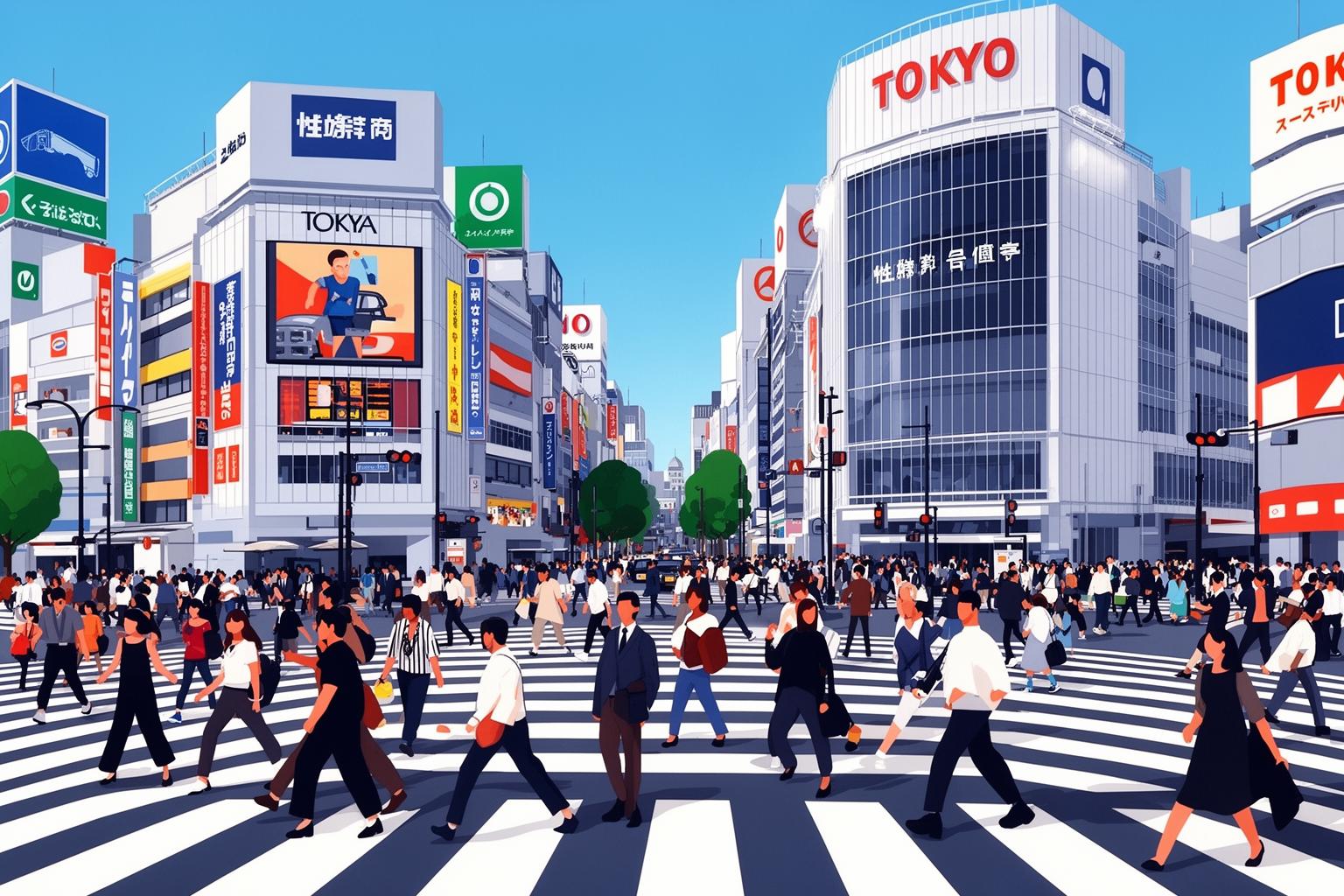
Before doing anything else in Shibuya, you must witness the Scramble. The Shibuya Scramble Crossing is, without exaggeration, the most famous intersection in the world. It’s the iconic postcard image of Tokyo, representing its orderly yet overwhelming density. Standing at its edge is a masterclass in organized chaos. Every few minutes, the traffic lights simultaneously turn red in all directions. Vehicular traffic halts, and a sudden, deceptive silence descends. Then, the pedestrian signals flash green, and the floodgates open. Thousands of people pour into the intersection from every imaginable angle—north, south, east, west, and diagonally. They move like a single, multi-limbed organism, a human tide flowing and parting with an instinctual grace that defies logic. You’ll see fashion-forward teens, focused salarymen, curious tourists, and locals simply going about their day, all merging into one temporary, harmonious river of humanity before dispersing onto the opposite sidewalks just as the lights begin to change again.
The sheer scale is mesmerizing. Giant video screens mounted on the surrounding buildings—most notably the iconic Shibuya 109 tower—blast J-pop anthems and kaleidoscopic commercials, their neon glow washing over the crowds below, especially after sundown. This visual and auditory symphony has made the Scramble a beloved filming location. From the surreal silence around Scarlett Johansson’s character in Lost in Translation to the high-octane action of The Fast and the Furious: Tokyo Drift, this intersection has played a starring role. For anime fans, it’s hallowed ground. Here is where the cataclysmic “Shibuya Incident” arc of Jujutsu Kaisen unfolds, transforming the familiar crossing into a sprawling, supernatural battlefield. Seeing it firsthand adds a visceral layer to those fictional events; you can almost feel the residual energy.
For the quintessential first-time experience, you’ll need the perfect vantage point. The most famous spot is the Starbucks on the second floor of the QFRONT building, which houses the Tsutaya book and music store. Its massive floor-to-ceiling windows offer a direct, eye-level view of the chaos. Be warned, securing a window seat here requires patience and a bit of luck, as it’s arguably the most coveted coffee shop spot in Tokyo. For a less crowded but equally impressive free view, head into Shibuya Station and find the overhead walkway connecting the main station to the Shibuya Mark City complex. The large windows here provide a fantastic bird’s-eye perspective. If you’re willing to pay for an unparalleled panorama, nothing beats Shibuya Sky, the open-air observation deck atop the Shibuya Scramble Square skyscraper. From there, the crossing looks like a mesmerizing, pulsating circuit board—a tiny part of the vast urban expanse. The best time to experience the Scramble is on a Friday or Saturday night, when crowds peak and neon lights blaze at their brightest, painting the entire scene in electric hues.
A Tale of Loyalty: Hachiko, Shibuya’s Eternal Guardian
Just steps away from the controlled chaos of Scramble Crossing, you’ll discover a small, quiet monument that reveals a completely different aspect of Shibuya’s character: the Hachiko Memorial Statue. This simple bronze statue of an Akita dog is more than just a charming photo spot; it is a symbol of Japanese culture, honoring unwavering loyalty and devotion that deeply resonates within the national consciousness. In many ways, it serves as the spiritual anchor of the entire district.
The story of Hachiko is a deeply moving local legend familiar to every child in Japan. In the 1920s, a university professor named Hidesaburo Ueno commuted daily from Shibuya Station. His faithful Akita dog, Hachiko, would accompany him to the station each morning and be there waiting, without fail, to welcome him back in the afternoon. This joyful routine lasted for over a year until, in 1925, Professor Ueno suffered a cerebral hemorrhage at work and passed away, never returning to the station. Unaware of his master’s fate, Hachiko continued to wait. Every day for nearly ten years, at the exact time his master’s train was due, Hachiko appeared at the station, patiently scanning the crowds for his beloved friend. His unwavering vigil gained the attention of locals and eventually the national media, turning him into a symbol of loyalty. When Hachiko finally died in 1935, his story had become a cherished national treasure.
The statue, erected near the very spot where he waited, immortalizes this profound bond. Today, the “Hachiko Exit” of Shibuya Station is the most famous and popular meeting point in Tokyo. Saying “Let’s meet at Hachiko” is a common phrase among friends planning a day or night out in Shibuya. You’ll often find a small crowd gathered around the statue, some taking photos, others simply waiting for their companions. It is a point of calm in a world of constant motion, a place where people connect. Visiting the statue offers a moment of thoughtful reflection amid the district’s energetic buzz. It reminds us that beneath the layers of commerce and trends, Shibuya harbors a deep, resonant soul rooted in stories of connection and enduring love.
Beyond the Crossroads: Navigating Shibuya’s Labyrinthine Alleys
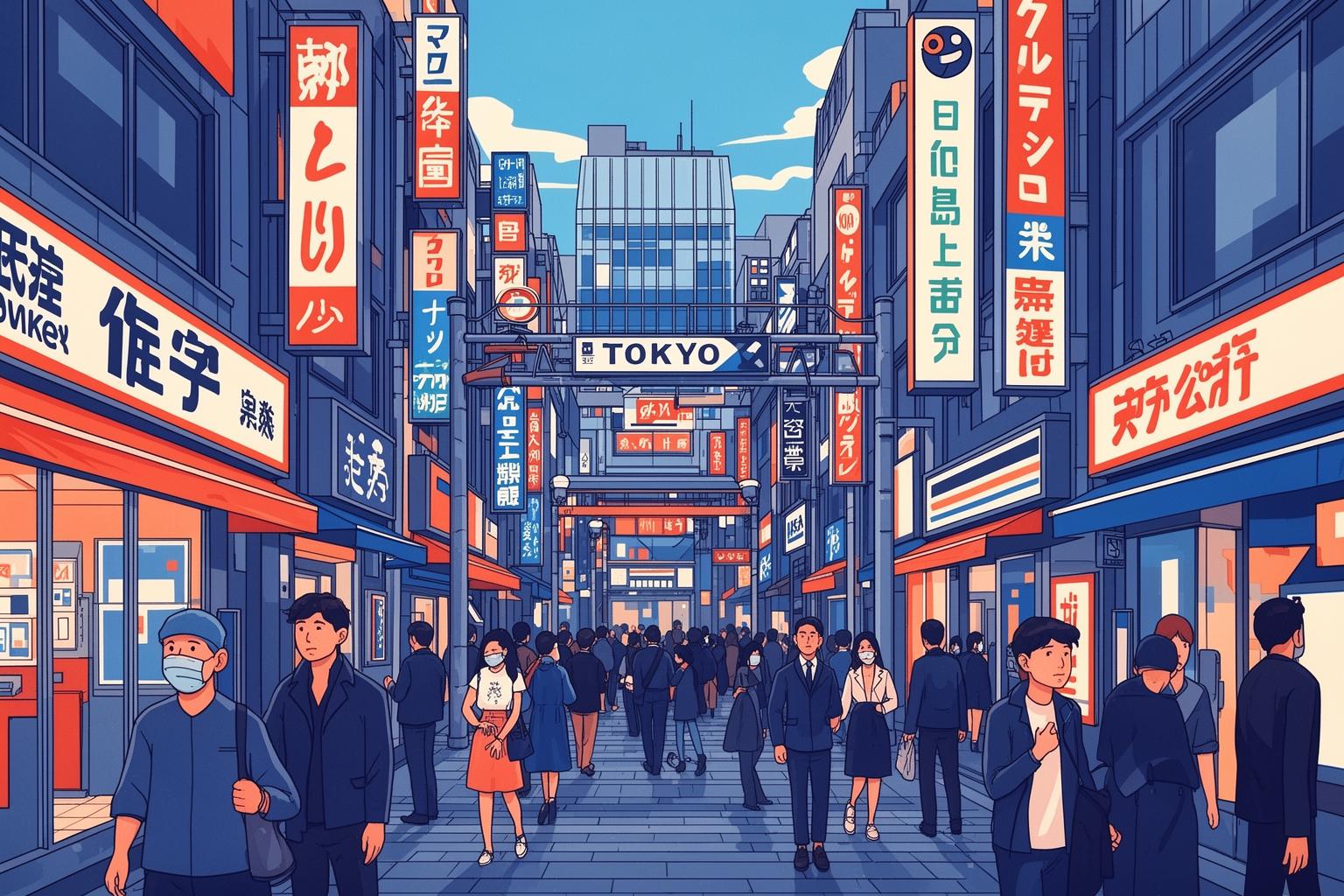
While the Scramble Crossing serves as Shibuya’s public face, the district’s true character emerges within the maze of streets and alleys branching out from it. Each neighborhood boasts its own unique flavor, rhythm, and community. To genuinely grasp Shibuya, you need to venture beyond the main intersection and lose yourself in its lively labyrinth. There, you’ll discover subcultures, hidden treasures, and the authentic heartbeat of Tokyo’s youth.
Center Gai: The Pulse of Youth Culture
Just across the Scramble from the station lies the main artery of Shibuya’s youth culture: Center Gai. Although officially renamed “Basketball Street” in 2011, it’s still widely known by its original name. This pedestrian-only street and its numerous offshoots bombard the senses. The air hums with competing sounds of J-pop blasting from storefronts, the frantic noise of claw machines from multi-level arcades like Taito Station, and the energetic calls of shop staff enticing passersby. This area is the epicenter of fast fashion, where stores like Bershka and Zara stand alongside uniquely Japanese brands catering to every possible teen subculture. You’ll find towering karaoke parlors, shops with the latest character merchandise, and a seemingly endless array of cheerful, affordable food stalls serving everything from sweet crepes to savory takoyaki (octopus balls). The atmosphere is electric, slightly gritty, and unapologetically loud. It’s a place you feel more than simply see, a wave of youthful energy that carries you along. For fans of Tokyo Revengers, strolling through Center Gai feels like stepping straight into the manga’s world; the raw, rebellious energy is tangible.
Koen Dori and the Path to Yoyogi Park
Heading north from the station brings you to Koen Dori, or “Park Street.” The vibe here changes markedly. The streets widen, storefronts are grander, and the atmosphere takes on a more refined tone. This is department store territory, featuring major names like Marui and the recently renovated Shibuya Parco. Parco, in particular, has become a sanctuary for pop culture fans. Its sixth floor, Cyberspace Shibuya, draws visitors as a pilgrimage site, hosting the Nintendo Store Tokyo, the Capcom Store, and a Jump Shop focused on popular manga. It’s a one-stop destination for premium, exclusive merchandise from some of Japan’s leading creative giants. True to its name, Koen Dori gradually ascends, guiding you away from the dense commercial core toward the tranquil greenery of Yoyogi Park and the Meiji Jingu shrine. This street provides a perfect transition from the height of consumer culture to a place of natural and spiritual calm.
Spain-zaka: A Slice of Europe in Tokyo
Tucked between Center Gai and Koen Dori lies one of Shibuya’s most delightful secrets: Spain-zaka, or “Spain Slope.” This narrow, winding pedestrian lane is said to be named for its resemblance to a quaint Spanish street. Its atmosphere feels worlds apart from the neon intensity of the major avenues. The intimate, cozy setting is lined with small independent boutiques, snug cafes, tiny record shops, and unique eateries. It’s a place of discovery, where you might stumble upon a vintage clothing shop, a store specializing in handmade accessories, or a quiet coffeehouse perfect for escaping the crowds. Although short, the slope is brimming with character, offering a brief but charming pause from the overwhelming scale of the rest of the district. It’s a testament to Shibuya’s knack for hiding pockets of calm and individuality within its bustling fabric.
Dogenzaka and Love Hotel Hill: Shibuya’s Nocturnal Heartbeat
To the west of the iconic Shibuya 109 building lies Dogenzaka, a major street that ascends a gentle hill. This area, along with its well-known subdistrict called “Love Hotel Hill,” represents Shibuya’s more mature, nighttime persona. As dusk settles, this neighborhood truly awakens. Dogenzaka is packed with a dazzling array of restaurants, bars, and some of Tokyo’s most famous nightclubs, such as Womb and Contact Tokyo, which attract world-class DJs and devoted music fans. Wander off the main road, and you’ll find yourself in Love Hotel Hill, an area renowned for its concentration of discreet, whimsically themed love hotels. These establishments, recognizable by their flamboyant designs and imaginative names, are a distinctive and integral aspect of Japanese urban culture, providing couples a few hours of privacy. The area carries a slightly edgy, mysterious vibe but is also a lively hub of nightlife and entertainment, perfectly safe to explore, and home to some of the city’s best late-night food and drink spots.
An Anime Pilgrim’s Paradise
For anime and manga enthusiasts, Shibuya is more than just a trendy place to visit; it’s a revered pilgrimage site. The district is so deeply embedded in modern Japanese storytelling that walking its streets feels like stepping directly into your favorite fictional worlds. This connection goes beyond mere references—Shibuya often acts as a character itself, with its geography and atmosphere playing a central role in the narrative.
A prime recent example is Jujutsu Kaisen. Its longest and most crucial arc, the “Shibuya Incident,” involves the entire district being sealed off and transformed into the battleground for a monumental fight between sorcerers and curses. Iconic locations such as Shibuya Station, the Scramble Crossing, and the Hikarie skyscraper serve not just as settings but as key elements of the story. Navigating the station’s intricate corridors or standing amid the Scramble Crossing inevitably brings to mind Satoru Gojo’s overwhelming power or Yuji Itadori’s desperate battles. The anime has imparted a fictional history to these real-world sites.
Similarly, Tokyo Revengers vividly captures the delinquent youth culture that has long defined Shibuya. Although set in the 2000s, the gritty energy of the gang conflicts fits perfectly in the back alleys of Center Gai and the district’s rougher corners. The series’ central meeting places and fight scenes are firmly rooted in Shibuya’s actual geography, turning a walk through the area into a genuine location scout.
This tradition extends even further back. The critically acclaimed film The Boy and the Beast by Mamoru Hosoda uses Shibuya’s maze-like alleyways as a literal gateway to a hidden world of mythical creatures. The protagonist, a lonely boy named Ren, stumbles into this fantasy realm from one of Shibuya’s unremarkable side streets. It’s a powerful metaphor for the district itself—a place where magic and mystery seem just around the corner. In the realm of video games, Persona 5 and its spin-offs offer an impressively accurate recreation of Shibuya. Players spend hours exploring its streets, from the station’s underground passageways to the bustling Central Street, making a real-life visit feel like a homecoming.
Beyond these specific settings, Shibuya is a paradise for merchandise seekers. While Akihabara is famed as the otaku capital, Shibuya offers a more curated, contemporary selection. Mandarake’s Shibuya branch is an underground treasure trove filled with vintage and rare manga, anime cells, and collectibles. Animate Shibuya provides the latest character goods and doujinshi. However, the highlight is Shibuya Parco, where the sixth floor is devoted to celebrating Japanese pop culture with official stores for Nintendo, Capcom, Shonen Jump, and more, offering exclusive items impossible to find elsewhere. For any fan, visiting Shibuya is an indispensable part of the complete anime experience.
A Culinary Scramble: Fueling Your Shibuya Adventure
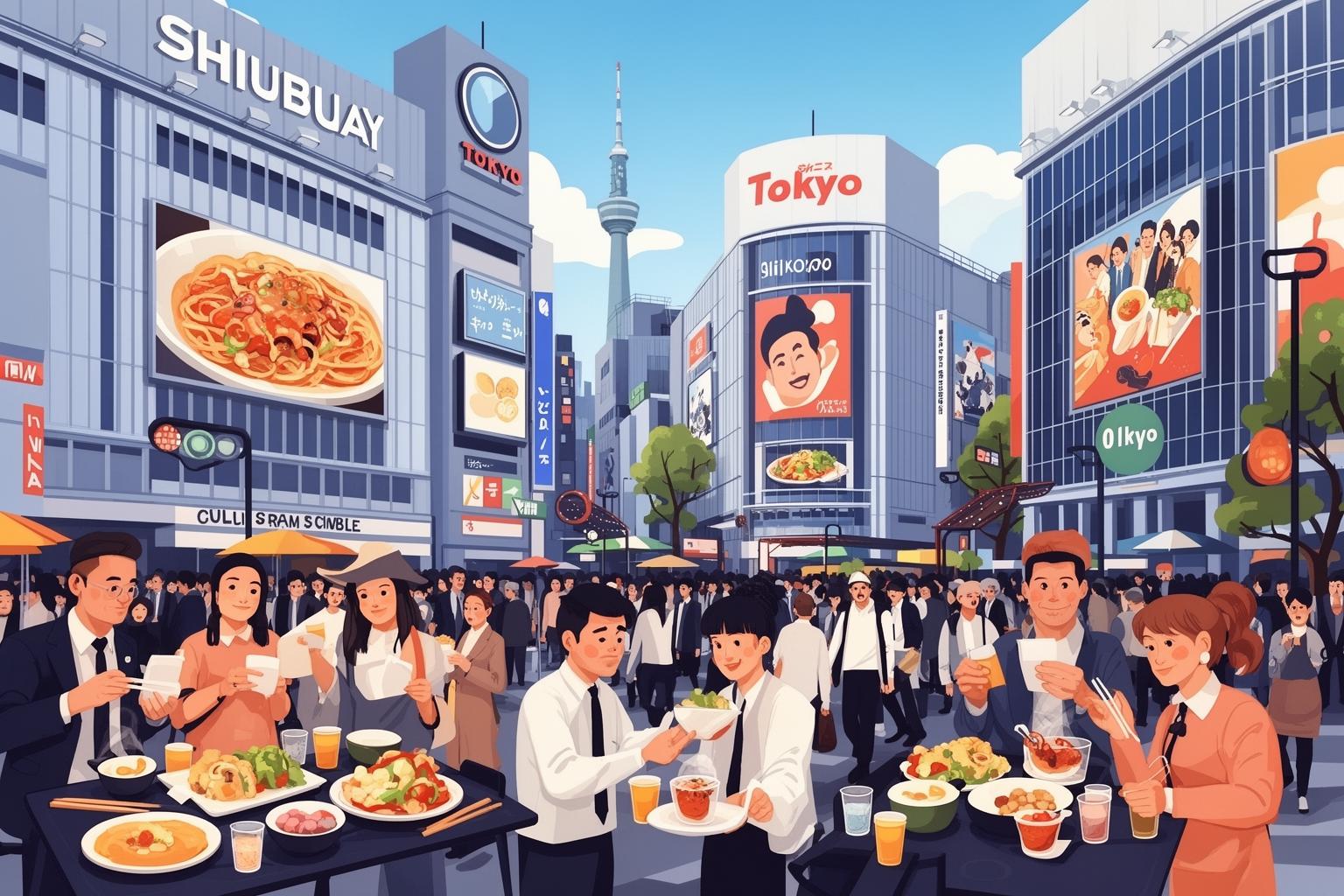
Exploring a vibrant area like Shibuya demands considerable energy, but fortunately, the district presents a culinary scene as varied and thrilling as its shopping and entertainment options. From speedy, budget-friendly snacks to immersive dining spots tucked away in plain sight, Shibuya is a haven for food enthusiasts. The trick is to align your meal with your mood, whether you need a quick pick-me-up between stores or a leisurely, extended dinner after a day of walking.
Quick Bites and Street Food Delights
Shibuya’s fast tempo is ideal for street food and quick eats. You’re never far from a tasty, affordable snack. Spot small stalls around Center Gai selling takoyaki—steaming, doughy balls filled with octopus and topped with savory sauce, mayo, and bonito flakes. Another classic Japanese street food is crepes, and Shibuya has mastered them. These thin pancakes, rolled into cones, are stuffed with everything from strawberries and whipped cream to cheesecake and ice cream, making a perfect sweet treat. For savory options, watch for karaage (Japanese fried chicken) vendors or stands offering nikuman (steamed pork buns). And don’t underestimate the culinary treasures of the depachika, the expansive food halls in department store basements like the Tokyu Foodshow beneath Shibuya Station. Here, you’ll discover an impressive selection of carefully prepared bento boxes, fresh sushi, artisanal bread, and exquisite desserts—elegantly packaged and ideal for a quick, quality meal.
Ramen, Udon, and the Slurping Ritual
For a heartier and distinctly Japanese meal, a bowl of noodles is always a great choice. Shibuya boasts numerous ramen shops, ranging from renowned national chains to small, independent venues. Ichiran Ramen is a favorite for newcomers, famous for its “flavor concentration booths” that provide solo dining privacy while letting you customize every element of your bowl—from the richness of the pork broth to noodle texture. For a different yet equally delightful experience, seek out a local tonkotsu (pork bone broth) or shoyu (soy sauce-based) ramen spot hidden on a side street. Ordering is typically done via ticket machines at the entrance—simply insert cash, select your dish, and hand the ticket to the chef. It’s a quick, efficient, and delicious way to dine. Beyond ramen, you’ll find excellent udon and soba shops serving thick, chewy wheat noodles or delicate buckwheat noodles in warm broths or cold with dipping sauces.
Izakaya Alleys and Nighttime Feasts
After dark, Shibuya’s izakaya scene springs to life. An izakaya is a casual Japanese pub, a place to relax with drinks and a variety of small, shareable dishes. They are central to the nightlife culture. For a truly atmospheric outing, head to Nonbei Yokocho, meaning “Drunkard’s Alley.” This tiny, lantern-lit alley near the train tracks is a relic from the post-war Showa era, packed with tiny bars and eateries, some with seating for just a few patrons. It feels like stepping back in time. For a more contemporary izakaya experience, the areas around Dogenzaka and Center Gai feature multi-story venues offering everything from classic yakitori (grilled chicken skewers) and sashimi to inventive fusion dishes. Spending an evening hopping among izakayas, tasting diverse foods and drinks, is one of the best ways to immerse yourself in Shibuya’s local vibe and lively social energy after dark.
Practical Navigation for the Urban Explorer
Shibuya’s thrilling energy can feel a bit overwhelming for first-time visitors. Its train station is vast and complex, and the streets may seem like a maze. However, with some essential information and an adventurous attitude, navigating this urban jungle becomes not only manageable but also part of the excitement. A little preparation can easily transform potential confusion into confident exploration.
Getting There and Getting Around
Shibuya Station is one of Tokyo’s key transportation hubs, which brings both advantages and challenges. It is exceptionally well-connected, served by the crucial JR Yamanote Line circling central Tokyo, along with several other JR lines and the Ginza, Hanzomon, and Fukutoshin subway lines. This accessibility makes reaching Shibuya convenient from nearly anywhere in the city. However, the station itself is a multi-level maze of platforms, corridors, and exits. The most important tip is to pay close attention to the exit numbers. Signs are plentiful and in English. The Hachiko Exit (Exit 8) leads directly to the Hachiko statue and the Scramble Crossing, making it the most important exit to remember. Once outside, the best way to explore central Shibuya is on foot. The major sights are all within a 10-15 minute walk from the station. For street navigation, Google Maps is invaluable, but don’t hesitate to put your phone away and wander. Some of the best experiences come from following your curiosity.
The Best Time to Visit
Shibuya’s atmosphere varies greatly by time and day of the week. To witness the district in its full, vibrant chaos, visit on a weekend evening. This is when the Scramble Crossing crowds peak, the neon lights glow brightest, and the energy is most contagious. Friday and Saturday nights are prime nightlife times, with clubs and bars lively into the early morning. For a calmer experience, especially for shopping, weekday mornings or early afternoons are preferable. The crowds are thinner, allowing you to browse and explore at a relaxed pace. Seasonally, Shibuya is a hub for celebrations. Although the large unofficial Halloween street party has been somewhat limited by authorities due to overcrowding in recent years, it remains a striking event. New Year’s Eve draws huge crowds for a countdown at the Scramble Crossing, offering an unforgettable way to welcome the new year.
Pro Tips for First-Timers
A few simple tips can greatly enhance your Shibuya visit. First, wear your most comfortable shoes—you’ll do a lot of walking, and your feet will thank you. Second, observe local etiquette. On escalators, stand on the left side to let faster people pass on the right (this is Tokyo’s custom; Osaka is the opposite). Third, although Japan is increasingly credit card-friendly, it’s wise to carry some cash, especially for small food stalls, independent shops, or ramen restaurant ticket machines. Fourth, take advantage of the numerous coin lockers around the station. For a few hundred yen, you can store your shopping bags or luggage for several hours, freeing your hands to explore easily. Lastly, embrace the chance of getting lost. Shibuya’s side streets and alleys hold its true spirit. Step off the main roads, follow any path that piques your interest, and you may discover your favorite shop, café, or hidden bar in the city.
The View from Above: Gaining a New Perspective
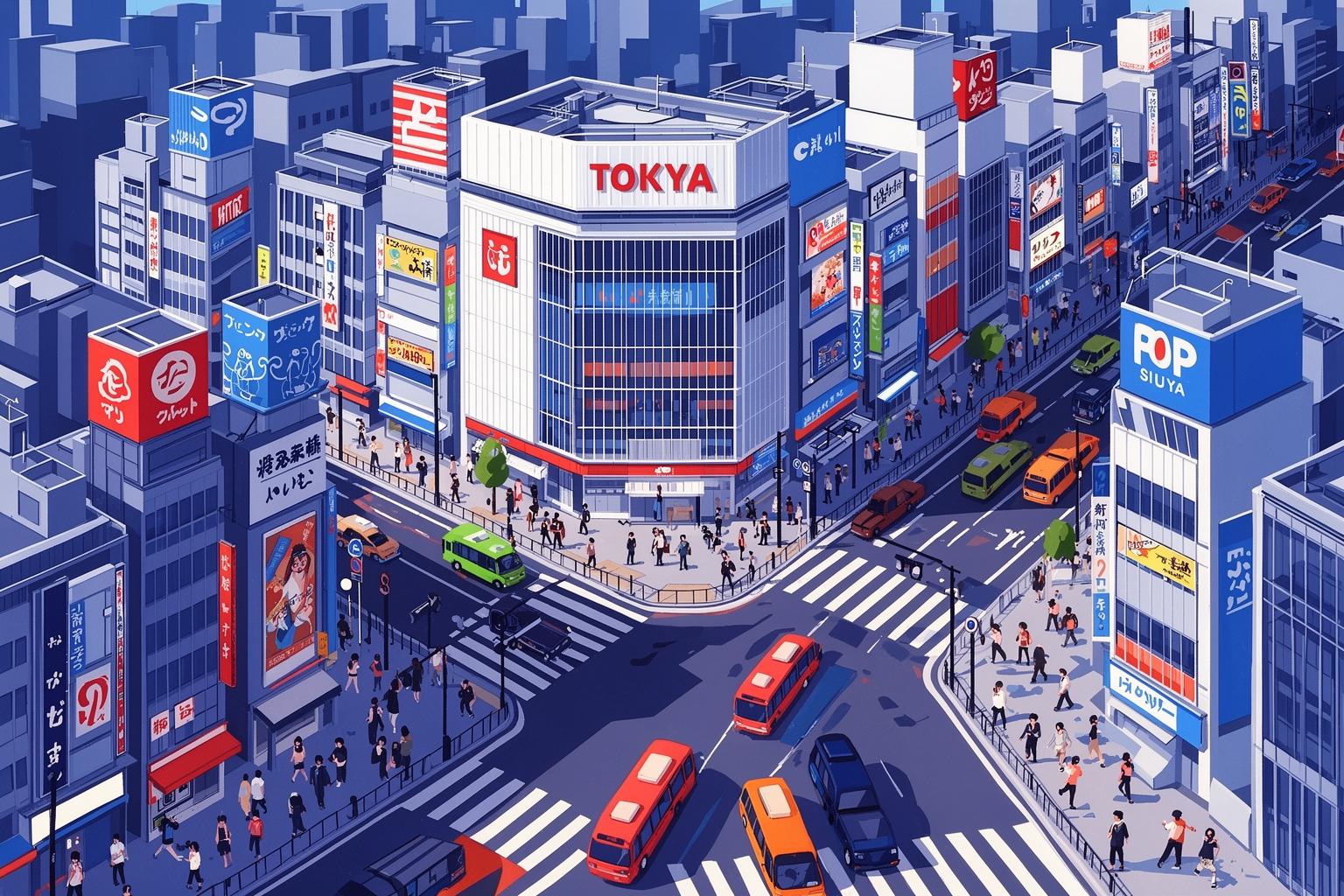
While experiencing Shibuya at street level, immersed in the flow of the crowd, is incredible, viewing it from above provides a completely different and equally stunning perspective. From a high vantage point, the chaotic energy transforms into a beautiful, intricate pattern—a living map of light, color, and movement. This viewpoint allows you to truly appreciate the vast scale of the district and its role within Tokyo’s sprawling urban landscape. Fortunately, Shibuya offers several fantastic options for gaining this elevated perspective.
Shibuya Sky: The Ultimate Panorama
The unrivaled highlight among Shibuya viewpoints is Shibuya Sky. Located atop the towering Shibuya Scramble Square building, this observation deck is a relatively recent addition to the skyline and has quickly become a must-see attraction. The experience begins with an exhilarating elevator ride up to the 45th floor. From there, you take an escalator through a dazzling digital art installation to the main attraction: the “Sky Stage,” a spacious 360-degree open-air rooftop deck. The views are absolutely spectacular. You can see the entire Shibuya district sprawled below you, with the Scramble Crossing resembling a tiny, pulsating ant farm. On a clear day, the panorama stretches for miles, revealing views of Tokyo Skytree, Tokyo Tower, and even the majestic Mount Fuji on the distant horizon. The deck’s corners are fitted with glass panels for vertigo-inducing photos, while comfortable net hammocks allow you to recline and literally watch the world pass by. For the most magical experience, book your tickets online in advance for a time slot just before sunset. Watching the city shift from day to night as millions of lights begin to sparkle across the landscape is a truly unforgettable moment.
Classic Views and Hidden Spots
Long before Shibuya Sky existed, the classic viewpoint was, and remains, the second-floor Starbucks in the Tsutaya building. This view is iconic for good reason. It’s not about seeing the entire city; it’s about having a front-row seat to the human drama unfolding at the Scramble Crossing itself. It’s an intimate, eye-level perspective that connects you directly to the action. Although it’s often crowded, sipping a coffee while watching the world’s busiest intersection ebb and flow is a quintessential Shibuya experience. For another excellent and completely free option, use the elevated indoor walkway connecting JR Shibuya Station to the Shibuya Mark City complex. This pedestrian bridge features large plate-glass windows overlooking the Scramble Crossing below. It’s a fantastic spot for photographers, offering clean, unobstructed shots without the need to compete for space. It provides a slightly higher vantage point than Starbucks, giving a better sense of the crossing’s scale while still keeping you close to the street’s vibrant energy.
A Final Thought: Embracing the Beautiful Chaos
Shibuya is not a destination you can simply tick off a list. It’s an experience to be fully embraced, a current that sweeps you along. It embodies the relentless, vibrant, and ever-evolving spirit of Tokyo. This district is one of striking contrasts, where the quiet devotion behind the Hachiko legend coexists with the roaring spectacle of the Scramble Crossing, and where ancient traditions of commerce and community are interpreted through the hyper-modern lens of youth culture and global trends. To visit Shibuya is to connect directly to the city’s central power source, feeling its energy pulse through you.
For first-time visitors, the secret is to let go. Don’t attempt to master it with a strict itinerary. Instead, allow yourself to be drawn in various directions. Follow the music down a narrow alley, let the skyscraper’s glowing lights pull your gaze upward, pause to watch the human tide at the crossing for just one more cycle. Have a coffee, enjoy some ramen, and wander without a fixed destination. It’s in these spontaneous moments that Shibuya unveils its true magic. This is a place that rewards curiosity and welcomes chaos. So dive in, open your senses, and let the electric heartbeat of Shibuya become your own for a time. You’ll leave with more than just photos and souvenirs—you’ll carry the unforgettable rhythm of Tokyo’s most iconic neighborhood resonating in your memory.