To understand an artist, you can study their work, read their biographies, or analyze their techniques. But to truly feel the pulse of their genius, you must walk the earth that shaped them. For an artist as monumental and transformative as Pablo Picasso, this journey is not a simple path but a sprawling, passionate pilgrimage across the vibrant landscapes of Spain and the revolutionary heart of France. It’s a journey that takes you from the sun-drenched Andalusian coast where he was born to the bohemian garrets of Paris where he shattered the conventions of art, and finally to the tranquil hills of the French Riviera where he worked with relentless fury until his final days. Each city, each village, each dusty street corner holds a piece of the puzzle that is Picasso. This is not just a tour of museums and studios; it is an exploration of the very soul of his art, a quest to see the world through the eyes of a man who reshaped how we see everything. We will trace the footsteps of the Minotaur, the modern master, through the places that ignited his spirit, broke his heart, and fueled a century of creation. This is the geography of genius, a map of the world that created, and was in turn created by, Pablo Picasso.
For more on how a place can shape an artist’s vision, explore our pilgrimage to the world of Kano Eitoku.
Málaga, Andalusia: The Birth of a Legend
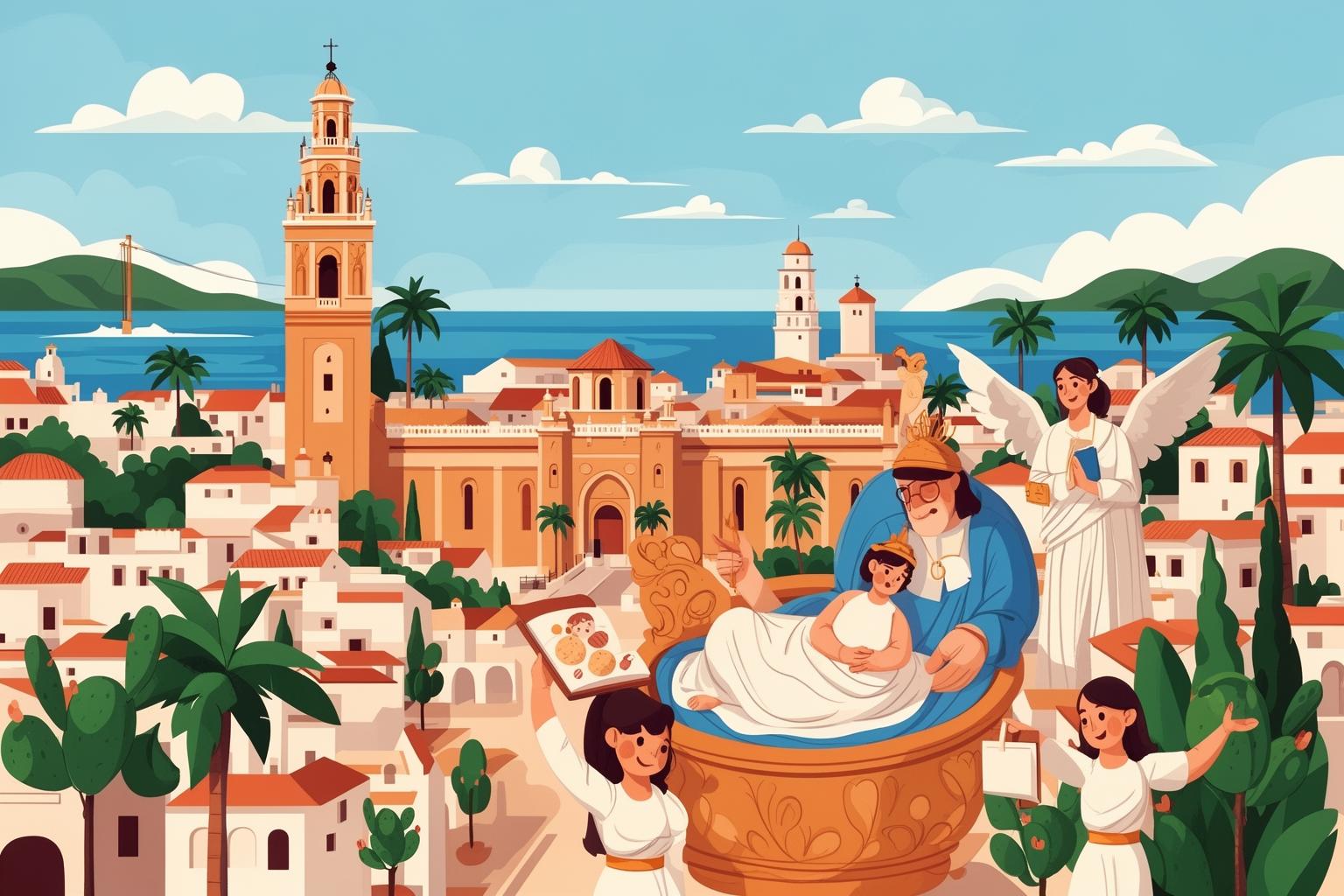
Every story has a beginning, and Picasso’s ignites under the brilliant, relentless sun of Málaga. This city isn’t merely a spot on Spain’s Costa del Sol; it is the foundation of his artistic language. The light here is unique—sharp, almost molten gold, casting deep, dramatic shadows. This contrast of intense light and profound darkness became a recurring theme throughout his work. To stroll through Málaga is to sense the primal Andalusian spirit that Picasso carried all his life: a blend of ancient history, passionate intensity, and a deep connection to the cycles of life and death, celebration and sorrow.
The Heartbeat of Plaza de la Merced
Our journey begins in the vibrant core of the city at Plaza de la Merced. This lively square, lined with cafés and shaded by jacaranda trees, is where a young Pablo first drew in the sand, famously sketching spirals before he could even speak. The atmosphere here buzzes with life, a continuous performance of daily routines that feels both timeless and immediate. It’s easy to picture a young, observant boy sitting here, taking in the scenes around him: the flutter of pigeons he would later depict with such tenderness, the animated chatter of neighbors, the dignified stance of elderly men watching the world unfold.
Dominating one corner stands a handsome 19th-century building, now known as the Casa Natal—the house where Picasso was born in 1881. Today, it serves as a museum and the headquarters of the Fundación Picasso. Walking inside is like stepping into a memory. The rooms are restored to reflect the period and filled with family photographs, personal belongings, and some of Picasso’s earliest surviving works, including charming sketches of animals and relatives. You encounter the art of his father, José Ruiz y Blasco, a painter and art teacher, gaining insight into the environment that nurtured this extraordinary talent. It’s an intimate, humanizing experience that peels away the myth of the global icon to reveal the boy, the son, the student, raised in the heart of this warm southern city.
Museo Picasso Málaga: The Return of the Native Son
While the Casa Natal reveals his origins, the Museo Picasso Málaga showcases the full arc of his life and art. Housed in the magnificent Palacio de Buenavista, a stunning example of Renaissance and Mudéjar architecture, the museum is a dream fulfilled. Picasso always longed for his work to have a strong presence in his hometown, a wish fulfilled by his family after his death. The collection, featuring over 200 works, offers a breathtaking journey through the artist’s diverse and prolific career, emphasizing the personal and intimate.
The museum does more than display his art; it situates it within his Andalusian heritage. You see the early academic studies of a technically gifted teenager alongside recurring symbols like the bull, the dove, and the flamenco dancer—motifs deeply woven into the Andalusian psyche. The collection sparkles with late-career masterpieces, where a mature Picasso reflects on both the masters and his own life with explosive creativity. Viewing his Cubist sculptures and vibrant late paintings within these ancient palace walls, bathed in the same golden light that shone at his birth, is a deeply moving experience. It feels like a homecoming. The courtyard, scented with orange blossoms, offers a moment of quiet reflection, a space to absorb the innovative force you’ve just encountered. This museum is more than a gallery; it is a love letter from Picasso to Málaga, and from Málaga back to its most famous son.
A Coruña, Galicia: The Blue Period’s First Shadows
If Málaga was the sunlit cradle of Picasso’s childhood, then A Coruña, located on the rugged, windswept coast of Galicia in northwestern Spain, was the cold, grey crucible of his adolescence. The family relocated there in 1891 when his father accepted a teaching position. The contrast could not have been more pronounced. The brilliant Mediterranean light gave way to the soft, often melancholic glow of the Atlantic. The city’s atmosphere—with its salty air, persistent rain, and granite buildings—felt worlds apart from the warmth of Andalusia. This dramatic environmental shift coincided with a period of intense emotional turmoil that would irrevocably shape the artist and lay the psychological foundation for his renowned Blue Period.
A Formative Exile
Walking through A Coruña today, especially along the grand promenade overlooking the restless sea, one can sense a profound solitude. The city is known for its ‘galerías’—glass-enclosed balconies designed to capture precious sunlight—which give the waterfront a striking, shimmering appearance. For the young Picasso, this new home was both a school and a prison. He sharpened his academic skills with remarkable speed at the School of Fine Arts, producing mature works that belied his youth. His painting, The Girl with Bare Feet (1895), stands as a masterpiece from this time, demonstrating technical skill beyond his years along with a deep empathy for his subject.
Yet this phase of artistic growth was overshadowed by a devastating personal tragedy: the death of his beloved younger sister, Conchita, from diphtheria. This loss plunged the family, especially the sensitive young Pablo, into profound grief. It is impossible to stand on the shores of Orzán beach, watching Atlantic waves crash against the rocks, without imagining the immense sorrow that consumed him here. This experience of loss, this close encounter with death and suffering, planted a seed of melancholy that would later bloom into the haunting, blue-hued canvases that defined his unique genius. A Coruña is where Picasso the prodigy became Picasso the artist—an artist who understood that light is meaningless without shadow.
Barcelona, Catalonia: The Crucible of Modernism
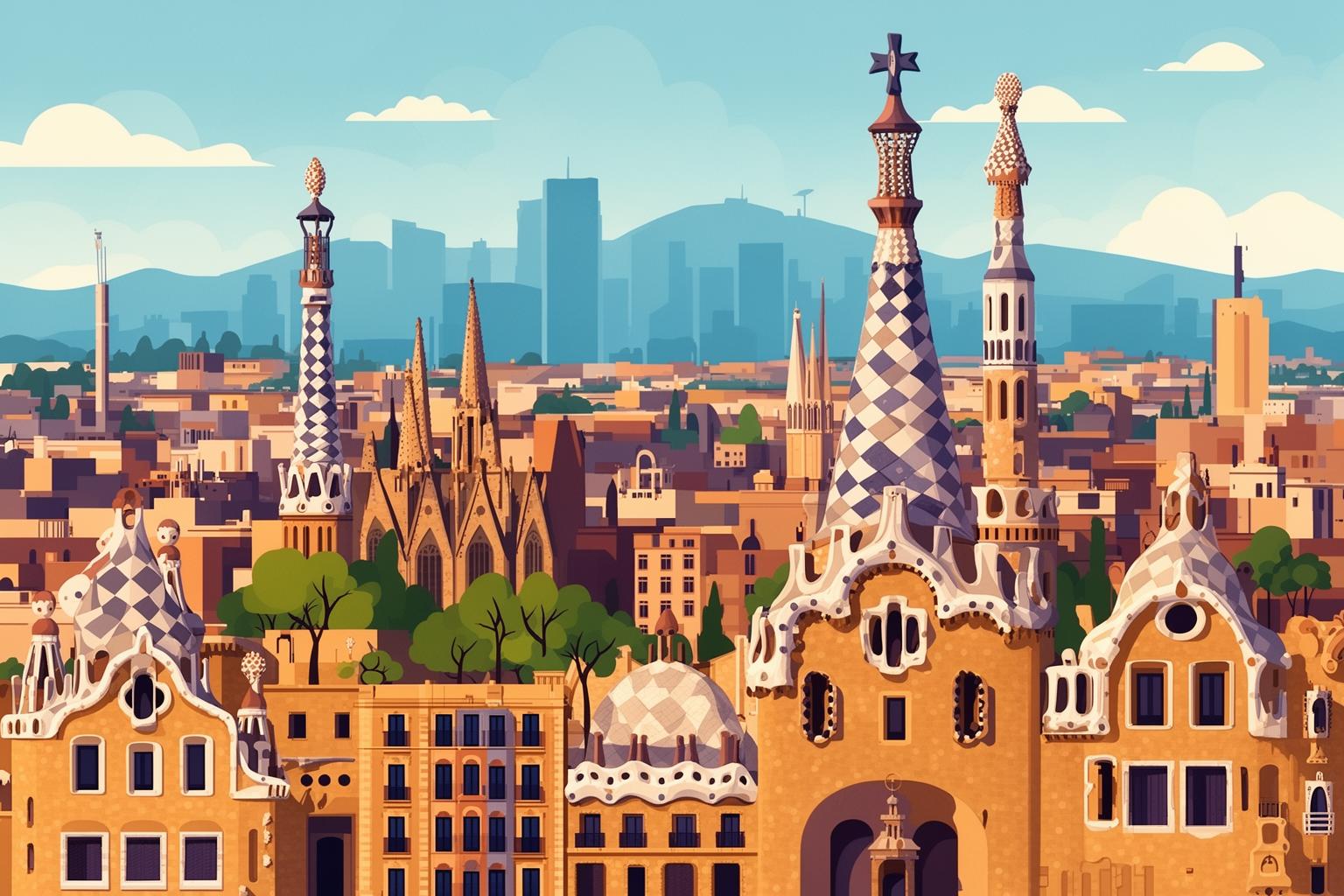
For Picasso, Barcelona was more than just a city; it was a declaration of independence. When he arrived in 1895, he found a city buzzing with artistic and intellectual energy. Barcelona was in the midst of the Modernisme movement, a Catalan form of Art Nouveau that was reshaping the city’s architecture, art, and literature. This environment freed him from the confines of his academic training and propelled him toward the avant-garde. He abandoned his father’s surname, Ruiz, and began signing his works simply as ‘Picasso,’ his mother’s name—a symbolic rebirth. The narrow, winding streets of the Barri Gòtic (Gothic Quarter) became his campus, while its taverns and brothels served as his life-drawing studios.
Els Quatre Gats: The Bohemian Heartbeat
At the core of this creative surge was a café inspired by the Parisian cabaret Le Chat Noir: Els Quatre Gats (The Four Cats). This was the meeting place for Barcelona’s modernist intellectuals, artists, poets, and architects. Stepping into Els Quatre Gats today, which has been carefully restored, feels like stepping back in time. The dark wood, tiled floors, and Ramon Casas posters on the walls evoke a vivid sense of history. You can almost hear the passionate debates, the clinking of glasses, the scratching of charcoal on paper. It was here, as a teenager, that Picasso held his first solo exhibition. He was not just a visitor but a central figure in the scene, sketching his friends, designing the menu cover, and absorbing revolutionary ideas that swirled around him like thick cigar smoke. Sitting at a table in Els Quatre Gats, you feel connected to that youthful, rebellious energy—the exhilarating moment when Picasso realized art could go beyond faithful representation to become a radical expression of life itself.
The Museu Picasso: An Artist’s Diary
To truly understand Picasso’s growth during his time in Barcelona, visiting the Museu Picasso is essential. Located in a series of splendid medieval palaces on Carrer Montcada, the museum’s focus is unique. It does not attempt to cover his entire career; instead, it offers an unparalleled, detailed look at his formative years. The collection, mainly assembled through donations from Picasso himself and his friend Jaume Sabartés, reflects the deep affection he held for the city.
Walking through the galleries feels like reading a visual diary. You witness his full command of classical techniques in early portraits and academic studies. Then, you see him break away. The Blue Period is represented by poignant masterpieces like The Wait (Margot), where the influence of El Greco and the sorrows of his life are strongly felt. You follow him into the warmer, more delicate Rose Period, and finally, in a stunning highlight, you encounter the complete series of 58 canvases he produced in 1957, deconstructing and reinterpreting Velázquez’s Las Meninas. Viewing this obsessive, brilliant series in full is a lesson in Picasso’s relentless drive to analyze, dismantle, and reinvent. The museum’s intimate size and historical setting make it feel less like a formal institution and more like a privileged glimpse into the artist’s evolving mind.
Carrer d’Avinyó and the Birth of a Revolution
Beyond the museum and café, the very streets of Barcelona’s old city are part of Picasso’s story. He lived and worked in various studios throughout the Barri Gòtic and El Raval. A stroll down the famous Carrer d’Avinyó is a vital part of the pilgrimage. This street, once part of the city’s red-light district, directly inspired one of the most revolutionary paintings in art history: Les Demoiselles d’Avignon (1907). Although painted in Paris, its spirit belongs to Barcelona. The painting’s raw, fractured forms and confrontational gaze shattered traditional ideas of beauty and perspective, paving the way for Cubism. Standing on that street today, amid modern shops and apartments, you can still sense the gritty, vibrant, and sometimes sordid reality that Picasso transformed into a world-changing work of art. The spirit of Barcelona—its medieval foundations and modern, rebellious heart—is forever woven into the DNA of his work.
Madrid: A Dialogue with the Masters
Picasso’s time in Madrid was brief and turbulent, yet the city’s impact on him was deep and enduring. He arrived in 1897 to study at the esteemed Royal Academy of Fine Arts of San Fernando, but he soon grew frustrated with its strict, classical approach. The true education he sought was not within the Academy’s classrooms, but in the revered halls of the Museo Nacional del Prado. For Picasso, the Prado was more than a museum; it was a sacred place—a temple where he could connect directly with the gods of Spanish painting: Velázquez, El Greco, and especially Goya.
The Prado Museum: A Lifelong Classroom
Visiting the Prado with Picasso in mind changes the experience, turning it into a quest to uncover his influences. You stand before Velázquez’s Las Meninas, the very painting Picasso would obsessively analyze six decades later, and you can sense the young artist’s admiration. He wasn’t merely observing; he was dissecting, learning, and absorbing the master’s use of light, space, and psychological complexity. In Velázquez, he found a realism that was both profound and unyielding.
Then there is Goya. In Goya’s dark, visceral portrayals of the horrors of war, such as The Third of May 1808, Picasso recognized a spiritual predecessor. The raw emotion, political fury, and stark honesty of Goya’s work struck a deep chord with him. It is impossible to view Goya’s Black Paintings without seeing a foreshadowing of the anguish Picasso would later channel into his monumental anti-war masterpiece, Guernica. The Prado served as Picasso’s touchstone throughout his career, a constant reference point against which he measured himself against the giants of Spanish art. During the Spanish Civil War, the Republican government appointed him director-in-exile of the Prado, a position he embraced with great seriousness, understanding that he was not only an artist but also a guardian of Spain’s cultural heritage. To walk through the Prado is to walk alongside the spirit of a young Picasso, passionately sketching, learning, and preparing to challenge the very masters he admired.
Paris, France: The Epicenter of the Art World
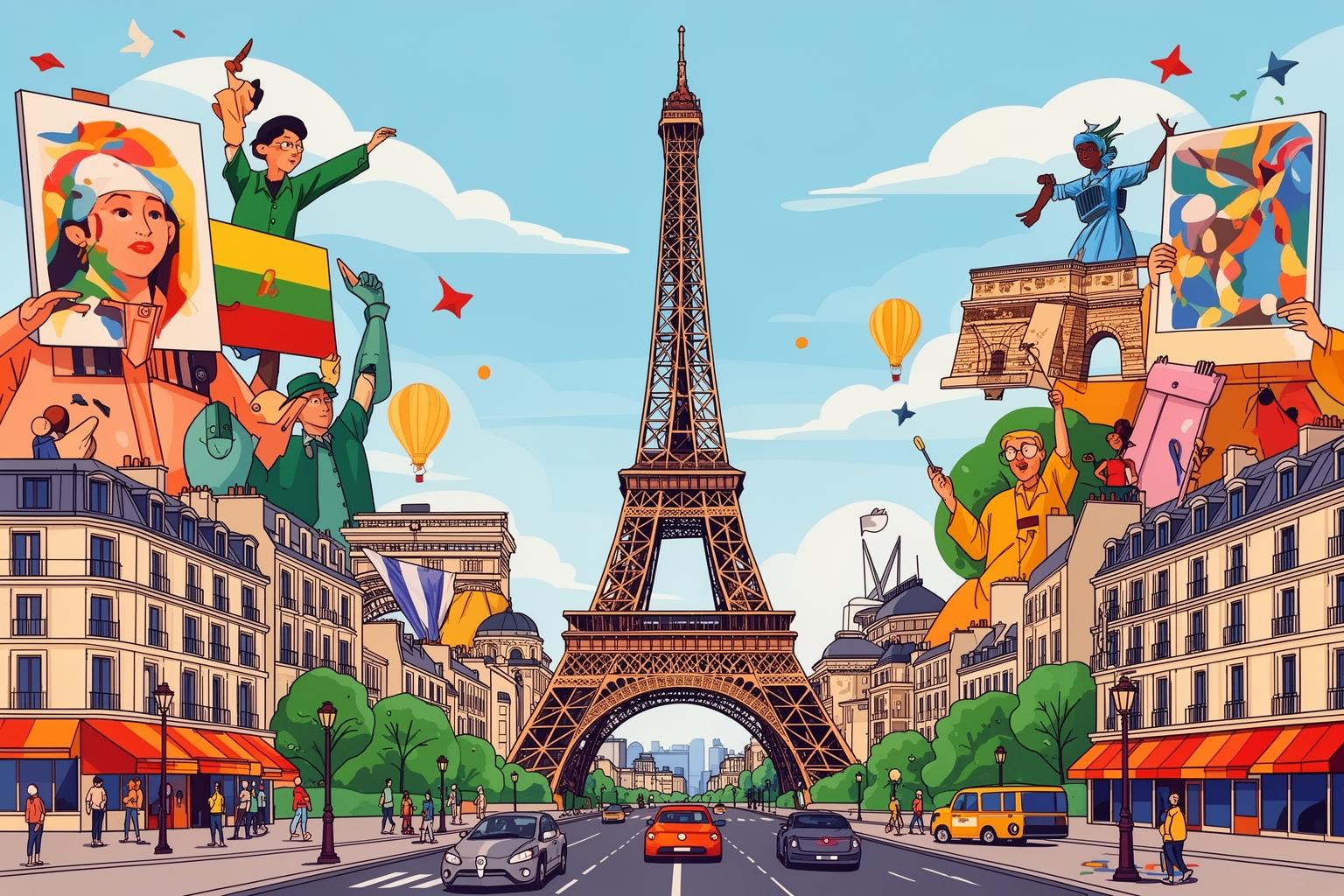
If Spain was Picasso’s homeland, the root of his artistic heritage, then Paris was his battlefield. It was the city that challenged him, embraced him, and ultimately offered the stage for his groundbreaking artistic innovations. He first arrived in 1900, and by 1904, he had settled there, drawn like many others to the city that, at the dawn of the 20th century, was the undisputed epicenter of the art world. Paris was a melting pot of fresh ideas, a magnet for ambitious artists, writers, and thinkers from around the globe. It was here that Picasso transformed from a Spanish prodigy into a global phenomenon.
Montmartre and the Bateau-Lavoir: The Birthplace of Cubism
A pilgrimage through Picasso’s Paris must begin on the hill of Montmartre. Today, the area around Place du Tertre can seem touristy, but in the early 1900s, it was a gritty, bohemian enclave of modest studios and lively nightlife. Here, at 13 Rue de Ravignan, stood a dilapidated, ramshackle building nicknamed the Bateau-Lavoir, or “Laundry Boat,” because it resembled the wash-boats on the Seine. This was Picasso’s first permanent home and studio in Paris, a place notorious for its poverty and legendary for its creativity.
The Bateau-Lavoir no longer exists—it burned down in 1970, with only its façade remaining—but a small plaque marks the site, and the charming little square in front still echoes its bohemian past. It takes imagination to see it: a dark, cold warren of studios, with only one water tap for all residents. It was here, amid the squalor and smells of kerosene and cheap wine, that Picasso painted Les Demoiselles d’Avignon. Here, he and his neighbor, Georges Braque, analyzed reality and reassembled it on canvas, giving birth to Cubism, the most radical artistic movement since the Renaissance. The Bateau-Lavoir was the laboratory of modern art, with Picasso and Braque as its leading scientists.
The Musée National Picasso-Paris: A Universe of Creativity
To appreciate the immense scope of Picasso’s output during his Paris years and beyond, one must visit the Musée National Picasso-Paris. Housed in the magnificent Hôtel Salé, a 17th-century mansion in the Marais district, the museum holds the world’s largest and most comprehensive collection of Picasso’s works. This collection was formed from pieces Picasso’s heirs donated to the French state in lieu of inheritance taxes, meaning it consists of works the artist himself chose to keep. It is, essentially, Picasso’s personal collection of his own art.
Walking through the elegant, light-filled rooms of the Hôtel Salé is an overwhelming experience. The exhibits follow a chronological path, allowing you to witness his breathtaking stylistic evolutions. You see tender Rose Period portraits, revolutionary Cubist canvases, monumental neoclassical figures of the 1920s, surrealist-inspired distortions of the 1930s, the anguish of the war years, and the explosive, colorful freedom of his later work. The museum showcases not only his paintings but also his sculptures, ceramics, and prints, revealing an artist who masterfully worked across every medium he touched. Unlike the Barcelona museum, which focuses on his formation, the Paris museum presents the fully developed titan in all his multifaceted glory. It stands as a testament to a life marked by relentless, obsessive, and joyful creativity.
Gertrude Stein’s Salon and the Avant-Garde
Picasso’s Paris was also a hub of intellectual and social ferment. His circle included poets Guillaume Apollinaire and Max Jacob, but crucially, it also featured the American writer and art collector Gertrude Stein and her partner, Alice B. Toklas. Their apartment at 27 rue de Fleurus on the Left Bank became one of the 20th century’s most important cultural salons. It was here that Picasso mingled with artists like Henri Matisse, and where his work gained its first serious patrons. Stein was among the earliest supporters of Cubism, and her portrait, painted by Picasso in 1906 after more than 80 sittings, marks a pivotal moment. He painted over her face and later completed it from memory in a stark, mask-like style inspired by ancient Iberian sculpture. This was a decisive break from naturalism and a bold step toward the abstractions of Les Demoiselles. Visiting these neighborhoods—from Montmartre to Montparnasse, where Picasso later lived and worked—is to trace the route of an artistic revolution that reshaped the world.
Rural Retreats: Primitivism and Peace
Although Picasso is eternally linked to the urban centers of Barcelona and Paris, many of his artistic breakthroughs were actually forged in the intense solitude of rural Spain. He occasionally escaped the city, seeking refuge in remote villages where he could reconnect with a more elemental, “primitive” reality, far removed from the sophisticated discourse of the avant-garde. These retreats were not leisurely vacations but rather periods of intense work and profound creative transformation.
Horta de Sant Joan: The Cubist Catalyst
Nestled deep in the rugged, mountainous terrain of Catalonia is the village of Horta de Sant Joan (also called Horta d’Ebre). Picasso first stayed here in 1898 as a teenager while recovering from scarlet fever. The raw, sun-baked landscape and the simple, archaic lifestyle made a lasting impression on him. He returned in the summer of 1909 with his mistress, Fernande Olivier, at a pivotal moment in his career. He and Braque were on the brink of developing what would become known as Analytic Cubism.
In the seclusion of Horta, Picasso’s art took a radical leap forward. He began painting the village and the surrounding mountains, not as he visually perceived them, but as he understood them. He broke down the forms of houses and rock faces into geometric planes, depicting them as crystalline, multifaceted structures. Paintings such as The Reservoir, Horta de Ebro illustrate his shift away from color and toward a monochromatic exploration of form and volume. He later famously stated, “Everything I know I learned in Horta.” Today, the village houses the Centre Picasso, which exhibits faithful reproductions of the works he created there. Walking the same dusty paths and seeing the same stark outline of the Santa Bàrbara mountain that he painted offers insight into how this raw, powerful landscape provided the ideal material for his Cubist experiments. It was here that he genuinely mastered the art of dismantling the world and reconstructing it in his own image.
Gósol: The Bridge to a New Vision
Another vital rural retreat took place in the spring and summer of 1906, when Picasso and Fernande sought refuge in the tiny, isolated village of Gósol, high in the Pyrenees. This was a place seemingly frozen in time, inhabited by peasants, shepherds, and ancient traditions. Immersing himself in this pre-modern, “primitive” culture had a direct and immediate influence on his art. His color palette warmed, shifting from the melancholic blues of his early Paris years to the earthy ochres, pinks, and terracotta tones of the surrounding landscape. His figures became simpler, more sculptural, and more monumental, clearly inspired by the ancient Iberian sculptures he had recently seen at the Louvre. Works from this period, such as the famous Portrait of Gertrude Stein (which he completed after returning to Paris) and Two Nudes, demonstrate a clear stylistic transition. The Gósol period serves as the crucial bridge between the sentimentality of the Rose Period and the radical innovation of Les Demoiselles d’Avignon. Visiting Gósol today, still a remote and stunning mountain village, one can sense the profound peace and timelessness that allowed Picasso to shed the last traces of his classical training and discover the powerful, archaic forms that would shape his modernism.
The French Riviera: A Sun-Drenched Final Act
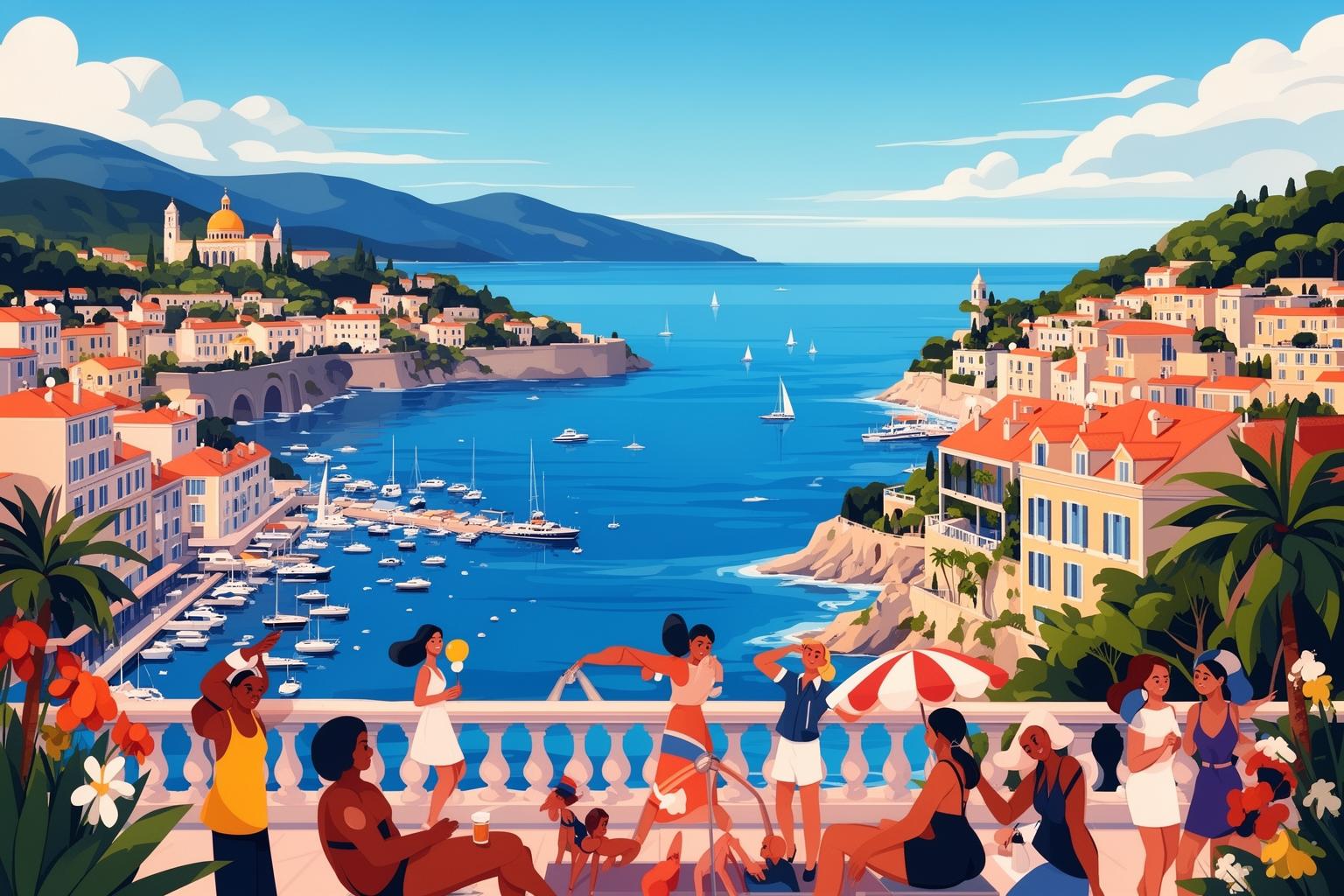
After the darkness and deprivation of World War II in occupied Paris, Picasso, then in his sixties, sought the sun. He relocated to the Côte d’Azur, the French Riviera, where he would spend the final three decades of his life in an extraordinary burst of creative energy. The Mediterranean, which had witnessed his birth in Málaga, now served as the setting for his last act. The brilliant light, the azure sea, and the region’s ancient history infused his work with a renewed vitality, a pagan-like “joie de vivre” that seemed to defy his advancing years.
Vallauris and the Joy of Ceramics
In 1948, Picasso settled in Vallauris, a small town near Antibes with a rich pottery-making tradition. He had discovered the Madoura pottery workshop a year earlier and quickly became captivated by ceramics. For him, clay presented a fresh and exciting challenge. He threw himself into it with the enthusiasm of a young apprentice, mastering the craft before gleefully breaking all its rules. He transformed plates into faces, vases into voluptuous female figures, and pitchers into whimsical owls and goats. Over the following years, he created thousands of ceramic pieces, a body of work brimming with humor, sensuality, and mythological references.
His presence revitalized the town of Vallauris. Today, the town stands as a testament to his legacy. In the main square is his monumental bronze sculpture, Man with a Sheep, a gift to the town. The Musée National Picasso La Guerre et la Paix is housed in the chapel of the local castle, showcasing his two massive, allegorical panels, War and Peace. Walking through Vallauris, with its many ceramic studios and galleries, one feels the lasting impact of his time there. It was a period of joyous renewal, where he reconnected with the tactile, ancient craft of the Mediterranean, the very sea that had witnessed the beginning of his journey.
Cannes and Mougins: The Last Studios
As his fame reached mythic heights, Picasso sought greater privacy. He moved to a grand villa, La Californie, in the hills above Cannes, and later to a secluded farmhouse, Notre-Dame-de-Vie, in the old village of Mougins. These homes became his final studios, private realms where he lived surrounded by his vast collection of works, his family, and a menagerie of animals. Photographers such as Robert Doisneau and David Douglas Duncan captured iconic images of him in these spaces—the aging master with piercing dark eyes, working with an intensity that never faded.
His late work, produced in these Riviera studios, was astonishingly prolific and often controversial. He revisited themes that had haunted him throughout his life: the artist and his model, the minotaur, the musketeer, the reclining nude. He painted with raw, frenetic energy, his brushwork loose and expressive. Though critics at the time sometimes dismissed these works as the ramblings of an old man, they have since been reassessed as a powerful, unflinching meditation on love, desire, mortality, and the very act of painting. Mougins, now a picturesque hilltop village famed for its gastronomy and art galleries, was his final sanctuary. It was here, in 1973, at the age of 91, that Pablo Picasso finally laid down his brush. He had worked until the very end, a force of nature who had spent nearly a century absorbing the world and reshaping it in his own image.
The Enduring Footprint of a Titan
To follow the path of Pablo Picasso is to journey through the heart of the 20th century. This voyage crosses countries, cultures, and artistic revolutions. From the dazzling light of Málaga to the bohemian shadows of Paris, from the rugged mountains of Catalonia to the sun-drenched shores of the Riviera, each place reveals another facet of this complex, endlessly creative genius. His life was lived with full intensity, marked by a relentless pursuit of new forms of expression. Visiting these locations means more than seeing where he lived and worked; it is to feel the sources of his inspiration, to stand in the light that illuminated his canvas, and to understand that for Picasso, art and life were inseparable, passionate, and monumental forces. Traveling through his world doesn’t just teach you about Picasso; it reveals the power of a single life to transform the way we see. And that is a pilgrimage worth undertaking.