To travel in the footsteps of Umberto Eco is not merely to visit a series of locations on a map. It is to embark on a pilgrimage into the very heart of interpretation itself. It is to wander through a labyrinth of signs, symbols, and stories, where every cobblestone street, every ancient library, and every plate of pasta holds a potential meaning, a hidden connection waiting to be discovered. Eco, the formidable Italian intellectual—novelist, philosopher, semiotician, and medievalist—was a man who saw the world as a grand, unfolding text. He taught us that history is a dialogue, that libraries are living organisms, and that even the most profound conspiracies can be born in the quiet hum of a dusty office. His life was a journey through the landscapes of both Italy and the human mind, and to follow his path is to learn how to read the world with his unique brand of insatiable curiosity and wry wisdom. This journey will take us from the foggy plains of his Piedmontese childhood to the hallowed halls of Europe’s oldest university in Bologna, from the bustling media hub of Milan to the windswept mountain peak that inspired his most famous novel, The Name of the Rose. It is a quest not for answers, but for better questions, a chance to see Italy through the eyes of one of its most brilliant modern minds.
Much like our journey through Eco’s Italy, you can explore the landscapes of other great stories, such as by uncorking the Santa Barbara wine country pilgrimage.
The Piedmontese Prologue: Alessandria and Turin
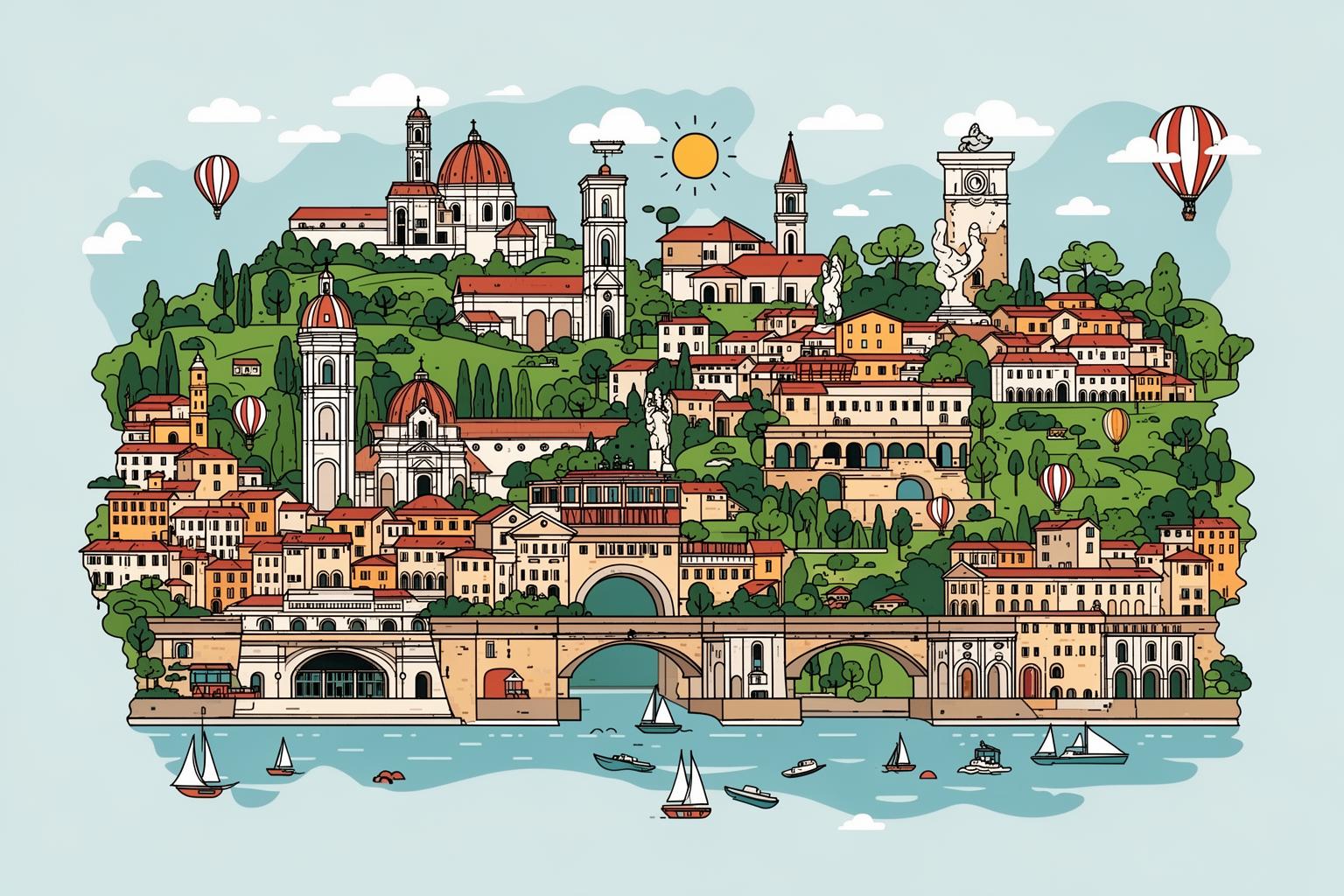
The story of Umberto Eco, like many renowned Italian narratives, begins in the provinces. It does not unfold in the grand theaters of Rome or Florence, but rather in the subtle, often overlooked Piedmont region of northwestern Italy. This land is known for its rolling vineyards producing Barolo and Barbaresco, industrial centers like Turin, and small, quiet towns shrouded in a distinctive, atmospheric fog. It was in this setting—rational yet mysterious, industrious yet deeply tied to its rural heritage—that Eco’s intellectual character was shaped.
Alessandria: The Beginning of the Tale
Every labyrinth has an entrance, and for Umberto Eco, that entrance was Alessandria. Born here in 1932, Eco’s childhood was steeped in the atmosphere of this provincial capital, a city quietly nestled between Turin and Genoa. Alessandria does not demand attention; its allure reveals itself slowly to the patient observer. The feeling here is one of grounded reality, with straight streets and sober architecture, a stark contrast to the baroque fantasies of southern Italy. Yet, it was precisely this environment that nurtured Eco’s imagination. He grew up during the turbulent years of Mussolini’s Fascist regime and World War II, experiences that profoundly influenced his grasp of ideology, memory, and narrative.
Walking through Alessandria today is like searching for a ghost of a landscape more powerfully present in Eco’s writing than on any street corner. The city forms the emotional heart of his novel The Mysterious Flame of Queen Loana, a deeply personal story about a man who loses his episodic memory and must reconstruct his past through the comics, books, and songs of his youth in this very region. To understand Eco, one must picture him as a young boy here, devouring adventure stories and pulp magazines, his mind alive with worlds far beyond the foggy plains of Piedmont. The best way to experience Alessandria is simply to wander. Begin at the Piazza della Libertà, the city’s main square, and let the grid-like streets guide you. The atmosphere is calm, almost melancholic on an overcast day, and you can sense the weight of a quiet, unassuming history.
For first-time visitors, Alessandria is most easily reached by train; it serves as a convenient hub with direct connections from Turin and Milan, making it perfect for a day trip or a thoughtful starting point on a longer journey. The ideal seasons to visit are spring or autumn. During these times, the famous Piedmontese fog often rolls in, blanketing the city in soft, diffused light. In this mist, you can best sense the connection to Eco’s own descriptions of his childhood—a world where reality softened around the edges, leaving ample room for imagination to wander.
Turin: The Crucible of a Philosopher
If Alessandria was the prologue, Turin was the first chapter of Eco’s intellectual journey. This is where he moved for his university studies, and the city’s unique character—a blend of rational, Enlightenment-era design and a deep fascination with the occult—provided the perfect crucible for his growing mind. Turin is a city of elegant arcades, grand piazzas, and palpable intellectual energy. It feels serious, regal, and profoundly cerebral. As the first capital of a unified Italy, it carries itself with a reserved dignity.
Eco enrolled at the University of Turin, where he ultimately wrote his thesis on the aesthetics of St. Thomas Aquinas. This deep exploration of medieval philosophy laid the foundation for his entire intellectual career. It taught him about systems, signs, and the medieval worldview that he would later vividly bring to life in The Name of the Rose. Walking through the university district today, one can still feel that academic intensity. The Palazzo Nuovo, the main humanities building, hums with the energy of students and scholars.
Yet, Turin’s influence on Eco extended beyond the lecture hall. The city is home to historic cafes like Caffè Fiorio and Caffè San Carlo, where generations of writers, politicians, and philosophers have debated contemporary ideas over a bicerin, the city’s signature drink of espresso, chocolate, and cream layered together. Spending an afternoon in one of these cafes, surrounded by gilded mirrors and velvet banquettes, is like stepping back in time. It’s easy to envision a young Eco engrossed in a book, his mind racing with connections between ancient theology and modern life.
No visit to Turin in the spirit of Eco would be complete without acknowledging the city’s mysterious side. Turin is famously part of two magical triangles—one of white magic and one of black magic—and this undercurrent of the esoteric and uncanny is central to its identity. This duality is something Eco captured so well: the tension between logic and the irrational. A visit to the magnificent Egyptian Museum, the world’s second largest, feels like a journey into realms of ancient codes and symbols that would have fascinated him. Similarly, the Mole Antonelliana, the city’s towering architectural emblem, stands as a monument both to structural genius and ambitious folly—a perfect metaphor for the grand, obsessive intellectual projects that fill Eco’s novels.
Milan: The Labyrinth of Modernity
Following his philosophical foundation in Turin, Eco’s professional life flourished in Milan. This city serves as the powerhouse of modern Italy—a hub of fashion, finance, and, importantly for Eco, publishing and media. Whereas Turin is cerebral and reserved, Milan is dynamic and cosmopolitan. The city exudes a relentless forward momentum, continually reinventing itself. Yet beneath the polished facade of design showrooms and corporate headquarters lies a rich cultural heritage, concealed in quiet courtyards, magnificent art collections, and one of the world’s most renowned opera houses.
A Life in Publishing and Media
Eco’s Milanese career began in the 1950s at RAI, the national public broadcasting company, where he worked as an editor for cultural programs. This role immersed him in the realm of mass media, a field he would analyze throughout his life with both fascination and skepticism. He famously reflected on the experience of creating culture for a mass audience, examining how television influences our perception of reality. He later joined the Bompiani publishing house as a senior editor, positioning him at the epicenter of Italy’s literary scene. He was not merely producing culture; he was actively shaping it.
To truly connect with this stage of Eco’s life, one must explore Milan as a hub of ideas. The Brera district is an ideal starting point. This charming neighborhood, with its cobblestone streets and artistic spirit, houses the Pinacoteca di Brera, one of Italy’s most important art galleries, and the Braidense National Library. Spending an afternoon in the library’s serene, magnificent reading rooms is to immerse oneself in the bookish world that was Eco’s natural environment. Nearby stands the grand Sforza Castle, a symbol of Milan’s layered history—a fortress that has served as a seat of power, a barracks, and now a collection of civic museums. Eco lived for many years in an apartment overlooking the castle, and one can imagine him gazing at its ramparts, reflecting on the flow of history and power.
The Pendulum’s Fulcrum
Milan is not merely a setting for Eco’s biography; it is the vibrant core of his second novel, the expansive, brilliant, and deeply paranoid Foucault’s Pendulum. The narrative centers on three editors at a Milanese publishing house who, partly as a game and partly out of intellectual pride, conjure a grand conspiracy theory—the Plan—that links the Knights Templar to a secret source of immense power. Their game soon spins out of control as occult believers begin to take their fiction as truth, with catastrophic results. The novel expertly explores the perils of over-interpretation, the dizziness of seeing connections everywhere, and the precarious line between intellectual amusement and genuine madness. In many respects, it stands as the quintessential Milanese novel, set against a backdrop of publishing deadlines, academic rivalries, and late-night discussions fueled by espresso and paranoia.
To follow the novel’s geography, a visit to the National Museum of Science and Technology “Leonardo da Vinci” is essential. Here, one can see a replica of Foucault’s famous pendulum, the simple apparatus proving Earth’s rotation and serving as the novel’s central, enigmatic symbol—the one constant in a world of swirling, chaotic interpretations. Watching the pendulum trace its path is a contemplative experience, offering a moment of scientific certainty in a city and novel devoted to the ambiguity of signs. Although the novel’s climactic, chilling scenes unfold in Paris at the Conservatoire National des Arts et Métiers, where the original pendulum resides, its intellectual and spiritual home is firmly rooted here, in Milan’s hyper-modern, information-saturated labyrinth.
Bologna: The Erudite Heart
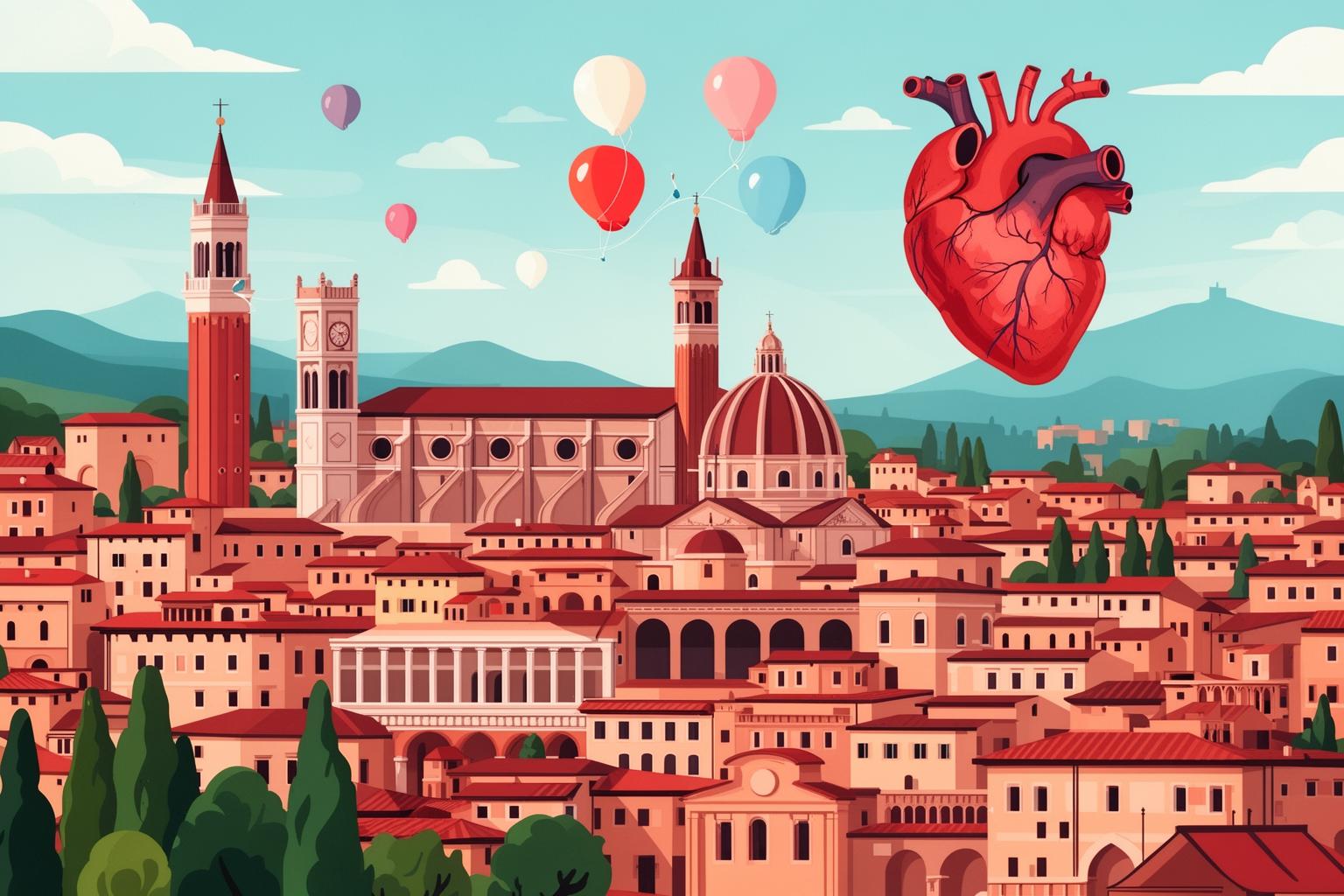
Despite all the time Eco spent in Turin and Milan, his true academic and spiritual home was Bologna. It was there, in 1975, that he became a professor at the University of Bologna, the oldest university in the Western world, and it was where he taught semiotics for the remainder of his life. Bologna is a city seemingly made for an intellectual like Eco. Its identity is deeply intertwined with its university, and the entire city radiates an atmosphere of scholarship, debate, and a profound passion for intellectual life.
La Dotta, La Grassa, La Rossa
Bologna is famously known by three nicknames: La Dotta (The Learned), for its university; La Grassa (The Fat), for its renowned cuisine; and La Rossa (The Red), for its terracotta rooftops and its historic leftist politics. These three titles perfectly encapsulate the spirit of the city. It is a place where intellectual endeavors coexist with earthly pleasures, a city that nourishes both mind and body with equal fervor. The ambiance in Bologna is one of dynamic, lived history. It isn’t a museum frozen in time; rather, it is a living, breathing city where ancient porticoes shelter lively student cafes, and medieval towers gaze upon a bustling modern metropolis.
The university is not a campus separated from the city; it is the city. The university district, centered on Via Zamboni, forms a labyrinth of historic buildings, libraries, and academic offices. The true heart of this ancient institution is the Archiginnasio of Bologna. Entering its courtyard is an awe-inspiring experience. Its walls are adorned with thousands of heraldic coats of arms representing the students and professors who have passed through since the 16th century. Inside, the Anatomical Theatre, carved entirely from cedar and spruce, stands as a remarkable, somewhat eerie tribute to the history of science. This is the tangible essence of La Dotta, a place steeped in centuries of collected knowledge.
To fully appreciate Bologna as Eco did, one must simply walk. The city is famous for its nearly 40 kilometers of porticoes, or covered walkways. These arcades are the city’s lifeblood, a distinctive architectural feature that fosters a sense of communal intimacy. They shield you from sun and rain, but more importantly, they promote a culture of walking and conversation. Wandering beneath the porticoes, discovering hidden chapels, antiquarian bookshops, and tiny trattorias, is like navigating a textual labyrinth in the real world. You find yourself both inside and outside, public and private at once—a perfect state for a roaming philosopher.
The Library of the World
Bologna, with its ancient university and rich book culture, can be seen as the closest real-world counterpart to the labyrinthine library at the heart of The Name of the Rose. The novel’s monastery is a fortress of knowledge, a place where books are both revered and feared, a microcosm of the world itself. Eco, a lifelong bibliophile who owned a personal collection exceeding 30,000 volumes, believed a library was not merely a repository of information but a model of the universe—a structured yet endlessly complex system. Bologna feels like a city-sized library. Knowledge is both its primary industry and greatest passion. Visiting the Bologna University Library, one of the oldest and most significant in Italy, is indispensable. The air there is heavy with the scent of aged paper and the quiet intensity of scholarship.
Naturally, no visit to Bologna would be complete without savoring La Grassa. The city is the capital of Emilia-Romagna, arguably Italy’s richest gastronomic region. It is the birthplace of tagliatelle al ragù (the authentic dish that inspired spaghetti bolognese), mortadella, prosciutto di Parma, and Parmigiano-Reggiano. The Quadrilatero, the city’s ancient market district just off Piazza Maggiore, is a sensory delight. Its narrow streets are filled with stalls offering fresh pasta, artisanal cheeses, cured meats, and regional specialties. For a traveler following Eco’s footsteps, taking time to enjoy a carefully prepared meal is not a distraction from the intellectual journey; it is an integral part of it. It is another way of reading the culture—understanding a place through its most treasured traditions.
Echoes of the Rose: In Search of a Fictional Abbey
Umberto Eco’s most renowned work, The Name of the Rose, takes place in a fictional Benedictine abbey nestled in the Apennine mountains of Northern Italy during the year 1327. Although the abbey itself is a creation of his vivid imagination, it was constructed from elements of real locations, memories, and historical research. To follow the essence of the novel is to step beyond the cities into the striking landscapes that fueled his creative vision.
Sacra di San Michele: The Stone Inspiration
Perched high atop Mount Pirchiriano, overlooking the Susa Valley in Piedmont, stands the Sacra di San Michele. This ancient abbey is a stunning, almost surreal sight. It appears to rise directly from the rocky mountain summit, a formidable fortress of God gazing down upon the mortal world below. Eco explicitly confirmed that this was the main visual inspiration for his fictional monastery. Upon seeing it, the link is immediate and unmistakable. The abbey’s commanding location, its vertiginous verticality, and its blend of Romanesque and Gothic architecture perfectly evoke The Name of the Rose.
The journey to the Sacra is an integral part of the experience. It is not easily reachable, which enhances its aura of isolation and sanctity. One can take a train from Turin to the nearby town of Sant’Ambrogio di Torino, from where a seasonal bus or a challenging but rewarding hike along the ancient pilgrim path is available. As you ascend, the modern world fades away, and the immense scale of the abbey becomes clear. The entrance itself is striking: you must climb the Scalone dei Morti, the Stairway of the Dead, a steep series of steps carved into the rock, where monks’ skeletons were once buried. At the summit, you pass through the Romanesque Portal of the Zodiac, a medieval sculptural masterpiece, before entering the church itself, precariously perched between heaven and earth. The wind sweeps around the stone walls, and the vistas over the Alps and valley are breathtaking. It is a place that feels ancient, potent, and profoundly spiritual, a perfect tangible representation of the novel’s setting.
The Montefeltro Landscape: A Medieval Canvas
While the abbey’s architecture was inspired by Piedmont, the landscape described in the novel—the stark, beautiful, and rugged terrain—drew from another region of Italy entirely. Eco owned a renovated farmhouse in the hills of Montefeltro, a historic area straddling the borders of Emilia-Romagna, Marche, and Tuscany. It was here, in the countryside between the magnificent Renaissance city of Urbino and the dramatic fortress of San Leo, that he discovered the atmosphere for his book.
This landscape consists of rolling hills that can feel gentle one moment and harsh the next. Fortified medieval towns, known as rocche, crown the hilltops, their stone towers outlined against the sky. Exploring this region requires a car. The journey itself is the destination. Winding roads lead through a mosaic of fields, forests, and dramatic clay ravines. In autumn and winter, thick mist often settles in the valleys, with hilltops emerging above like islands in a sea of clouds—a scene straight from the novel’s opening pages. A visit to the fortress of San Leo is essential. Perched on a massive, sheer rock, it appears utterly impregnable. It was here that the occultist Cagliostro was imprisoned and died, adding to the area’s mystique. This landscape feels intensely medieval, a place where the past is not merely recalled but remains an active, living presence. Staying in a local agriturismo (a working farm offering accommodation) is the best way to immerse yourself in the land’s rhythm and its extraordinary cuisine.
The Semiotician’s Toolkit: A Traveler’s Guide
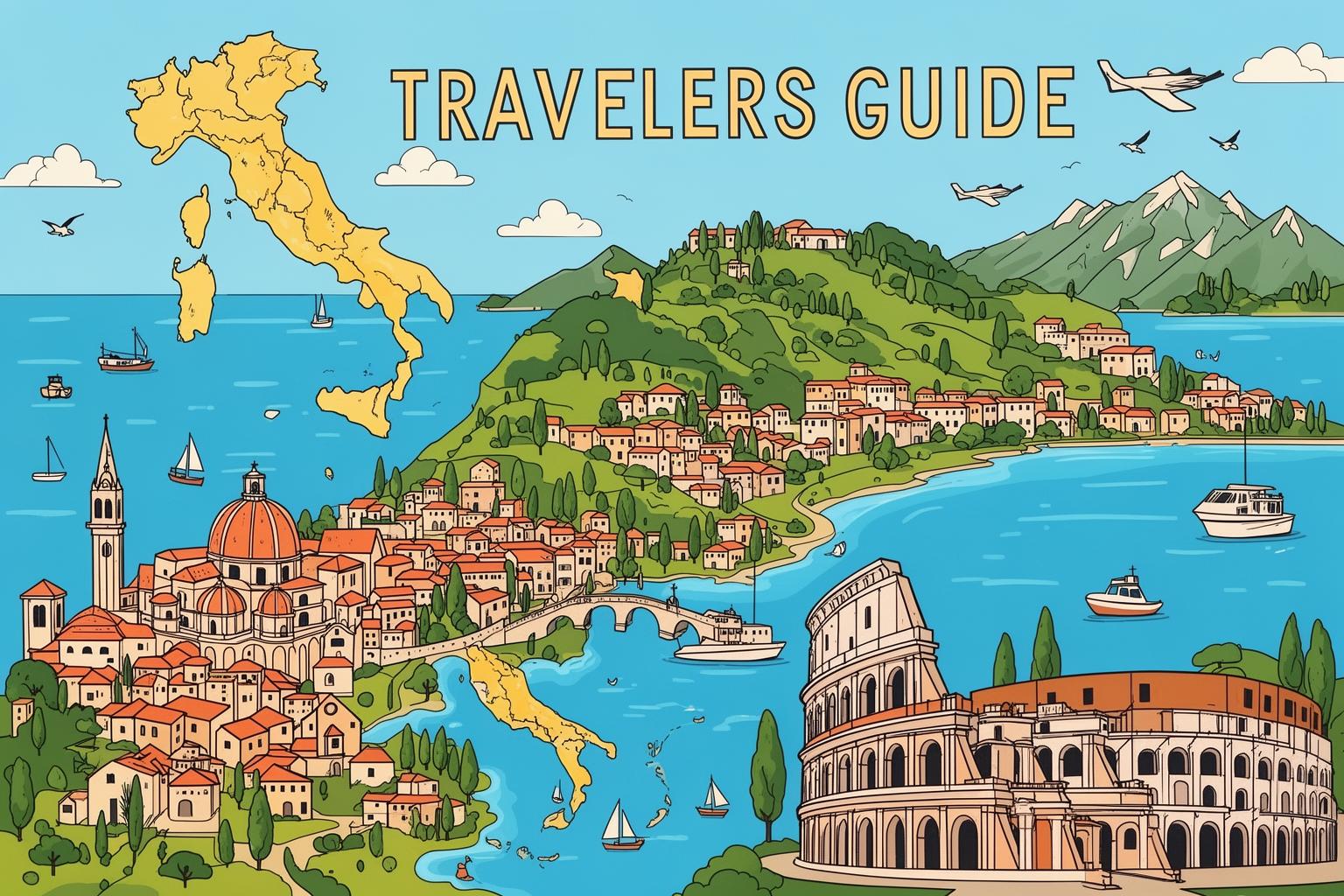
A journey following in Umberto Eco’s footsteps is more than just a tour; it represents a mode of perception. To genuinely honor his legacy, travelers should strive to see the world through his eyes—as a semiotician, a lover of lists, and a connoisseur of the genuine and the counterfeit.
Reading the World as a Text
Semiotics, Eco’s academic discipline, studies signs and symbols and how they are used or interpreted. At its essence, it’s about how meaning is created. Eco urged us to “read” the world around us as if it were a text. Architectural styles, recipes, political posters, maps—all of these are sign systems that can be deciphered. While traveling through Italy, try applying this perspective. The famous porticoes of Bologna are not merely convenient shelters but signify a particular kind of civic life, reflecting the relationship between public and private spaces. The design of a Renaissance piazza acts as a text about power, perspective, and humanism. By asking not only “What am I seeing?” but also “What does this mean?”, you shift from being a tourist to becoming an interpreter, actively participating in the creation of meaning. This is the essential Eco-inspired way of traveling.
The Vertigo of the List
Eco was famously fascinated by lists. He viewed them not as dull tools for organizing information but as creative acts, a way to wrestle with the world’s infinite complexity. He authored a book, The Infinity of Lists, celebrating the form—from Homer’s catalogs of ships to contemporary shopping lists. Lists, he claimed, create order from chaos but also hint at what has been excluded and at the endlessness beyond their limits. As you travel, embrace making lists. Don’t merely take photographs; compile lists. List the various pasta shapes seen in a Bologna shop window. List the scents of the Quadrilatero market. List the titles found in a dusty Turin bookshop. List the heraldic symbols in the Archiginnasio. This practice sharpens your attention, helping you notice details that might otherwise go overlooked. It’s a way of cataloging your unique experience of a place, constructing a personal text of your journey.
Embracing the Fake
In his essay collection Travels in Hyperreality, Eco examined America’s obsession with crafting perfect, often enhanced replicas of reality—from wax museums to full-scale historical reconstructions. He was intrigued by the idea of the “authentic fake.” This concept can be a useful tool for travelers in countries like Italy, where the boundary between genuinely ancient, carefully restored, and outright tourist-trap can be blurred. Rather than dismissing something as “inauthentic,” ask what its falseness reveals. What does a restaurant with a “traditional” menu designed for tourists say about our romanticized notion of Italian cuisine? What does a restored medieval castle disclose about our yearning for a sanitized, picturesque past? For Eco, the hyperreal was more than just a curiosity—it was a sign exposing profound truths about our culture’s desires and anxieties. Adopting this viewpoint allows you to find meaning and insight in every experience, not only those deemed “authentic.”
This pilgrimage through Umberto Eco’s Italy is ultimately an inward journey. It is an invitation to engage more deeply with the world, to question our assumptions, and to find joy in the infinite, labyrinthine puzzle of history and culture. By following his path—from the fog-shrouded streets of his youth to the sunlit hills of his imagination—we learn that the destination is not a point on a map but a new way of seeing. It is a way of understanding that we are always wandering through a forest of symbols, and the greatest adventure lies in the act of interpretation itself.