It explodes onto the screen with a jolt of pure, uncut cinematic adrenaline. A group of men, sharp in their monochrome suits, sit around a diner table, dissecting Madonna’s ‘Like a Virgin’ with the analytical fervor of Talmudic scholars. This is the opening salvo of Quentin Tarantino’s 1992 masterpiece, Reservoir Dogs, a film that didn’t just kick down the door of independent cinema; it blew the door off its hinges, drenched it in gasoline, and flicked a lit match as it walked away in slow motion. The film is a masterclass in tension, a symphony of crackling dialogue and brutal consequence, all set against a backdrop that is as crucial as any character: the sun-scorched, unglamorous, and utterly authentic sprawl of Los Angeles. For the cinematic pilgrim, tracing the steps of Mr. White, Mr. Orange, Mr. Blonde, Mr. Pink, Mr. Blue, and Mr. Brown is not a tour of Hollywood landmarks. It’s a journey into the city’s workaday soul, into the very warehouses, diners, and desolate bridges that gave this blistering debut its gritty, undeniable reality. This is a pilgrimage for those who understand that the magic of movies is often found not in the studio backlot, but on a real street corner, under the hum of power lines and the indifferent gaze of the California sun. Here, in the forgotten corners of the City of Angels, the echoes of K-Billy’s Super Sounds of the Seventies still linger on the breeze, and the ghosts of the diamond heist are waiting.
For a different kind of cinematic pilgrimage that also explores the profound connection between a city and its stories, consider the unseen Paris of Michael Haneke’s ‘Cache’.
The Heart of the Heist: The Warehouse
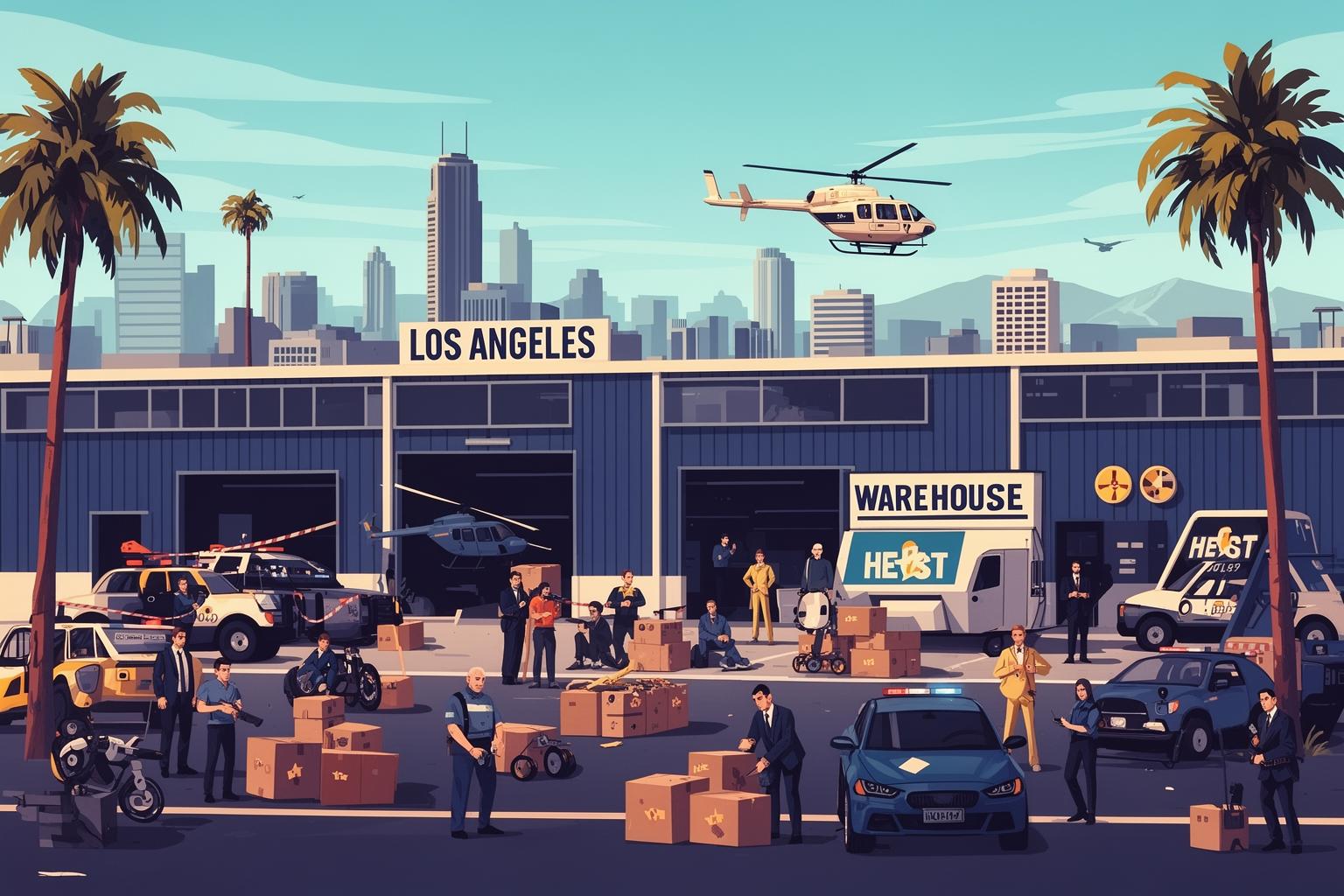
Every major tragedy demands its setting, and for Reservoir Dogs, that setting is a bleak, nondescript warehouse—a purgatory of brick and dust where the failed diamond heist unravels amid a storm of paranoia, blame, and violence. This location forms the heart of the film, a pressure cooker where alliances are questioned and destinies are determined. Most of the film’s duration unfolds within these four walls, showcasing Tarantino’s theatrical background and his talent for extracting epic drama from a confined environment. This decision was influenced as much by budgetary limits as by a brilliant artistic choice, directing full attention to the characters and their sharp, piercing dialogue. However, this wasn’t just any warehouse. The chosen site for the ill-fated meeting has its own history and atmosphere, adding a layer of dark irony that even Tarantino may not have entirely anticipated.
Finding the Unfindable: Pat & Lorraine’s Mortuary
The actual location used as the gang’s hideout was not a warehouse but a former mortuary at 2312 West Florence Avenue in South Los Angeles. This building, once the Pat & Lorraine’s Funeral Home, lends an almost grimly ironic undertone to the scenes onscreen. In this space, designed for the dead, Mr. Orange slowly bleeds out, Marvin Nash is subjected to torturous torment, and the climactic, bloody shootout unfolds. Knowing that the setting was once a place for final rest casts a chilling shadow over the film. The building’s long, open layout and stark industrial ambiance perfectly suited the film’s requirements. The large roll-up door for car entrances, distinct office rooms, and the broad, empty floor all reinforce a sense of a space that is at once a refuge and a tomb.
Visitors today will note that the building no longer retains the funeral home’s name. It has been repurposed by various businesses over the years, its exterior altered by time and commerce. Yet the core structure remains intact. Standing on the sidewalk of Florence Avenue—a busy street far removed from the film’s claustrophobic tension—one can still discern the building’s outline. You can imagine Mr. Pink fleeing in panic, or Mr. Blonde strolling in calmly with his grim trophy. The neighborhood itself exemplifies the Los Angeles Tarantino depicted—not the glamour of Beverly Hills, but the genuine, working-class soul of the city. The atmosphere is filled with the sounds of traffic and the vibrant pulse of a bustling community. To stand here is to sense the dissonance between the ordinary reality of the location and the extraordinary, violent fiction enacted within its walls. It is a profound moment for any fan—a tangible connection to the raw intensity that defines the film.
The Art of Confinement: Staging the Drama
Inside this mortuary-turned-warehouse, Tarantino and his director of photography, Andrzej Sekuła, developed a visual language of confinement. The camera frequently remains low, fostering a feeling of being trapped alongside the characters. The long, uninterrupted takes, especially during the charged dialogue scenes, allow the performances to flow and intensify. Consider the standoff between Mr. White and Mr. Pink, their body language dripping with suspicion as they pace the concrete floor. The space is utilized to brilliant effect. Although the empty coffins and embalming equipment reportedly still present during filming were covered up, their ghostly presence permeates the film’s essence. The central open area becomes an arena, while the smaller, cluttered office where Joe Cabot and Nice Guy Eddie plot and panic feels like a separate, more controlled domain. Michael Madsen’s infamous dance to “Stuck in the Middle with You” is made all the more eerie by the stark, indifferent emptiness of the surrounding warehouse. It becomes a stage for madness, a blank slate onto which he projects his chilling charisma. The building itself acts as a character—its silence magnifying the screams, its shadows concealing betrayals, and its cold floor cradling the dying. Choosing this particular location was a stroke of genius, a cinematic treasure that transformed a low-budget thriller into a timeless work of art.
Before the Bloodshed: The Pre-Heist Meetups
The moments leading up to the crime are just as iconic as its bloody aftermath. These scenes set the tone, introduce the characters, and plant the seeds of distrust that later erupt into full-scale carnage. Tarantino skillfully uses mundane, everyday settings to anchor his hyper-stylized dialogue and larger-than-life characters. The diner and the office serve as the calm before the storm, the ordinary world the gang is about to disrupt. Visiting these locations offers a unique kind of pilgrimage, a chance to step into the film’s world before it was marked by betrayal and violence.
The “Like a Virgin” Debate: Pat & Lorraine’s Coffee Shop
The film’s unforgettable opening scene doesn’t take place in the eponymous funeral home but rather in a classic, unpretentious diner. It’s where we first meet the crew, where Mr. Brown delivers his thesis on Madonna, and where Mr. Pink asserts his principled refusal to tip. This iconic spot was a real diner located at 4720 Eagle Rock Boulevard in Los Angeles’s Eagle Rock neighborhood. At the time of filming, it was a straightforward, no-frills coffee shop—the perfect setting for a group of criminals sharing one last meal before business. The long counter, vinyl booths, and large windows overlooking the street are forever etched into the memories of film fans everywhere.
Today, the location has undergone multiple changes. It no longer operates as the same coffee shop, having changed owners and names over the years, including a period as a French café called Café Beaujolais. Though the interior has been remodeled and the sign now bears a different name, the building’s footprint and its corner position at Eagle Rock and Westdale Avenue remain the same. Visitors can still soak in the neighborhood vibe, which has evolved from a sleepy suburb into a trendy, lively community known for its independent shops, bars, and restaurants. Standing outside, one can almost hear the clatter of cutlery and murmurs of conversation, punctuated by Joe Cabot’s command to “let’s go to work.” Visiting this corner is a pilgrimage to the very origins of the Tarantino universe, where his distinctive style of dialogue—pop-culture savvy, profane, and deeply human—was first unleashed. You can grab a coffee nearby, sit on a bench, and reflect on the nature of tipping, feeling for a moment like one of the crew.
Planning the Perfect Crime: Joe Cabot’s Office
The planning scenes, where Joe Cabot assembles his team and assigns them their colorful code names, unfold in a stark, businesslike office. These moments are essential for establishing the group’s power dynamics and the professional, albeit ruthless, nature of the Cabot crime family. Though many assume these interiors were filmed at a different location, they were actually shot in a section of the same Florence Avenue mortuary, cleverly redressed to resemble a separate office building. This was another brilliant cost-saving tactic that also helped maintain the film’s cohesive feel.
However, the exterior world that defines the gang’s Los Angeles is vividly captured by another significant site: the Belmont Tunnel and Toluca Substation. While not the actual office location, the gritty, historic, and dilapidated LA infrastructure perfectly embodies the urban landscape the characters inhabit. The Belmont Tunnel, once part of the Pacific Electric Railway system, was a graffiti-scarred, abandoned landmark in the early 1990s—a symbol of the city’s forgotten past. Its raw industrial decay serves as the spiritual home of the film’s aesthetic. The driving sequences, establishing shots, and overall mood are steeped in the atmosphere of locations like this. Today, the area has seen considerable redevelopment, with sections of the old right-of-way converted into parks and public spaces. Yet, the ghosts of the Red Car trolleys—and, by extension, the black-suited gangsters—still linger. Walking through this part of the city reveals layers of LA history, from early 20th-century transit ambitions to the urban decay of the ’90s and its current renewal. It’s a reminder that the Los Angeles of Reservoir Dogs was a real, breathing city in transition, full of forgotten places ripe for cinematic reinvention.
On the Streets of Los Angeles: The Getaway and the Aftermath
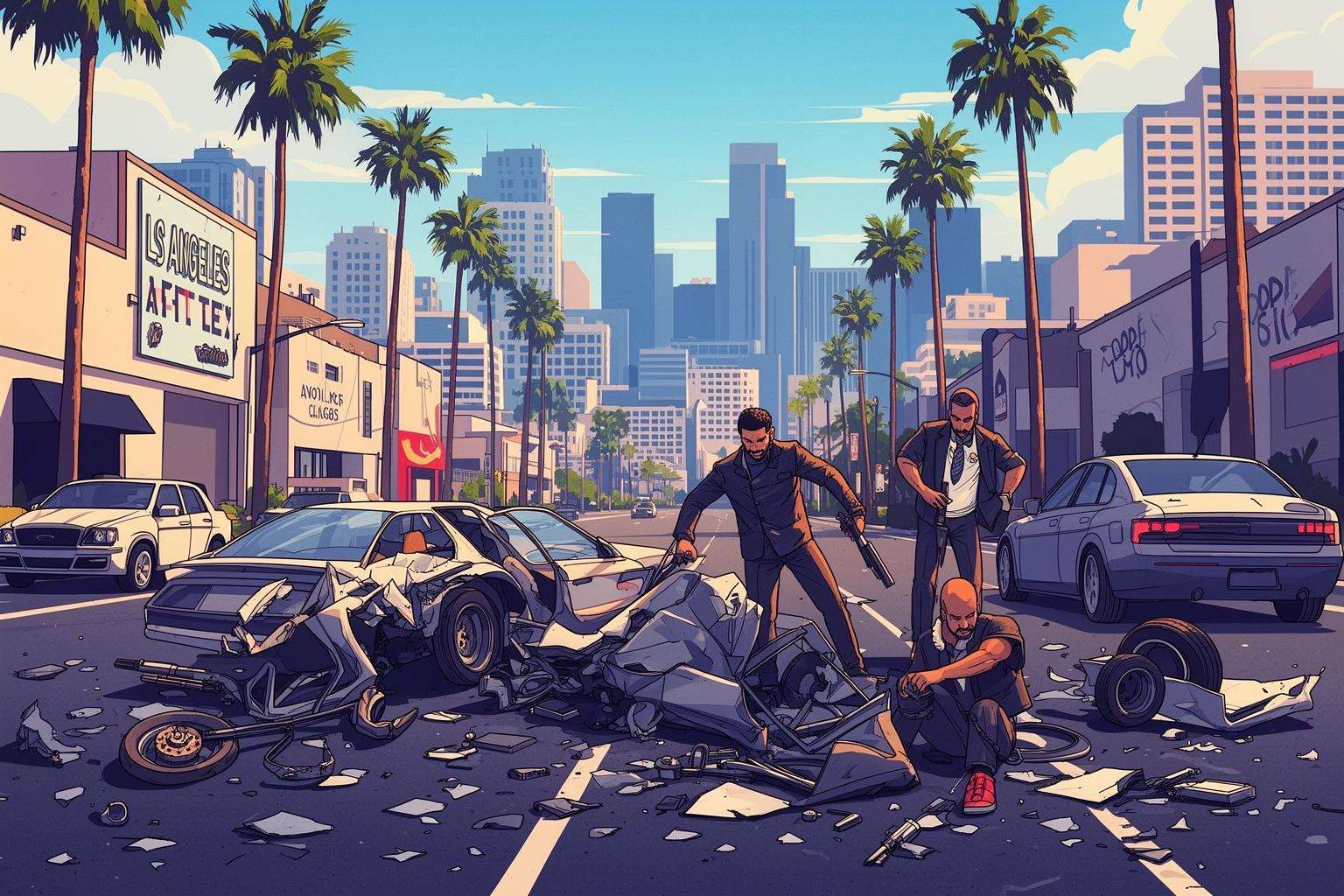
When the heist goes awry, the film bursts beyond the confines of the jewelry store (a location never depicted on screen) onto the sun-bleached, relentless streets of Los Angeles. The chase and escape scenes unfold as a frantic, desperate ballet of screeching tires and gunfire, revealing a side of LA far removed from the palm-lined Hollywood boulevards. These sequences are rooted in the geography of specific neighborhoods, making them thrillingly authentic and providing a clear route for the modern-day pilgrim to follow.
Mr. Pink’s Escape: The York Boulevard Chase
Steve Buscemi’s Mr. Pink arguably has the most cinematic escape. After fleeing the scene, he engages in a running gun battle with the police and executes a desperate carjacking. This entire sequence was shot along York Boulevard, mainly between Avenue 50 and Avenue 51, in the Highland Park neighborhood. This stretch of road, with its low-slung, mid-century storefronts and expansive sky, transforms into a stage for chaos. The scene is a masterclass in street-level action, capturing the panic and adrenaline of the moment with raw intensity.
Visiting York Boulevard today offers a fascinating experience. Highland Park has seen significant gentrification since the early 1990s. The once-quiet street is now a lively center of trendy bars, boutique shops, art galleries, and acclaimed restaurants. Yet, the architectural DNA of the street endures. Many of the buildings featured in the film remain, their facades now adorned with vibrant colors and hosting new businesses. Walking this street is like stepping through time. You can stand on the exact corner where Mr. Pink shoves a woman out of her car and makes his escape. The feeling of the wide, sunlit boulevard stays the same, and with a bit of imagination, you can overlay the film’s frantic energy onto the chic, contemporary scene. It’s a powerful illustration of how a city evolves while preserving echoes of its past, especially a past immortalized on film.
Mr. Orange’s Desperate Drive: The Figueroa Street Viaduct
One of the film’s most emotionally charged moments is the agonizing drive as Mr. White desperately tries to soothe the gravely wounded Mr. Orange. Tim Roth’s performance is a symphony of pain and shock, set against the backdrop of the Figueroa Street Viaduct, particularly the section crossing the Los Angeles River near Riverside Drive. The bridge, with its distinctive arches and industrial grandeur, conveys a sense of motion and desperation as they speed toward the false refuge of the warehouse.
The Los Angeles River itself is a crucial part of the city’s cinematic identity. It is not a lush, natural waterway but a vast, concrete-lined flood channel, a testament to the city’s efforts to control nature. Its stark, brutalist appearance has made it a favored location for numerous films, from Grease to Terminator 2. In Reservoir Dogs, its presence reinforces the film’s gritty, urban reality. Driving across this bridge today is essential for any pilgrim. You can sense the rhythm of the car rolling over the expansion joints, see the concrete channel stretching on either side, and hear the city’s hum. Gazing at the skyline, you can almost hear Harvey Keitel’s desperate reassurances and Tim Roth’s strained gasps. It’s a moment of pure cinematic immersion, offering a chance to place yourself inside one of the film’s most powerful and heartbreaking scenes.
More Than Just a Bridge: The Viaduct in Cinema
The Figueroa Street Viaduct and its many sister bridges spanning the LA River are more than mere infrastructure; they are iconic elements of Los Angeles’ cinematic landscape. Their blend of industrial decay and architectural form has made them symbols of the city’s gritty underbelly. Directors have used these bridges to stage car chases, secret meetings, and moments of intense reflection. By filming here, Tarantino was not simply choosing a convenient location; he was tapping into a rich cinematic tradition. He positioned his story within a familiar visual context—a city of concrete and steel, filled with desperate people in desperate circumstances. To understand the viaduct’s role in Reservoir Dogs is to grasp its importance in the broader narrative of Los Angeles as portrayed on screen. It stands as a working-class landmark, a silent witness to countless fictional dramas, and a key stop on any tour of the city’s cinematic heart.
The Unseen and the Implied: Expanding the World
A pilgrimage to the locations of Reservoir Dogs isn’t confined to physical spots you can locate on a map. The film’s world is also shaped by unseen elements and cultural contexts that are equally crucial to its identity. The film’s brilliance lies in its ability to craft a vast, dangerous world that exists nearly entirely off-screen—a world we engage with through dialogue, sound, and the cultural atmosphere of the era.
K-Billy’s Super Sounds of the Seventies
The most significant unseen location in the film is the radio station airing “K-Billy’s Super Sounds of the Seventies.” Hosted by the deadpan comedian Steven Wright, the DJ delivers the film’s memorable soundtrack and acts as its Greek chorus. The radio is the sole consistent connection the characters—and the audience—have to the outside world once they are trapped in the warehouse. As tensions escalate inside, the upbeat, groovy tunes from the radio create a striking and brilliant contrast. The most famous example, naturally, is the use of Stealers Wheel’s “Stuck in the Middle with You” during the torture scene, a moment of such shocking and darkly comic genius that it has become one of the most iconic scenes in modern cinema. The radio station functions as a virtual space, a soundscape that defines the film’s cool, retro vibe. A true pilgrim can recreate this experience anywhere—by crafting a playlist of the film’s soundtrack and listening to it while traveling between the physical locations—making it an essential part of the journey and fully immersing oneself in the sonic atmosphere Tarantino so masterfully assembled.
The Spirit of 90s Independent Film
To truly grasp the significance of Reservoir Dogs locations, one must understand the context in which it was created. The early 1990s marked a golden era for American independent cinema, driven by the rise of the Sundance Film Festival and a generation of filmmakers eager to tell stories beyond the Hollywood studio system. This movement was defined by a raw, do-it-yourself aesthetic. Choosing non-glamorous, real-world settings was not just a budgetary necessity; it was a powerful artistic declaration. It was a rejection of Hollywood polish in favor of authenticity. Films like Reservoir Dogs celebrated the beauty found in grit, discovering drama and poetry in the mundane urban landscapes of America. The warehouses, diners, and concrete riverbeds in the film embody this ethos. They are real places, inhabited by characters who felt real, delivering dialogue that, while stylized, captured a certain truth. A pilgrimage to these sites is a journey back to a pivotal moment in film history—when a new wave of cinematic storytellers redefined the rules and proved that a great story didn’t require a huge budget or soundstage, just a great script, a committed cast, and the perfect, forgotten corner of a real city.
A Modern Pilgrim’s Practical Guide
Embarking on a Reservoir Dogs pilgrimage through Los Angeles is a highly rewarding experience, but it does require some planning. The city is vast and notoriously car-dependent, with film locations scattered across a broad area. With a bit of preparation, you can navigate the city like a seasoned local and enjoy a safe, memorable, and respectful journey.
Getting Around the City of Angels
Simply put, a car is essential. Los Angeles is designed for driving, and attempting to visit these dispersed sites using public transportation would be both frustrating and time-consuming. Renting a car allows you the freedom to move at your own pace and truly immerse yourself in the city’s driving culture, which helps capture the film’s atmosphere. Plan your route ahead of time, grouping locations by neighborhood to maximize efficiency. For example, you can see the diner in Eagle Rock and the Mr. Pink chase scene in Highland Park on the same day since they’re relatively close. Be mindful of LA’s notorious traffic and try to travel during off-peak hours to avoid gridlock. The time spent driving between locations is part of the adventure, giving you a chance to experience the city’s diverse landscape through your windshield.
Respectful Observation
It’s important to remember these are not theme park attractions. They are real locations, some of which are private businesses or in residential areas. When visiting the warehouse on Florence Avenue or the former diner in Eagle Rock, show respect by taking photos from public sidewalks and never trespassing or disturbing those who live or work there. The locals are simply going about their daily lives. A successful pilgrimage leaves no trace and honors the communities inadvertently connected to cinematic history. Stay aware of your surroundings, especially in less-touristy neighborhoods, and exercise common sense and urban awareness to ensure your journey is safe and positive.
Beyond the Heist: Exploring the Neighborhoods
Your pilgrimage should be more than a list of film stops. Use the opportunity to explore the vibrant neighborhoods where the movie was filmed. Highland Park, where Mr. Pink escapes, is now one of LA’s trendiest areas. After strolling York Boulevard, check out its unique shops, enjoy a craft beer at a local brewery, or dine at one of its acclaimed restaurants. Eagle Rock, the location of the opening diner scene, offers a charming small-town vibe with an excellent selection of vintage shops and cozy cafés. Exploring these neighborhoods offers a fuller, richer understanding of the city and reveals how these areas have changed since they were captured on film in the early ’90s. This approach turns your trip from a simple location tour into a genuine cultural exploration of Los Angeles itself.
Walking the streets where Quentin Tarantino launched his groundbreaking debut is a unique form of time travel. It’s a journey back to the birth of a cinematic revolution and a deep dive into the spirit of a city constantly reinventing itself. These locations—the mortuary, the diner, the bridge—are not merely backdrops; they are the crucibles where a new kind of cinema was born. They are stark, unpretentious, and alive with the raw energy captured perfectly by the film. Standing on a corner in Highland Park or looking out over the concrete expanse of the LA River connects you to that energy, letting you feel the echoes of dialogue and the tension of the standoff. So put on your black suit, cue up the K-Billy’s playlist, and hit the sun-soaked freeways. You’re not just visiting filming spots; you’re stepping into the frame and becoming part of the story, a story that continues to captivate and electrify audiences worldwide. Just don’t forget to leave a good tip.