
The wind kicks up dust. A lone figure, shoulders broad and posture relaxed yet ready, stands at a crossroads. He tosses a stick into the air, lets it fall, and follows its direction into a town simmering with greed and violence. This is the moment the world met Sanjuro, the nameless ronin played by the electric Toshiro Mifune in Akira Kurosawa’s 1961 masterpiece, Yojimbo. The film is a cinematic earthquake, a perfect blend of samurai chanbara, American Western, and sharp-witted noir. It’s a story etched not just in character and action, but in place. The film’s setting—a desolate, wind-swept post town torn apart by two warring gangs—is as crucial a character as any swordsman. It’s a crucible where honor is tested and deception is currency. For decades, fans of Kurosawa and connoisseurs of cinema have longed to walk that dusty main street, to feel the tension hanging in the air, to stand where Sanjuro stood. But where do you find a ghost town, a place crafted from the mind of a master filmmaker? The original set, a sprawling and meticulously constructed world, has long since vanished into the mists of time. This, however, is not the end of the road for the pilgrim. This is the beginning. Our journey is not one of finding a precise location, but of chasing an atmosphere, of stepping into the historical and architectural soul that Kurosawa so brilliantly captured on screen. We will walk through preserved villages that breathe the air of the Edo period, explore the very landscapes that inspired the film’s stark beauty, and discover how you can, for a moment, inhabit the world of Yojimbo. This is a guide to finding the echoes of that cinematic town, a pilgrimage into the heart of Kurosawa’s Japan.
If you’re captivated by the idea of cinematic pilgrimages, you might also enjoy exploring the Tokyo of Lost in Translation.
The Soul of a Ghost Town: Crafting the World of Yojimbo

To know where we need to go, we must first grasp what Kurosawa created. The post town in Yojimbo was never a real location. It couldn’t be, as the story required a self-contained world—a pressure cooker of a town that Kurosawa could control completely and ultimately destroy. He needed absolute command over the environment, including the wind that relentlessly swept through the main street, carrying dust, leaves, and a foreboding sense of doom. He had to design the geography of the conflict precisely, with the silk merchant Seibei’s brothel at one end, the sake brewer Ushitora’s headquarters at the other, and the watchtower looming grimly in the center. Shooting in an actual historical town was impossible; the narrative called for fires, sword fights shattering buildings, and an all-encompassing atmosphere of decay that no town official would allow. Thus, Kurosawa’s famously exacting direction led the Toho Studios team to build one of the most ambitious and iconic sets in Japanese film history. It was constructed on the wide, open plains near Gotemba, beneath the imposing presence of Mount Fuji. This location was chosen for its bare, windswept quality, offering a raw canvas on which Kurosawa could craft his vision. The set was a life-sized town, a single long street lined with buildings made with meticulous historical accuracy, then artificially aged and distressed. The wood appeared weathered, roofs looked leaky and worn, and paper screens were torn. It was a production design masterpiece, embodying the town’s moral decay. Today, no trace of that set remains. It was a temporary world, built solely for filming and thereafter dismantled, existing now only in the film itself. The pilgrim’s challenge, then, is to discover the spirit of this fabricated place within the real, surviving remnants of old Japan. We search for the textures, architectural language, and atmospheric mood that inspired its creation.
A Journey Back in Time: The Open Air Museum of Old Japanese Farmhouses (Nihon Minka-en)
Our first and most essential destination lies not in the shadow of Mount Fuji, but nestled within a surprisingly lush, green park in the city of Kawasaki, just a short train ride from central Tokyo. Here, you will find Nihon Minka-en, also known as the Japan Open-Air Folk House Museum. This is no conventional museum filled with artifacts behind glass cases; instead, it is a living, breathing village from the past. Over twenty authentic traditional Japanese buildings, mainly from the Edo Period (1603–1868), have been carefully transported from various parts of Japan and reconstructed here. They are preserved not as sterile exhibits but as tangible pieces of history you can walk through, touch, and experience firsthand. For the Yojimbo pilgrim, this site is sacred ground. Although not an actual filming location, it arguably comes closest to capturing the aesthetic and atmosphere of Kurosawa’s set. The museum serves as a repository of architectural styles, materials, and spatial arrangements typical of the era depicted in Yojimbo. Here, the cinematic illusion feels most vivid and real.
Why Minka-en? The Resonance of Kurosawa’s Japan
The moment you pass through the entrance and step onto the winding earthen paths of Minka-en, the modern world begins to fade away. You are embraced by the deep, earthy scent of thatched roofs, the aroma of aged wood, and the cool, damp air lingering in the shade of ancient eaves. Surrounding you are the sounds of birdsong, the rustle of bamboo groves, and the gentle creak of floorboards beneath your feet. It is a full sensory immersion into the environment Kurosawa aimed to recreate. Kurosawa was a master of texture: consider the rough grain of wooden posts Sanjuro leans on, the coarse fabric of kimonos, and the gritty dust. Minka-en is a symphony of these textures. You can run your hand over the massive, darkened pillars of a farmhouse, smoothed by centuries of use; admire the intricate weaving of rice straw in a thick thatched roof, a craft handed down through generations; and feel the chill of packed earth floors in a merchant’s home. The play of light and shadow here is quintessentially Kurosawa. Sunlight filtering through latticed windows creates complex patterns on interior walls, while deep shadows pool beneath heavy roofs, forming pockets of mystery and concealment—just as Sanjuro exploited shadows to his advantage. It is in these details that the film’s spirit resides. The museum invites you to see the setting not merely as a backdrop but as an active participant in the drama—a core principle in Kurosawa’s filmmaking.
Exploring the Scenes: Key Structures and Views
As you explore Minka-en, several buildings will immediately evoke scenes from Yojimbo. The path winding through the Shinetsu region’s cluster of houses resembles a village lane so closely that you can almost envision the tense standoff between Seibei’s and Ushitora’s men unfolding here, the air thick with silent threats. Be sure to visit the Kitamura House, originally from Hadano in Kanagawa. As a village headman’s residence, it conveys authority through its spacious rooms, formal entrance, and solid construction—much like the headquarters of the two gang leaders. You can step inside, remove your shoes, and walk across polished wooden floors. Sitting in the main room and gazing out at the garden, you can almost overhear the whispered strategies of henchmen plotting their next move. The Suzuki House, a vast and impressive farmhouse from Fukushima, provides another vivid connection. Its immense scale and cavernous, smoke-filled interior, centered around an irori hearth, evoke the communal spaces where ronin and travelers might gather. Picture Sanjuro sitting quietly by such a fire, observing locals and gathering the vital intelligence for his plans. Don’t miss the Hara House, a robust structure combining living quarters and workspace. Its practical, no-nonsense design resonates with the brutal, pragmatic world of Yojimbo. Standing before it, you can appreciate the architectural vocabulary of power and influence Kurosawa harnessed so effectively in his set design.
Capturing the Kurosawa Style
For photographers and cinephiles alike, Minka-en is a creative playground. Kurosawa famously used long telephoto lenses, which compressed space, flattened perspectives, and made background elements appear closer and more imposing. You can mimic this effect by zooming in on a distant farmhouse from one end of a path, capturing layers of roofs and walls between you and your subject. This method creates a sense of claustrophobia and inevitability, as if the characters are trapped within the environment’s frame. Pay attention to composition. Kurosawa often employed strong diagonal lines and framing within frames to craft dynamic and visually stunning shots. Use the posts and beams of a house to frame another building beyond. Shoot from a low angle, looking upward at imposing roofs, making the structures feel dominant and intimidating—reflecting how the town itself looms over its inhabitants. Wait for ideal lighting. Overcast days offer soft, diffused light that enhances the rich textures of wood and thatch, echoing the film’s moody atmosphere. In contrast, late afternoon’s harsh sunlight creates dramatic shadows and bright highlights, underscoring Kurosawa’s use of contrast for effect. Minka-en is not merely a place to see old houses; it’s a place to witness the world through a Kurosawa lens.
The Spirit of the Samurai Road: Exploring the Kiso Valley and the Nakasendo Trail
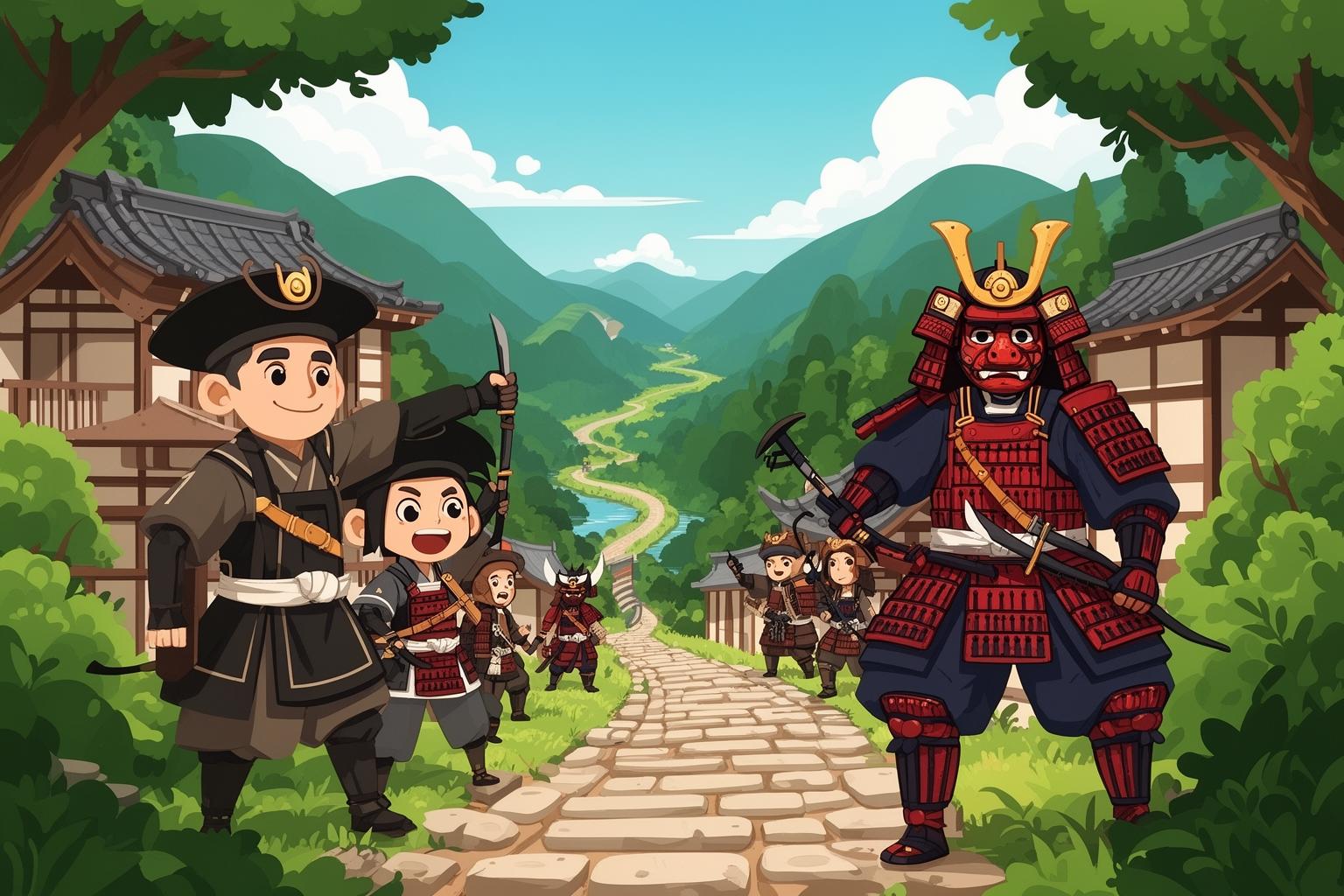
While Minka-en supplies the architectural language of Yojimbo, capturing the film’s narrative spirit demands a different kind of journey: that of the solitary traveler. Sanjuro is a wanderer, a ronin drifting from place to place along Japan’s ancient highways. To truly follow in his footsteps, one must leave the city behind and venture into central Japan’s mountains, to the Kiso Valley and the remnants of the old Nakasendo Trail. The Nakasendo was one of the five principal routes of the Edo period, linking the shogun’s capital Edo (modern-day Tokyo) with the imperial capital Kyoto. Unlike the coastal Tokaido route, the Nakasendo wound through the mountainous interior. It was a route for feudal lords, merchants, pilgrims, and of course, masterless samurai. Along this path, sixty-nine “post towns” (shukuba) were established to offer travelers lodging, food, and rest. These towns form the historical foundation for Kurosawa’s fictional setting.
The Real Post Towns of the Edo Period
Many of the Nakasendo’s post towns have succumbed to modernization, but a few—especially those in the Kiso Valley—have been preserved with remarkable care. The most renowned among them are Magome-juku and Tsumago-juku. Visiting these places is like stepping onto a film set, yet one that is completely real and has endured for centuries. Tsumago-juku, in particular, seems suspended in time. Strict preservation laws forbid telephone poles or power lines along the main street. The dark wood buildings with intricate latticework, the stone-paved road, and the quiet water channels running beside the street evoke the world of Yojimbo brought to life. As you walk the main street, you pass old inns (hatago), noodle shops, and craft stores, all housed in authentic Edo-period buildings. The structures are modest, functional, human-scaled, and deeply connected to the landscape. History is palpable in the worn stone steps and the creaking inn signs swaying in the breeze. Magome-juku, perched on a steep hillside, offers a different but equally captivating experience. Its stone-paved path snakes uphill between shops and inns, flanked by working water wheels. The vistas from the top, overlooking the surrounding Kiso mountains, are breathtaking and evoke the vast, untamed terrain that a traveler like Sanjuro would have had to traverse.
Feeling the Isolation and Tension
To truly embody the spirit of the wandering ronin, one must hike the Nakasendo Trail section connecting Magome and Tsumago. This roughly eight-kilometer trek takes two to three hours, winding through cedar and cypress forests, past waterfalls, and alongside small farms. As an outdoor specialist, I find this segment of the pilgrimage essential. While not overly demanding, the trail offers a profound sense of journey. In the forest’s quiet, with only the sound of your footsteps, you begin to grasp the traveler’s isolation. You sense the anticipation of arriving at a town after a long walk, the relief of glimpsing rooftops through the trees. This cadence defines Sanjuro’s life. The experience is most evocative in early morning or late evening when day-trippers have left. Stroll through Tsumago after dusk, when paper lanterns cast a warm, flickering glow on the dark wooden buildings. The streets are nearly deserted, and silence is broken only by the running water channels. In this setting, Yojimbo’s tension becomes tangible. Every dark alley feels laden with secrets, every closed shutter suggests a possible threat. You sense your outsider status, an observer just as Sanjuro was when he first stepped into his troubled town. This is the emotional heart of the film, and it can be found here, on the old samurai road.
Practical Pilgrim’s Guide: Planning Your Yojimbo Journey
Embarking on this pilgrimage requires some planning, but the experience is well worth the effort. The two main destinations, Nihon Minka-en and the Kiso Valley, are located in different regions of Japan, so it’s best to plan them as separate trips or as parts of a longer journey.
Accessing Nihon Minka-en
Nihon Minka-en is surprisingly easy to reach from central Tokyo, making it an excellent option for a day trip. It’s situated within Ikuta Ryokuchi Park in Kawasaki City, Kanagawa Prefecture. The easiest way to get there is by taking the Odakyu Odawara Line from Shinjuku Station. You can board either a Rapid Express or Express train to Noborito Station, then transfer to a local train for one stop to Mukogaoka-Yuen Station, or simply take a local train directly to Mukogaoka-Yuen. From the station’s south exit, it’s a pleasant 15-minute walk, or you can opt for a short bus ride. The museum is generally open from 9:30 AM to 5:00 PM (with slightly shorter hours during winter) and is closed on Mondays. Admission is very affordable. I highly recommend dedicating at least half a day to Minka-en—rushing through it would be a mistake. Take your time to wander aimlessly, sit inside the houses, and absorb the atmosphere. There is an excellent soba noodle restaurant on site, located in one of the historic buildings, providing a perfect spot to relax and enjoy a meal that fits the setting.
Journeying to the Kiso Valley
The Kiso Valley spans Nagano and Gifu Prefectures, nestled in the mountains between Tokyo and Kyoto. It is typically accessed via the JR Chuo Main Line. From Tokyo, take the Limited Express Azusa train to Shiojiri, then transfer to a local line heading toward Nakatsugawa. From Nagoya, you can take the Limited Express Shinano directly. To reach Magome, get off at Nakatsugawa Station and take a bus. For Tsumago, disembark at Nagiso Station and take a bus or taxi. The best time to visit depends on your preferences. Spring offers mild hiking weather and fresh greenery, while autumn—from late October to mid-November—is spectacular, with the mountains ablaze in red, orange, and yellow hues. Winter creates a magical scene with snowy landscapes, but be prepared for cold temperatures and potentially icy trails. For the hike between Magome and Tsumago, wear comfortable walking shoes. The trail is well maintained but includes some uneven stone sections. A baggage forwarding service is available between the tourist offices of these two towns, which is highly convenient if you plan to stay overnight and want to travel light.
Local Flavors and Stays
To fully immerse yourself, I strongly suggest staying overnight in a traditional inn (ryokan or minshuku) in either Tsumago or Magome. This lets you experience the towns at their most atmospheric—after sunset. A stay in a ryokan usually includes a multi-course kaiseki dinner and a traditional Japanese breakfast, offering a thorough taste of local cuisine. While in the Kiso Valley, don’t miss local specialties like gohei mochi: pounded rice coated in a sweet and savory walnut-miso or sesame sauce, then grilled on a skewer. It’s the perfect snack for a tired traveler. The region is also famous for its delicious soba noodles. Enjoying a simple, rustic meal in one of these ancient towns offers a profound connection to the wandering spirit of the ronin, for whom a warm meal and a safe place to rest were invaluable.
Kurosawa’s Enduring Vision: Why Yojimbo Still Resonates

Yojimbo is more than merely a samurai film; it serves as a timeless allegory. It tells a story about the corrupting power of greed, the foolishness of relentless conflict, and the influence one cynical yet ultimately principled individual can exert on a broken system. The film’s themes remain as relevant today as they were in 1961. Visiting these locations goes beyond simple cinematic tourism—it is an act of connection. By walking the grounds of Nihon Minka-en, you engage with the rich history of Japanese craftsmanship and rural life that shaped the visual world of Kurosawa. By hiking the Nakasendo and spending a night in Tsumago, you experience the historical reality of the travel and hardship that defined the Edo period. You come to understand that Kurosawa wasn’t merely crafting a fantasy; he was capturing the essence of a real time and place, heightening its drama to tell a universal story. This pilgrimage invites you to step through the screen. It offers a chance to touch the rough-hewn wood, breathe in the scent of the forest after rain, savor the simple roadside food, and stand in a quiet, lantern-lit street feeling the weight of history around you. In these moments, the ghost town from the film feels remarkably near. The wind stirs, rustling the leaves, and for a fleeting moment, you might expect to see a lone samurai, hands tucked into his kimono, a toothpick in his mouth, watching you with a wry, knowing smile. The journey awaits your taking.