Some films are watched. Others are felt, experienced, and carried with you long after the credits roll. Hany Abu-Assad’s 2005 masterpiece, Paradise Now, is firmly in the latter category. It’s a film that doesn’t just tell a story; it pulls you into the suffocating closeness of its world, into the final, fraught hours of two young men, Said and Khaled, preparing for a suicide mission in Tel Aviv. The film’s power lies not in its politics, but in its profound, unrelenting humanity. And the bedrock of that humanity is its sense of place. The ancient, labyrinthine streets of Nablus and the sun-drenched, modern avenues of Tel Aviv are not mere backdrops; they are characters in their own right, shaping the destinies of the souls who walk them. To embark on a journey to these locations is to do more than simply visit a film set. It is a pilgrimage into the heart of a complex reality, a quest to understand the geography of hope and despair. It’s a journey that challenges you, changes you, and forces you to confront the visceral textures of a world seen so often through the sterile lens of news reports. This is a walk along the edge, tracing footsteps etched not just onto celluloid, but into the very stone and sand of the Holy Land.
If you’re inspired to explore other films where the landscape is a central character, consider embarking on a pilgrimage to the wild filming locations of The Revenant.
Nablus: The Heart of the Narrative
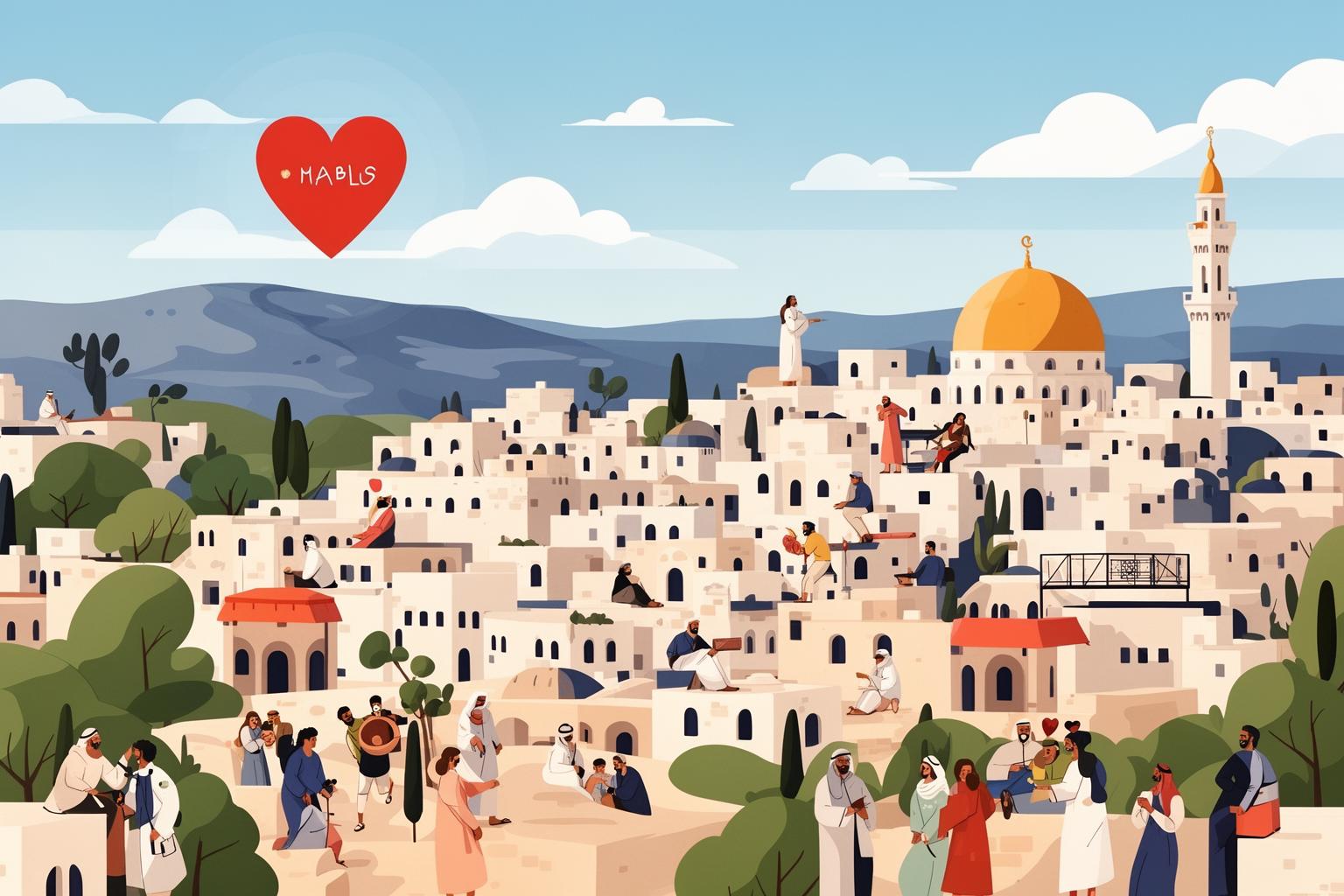
The story of Paradise Now begins and breathes life in Nablus. This ancient city, nestled between the twin mountains of Ebal and Gerizim, serves as the film’s crucible. It’s where friendships are forged in grease-stained mechanic shops, where life unfolds with a vibrant, chaotic rhythm, and where desperate decisions are made in the quiet seclusion of hidden courtyards. Director Hany Abu-Assad deliberately chose Nablus. During the Second Intifada, the period in which the film is set, its Old City, or kasbah, was a frequent flashpoint—its maze-like alleys symbolizing both sanctuary and entrapment. To visit Nablus today is to step directly into the film’s atmospheric world, a place where history is not a static museum piece but a living, breathing force.
The Atmosphere of the Old City
Stepping into the kasbah of Nablus is a sensory immersion. The air cools, shaded by centuries-old stone buildings that lean into one another, forming a canopy over the narrow streets. Sunlight filters through in dramatic shafts, illuminating dust motes dancing in the air. The soundscape is a rich tapestry: the rhythmic clang of a coppersmith’s hammer, the distant call to prayer from the Great Mosque, the chatter of vendors, and the laughter of children kicking a soccer ball against a weathered wall. The film captures this feeling of claustrophobia—the sense that the walls are constantly closing in—but it also conveys, and you feel viscerally when there, the sheer, unyielding pulse of life. This is not a ghost town; it is a city that has endured, a place of profound resilience. The scents of cardamom coffee, baking bread, and the sweet, enticing aroma of Nabulsi knafeh—the city’s legendary cheese pastry—drift from unseen kitchens and storefronts. It is easy to imagine Said and Khaled moving through these same passages, their internal turmoil a stark, silent counterpoint to the vibrant life swirling around them.
Tracing Said and Khaled’s Footsteps
While pinpointing exact, door-for-door filming locations is difficult, as many were chosen for their generic, representative quality, the spirit of their world is everywhere. The pilgrimage here is not about finding a specific plaque on a wall but about understanding the environment that shaped their final days.
The Mechanic’s Shop: A World of Routine
Said and Khaled’s life before their mission is one of routine, oil, and quiet desperation, embodied by the auto repair shop where they work. Though the specific shop is not a landmark, its echoes can be found throughout the industrial edges of Nablus. These are places of hard work with little reward, spaces where young men share cigarettes and dreams of a different life. The film uses this setting to ground its characters in a tangible reality. They are not abstract figures; they are working men, their hands stained with grease, their futures feeling as broken as the cars they are paid to fix. Exploring these areas gives a sense of the economic pressures and lack of opportunity that form a crucial, unspoken part of the film’s narrative. It is in the quiet moments between repairs, the long stares into the middle distance, that the seeds of their fateful decision are sown.
The Souk and the Streets of Life
At the heart of the Nablus experience, both in the film and in reality, lies the souk. This bustling, covered market is a river of humanity. Shopkeepers sit on stools, watching the flow of people while their stalls overflow with spices, olives, fresh produce, and glistening sweets. In the film, these public spaces are where the characters are most anonymous—part of a larger community yet isolated in their secret purpose. A walk through the Nablus souk today feels remarkably unchanged. One can stop at a stall for a glass of fresh-squeezed pomegranate juice, just as they might have done. You can taste the city’s famous tahini or buy a block of olive oil soap from a family-run factory that has operated for generations. It is here, amidst commerce and community, that the stark contrast in the film’s plot becomes most poignant. Life, in all its simple, beautiful, and chaotic glory, happens all around them—a life they are preparing to leave behind.
Homes and Hidden Courtyards
The film offers glimpses into the private, domestic world of Nablus. The traditional architecture of the Old City is built around interior courtyards, creating oases of calm and privacy away from the bustling streets. These spaces are where families gather, secrets are kept, and the characters steel themselves for what lies ahead. The final dinner Said shares with his family, fraught with unspoken goodbyes, resonates strongly in these quiet, domestic settings. While private homes are off-limits, one can appreciate the architectural philosophy from the outside—the heavy wooden doors, the ornate windows, and the feeling that the most important parts of life happen within these protective stone walls. This reflects a culture that values family and community, making the characters’ decision to separate from it all the more tragic.
The Cultural and Historical Canvas of Nablus
To fully appreciate the film’s setting, one must understand the historical weight Nablus carries. This is one of the world’s oldest continuously inhabited cities. It is the site of biblical Shechem, home to a significant Samaritan community on Mount Gerizim, and has been a major administrative and commercial hub through the Roman, Byzantine, and Ottoman eras. This history is felt in the stones of the kasbah, which contains several ancient mosques, churches, and Turkish-style hammams (bathhouses). The film is set during the Second Intifada (2000-2005), a period of intense conflict. Israeli military incursions into the Old City left scars, both visible and invisible, on the urban landscape and collective psyche. The film need not state this explicitly; it is embedded in the atmosphere—in the weary expressions of the older residents and the simmering anger of the young. For a visitor, understanding this context is crucial. It transforms a simple walk through a beautiful old city into a deeper engagement with a story of struggle, survival, and enduring identity.
The Journey: Crossing the Divide
The second act of Paradise Now centers on the journey itself—the dangerous, uncertain crossing from the familiar world into the one they aim to destroy. This transition is both physical and psychological, with the landscape playing a vital role in expressing this change. The film portrays the raw, rugged beauty of the West Bank, a land of rolling hills, ancient olive groves, and terraced farms, harshly divided by the infrastructure of occupation.
The Landscape of Separation
As Said and Khaled are driven toward the border, the camera captures the Palestinian countryside. These are lands cultivated for millennia, where the twisted trunks of olive trees stand as silent witnesses to generations of history. The film contrasts this organic, timeless beauty with the stark, modern geometry of the Israeli separation barrier. The wall—an iconic image in much of the region’s contemporary art and cinema—is more than a physical barrier; it is a psychological scar on the landscape. It symbolizes division, restricted access, and the daily humiliations of occupation that fuel the characters’ desperation. For travelers exploring the West Bank, encountering the wall is an unavoidable and profound experience. Whether it snakes through the hills outside Ramallah or cuts through neighborhoods in Bethlehem, its presence constantly reminds you of the fractured reality of this land. The film captures the essence of this journey: moving through a landscape that is both beautiful and broken.
The Checkpoint: A Cinematic and Real-World Limbo
The checkpoint serves as a central motif in the film—a place of tension, power struggles, and utter vulnerability. It is a liminal space, a non-place between two worlds where identity is reduced to a permit, an ID card, and the arbitrary judgment of a young soldier. The checkpoint scenes in Paradise Now are nearly unbearably tense, conveying the fear and helplessness that many Palestinians face daily. Visiting the West Bank today, you will likely encounter your own experience of crossing a checkpoint, such as the well-known Qalandia checkpoint between Ramallah and Jerusalem. Although your experience as a foreign passport holder will be vastly different and far easier, it offers a small, humbling insight into this reality. The advice for any traveler is straightforward: keep your passport ready, be patient, be polite, and stay observant. Avoid taking photos unless you are sure it is allowed. Witnessing the process—the long lines of workers waiting at dawn, the interactions between soldiers and civilians—provides a powerful, real-world context for the film’s portrayal of this critical and dehumanizing aspect of the conflict.
Tel Aviv: The “Paradise” on the Other Side

When Said finally crosses into Israel and arrives in Tel Aviv, the cinematic style shifts notably. The tight, claustrophobic framing of Nablus opens up to wide, expansive shots. The color palette brightens, and the sounds transition from the intimate bustle of the souk to the impersonal hum of a modern metropolis. Tel Aviv represents the “paradise” mentioned in the title—a realm of beaches, cafes, and a sense of freedom that is both enticing and unfamiliar to the protagonist. It is, in every respect, a different world, situated just a few dozen miles from Nablus yet separated by a vast divide of culture, politics, and experience.
A World Apart: The Beachfront and Cityscape
The contrast is immediate and striking. Said finds himself on a bus, gazing at a city that feels as if it belongs to another continent. The sleek, white Bauhaus buildings for which Tel Aviv is renowned line the streets. Young people in trendy clothes laugh and converse at sidewalk cafes. The ultimate destination—and the film’s most powerful symbol of this other world—is the beach. The vast, glistening expanse of the Mediterranean Sea symbolizes a freedom almost unimaginable in landlocked Nablus. The promenade, or Tayelet, is a lively thoroughfare of a different kind—joggers, families, tourists, all part of a relaxed, secular, and affluent society. The film uses this setting for Said’s moments of uncertainty and reflection. The open space of the beach stands as a stark contrast to his internal confinement and profound sense of alienation.
Filming in the Metropolis
Retracing Said’s path through Tel Aviv offers a surreal experience, as you move through busy, everyday locations that were depicted as the site of an impending tragedy.
Dizengoff Center and Kikar Dizengoff
The film’s climax takes place around Dizengoff Street, the commercial and cultural core of Tel Aviv. Kikar Dizengoff, or Dizengoff Square, with its iconic fountain and surrounding cafes, is the specific target referred to. This area epitomizes Tel Avivian life—a place where people shop, meet friends, and catch a movie. Standing in the middle of the square today, surrounded by the noise of traffic and conversation, it is chilling to recall the film’s tension. You see the crowds that Said sees—anonymous faces, each carrying their own story, completely unaware of the fate planned for them. The film masterfully employs the anonymity of the big city. In Nablus, everyone knows everyone; in Tel Aviv, Said is invisible, a ghost moving through a world that doesn’t notice him, which is both a tactical advantage and a profound source of his isolation.
The Promenade and the Mediterranean Shore
Many of the film’s most poignant scenes occur along the Tel Aviv coastline. After his plan initially fails, Said wanders beside the beach. Here, he interacts with an Israeli woman—a brief, fleeting moment of human connection that complicates his mission. Walking this same stretch of sand, from Gordon Beach down to Jaffa, is a quintessential Tel Aviv experience. The atmosphere is carefree and vibrant. The setting sun paints the sky in brilliant hues over the sea. To walk here with the film in mind is to be struck by the tragic irony of its title. This is a kind of paradise—a world of peace and prosperity. The tragedy the film explores lies in the forces that drive someone to want to destroy it, and the moral abyss that opens when one human being decides another’s paradise is the source of their own hell.
Navigating the Urban Maze
Said’s journey through Tel Aviv is one of confusion and discovery. He arrives at the central bus station, a notoriously chaotic and maze-like structure, and from there navigates the city with a mixture of awe and dread. Visitors can easily follow this journey themselves. The public bus system in Tel Aviv is efficient, and the grid-like layout of the city center makes it relatively easy to explore on foot. You can take a bus along Allenby Street, stroll through the Carmel Market, and head toward Dizengoff, experiencing the city’s rhythm just as Said does. Tracing his path allows you to feel the city’s scale and energy, and gain a deeper understanding of his overwhelming sense of being a stranger in a strange land.
The Unseen Locations and Thematic Depths
Some of the most pivotal scenes in Paradise Now unfold in places that are inaccessible to visitors—the secret safe houses, the rooms where the farewell videos are recorded. Yet, these hidden spaces lie at the heart of the film’s psychological drama and merit reflection on any pilgrimage.
The Safe House and the Videotapes
The film’s most haunting moments happen within the sterile, nondescript rooms where the protagonists are prepared for their mission. They are shaved, dressed in black suits, and made to shoot their “martyrdom” videos. These scenes are clinical and unsettling, stripping away all romantic notions and revealing the cold, manipulative reality beneath. These safe houses represent the covert world lurking beneath the surface of everyday life in Nablus. They are places of indoctrination, where ideology is forged into a rigid, unthinking resolve. Although you cannot visit these locations, their depiction in the film serves as a reminder that this struggle operates on multiple levels, many of which remain hidden, working quietly in the shadows of ordinary streets.
Suha’s World: Bridging Divides
Suha, the educated and well-traveled daughter of a renowned Palestinian leader, offers an essential counter-narrative. She embodies a different path: non-violent resistance and faith in a shared future. Her world, reflected in her modern apartment and car, stands in stark contrast to the harsh reality experienced by Said and Khaled. She navigates more freely between the Palestinian and Israeli spheres, symbolizing hope for connection and dialogue. Her presence in the film highlights the diversity within Palestinian society and the internal debates that shape it. She challenges the characters—and the audience—to reconsider the morality and effectiveness of their chosen course, adding a profound layer of intellectual and emotional complexity to the narrative.
The Director’s Vision: Hany Abu-Assad’s Nablus
It is important to recognize that the Nablus and Tel Aviv portrayed in the film are shaped by the artistic vision of Hany Abu-Assad. Born in Nazareth as an Arab citizen of Israel, Abu-Assad possesses a unique perspective that enables him to traverse both worlds. He selected Nablus specifically because its kasbah offered a perfect visual metaphor for his characters’ mental state: trapped, with no straightforward escape. His cinematography highlights this, employing tight, hand-held shots within the alleys of the Old City. In Tel Aviv, the camera retreats, using wide, static frames that accentuate the characters’ alienation in a vast and impersonal environment. Nablus is more than a setting; it acts as an active participant in the drama, its ancient stones resonating with the heavy history and conflict bearing down on the protagonists.
A Traveler’s Guide to a Complex Pilgrimage

Embarking on a journey to the locations featured in Paradise Now requires more than just a map; it demands sensitivity, awareness, and an open heart. This is not a typical movie tour but rather a gateway into one of the most complex and contested regions on Earth.
Practicalities and Sensitivities
The most common way to reach Nablus is from Jerusalem or Ramallah via shared taxis called servees. These provide an efficient and affordable mode of travel, offering a chance to experience the landscape and travel as locals do. The ideal time to visit is during spring (March-May) or autumn (September-November), when the weather is pleasant. When visiting Nablus, especially the Old City and religious sites, it is important to dress modestly. For both men and women, this means covering shoulders and knees, as a sign of respect for local culture. Above all, travel with humility. You are a guest in a place marked by a painful and ongoing history. The best approach is to be an observer and a listener, rather than a commentator. Your aim is to understand, not to judge or solve.
What to Expect on Your Journey
Prepare for a journey of contrasts. You will experience genuine hospitality, warmth, and generosity from the Palestinian people you encounter. At the same time, you will witness the harsh realities of occupation: checkpoints, settlements perched on hilltops, and a pervasive sense of political uncertainty. The experience can be emotionally challenging but also deeply rewarding. Allow yourself to be moved by what you see. Immerse yourself in the local culture. Savor the amazing food, from the heavenly knafeh to freshly baked taboon bread. Visit a soap factory and purchase crafts from local artisans. These interactions bring the film’s backdrop to life, connecting you to the resilient spirit of those who call this land home.
Beyond the Film: Deepening the Experience
While in Nablus, take time to explore beyond the Old City’s boundaries. A visit to Mount Gerizim offers breathtaking views and a chance to encounter the ancient Samaritan community. Nearby, Jacob’s Well holds profound religious significance for Christians. In Tel Aviv, explore Jaffa (Yafo), the ancient port with its flea market and art galleries, to gain insight into the area’s deeper Arab history before 1948. Reading works by both Palestinian and Israeli authors can provide a range of perspectives that enrich your understanding. This journey is an opportunity to learn, and the more context you gather, the more meaningful your pilgrimage will become.
The Lingering Questions of Paradise
A journey through the world of Paradise Now offers no easy answers. Instead, it leaves you with lingering questions. It compels you to stand in the sunlit square of Tel Aviv and sense its vibrant peace, then to stand in the shadowed alleys of Nablus and feel its profound historical rhythm. The film’s brilliance lies in collapsing the distance between these two worlds, revealing them as inextricably and tragically connected. Visiting these places has the same effect. It turns abstract headlines into tangible streets, political debates into human faces. You walk away from this pilgrimage with a heavier heart, perhaps, but also a more open one. You leave with the film’s final, haunting image—a man on a bus, his destination unknown, city lights reflected in his eyes—a powerful reminder that in this land, the path between paradise and oblivion is frighteningly short, and the questions of justice, humanity, and peace remain painfully unresolved.