To read Honoré de Balzac is to plunge headfirst into the swirling, intoxicating, and often ruthless world of 19th-century France. He wasn’t just a novelist; he was a sociologist, a historian, and an architect of an entire fictional universe, La Comédie humaine, populated by a sprawling cast of over two thousand characters whose lives intertwine across ninety-one novels and stories. They are driven by love, greed, ambition, and despair, their destinies forged in the drawing rooms of Parisian high society, the dusty offices of provincial lawyers, and the desperate garrets of aspiring artists. But to truly understand the soul of his work, to feel the pulse beneath the prose, you must walk the ground he walked. You must breathe the air he breathed. A pilgrimage to the places that shaped Balzac is more than a tour; it’s a journey into the very heart of his human comedy, where the cobblestones still whisper tales of social climbers and fallen aristocrats, and the walls of quiet country châteaux hold the secrets of his creative genius. This is a path that leads from the frenetic energy of Paris, the undeniable main character of his epic, to the tranquil solitude of the Loire Valley, a refuge where his most potent ideas took root. It’s an invitation to see France through his eyes, to discover the tangible world that fueled an unparalleled imagination.
For more on how landscapes shape literary worlds, explore our guide to a literary pilgrimage through Arundhati Roy’s India.
The Heart of the Human Comedy: Balzac’s Paris

Paris was more than just a backdrop for Balzac; it was a living, breathing entity. It was a crucible where fortunes were won and lost in moments, a maze of social strata, and a stage for the grandest human dramas. The city he experienced was full of sharp contrasts, a place of dazzling balls in the Faubourg Saint-Germain and dire poverty in the concealed alleyways of Le Marais. To walk through Paris with Balzac in mind is to perceive the city as a complex text, each neighborhood a distinct chapter in his expansive story. You can sense the presence of Eugène de Rastignac, the ambitious young provincial from Le Père Goriot, as you stand atop the heights of Père Lachaise Cemetery, gazing down on the city he vowed to conquer. The air in the Jardin des Tuileries still seems to carry the whispered conversations of characters from Lost Illusions, scheming their next steps in the ruthless literary world. Balzac portrayed a city in transition, a post-Napoleonic society wrestling with a new era of industrial capitalism, and that energy, that unyielding drive, remains palpable in the city’s pulse. It’s heard in the hurried footsteps on the grand boulevards and found in the quiet reflection of its hidden squares. To follow Balzac’s path is to realize that, for him, geography was destiny. Where you lived in Paris defined who you were and what you might become.
A Writer’s Sanctuary: The Maison de Balzac
Situated on the verdant slopes of Passy, a neighborhood that maintains a charming, almost village-like tranquility despite being in the fashionable 16th arrondissement, is the Maison de Balzac. This site is arguably the most revered for any admirer of the author, as it is the sole one of his many Parisian residences still standing today. Discovering it feels like uncovering a secret. You leave the elegant streets behind and descend a series of staircases along Rue Raynouard, the city’s noise diminishing with every step, until you reach the modest house with green shutters. Here, from 1840 to 1847, writing under the pseudonym “Monsieur de Breugnol” to evade his constant creditors, Balzac produced some of his most remarkable work. He revised the entire La Comédie humaine, wrote classics such as La Cousine Bette and Le Cousin Pons, and polished numerous other novels.
Entering the Author’s Realm
Upon crossing the threshold, you are immediately transported. The museum is not grand or imposing but intimate, reflecting the modest scale of his everyday life. The atmosphere is thick with literary significance. You can explore the five rooms of his apartment, each adorned with portraits, prints, and personal belongings that vividly illustrate the man behind the masterpieces. The true heart of the home is his study. This small, nearly monastic room is dominated by a simple wooden desk and chair. Here, you can almost hear the frantic scratching of his quill and see the flickering candlelight of his night-time writing sessions. The desk faces a blank wall, a thoughtful choice to avoid the distraction of the lovely garden view, helping him focus on the worlds he created in his mind. Nearby, relics of his famous routine stand out: a replica of the turquoise-studded cane he designed himself and, most notably, his legendary coffee pot. Balzac was sustained by an extraordinary amount of coffee, reputed to drink up to fifty cups of thick, black Turkish-style brew a day to keep up his marathon writing sessions that often stretched from midnight until dawn. The house stands as a testament to this incredible discipline and relentless creative energy. One of the most intriguing features is the backdoor, a secret escape route leading to another street, allowing him to slip away whenever creditors came calling at the front. It’s a detail that perfectly captures the chaotic, larger-than-life drama of his own existence, a life as complex and perilous as any of his fictional characters.
A Visitor’s Practical Guide
Visiting the Maison de Balzac is a wonderfully tranquil experience, a refreshing break from the crowds of larger Parisian attractions. It is located at 47, rue Raynouard, and the easiest way to reach it is by taking the Métro to Passy on Line 6 or La Muette on Line 9. From either station, it’s a short and pleasant walk. The museum is managed by the City of Paris, which means access to the permanent collection is often free, although there may be a charge for special exhibitions. Be sure to check the Paris Musées website for the latest visiting hours before your trip. The best way to savor your visit is to take your time. Linger in the study, examine the remarkable genealogical chart outlining all the characters of La Comédie humaine, and spend a few moments in the charming garden. This is a place that rewards slow reflection, allowing the author’s spirit to truly resonate. For first-time visitors, don’t miss the small library and the collection of illustrations and caricatures, which reveal how his contemporaries perceived this literary titan. It is a deeply personal and moving museum offering a profound connection to the man and his legacy.
The Loire Valley Escape: Château de Saché
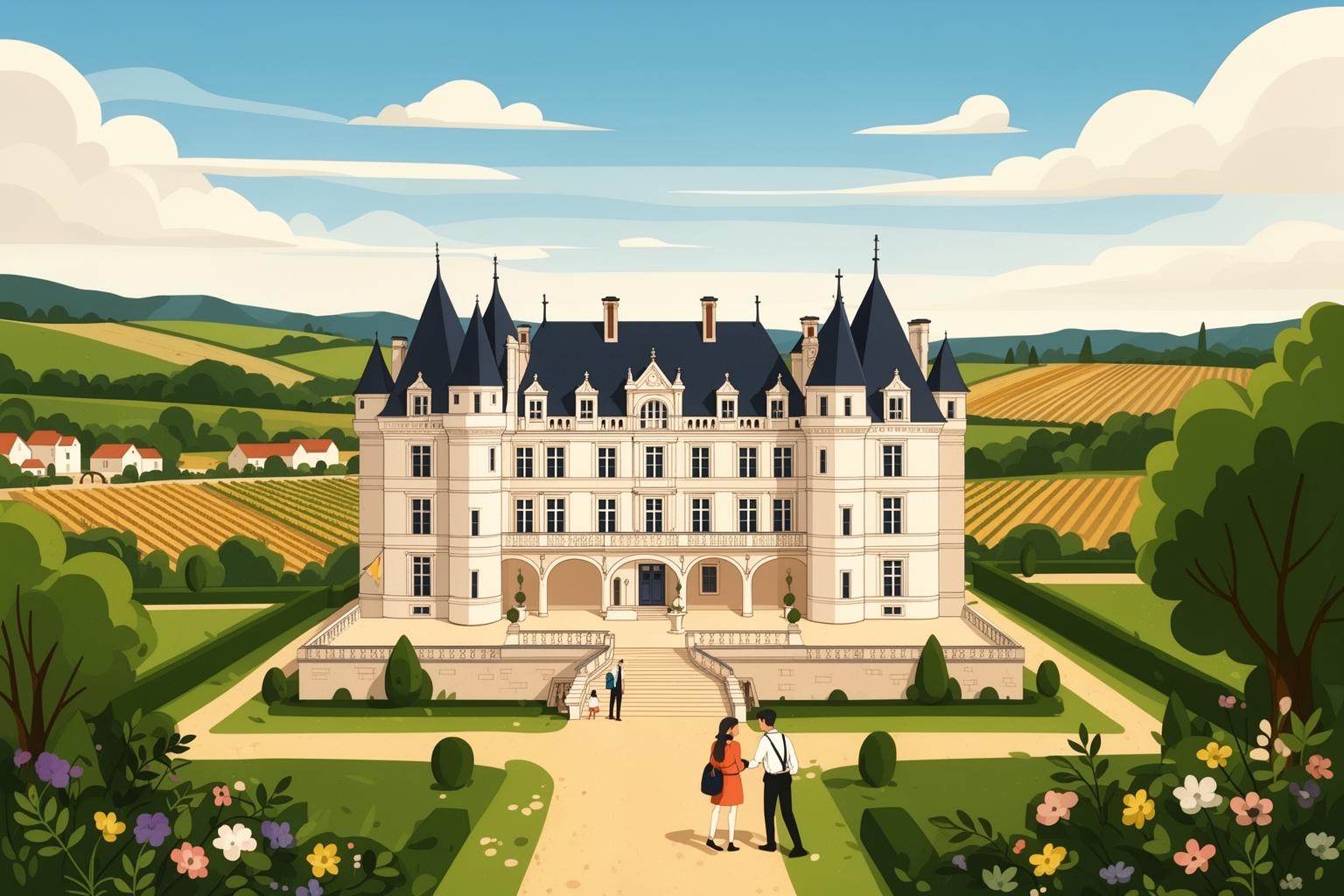
While Paris was Balzac’s battleground, the site of his social and financial struggles, the Touraine region of the Loire Valley served as his sanctuary. It was the landscape of his childhood and the refuge he returned to repeatedly to escape his creditors and find the tranquility needed for deep, focused work. At the center of this refuge stands the Château de Saché, a beautifully preserved country manor where Balzac was often a guest of his friends, the de Margonne family. Unlike the grand, fairytale castles that dot the Loire, this château is more modest, intimate, and richly atmospheric. It was here, in a small, sparse second-floor bedroom, that Balzac found the silence he longed for. The room remains perfectly preserved, featuring a simple bed, a small fireplace, and the iconic writing desk, nearly identical to the one in Paris. Standing in this room, gazing out the window at the gentle Indre river and the rolling green countryside, one can understand why this place was so crucial to his creativity. The frenetic energy of Paris fades away, replaced by a deep sense of calm. It was within these very walls that he penned some of his most enduring masterpieces, including Le Père Goriot, and found inspiration for Le Lys dans la vallée (The Lily of the Valley), a novel that serves as a lyrical love letter to this landscape. Today, the château is a dedicated Balzac museum, and touring its rooms reveals the profound connection between his life, his work, and the spirit of rural France.
Journeying to the Writer’s Retreat
A trip to Saché is a pilgrimage that requires more planning than a stroll through Paris, but it is immensely rewarding. The château is situated about a half-hour drive from the city of Tours. The most efficient route from Paris is to take the high-speed TGV train from Montparnasse station to Tours, a journey of just over an hour. From Tours, you can either rent a car, offering flexibility to explore the surrounding area, or take a local bus. Visiting Saché provides a completely different experience from the Parisian attractions. It offers a chance to slow down and immerse yourself in the natural beauty that soothed Balzac’s restless spirit. The best time to visit is in late spring or summer, when the gardens bloom fully and the countryside is lush and vibrant. To maximize your visit, consider pairing Saché with tours of other nearby châteaux, such as Villandry, famed for its spectacular gardens, or Azay-le-Rideau. But be sure to allow plenty of time at Saché. Wander the grounds, sit by the river, and simply soak in the atmosphere. It is here, far from the pressures of the capital, that you can connect with the more reflective, pastoral side of Balzac’s genius.
Echoes in the City of Light: Further Footsteps
Beyond his home in Passy, all of Paris stands as an open-air museum of Balzac’s world. A thoughtful stroll through its historic neighborhoods uncovers the settings of numerous scenes from La Comédie humaine, and with a touch of imagination, you can see his characters come alive on every corner.
The Palais-Royal: A World of Pleasure and Peril
Just a short walk from the Louvre, the arcades of the Palais-Royal were the heart of Parisian social life in the early 19th century. It was a dazzling realm of cafés, gambling halls, theaters, and upscale shops—a place where fortunes were won and lost with the turn of a card, and where political and romantic intrigues unfolded in whispered conversations. This was the world of Lucien de Rubempré, the handsome and ambitious poet central to Lost Illusions, who is lured by its glamour and eventually destroyed by its cynicism. Walking beneath the elegant covered galleries today, past antique shops and designer boutiques, it’s easy to picture him strolling here, dreaming of literary fame. The garden at its center remains a peaceful oasis, an ideal spot to sit with his novel and sense the lingering spirits of his characters’ hopes and downfalls.
Place Vendôme: The Gleam of Ambition
For Balzac, the magnificent Place Vendôme, with its triumphal column and majestic, uniform façades, symbolized wealth, power, and high finance. It was the domain of bankers, jewelers, and the ultra-rich aristocracy. Characters in his novels, such as the perfumer César Birotteau, dreamed of attaining the prestige that a Place Vendôme address represented. The pursuit of this ambition, along with the crushing debts it often brought, is a key theme in many of his stories. Today, the square still hosts the world’s most renowned jewelers and the iconic Hôtel Ritz. Gazing at the sparkling window displays, you can feel the same magnetic allure of luxury and aspiration that energized Balzac’s world. It serves as a powerful reminder of his sharp critique of a society increasingly consumed by material wealth.
The Latin Quarter: Student Dreams and Early Struggles
Before becoming the celebrated author of La Comédie humaine, Balzac was a young, impoverished law clerk and aspiring writer living in the garrets of the Latin Quarter. This historic student neighborhood, with its winding medieval streets and ancient university buildings, was where he first tasted the freedom and poverty of the artistic life. He lived in a tiny attic room on Rue Lesdiguières, far removed from the opulent salons he would later depict. While the area has evolved, you can still wander streets like Rue de la Harpe or Rue Saint-Séverin and catch a sense of that bohemian world. This is the world of Daniel d’Arthez and his intellectual circle in Lost Illusions, who debated philosophy and literature in inexpensive cafés, rich in thought though poor in means. Exploring the Latin Quarter offers a glimpse into the formative years of Balzac’s life, a time of struggle that gave him deep insight into the fierce ambition of youth.
A Final Resting Place: Père Lachaise Cemetery
No Balzac pilgrimage is truly complete without visiting Père Lachaise Cemetery, the vast and romantic necropolis in the 20th arrondissement. This place is more than just a cemetery; it is a city of the dead, a maze of cobblestone paths, towering trees, and some of the most beautiful and poignant funerary art in existence. It holds the final resting places of numerous luminaries, including Molière, Chopin, Oscar Wilde, and Jim Morrison. Locating Balzac’s tomb is an experience in itself. You will pass by weeping angels and crumbling mausoleums, feeling completely detached from the bustling city beyond its walls. His tomb is dignified, reflecting his stature. A large bronze bust of the author, his face marked by intelligence and intensity, rests atop a tall granite pedestal. Beneath it, a book and a quill pen are carved into the stone. It is a powerful and solemn tribute. Standing here reminds you of the vastness of his accomplishments. At his funeral, held in this very cemetery, Victor Hugo delivered a celebrated eulogy, declaring, “From this moment, the eyes of men will be turned to look upon his face, not those who are his contemporaries, but all those who will come after him.” This is a place for quiet reflection, a moment to honor the man who created a whole world and left it for us to explore.
Navigating the Necropolis
Père Lachaise is expansive, so be ready for a good walk. The easiest access is via the Métro, either at Père Lachaise (Line 2 or 3) or Gambetta (Line 3), with the Gambetta entrance at the hilltop serving as a great starting point for a downhill walk. It is highly recommended to pick up a map at one of the main entrances, as it is quite easy to become disoriented among the winding paths. Yet, getting a bit lost is part of the charm. Allow yourself at least a couple of hours to explore, not only Balzac’s tomb but also the countless other beautiful and historic graves scattered throughout this remarkable site. It is a deeply moving and unforgettable Parisian experience.
The Flavor of Balzac: A Culinary Postscript
To fully immerse yourself in Balzac’s world, you must engage all your senses, including taste. His novels brim with vivid food descriptions, ranging from the modest crusts of bread eaten by struggling students to the lavish, multi-course feasts enjoyed by the Parisian elite. For Balzac, food represented social status, a source of pleasure, and a symbol of desire.
The Power of Coffee
As you stroll through the streets of Paris, the scent of coffee drifting from countless cafés is irresistible. For literary pilgrims, pausing for a coffee is more than just a rest; it is an act of tribute. Take a seat at a classic café—perhaps Le Procope in the 6th arrondissement, which has been serving coffee since the 17th century. Order a strong, black café express and take a moment to summon Balzac’s intense energy. Picture him, bent over his desk in the dead of night, steam from his cup blending with the rapid flow of his ideas. It’s a simple yet powerful way to connect with the fuel that powered his creativity.
The Feasts of the Comédie Humaine
Balzac’s characters are frequently eating, and their food choices reveal much about them. From the modest boarding house meals in Le Père Goriot to the opulent banquets hosted by the banker Nucingen, food lies at the heart of his world’s social fabric. To complete your journey, indulge in a meal at a traditional French bistro. Look for one with red-checked tablecloths, a menu featuring classics such as boeuf bourguignon or confit de canard, and a fine bottle of wine. As you relish the rich, layered flavors of classic French cuisine, you participate in the same sensory experience that Balzac so masterfully portrayed. It is the perfect closing note on a pilgrimage dedicated to an author who understood better than most that the human experience is a feast for the senses, a grand comedy of appetite and ambition.
The Enduring Echo of Balzac’s World
Following in the footsteps of Honoré de Balzac through Paris and the Loire Valley reveals that the world he depicted is not entirely gone. The buildings remain, the streets still trace their ancient routes, and the ambitions he described—for love, for wealth, for recognition—continue to resonate in the human heart. His Paris, a city of dazzling opportunity and profound heartbreak, is still recognizable within the modern metropolis. His countryside, a place of restorative peace and quiet beauty, continues to offer a vital refuge. To walk these paths is to collapse time and feel a direct connection to the literary giant who viewed the world with such breathtaking clarity. You may have come seeking the ghost of an author, but you leave having discovered the enduring soul of France itself, a soul Balzac immortalized in the magnificent pages of La Comédie humaine. The story remains, waiting for you to read it not just in a book, but in the very landscape where it was born.