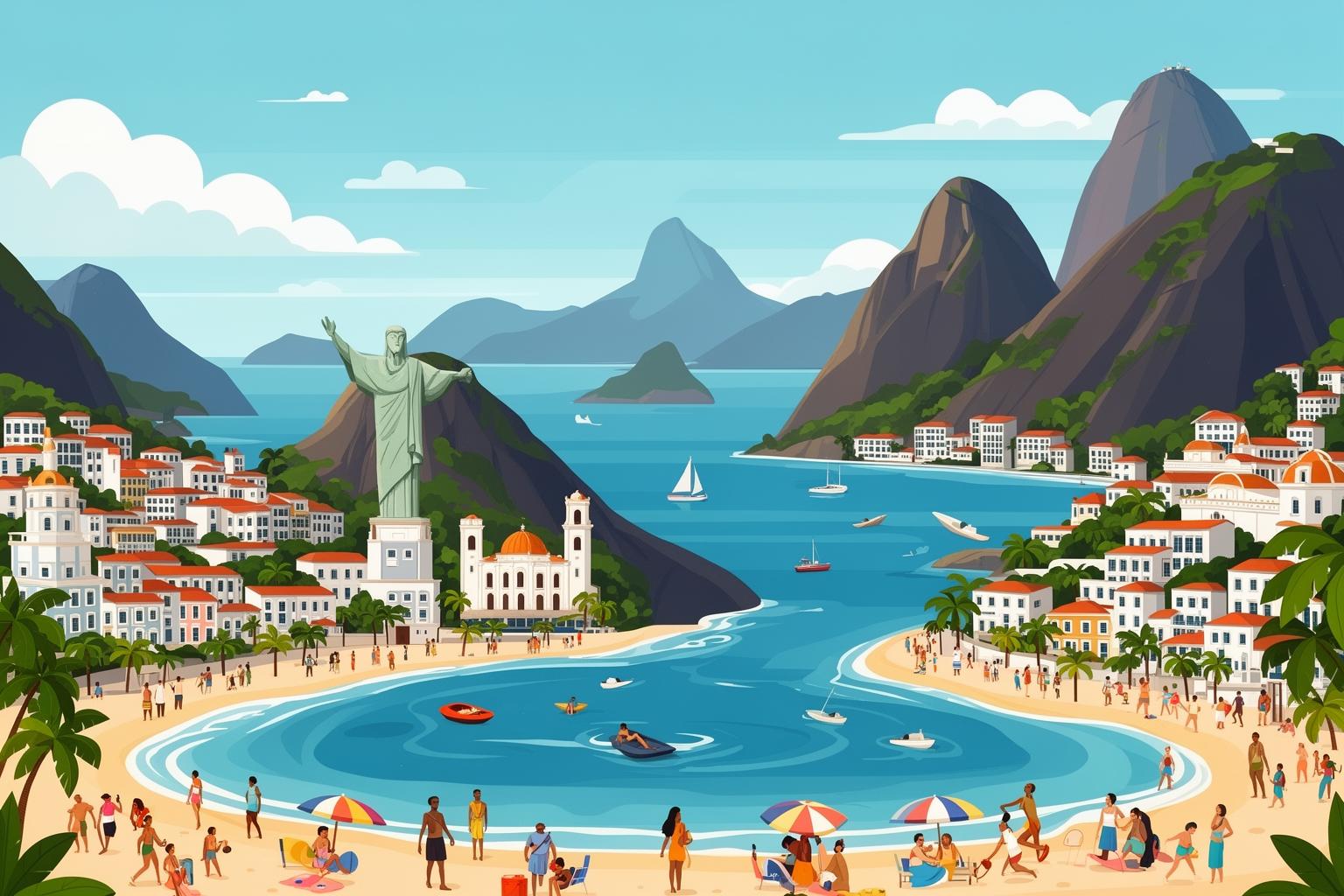
There’s a rhythm to Rio de Janeiro, a beat that pulses from the sun-warmed sands of Copacabana to the cool, forested heights of Corcovado. It’s a city of vibrant, forward-looking energy. But listen closer, beneath the samba and the city’s hum, and you’ll hear another rhythm—a more subtle, literary heartbeat. This is the rhythm of Machado de Assis, the undisputed giant of Brazilian literature, a man whose words shaped not just a nation’s canon, but its very soul. To walk through Rio is to walk through the pages of his novels. His characters, with their doubts, their loves, and their quiet ironies, are not confined to paper; their ghosts linger in the colonial archways of Centro, they gaze out from the hillside villas of Cosme Velho, and they debate philosophy in the hushed corners of historic cafés. This journey isn’t just about visiting landmarks; it’s a pilgrimage into the mind of the man they called the “Wizard of Cosme Velho.” It’s about seeing his Rio, a city of gaslights, horse-drawn trams, and simmering social ambition, a city that laid the foundation for the metropolis we see today. We will trace the footsteps of Joaquim Maria Machado de Assis, from his humble beginnings to his ultimate enshrinement as a national treasure, and in doing so, discover a Rio that history books alone can never reveal. It’s a journey through time, literature, and the very heart of Brazilian identity.
For another profound journey into a writer’s world, consider embarking on a literary pilgrimage through Orhan Pamuk’s Istanbul.
The Echoes of a Humble Beginning: Morro do Livramento
Every story has a beginning, and for the man who would become Brazil’s greatest author, that beginning was carved into the slopes of Morro do Livramento. Today, pinpointing the exact place where Machado de Assis was born in 1839 is an impossible endeavor. The house has long disappeared, swallowed by the relentless redevelopment typical of any major port city. Yet standing in the Saude and Gamboa districts, in the shadow of where the hill once rose, is to sense the core of his origin story. This was not the glamorous Rio of postcards; it was the city’s working heart, a busy, gritty landscape of docks, warehouses, and modest homes of laborers and freed slaves. Machado was born into a world marked by profound social stratification. His father was a mixed-race wall painter, the son of freed slaves, and his mother a Portuguese washerwoman. By all accounts, he was a child of the people, growing up far from the opulent salons he would later dissect with such surgical precision in his writing.
To understand Machado, one must grasp this context. He was a mulatto in a society obsessed with racial purity, an epileptic in an age that misunderstood the condition, and largely self-taught in a world that prized formal, European-style education above all. His very existence was a quiet act of rebellion. Walking through the Zona Portuária today reveals a strange yet powerful parallel. The area has been reborn and revitalized for the Olympics with architectural marvels like the Museu do Amanhã (Museum of Tomorrow) and the Museu de Arte do Rio (MAR). Sleek light-rail trams glide where dusty carts once rumbled. Yet the history is not entirely erased. Look closely at the remaining colonial-era buildings, the narrow cobblestone streets winding away from the main avenues, and you can feel the weight of the past. Imagine a young Machado, a stuttering, observant boy, absorbing the cacophony of this place—the sailors’ shouts in a dozen languages, the scent of salt and sugarcane, the stark contrast between the wealth flowing through the port and the poverty of those who served it. This was his first classroom. It taught him about nuance, the masks people wear, and the invisible lines dividing society. These lessons became the foundation of his literary genius.
For visitors, a trip to this area is a study in contrasts. Begin at Praça Mauá, the grand plaza facing the bay, and admire the stunning modern architecture. It offers a glimpse of Rio’s future. Then, turn your back to the water and explore the side streets of Gamboa. Visit the Cemitério dos Pretos Novos, a deeply moving memorial and archaeological site that exposes the brutal history of the slave trade. It’s a somber but essential experience that sheds light on the world into which Machado was born. This area is not a direct shrine to the author, but rather a sensory immersion into his roots. It is here, amid the echoes of the empire’s bustling port, that you can begin to appreciate the vast journey he traveled—not only geographically, but socially and intellectually—to become the master of Brazilian letters.
The Ink-Stained Heart of the Empire: Rio’s Centro
The true stage for Machado de Assis’s public and professional life was Centro, the historic and commercial core of Rio de Janeiro. In the 19th century, this area was the center of Brazilian politics, culture, and finance. It was a compact, walkable environment filled with ministries, banks, elegant shops, and, most importantly for Machado, printing presses, bookstores, and literary circles. Here, the self-taught boy from Morro do Livramento transformed into a respected journalist, poet, civil servant, and novelist. Walking through Centro today is like stepping directly into the setting of his life’s work. Although the cityscape has evolved—with skyscrapers rising where two-story sobrados once stood—the street layout and many architectural treasures remain, serving as portals to his time.
Rua do Ouvidor: The Artery of Ideas
No street was more central to Machado’s world than Rua do Ouvidor. During his day, this narrow pedestrian lane was the city’s intellectual and social hub. It was Rio’s version of a Parisian boulevard—a place to see and be seen, exchange gossip, debate politics, and for a writer, observe the grand theater of human behavior. Imagine a dapper Machado, perhaps in his thirties and already well-known, strolling along this street. He would tip his hat to politicians, nod to fellow writers, and pause to admire the latest French novels in a bookstore window. The air would be filled with the aroma of coffee from elegant confeitarias and the scent of costly perfumes worn by the wives of wealthy barons. This was his hunting ground for material. The subtle gestures, overheard conversations, and fleeting expressions of envy or desire were all noted and later distilled into the complex psychology of his characters.
Today, Rua do Ouvidor is a bustling commercial street crowded with shoppers and office workers. Its former glamour has given way to a more democratic, everyday energy. Yet, the spirit of the place endures as a vital channel in the city’s life. As you walk its length—from the waterfront toward Largo de São Francisco—try to peel back the layers of modernity. Notice the ornate ironwork on some older buildings, duck into a side alley, find a traditional café, order a cafezinho, and simply watch the people pass. This simple act is profoundly Machadian: an exercise in the patient observation that defined him. He understood that the deepest truths about society often reveal themselves in the most mundane moments.
The Royal Portuguese Reading Room: A Cathedral of Books
Prepare to be amazed. Tucked away on a side street just off the main thoroughfare is one of Rio’s most stunning and unexpected treasures: the Real Gabinete Português de Leitura. Stepping inside is like entering another world. It is more than a library; it is a shrine to the written word, a three-story cathedral of books built in the ornate Neo-Manueline style. Dark, carved wood stretches toward a stained-glass skylight that bathes the room in a soft, ethereal glow. Tens of thousands of rare volumes line the walls from floor to ceiling, their leather spines forming a rich, intricate tapestry. The air feels sacred, heavy with the scent of old paper and polished wood. It is unquestionably one of the most beautiful libraries on the planet.
Machado de Assis was deeply connected to this institution. He attended sessions here, consulted its vast collection, and was a familiar presence within its revered walls. For a man without formal university training, places like the Real Gabinete functioned as his university. Here, he immersed himself in the great Portuguese and European literary works, refining his craft and expanding his intellectual horizons. When you stand in the main hall, looking up at galleries of books, you stand in a place that nurtured his genius. The experience is deeply moving. Imagine him carefully pulling a volume from a shelf, fingers tracing the embossed title as the world outside Rua Luís de Camões fades away while he loses himself in its pages. Visitors are welcome to enter quietly and take in the view from the ground floor; photography without flash is usually allowed. Please honor the silence—it is a working library, and the quiet reverence is a key part of its magic. This is no mere photo op; it’s a chance to connect with the intellectual fervor that animated Machado’s Rio.
The Brazilian Academy of Letters: Crowning a Legacy
Machado’s ascent from the margins to the heart of Brazilian intellectual life culminated in his role as co-founder and first president of the Academia Brasileira de Letras (ABL), which he led from 1897 until his death in 1908. Modeled after the Académie française, the ABL was established as the official guardian of the Brazilian Portuguese language and literature. That a man of his background was unanimously elected its leader speaks volumes about the immense respect he commanded. It was the ultimate acknowledgment of his unparalleled contribution to the nation’s culture.
The ABL is housed in an exquisite replica of the Petit Trianon at Versailles, a stunning example of French neoclassical architecture seemingly transported to Rio’s center. Known as the Petit Trianon, the building is an elegant landmark located in Centro. The academy hosts regular events and tours, offering visitors a chance to see the interiors where the “Immortals,” as its forty members are called, hold sessions. Visiting the ABL lets you appreciate the final chapter of Machado’s public life. Here, he was not merely a writer but an institution builder—a figure who cemented literature’s role in national identity. Standing before the Petit Trianon, you can feel the weight of his legacy. It signifies the triumph of talent over circumstance and the power of a singular intellect to shape a nation’s culture. Check the ABL’s official website for information on public tours or cultural events. It offers a fascinating glimpse into the formal and ceremonial literary world Machado ultimately dominated.
The Domestic Sphere: Where Life and Literature Intertwined

While Centro was the backdrop for Machado’s public life, his private world—the space where he lived, loved, and, most importantly, wrote—was nestled in the quieter, more residential neighborhoods between the mountains and the sea. Throughout their long marriage, he and his beloved wife, Carolina Augusta Xavier de Novais, resided in several homes, but it was within these intimate settings that the raw impressions of city life transformed into literary treasures. Tracing his residences unveils a map of his personal and professional progression, as he moved to increasingly comfortable and serene areas of the city. These neighborhoods provide a different view of the author, revealing the man behind the public figure.
Cosme Velho: The Serene Refuge of the Wizard
For the final two decades of his life, Machado de Assis lived on Rua Cosme Velho in the peaceful neighborhood bearing the same name. From this address, he earned his renowned nickname, the “Bruxo do Cosme Velho”—the Wizard of Cosme Velho. The name is fitting, conjuring the image of a quiet magic, an alchemist in his study, transforming the ordinary details of daily life into the pure gold of fiction. Although the original house no longer stands, replaced by an unremarkable building, the neighborhood’s atmosphere remains remarkably preserved. Cosme Velho stands in stark contrast to the clamor of Centro. Nestled at the base of Corcovado mountain, the area is lush, green, and tranquil. The air feels cooler here, heavy with the scent of damp earth and tropical blooms from the nearby Tijuca Forest. The streets are lined with charming old homes shaded by towering trees.
Visiting Cosme Velho helps one understand why Machado chose this place for his final retreat. It provided peace—a place for reflection and the deep, introspective work demanded by his later novels. Walking along Rua Cosme Velho, you can nearly imagine him on his daily stroll, a thoughtful elderly gentleman, perhaps accompanied by his wife Carolina, whose support was essential to his work. The neighborhood is famous for the Corcovado Train station, which transports visitors to the Christ the Redeemer statue. Most tourists hurry from their transport to the station without a glance at the surroundings. The true pilgrim seeking Machado should do the opposite: arrive early, before the crowds, and take a slow stroll. Notice the quality of light filtering through the leaves. Listen to the birdsong. This sensory setting surrounded Machado as he wrote his masterpieces, including the incomparable Dom Casmurro. The novel’s themes of memory, doubt, and jealousy feel perfectly at home in this atmospheric, subtly melancholic environment. Nearby Largo do Boticário, a picturesque square with neo-colonial houses, offers an ideal spot to sit and absorb the neighborhood’s unique, timeless charm.
Laranjeiras and Catete: Neighborhoods of Prose and Power
Before settling in Cosme Velho, Machado and his wife lived in other nearby neighborhoods, notably Laranjeiras and Catete. In the late 19th century, these areas were fashionable addresses for the city’s growing bureaucracy and professional class. The Catete Palace, located in the neighborhood of the same name, even became the Brazilian presidential residence after the Empire’s fall. Living here placed Machado right within the social milieu he so brilliantly satirized. His characters—the ambitious politicians, struggling clerks, and wives navigating complex social hierarchies—would have been his neighbors. He didn’t just imagine their lives; he observed them every day.
A walk from the Largo do Machado metro station through Laranjeiras and Catete offers a splendid architectural tour of late 19th and early 20th-century Rio. The buildings range from grand mansions and elegant townhouses to more modest homes, reflecting the social strata Machado documented. This is the world of his novels brought vividly to life. As you roam, you might picture Bentinho and Escobar from Dom Casmurro taking a walk, or Brás Cubas, the narrator of The Posthumous Memoirs of Brás Cubas, musing on his life of leisure and romantic affairs from a balcony in one of these houses. Observe the small details: wrought-iron gates, Portuguese tiles (azulejos) decorating the facades, shaded internal courtyards. These are the physical markers of the world he portrayed. This area feels less like a tourist spot and more like a living museum of Rio’s Belle Époque era—a genuine glimpse into the domestic backdrop of his most enduring fiction.
The Eternal Rest: Cemitério São João Batista
To complete a pilgrimage honoring a remarkable life, one must inevitably visit the site of its final rest. Machado de Assis lies in the Cemitério São João Batista in Botafogo. But this is no ordinary cemetery. Like Père Lachaise in Paris or Highgate in London, it is a city of the dead—an open-air museum of art and history where many of Brazil’s most distinguished figures are interred. A visit here is a solemn, beautiful, and profoundly moving experience. The cemetery is a maze of marble angels, ornate chapels, and grand mausoleums, all framed by the dramatic silhouette of Corcovado mountain, with the statue of Christ the Redeemer watching over from above.
The atmosphere is one of deep tranquility. The city’s noise seems to fade as you pass through the imposing entrance gates. The air is still, broken only by the cooing of doves and the rustle of leaves. It is a place that encourages reflection—not only on Machado’s life but also on the themes of mortality, memory, and legacy that are central to his work, particularly in The Posthumous Memoirs of Brás Cubas.
Machado is interred in the mausoleum of the Brazilian Academy of Letters, a dignified and impressive granite structure. Locating it can be somewhat challenging, so it is wise to request a map or directions at the administrative office near the entrance. The mausoleum serves as a collective tomb for the academy’s “Immortals,” and Machado’s name is inscribed among them. Standing before this monument brings the full arc of his story to life. The boy from Morro do Livramento, who began with nothing, now rests here, forever enshrined among the nation’s cultural giants. It is a powerful moment. The names of other luminaries—singers, presidents, scientists, and artists—are also found nearby. Here, you are, in truth, standing at the heart of Brazil’s cultural pantheon.
When visiting, keep in mind that this is a place of mourning and respect. Dress modestly, speak softly, and be considerate of any funeral services underway. A visit to São João Batista is not a morbid experience; instead, it is a beautiful and fitting conclusion to a journey through Machado’s Rio. It is a place to reflect on how a life ends, yet how a person’s work, ideas, and spirit can achieve a form of immortality, continuing to resonate with new generations long after they are gone.
Reading Machado in Rio: A Sensory Experience

A pilgrimage honoring a writer must encompass more than merely visiting places; it must also involve engaging with their words. The best way to connect with Machado de Assis is to read his work in the very city that inspired it. This transforms reading from a purely intellectual pursuit into a rich, multi-sensory experience. The sounds, sights, and smells of contemporary Rio add new depth to his 19th-century prose. Find a quiet spot, open a book, and let the two worlds—the one on the page and the one around you—blend together.
There are countless ideal locations for this. Bring a copy of Dom Casmurro to the Jardim Botânico (Botanical Garden). Locate a secluded bench beneath the magnificent imperial palms, accompanied by the sounds of exotic birds and trickling fountains. As you read about Bentinho’s all-consuming jealousy, the lush, almost overwhelmingly beautiful surroundings provide a poignant contrast to the darkness of the narrator’s mind. Alternatively, take The Posthumous Memoirs of Brás Cubas to a café in the bohemian hillside neighborhood of Santa Teresa. Ride the famous yellow tram up the hill, find a seat with a view over the city, and immerse yourself in Brás Cubas’s witty, cynical, and surprisingly profound reflections on a misspent life. Gazing out over the sprawling city—a landscape of both beauty and decay—you can’t help but sense the philosophical weight of his words. You witness the human comedy that Machado perceived, unfolding on the streets below.
Even a simple act like sitting on a bench at Praça XV de Novembro in Centro, the historic heart of Imperial Rio, can be transformative. Surrounded by the Paço Imperial and other historic buildings, you can read his crônicas—the short, insightful newspaper columns he wrote for decades. In these, he commented on the everyday life of the city, from the arrival of new technologies like the telephone to the social etiquette of formal balls. Reading these pieces on location feels as if the author himself is your guide, whispering observations about the very ground you sit upon. It makes the past feel vividly present. This practice of reading in place links the abstract world of literature to the tangible reality of the city. It allows Machado’s voice to resonate not only in your mind but also in the very streets he once walked.
A Taste of Machado’s Rio: Culinary and Cultural Notes
To fully immerse yourself in Machado’s world, you must also engage your sense of taste. The culinary scene of his Rio was marked by contrasts, ranging from simple street food to refined European pastries served in elegant cafés. The most iconic and accessible way to experience this is by visiting Confeitaria Colombo in Centro. Founded in 1894, this café is a stunning time capsule from the Belle Époque. Machado would have known it in his later years, and it represents the height of the refined urban culture he both participated in and critiqued.
Stepping into Colombo feels like stepping into one of his novels. The interior is a harmony of carved jacaranda wood, crystal-clear mirrors from Belgium, and Italian marble countertops. The scale is grand, the details exquisite. Find a small table, order a strong coffee and a traditional Portuguese pastry like a pastel de nata. As you sit there amid the gentle clatter of porcelain and silver, you become part of a ritual that has been unfolding for over a century. This was a place for conversation, business deals, and meetings of society ladies. It embodied the sophisticated, European-oriented Rio that Machado chronicled. It feels both opulent and intimate, the perfect setting for the quiet dramas he was so skilled at depicting.
Beyond the grand cafés, consider the simpler flavors that would have been part of his everyday life. The street vendors selling caldo de cana (sugarcane juice) or roasted corn. The hearty, traditional Brazilian meals of beans, rice, and meats served in modest eateries and private homes. While you can’t eat exactly as he did, you can visit traditional restaurants in Centro or Laranjeiras that serve classic Brazilian cuisine. Ordering a feijoada, the national dish, in a historic part of town is another way to connect with the deep-rooted cultural traditions that shaped his life. Food is a powerful link to the past, and tasting the flavors of Rio offers another way to bring Machado’s world to life.
A Final Word
A journey through Machado de Assis’s Rio is a journey into the very heart of Brazil. It leads through bustling commercial streets and quiet residential lanes, from grand libraries to a solemn resting place. But beyond that, it is a journey into a unique way of seeing the world. Machado taught his readers to look beneath the surface, to question appearances, and to appreciate the profound irony and beauty of human existence. Following in his footsteps, you learn to see Rio not merely as a collection of sights, but as a living, breathing text filled with stories waiting to be discovered. You leave with more than just photographs; you gain a deeper understanding of how a great writer and a great city can become deeply intertwined. The Wizard of Cosme Velho may have long departed, but his spirit, his sharp eye, and his immortal voice remain, waiting to be found in the rhythm of the city he called home.