There’s a moment, suspended between the churning North Atlantic and a ceiling of ever-moving clouds, when you first truly see the Faroe Islands. It’s not a single image, but a feeling that washes over you. A sense of profound, ancient solitude. Here, on these 18 volcanic islands cast adrift between Iceland and Norway, the world feels both newborn and impossibly old. The grass is an electric, almost artificial green, clinging to cliffs that plummet into a cobalt sea. Waterfalls are spun into mist by the wind before they can even meet the ocean. And the silence is a living thing, punctuated only by the cries of seabirds and the distant bleating of the islands’ true rulers: the sheep. This is not a landscape you simply observe; it is one you must enter, walk through, and breathe in. For artists, storytellers, and dreamers, this is a pilgrimage site for the soul, a place where the sagas of old feel written on the very wind. Hiking here is not a mere activity; it is a conversation with the earth itself. It is the only way to truly understand the raw, untamed spirit of a place that time seems to have respectfully left alone.
For those who find their own pilgrimage in the footsteps of literary giants, consider tracing the path of Charles Dickens through his many cities.
The Soul of the Faroes: Understanding the Landscape
Before your boots ever press into the damp soil of a Faroese trail, you must first grasp the elements that mold every experience here. The islands form a living canvas, with the wind, rain, sun, and sea as its artists. To hike in the Faroes is to yield to their caprices, and in that surrender lies the archipelago’s most profound magic.
Weather, the Unpredictable Director
The most common advice about the Faroes is that you can encounter all four seasons within a single hour. This is no exaggeration; it is a fundamental truth of life here. A morning may begin with radiant sunshine that makes the fjords glisten, only for a thick, disorienting fog to sweep in from the sea within minutes, obscuring everything around you. This might be followed by a sudden, driving rain, and then just as swiftly, the sun can reappear, casting a double rainbow against a bruised sky. This constant change is not an obstacle but the very essence of the Faroese drama. It teaches humility and preparedness. The landscape is never still; a cliff majestic in sunlight can seem a menacing, mythical creature when cloaked in mist. The weather governs the mood, visibility, and safety of every trek. It is the unpredictable director of your entire adventure, and learning to honor its power is the first rule for any Faroese hiker.
A Land Forged by Fire and Ice
The dramatic terrain you have come to witness tells a tale written over millennia. These islands are the exposed peaks of a volcanic ridge, shaped and sculpted by the immense force of glaciers during the Ice Age. This geological story is visible everywhere you turn. It shows in the tiered, pyramid-like formations of the mountains, shaped by layers of basalt lava flows. It appears in the deep, U-shaped valleys and the long, narrow fjords cutting into the islands’ core. It reveals itself in the sheer sea cliffs—among the tallest in Europe—that stand like defiant fortresses against the relentless Atlantic waves. This raw and powerful geology means trails are seldom flat. You are nearly always ascending or descending, often on steep, grassy slopes that grow treacherous when wet. The terrain is challenging, but it is that very challenge that makes the views so rewarding. Every step upward unveils a new, more breathtaking panorama of a world sculpted by elemental forces.
The Concept of “Heimablídni”
Beyond the epic landscapes and volatile weather, a deep cultural current runs through these islands. The Faroese people, shaped by centuries of isolation and close-knit communities, embrace a unique form of hospitality called “heimablídni,” meaning “home hospitality.” In several villages, local families invite visitors into their homes for an authentic dinner, sharing traditional dishes like fermented lamb, wind-dried fish, and fresh seafood, while recounting stories of their lives and village history. This is a vital part of the Faroese experience. It reminds you that these breathtaking landscapes are not merely wilderness but a home. They form the backdrop to a rich, resilient culture. Taking part in heimablídni links your hiking journey to the human heart of the islands, turning a scenic trip into a meaningful cultural exchange.
Gearing Up for the Grand Stage: Essential Preparations
Undertaking a Faroese hike without the proper gear is like attending an opera in swim trunks—you are fundamentally unprepared for the experience. The environment demands respect, which begins with what you bring along. The right equipment isn’t about comfort; it’s about safety, and it will determine whether your adventure becomes magical or miserable, potentially even dangerous.
The Hiker’s Wardrobe: A Symphony in Layers
Layering is the essential principle of Faroese hiking. The ability to quickly add or remove clothing in response to the constantly changing weather is crucial. This approach helps you regulate both temperature and moisture, keeping you warm in the cold and cool during exertion, all while staying dry from rain and sweat.
Base Layers
This layer sits against your skin and is primarily responsible for wicking moisture away from your body. Sweat is your enemy in the cool, damp environment; if it lingers on your skin, it chills you rapidly as soon as you stop moving. Therefore, cotton is completely off-limits. It soaks up moisture like a sponge and loses its insulating qualities, becoming a cold, heavy fabric against your body. Instead, opt for merino wool or synthetic fabrics like polyester. Merino wool is an excellent natural choice—breathable, moisture-wicking, and importantly, it insulates even when damp. It also naturally resists odors, which is beneficial on multi-day hikes. Synthetics also wick well and dry quickly, though they tend to retain odors more than wool. A long-sleeved base layer top and full-length bottoms are essential for any serious trek.
Mid Layers
Your insulation layer’s job is to trap body heat and keep you warm. Versatility is key. A fleece jacket is a classic and dependable choice—warm, breathable, and durable. Lightweight insulated jackets, filled with down or synthetic material, are also excellent options. Synthetic insulation is preferable in the damp Faroese climate because it retains much of its warmth when wet, whereas down can clump and lose loft. Depending on the weather and the length of your hike, you might carry one or two different mid-layers. This lets you fine-tune your temperature—wearing just a base layer and fleece while climbing, then adding an insulated jacket when resting at a breezy summit.
The Outer Shell
Arguably the most crucial piece of clothing, your outer shell—both jacket and pants—protects you from the elements. It must be completely waterproof and windproof with no compromises. A light Faroese shower can instantly turn into a heavy, wind-driven downpour. Your jacket needs a robust hood with a brim to shield your face from the rain and sealed or taped seams to stop water seepage. Look for materials such as Gore-Tex or other advanced waterproof-breathable membranes. Breathability is vital, as it allows your body’s moisture to escape and prevents you from becoming wet from the inside out. Waterproof pants are just as essential; walking through wet grass will soak ordinary hiking pants in minutes, causing discomfort and chill. Your outer shell is your personal refuge in the storm.
Footwear: Your Connection to the Earth
Your feet are your vehicle across the Faroese terrain, which features rocky paths, slick mud, and steep, uneven grassy slopes, and is nearly always damp.
Boots vs. Trail Runners
While seasoned trail runners might choose their preferred footwear on well-maintained trails, sturdy, waterproof hiking boots are the best choice for most hikers and trail conditions. The main advantage is ankle support, which is invaluable on rocky, unpredictable ground. A twisted ankle in a remote Faroese valley can be serious. Additionally, boots with a waterproof membrane keep your feet dry when crossing streams or traversing boggy areas. Make sure your boots are well broken-in before the trip to avoid blisters. Deep, aggressive treads are essential for good traction on slippery surfaces.
Socks and Gaiters
Never underestimate the value of quality socks, and like base layers, avoid cotton. Merino wool hiking socks offer cushioning, wick moisture, and reduce blister risk. Always bring at least one extra pair, even on day hikes—switching into dry socks midway through a wet day can feel miraculous. For extra protection, consider gaiters. These fabric guards wrap around your lower legs and boot tops, effectively preventing water, mud, and stones from entering your shoes, keeping your feet drier and more comfortable over long distances.
Navigation and Safety: Your Trusty Companions
The Faroe Islands’ wild beauty comes with remoteness. Many trails are marked only by cairns (stone piles) or faint grass paths, which can disappear in fog. Being self-reliant in navigation is essential.
Don’t depend solely on your phone’s cell service, which is unreliable or absent outside villages. Instead, use a dedicated GPS device or smartphone apps that offer offline maps, like Maps.me, Gaia GPS, or AllTrails Pro. Download maps of the entire Faroe Islands and plan your route before leaving your accommodation. Carry a portable power bank to keep devices charged. As a backup, bring a physical map and compass—if you know how to use them. Always inform someone—a guesthouse host, friend, or family—of your route and expected return time. The emergency number in the Faroes is 112. Save it in your phone, but hope you never have to call.
The Iconic Pilgrimages: Must-Hike Trails of the Faroe Islands
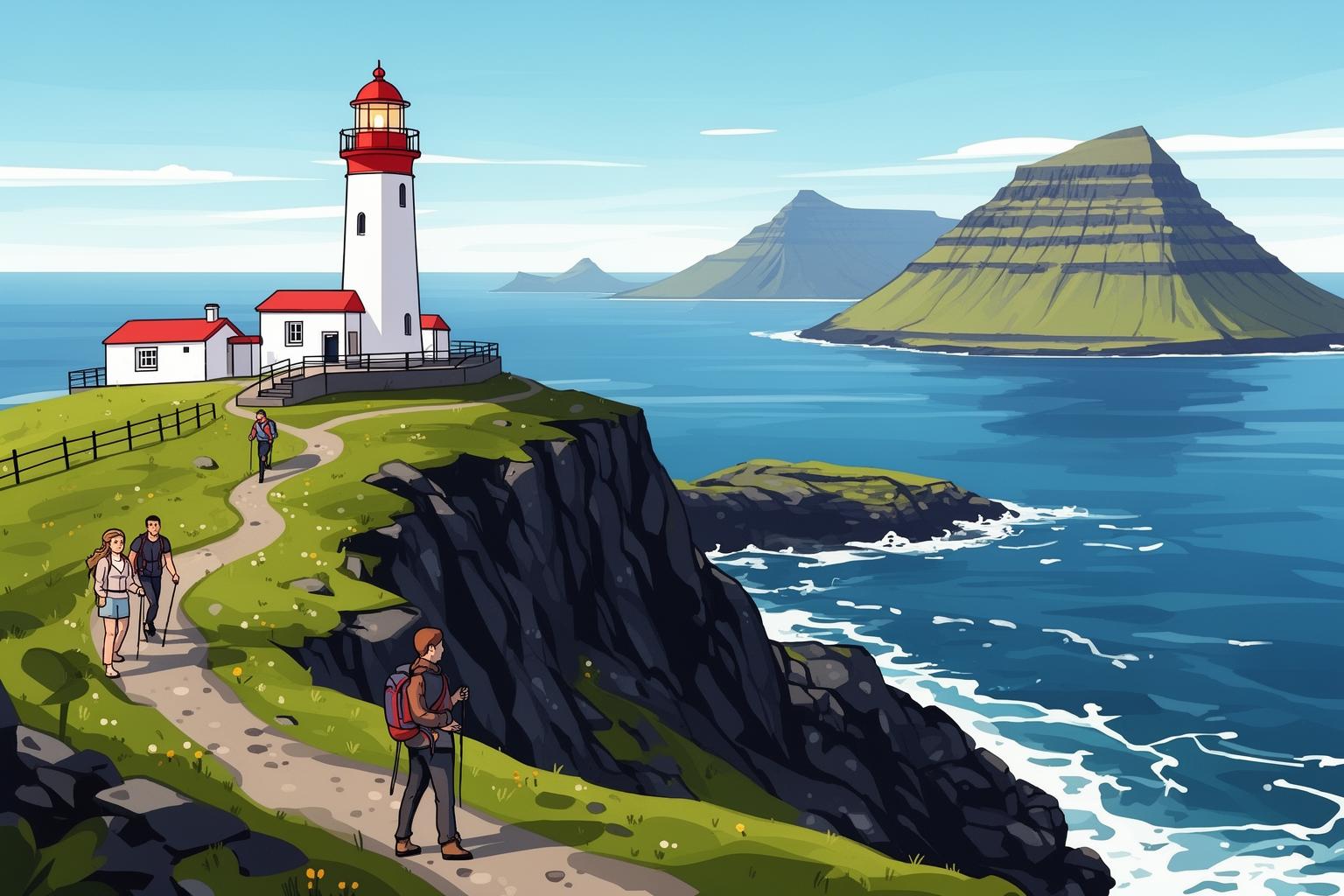
While nearly every corner of these islands offers stunning beauty, certain trails have reached legendary status. They are grand epics, journeys that draw wanderers from all over the world. These are more than mere hikes; they are rites of passage for any visitor seeking to experience the true power of the Faroese landscape.
The Floating Lake: Sørvágsvatn and the Cliffs of Trælanípan (Vágar Island)
This is perhaps the most famous optical illusion in the Faroe Islands, where geography seems to deceive the eye. The hike to Trælanípan, or “Slave Cliff,” leads to a viewpoint where the largest lake in the Faroes, Sørvágsvatn, looks as if it is floating hundreds of feet above the ocean. It’s a surreal and mesmerizing sight that has become a symbol of the islands’ unique beauty.
The Approach
The trailhead is conveniently situated on Vágar Island, home to the international airport, making this an accessible hike for the start or end of your trip. Beginning from a designated parking area near the village of Miðvágur, the path is well-marked and frequently used. This is private land, owned by local farmers who maintain the area, so a small hiking fee is charged at the entrance gate. This fee helps preserve the path and protect the fragile environment, a common and vital practice throughout the islands.
The Trail Experience
The hike itself is among the easier ones in the Faroes, a gentle, steady walk across open, grassy terrain with the lake to your right. It’s a meditative journey lasting about an hour, accompanied by the sound of wind and the calls of oystercatchers. As you proceed, the land gradually rises. The trail leads to the southern end of the lake, where it flows into the sea via the powerful Bøsdalafossur waterfall. However, the main highlight is the viewpoint at Trælanípan. Upon reaching the cliff edge—exercising extreme caution as there are no barriers—and turning northward, the incredible illusion unfolds. The angle of the cliff creates the effect of the lake perched high above the sea. It’s a moment of pure wonder, a testament to the power of perspective. The wind lashes at you, waves crash violently against the cliffs below, and the vast Atlantic stretches to the horizon. It’s a place that makes you feel both small and profoundly alive.
Practical Details
The round trip typically takes two to three hours, depending on how long you linger at the viewpoints. The trail is rated easy, but the exposed cliff edges require your full attention, especially in windy conditions or when accompanied by children. The best light for photography often occurs late afternoon, when the sun casts a golden glow on the cliffs. Even on overcast, moody days, the scene remains powerfully atmospheric.
To the Edge of the World: The Kallur Lighthouse (Kalsoy Island)
If Trælanípan is the famous illusion, the Kallur Lighthouse hike is the epic tale. It’s a journey to a remote, windswept promontory at the northernmost tip of Kalsoy Island, a place that feels like the very edge of the world. The image of the small white-and-red lighthouse standing guard on a narrow strip of green, flanked by colossal cliffs, is one of the most striking in the entire North Atlantic.
The Journey to Kalsoy
The adventure begins well before the hike. Kalsoy, nicknamed “the flute” for its long, slender shape and multiple tunnels, is accessible only by a small car ferry from Klaksvík, the Faroe Islands’ second-largest town. The ferry runs a limited schedule, so planning is crucial. After disembarking at Syðradalur on Kalsoy, the journey continues along a road that winds through narrow, dark, often single-lane tunnels connecting the island’s four tiny villages. This drive is an experience in itself—a somewhat unnerving but thrilling passage through the mountains. The hike starts from Trøllanes, the northernmost village, a tranquil hamlet nestled in a green bowl surrounded by towering peaks.
The Ascent to Kallur
From Trøllanes, a path marked by a red gate leads onto steep grassy slopes. The trail is not always well-defined; often, you follow faint sheep tracks up the hillside. The ascent is moderately strenuous and can be very slippery, especially after rain. You’ll need to navigate muddy patches and small streams as you climb higher. Anticipation mounts with each step. After about an hour, you reach a ridge where the Kallur Lighthouse awaits. But the hike isn’t over. The most iconic viewpoint requires carefully traversing a narrow, muddy path beyond the lighthouse. This section is not for the faint-hearted: it is extremely exposed, with steep drops on both sides. Those who proceed with caution are rewarded with one of the most spectacular views on earth. You stand on a slender strip of land, with the lighthouse behind and the sheer cliff of Cape Enniberg—one of the world’s highest sea cliffs—looming across the water. It’s a moment of pure, unfiltered awe.
Safety and Respect
The Kallur Lighthouse hike demands the utmost respect for the terrain. The weather can change suddenly, and fog can render navigation impossible. The exposed ridges are dangerously hazardous in strong winds. This hike should not be attempted in poor conditions. As with other popular sites, a hiking fee is payable in Trøllanes; it assists local farmers in managing tourism’s impact. This trail gained additional fame from its appearance in the James Bond film “No Time to Die,” but its mythical allure long predates any movie.
A Puffin Paradise: The Mykines Island Hike
For wildlife enthusiasts, a journey to Mykines Island is an essential pilgrimage. This westernmost island is a designated bird sanctuary and, during summer months, becomes a lively, chaotic, and utterly charming home to thousands of Atlantic puffins, along with gannets, razorbills, and guillemots. Hiking across the island to the lighthouse on Mykineshólmur is a walk through one of nature’s most enchanting spectacles.
The Voyage to Mykines
Reaching Mykines is an adventure in itself and highly dependent on weather. The most common route is via ferry from Sørvágur on Vágar. The crossing can be rough, and sailings are often canceled due to high seas. Booking well in advance is essential as availability is very limited. Alternatively, a helicopter ride is surprisingly affordable, as it is part of the subsidized public transport system. However, tourists can only book one-way flights, so you might fly out and plan to return by ferry. Arriving in the tiny harbor of Mykines, nestled beneath sheer cliffs, feels like entering another world.
Walking Among the Puffins
From the small turf-roofed village, the trail heads west. A hiking fee is mandatory, and all visitors must be accompanied by a certified local guide. This rule protects the fragile ecosystem and the puffins’ nesting burrows from damage. The path initially climbs a steep hill and then follows the cliff edges. Soon, puffins with brightly colored beaks pop in and out of their burrows, fly in with mouthfuls of sand eels, and waddle comically just feet from the trail. Their gentle, purring calls fill the air. The trail eventually leads to a dramatic suspension bridge spanning a 35-meter deep gorge, connecting the main island to the islet of Mykineshólmur. Crossing this “Bridge Over the Atlantic” is a thrilling experience. The final stretch leads through the heart of the puffin colony to the lighthouse at the islet’s tip, offering spectacular views back towards the main island.
Conservation and Rules
Experiencing Mykines is a privilege, and being a responsible visitor is crucial. Guides ensure everyone sticks to designated paths. Leaving the trail risks collapsing delicate puffin burrows, which can be fatal for chicks inside. Visitors must move slowly and quietly to allow the birds to go about their business undisturbed. Puffin season generally runs from May through August; visiting outside this period means the birds will be scarce. Always check the latest regulations and booking requirements before planning your trip.
Beyond the Beaten Path: Discovering Deeper Magic
While the iconic trails are understandably popular, the true essence of the Faroes often emerges in the quieter, less-traveled corners. Exploring beyond the well-known paths reveals a deeper, more personal connection to this wild landscape.
The Silent Giant: Slættaratindur, the Rooftop of the Faroes (Eysturoy Island)
Rising to 880 meters, Slættaratindur is the highest peak in the Faroe Islands. Its name means “flat summit,” and on a clear day, reaching the top rewards you with an unparalleled panoramic view of the entire archipelago. From here, all 18 islands spread out before you like a living map. The hike is straightforward but steep, with two main routes: one starting at the mountain pass of Eiðisskarð and a steeper one from the village of Gjógv. The climb is a steady push over rocky and grassy ground, but all fatigue fades once you arrive at the summit. Standing on the Faroes’ rooftop, with only the wind for company, allows you to truly grasp the scale and isolation of these islands. It is a humbling and profoundly moving experience.
The Village of Saksun: A Tidal Fairytale
Saksun is more of a destination to explore than a hike itself. Tucked at the end of a long, narrow valley, this tiny village offers a perfectly preserved glimpse of the old Faroes. It’s home to a cluster of traditional turf-roofed houses and a quaint white church overlooking a breathtaking natural harbor that transforms with the tide. At high tide, it becomes a deep, circular lagoon; at low tide, the water recedes completely, exposing a vast stretch of black sand. This is when the true journey begins. You can walk from the lagoon all the way to where the powerful waves of the Atlantic crash. The trail feels otherworldly, with steep mountains, streaked by waterfalls, rising on both sides of the sandy valley, almost like walking at the bottom of a fjord. Tide awareness is crucial here, as the incoming water can trap you. This walk, governed by the ocean’s rhythm, is a vivid reminder of how nature shapes life in the Faroes.
The Hidden Valley of Gásadalur and Múlafossur Waterfall
For centuries, Gásadalur on Vágar island was one of the most isolated Faroese villages. Surrounded by the island’s highest mountains, it was accessible only by a perilous hiking trail over the mountain or by boat during calm seas. In 2004, a tunnel was carved through the mountain, linking Gásadalur to the road network. Today, visitors can easily drive there, but to truly feel its former solitude, one should hike the old postman’s trail. This demanding trek crosses the steep mountain pass and offers stunning views along the way. Whether arriving by car or on foot, the village remains unforgettable. It is home to the magnificent Múlafossur waterfall, which plunges from lush cliffs directly into the turbulent ocean below—a striking vision of raw, untamed beauty where land meets sea.
The Faroese Way of Life: Practicalities and Etiquette
Exploring the Faroe Islands requires some planning and familiarity with local customs. While the infrastructure is excellent, the archipelago’s remoteness and small size mean you need to be well-prepared.
Getting Around the Archipelago
Car Rental
Renting a car is by far the most flexible way to explore the islands. It lets you set your own schedule, follow favorable weather, and reach remote trailheads at your convenience. Although the roads are well-maintained, they are often narrow and winding. Be ready to encounter sheep on the road at any time, as they have the right of way. One remarkable aspect of Faroese infrastructure is the network of sub-sea tunnels connecting the main islands. These tunnels are engineering feats but come with tolls, usually charged automatically through a chip in the rental car. Be sure to reserve your rental car well in advance, especially during the busy summer months, as availability is limited.
Public Transport
If you prefer not to drive, the public transportation system—comprising buses and ferries operated by Strandfaraskip Landsins—is efficient and dependable. The network links most villages, though service can be infrequent in more remote locations. A multi-day travel pass offers excellent value, granting unlimited access to all bus routes and most ferry lines. Traveling by public transport demands more careful planning but allows for a slower pace and opportunities to interact with locals.
Where to Stay
Accommodation in the Faroes ranges from modern hotels in Tórshavn to cozy guesthouses, B&Bs, and private rentals (such as Airbnb) across the villages. For a truly unique experience, consider staying in a traditional turf-roofed house. Lodging can be limited, especially outside Tórshavn, so it’s essential to book well ahead of your trip. Camping is also an option but is restricted to designated campsites; wild camping is strictly prohibited to protect the fragile environment and local livestock.
Fueling the Adventure: Faroese Cuisine
The Faroese culinary scene is a fascinating mix of ancient traditions and modern creativity. Local dishes are shaped by what the land and sea provide. Traditional staples include fish, whale, seabirds, and lamb. A distinctive Faroese practice is fermentation, or “ræst,” a preservation method that imparts a strong, pungent flavor to meat and fish. While it may take some getting used to, trying it offers a genuine cultural experience. In Tórshavn, you can find world-class restaurants like the Michelin-starred KOKS, which craft innovative dishes from these traditional ingredients. For hikers, it’s important to note that grocery stores and restaurants are concentrated in larger towns. Before heading to smaller villages or embarking on a long hike, be sure to stock up on snacks, lunch, and water, as services may not be available.
Respecting the Land and Its People
The Faroe Islands are not a national park; most land, including hiking trails, is privately owned, largely by sheep farmers whose families have worked the land for generations. This calls for a specific code of conduct from visitors.
Follow the principles of “Leave No Trace.” Carry out everything you bring in, including all trash. The landscape’s pristine condition is its greatest asset, and it’s everyone’s responsibility to maintain it.
Many popular hiking trails now require a fee. This is not a commercial tactic but a necessary measure to help farmers maintain the paths, build stiles over fences, and reduce environmental damage from increasing foot traffic. Please pay these fees willingly, as they directly support trail preservation.
Always stick to marked trails or designated routes. Straying off-path can harm fragile vegetation and disturb nesting birds. Respect all signage, especially warnings about closed trails. Trails may be closed temporarily to protect the land during lambing season or for conservation reasons. Check the official hiking site at hiking.fo for updated trail status and safety information.
Remember that you are a guest in someone’s home. The Faroese are known for being friendly but often reserved and private. A simple greeting (“Góðan dag”) is always appreciated. Drive slowly through villages, respect private property, and keep a respectful distance from homes. Your visit should be a positive experience for both you and the local community.
A Parting Word: Carrying the Islands With You
A trip to the Faroe Islands transforms you. You return with more than just pictures of puffins and waterfalls. You carry with you the feeling of the wind on your face, the scent of sea-salt air, and the sound of silence in a vast green valley. Hiking here is a personal experience—an act of stripping away the noise of modern life to tune into an older, deeper rhythm. You learn to read the clouds, respect the ocean’s power, and discover immense beauty in the subtle changes of light on a mountainside.
The Faroes don’t provide the easy comforts of a typical vacation. Instead, they offer something far more meaningful: a connection. A connection to the raw forces of nature, to a resilient and ancient culture, and ultimately, to yourself. You’ll be tested by steep climbs and unpredictable weather, but rewarded with a clarity and awe rarely found elsewhere. When you finally leave, you’ll realize the islands never truly leave you. Their wild, green spirit becomes a part of you—a story whispered on the wind that you will carry long after your boots have dried.