There’s a place where the world feels newly born, a scattered handful of emerald islands cast upon the deep, churning blue of the North Atlantic. This is the Faroe Islands, an archipelago that exists somewhere between myth and reality, a land sculpted by volcanic fury and softened by millennia of relentless wind and rain. It’s a place that doesn’t just invite you to look; it demands that you feel. It’s a pilgrimage for the soul that yearns for the untamed, for the stories whispered on the gales, and for the profound silence that can only be found at the edge of the world. This isn’t just a destination; it’s an encounter with the raw, beating heart of nature. Here, grass grows on the roofs of houses, waterfalls plunge directly into the sea, and for a few precious summer months, the cliffs come alive with the charming, comical, and utterly captivating Atlantic Puffin. To walk these ancient paths is to trace the footsteps of Vikings, to listen for the echoes of ancient sagas, and to stand in a landscape so epic it feels like the backdrop for a grand, forgotten legend. It is a journey to the land of maybe, where the mist blurs the line between the seen and the unseen, and every view feels like a masterpiece painted by the elements.
For those who find their own pilgrimage in the footsteps of literary giants, a journey through the world of George Orwell offers a similarly profound encounter with the landscapes that shaped a visionary mind.
The Call of the Wild: Why the Faroes Beckon the Soul
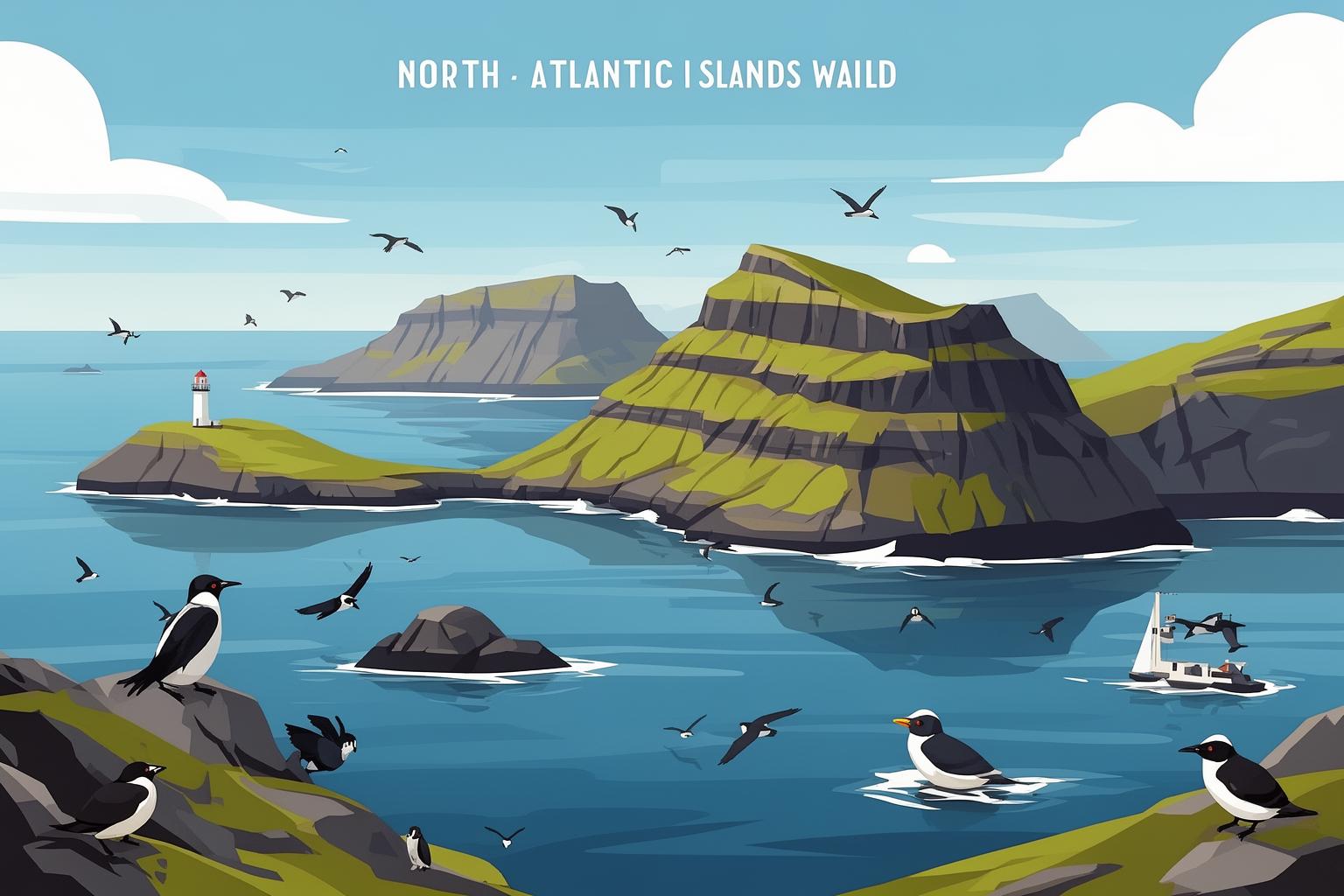
The magnetic allure of the Faroe Islands cannot be fully captured by photographs alone, though they certainly ignite the initial spark of wonder. It is a deeper connection, a call to a wildness that many of us have long forgotten. This archipelago, a self-governing nation within the Kingdom of Denmark, stands as a testament to the resilience of both the land and the people who call it home. Here, the bond with nature is not merely a lifestyle choice but the very essence of existence. Weather is never a casual topic; it is the central figure in the daily drama of life, shaping everything from ferry timetables to a farmer’s tasks. This ongoing, humbling interaction with the elements molds the Faroese spirit and imparts visitors with a profound lesson in acceptance and adaptability.
A Land Born of Fire and Legend
To truly understand the Faroe Islands, one must first grasp their turbulent origins. These are the peaks of an immense basalt plateau, thrust upward from the ocean floor by volcanic forces some 60 million years ago. As Ice Age glaciers retreated, they sculpted deep fjords, sharpened towering cliffs, and carved valleys where small, colorful villages now nestle for shelter. Standing on a cliff’s edge, looking down at the crashing waves below, you are on ancient geological ground. This striking origin story feels alive in the landscape—it’s easy to envision Norse gods roaming these verdant heights or giants hurling stones into the sea. The Norse sagas, epic poems of this world, seem palpably near. The earliest settlers were likely Irish monks seeking solitude in the 7th century, but it was the Vikings, arriving around 800 AD, who truly shaped the islands’ fate. They brought their language, which evolved into modern Faroese, their laws—establishing one of the world’s oldest parliaments, the Løgting—and their stories. Walking along an old village trail is not just exercise; it is traversing a path used for over a millennium, a tangible link to this rich history. The air itself feels thick with these legends, and the ever-present mist acts like a veil, hinting that the realm of myth lies just within reach.
The Avian Guardians of the Cliffs: The Puffin’s Realm
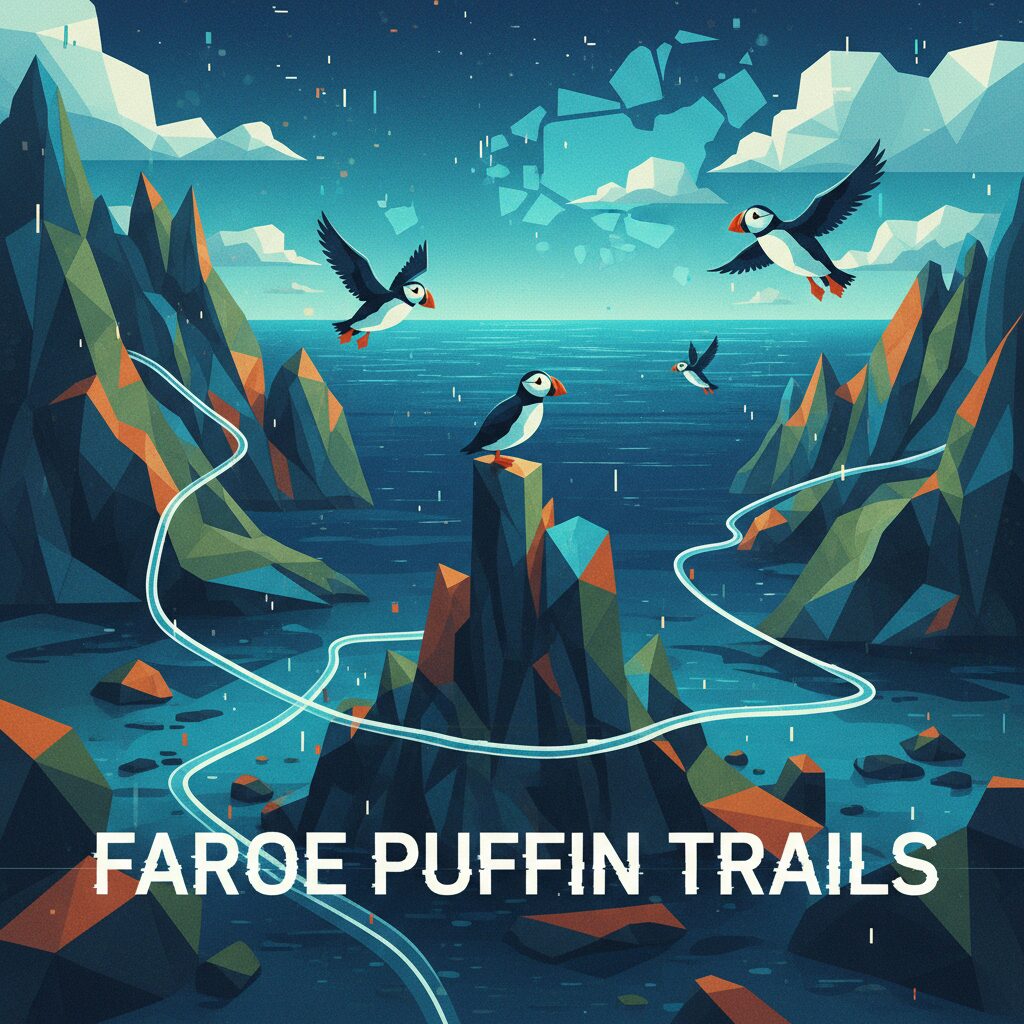
For many, the ultimate journey to the Faroes is inspired by the wish to encounter one of its most iconic inhabitants: the Atlantic Puffin, known as Lundi in Faroese. These birds radiate pure charm. With their elegant black-and-white tuxedo-like feathers, a brightly colored, almost hand-painted beak, and soulful eyes rimmed in black, they possess a comical dignity that is impossible to resist. Puffins spend the majority of their lives on the open ocean but return from around May to August to nest in burrows dug into the soft cliff soil. Witnessing their arrival is to behold a natural spectacle of immense scale. The cliffs of islands like Mykines transform into bustling, chaotic, noisy seabird metropolises. Often dubbed the “clowns of the sea,” puffins fill the air, their wings fluttering in a frantic blur. Though not the most graceful in flight, often crash-landing with endearing clumsiness, they exhibit remarkable skill as swimmers and divers. Seeing thousands gathered, interacting, and raising their young—the pufflings—is an experience far beyond simple birdwatching. It feels like receiving a brief invitation into a magical, secret kingdom. Puffins symbolize the Faroese summer, a lively splash of color amid the greens and greys, and their faithful return each year is a poignant reminder of the enduring, cyclical patterns of the natural world.
The Pilgrim’s Path: Journeying to the Puffin Kingdom of Mykines
While puffins can be seen in various spots across the islands, Mykines stands as the undisputed capital of their realm. This westernmost island feels like a world apart, where the bird population far surpasses the dozen or so human residents who live there year-round. Visiting Mykines is no casual trip; it is a full-day venture requiring careful planning, patience, and a deep respect for the power of the North Atlantic. Yet the rewards are immense, offering one of the most intimate and awe-inspiring wildlife experiences on the planet.
The Voyage Across the Waves: Reaching Mykines
The journey is the first part of the pilgrimage. The main way to get to the island is by ferry from the port of Sørvágur on the nearby island of Vágar. This is not a large car ferry, but a smaller, sturdy craft built to handle the often choppy seas. Here lies the first crucial advice for any prospective visitor: you must book your ferry ticket online, months ahead. The boat’s capacity is limited, and summer demand is immense. July tickets can sell out as early as February. Leaving it to chance guarantees disappointment. There is also a helicopter service, surprisingly affordable since it is subsidized public transport for the island’s residents. While offering a stunning aerial view, it is considered poor etiquette for tourists to book a same-day round trip, as it occupies seats locals may need. The best approach is often to take the ferry one way and the helicopter the other, if timing and availability allow. The boat ride, lasting about 45 minutes, is a sensory immersion—you’ll feel the cold salt spray on your face, watch gannets and fulmars glide effortlessly alongside, and see the imposing cliffs of Vágar and Tindhólmur slip by. As Mykines appears—a sheer rock fortress rising from the sea—the anticipation is electric. Weather is the ultimate gatekeeper; trips are often canceled due to high swells, a firm reminder that you are visiting on nature’s terms, not your own.
Stepping into a Fairytale: The Village of Mykines
Landing on Mykines is an adventure itself. There is no large, gentle harbor—only a small stone jetty nestled in a narrow gorge. Except in the calmest conditions, the boat’s crew must expertly time the waves’ rise and fall to unload passengers safely. Once ashore, you climb a steep stairway and emerge into another era. The village is a tiny cluster of brightly painted wooden houses with traditional turf roofs, huddled around a small stream. No paved roads, no shops, no cars—only narrow grassy paths linking the homes. The silence is profound, broken only by seabird cries, sheep bleats, and the rushing stream. It feels less like a village and more like a well-kept secret. The air is clean and crisp, carrying the scents of salt, earth, and wildflowers. This is a place that makes you slow down, breathe deeply, and just be present. The small local café is a comforting refuge, offering hot drinks and simple, hearty fare, but the true feast is the atmosphere of complete peace and solitude.
The Sacred Trail to Mykineshólmur
The real purpose of the visit begins at the village’s edge. A well-worn path marks the start of the hike to the islet of Mykineshólmur, home to the largest puffin colony. Visitors must pay a hiking fee to access this trail. This is not a tourist trap but a critical conservation effort. The funds go straight to preserving the fragile path, protecting bird habitats, and sustaining tourism on this highly sensitive island. Local guides who oversee the trail offer essential insights and ensure everyone respects the rules. The most important rule is absolute and non-negotiable: remain on the designated path at all times. The ground is honeycombed with puffin burrows, each sheltering a fragile egg or chick. Stepping off the path risks collapsing these burrows, with fatal consequences for their inhabitants. You are a guest in their home, and walking lightly is the highest form of respect.
The hike itself is like stepping into a dreamscape. Initially, the path climbs steeply, offering breathtaking views of the village and its verdant amphitheater. Then, rounding a bend, the world transforms. Suddenly, you are surrounded. The air hums with the flutter of thousands of wings. Puffins are everywhere—on the path’s edge, peeking from their burrows, crash-landing with fish-laden beaks, and bobbing on the water below. A constant, gentle, almost purring coo emanates from the burrows, mixed with the harsher cries of kittiwakes and razorbills clinging to sheer cliffs. It is an overwhelming, joyous, and deeply moving spectacle. The path winds along the cliff’s edge, a dramatic route with the roaring ocean always beside you. Then comes the hike’s icon: a narrow, 40-meter steel bridge spanning a dizzying chasm, linking the main island to Mykineshólmur islet. Crossing it, wind whipping around you and the sea churning far below, is a heart-pounding thrill, an authentic passage into the heart of the puffin kingdom. Beyond, the path ascends gently toward the lighthouse at the islet’s western tip. Built in 1909, this stoic white sentinel stands alone against the vast Atlantic. Reaching it feels like reaching the world’s edge. Here, sheltered from the wind, you can sit and absorb the grandeur of it all: the endless ocean to the horizon, the dense birdlife, and the profound peace of being utterly removed from the noise of modern life.
Practicalities and Etiquette on the Puffin Path
Preparation is vital to fully enjoy this once-in-a-lifetime experience. Faroese weather is famously unpredictable. Dressing in layers is essential: a merino wool base layer, a fleece or insulated mid-layer, and a waterproof, windproof outer shell—necessary even on sunny days. Sturdy, waterproof hiking boots with solid grip are a must; the trail can be slippery and muddy. Bring a small backpack with water, high-energy snacks, and perhaps a warm flask. Photographers will find a telephoto lens indispensable to capture intimate puffin portraits without disturbing the birds. Remember, drones are strictly prohibited on Mykines to protect wildlife. Above all, bring reverence and patience. Sit quietly, watch their comings and goings, and let the magic of this place wash over you. The best photos and most treasured memories come not from rushing to the end but from lingering and becoming part of the landscape.
Beyond the Puffins: Hiking the Ancient Trails of the Archipelago
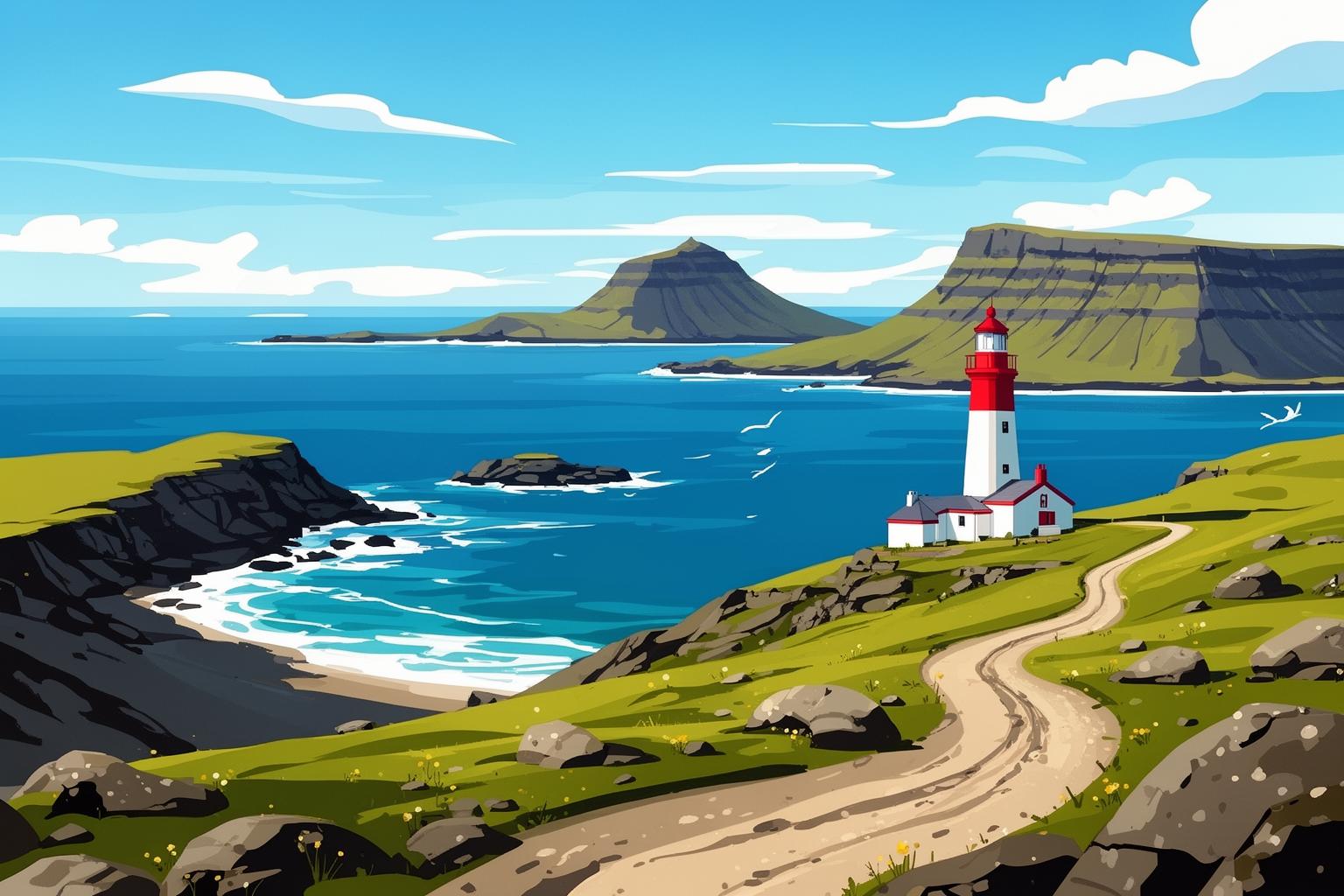
While Mykines undoubtedly stands out as a highlight, it represents just one chapter in the grand saga of hiking across the Faroe Islands. The archipelago is laced with ancient trails called varðagøtur, or “cairn paths.” Marked by stone cairns, these routes were the original highways of the Faroes, linking remote villages long before roads and tunnels existed. Walking them offers a deeply personal connection to the islands’ history. Each island boasts its own unique character, presenting different challenges and rewards.
Vágar Island: Pursuing Illusions and Coastal Majesty
As the island hosting the international airport, Vágar offers every visitor their first taste of the Faroes, immediately setting an exceptionally high standard. It is home to some of the most iconic and photographed landscapes in the entire archipelago.
The Floating Lake of Sørvágsvatn
The hike to the Trælanípa viewpoint is arguably the most famous in the Faroes. It reveals the mind-boggling optical illusion of Sørvágsvatn, a lake that appears to hover hundreds of feet above the ocean. The trail is a fairly easy, mostly flat walk across open moorland, taking about an hour each way. As you near the cliff’s edge, the perspective shifts, and the incredible illusion unfolds. The lake, actually only about 30 meters above sea level, is separated from the ocean by a sheer, towering cliff. From the perfect vantage point at Trælanípa, or “Slave Cliff,” the effect is astonishing. The cliff’s name carries a darker past, as it is said to be where exhausted Viking slaves were cast into the sea. Standing here, with the vast lake on one side and the endless ocean on the other, evokes a humbling experience. Just beyond the main viewpoint lies the Bøsdalafossur waterfall, where the lake’s overflow plunges directly into the Atlantic—a breathtaking, dramatic sight.
The Waterfall into the Ocean: Múlafossur at Gásadalur
Not far from the airport is the tiny, extraordinarily picturesque village of Gásadalur. For centuries, this settlement was among the most isolated in the Faroes. Surrounded by steep mountains on three sides and a sheer cliff on the fourth, the only access was a perilous mountain hike or a boat landing possible only in the calmest seas. The postman’s weekly delivery was a heroic mountaineering feat. In 2004, a tunnel was blasted through the mountain, finally connecting Gásadalur to the road network and saving it from abandonment. Today, you can simply drive there, but the true jewel is the view of the Múlafossur waterfall. Here, a pristine cascade of freshwater leaps from the village’s cliff-edge green fields and plunges directly into the roiling saltwater below. It is a scene of such raw, perfect beauty it almost seems unreal. For those with time and energy, hiking the old postman’s route over the mountain from Bøur offers a profound sense of the isolation once faced by villagers and provides some of the island’s most spectacular coastal views.
Streymoy Island: Echoes from the Capital and Cliffs
Streymoy is the largest and most populous island, home to the capital city, Tórshavn. Yet even here, wild and untouched nature is only minutes away. The island offers an ideal mix of culture, history, and dramatic landscape.
A Stroll Through Tórshavn’s Heart: Tinganes and Reyn
Tórshavn may be the coziest capital city in the world. Its core is the old town, a charming maze of narrow, winding alleys in the Reyn and Undir Ryggi neighborhoods. Traditional black-tarred wooden houses with bright white window frames and lush turf roofs—so green they seem to grow straight from the earth—define the scene. At the center is Tinganes, a rocky peninsula jutting into the harbor. This is not just a historic site; it is the seat of the Faroese government. With its deep-red, turf-roofed wooden buildings, it houses one of the world’s oldest parliamentary meeting places, dating back to the Viking era around 900 AD. Wandering these lanes, with the scent of the sea in the air and the sound of footsteps on ancient stones, you feel the living pulse of Faroese history. It is a place of quiet strength and vast cultural importance.
The Path to Saksun: A Tidal Village Frozen in Time
At the end of a long, beautiful valley on Streymoy’s northwest coast lies the small settlement of Saksun. It is a cluster of historic turf-roofed farmhouses and a quaint white church overlooking a stunning natural amphitheater that was once a deep, protected harbor. Over time, a storm silted up the harbor’s entrance, forming a tidal lagoon with a black sand beach. Walking from the lagoon out to the open ocean is a magical experience but demands careful timing. It is only possible at low tide. You must check the tide schedules beforehand, as the incoming tide can quickly flood the lagoon, cutting off your return path. Crossing the wet sand between towering cliffs feels like traversing a secret, temporary path revealed just for you. The sense of scale is overwhelming, and reaching the thunderous Atlantic waves at the walk’s end is a rewarding climax.
Kalsoy Island and the Legend of the Selkie
For a journey deep into Faroese mythology, a visit to Kalsoy—long, narrow, and steep—is essential. Known as “the flute” due to its shape and many road tunnels, Kalsoy hosts one of the archipelago’s most dramatic hikes, intertwined with one of its most poignant legends.
The Kallur Lighthouse Trek: Hiking to the Edge of Myth
The hike to the Kallur lighthouse starts in the northernmost village of Trøllanes. The trail is steep, muddy, and often demanding, requiring a steady head for heights as it crosses exposed grassy slopes. There are no guardrails—only you, the narrow path, and the vast drops to the sea. The reward is one of the North Atlantic’s most stunning panoramas. The small white lighthouse sits at the promontory’s edge, a beacon of solitude. From here, the view north along Cape Enniberg’s razor-sharp cliff is both terrifying and beautiful. On clear days, you can see the towering sea stacks of Risin and Kellingin off Eysturoy’s coast—giant and witch turned to stone as they tried to pull the Faroes back to Iceland. The landscape is also deeply tied to the legend of Kópakonan, the Seal Woman. The tale tells of a selkie, a mythical being who sheds her seal skin to become human on land. A local farmer from nearby Mikladalur stole her skin, forcing her into marriage. Years later, she found her skin and returned to the sea, after her human husband killed her selkie spouse and children. In sorrow, she cursed Mikladalur’s men, foretelling so many deaths at sea they could link hands around all of Kalsoy. This melancholic and beautiful story feels woven into the very fabric of the dramatic landscape. In Mikladalur, a striking steel statue of Kópakonan gazes forever out to sea, a powerful homage to the tales shaping this land.
The Faroese Way of Life: Culture, Cuisine, and Connection
To visit the Faroe Islands and only appreciate the landscapes is to miss half the story. The culture shaped by this beautiful yet harsh environment is unique, resilient, and profoundly connected to the land and sea. Even a brief immersion in the Faroese way of life is a crucial part of the journey.
Heimablídni: Dining in the Heart of a Faroese Home
One of the most genuine and unforgettable experiences is heimablídni, meaning “home hospitality.” Several local families invite visitors into their homes to enjoy multi-course meals featuring traditional Faroese dishes. This is not a restaurant setting; it is being welcomed into a family’s dining room to share food and stories. The menu follows the seasons and what the family has farmed, fished, or foraged. You might taste ræst kjøt (semi-fermented, wind-dried mutton), a flavor that is distinctive, pungent, and deeply connected to the islands’ food preservation heritage. You may also sample wind-dried fish, rhubarb desserts from the garden, and possibly home-brewed beer. Beyond the food, it is the conversation and connection that make the experience truly special. You’ll hear tales about village life, learn about the challenges and joys of farming on steep slopes, and gain authentic insight into the Faroese spirit.
The Language of Wool: Faroese Knitwear and the Stories They Tell
Faroese sheep, a tough and ancient breed, outnumber the human population nearly two to one. For centuries, their wool has been the islands’ most valuable resource, providing warmth and defense against harsh weather. The iconic Faroese sweater, or føroysk troyggja, is more than just clothing; it embodies cultural identity. The complex, star-like patterns are not merely decorative but are rooted in tradition and regional distinctions. These sweaters were, and still remain, a fisherman’s trusted companion, with the natural lanolin in the wool rendering them highly water-resistant. This knitting tradition thrives everywhere, from high-fashion boutiques in Tórshavn offering modern designs to local women knitting in their homes. Purchasing an authentic, hand-knitted sweater is an excellent way to support local artisans and bring home a piece of Faroese heritage that endures a lifetime.
Navigating the Elements: The Unpredictable Faroese Weather
Discussing the Faroes without acknowledging the weather is impossible. The local saying that you can experience “four seasons in fifteen minutes” is no exaggeration. A day can start with bright sunshine, be swallowed by dense, disorienting fog (mjørki), battered by horizontal rain and gale-force winds, and end with a peaceful, sunlit evening. This volatility defines the islands. For travelers, preparation is essential—not optional—for both comfort and safety. The idea of calling off plans due to a “rainy day” doesn’t apply here; instead, you dress appropriately and carry on. Umbrellas are useless in the wind. Your most important items are truly waterproof and windproof jackets and trousers, plus layers upon layers. Merino wool is ideal as it retains warmth even when wet. Fog poses particular dangers for hikers, descending rapidly and reducing visibility to mere feet. It is vital to stay on marked trails, carry a map and compass (and know how to use them), and keep a fully charged phone. Always check the weather forecast before heading out and be ready to turn back if conditions worsen.
A Practical Guide for the Intrepid Traveler
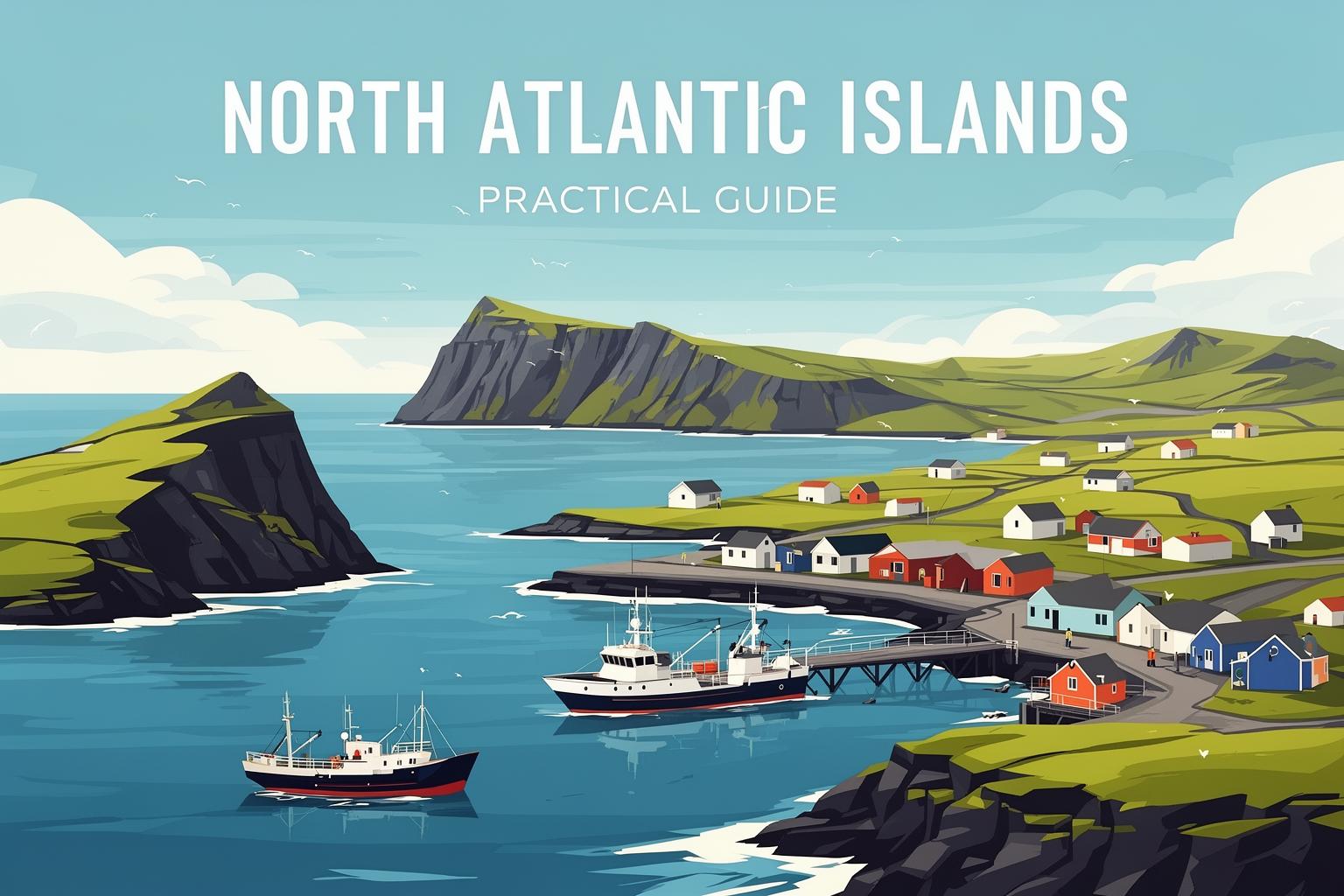
Planning the logistics of a trip to the Faroe Islands is part of the adventure. With some advance preparation, you can make your journey as seamless as possible, allowing you to fully enjoy the incredible experiences that lie ahead.
Arriving and Getting Around
All international flights arrive at Vágar Airport (FAE). From there, the best way to explore the islands with freedom and flexibility is by renting a car. The roads are well-maintained, scenic, and typically quiet outside of Tórshavn. A network of impressive sub-sea tunnels connects the main islands, some featuring stunning light installations by Faroese artist Tróndur Patursson. Note that these tunnels have automated tolls; your rental car company usually tracks your usage and bills you afterward. For those who prefer not to drive, an unexpectedly efficient public transport system of buses and ferries links most of the islands. Purchasing a multi-day Travel Card (Slóðakort) can be a cost-effective choice, offering unlimited travel on most routes.
When to Embark on Your Pilgrimage
The ideal time to visit depends entirely on your priorities. The summer months, from June to August, provide the best chance for milder weather, the famous long days of the midnight sun, and, importantly, the presence of puffins, who typically leave by late August. This is also the busiest and most expensive season, making early booking for flights, accommodation, and the Mykines ferry absolutely crucial. The shoulder seasons of May and September can be delightful. The landscapes remain beautiful, the crowds are thinner, and you may catch either the start or end of puffin season in May. The weather can be unpredictable, but the dramatic light is a photographer’s dream. Winter is for the truly adventurous. It brings short days, fierce storms, and a raw, stark beauty. Many hiking trails may be inaccessible or unsafe, but you’ll have the islands nearly to yourself and might witness the Northern Lights on a clear night.
Lodging for the Weary Soul: Where to Stay
Accommodation ranges from modern hotels in Tórshavn to charming guesthouses and self-catering cottages in smaller villages. Using Tórshavn as a base is popular, offering easy access to a wide variety of restaurants and services. However, staying in a smaller, more remote village provides a more immersive and tranquil experience, placing you right at the doorstep of incredible hiking trails. Booking through platforms like Airbnb can uncover wonderful traditional homes with turf roofs and stunning fjord views. Regardless of your choice, reserving well in advance—especially for summer travel—is essential to secure your preferred accommodation.
Final Thoughts: Carrying the Spirit of the Islands Home
A journey to the Faroe Islands lingers with you long after you leave. It etches itself into your memory not merely as a collection of breathtaking photographs, but as a sensation. It’s the sensation of the wind pressing against you atop a high cliff, a force so intense it feels as though the planet itself is reaching out. It’s the delight of seeing a puffin land clumsily, its beak stuffed with tiny silver fish. It’s the taste of salt on your lips and the deep, resonant quiet of a valley at dusk. You arrive as a visitor, a tourist, but you depart as a pilgrim, having witnessed something ancient, powerful, and profoundly beautiful. You leave with a renewed admiration for the forces of nature, for the resilience of communities living in harmony with it, and for the myths and stories that give a landscape its soul. The Faroe Islands don’t just reveal the world to you; they reveal how the world was formed, reminding you of the wildness that still lingers, waiting in the mist at the edge of the sea.