
There are journeys that follow a map, and then there are those that follow a story. To travel through Spain in the footsteps of Miguel de Cervantes Saavedra is to embark on the latter, a pilgrimage not to a single sacred spot, but across a sun-scorched, wind-swept landscape of the soul. This isn’t just about seeing where a great writer was born or died; it’s about understanding how a place can forge a mind, how the dust of a road and the light of a particular sky can give birth to a character who would, quite literally, change the way we think about storytelling. We’re chasing the ghost of the man who gave us Don Quixote de la Mancha, the Ingenious Gentleman who dared to see giants where others saw only windmills. Cervantes, a soldier, a tax collector, a prisoner, and a playwright, lived a life as sprawling and adventurous as his novel. His Spain was a world of imperial glory and crushing bureaucracy, of profound faith and roguish survival. To trace his path is to wander through the heart of the Spanish Golden Age and to find, in the quiet villages and bustling cities, the very essence of his enduring magic. This is a quest to find the source code of a literary revolution, a journey into the Spain that created Cervantes, and the Spain that he, in turn, created for all of us.
Such literary pilgrimages, like Chasing Shadows: A Literary Pilgrimage Through Dostoevsky’s Russia, offer a profound way to connect with the landscapes that shaped great writers.
The First Chapter: Alcalá de Henares, Where the Story Begins
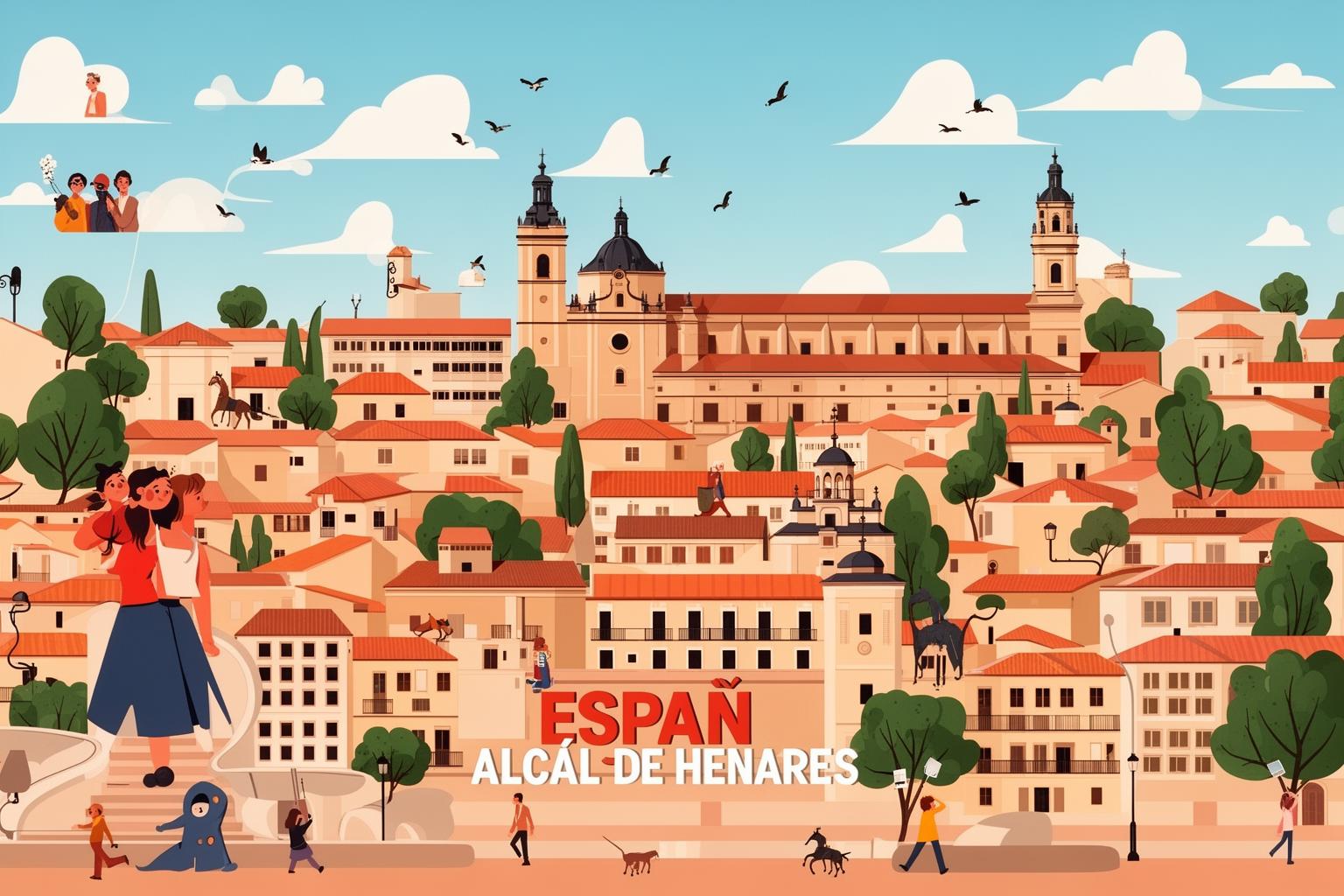
Every great story has an origin, and for Miguel de Cervantes, that origin is Alcalá de Henares. Just a brief train journey from the bustling streets of Madrid, this city feels like stepping onto a meticulously preserved 16th-century film set. As a university town, its scholarly and reflective spirit seems to seep from every stone. The air hums with the quiet fervor of learning, a testament to its historic university established in 1499. This is the world that welcomed Cervantes on his baptism day, October 9, 1547. While Madrid may be the site of his tomb, Alcalá is where he was born, and the essence of his beginnings is deeply felt here.
The Birthplace Museum: A Glimpse into 16th-Century Life
The highlight of any Cervantes pilgrimage is the Museo Casa Natal de Cervantes, the carefully restored home believed to be his birthplace. Situated on the long, arcaded Calle Mayor, the museum is far from a mere display of artifacts behind glass; it’s an immersive journey. Crossing its threshold transports you back from the 21st century. The cool, shadowed interior provides relief from the Castilian sun, and the home’s design tells the story of a middle-class family during the Siglo de Oro. You can explore the surgeon’s room of his father, Rodrigo de Cervantes, complete with intimidating medical tools that inspire gratitude for modern healthcare. The kitchen, with its hearth and simple pottery, feels alive, as if someone has just stepped out to the market.
Upstairs, the women’s quarters, or estrado, where sewing and receiving guests took place, offer insight into the domestic world that influenced Cervantes’s early view of society. Yet the most moving room is the study. There, a modest desk and chair await. While none of Cervantes’s personal belongings are authenticated here, this emptiness somehow intensifies the room’s power. It becomes a blank slate onto which you can imagine a young Miguel, perhaps already weaving stories, his imagination fueled by the chivalric tales he would later so masterfully satirize. The creak of floorboards, the angle of light through small, paned windows—all combine to bring you nearer to the man himself. Take your time here. Pause in the doorways and imagine the household sounds, the conversations, and daily rhythms that shaped a genius in the making.
The Soul of the City: Plaza de Cervantes and the University
Exiting the house, you return to Calle Mayor, a lively vein of city life. Follow it to Plaza de Cervantes, the town’s grand central square. Here stands a statue of the writer, book in hand, overseeing students and citizens gathered under the shade of trees. He appears not as a stiff literary figure but as a knowing observer, a man who grasped the follies and triumphs of human nature. The plaza is an ideal spot to sit with a coffee and soak in the ambiance. Listen to the conversations from the outdoor cafes and watch the storks—the city’s unofficial mascots—tending their large nests atop historic buildings. Their clattering beaks provide Alcalá’s unique soundtrack.
Nearby sits the University of Alcalá, a UNESCO World Heritage site. Its Plateresque façade is among the most stunning examples of Spanish Renaissance architecture. You don’t need to be a student to sense the place’s intellectual weight. Step into the courtyard, the Patio Trilingüe, where scholars once studied Latin, Greek, and Hebrew. This was the intellectual melting pot of Cervantes’s Spain. Although he did not formally attend this esteemed university, he was surely influenced by the scholarly atmosphere of his hometown. The presence of such a center of knowledge would have filled the streets with books, ideas, and debates—rich material for his future work.
A useful tip for visitors: Alcalá is best explored on foot. Wear comfortable shoes and let yourself wander the grid of historic streets. Step inside the Corral de Comedias, one of Europe’s oldest preserved theaters, to experience the dramatic world Cervantes aspired to master. And don’t leave without trying the local pastry, the costrada, a delightful blend of puff pastry, cream, and meringue—a sweet reward after a day spent traveling through history.
The Literary Labyrinth: Cervantes in Madrid
If Alcalá was the prologue, Madrid was the expansive, chaotic, and dazzling main chapter of Cervantes’s life. He resided here at different times, but it was in his later years that he truly became woven into the city’s fabric, living and writing in the vibrant neighborhood now known as the Barrio de las Letras, or the Literary Quarter. This is where the giants of the Spanish Golden Age—Cervantes, Lope de Vega, Quevedo, Góngora—lived, worked, and often feuded. To stroll these streets is to follow the invisible ley lines of Spanish literature.
Barrio de las Letras: Where Words Lay the Streets
The Barrio de las Letras is not a district of grand monuments but of subtle reminders. The magic lies in the details. As you wander the narrow alleys, glance down. Embedded in the paving stones are golden excerpts from the works of the neighborhood’s famous residents. You’ll literally walk over the words of Don Quixote. Calle de Cervantes, where the author lived and died, and the crossing Calle de Lope de Vega, named after his great rival, form a lasting map of their complex relationship. The area vibrates with creative energy, blending historic taverns, avant-garde theaters, artisan shops, and quiet, leafy plazas. It feels both historic and vividly alive, a place where the ghosts of the past seem to hold lively conversations with the present.
Make your way to the Casa-Museo de Lope de Vega, the beautifully preserved home of Cervantes’s contemporary. Visiting it offers a fascinating contrast. Lope was a superstar of his time, successful and wealthy, and his home reflects that. It provides a glimpse into the world Cervantes aspired to—and often struggled to reach. The rivalry between the two men was legendary, a clash of personalities and literary styles played out on these very streets.
A Final Resting Place: The Convent of the Barefoot Trinitarians
For centuries, the exact location of Cervantes’s grave remained a mystery. He died in poverty on April 22, 1616, and wished to be buried in the Convent of the Trinitarians on Calle de Lope de Vega. He harbored deep gratitude for the Trinitarian order, which had negotiated his ransom and secured his release after five long years of captivity in Algiers. The original church was later rebuilt, and his remains were lost during the process.
In 2015, after a meticulous search, forensic scientists announced they had found bone fragments believed to belong to Cervantes, his wife, and others named in his will. Today, a discreet plaque inside the convent’s new church marks his final resting place. Visiting the Convento de las Trinitarias Descalzas is a quiet, contemplative experience. It’s not a grand tomb but a simple marker in an active place of worship. You cannot see the remains, but knowing you are in the place he chose for his eternal rest is deeply moving. It’s a humble end for a man whose literary legacy is anything but. It speaks to the hardships of his life and his enduring faith. Visiting here is less about sightseeing and more about quietly honoring the man behind the myth.
The Bronze Knight: Plaza de España
For a more monumental tribute, head to the majestic Plaza de España. Here, a towering monument to Cervantes overlooks the square. At its base, a bronze Don Quixote on his horse Rocinante and a loyal Sancho Panza on his donkey Dapple ride forth on their timeless quest. It’s one of Madrid’s most iconic and widely photographed landmarks. The statues perfectly capture the spirit of the characters—Quixote, gaunt and determined, gazing toward some unseen ideal, and Sancho, pragmatic and grounded. The sculpture powerfully testifies to how Cervantes’s creations have transcended the page to become universal symbols of idealism and friendship. It’s an inspiring spot to reflect on the global influence of a story that began in the dusty plains of La Mancha and the bustling streets of this very city.
The Royal Interlude: A Writer’s Life in Valladolid

For a brief, shining period from 1601 to 1606, the capital of Spain was not Madrid, but Valladolid. The royal court of King Philip III relocated here, and everyone of importance, including Cervantes, followed. This was a defining moment in his life. He was no longer a young adventurer but a man in his fifties, battle-worn and world-weary, yet on the verge of his greatest literary accomplishment. It was in a modest house on the outskirts of the city that he lived while completing and publishing the first part of Don Quixote in 1605.
The Valladolid House: Where Quixote Took Flight
The Casa de Cervantes in Valladolid provides a glimpse into the author’s life at this exact, crucial time. The house museum is an authentic reconstruction of the home he shared with his large family—his wife, his sisters (the “Cervantas”), his illegitimate daughter, and his niece. It was a household dominated by women, a detail that likely influenced his complex female characters.
The atmosphere here differs from his birthplace in Alcalá. This is the home of a working writer. You can almost sense the pressure and excitement of the era. Picture Cervantes in these rooms, refining the manuscript that would soon bring him fame, if not fortune. The house itself gained notoriety during his stay due to a mysterious death outside its doors, a scandal that briefly landed Cervantes and his family in prison. As you move through the rooms, you get a sense of the fragility of his life—living on the edges of court society, dealing with financial hardship and legal disputes, all while creating a work of extraordinary genius.
The garden is a particularly serene spot—a small, walled refuge offering a quiet place to reflect on the contrast between the turmoil of his life and the clarity of his artistic vision. Valladolid itself is a grand and beautiful city, with a majestic Plaza Mayor that predates Madrid’s. Exploring the city lets you see both the centers of power and the backstreets Cervantes would have known—the world he keenly observed and engaged with while writing his masterpiece.
The Heart of the Matter: Journeying Through La Mancha
No pilgrimage in honor of Cervantes is complete without venturing into La Mancha. This region is more than just the backdrop of Don Quixote; it embodies the very spirit of the novel. Stretching across a vast, arid plateau in central Spain, La Mancha is a land of stark beauty and endless horizons. The sky blazes a piercing blue, the soil reveals shades of ochre and red, and the sun beats down relentlessly, causing the landscape to flicker and blur. It is a place that stirs the imagination, a blank canvas upon which a knight-errant might easily project his dreams. Traveling here allows you to grasp, on a profound level, why this land served as the perfect cradle for the world’s most famous dreamer.
A practical tip: La Mancha is best explored by car. The distances between key sites are vast, and public transport is often scarce. Renting a car gives you the liberty to pursue the horizon, stop whenever a view captivates you, and truly absorb the magnificent emptiness of the landscape that inspired the novel.
The Giants of Consuegra and Campo de Criptana
No image is more iconic in Don Quixote than the windmills. Perched along a ridge overlooking Consuegra, a row of twelve brilliantly white windmills stand guard, their sails slowly turning in the constant breeze. This is the place. This is the scene. Witnessing them for the first time is genuinely awe-inspiring. These are not mere props; they are historic edifices once used to grind grain, possessing a rugged, straightforward charm. You can approach them closely, touch their weathered stone, and even enter one, “Sancho,” which still contains its original 16th-century machinery.
Standing on that ridge, feeling the wind whip past you, and gazing over the endless, flat plain instills a unique sense of reality blending with fiction. You instantly understand how a lonely, book-obsessed nobleman could mistake these structures for fierce giants awaiting battle. The best time to visit is during the golden hours of sunrise or sunset, when the light bathes the landscape in orange and purple tones, and the windmills cast long, dramatic shadows. It is pure enchantment.
Just a short drive away, the town of Campo de Criptana features another remarkable cluster of windmills, some undoubtedly witnessed by Cervantes himself. These windmills rise amid the town’s whitewashed houses. The surrounding Albaicín neighborhood is a charming maze of narrow, sloping streets. The experience here feels more intimate—you don’t merely observe the windmills from afar; you walk among them, living alongside them as the people of La Mancha have for centuries.
In Search of Dulcinea: The Romantic Ideal of El Toboso
Every knight requires a lady to whom he dedicates his heroic deeds, and for Don Quixote, that lady was Dulcinea del Toboso. His idealized image of a simple farm girl named Aldonza Lorenzo transformed her into a princess of unmatched beauty. Her hometown, El Toboso, embraces this literary legacy wholeheartedly. The entire village feels like a love letter to Dulcinea.
Streets are adorned with plaques quoting passages from the novel that mention her, and the town is impeccably maintained, its whitewashed walls and blue-trimmed doorways exuding a storybook charm. The principal attraction is the Casa de Dulcinea, a museum housed in a 16th-century manor that represents the home of a prosperous farmer of the time—the kind of woman Aldonza Lorenzo might have been. It offers a fascinating glimpse into rural life, featuring antique farming tools, a wine press, and period furnishings. This grounds Dulcinea’s fantastical tale in tangible reality, revealing the world from which Quixote drew his ideal.
Nearby is the Museo Cervantino, which showcases an impressive collection of Don Quixote editions from around the globe, in numerous languages, some signed by famous personalities. It is a powerful testament to the story’s universal appeal. El Toboso is a quiet, romantic locale that invites you to slow your pace, wander its streets, and reflect on the power of love and imagination— the very forces that propelled the Knight of the Sad Countenance.
The Prison and the Prologue: Argamasilla de Alba
“In a village of La Mancha, whose name I do not wish to recall…” Don Quixote begins. For centuries, scholars and towns have competed for the honor of being that unnamed village. Argamasilla de Alba stakes one of the strongest claims. Local tradition holds that Cervantes was imprisoned here in the Cueva de Medrano, a cellar-prison, following a dispute with the local gentry. Legend says it was in this dark cave that he conceived and began writing his masterpiece.
Today, visitors can descend into the Cueva de Medrano. This simple, subterranean chamber is cool and shadowy. Whether legend or fact, standing within its stone walls evokes a profound sense of creative origin. It symbolizes how a story of ultimate freedom was born from a place of confinement. The town itself is a typical Manchegan settlement, but this small cave grants it a unique and powerful literary significance. It serves as a reminder that inspiration often springs from the most unexpected and uncomfortable places.
The Andalusian Chapters: Seville’s Grit and Glamour
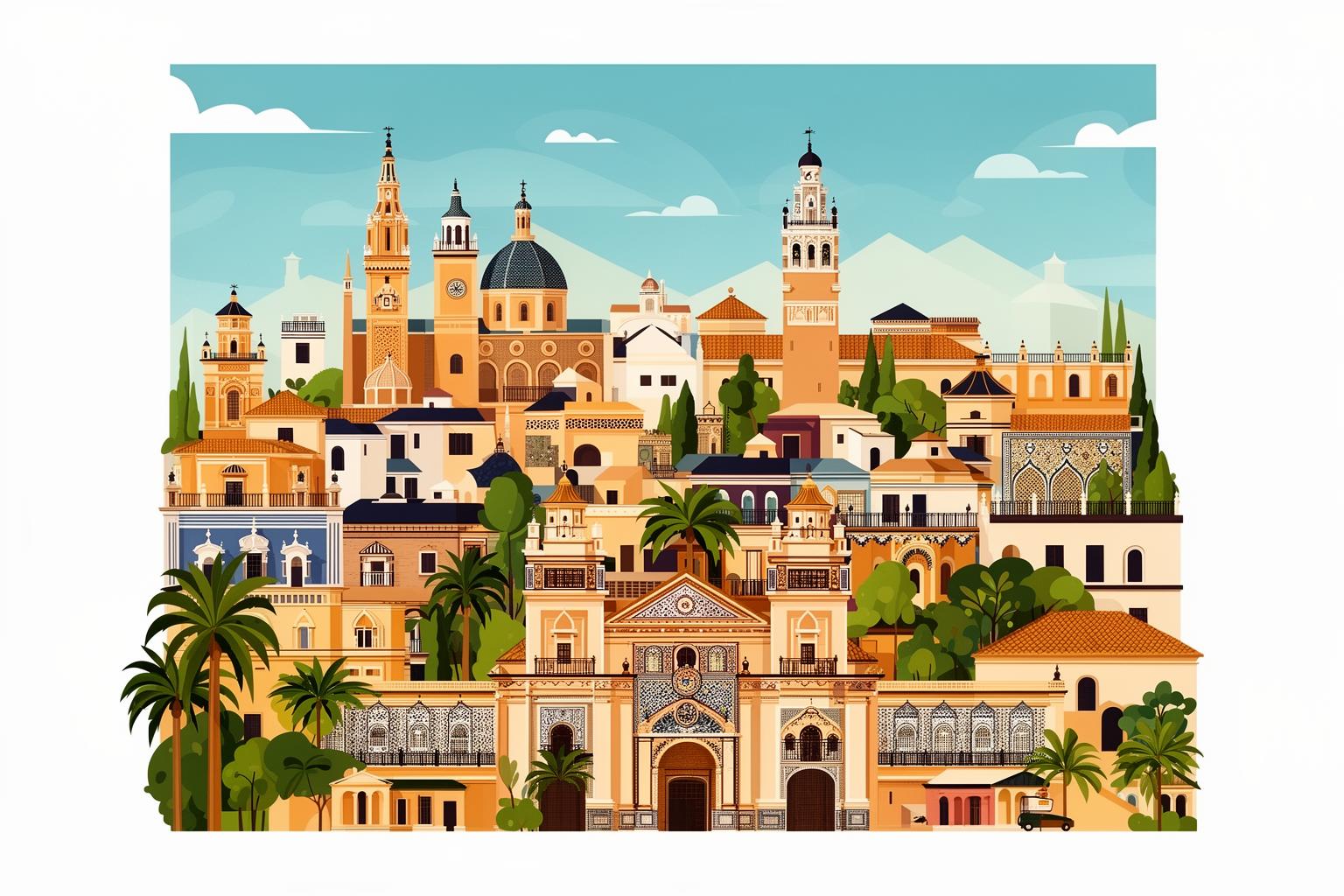
Before becoming a celebrated novelist, Cervantes was a man struggling to make a living, and his work frequently took him to the vibrant, chaotic, and sun-soaked region of Andalusia. He spent a significant amount of time in Seville, which in the 16th century was one of the most important cities globally. As the primary port for trade with the Americas, it was a bustling, multicultural metropolis— a place of immense wealth and desperate poverty, of devout convents and rowdy taverns. It was a city of sharp contrasts, and Cervantes absorbed it all.
He worked there as a royal commissary, tasked with requisitioning wheat and olive oil for the Spanish Armada. It was a challenging role that put him at odds with powerful church and city officials and even landed him in prison in Seville at least once due to discrepancies in his accounts. Yet these experiences, difficult as they were, proved invaluable for the writer. They gave him a firsthand view of all layers of society, from scheming merchants and corrupt officials to beggars and pícaros (rogues). This rich mosaic of human life is intricately woven into his work, especially his Novelas Ejemplares (Exemplary Novels), many of which are set in Seville.
To walk through Seville today is to glimpse the city Cervantes once knew, though now with a modern sheen. Stroll through the Barrio de Santa Cruz, the old Jewish quarter, with its impossibly narrow streets and flower-filled patios. Visit the vast Seville Cathedral and the Archivo de Indias, the archive of the Spanish Empire, which holds the records of the wealth and bureaucracy that defined the era. Picture Cervantes navigating these streets, a man with literary dreams compelled to perform a thankless government job, always observing. His time in Seville may have been fraught with frustration, but it enriched his writer’s arsenal with the characters and scenes that make his work feel so gritty, authentic, and vivid.
The Man Forged by Battle and Bondage
A full understanding of Cervantes requires recognizing the experiences that occurred far from the literary salons of Madrid or the plains of La Mancha. As a young man, he served as a soldier, fighting valiantly in the monumental naval Battle of Lepanto in 1571, where a Christian coalition triumphed over the Ottoman Empire. He was wounded three times—two shots to the chest and one to his left hand, which was permanently maimed. Proud of his service, he famously called himself the “Manco de Lepanto” (the one-handed man of Lepanto) and considered his role in that “most noble and memorable occasion that past centuries have seen” a greater accomplishment than writing his renowned book.
During his return to Spain, his ship was attacked by pirates, and he was captured and held as a slave in Algiers for five harsh years. He attempted to escape four times, always taking full responsibility to protect his fellow prisoners. His courage and resilience were exceptional. These years of suffering profoundly influenced him, providing a deep insight into pain, hope, and the complexities of Christian and Muslim relations. This experience resonates throughout his works, especially in “The Captive’s Tale” within Don Quixote and in his plays set in Algiers.
Though visiting these battlefields or prisons may be difficult, understanding this chapter of his life adds richness to every site you explore in Spain. It brings a profound seriousness to the man himself. Standing in his birthplace or home means standing in the home of a decorated war hero and survivor of immense hardship. His humor, irony, and deep humanism were not conceived in an ivory tower; they were shaped in the crucible of a truly challenging and extraordinary life. His optimism, so beautifully expressed in Don Quixote, is all the more striking when one considers the darkness he endured.
An Ending and a Beginning
To follow Cervantes across Spain is to realize that his story extends beyond the pages of his books. It is etched into the very landscape. You witness it in the defiant shapes of the windmills against an endless sky, hear it in the scholarly murmurs of Alcalá’s courtyards, and feel it in the lively, historic streets of Madrid. You come to understand that Don Quixote was not a mere flight of fantasy, but a profound reflection of the land and the man who created him—a land of stark contrasts, harsh realities, and soaring ideals, and a man who experienced both glory and despair, ultimately choosing to believe in the power of human imagination.
A journey through Cervantes’s Spain is more than a literary tour. It is an invitation to view the world differently, to discover the potential for adventure in the everyday, and to appreciate the lasting power of a great story. You will leave not just with photos of windmills, but with a deeper connection to one of history’s greatest storytellers and the indomitable, idealistic, and wonderfully foolish knight who remains his most enduring legacy. You come chasing a ghost, yet find a piece of yourself.