
There are films that you watch, and then there are films that you inhabit. Wim Wenders’ 1984 masterpiece, Paris, Texas, is unequivocally the latter. It’s a cinematic poem etched onto the sprawling, sun-bleached canvas of the American Southwest, a story that seeps into your bones long after the final, haunting slide of Ry Cooder’s guitar fades away. It begins with an image so iconic it feels like a memory you’ve always had: a man, gaunt and silent in a dusty suit and a red baseball cap, walking out of the vast, indifferent emptiness of the desert. This is Travis Henderson, a man walking away from a past he cannot articulate, towards a future he cannot yet imagine. The film is his journey back, not just to civilization, but to himself, through a landscape that is as broken, beautiful, and full of silent stories as he is. To follow his path is more than a movie location tour; it’s a pilgrimage into the heart of the film’s themes of memory, loss, and the aching possibility of redemption. It’s a road trip through the soul of America, a place of endless highways, forgotten towns, and horizons that promise everything and nothing at all. This journey invites you to step into the frame, to feel the heat rising from the asphalt, to hear the silence between the notes of the soundtrack, and to see if the echoes of Travis and Jane’s story still linger in the Texas air. It’s a search for a vacant lot in a town called Paris, a piece of land that represents an idea, a dream, a connection that was lost but never truly forgotten.
For a different kind of pilgrimage, one that trades desert highways for subway lines, consider a journey through the concrete jungles of New York City.
The Vast and Silent Beginning: Big Bend and the Chihuahuan Desert
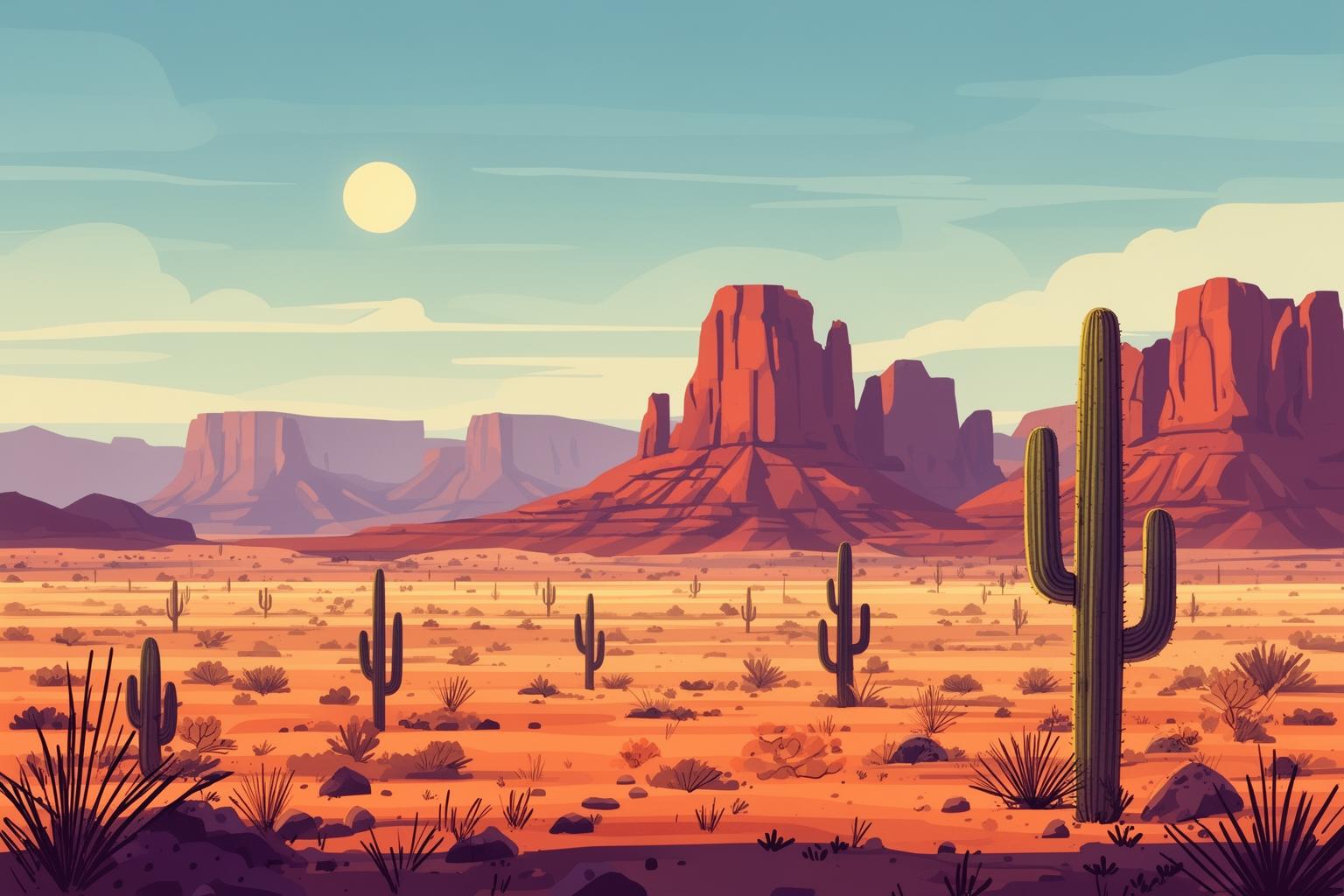
The film begins not with dialogue, but with a powerful sense of place. Travis emerges from the Chihuahuan Desert, a landscape so raw and immense it feels like the dawn of the world—or perhaps its twilight. This is the land around Big Bend National Park and the nearby abandoned town of Terlingua, located in the deep southern curve of the Rio Grande. Standing here offers insight into Travis’s original mindset. The silence isn’t empty; it’s a tangible presence, dense and weighty, interrupted only by the wind rustling through creosote bushes and the distant cry of a hawk. The sky itself acts as a character, an impossibly vast dome of blazing blue by day and a velvet canopy of infinite stars by night. This is a place that strips you down to your core, where modern distractions fade away, leaving you alone with your thoughts. It serves as a perfect visual metaphor for a man who has wiped his own memory clean—a blank slate under an unrelenting sun.
Terlingua’s Ghostly Embrace
Though the exact location of Travis’s walk is debated, the spirit of the area is perfectly embodied by the surroundings of Terlingua. Once a thriving mercury mining town, it was deserted in the 1940s, leaving behind stone ruins steeped in history. Today, Terlingua has found new life as a quirky, fiercely independent enclave of artists, musicians, and desert inhabitants. Visiting the ghost town is like stepping onto a forgotten movie set. The crumbling adobe walls, the old Starlight Theatre (now a restaurant and bar), and the hilltop cemetery with its rustic, weathered crosses all tell tales of boom, bust, and endurance. You can easily picture Travis wandering this landscape, a ghost among the ghosts of the past. The atmosphere radiates defiant resilience, a tribute to the kind of life that thrives against all odds. To truly experience the film’s opening, take the dusty roads outside town, stop, and simply walk. Let the vastness of the landscape envelop you. The horizon extends endlessly, the mountains shimmering in the heat haze, and you begin to feel both minuscule and profoundly connected to something ancient and extraordinary.
Finding Sanctuary in Big Bend National Park
A short drive from Terlingua leads to Big Bend National Park, one of the most remote and breathtaking parks in the United States. Its landscape is a striking mosaic of rugged mountains, deep river canyons, and expansive desert plains. The film’s opening scenes, marked by their sweeping grandeur, could have been captured anywhere within this vast territory. Traveling the Ross Maxwell Scenic Drive reveals vistas that inspire awe, culminating at the majestic Santa Elena Canyon, where the Rio Grande has carved a sheer 1,500-foot gorge through limestone cliffs. Hiking any of the park’s trails—whether the gentle Window View Trail in the Chisos Basin or a more demanding backcountry route—allows you to immerse yourself physically in the environment that framed the film’s start. Big Bend offers the solitude Travis sought, a place to disappear from the world and perhaps begin the slow process of rediscovery. For visitors, it’s a sanctuary of profound calm and reflection. Camping overnight in the Chisos Basin, you’ll witness a sunset that bathes the mountains in hues of orange, pink, and purple, followed by a star-studded sky so vivid it feels as though you can reach out and touch the Milky Way. It is a humbling and restorative experience, a powerful reminder of nature’s capacity to heal.
A Roadside Awakening: Marathon and the First Steps Back
Travis’s journey back to the world begins in a dusty, single-road town where he collapses from exhaustion and dehydration. This setting is represented by Marathon, Texas, located on U.S. Route 90. Marathon is the quintessential West Texas town, a small oasis of civilization amid a vast, empty landscape. It feels suspended in time, a place where life moves slowly and steadily, governed by the rising and setting of the sun. The doctor’s office where Travis receives treatment epitomizes this small-town Americana, a place of quiet care and community in an often isolating world. Today, visiting Marathon, you’ll find it retains this genuine, unpretentious character, while also becoming a haven for artists and a gateway for visitors to Big Bend.
The Town of Marathon: A Dot on the Map
Walking down Marathon’s main street feels like stepping right into the film’s scenes. The low buildings, vintage signage, and the ever-present railroad tracks cutting through the town’s edge create a strong sense of cinematic nostalgia. The historic Gage Hotel, a beautifully restored mission-style railroad hotel dating back to 1927, serves as the town’s anchor. Although not featured in the film, its grand lobby and expansive courtyards perfectly capture the spirit of the region’s history. It’s a place to sit on a leather couch, sip a cool drink, and imagine the countless travelers who have passed through this remote outpost over the years. The true charm of Marathon lies in its atmosphere. It’s a place to slow down, sit on a porch watching heat shimmer off the asphalt, and listen to the lonesome train whistle echo across the plains. Here, Travis begins reconnecting with the human world through the kindness of a stranger, and it’s also a place where modern travelers can find a moment of quiet connection, away from everyday noise.
The Highway as a Lifeline: U.S. Route 90
The road that brings Walt to Marathon and carries him and Travis away is U.S. Route 90. In Paris, Texas, the highway is more than a transportation route; it’s a character, symbolizing transition, escape, and the long, linear path of memory. Driving this stretch is a meditative experience. The landscape unfolds before you, a hypnotic panorama of flatlands, distant mesas, and occasional pumpjacks bobbing rhythmically. Telephone poles connect sky to earth, marching endlessly toward the horizon. You pass through other small towns like Sanderson and Alpine, each with its unique character but all sharing a sense of splendid isolation. To fully appreciate this journey, create a playlist with Ry Cooder’s soundtrack. As the mournful, evocative notes of his slide guitar fill your car, the landscape outside transforms, imbued with narrative, melancholy, and hope. Every dusty turnout, rusted-out car by the roadside, and passing freight train seems to tell a story. This is the heart of the American road trip, an experience that Wenders, with his outsider’s eye, captured so brilliantly.
The Fragmented Past: El Paso and the Borderlands
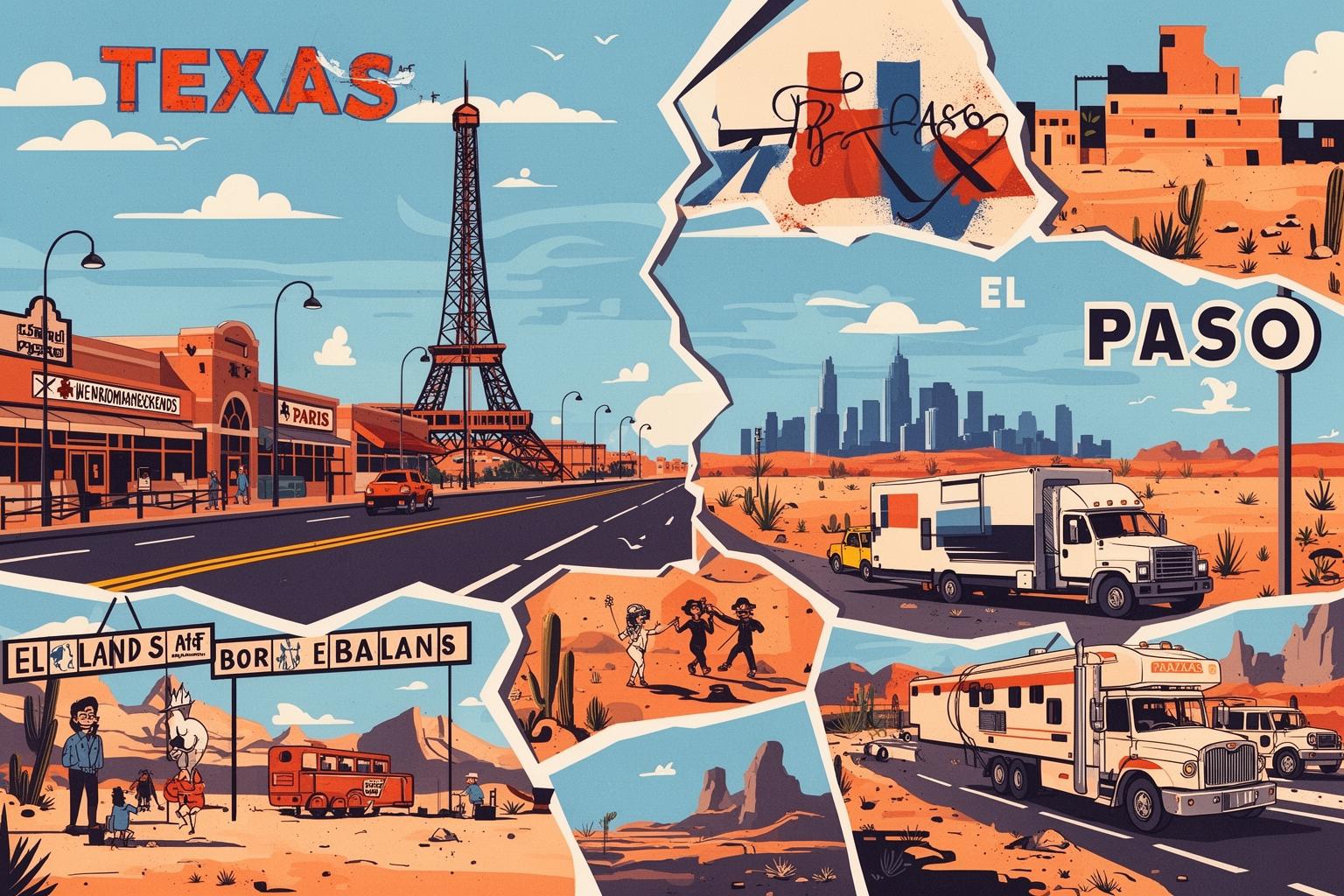
Although the film does not dwell long in El Paso, the city marks a crucial turning point. At the El Paso International Airport, Travis—now cleaned up but still deeply disconnected—reunites with his brother Walt. Here, the journey shifts from solitary wandering in the wilderness to a reluctant confrontation with a past he has tried to leave behind. El Paso is a city of bridges, both literally and metaphorically. Situated directly on the border with Mexico, it is a vibrant cultural crossroads where two worlds intersect. This sense of being between places reflects Travis’s own internal state: no longer the wild man of the desert, but not yet the person he needs to become. The scenes are filled with the awkward, painful silence of estranged family members attempting to close a divide formed by four lost years. For the traveler, El Paso offers a distinctive Texan experience. It is a lively, energetic city with a rich history and an outstanding culinary scene. Exploring the historic downtown, visiting the mission trail, or simply gazing across the Rio Grande to the sprawling city of Juárez, Mexico, provides a meaningful backdrop to the film’s themes of borders, both physical and emotional. It serves as a reminder that Travis’s journey spans not just a physical landscape, but also the painful boundaries of memory and trauma.
A Different Kind of Wilderness: The Freeways of Los Angeles
The film’s third act features a dramatic change in setting as Walt takes Travis to his home in Los Angeles. The vast, open spaces of Texas give way to the concrete canyons and sprawling, maze-like suburbs of Southern California. Here, the wilderness is not natural but man-made. Wenders captures the freeways with the same grand scale he used for the desert, portraying the endless ribbons of asphalt and towering overpasses as a new, imposing landscape. This world is one of manicured lawns, swimming pools, and deep suburban isolation. Travis, used to the immense silence of the desert, now drifts amid a sea of traffic and noise. His unease is tangible. He appears as out of place here as he did in the desert—a man caught between two worlds, belonging to neither. The interactions between Travis and his young son, Hunter, unfold slowly, tenderly, and often heartbreakingly, as they try to rebuild their bond from scratch. The iconic scene where they watch old Super 8 home movies delivers a universal emotional blow, confronting them with a joyous past that now feels like a dream from another life. Exploring these suburban settings—from the San Fernando Valley to the hills overlooking the city—conveys the sense of this manufactured paradise and the loneliness it can harbor. This starkly contrasts with the raw, honest desolation of West Texas and forms a crucial part of Travis’s emotional landscape.
The Heart of Houston: A Neon Confessional

The search for Jane brings Travis and Hunter back to Texas, to the vast metropolis of Houston. This marks the final chapter of their journey, a city of glass and steel that sharply contrasts with the dusty, expansive landscape of West Texas. The film’s emotional climax unfolds in a setting as unique and heartrending as the story itself: the Keyhole Club, a peep show where Jane works. The location serves as a brilliant narrative device. Travis and Jane finally speak, but they are separated by a one-way mirror—he can see her, but she cannot see him. This physical barrier perfectly symbolizes the emotional distance that has grown between them. Their two-part monologue is among the most powerful and beautifully crafted scenes in cinematic history, a raw and unflinching confession of love, pain, and regret. The original building used for the Keyhole Club’s exterior was located on Washington Avenue, though the area has been extensively redeveloped since the 1980s. Still, the atmosphere can be sensed in the city’s downtown core. Walking among the towering skyscrapers at night, with neon signs reflecting on the wet pavement, one can feel the anonymity and isolation the city embodies in the film. It is a place where two people once intimately connected can become complete strangers, hidden in plain sight. The film’s final shots, featuring Jane and Hunter reuniting in a hotel room against the Houston skyline, offer a glimmer of hope—a fragile bond formed in the heart of this impersonal city. It is a bittersweet ending, acknowledging that some things can heal, even if they can never return to what they once were.
The Unseen Destination: The Idea of Paris, Texas
Throughout the film, the town of Paris, Texas, stands as a mythic destination. It is where Travis’s parents met and the site of the vacant lot he purchased—a piece of land symbolizing the foundation of a dream that turned into a nightmare. It is the only place in the film that neither Travis nor the audience ever actually visit. Its power comes from its absence. It exists as an idea, a memory, a symbol of an idealized past and an unreachable future. For Travis, it is the origin of both his love and his failure. The film’s title carries a beautiful, poignant irony, referencing a destination that remains eternally out of reach.
A Place on a Faded Photograph
For the devoted pilgrim, the journey would be incomplete without acknowledging the real Paris, Texas. Situated in the northeastern part of the state, it is geographically and culturally far removed from the West Texas desert where the film begins. The real Paris is a charming, historic town, reflecting the Old South as much as the West. It is famously home to a 65-foot-tall replica of the Eiffel Tower, topped with a large red cowboy hat—a quirky and surreal landmark that somehow perfectly suits the town lending its name to such an ethereal film. Visiting the real Paris after following Travis’s path through the desert and cities is a surreal experience. While you won’t find the vacant lot from his photograph, you will find a quiet American town going about its daily life. The power of the visit lies precisely in this disconnect. It compels you to confront the distinction between a place and the idea of a place, between reality and the dreams we project upon it. It is the final, fitting piece of the puzzle—a quiet reflection on the nature of memory and belonging at the heart of Wenders’ film.
Your Pilgrimage Planner: Crafting the Paris, Texas Road Trip

Embarking on a road trip inspired by Paris, Texas is an unforgettable experience, but it demands some preparation, especially when exploring the remote areas of West Texas. This journey shouldn’t be rushed; it’s about savoring the long, quiet stretches and immersing yourself in the atmosphere of each place.
Planning Your Route
A classic route starts in El Paso, the entry point to West Texas. From there, travel east on Interstate 10 before turning south on U.S. Route 90 toward Marathon. This town will serve as your base for discovering the local area and nearby highways. Allocate at least two full days, ideally more, to Big Bend National Park and the Terlingua region. The vastness of the park warrants sufficient time. Afterwards, continue the long drive toward Houston, passing through the heart of Texas. To complete the pilgrimage, consider a separate visit to Paris in Northeast Texas, offering a thoughtful conclusion to the trip. Set aside at least a week for the West Texas segment to fully appreciate it without feeling hurried. This is slow travel meant to be enjoyed, not rushed.
Must-Haves for Your Southwestern Journey
Reliable transportation is essential. Rent a comfortable vehicle, preferably equipped with good air conditioning, as summer heat can be intense. Cell phone reception can be unreliable or nonexistent in many parts of West Texas, especially around Big Bend. Download offline maps onto your phone and carry a physical map as a backup. Keep your gas tank at least half full since gas stations are often few and far between. Water is the most crucial supply. Bring more than you expect to need, especially if you plan to hike. The sun is strong, so pack a wide-brimmed hat (a red baseball cap is, of course, the perfect choice), sunglasses, and high-SPF sunscreen. Desert nights can get unexpectedly cool, so bring layers.
Embracing the Wenders Style: A Photo Guide
This landscape is a photographer’s paradise, and it’s impossible not to be inspired by Robby Müller’s masterful cinematography. To evoke the Paris, Texas mood, pay attention to the quality of light. The golden hours of early morning and late afternoon are enchanting in the desert, casting long shadows and flooding the scene with a warm, ethereal glow. Seek strong, simple compositions: a solitary telephone pole against a vast sky, a road disappearing into the horizon, or the vivid colors of a rusty sign against a weathered wall. Müller was a genius of color, using bold reds, greens, and blues to highlight the muted desert tones. Look for these bursts of color in the wild. Don’t just capture sweeping vistas; focus on small details that tell a story—a cracked window, a faded mural, or the texture of peeling paint. The film’s aesthetic is one of beautiful decay and quiet poetry, which can be found throughout this landscape if you take the time to truly observe.
Beyond the Frame: Soaking in the Local Culture
A journey through Texas is also a journey into its unique and vibrant culture, which is intimately connected to its landscape and history. Taking the time to immerse yourself in this culture will greatly enrich your pilgrimage.
The Taste of West Texas
The food along this route is hearty, straightforward, and delicious. You’ll encounter classic Texas barbecue joints serving perfectly smoked brisket, cozy diners offering chicken-fried steak as large as your plate, and fantastic Tex-Mex restaurants where the salsa is fresh and the enchiladas are generously smothered in chili con carne. Be sure to stop at a local cafe in a small town like Marathon or Alpine for a slice of homemade pie and a cup of coffee. Food provides a way to connect with the local community, offering a chance to sit and hear the stories of the people who call this distinctive corner of the world home. In larger cities like Houston, the culinary scene bursts with diversity, featuring everything from world-class global cuisine to authentic Vietnamese food, reflecting the city’s international character.
The Sound of the Desert
Beyond the essential Ry Cooder soundtrack, the most important sound of this journey is silence. Make a deliberate effort to find moments of true quiet. In Big Bend, far from any road, turn off your music, pause, and just listen. You’ll hear the hum of insects, the rustle of a lizard in the brush, the beat of your own heart. It’s a profound and increasingly rare experience. At night, the desert awakens with a different kind of music. The stars in Big Bend, an official International Dark Sky Park, are simply breathtaking. Lying on your back and gazing up at the Milky Way’s celestial river is deeply moving, a reminder of your place in the universe. It is in these moments of quiet reflection, away from screens and daily distractions, that the true spirit of Travis’s journey can be truly felt.
The Echo Remains
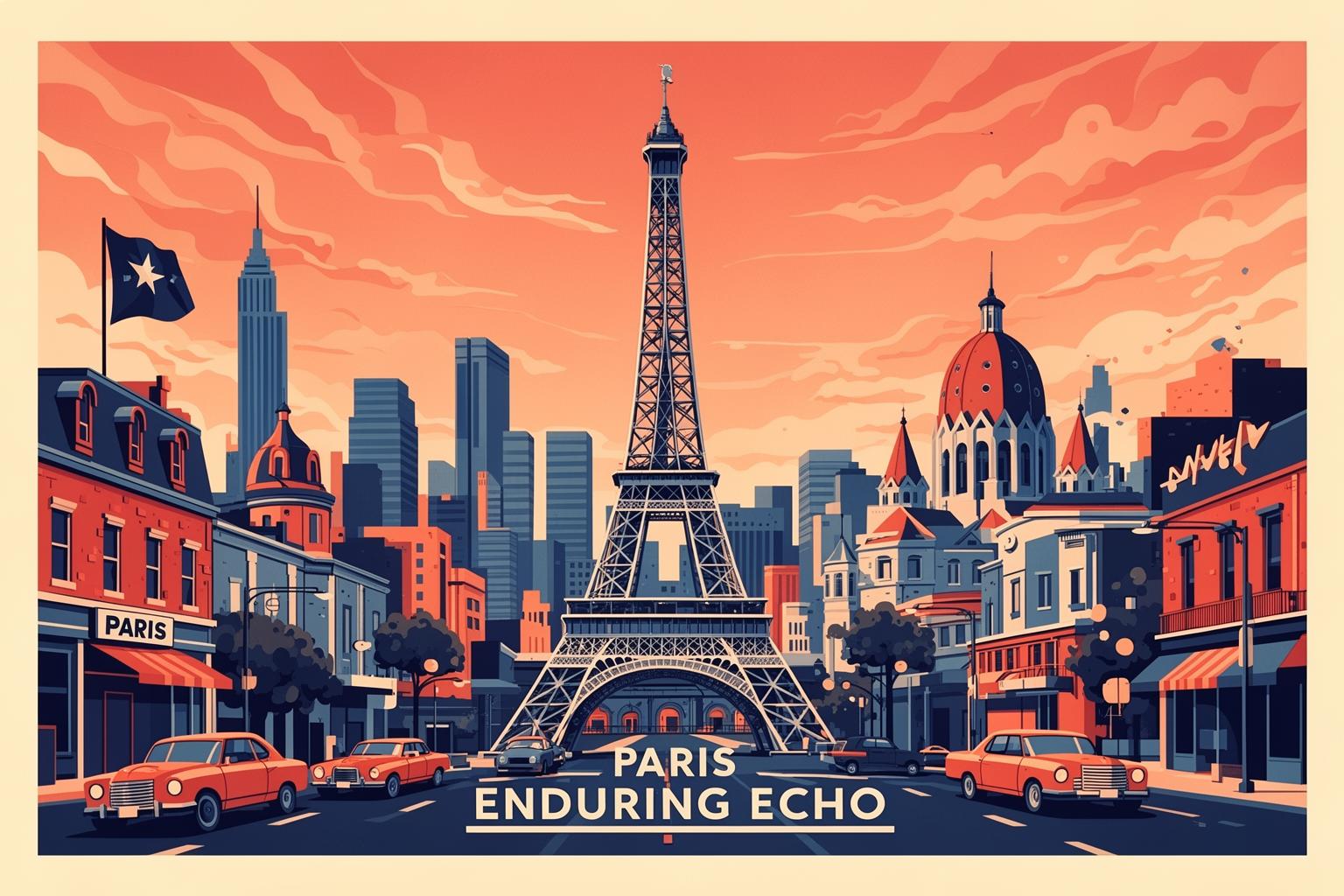
To explore the landscapes of Paris, Texas is to realize that the film’s power is deeply tied to its setting. The desert serves not merely as a backdrop but as a reflection of the soul. The endless highways are more than just roads; they become pathways through memory and time. The cities are not mere destinations; they act as arenas of human connection and disconnection. Following in Travis’s footsteps is a journey that gradually and subtly affects you. The vastness of the land, the weight of its silence, and the resilience of life thriving there leave an unforgettable impression. You might arrive searching for movie locations, but you will depart with something far more meaningful: a deeper appreciation for the beauty of empty spaces, the melancholy of a forgotten past, and the fragile yet persistent hope of finding your way home. The story of Travis and Jane is universal, and its echoes resonate clearly in the vast, beautiful, and haunting landscapes of Texas, waiting for any pilgrim willing to listen.