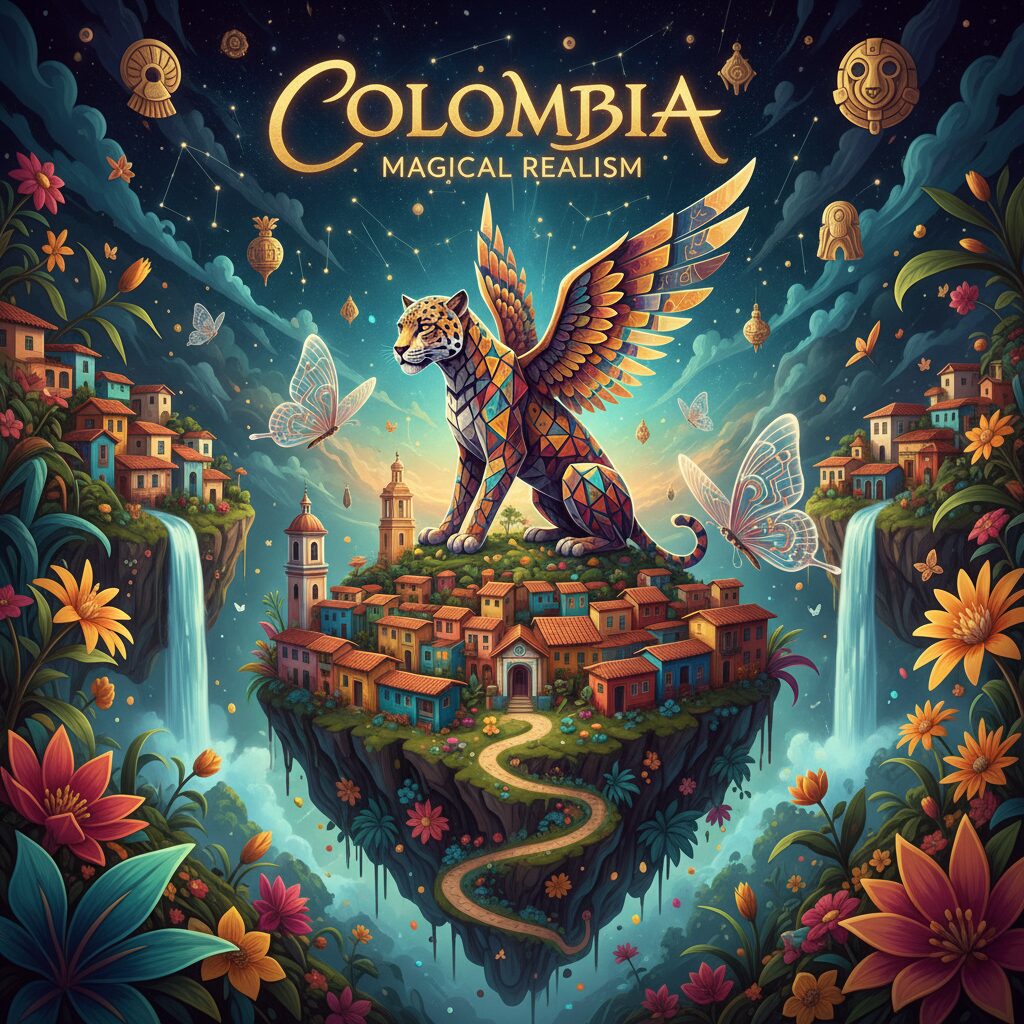
There are worlds born from ink and paper that feel more real than the ground beneath our feet. Worlds that breathe with a rhythm of their own, where the extraordinary threads itself into the fabric of the everyday, where myths walk hand-in-hand with men, and where the line between memory and reality blurs into a beautiful, haunting watercolor. This is the world of Gabriel García Márquez, the Colombian titan of literature, the maestro of magical realism, a storyteller who didn’t just write novels but painted an entire continent’s soul onto the global stage. To read Gabo, as he is affectionately known, is to be swept away by a current of prose so powerful, so deeply rooted in the soil of his homeland, that you can almost smell the bitter almonds, feel the suffocating heat, and hear the vallenato music drifting through the dusty streets. But what if you could step through the looking glass? What if you could walk those very streets, touch the sun-baked walls, and breathe the air that gave life to Macondo, to the undying love of Florentino Ariza, to the tragic saga of the Buendía family? This isn’t just a literary tour; it’s a pilgrimage. A journey into the heart of Colombia, the place that was not merely the setting for his stories, but the very source of their magic. We’ll follow the trail of yellow butterflies from the sweltering Caribbean coast to the cool highlands of Bogotá, chasing the ghost of a Nobel laureate who taught us that the most incredible stories are often the truest ones. This is a journey to understand how a place can shape a person, and how that person can, in turn, make a place immortal.
If you’re inspired to embark on a similar journey into the landscapes that shape great storytellers, consider a literary pilgrimage to the world of Carlos Fuentes.
The Cradle of Macondo: Aracataca’s Humming Heart
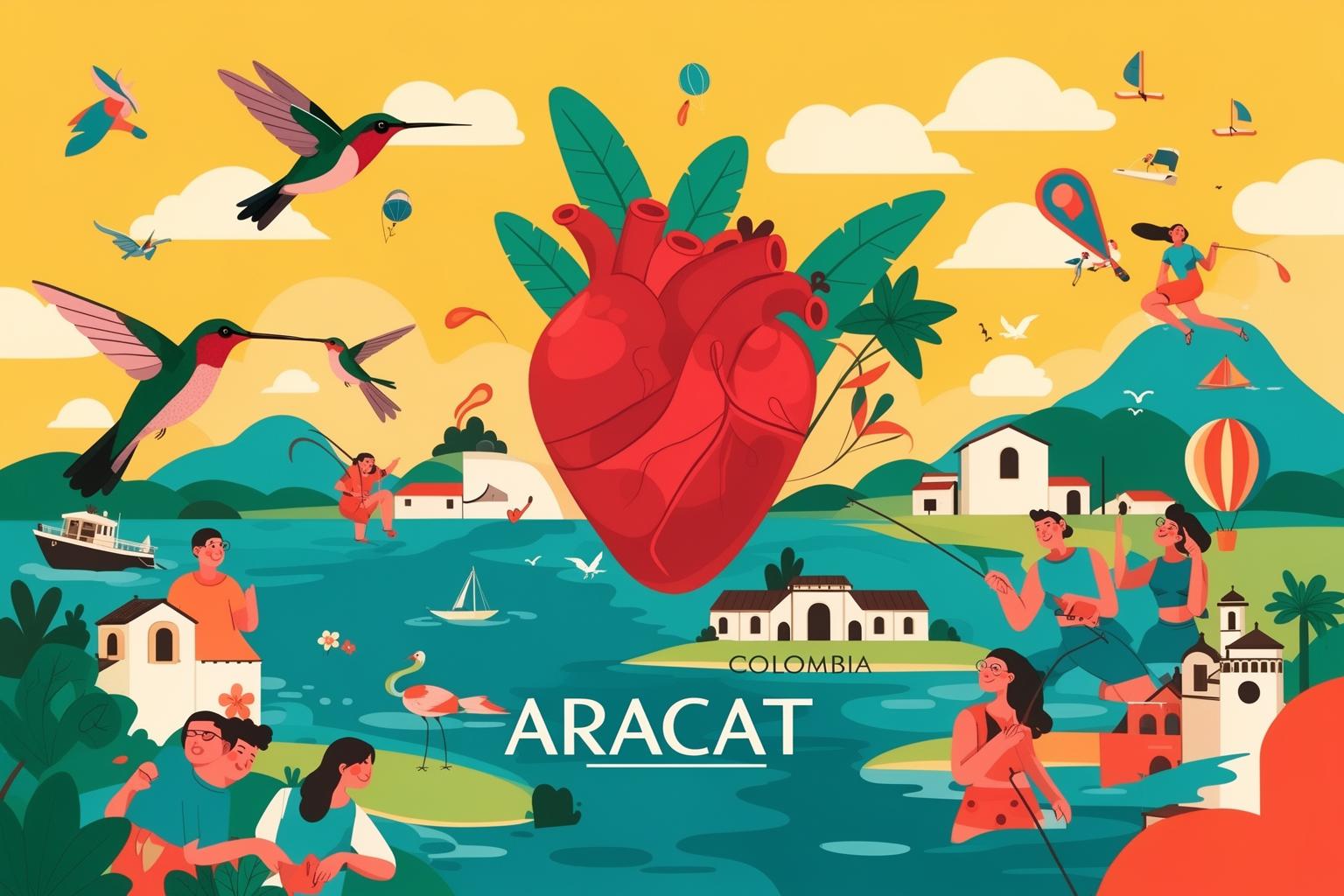
Our journey begins where his did, in a small, unassuming town nestled deep within the banana-growing region of Colombia’s Caribbean coast: Aracataca. The name itself feels like an incantation, a word whispered under the oppressive midday sun. To the world, this is the soul of Macondo, the mythical town at the heart of One Hundred Years of Solitude. Reaching it is a small quest of your own—a drive from the coastal city of Santa Marta through a landscape seemingly untouched by time. The air thickens, heavy with the scent of tropical fruit and damp earth. The horizon shimmers. Then, you arrive. There is no grand sign proclaiming “Welcome to Macondo.” There doesn’t need to be. You sense it in the quiet dignity of the streets, the peeling paint on pastel-colored houses, and in the way time itself appears to slow, stretching like warm honey.
Walking into a Hundred Years of Solitude
Strolling through Aracataca is a surreal experience. It’s a living, breathing museum where the exhibits are the very streets and people who inspired a masterpiece. You see the almond trees Gabo wrote about, their shade offering a brief respite from the relentless sun. You glimpse the telegraph office where his father worked—a humble building that linked to a wider, unseen world in his novel. The ice factory, a place of wonder for a young Aureliano Buendía, no longer stands, but the memory of its magic lingers. The town is a palimpsest, where the fictional world of Macondo overlays the real Aracataca so vividly that they become inseparable. Every corner whispers a story. A wizened old man sitting on a porch might be a forgotten Buendía relative. A sudden gust of wind kicking up dust feels like a premonition. Here you realize magical realism wasn’t invented; it was a transcription of reality as Gabo perceived it. He saw the magic that already existed, hidden in folklore, superstitions, and the remarkable, often tragic, history of his people.
The Casa Museo Gabriel García Márquez
The focal point of any pilgrimage to Aracataca is the Casa Museo, a meticulous recreation of the house where García Márquez was born and spent his first eight years. This was the home of his maternal grandparents, Colonel Nicolás Ricardo Márquez and Tranquilina Iguarán Cotes, two figures who became monumental forces in his literary imagination. The house is not a stuffy, velvet-roped museum; it’s airy and open, centered around a courtyard filled with plants, just as he described. As you wander through its rooms, you literally walk through the blueprints of One Hundred Years of Solitude. Each room is marked not only by its function but also by its literary significance. You find the Colonel’s office, filled with his tools and dictionaries—the place where young Gabito first discovered the wonders of the dictionary. You see the silver workshop where Colonel Aureliano Buendía crafted his tiny golden fishes. You stand in the long corridor where Úrsula Iguarán ran her candy animal business and battled the decay of time. The kitchen, with its large rustic stove, feels like the heart of the home—a place of storytelling and nourishment. The entire house is designed to evoke memory. Quotes from his books are thoughtfully placed throughout, linking the physical space to the immortal words it inspired. Standing in the courtyard, you almost hear the chatter of his aunts, the stern but loving voice of his grandfather, and feel the weight of a history so dense it seemed like destiny.
The Scent of Guavas and the Spirit of a Town
Beyond the museum, Gabo’s spirit permeates everything. The local library bears the name of Remedios the Beauty, the ethereal character too beautiful for this world who ascended to the heavens. The church, a simple white building in the town’s center, invites you to imagine townsfolk gathering, their lives intertwined in a web of gossip, love, and fate. Walk down to the river—the same one the Buendías crossed—and feel the slow, inexorable flow of water, a metaphor for the passage of time central to Gabo’s work. The town is adorned with murals depicting scenes from his novels: yellow butterflies, the Colonel, the Buendía family tree. These vibrant artworks testify to how deeply Aracataca has embraced its identity as the source of a literary universe. This isn’t a theme park; it’s a town that has come to understand and celebrate its soul through the lens of its most famous son. Speak with the locals. They take pride in their heritage, many sharing their own stories of Gabo or tales handed down from parents and grandparents. They are the keepers of the oral tradition that profoundly influenced his writing style.
Practical Magic: A Visitor’s Guide to Aracataca
Visiting Aracataca requires some planning but is well worth the effort. The easiest way to get there is by bus or car from Santa Marta—a journey of about two hours. It’s best to go early in the morning to avoid the region’s intense midday heat. The sun here is no joke; lightweight clothing, a wide-brimmed hat, and plenty of water are essential. The town is small and easily walkable. Allow yourself a full day to take it all in. Start at the Casa Museo, then wander freely without a strict itinerary. Let curiosity be your guide. For lunch, seek out a local restaurant for a traditional sancocho, a hearty soup staple of the Colombian Caribbean. Luxury hotels are scarce in Aracataca, part of its charm. Staying overnight lets you experience the town in the cooler evening, when it truly comes alive and residents bring chairs out onto sidewalks to chat and escape the heat inside their homes. In these quiet moments, you feel the true, unvarnished pulse of Macondo.
The Cauldron of Creativity: Barranquilla’s Bohemian Spirit
If Aracataca represented the subconscious—the dreamscape of Gabo’s childhood that ignited his imagination—then Barranquilla was the conscious awakening. It was the place where the boy truly became a writer. After a less-than-happy period at boarding school, Gabo found his intellectual and spiritual home in this bustling, chaotic, and vibrant port city. Unlike the colonial jewel of Cartagena or the administrative capital Bogotá, Barranquilla has always been a city of immigrants, commerce, and fresh ideas. It was a place where cultures collided and blended, creating a dynamic, forward-looking energy that was intoxicating for a young man eager to embrace the world. Here, he dropped out of law school, embraced journalism, and joined a group of friends who would alter the course of his life.
The Barranquilla Group: A Fellowship of the Mind
García Márquez’s growth as a writer cannot be fully understood without recognizing the Barranquilla Group. This was not a formal club but a loosely connected circle of writers, artists, and intellectuals who gathered in the city’s cafes and bars to debate literature, art, and politics. They served as his university, mentors, and first crucial readers. They introduced him to Faulkner, Hemingway, and Virginia Woolf—authors who deeply influenced his style. They read his early drafts, delivered tough criticism, and offered the encouragement he needed to find his own voice. This intellectual camaraderie was the crucible in which his literary brilliance was forged. While many of the group’s original haunts have vanished, their spirit endures in the city’s vibrant cultural scene. Walking the streets of El Prado, the city’s historic and elegant neighborhood, it’s easy to imagine a young Gabo striding along with a manuscript in hand, on his way to see his friends, his mind alive with stories waiting to unfold.
La Cueva: The Legendary Sanctuary
At the heart of the Barranquilla Group’s social life was La Cueva, a bar and restaurant that has become legendary in Colombian cultural history. Today, La Cueva has been revived as a foundation and cultural center, a shrine to the generation that once made it their headquarters. Entering feels like stepping back in time. The walls are adorned with photos of Gabo and his friends—Álvaro Cepeda Samudio, Germán Vargas, Alfonso Fuenmayor—captured laughing, drinking, deeply engaged in conversation. The atmosphere brims with history. You can sit at a table, order a drink, and imagine the electrifying discussions that once filled these walls. The foundation hosts literary events, exhibitions, and concerts, keeping the Barranquilla Group’s creative flame alive. It is an essential stop for anyone seeking to understand the intellectual environment that nurtured Gabo’s talent. The energy, passion, and sheer joy of creation that defined that era are palpable here. Enjoy a meal, too; the food is excellent—modern Caribbean cuisine—but the true nourishment feeds the soul.
Feeling the Carnival Vibe
Barranquilla is also renowned for its Carnival, the world’s second-largest after Rio de Janeiro. It is an explosion of color, music, and dance that takes over the entire city. Gabo adored the Carnival, whose spirit of exuberant chaos and temporary suspension of reality is a vital ingredient in the magical realism of his work. Even if you cannot visit during the festival itself (held in the days before Ash Wednesday), its influence is felt year-round. Visit the Museo del Carnaval to marvel at the incredible costumes and learn about the history and traditions of this UNESCO-recognized cultural event. You’ll encounter the marimondas, monocucos, and all the fantastical characters that animate this wild celebration. To understand the Carnival is to grasp the soul of Barranquilla, a city that knows how to find joy amidst hardship—a theme that resonates throughout Gabo’s novels.
Navigating Barranquilla’s Cultural Heart
Barranquilla is a sprawling, modern city that can be somewhat overwhelming for first-time visitors. Center your visit on the historic El Prado neighborhood and the area around La Cueva. The city is a major air travel hub on the Caribbean coast, making it a convenient stop between Santa Marta (gateway to Aracataca) and Cartagena. While it may lack Cartagena’s immediate postcard-perfect charm, Barranquilla’s cultural richness is considerable. It’s a city that rewards curious travelers. Explore the Museo del Caribe, a superb interactive museum narrating the Colombian Caribbean’s geography, history, and culture. Gabo was a strong advocate of this museum, which includes a dedicated section on his life and work. Barranquilla offers a different coastal flavor—it’s grittier, more modern, and perhaps more genuine. It’s a city of labor and creativity, the ideal place to appreciate the dedication that transformed a young journalist into a literary giant.
A Tale of Two Cities: Love and History in Cartagena de Indias
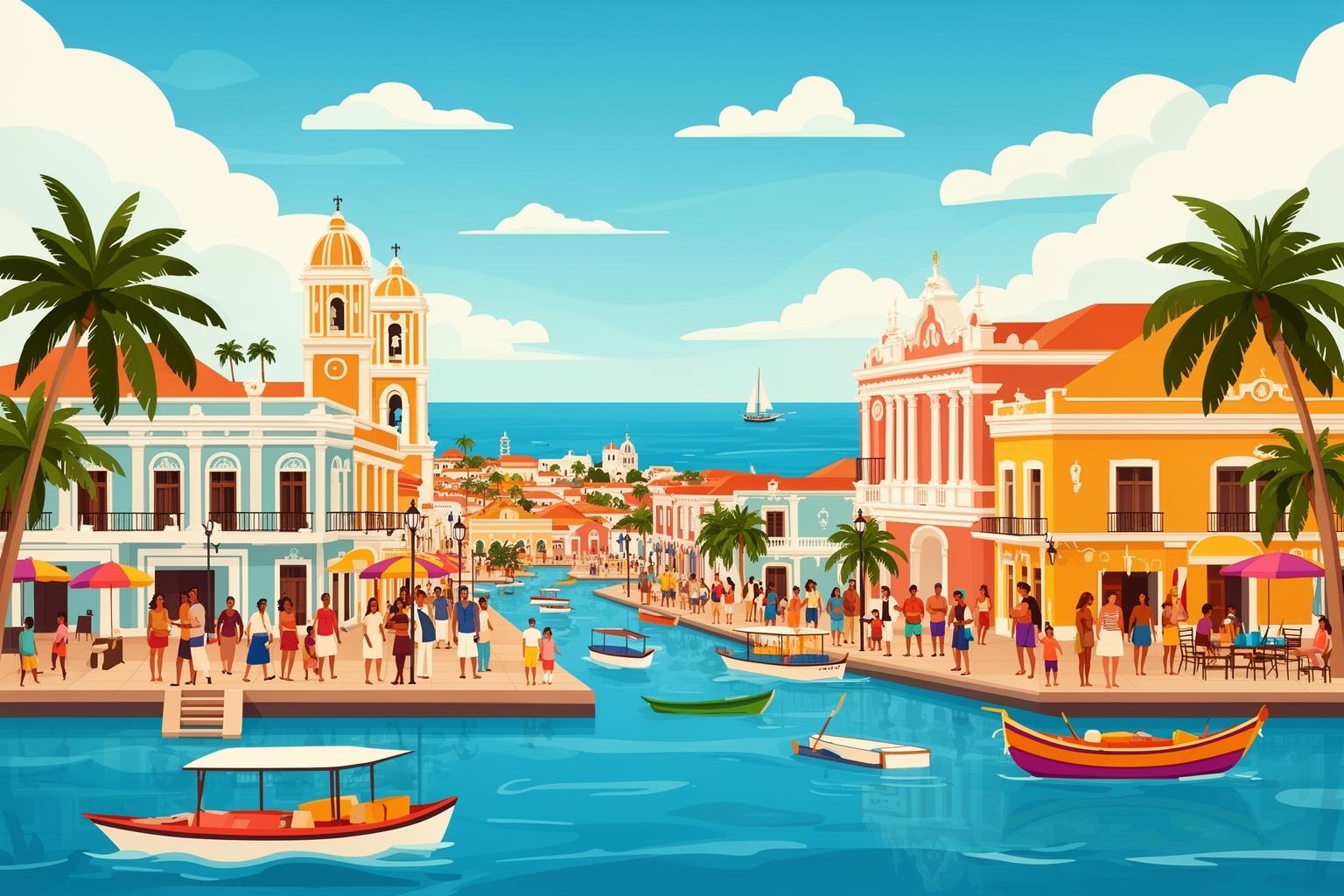
From the working-class vitality of Barranquilla, we transition to the breathtaking, romantic grandeur of Cartagena. If Aracataca was the heart and Barranquilla the mind, then Cartagena was the enduring love affair of Gabo’s life. He worked here as a young journalist and chose this city to build his final home in Colombia. More than any other place, Cartagena lives and breathes as the setting of one of his most cherished novels, Love in the Time of Cholera. To visit Cartagena is to step straight into the pages of that epic love story, to walk the very streets of Florentino Ariza and Fermina Daza, and to feel the weight of fifty years of unrequited love lingering in the jasmine-scented air.
The Walled City: A Maze of Romance
The historic core of Cartagena, the Ciudad Amurallada, is a UNESCO World Heritage site—a flawlessly preserved colonial city encircled by massive stone walls. Entering through one of its gates is like stepping back in time. The streets are narrow cobblestone lanes lined with colonial mansions draped in bougainvillea of vivid hues—fuchsia, orange, crimson. Wooden balconies burst with flowers, and shaded plazas offer shelter from the Caribbean sun. This is Fermina Daza’s world. You can easily picture her strolling through the Portal de los Dulces, the covered arcade bustling with vendors selling traditional coconut sweets—the very spot where Florentino first glimpses her. The atmosphere is intoxicatingly romantic. Every corner seems to hold a secret, every courtyard a hidden tale. It’s a city designed for getting lost in. Put away your map and simply wander. Let the colors, sounds, and scents lead you. You’ll discover quiet squares, majestic churches, and breathtaking views of the Caribbean Sea. It’s a city that invites you to slow down, to sit at a café in a plaza, and simply watch the world go by—just as Florentino surely did throughout those long years of waiting.
Following in the Footsteps of Florentino and Fermina
For fans of Love in the Time of Cholera, Cartagena is a treasure map. Although Gabo changed place names, the real locations are easily recognizable. The Parque de Bolívar, a leafy square at the city’s heart, is the “Park of the Evangels” in the novel, where Florentino would sit on his favorite bench watching Fermina. You can find that very bench and sit there yourself, beneath the shade of trees, sensing the presence of literary lovers all around. The Manga neighborhood, with its beautiful yet faded Republican-era mansions, is where Fermina Daza lived in her grand home with Dr. Juvenal Urbino. Walk through the Getsemaní neighborhood, just outside the main walls. Once a rougher area, it has evolved into a vibrant, bohemian hub of street art, salsa clubs, and fantastic restaurants. It represents the more庶民, the popular side of the city—the world Florentino Ariza would have inhabited. The contrast between the aristocratic walled city and the lively Getsemaní perfectly reflects the class divisions central to the novel.
The García Márquez House: A Modern Fortress Overlooking the Sea
Perched atop the ancient city walls and overlooking the Caribbean Sea stands the house Gabriel García Márquez built in the 1990s. Designed by his friend and architect Rogelio Salmona, this striking modern structure of reddish-brown brick stands in contrast to the surrounding colonial architecture. It is a private residence and not open to the public, but can be viewed from outside. Walking along the top of the wall, you can see the house and imagine Gabo inside, writing at his desk, gazing out at the same sea that inspired much of his work. Its location is symbolic—firmly rooted in Cartagena’s history yet facing out toward the wider world. It signifies his place as both a son of Colombia and a citizen of the world. Seeing the house is a poignant moment, a reminder of his tangible presence in the city he loved so deeply.
Savoring Cartagena’s Caribbean Spirit
Beyond the literary pilgrimage, Cartagena delights the senses. The food is a highlight. Indulge in fresh ceviche, crispy fried fish with coconut rice, and arepas de huevo, a delicious street food treat. The city comes alive at night. The air cools, the streets fill with people, and music—salsa, cumbia, vallenato—pours out from open doorways. Find a rooftop bar to watch the sunset over the sea, the sky ablaze with brilliant shades of orange and pink. Take a boat trip to the nearby Rosario Islands for a day of white-sand beaches and crystal-clear turquoise waters. Cartagena is a city of passion, history, and resilience. It has endured pirates, plagues, and civil wars. You can feel its strength in the ancient stone walls and in the spirit of its people. It is this combination of romantic beauty and determined survival that Gabo captured so perfectly. It is a city that, once it seizes your heart, will never let it go.
The Andean Chapter: Bogotá’s Cold Heart and Political Fire
Leaving behind the sun-soaked Caribbean coast, our journey ascends into the Andes Mountains, arriving at Bogotá, the sprawling and chilly capital. The shift in environment is immediate and striking. The air is thin and cool, the light distinct, and the atmosphere more somber and intellectual. For Gabo, Bogotá was an exile within his own homeland. Sent to study law at the National University, the young man from the coast felt out of place. He detested the cold, the persistent rain, and the formal, reserved culture of the cachacos, as Bogotá’s residents are called. Yet, it was here that he witnessed a pivotal event that would shape his political awareness and influence many of his works: the Bogotazo.
Student, Journalist, and Witness to History
In April 1948, the assassination of the popular liberal presidential candidate Jorge Eliécer Gaitán sparked a wave of violent riots that devastated much of Bogotá’s city center. Known as the Bogotazo, this event marks the beginning of La Violencia, a brutal decade-long civil war in Colombia. The young García Márquez was in the city and directly experienced the chaos. Though traumatic, the event was also a political awakening. It solidified his lifelong leftist beliefs and his focus on themes of power, violence, and the cyclical nature of Colombian history. The echoes of this past can still be felt in the city today. Carrera Séptima, the main artery where the assassination occurred, is now a busy corridor of commerce and government. Plaza de Bolívar, the grand central square bordered by the Cathedral, Palace of Justice, and Capitol building, remains the political heart of the nation, a stage for much of its turbulent history.
Exploring La Candelaria and its Echoes
The best way to connect with Gabo’s Bogotá is through the historic neighborhood of La Candelaria. This colonial quarter is a maze of narrow, sloping streets, colorful houses, and historic buildings. It housed the National University, where Gabo likely spent his student years, perhaps tucked away in a smoky café, reading poetry and dodging law classes. Today, La Candelaria is a lively university district and cultural hub, filled with museums, theaters, and libraries. The Botero Museum, home to a splendid collection by Colombia’s most famous artist, Fernando Botero, is a must-visit. The Gabriel García Márquez Cultural Center, a striking modern building designed by the same architect who created his Cartagena home, is another key site. It features a large bookstore, art gallery, and event space, symbolizing how the city that once repelled him now honors and celebrates his legacy. As you wander through La Candelaria, you can picture a young, melancholic Gabo, cloaked in a dark coat, his mind brimming with stories that would one day captivate the world. The gray skies and historical gravity of the city contrasted sharply with the vibrancy of the Caribbean, deepening his complex understanding of his country.
The Exiled Author: Traces of Gabo Across the Globe
Although Colombia was always his source of inspiration, much of Gabriel García Márquez’s most significant work was created during his self-imposed exile. His political beliefs made living in his home country difficult and at times dangerous. His existence as a global citizen left marks in several major cities, each reflecting a different phase of his career.
Paris, Barcelona, and a Colonel with No One to Write to Him
In the 1950s, Gabo lived in Paris, working as a foreign correspondent. It was a time of great poverty but also immense creative energy. Residing in a small hotel in the Latin Quarter, it was there, enduring hunger and cold, that he wrote the masterful novella No One Writes to the Colonel. Today, walking through the Latin Quarter, one can still sense the bohemian spirit that attracted so many writers and artists to its streets. Later, in the late 1960s and early 70s, he moved to Barcelona. This period was pivotal. He was part of the Latin American literary “Boom,” alongside writers such as Mario Vargas Llosa and Julio Cortázar. It was in the Sarrià neighborhood of Barcelona that he wrote The Autumn of the Patriarch. Spain, the former colonial power, became a place where Latin American literature asserted itself on the world stage.
Mexico City: A Second Home and a Final Resting Place
Among all the places he lived outside Colombia, Mexico City was the one he considered home for the longest time. He moved there in the 1960s, and it was in Mexico City that he secluded himself for 18 months to write the novel that had been brewing inside him his entire life: One Hundred Years of Solitude. After its release in 1967, his life changed dramatically. He became a global literary icon. He continued residing in Mexico City for much of the remainder of his life, in a house located in the southern neighborhood of San Ángel. He passed away there in 2014. For Gabo, Mexico City was a safe haven, a place where he could write and live with his family, while always keeping his heart and imagination deeply rooted in the Caribbean soil of Colombia.
A Farewell to the Master: Embracing the Magic
To journey through the world of Gabriel García Márquez is to understand that his magical realism was never about fantasy. It was about viewing the world with broader vision, recognizing the mythic and the miraculous in everyday life. It was about honoring the power of memory, the weight of history, and the remarkable resilience of the human heart. From the dusty, sun-bleached streets of Aracataca to the romantic ramparts of Cartagena, his spirit remains alive. It breathes in the stories of the people, in the rhythm of the music, in the scent of the tropical air. A pilgrimage in his footsteps is more than a literary tour; it is an invitation to perceive our own world anew. It teaches us that every family holds its own epic saga, every town harbors its hidden myths, and each of us possesses the capacity for a love that endures the ravages of time. The yellow butterflies may be a literary creation, but the magic they symbolize is real. It is the magic of storytelling, the magic of a place that can inspire a universe, and the magic of a writer who bestowed that universe upon us all. Go to Colombia. Walk the streets he walked. And you might just discover a little of that magic for yourself.