
There are writers whose words build worlds on the page, and then there are writers whose worlds are built from the very soil, stone, and sea of the places they called home. José Saramago, the Portuguese titan of literature and Nobel laureate, belongs firmly to the latter. To read Saramago is to walk the sun-drenched plains of the Alentejo, to navigate the labyrinthine alleys of Lisbon, and to feel the raw, volcanic pulse of Lanzarote. His story is a map, and his novels are the landmarks. This journey isn’t just for literary scholars; it’s for anyone who has ever felt a landscape speak, for anyone who believes that to understand an artist, you must understand their geography. We’re about to embark on a pilgrimage, not of faith, but of fiction and reality, tracing the path of a man who saw the extraordinary in the ordinary, from the humble village of his birth to the island refuge where he penned his final words. It’s a journey through Portugal and Spain, but more profoundly, it’s a journey into the heart of Saramago’s universe.
This kind of literary pilgrimage, where an author’s work is inseparable from their geography, is also beautifully explored in a guide to the landscapes of J.M. Coetzee.
Azinhaga: The Cradle of Memory
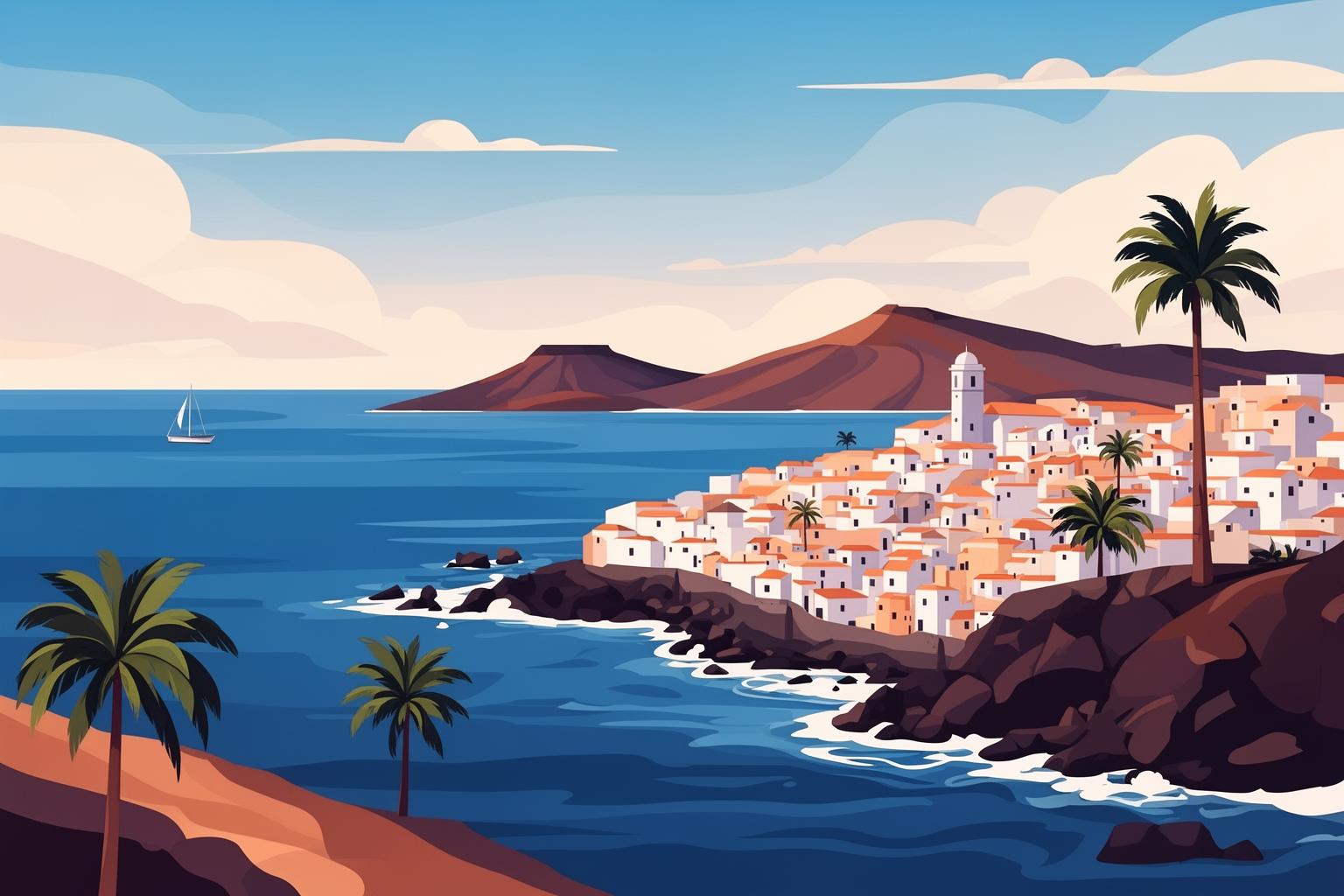
Every story has its beginning, and for José de Sousa Saramago, that beginning was Azinhaga. A tiny dot on the map in Ribatejo province, a land of vast plains, meandering rivers, and timeless agricultural rhythms. Visiting Azinhaga is like stepping into the pages of Small Memories, his moving memoir of childhood. This is not a town of grand monuments but one of deep, quiet meaning. The very air feels heavy with the stories of the landless peasants from whom he descended, a world he portrayed as “poverty with dignity.” The true pilgrimage here is about the atmosphere. Walking along the banks of the Almonda River—a narrow strip of water that was an entire universe to the young Saramago—you can almost see the barefoot boy dreaming of worlds beyond the poplar trees.
The Heart of the Village
The focal point of any Saramago-themed visit is the local branch of the José Saramago Foundation, located in a carefully restored building. Here, the global legacy of the writer reconnects with its humble beginnings. Inside, you’ll find exhibits and a library, but the real treasure is the bond with the community. The foundation is more than a museum; it is a living part of the village. The staff, many local residents, share stories with a warmth and pride that feels deeply personal. They can direct you to the site of his grandparents’ simple home, a place he immortalized with heartbreaking beauty, describing them as the wisest people he ever knew—people who could sleep soundly with pigs in their house because they were “people of this earth.”
Experiencing Ribatejo
To genuinely appreciate Azinhaga, you must understand Ribatejo. Rent a car and explore the surrounding countryside. The landscape plays a vital role in his early work. Take in the corn and wheat fields, the cork oak trees, and the mighty Tagus River flowing nearby. This is the wellspring of his grounded, earthy prose and his profound empathy for the struggles of working people. The ideal time to visit is in spring, when the fields are lush green, or early autumn, when the harvest light bathes everything in a golden glow. It’s a place to slow down, listen to the countryside’s sounds, and realize that for Saramago, the earth was not merely a backdrop; it was the source of all truth.
Lisbon: The Labyrinth of History and Fable
If Azinhaga was the source of Saramago’s roots, Lisbon was the vast, vibrant, and chaotic tree that grew from them. He moved to the city as a child, and it became his university, his workplace, and the grand stage for some of his most celebrated novels. Lisbon is a city layered with history, where Roman ruins lie beneath medieval cathedrals, and eighteenth-century plazas give way to modern avenues. This layering of time lies at the heart of Saramago’s work, and walking through Lisbon, you can almost sense his characters just around the corner, living their lives in a city both real and imagined.
Casa dos Bicos: A Foundation of Diamonds
Your first stop should be the José Saramago Foundation headquarters, Casa dos Bicos, located in the Alfama district. The building itself is extraordinary, its façade adorned with diamond-shaped stones—a rare example of 16th-century civil architecture. It feels both ancient and strikingly modern, an ideal home for a writer who continually played with the concept of time. Inside, the space is a touching tribute. The permanent exhibition, “The Seed and the Fruits,” traces his life and work, displaying manuscripts, his Nobel medal, and personal diaries. You can admire the meticulous, handwritten pages of his novels, crafted without paragraph breaks in his distinctive style, and sense the immense discipline and passion that drove his craft.
Beneath an ancient olive tree, brought from his birthplace Azinhaga, lie his ashes. It is a powerful, circular symbol of his journey—a piece of his rural past now permanently rooted in the heart of the city he embraced. The atmosphere is not one of mourning, but of vibrant, ongoing life. It is a place of conversation, readings, and intellectual energy, a true foundation devoted to preserving his spirit of inquiry and humanism. Spend time in the library, browse the bookshop, and simply sit by the olive tree—it is a moment of profound connection.
Walking with Ricardo Reis in Chiado
To fully experience Saramago’s Lisbon, read The Year of the Death of Ricardo Reis and then stroll through the Chiado and Baixa districts. The novel, set in 1936, revives one of Fernando Pessoa’s literary alter egos and follows him wandering a Lisbon on the brink of political unrest. Saramago skillfully recreates the atmosphere of the period, and the places still stand. Stand in Praça do Comércio, facing the Tagus River, and feel the weight of history. Walk up Rua Garrett, the elegant heart of Chiado. Here you will find the famous Café A Brasileira, where a bronze statue of Fernando Pessoa sits eternally at a table. You can sit beside him, order a bica (espresso), and imagine his heteronym, Ricardo Reis, watching the city’s ghosts drift by. This part of Lisbon is all about atmosphere—the clatter of the number 28 tram, the melancholy strains of a distant Fado singer, and the sense of a city living comfortably with its phantoms.
The Siege of Alfama
From Casa dos Bicos, wander uphill into Alfama, the oldest district in Lisbon. This is the setting for The History of the Siege of Lisbon. The novel tells a brilliant tale of a proofreader who inserts a single word, “not,” into a historical text, thereby altering the accepted version of the city’s past. As you lose yourself among Alfama’s narrow, winding streets, it becomes easy to understand Saramago’s fascination with the subjectivity of history. The neighborhood itself is a living manuscript, a medieval maze where each corner reveals a new story. Climb up to Castelo de São Jorge, the fortress overlooking the city. From its ramparts, you can see Lisbon’s entire historical narrative spread out before you. You can spot the place where the crusaders, according to the official account, laid siege to the Moorish city. Standing there, you can feel Saramago’s central question echoing in the breeze: what is history but a story we agree to tell?
Mafra: A Monument to Folly and Dreams
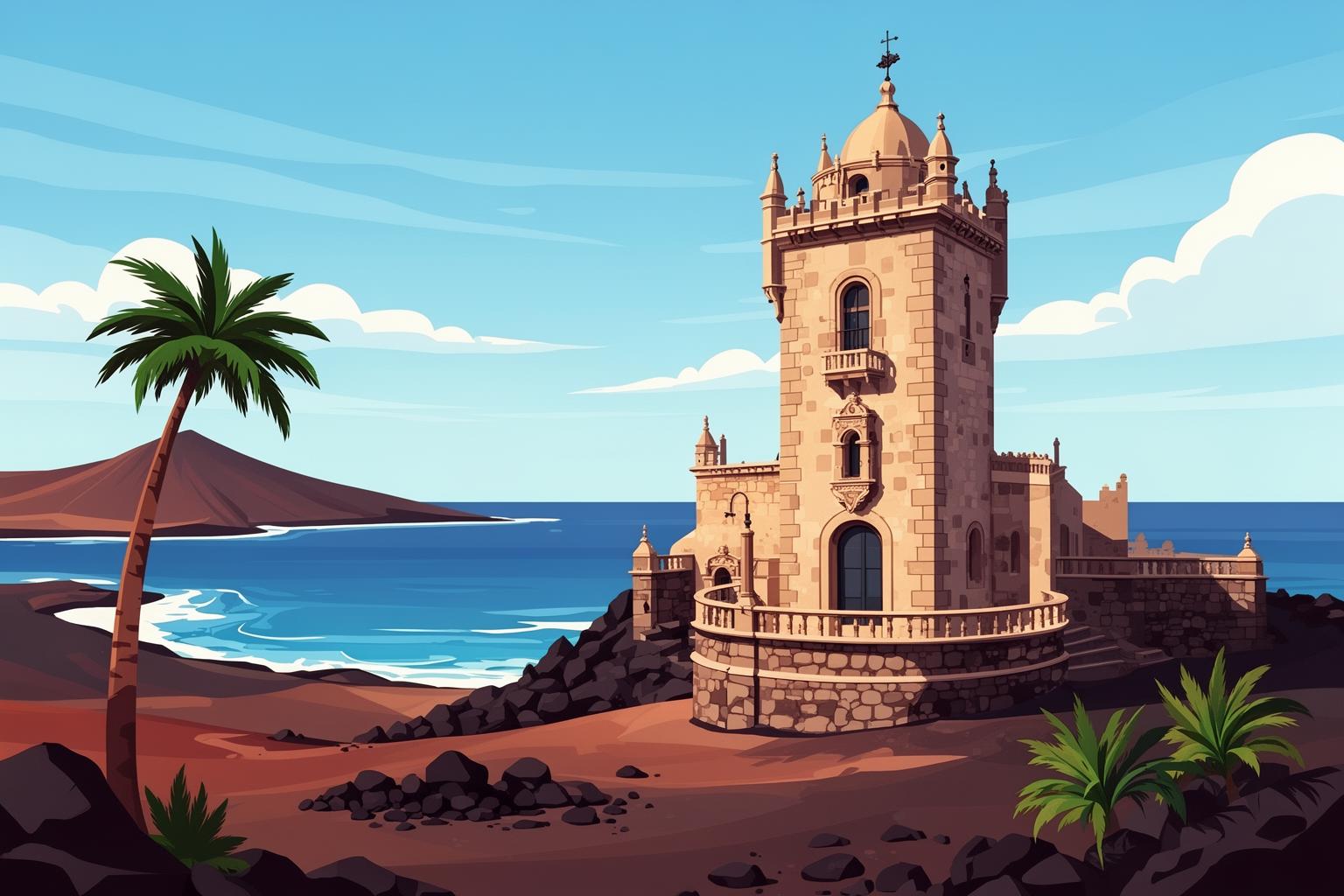
Just a short journey from Lisbon lies the town of Mafra, dominated by one of Europe’s most astonishing buildings: the Palácio Nacional de Mafra. This vast Baroque complex, which includes a palace, basilica, and convent, is more than a historical monument; it serves as the central character in Saramago’s magnificent novel, Baltasar and Blimunda. The story recounts the palace’s 18th-century construction through the eyes of two lovers—a one-handed soldier and a woman with visionary powers—intertwining their tale with the grueling labor of the thousands who built this monument to royal vanity and religious devotion.
The Stone Raft
Upon approaching the palace, the first thing that overwhelms you is its sheer scale. It is immense, a formidable act of will imposed upon the landscape. Saramago aptly called it a “stone raft,” a metaphor that perfectly captures its feeling of being both grounded and adrift in time. Wandering through its endless corridors—over 1,200 rooms—you can almost hear the echoes of the novel. The grandeur meant for the king contrasts with the austere cells reserved for the monks, a tangible embodiment of the novel’s themes: power and faith, excess and sacrifice.
The Library of Wonders
The crown jewel of any visit to Mafra is the Rococo library. Often hailed as one of the world’s most beautiful libraries, it is a sanctuary of knowledge that feels truly sacred. The vast hall, with its marble floors and intricately carved wooden shelves, holds more than 36,000 precious volumes. A colony of bats famously inhabits its walls, protecting the ancient books from insects—a detail that seems straight out of one of Saramago’s own fables. For any lover of books, standing in this space is a breathtaking experience. Here, the intellectual and spiritual ambitions of the Enlightenment meet the novel’s magical realism. It’s the perfect place to reflect on the central, fantastical plot of Baltasar and Blimunda: the creation of the Passarola, a flying machine powered by human will, symbolizing humanity’s beautiful, impossible dream of transcending earthly limits.
A Day in Mafra
Mafra makes an ideal day trip from Lisbon. Exploring the palace properly takes several hours, so allow yourself plenty of time. Don’t rush—let the scale truly sink in. After your visit, relax in a local café and sample the region’s specialty pastries. Ponder the duality of the place: the stunning beauty born from immense human suffering. This tension is precisely what Saramago explored with such profound empathy. Mafra is not just a palace; it is a novel carved in stone.
Évora and the Alentejo: The Landscape of Doubt
To grasp the courage and controversy of Saramago’s work, one must journey to the Alentejo. This expansive, arid region in southern Portugal, characterized by rolling plains dotted with cork oaks and whitewashed villages, is the landscape that likely inspired his most provocative novel, The Gospel According to Jesus Christ. The book, which humanizes Jesus and challenges the divine narrative, sparked a public conflict with the Portuguese government and played a significant role in Saramago’s decision to leave his homeland. The Alentejo, a land of stark beauty and deeply rooted Catholic tradition, serves as a fitting backdrop for a novel that questions the very foundations of faith.
A Human History
The historic city of Évora, a UNESCO World Heritage site, lies at the heart of the region. Its history is etched in stone: a Roman temple stands defiantly against time, a Gothic cathedral asserts its presence, and the eerie Capela dos Ossos (Chapel of Bones) reminds visitors of life’s fragility with the inscription, “We bones that are here, for yours we wait.” This tangible sense of human history, mortality, and the search for meaning fills the air. As you walk through Évora, you feel the weight of the traditions Saramago sought to question. He did not aim to destroy faith but to explore it from a human perspective, complete with flaws, passions, and doubts. The Alentejo’s landscape—vast, silent, and unforgiving—invites reflection and big questions, the very ones Saramago dared to pose.
Lanzarote: The Final Refuge, The Volcanic Muse
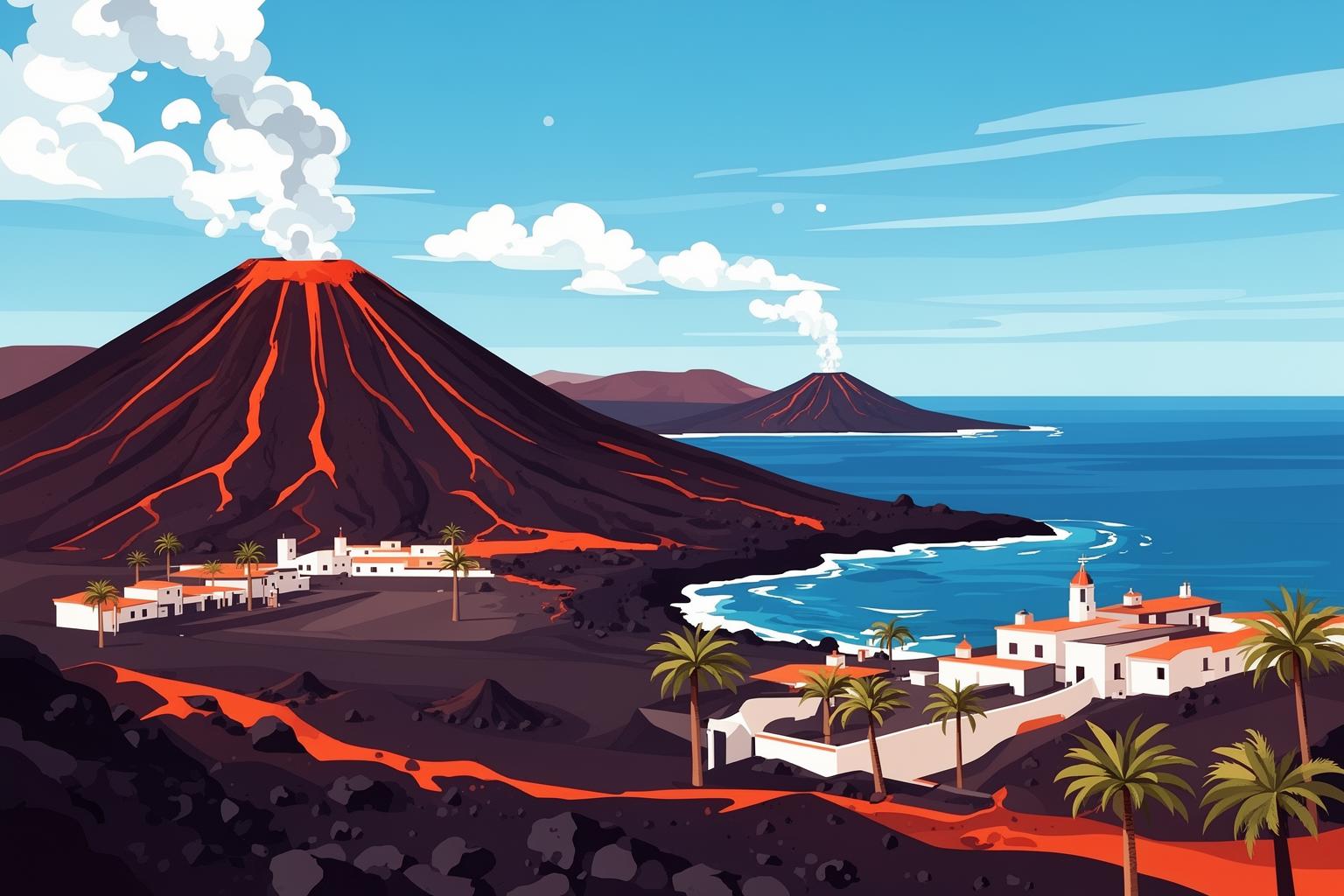
In 1993, after the controversy sparked by his novel, José Saramago made a choice that would redefine the final chapter of his life and work. He embarked on a self-imposed exile, relocating to Lanzarote, one of Spain’s Canary Islands. What appeared to be an ending was, in reality, a profound new beginning. The island—with its stark black volcanic soil, dramatic cliffs, and minimalist white architecture—became his home, sanctuary, and ultimate vibrant muse. Visiting Lanzarote is like stepping into the landscape of his later years’ mind: clear, profound, and stripped of all unnecessary elements.
A Casa: A Home and a Library
In the town of Tías stands “A Casa,” the house Saramago built with his wife, Pilar del Río. Now a museum, it feels far from static. The moment you enter, it seems the writer has just stepped out for a walk. His glasses rest on the desk, his books line the walls not as mere artifacts but as beloved companions, and coffee cups are found in the kitchen. The tour is intimate and deeply moving. You see the study where he wrote daily, seated in the same chair, gazing out over the volcanic garden. It was there he created some of his most renowned works, including the haunting allegory Blindness and its sequel Seeing.
At the heart of the home lies the library. Unlike the grandiose library of Mafra, this is a personal, working library filled with the books he read and cherished. It maps his intellect and spirit. The guides share intimate stories that animate the space, portraying a man who, despite worldwide fame, found profound fulfillment in a simple routine of reading, writing, and living. In the garden, another olive tree stands, a sibling to the one in Lisbon, symbolically linking his birthplace and his final home through a single root.
The Island’s Influence
Beyond the house, explore Lanzarote. Drive through Timanfaya National Park, a lunar terrain of dormant volcanoes and hardened lava. Visit the works of artist César Manrique, who shaped the island’s visual identity with his philosophy of blending art and nature. The island’s unique environment clearly influenced Saramago’s later writings. Themes of isolation, survival, and the creation of a new society from scratch—which are central to Blindness—resonate deeply with the island’s own story of life flourishing in a harsh setting. Lanzarote provided Saramago with a vantage point, a place from which to reflect on the world with clear, critical insight. It granted him the peace to write with uncompromising honesty until the very end.
Visiting “A Casa” is a pilgrimage of the heart. It requires a flight to the Canary Islands, but every mile traveled is worthwhile. It offers a moment to give thanks, to sit in the presence of his creative spirit, and to realize that for this extraordinary writer, home was not merely a location on a map but a space shaped by love, books, and a window opening onto the world.
Following Saramago’s path is to journey through the 20th century, through literature, and through the soul of a man who never ceased questioning, observing, or believing in the power of the written word to change our perspective. From the muddy banks of a Portuguese river to the black sands of a volcanic island, his life stands as a testament to the idea that our stories are deeply entwined with the places that mold us. Walking these paths is to read his work in vivid dimensions, to feel the sun and stone living between his lines, and to gain a deeper appreciation for one of literature’s most vital voices.