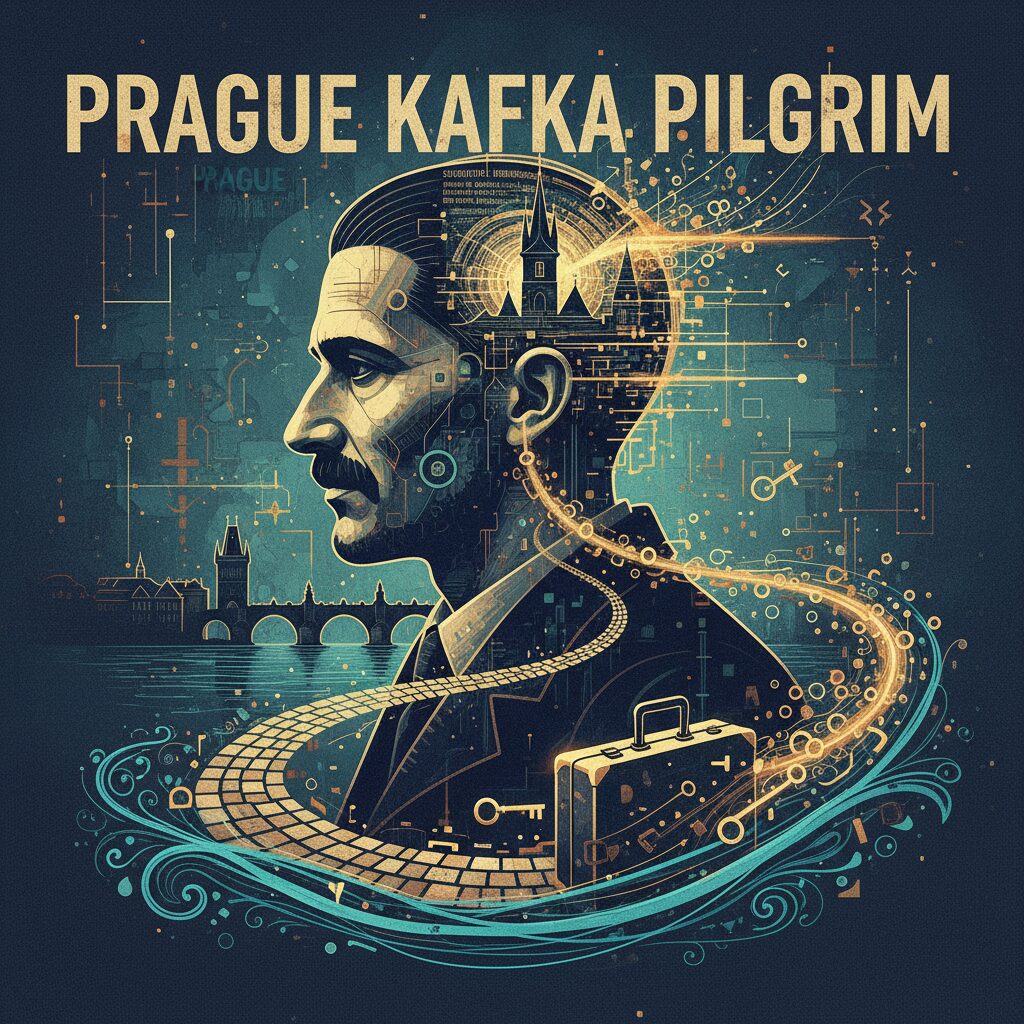
There are cities that you visit, and then there are cities that inhabit you. Prague is the latter. It’s a city of shadowed alleyways and golden spires, a labyrinth of cobblestone that seems to hold the echoes of every soul who ever walked its paths. And no soul echoes more profoundly, more enigmatically through these streets than that of Franz Kafka. To walk through Prague is to walk through the pages of his mind, to feel the beautiful, terrifying, and absurd architecture of his world rising up around you. This isn’t just a tour of historic sites; it’s a pilgrimage into the heart of a literary universe, a journey to understand the man who was so inseparable from his hometown that he once declared, “Prague never lets you go… this dear little mother has claws.” He was right. The city holds you, and the ghost of Kafka holds you tighter still. We come here not just to see where he lived, but to feel what he felt: the weight of the castle on the hill, the claustrophobia of the winding lanes, the sudden, breathtaking beauty of a sunrise over the Vltava River. It’s a pursuit of a feeling, an atmosphere—the very essence of what it means to be Kafkesque, found in the city that birthed the term. Before we begin our descent into this beautiful maze, let’s orient ourselves within the geography of his life.
This journey into Kafka’s Prague is a form of literary pilgrimage, much like tracing the landscapes of other great authors.
The City as a Character: Prague’s Labyrinthine Soul
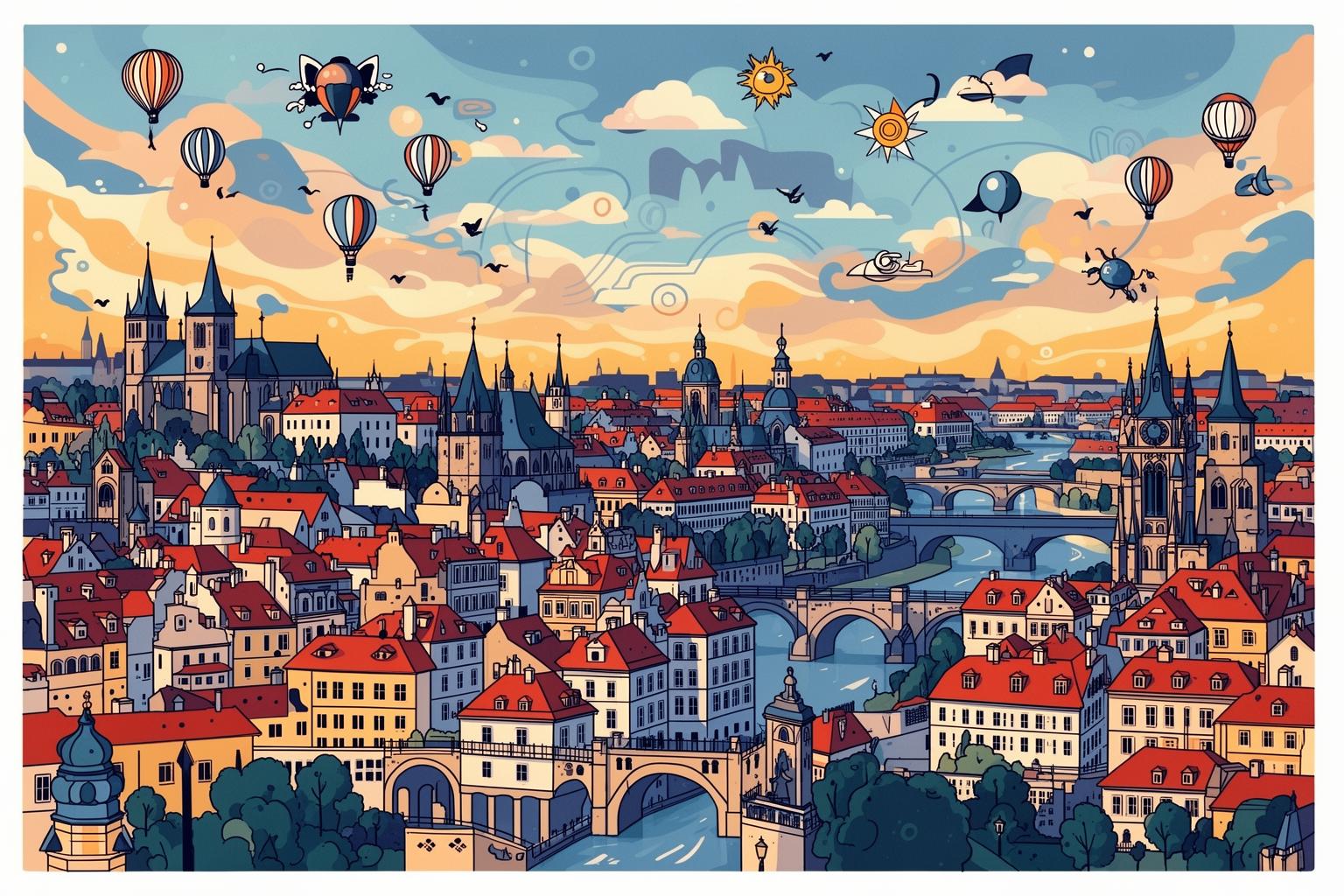
Before you can truly find Kafka, you must first lose yourself in his Prague. This is not the Prague of bright tourist snapshots, but a city of stark contrasts, where light and shadow engage in an endless dance. Kafka was born in 1883 into a cultural crucible—the capital of Bohemia and a key hub of the German-speaking world within the sprawling Austro-Hungarian Empire. As a German-speaking Jew in a predominantly Czech city, he inhabited a trifecta of identity that left him in a constant state of otherness. This sense of being an outsider in his own home permeates his work and can be sensed in the very stones of the city.
Step away from the crowds. Slip into a passageway, a pasáž, that cuts through a city block and leads onto an unexpected street. Look up at the tangled rooftops, the eerie sculptures and gargoyles perched on centuries-old facades. This is the architecture of Kafka’s imagination. The city was not merely a backdrop for him; it was an active element in his psychic landscape. The imposing presence of Prague Castle, visible from almost anywhere in the old town, becomes the inaccessible, unfathomable seat of power in The Castle. The winding, illogical streets of the Old Town reflect the bewildering legal labyrinth of The Trial. He absorbed the atmosphere of bureaucratic stagnation, mystical folklore, and simmering ethnic tensions, transforming them into universal parables of alienation and anxiety.
To fully appreciate this, visit at the edges of the day. In the early morning mist, as gas lamps flicker off and the Charles Bridge lies almost deserted, you can feel the city’s medieval soul—secretive and spectral. At twilight, as the sun sets behind the castle and the sky deepens to a bruised purple, the Golden City takes on a melancholic beauty. It is in these quiet moments, away from the crowds, that you can hear the whispers of Kafka’s world. You begin to realize that his surrealism was not mere fantasy, but a heightened form of realism for a man living in a profoundly surreal place.
The Epicenter: Old Town Square and Its Orbit
Kafka’s entire life revolved closely around the Old Town Square (Staroměstské náměstí). Born in a house on its very edge, he spent much of his life living in various apartments located on or overlooking the square. Today, the square pulses with vibrant tourism, highlighted by its magnificent Astronomical Clock and the twin spires of the Church of Our Lady before Týn. Yet, if you try to look beyond that modern energy, imagine the square through Kafka’s perspective.
The Birthplace and the Shadow of the Father
The original house where Kafka was born, at the corner of Kaprova and Maiselova streets, no longer exists, having been demolished during the late 19th-century renovation of the Jewish Quarter. A simple plaque on the current building marks the site, but its psychological significance remains immense. From his earliest days, Kafka stood at the center of this grand, theatrical space, yet also remained on its margins as part of the Jewish minority. His family’s apartments in the Oppelt House and later the Minute House, with its striking sgraffito facade adjacent to the Astronomical Clock, placed him directly within the pulse of the city’s life. Looking out his window, he could witness Prague’s entire drama unfold—markets, protests, parades, and executions. This constant public exposure, contrasted with his deeply private inner world, undoubtedly fueled the tension in his writing.
His fraught relationship with his domineering father, Hermann, is a well-documented source of his lifelong anxiety. The family’s haberdashery operated on the ground floor of the Kinský Palace, a grand Rococo building that dominates one side of the square. Picture a young, sensitive, introverted Franz gazing upon this massive, imposing palace, which symbolized not only his father’s commercial success but also the oppressive weight of his expectations. The building felt like a physical embodiment of the paternal authority Kafka struggled against throughout his life—a theme powerfully explored in his “Letter to His Father.” Today, when you stand before the Kinský Palace, don’t just admire its architectural elegance; see it as a monument to an intensely private psychological battle.
The View from the Window
Kafka once described his life as confined within this small circle around the square. For a period, he lived in an apartment directly facing the Astronomical Clock. There, he would have observed the hourly procession of the Apostles—a delightful spectacle for tourists, but for Kafka, possibly a symbol of relentless, mechanical time, judgment, and predestination. The square was both his cradle and his prison. It represented the world in miniature—a stage where the absurdities of human existence played out daily. To walk the streets branching from the square—Celetná, Pařížská, Dlouhá—is to follow the routes of his daily journeys between home, school, university, and the cafes where he sought intellectual escape.
A Room of One’s Own: The Alchemical Magic of Golden Lane
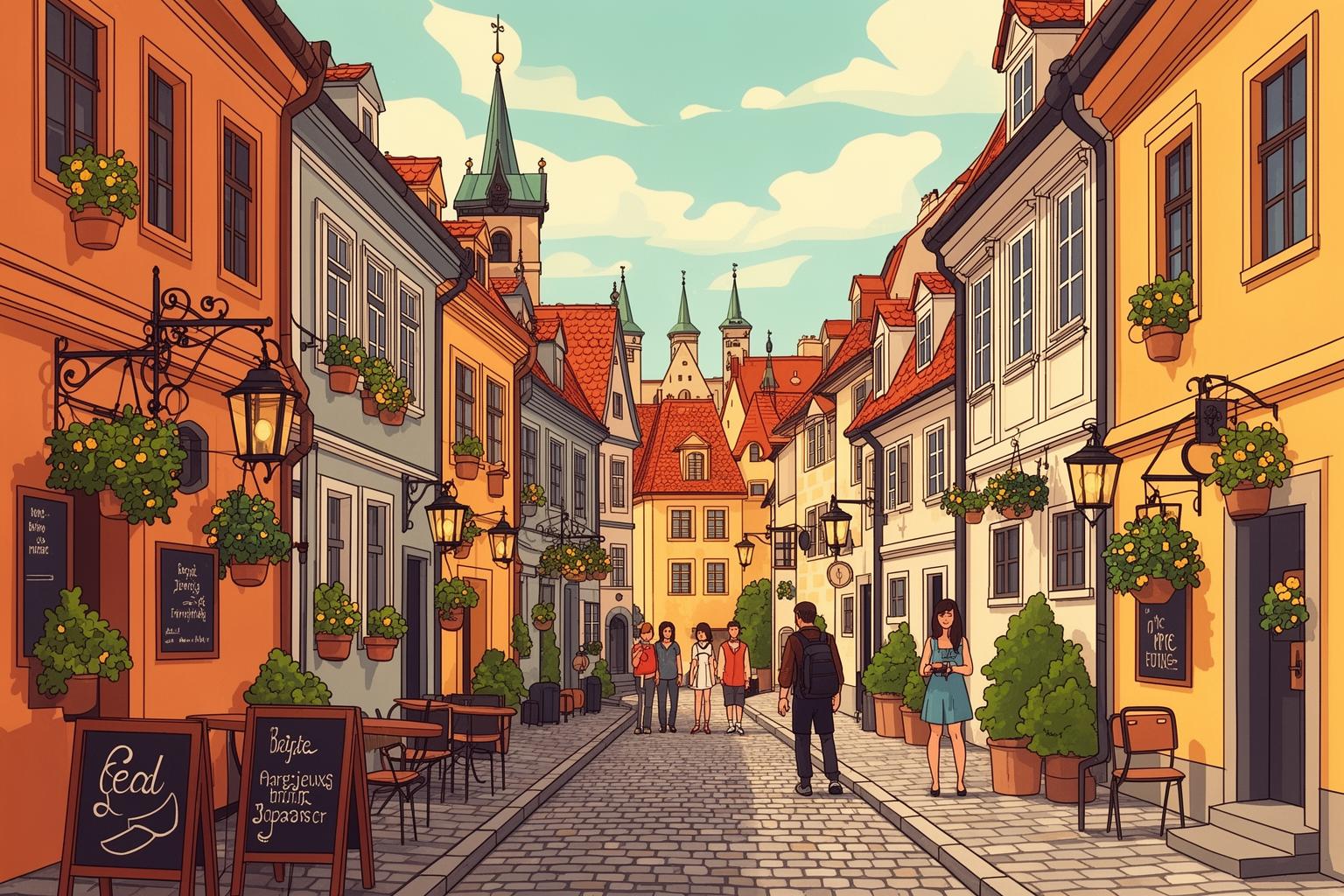
To escape the stifling closeness of his family and find a quiet place to write, Kafka sought refuge in one of the most enchanting spots in the city: the Golden Lane (Zlatá ulička), tucked within the fortified walls of Prague Castle. In the winter of 1916-1917, he rented a small, sky-blue house, No. 22, from his sister Ottla. This became his sanctuary.
The Fairytale Facade
Strolling down the Golden Lane feels like stepping into a storybook. The tiny houses, painted in vivid colors, lean against the ancient castle ramparts. Legend has it that alchemists once lived here, attempting to turn lead into gold for Emperor Rudolf II. The air is thick with magic and myth. It’s a place almost too charming, too picturesque to be real. And it is precisely this contrast that makes Kafka’s presence here so striking.
Within this fairytale setting, he was not weaving fantasies. He was exploring the darkest depths of the human condition, writing some of his most profound short stories, including “A Country Doctor.” The quiet of the lane, especially at night after the castle grounds had emptied, offered the silence he so desperately needed. He wrote to his fiancée, Felice Bauer, about the experience: “It is something special to have one’s own house… to step out of the door of one’s own house right into the snow of the silent lane.”
Practicalities of a Visit
Today, the Golden Lane is part of the Prague Castle ticketed route. It can become very crowded during the day, with the narrow lane filled with tour groups. The houses are now arranged as small museums and souvenir shops, illustrating what life might have been like for the castle guards, goldsmiths, and servants who once lived there. House No. 22 hosts a small bookshop and a display dedicated to Kafka. To catch a glimpse of the solitude he sought, aim to be among the first visitors in when the castle opens or come late in the afternoon as the crowds begin to thin. Look beyond the commercialism and try to sense the profound peace and focus he must have found here, a tiny blue haven of creativity high above the bustling city below.
Across the River: The Surreal World of the Kafka Museum
Cross the iconic Charles Bridge, lined with its gallery of stoic saints, and step into the Malá Strana, or “Lesser Town.” Here, along the banks of the Vltava, nestled within the former Herget Brickworks, you will discover the Franz Kafka Museum. This is far from a dusty, hagiographic collection of artifacts. Instead, it offers an immersive, disorienting, and brilliant exploration of the writer’s inner world.
An Existential Labyrinth
The museum is split into two main sections: “Existential Space” and “Imaginary Topography.” The first section traces Kafka’s physical life in Prague through letters, diary entries, photographs, and first editions of his books. Yet the presentation is anything but simple. The rooms are dark, lit only by spotlights that highlight fragments of text or haunting images. Audio-visual elements generate a sense of unease—disembodied hums of machinery and the scratch of a pen surround you. The experience is designed to evoke his feelings: the suffocating family life, the bodily anxieties, the complex labyrinth of his mind.
The Topography of Imagination
The second section transforms the museum into a work of art itself. It seeks to map the “imaginary topography” of Kafka’s fiction, visualizing the impossible architecture of his novels. Filing cabinets rise to the ceiling, drawers bursting with endless paperwork—a clear allusion to the oppressive bureaucracy in The Trial. Projections of German and Czech words drift across the walls, reflecting the linguistic duality of Kafka’s existence. The atmosphere is paranoid, claustrophobic, and deeply unsettling, yet also intellectually thrilling. You don’t just learn about Kafka’s work; you are immersed in it. It is a masterclass in exhibition design, perfectly capturing the spirit of its subject.
Before stepping inside, you are welcomed by one of Prague’s most famous and provocative modern sculptures: David Černý’s “Piss.” Two bronze male figures stand in a basin shaped like the Czech Republic, urinating, with motorized streams of water that spell out quotes from Czech literature. Absurd, irreverent, and confrontational, it offers a fittingly Kafkesque introduction to the world you are about to enter. Allow yourself plenty of time for this museum—it is dense and requires slow, thoughtful engagement. It will leave you with a profound and visceral understanding of the writer’s tormented genius.
The Double Life: Bureaucracy and the Written Word
For the majority of his adult life, Franz Kafka was more than just a writer; he was a dedicated and respected lawyer employed by the Worker’s Accident Insurance Institute for the Kingdom of Bohemia. His professional life is a vital, often overlooked, part of understanding him. The large, neoclassical building where he worked still stands on Na Poříčí street, serving as a monument to the impersonal forces of the modern state.
A Prison of Paperwork
Each morning, Kafka stepped into a world of regulations, claims, and industrial accident reports. He confronted the harsh reality of workers injured by machinery, a grim truth that undoubtedly shaped his bleak perspective on industrial progress. He was reportedly proficient in his work, received several promotions, and was even assigned to write safety pamphlets aimed at preventing the accidents he investigated. Despite this, he referred to his office as “hell” and led a divided existence. His days were devoted to the institute; his nights to literature. He would return home, eat, attempt to sleep for a few hours, and then write throughout the night, driven by an urgent, almost compulsive, need to create.
This daily routine within the heart of a bureaucratic monster provided the raw material for much of his fiction. The endless hallways, obscure regulations, faceless authorities, and individuals trapped within an unfathomable system were not merely metaphors. They were the tangible reality of his work life. When reading The Trial, you encounter a nightmarish amplification of an insurance office. Visiting the building today, its imposing facade conveys a palpable weight. It powerfully reminds us that Kafka’s surrealism was deeply grounded in the mundane absurdities of 20th-century existence.
Islands of Thought: The Prague Café Culture
Though his office was a place of confinement, the grand cafes of Prague served as his sanctuaries of intellectual freedom. In the early 1900s, these vibrant spaces were the city’s living rooms for artists and philosophers. They were venues for debate, reading, observing humanity, and, naturally, writing. Kafka and his circle, including his close friend Max Brod, frequented several notable establishments.
Café Louvre
Opened in 1902 and still flourishing today, Café Louvre on Národní Street offers a splendid step back in time. Its grand Art Nouveau interior, high ceilings, and billiard room evoke a perfectly preserved fragment of the Austro-Hungarian Empire. This was a regular gathering spot for the German-Jewish intellectual elite, including members of the Brentano Circle, a philosophical group Kafka belonged to. Albert Einstein also visited during his time in Prague. A visit today is essential: order a coffee and a slice of cake, then simply sit. Take in the atmosphere. Watch the light pour through the tall windows. It remains one of the few places where you can share the same elegant space that Kafka once inhabited and feel the vibrant intellectual energy that filled his world.
Café Arco and Café Savoy
Café Arco, now a dull canteen for the Ministry of the Interior, was another important meeting place, the hub of the “Arco Circle” of writers. Although its original charm has faded, its historical significance is still palpable. Across the river near Kampa Park stands the magnificent Café Savoy. With its stunning Neo-Renaissance ceiling and lavish decor, it epitomizes the peak of Prague’s coffeehouse culture. While it is less directly linked to Kafka than Louvre or Arco, it perfectly embodies the ambiance of the era. It was in these spaces, amid the clinking cups and soft murmur of conversation, that Kafka could escape the solitude of his office and connect with the world of ideas, even if only as a quiet observer.
Beyond the City Walls: The Search for Air
Kafka’s life was marked by a continuous battle with physical and psychological ailments, most prominently the tuberculosis that ultimately claimed his life. This struggle compelled him to leave his cherished yet stifling Prague in pursuit of fresh air and tranquility, seeking treatment in sanatoriums across Europe. These places of refuge are as integral to his story as the streets of the city itself.
Kierling and the Final Words
The most notable of these was the Dr. Hoffmann Sanatorium in Kierling, a small town nestled in the Vienna Woods. It was there, in the spring of 1924, that Kafka spent his final weeks. His tuberculosis had advanced to his larynx, rendering him unable to speak or eat. His last communications were penned on small slips of paper, known as his “conversation slips.” He was cared for by his friend Robert Klopstock and his last love, Dora Diamant. It was at this place that he famously and poignantly instructed Max Brod to destroy all his unpublished work—an order Brod thankfully chose to disregard. The building remains standing today as a private residence, with a small memorial marking the site where one of literature’s most profound voices fell silent. Visiting Kierling is a solemn yet vital part of the Kafka pilgrimage, offering a space to reflect on the delicate line between genius and mortality.
Retreats in the Mountains and by the Sea
Throughout his illness, Kafka sought sanctuary in other locations as well. He spent time in sanatoriums in the High Tatras mountains, now in Slovakia, surrounded by the majestic and indifferent beauty of the alpine landscape. He also stayed in Merano, a spa town in the Italian Alps, and Müritz on the Baltic Sea coast. These settings stood in sharp contrast to the crowded urban environment of Prague. They were places of open space, nature, and quiet reflection. His letters from these retreats reveal a fleeting sense of peace, a brief respite from the anxieties that haunted him. These visits symbolized his search not only for physical healing but also for spiritual and mental clarity—something the city, despite its inspiration, could never fully offer.
A Final Resting Place: The New Jewish Cemetery
Kafka’s physical journey concludes back in Prague, at the New Jewish Cemetery (Nový židovský hřbitov) in the Žižkov district. Reaching it involves a short tram ride from the city center, and the trip itself feels like an apt transition from the realm of the living to a place of quiet reflection.
An Oasis of Green
The cemetery is expansive, beautiful, and somewhat overgrown, resembling a forest more than a typical graveyard. Sunlight filters through a canopy of ivy-covered trees, casting dappled light on the intricate headstones. It is a peaceful, contemplative space, far removed from the bustling tourist crowds. Finding Kafka’s grave takes some time; following the signs, the walk becomes a meditative preparation of sorts. His grave is marked by a simple, modernist stone obelisk, a design he personally chose. He is buried here alongside his parents, Hermann and Julie Kafka. The stone is austere and unembellished, standing in stark contrast to the more ornate monuments around it. It feels fitting, reflecting the clarity and precision of his prose, stripped of sentimentality. Visitors from around the world leave small stones on the grave, a traditional Jewish custom, along with notes, poems, and other small tributes. Standing there in the quiet of the cemetery, one senses the profound connection readers have with this man—a shared understanding of the human condition he so eloquently expressed. Nearby, a plaque honors his close friend Max Brod, who is buried in Tel Aviv but whose name remains forever linked to Kafka’s legacy.
The Modern Ghost: Kafka’s Ever-Present Image
Returning to the city center, you’ll notice that Kafka’s presence in Prague today is stronger than ever before. His likeness appears everywhere: on t-shirts, mugs, and magnets. Yet beyond the kitsch, the city has also honored him with genuinely remarkable public artworks.
The Kinetic Head
Behind the Quadrio shopping center stands David Černý’s “Head of Franz Kafka.” This large, captivating sculpture is made up of 42 rotating stainless steel layers. These layers move independently, continually deconstructing and reconstructing Kafka’s face. It serves as a brilliant metaphor for the writer’s fragmented identity, restless mind, and the fluid, unreliable nature of reality in his work. Watching the face dissolve into a chaotic tangle of metal and then gradually reform is an unforgettable experience. The piece is a perfect example of 21st-century art capturing a 20th-century consciousness.
The Rider on Shoulders
In the Jewish Quarter, near the Spanish Synagogue, you’ll find Jaroslav Róna’s “Statue of Franz Kafka.” This surreal sculpture features a giant, empty suit carrying a smaller figure of Kafka on its shoulders. The work is inspired by a scene from Kafka’s early short story, “Description of a Struggle.” It powerfully illustrates themes of alienation, duality, and the sensation of being carried forward by forces beyond one’s control. This strange, unsettling, and deeply moving tribute avoids simple portraiture, offering instead a profound psychological interpretation.
An Invitation to Wander
A journey into Kafka’s Prague is not about ticking off a list of landmarks. It is about immersion—allowing yourself to get lost, to feel the weight of history, and to discover beauty within the shadows. Wander the streets by night. Find a quiet corner in a centuries-old pub. Read a page of The Metamorphosis in the Golden Lane. Experience the unsettling brilliance of the Kafka Museum. This city was his muse, his prison, and his entire universe. By following his footsteps, we are not merely learning about a writer who died a century ago; we are learning about ourselves. We confront the anxieties, absurdities, and unexpected moments of grace that shape our modern lives. Prague still has its claws, and if you allow it, it will hold you in its beautiful, melancholic, and deeply Kafkesque embrace long after you’ve returned home.