
The heart of England beats with a quiet, pastoral rhythm, a pulse felt in the rolling green hills and sleepy canals of Warwickshire. This is a landscape stitched together with ancient hedgerows and red-brick farmhouses, a place that seems to breathe history. But for lovers of literature, this region resonates with a deeper frequency. It is the cradle of one of the world’s greatest novelists, the soul-ground of George Eliot. To walk here is to walk through the pages of Middlemarch and The Mill on the Floss, to trace the evolution of a brilliant mind from a curious country girl named Mary Ann Evans into the literary titan who would forever change the English novel. This journey isn’t just about visiting landmarks; it’s about understanding how a place can shape a person, how the soil and streams and social currents of a specific corner of the world can flow into stories that feel universal and timeless. We’ll wander from her childhood haunts, through the crucible of her intellectual awakening in a bustling city, to the London parlors where George Eliot was truly born. It’s a pilgrimage into the mind of a genius, guided by the very landscapes that inspired her.
Such literary pilgrimages offer a profound way to connect with authors, much like a journey through the world of F. Scott Fitzgerald.
The Heart of Eliot Country: Nuneaton and the Making of a Memory
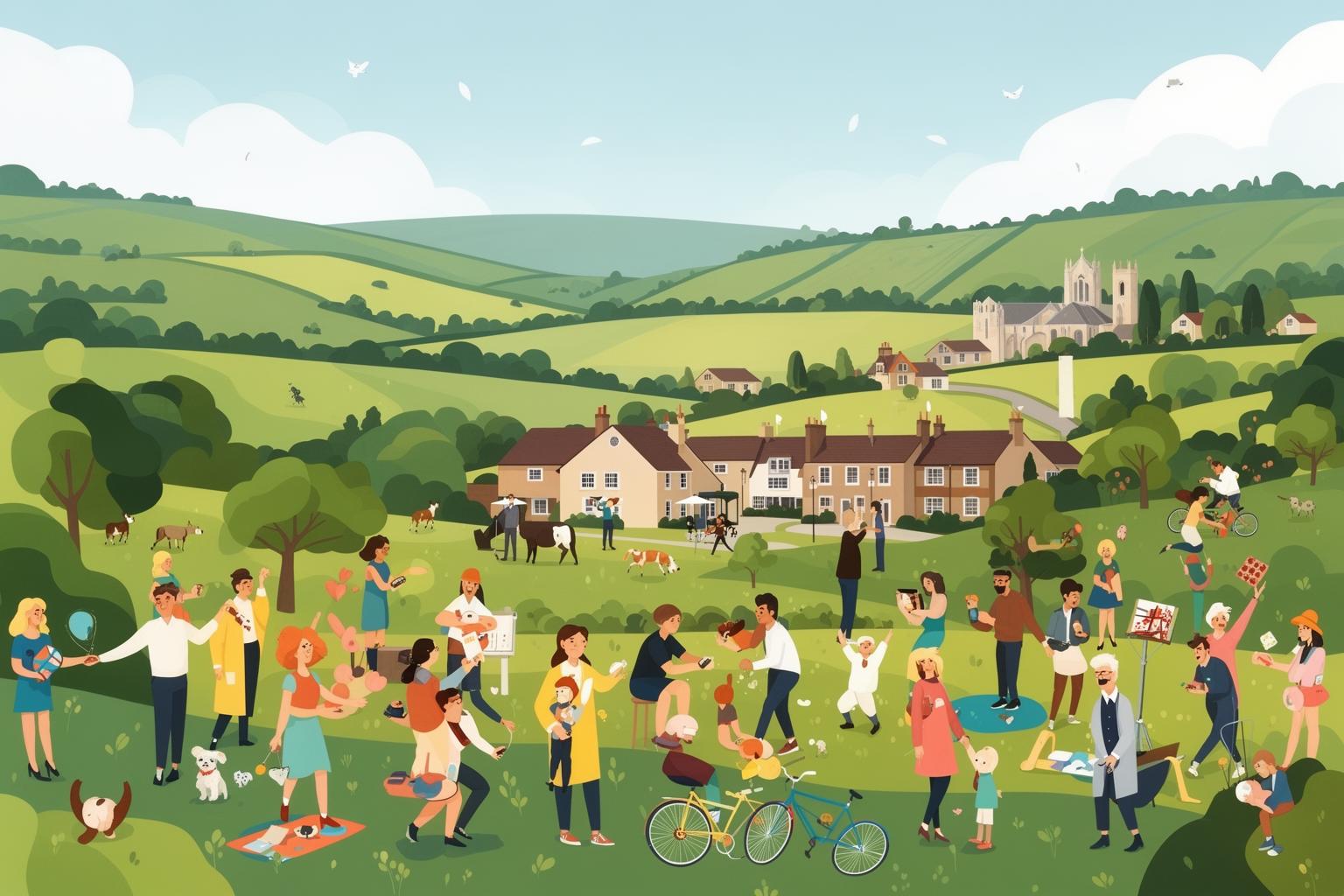
The story of George Eliot begins not in a grand mansion, but in the gentle, unpretentious countryside of North Warwickshire. This region, now affectionately dubbed “George Eliot Country,” is where the raw material for her greatest fiction was gathered. Her recollections of its sights, sounds, and inhabitants became the foundation of her artistry, giving it a deep authenticity that captivated Victorian readers and continues to fascinate us today. It all begins on the Arbury Estate, a vast property that dominated both the local landscape and the lives of those within its sphere.
A Childhood at South Farm and Griff House
Mary Ann Evans was born on November 22, 1819, at South Farm, a charming red-brick farmhouse on the Arbury Estate where her father, Robert Evans, served as the land agent. Though her time there was brief, the very fact of her birth on this working farm, surrounded by agricultural cycles and the rhythms of rural labor, is significant. It grounded her in a world of tangible realities—the scent of damp earth, the lowing of cattle, the chatter of farmhands—that would later enrich her novels with an unparalleled sense of place. Her father’s role offered the family a unique social perspective, positioned between the landed gentry and tenant farmers, enabling young Mary Ann to observe a broad cross-section of provincial society with a sharp, analytical eye.
Just months after her birth, the family relocated to Griff House, a larger and more distinguished residence on the same estate, situated on the main road between Nuneaton and Coventry. This would be her home for the next twenty-one years, and it is, without doubt, the single most crucial location in her formative life. To visit Griff House today is to step directly into the world of Maggie Tulliver, the passionate, intelligent, and ill-fated heroine of The Mill on the Floss. The house—with its sprawling gardens and proximity to the Coventry Canal—is the unmistakable model for Dorlcote Mill. Standing before its ivy-covered walls, you can almost hear the echoes of childhood games and the fierce, loving disputes between a clever, imaginative girl and her more practical older brother, Isaac. Their relationship, marked by deep affection and painful misunderstandings, served as the blueprint for Maggie and Tom Tulliver’s tragic bond.
The atmosphere surrounding Griff House still whispers of her past. You can imagine a young Mary Ann, book always in hand, retreating to the attic, her private sanctuary for reading and dreaming. Walking along the nearby canal towpath, you can picture her watching the slow-moving barges, a lifeline to the wider world beyond her rural enclave. Close by, a wooded, dingly dell and old stone quarry inspired the fictional “Red Deeps,” Maggie Tulliver’s treasured hideaway. For Eliot, this was more than just a home; it was a sensory archive. She absorbed every detail: the changing seasons, the wildflowers in the hedgerows, the dialect of local workers, and the social codes shaping every interaction. These details were stored away, ready to be retrieved and refined into the radiant prose of her novels.
Visiting Griff House Today
Fortunately for literary pilgrims, Griff House still stands and remains remarkably accessible. It is now a hotel and restaurant, part of the Beefeater chain. While the interior has been modernized for hospitality, the building’s exterior and its grounds retain their historic charm. You don’t need to be a guest to visit; stopping for a meal or a drink offers a perfect way to soak in the atmosphere. Sitting in the dining room, knowing you are in the very building where Eliot’s consciousness was forming, is a deeply moving experience. It serves as a tangible link to the past, a place where the boundary between biography and fiction feels beautifully and thrillingly blurred.
Nuneaton: The Gritty Realism of Milby
If Griff House was the idyllic center of her childhood, the nearby market town of Nuneaton provided the social drama and gritty reality. Nuneaton was the family’s hub for shopping, church, and business. It was here that Mary Ann witnessed the complex tapestry of provincial life: the gossip of shopkeepers, the piety of churchgoers, the struggles of the working class, and the quiet tragedies unfolding behind closed doors. This bustling, somewhat grimy town, shaped by its ribbon-weaving industry and coal-mining grit, would later be immortalized as “Milby” in her first work of fiction, Scenes of Clerical Life.
In Scenes, especially the impactful story “Janet’s Repentance,” Eliot paints a vivid, unflinching portrayal of a town wrestling with religious dissent, alcoholism, and social hypocrisy. Strolling through Nuneaton’s town center today, you can still sense the echoes of Milby. The Parish Church of St. Nicolas, with its imposing tower, is the very church she described in her stories. Standing in its churchyard, you can imagine the congregations of her era, their lives intertwined with the sermons and scandals that Eliot observed so keenly.
Though much changed, the market square remains the town’s focal point. It was here she would have observed farmers bartering, townsfolk gossiping, and the full social hierarchy of the region on display. A must-visit for any Eliot enthusiast is the Nuneaton Museum & Art Gallery, located within the lovely grounds of Riversley Park. The museum hosts a dedicated George Eliot gallery, featuring personal belongings, letters, and first editions that offer a fascinating glimpse into her life and work. It’s a thoughtfully curated collection that brings the woman behind the pen name vividly to life. In the heart of the town, in Newdegate Square, you’ll also find a proud statue of George Eliot, book in hand, a lasting tribute from the town she so masterfully portrayed.
Coventry: The Crucible of a Mind
In 1841, at the age of twenty-one, Mary Ann Evans experienced a profound transformation in her life. After her mother’s death and her brother’s marriage, she relocated with her father to Foleshill, a suburb of nearby Coventry. The shift from the rural seclusion of Griff to the intellectual and industrial vibrancy of Coventry was like moving from a calm pond into a swiftly flowing river. Coventry was not just a larger town; it was a hub of radical ideas, religious nonconformity, and progressive politics. It was in this environment that the country girl with an insatiable thirst for knowledge evolved into a formidable intellectual, a journey that would ultimately lead to her becoming George Eliot.
The Transition to Urban Life and the Bray Circle
The Coventry of the 1840s was alive with fresh ideas. Her new neighbors, Charles and Cara Bray, were a wealthy and philanthropic couple who hosted a vibrant intellectual circle at their home, Rosehill. Charles Bray, a free-thinking ribbon manufacturer and philosopher, introduced Mary Ann to a world filled with radical thinkers, scientists, and writers who challenged the core of her orthodox religious beliefs. The discussions at Rosehill were exhilarating—covering geology, phrenology, philosophy, and German Higher Criticism, a biblical study approach treating scripture as historical text rather than divine revelation.
This deep engagement with new intellectual currents triggered a crisis of faith for Mary Ann. It was a painful and lonely experience, causing a temporary estrangement from her devout father. Yet, it was also freeing, releasing her mind from the grip of dogma and opening it to a more compassionate, humanistic outlook that would become central to her novels. Her great talent lay not in abandoning morality with orthodoxy, but in discovering a new foundation for it in human empathy and fellowship. This profound psychological and philosophical journey, carried out in Coventry’s drawing rooms and libraries, was the true crucible of her genius.
In Coventry, she also undertook her first major literary project: the meticulous translation of David Friedrich Strauss’s Das Leben Jesu, kritisch bearbeitet (The Life of Jesus, Critically Examined). This dense and scholarly German theological work was monumental, requiring nearly two years to complete. The arduous intellectual effort refined her prose, deepened her grasp of complex ideas, and established her reputation as a serious scholar. It was an apprenticeship forged in the demanding fires of translation, preparing her for the creative challenges ahead.
Following Eliot’s Path in Modern Coventry
For today’s literary visitor, tracing Eliot’s Coventry is more difficult than exploring Warwickshire. The city suffered heavy bombing in World War II, erasing much of the Victorian architecture she once knew. Rosehill, the Brays’ home, no longer exists. The house she shared with her father in Foleshill has also disappeared. Yet, the spirit of the place and the importance of her time there endure.
A visit to Coventry today is a testament to resilience and renewal. The striking modern cathedral, built alongside the haunting ruins of the old one, vividly symbolizes this spirit. Although not directly connected to Eliot, its message of reconciliation and hope echoes her humanistic philosophy. To truly understand her Coventry, one must look beyond the surviving structures and sense the intellectual vitality that once energized the city. The Herbert Art Gallery & Museum offers valuable context, with exhibits on the city’s industrial heritage and its history of radical thought. Walking through the rebuilt city center, one can imagine the shock and exhilaration a young woman from the countryside would have felt here—the thrill of new ideas and the shaping of a new identity far from the familiar fields of Griff.
London: The Birth of George Eliot

After her father’s death in 1849, Mary Ann Evans found herself finally unbound. After traveling through continental Europe, she made the daring and unconventional choice to relocate to London in 1851 and build a career as a writer and editor. This marked the final and pivotal phase of her transformation. If Warwickshire gave her the heart and Coventry the mind, London bestowed upon her the voice and the name: George Eliot.
A New Life at the Westminster Review
She lodged at 142 Strand, in the house of the publisher John Chapman, and soon became the de facto editor of his progressive journal, the Westminster Review. This was an extraordinary role for a woman in the mid-Victorian period. She was much more than an assistant; she was the intellectual force behind the publication, commissioning articles, editing influential thinkers such as John Stuart Mill and Herbert Spencer, and shaping the leading intellectual debates of the time. The Strand was the vibrant hub of London’s press, and she was at its core, proving to be one of the sharpest minds in a city full of them.
During this period, she met the man who would alter her life: the philosopher, critic, and scientist George Henry Lewes. Lewes was brilliant, witty, and lively, one of the few men who could match her intellectually. He immediately recognized her genius, not only as a critic and editor but as something more. They fell deeply in love, yet their relationship was complicated. Lewes was caught in an open marriage, unable to divorce his wife, Agnes Jervis, with whom he had several children, some fathered by another man. For Mary Ann and Lewes to be together, they had to defy one of Victorian society’s greatest taboos.
A Union of Minds and the Pen Name
In 1854, they made their decision. Traveling to Germany together, they publicly declared themselves a couple. It was a social exile, an act of remarkable courage that scandalized polite society and estranged Mary Ann from many friends and family, including her beloved brother Isaac. Yet this partnership became her greatest source of strength. Lewes offered unwavering emotional support and intellectual encouragement, enabling her to unlock her creative potential. It was he who, after reading a witty, insightful essay she had written about country vicars, encouraged her to try her hand at fiction. He believed she had the soul of a novelist.
Though hesitant and plagued by self-doubt, she gradually began to write under his gentle persuasion. The result was Scenes of Clerical Life. To protect her privacy and ensure her work was evaluated on its merits, free from the scandal of her personal life and prejudice against female authors, she adopted a male pen name: George Eliot. “George” honored George Henry Lewes, and “Eliot” was, as she said, “a good, mouth-filling, easily-pronounced word.” The secret was kept, and the stories received critical acclaim. Charles Dickens himself wrote to praise the work, intuiting that despite the name, the author was a woman. With Lewes as her champion and partner, Mary Ann Evans had at last become George Eliot, the novelist.
Finding Eliot’s London Today
Eliot and Lewes lived in several London homes, creating havens of domesticity and intellectual work. Though 142 Strand no longer stands, you can still visit the neighborhoods that shaped their world. They spent time in Richmond, with its lovely park and riverside walks, offering a welcome escape from the city’s grime. Their most famous London residence was The Priory, at 21 North Bank in St John’s Wood, near Regent’s Park. For nearly fifteen years, it was their refuge. There, they hosted renowned Sunday salons attended by the literary and scientific giants of the era, including Tennyson, Browning, and Darwin. The house is now private, but strolling the elegant streets of St John’s Wood and walking through Regent’s Park, where they walked daily, one can feel the presence of their powerful partnership.
After Lewes’s devastating death in 1878, a grief-stricken Eliot eventually married a younger man, John Walter Cross. They moved to a grand home at 4 Cheyne Walk in Chelsea, an area steeped in artistic and literary history. Tragically, she passed away there just months later in 1880. She is buried not in Westminster Abbey—her unorthodox life and agnostic beliefs denied her that honor—but in Highgate Cemetery, beside her beloved George Henry Lewes. Visiting their shared grave is a moving conclusion to any London pilgrimage, a tribute to a love and partnership that gave the world some of its most enduring literature.
The Literary Landscapes: From Reality to Fictional Worlds
One of George Eliot’s greatest talents was her ability to transform the real world into lasting fictional landscapes. She was not merely a writer who replicated what she observed; she was an artist who captured the essence of a place—its social interactions, physical characteristics, and very spirit—and reimagined it as a setting that felt both particular and universal. Her novels are firmly anchored in the English Midlands, yet they resonate with human experiences that go beyond time and place.
From Warwickshire to St Ogg’s and Middlemarch
The link between her life and her art is most vivid in her early work. As noted, Griff House and the nearby canals and waterways clearly inspired Dorlcote Mill and the River Floss, the central setting of The Mill on the Floss. The fictional town of St Ogg’s is a composite, borrowing aspects of Gainsborough in Lincolnshire, but its emotional landscape is purely Warwickshire. Childhood memories of life by the water, affection for her brother, and the stifling limitations of provincial society—all were drawn from her personal experiences around Nuneaton.
In a similar vein, the villages and countryside of Warwickshire form the backdrop for Adam Bede and Silas Marner. The fictional village of Raveloe in Silas Marner encapsulates the small, insular English villages she knew growing up, with their close-knit communities, ancient customs, and firmly rooted superstitions. She grasped the rhythms of rural life, the moral codes of the Dissenting chapels, and the quiet dignity of the working class. Her characters, from the noble carpenter Adam Bede to the troubled weaver Silas Marner, feel authentic because they are born from a world she understood intimately.
Her masterpiece, Middlemarch: A Study of Provincial Life, is perhaps her most remarkable act of creative synthesis. The town of Middlemarch is not a direct depiction of any one place but is generally regarded as a fictional fusion of Coventry and its neighboring towns during the 1830s, a time of profound social and political change. She drew upon her recollections of Coventry’s intellectual excitement, political reform movements, and class conflicts to create a microcosm of English society. The novel’s expansive array of characters, from the idealistic Dorothea Brooke to the ambitious Dr. Lydgate, navigate a world of social aspiration, medical progress, and political upheaval that mirrors the very challenges she first encountered in Coventry’s drawing rooms and factories.
Experiencing the Atmosphere Today
To genuinely connect with George Eliot’s world, a visitor must do more than simply check off locations. The key is to absorb the atmosphere. I suggest renting a car to allow for slow, thoughtful exploration of the country lanes winding between Nuneaton, Coventry, and the nearby villages. Stop to walk through a field. Lean on a five-bar gate. Saunter along a canal towpath and watch the narrowboats drift by. Notice the deep red of the old brickwork, the slate roofs, and the vast, expressive skies of the Midlands.
Visit in late spring, when hawthorn hedges are blooming, or in early autumn, when the fields turn golden and the air is crisp. These sensory details are the very essence of her novels. By immersing yourself in the landscape, you begin to grasp the wellspring of her inspiration. You see how the quiet beauty and subtle social dramas of this particular place could inspire novels of such profound psychological insight and lasting moral power.
Planning Your Pilgrimage to George Eliot Country

A journey through George Eliot’s England is best enjoyed at a slow, reflective pace. It offers an opportunity to escape the hurried pace of modern life and immerse yourself in a landscape steeped in literary heritage. Here is some practical guidance to assist you in planning your own pilgrimage.
Getting There and Getting Around
George Eliot Country is very easy to access. Nuneaton and Coventry serve as major hubs on the UK rail network, with frequent, direct trains from London Euston (just over an hour’s journey) and Birmingham New Street. This makes them convenient destinations for international travelers arriving at either city.
Once you arrive, however, the ideal way to explore the area is by car. Although buses link the main towns, having a car provides the freedom to visit more remote rural locations, quaint villages, and country lanes that are integral to the experience. It allows you to travel at your own pace and stop whenever a particular view or historic church catches your eye. For those coming from London or another major city, renting a car upon arrival in Coventry or Nuneaton is a simple and practical option.
Where to Stay
For the most immersive experience, staying at The Griff House Hotel is unmatched. Although it functions as a modern Beefeater restaurant and Premier Inn hotel, the historical atmosphere is strongly felt. Waking up on the very grounds where George Eliot spent her formative years is truly special.
Alternatively, for a different taste of English life, consider lodging in a traditional Bed & Breakfast or a historic pub with rooms in one of the delightful market towns nearby, such as Warwick or Kenilworth. These towns feature beautiful architecture, cozy pubs, and make a wonderful base for exploring the wider Warwickshire area.
A Woman’s Perspective: Safety and Solo Travel
As a solo female traveler, I found Warwickshire to be an exceptionally safe and welcoming area. The towns and villages have a warm, community-oriented atmosphere. Of course, standard travel precautions apply: be mindful of your surroundings, especially at night, and keep your valuables secure. Overall, the region is peaceful and presents very few issues.
The English countryside is ideal for solo hikes and quiet walks. It’s always a good idea to inform someone—such as your B&B host—of your general route and expected return time when setting out on a long rural walk. Mobile phone coverage can be unreliable in some remote spots, so downloading maps for offline use is advisable. Local pubs are excellent, safe, and friendly venues where solo diners can enjoy a hearty meal and a pint, offering a warm taste of local life.
The Enduring Legacy of a Landscape
To travel through George Eliot Country is to recognize that for some writers, place is more than merely a setting; it becomes a character in its own right. The fields, rivers, and towns of Warwickshire served not just as a backdrop for her stories but as the source of her moral imagination. The landscape influenced her understanding of community, tradition, the slow, inevitable progress of time, and the profound human need for connection—to both the earth and one another.
As you leave behind the quiet canals and rolling hills, you take with you more than just memories of picturesque scenery. You gain a deeper appreciation for how a unique vision was shaped in this particular corner of the world. You see how the observant girl who wandered these fields grew into the wise and compassionate novelist who wrote, “It is never too late to be what you might have been.” George Eliot’s legacy lives not only in her books but also in the very soil and spirit of this land. For those who come to walk in her footsteps, it is a legacy that feels vibrantly and beautifully alive.