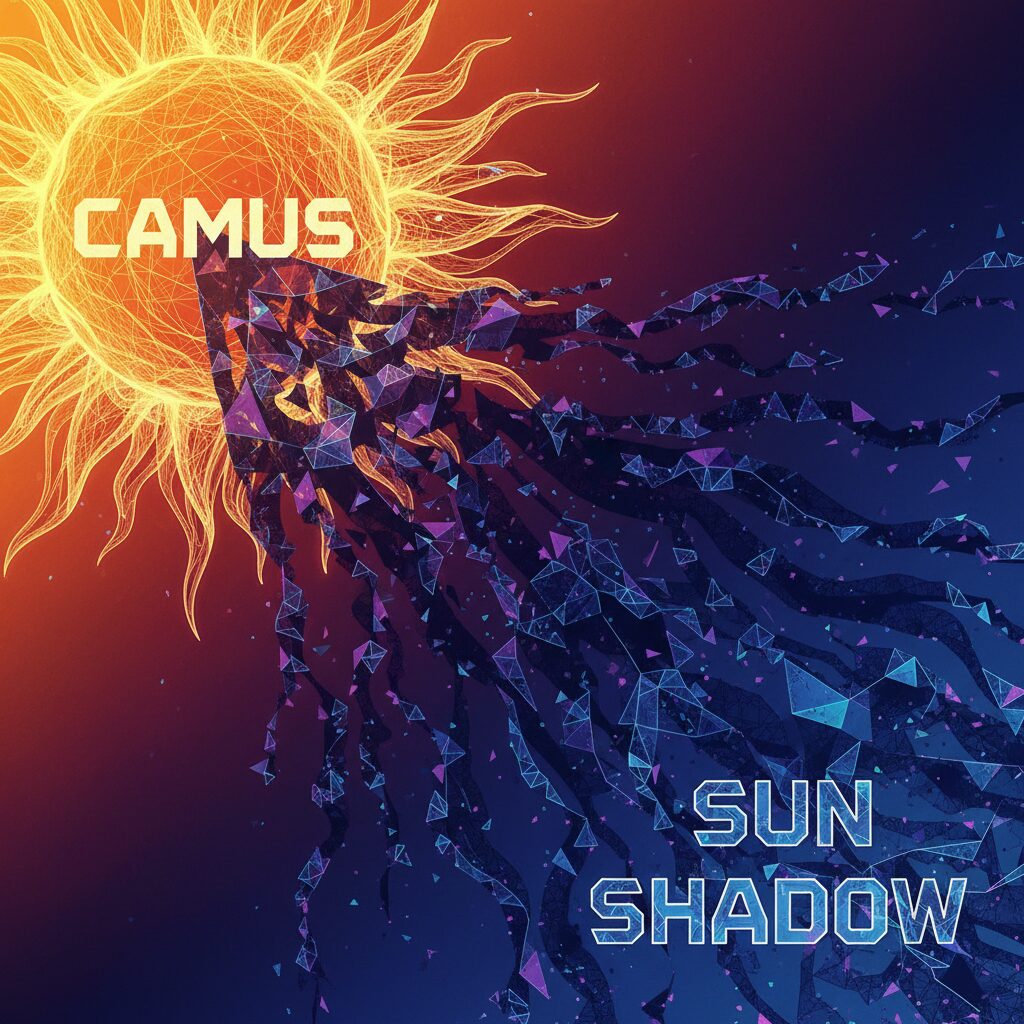
To trace the life of Albert Camus is to walk a path illuminated by a fierce, unrelenting sun and shadowed by the profound questions of human existence. He was more than a novelist, more than a philosopher; he was a moral compass for a generation grappling with the rubble of war and the seeming meaninglessness of the universe. His story is not confined to the pages of his books but is etched into the very landscapes that shaped him: the vibrant, impoverished quarters of Algiers, the solemn Roman ruins of Tipasa, the claustrophobic streets of Oran, the intellectual battlegrounds of Paris, and finally, the tranquil olive groves of Provence. To follow Camus is to undertake a pilgrimage, not to relics, but to places where the physical world—the heat on the skin, the salt on the lips, the scent of lavender and wormwood—became the raw material for a philosophy of lucid rebellion and tender humanism. This journey takes us from the shores of the Mediterranean, which he called his true homeland, to the heart of Europe, exploring the geography of a soul that never ceased to search for a reason to love and to fight in an absurd world. It’s a journey that reveals how a place can forge a mind, and how a mind, in turn, can render a place eternal.
For a different kind of literary journey, consider a pilgrimage through Julian Barnes’s England.
Mondovi (Dréan): The Soil of Origins
The story of Albert Camus begins not with dramatic flair but in the humble, sunbaked soil of French Algeria. In 1913, in the small farming village of Mondovi, now called Dréan, he was born into a world of deep poverty and silence. His father, Lucien, an itinerant farm laborer, was killed in the Battle of the Marne less than a year later, becoming a ghostly, honored name Camus would spend his life seeking to understand. His mother, Catherine, partially deaf and illiterate, was a figure of quiet, enduring love and profound silence. This was the foundation of his existence: a world without ancestry to claim, without inherited wealth or philosophy—a life to be built from scratch beneath the vast, indifferent African sky.
Visiting Dréan today requires imagination. It is not a town filled with monuments to its most famous son. Instead, it offers something more essential: the sensory landscape of his origins. The atmosphere of the place is one of slow time, governed by agricultural seasons. You can feel the oppressive weight of the summer heat, the kind that drives life into the shade at midday. You can smell the rich, dark earth and dusty roads. This is the world Camus would later explore with heart-wrenching honesty in his unfinished autobiographical novel, The First Man. He recalls a childhood where the lack of books was offset by the richness of the physical world, where the body learned its truths directly from the sun, sea, and earth. He was a pied-noir, a Frenchman of Algeria, belonging fully to neither France nor the Arab world—a status that would shape his sense of exile and unique perspective as both insider and outsider.
To understand Camus, one must start here—in this silence and under this sun. It was here that he learned the dignity of the poor, the weight of a mother’s unspoken love, and the fundamental reality of a life lived without the cushion of intellectual or material comforts. There are no plaques pointing to the exact house, no museums preserving his birthplace. The pilgrimage to Dréan is a journey into the atmosphere that shaped him. It is about standing on that red earth and realizing that for Camus, truth was not found in abstract ideas but rooted in the tangible—in the beautiful and harsh realities of the physical world. This is the essential first step to understanding the man who would later write, “In the midst of winter, I found there was, within me, an invincible summer.” That summer was born here.
Algiers: The Kingdom of Youth
If Mondovi was the soil of his birth, Algiers was the realm where Camus truly came to life. The city—a dazzling amphitheater of white buildings tumbling down to the brilliant blue of the Mediterranean—served as his playground, his university, and his first love. It was within Algiers’ working-class neighborhoods and sun-drenched beaches that his fundamental sensibilities were shaped: a deep love for the body, an awareness of nature’s overwhelming beauty, and a sense of community rooted in shared poverty and simple joys.
Belcourt and the Working-Class World
Camus was raised in the Belcourt district (now Belouizdad), a lively, bustling neighborhood full of energy. His family—his mother, his stern grandmother, his brother, and a paralyzed uncle—lived in a cramped two-room apartment without electricity or running water. Life unfolded on the streets, amid noise and heat, within a community of fellow pieds-noirs and Arabs. Belcourt’s atmosphere was one of constant motion: a world of shouting vendors, playing children, and the steady hum of neighbors living cheek by jowl.
Walking through Belouizdad today, one can still sense the echoes of that world. Though the city has transformed considerably, the neighborhood’s basic layout—with its steep streets and sun-bleached apartment blocks—endures. One can almost envision a young Camus, a boy brimming with fierce intelligence and a passion for football, navigating these streets. His devotion to the local football team, Racing Universitaire d’Alger (RUA), where he was a goalkeeper, was more than a hobby; it was an education in solidarity, courage, and the ethics of fair play. He famously declared, “All I know most surely about morality and obligations, I owe to football.”
This setting unmistakably forms the backdrop for his first novel, The Stranger. Its protagonist, Meursault, emerges from this world—a man who experiences life through his senses, feeling the sun’s heat more profoundly than the death of his mother. Meursault’s detachment is not merely a psychological trait; it expresses a life lived entirely in the present, where the immense power of the physical world—the sun, the sea, the sky—overshadows the narratives of conventional morality. Exploring Belcourt offers a visceral insight into the origins of a character like Meursault, a world where the truths of the body often seem more authentic than those of the mind.
The Lycée Bugeaud and the Guidance of Jean Grenier
Camus’s intellect paved his way out of the confined world of Belcourt. His journey began with a primary school teacher, Louis Germain, who recognized his exceptional potential and advocated for a scholarship to the prestigious Lycée Bugeaud (now Lycée Emir Abdelkader). Camus later dedicated his Nobel Prize acceptance speech to this teacher, underscoring the profound influence of that early support.
The Lycée was a wholly different universe: a realm of French culture, literature, and philosophy, sharply contrasting with the poverty and intellectual silence of his home. There, he discovered the life of the mind. The pivotal figure in this awakening was his philosophy teacher, Jean Grenier. Grenier introduced Camus to Nietzsche, Gide, and the power of ideas, while nurturing a love for the Mediterranean world and a philosophical outlook that balanced intellectual rigor with sensory experience. Grenier became a lifelong mentor and friend, a vital sounding board for the emerging writer.
Visiting the old Lycée grounds, one can sense the enormous cultural shift they represented for young Camus. It was here he faced the dualities that would shape his work: poverty and beauty, body and mind, silence and language. It was also here, at seventeen, that he was first diagnosed with tuberculosis—a brush with death that would haunt him and deepen his awareness of life’s absurdity. This illness ended his football career and cast a permanent shadow over his sunlit world, forcing him to confront existence’s fragility and the universe’s indifference to human aspiration.
The Sun on the Beaches: Bainem, Padovani, and the Body
Despite the intellectual stimulation of the Lycée, Camus’s true sanctuary was the sea. The beaches near Algiers—Bainem, Padovani, and others—were places of pure, unfiltered joy. For Camus and his friends, swimming in the Mediterranean was a ritual, a communion with nature bordering on the pagan. It stood apart from the guilt and sin of the European Christian tradition. Here, the body was not a source of shame, but a vessel for pleasure and freedom.
The ambiance of these coastal stretches remains intoxicating even today. The blinding light reflected on the water, the scent of salt and heated rock, the sharp shock of cool water on sun-warmed skin—these sensations permeate Camus’s early essays, especially in the collection Nuptials. He writes of a life harmonized with the elements, where happiness is simple and immediate: the joy of a perfect dive, the camaraderie of friends on the sand, the feeling of being a healthy creature in a beautiful world.
This passionate embrace of the physical was a philosophical stance. In a godless world, Camus found meaning in the here and now, in the intense beauty of the present moment. His love for the Algerian coast was a rebellion against abstraction, declaring that life’s meaning—if it exists at all—must be found in the flesh and the world we can see and touch. For any visitor seeking the core of Camus’s early vision, a journey to the coast near Algiers is indispensable. It is not about locating a particular landmark but about experiencing the elemental forces that molded his soul: the sun, the sea, and the glorious freedom of the body.
Tipasa: Where Spirit and Stone Converge
There is no place more central to Albert Camus’s spiritual and aesthetic world than Tipasa. This ancient Roman city, its ruins gracefully crumbling into the Mediterranean about seventy kilometers west of Algiers, held a sacred significance for him. It was here, among the weathered stones, fragrant wormwood, and the endless blue sea and sky, that he formulated his philosophy of a godless paradise—a world where happiness and truth emerge from the magnificent indifference of nature.
Visiting Tipasa is like stepping directly into the pages of his most lyrical essays, Nuptials at Tipasa and Return to Tipasa. The atmosphere is deeply immersive. Walking along the ancient Roman road, the Decumanus Maximus, the air is filled with the scent of pine and wild herbs, accompanied by the constant, hypnotic sound of cicadas. The ruins—the amphitheater, the forum, the villas with their faded mosaics—are not grand or imposing like those in Rome; rather, they are intimate, weathered by centuries of sun and sea spray, gradually being reclaimed by nature. Wildflowers grow between the stones, and the site feels less like a museum and more like a garden where history and nature have reached a quiet, beautiful harmony.
In Nuptials at Tipasa, written in his youth, Camus portrays the site as a place of joyful union with the world. He speaks of “the great libertinage of nature and the sea,” describing a world that demands nothing from him but simply to be present, to feel the sun on his skin and the wind in his hair. For the young Camus, Tipasa was a lesson in living without hope for another world, finding eternity in the present moment. He expresses a fierce and desperate love for this life—a happiness born from the awareness of its own finitude. This reflects the essence of his early concept of the absurd: humanity’s longing for meaning confronted by the universe’s silent, beautiful indifference.
A first-time visitor should find a quiet spot overlooking the sea, perhaps near the Christian basilica on the western hill, and simply sit. The power of Tipasa lies not in its historical facts but in its emotional resonance. One can feel what Camus felt: the sense of being a small part of a vast, ancient cycle of decay and renewal. The stones whisper of forgotten empires, while the sea and sun speak of an eternity that transcends human history.
Years later, after the horrors of World War II, Camus returned to this cherished place and wrote Return to Tipasa. The tone had shifted—more somber and reflective. The youthful exuberance was replaced by a mature awareness of history’s brutality. He found the site marked by barbed wire and a new, garish monument. Yet even in this disillusionment, he rediscovered the place’s essential truth. Under the winter sun, he sensed “the eternal youth of the world.” He learned that despite historical despair, the beauty of the world remains a source of strength—an “invincible summer” that endures within. Tipasa taught him that one holds a duty both to history (to resist injustice) and to beauty (to preserve the source of our love for the world). It is a place of profound duality, where one can reflect on the ruins of human ambition while celebrating nature’s enduring splendor.
For travelers, the best times to visit are spring, when wildflowers bloom, or autumn, when the light turns golden and the crowds thin. Allow several hours to roam freely, to get lost among the stones, and to explore the small, secluded beaches. Tipasa is not a place to be conquered but a poem to be experienced. It is the heart of Camus’s Mediterranean soul, and to feel its sun and wind is to understand his work on a depth no book alone can offer.
Oran: The City of the Plague
If Algiers was the city of youthful joy and Tipasa the place of spiritual connection, Oran stood as the city of exile and confinement. When Camus briefly lived there as a schoolteacher in the early 1940s, he found it unlike Algiers. While Algiers opens itself to the sea, Oran, a busy commercial port, appeared to Camus to have turned its back on it. He described it as a dry, dusty, and monotonous city, lacking soul and devoted solely to commerce. This bland, inward-looking nature made it the ideal setting for his masterpiece, The Plague.
In the novel, Oran becomes a microcosm of the human condition. When a deadly plague strikes, the city gates are closed, and its inhabitants are confined together in quarantine. Camus creates an atmosphere of claustrophobia, boredom, and simmering fear. The city’s physical environment is more than just a backdrop; it acts as an integral element of the story. The relentless heat, the unchanging sky, and the repetitive street patterns all contribute to a sense of an inescapable prison. The plague itself serves as a potent metaphor for many things: the German occupation of France, the reality of evil, and the existential condition of living in an absurd universe.
Exploring Oran today with The Plague in mind is a fascinating experience. Although the modern city is vibrant, featuring unique charm especially in its Spanish-influenced architecture and lively music scene, traces of Camus’s fictional Oran remain. The novel’s geographical precision allows one to follow the characters’ paths. You can stand on the promenade of Boulevard Front de Mer and look out at the harbor, imagining the longing of separated lovers. Wandering through the old Spanish quarter, the Casbah, you can sense the labyrinthine quality Camus depicted.
A key site is the Place d’Armes (now Place du 1er Novembre), the central square where citizens gather and public notices are posted. It is the city’s heart in the novel, where hope and despair are most vividly felt. Visiting the Fort of Santa Cruz, perched high on a hill overlooking the city, offers a stunning panoramic view. From this vantage point, you can appreciate the city’s layout and its tenuous—or absent—connection to the sea. It is from a similar spot that the narrator of The Plague, Dr. Rieux, and his friend Tarrou observe the sleeping city, sharing a quiet moment of solidarity in their struggle.
What makes visiting Oran so compelling for readers of Camus is how it highlights the novel’s central theme: rebellion. The characters in The Plague are not heroic figures. They are ordinary people—a doctor, a civil servant, a journalist—who choose to fight the plague not from faith or ideology but from a basic sense of human decency and solidarity. They choose to act, to relieve suffering, and to bear witness. The city’s oppressive atmosphere only intensifies the power of their quiet, determined resistance. They rebel against the absurdity of their predicament by affirming the worth of human connection.
For visitors, Oran offers a different kind of Camus pilgrimage. It is less about discovering natural beauty and more about reflecting on human responses to crisis. It is a city that encourages contemplation of community, responsibility, and the quiet heroism of everyday life. It reminds us that even in the most closed-off and monotonous places, the human spirit can create meaning through compassion and action.
Paris: The Intellectual’s Battlefield

Camus’s arrival in Paris signified a profound transformation in both his life and work. He transitioned from the sunlit, sensuous Mediterranean world to the gray, intellectual core of Europe. It was in Paris that he emerged as a public figure, resistance hero, Nobel laureate, and a leading voice in existentialism. Yet, Paris was also a place of exile, where he often felt like a stranger, yearning for the light and sea of his Algerian homeland.
The War Years and the Resistance
Camus’s connection with Paris deepened during its darkest times. He worked for the newspaper Paris-Soir but fled before the German invasion. Later, he returned and played a crucial role in the French Resistance as editor of the underground newspaper Combat. This period was marked by great danger and moral clarity. Occupied Paris was a place of fear, suspicion, and oppression, dominated by curfews, rationing, and the constant risk of betrayal and arrest.
While working for Combat, Camus risked his life to champion freedom. His editorials from this era stand as powerful testaments to the fight against tyranny. This experience cemented his evolution from the writer of The Stranger, focused on individual metaphysical absurdity, to the author of The Plague, who addressed collective responsibility and political defiance. His Resistance experience granted him the moral authority that shaped his public identity thereafter. It was amid the trials of occupied Paris that his philosophy of rebellion acquired its political voice.
Saint-Germain-des-Prés: The Heart of Existentialism
After Paris was liberated, Saint-Germain-des-Prés became the intellectual hub. Its cafés—Les Deux Magots, Café de Flore, Brasserie Lipp—became stages for the era’s philosophical debates. This neighborhood was the birthplace of existentialism, with Albert Camus and Jean-Paul Sartre as its leading figures. The atmosphere was electric, filled with cigarette smoke, coffee, jazz, and lively discussions as a generation sought to understand a war-torn world.
Camus was a frequent visitor to these cafés, though he kept a certain distance from Parisian intellectual circles. Handsome, charismatic, and a brilliant conversationalist, he never quite abandoned his identity as a Mediterranean outsider. Visiting these cafés today is like stepping into living history. Despite being major tourist spots, they still hold the aura of their legendary past. Sitting there, one can imagine the passionate debates between Camus and Sartre on freedom, commitment, and political violence.
Their famous friendship and eventual bitter split are central to post-war French intellectual history. Initially allies, they sharply diverged over communism. Sartre’s growing support for the Soviet Union clashed with Camus’s steadfast denunciation of all forms of totalitarianism. The public rupture came in 1952 with Camus’s The Rebel, a critique of revolutionary violence that Sartre and his followers harshly attacked. The break was painful and lasting, symbolizing a major division within leftist thought.
The Gallimard Offices and the Nobel Prize
Beyond the cafés’ spotlight, another important Parisian setting in Camus’s life was the prestigious publisher Gallimard’s office on Rue de Sébastopol. Camus worked there as a reader and editor, fostering other writers’ careers. It was his professional sanctuary, a place of literary dedication and craftsmanship.
In 1957, Camus was awarded the Nobel Prize in Literature. At 44, he was the second youngest recipient ever. The prize was a global acknowledgment of his work, but also a heavy responsibility. In his Stockholm acceptance speech, he spoke of the artist’s duty not to serve those who make history, but those who endure it. He bore the weight of being a moral voice, especially as the Algerian War of Independence tore him between loyalty to his French-Algerian roots and his commitment to justice for the Arab people. The Nobel Prize amplified his influence but also deepened his isolation. Paris, the city that made him a world-renowned intellectual, was also where he felt most painfully the contradictions of his identity and era.
Provence: The Search for a Final Harbor
In the final years of his life, weary of the political infighting in Paris and yearning for the Mediterranean light of his youth, Camus sought refuge in the south of France. Using his Nobel Prize money, he purchased a house in the small, charming village of Lourmarin, nestled in the Luberon mountains of Provence. This would be his final sanctuary, a place for quiet work and a return to the sensory world he cherished.
Lourmarin: A Home in the Luberon
Lourmarin was, and remains, the quintessential Provençal village. Its narrow, winding streets, shaded by ancient plane trees and cooled by the gentle murmur of stone fountains, offered Camus a peace he could no longer find in the capital. The atmosphere exudes timeless tranquility. The golden stone of the houses glows in the afternoon sun, and the air carries the scent of lavender and thyme from the surrounding hills. For Camus, this was a homecoming of sorts—not to Algeria, which was being torn apart by war, but to the same Mediterranean culture of sun, stone, and simple living.
He bought a modest former silkworm nursery on the Rue de l’Eglise, which he renovated into a comfortable family home and study. Here, he led a life far removed from the intellectual salons of Saint-Germain-des-Prés. He became a familiar figure in the village, playing petanque in the town square and cheering for the local football team. He found a sense of community that was simple and unpretentious. Visitors to Lourmarin can easily find his house and sense the quiet rhythm of the life he established there. The village seems to hold his presence gently; it is a place for reflection, not spectacle.
It was in his study in Lourmarin that he worked on his final, and perhaps most important, project: the autobiographical novel The First Man. This book was a deep exploration of his own past, an attempt to understand his silent mother, his unknown father, and his impoverished childhood in Algeria. It was a work of profound love and reconciliation, a move away from abstract philosophical novels toward a more personal and lyrical form of storytelling. Lourmarin provided the necessary silence and distance for him to embark on this journey into his origins.
The Final Journey: Villeblevin and the Cypress Tree
The peace of Lourmarin was tragically broken on January 4, 1960. Camus had planned to take the train back to Paris with his family after the holidays but agreed to drive with his friend and publisher, Michel Gallimard. On a long, straight stretch of road near Villeblevin in Burgundy, their car, a powerful Facel Vega, skidded off the wet road and crashed into a plane tree. Camus was killed instantly. Gallimard died a few days later.
News of his death at the age of 46 sent shockwaves around the world. There was a cruel, terrible irony to it. The man who had written so eloquently about the absurdity of the universe—the random, meaningless nature of death—had met the most absurd end imaginable. His death was not the result of a grand struggle or a noble illness, but a banal, senseless accident. In the wreckage, the mud-spattered manuscript of The First Man was discovered.
Today, a simple monument marks the crash site. It is a somber and moving place, a reminder of life’s fragility and the suddenness with which a great voice can be silenced. The location itself—an ordinary country road—underscores the mundane nature of the tragedy, making it all the more poignant.
The Cemetery at Lourmarin: Under the Sun
Camus was buried, as he wished, in the cemetery at Lourmarin. His grave is strikingly simple, a humble stone marker on a bed of earth, often covered with wild rosemary, lavender, and irises left by visitors. It is not a grand tomb but a plot of land, returning him to the soil he loved. Next to him lies his wife, Francine.
To stand before his grave is a profoundly peaceful experience. It faces the Luberon mountains, under the same Provençal sun that had given him so much comfort. Unlike the grand, monumental graves in Paris’s Père Lachaise cemetery, Camus’s final resting place is modest, integrated into the landscape, and overwhelmingly beautiful in its simplicity. It feels perfectly suited to the man who wrote, “I have not lived enough to be able to call myself a sage. I know nothing, except that the sun warms the skin, and that it is better to be right than to be wrong.” The cemetery at Lourmarin is not a place of sadness but one of quiet acceptance. It is the final, fitting stop on a journey through a life that, despite its encounters with darkness and despair, never lost its profound and enduring love for the beauty of the world.
A Lasting Light

Tracing Albert Camus’s journey from the shores of Algeria to the villages of Provence reveals that his philosophy was not crafted in a library but lived out on the streets, beaches, and under the sun. The landscapes of his life served as the very text from which he derived his insights into beauty, absurdity, rebellion, and love. He remains a beacon, not because he provided easy answers, but because he taught us how to live with challenging questions. He demonstrated that even in a silent universe, we can create meaning through solidarity with others, resistance against injustice, and a deep appreciation for the simple, overwhelming beauty of the world. Whether standing among the ruins of Tipasa or the quiet cemetery of Lourmarin, one senses the enduring strength of his legacy: an invincible summer, shining brightly against the encroaching darkness.