
Written by Sofia Rodriguez
There’s a certain magic that lingers in the pages of a Jane Austen novel, a world of witty heroines, dashing gentlemen, and rolling green landscapes that feels both impossibly romantic and wonderfully real. For so many of us, these stories are more than just books; they are gateways to an era of elegance, sharp social commentary, and heartfelt emotion. But what if you could step through that gateway? What if you could walk the same cobblestone streets as Elizabeth Bennet, feel the sea spray on your face where Anne Elliot pined for Captain Wentworth, and sit in the very room where Jane Austen herself dipped her quill into ink, bringing these characters to life? An adventure through the south of England offers just that—a pilgrimage to the heart of Jane Austen’s world, a journey that transforms her beloved novels from fiction into a tangible, breathtaking reality. This isn’t just a tour of historic sites; it’s a chance to connect with the spirit of one of the world’s most cherished authors, to see the landscapes that fired her imagination, and to understand the life that shaped her genius. From her tranquil Hampshire birthplace to the bustling, fashionable city of Bath, and finally to the cozy cottage where her greatest works were polished, we’ll follow in her footsteps, discovering the soul of Regency England and the enduring legacy she left behind. Get ready to pack your bonnet and open your heart; a truly unforgettable chapter awaits.
For those inspired to embark on other literary journeys, consider a literary pilgrimage into the world of Carlos Fuentes.
The Hampshire Beginnings: Steventon’s Echoes
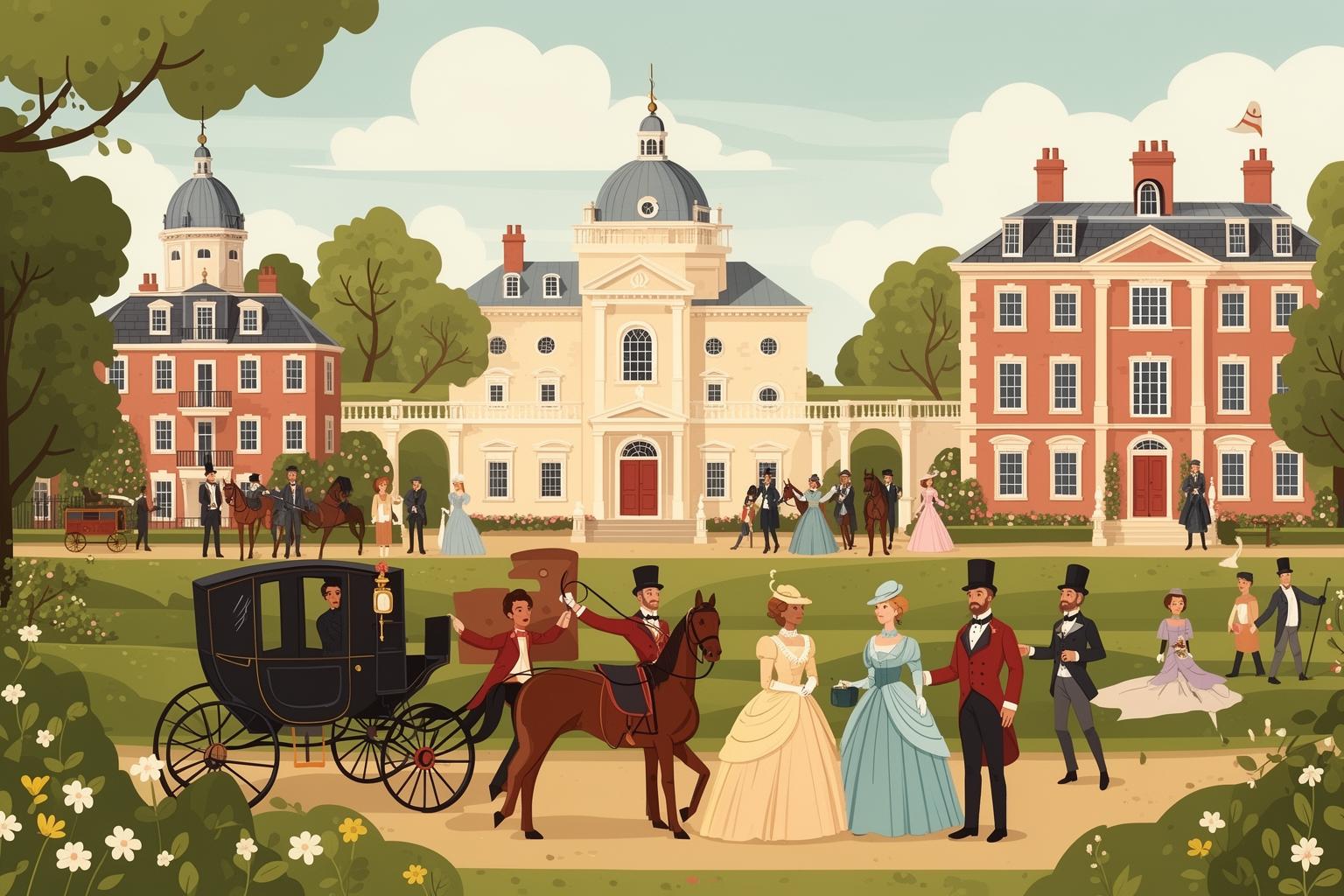
Our journey begins where hers did, in the quiet, unassuming parish of Steventon in Hampshire. This is the birthplace of her genius, the place where Jane Austen was born in 1775 and spent the first twenty-five years of her life. Here, amidst the peaceful rhythm of country life, she observed the subtle social dance of the local gentry, attended country dances, and took long, reflective walks—experiences that would weave themselves into the very fabric of her novels. Visiting Steventon today is an exercise in imagination, offering a chance to connect with the budding spirit of the author before the world knew her name.
The Birthplace of a Genius
Unlike many other literary landmarks, you won’t find a grand, preserved house marking Jane’s birthplace. The Steventon Rectory, her childhood home, was sadly demolished in the 1820s. Yet, the absence of the structure does little to lessen the significance of the site. Standing on the spot, now a simple field marked by a lime tree and an old pump, you are on sacred ground. This is where she drafted the first versions of three of her most famous novels: First Impressions (which later became Pride and Prejudice), Elinor and Marianne (which evolved into Sense and Sensibility), and Susan (which transformed into Northanger Abbey). Close your eyes and you might almost see it: a bustling household filled with her seven siblings, the sound of her father rehearsing sermons, and a young Jane, finding quiet corners to scribble secretly, her mind alive with stories.
What You’ll Find Today
The centerpiece of a visit to Steventon is the charming St. Nicholas Church. This small, 12th-century flint church is beautifully preserved and feels nearly untouched by time. It was here that her father, George Austen, served as rector for more than forty years. Stepping inside is like stepping back into the 18th century. The air is cool and still, tinged with the scent of ancient wood and stone. You can see the very font where Jane was baptized and imagine the Austen family filling the box pews every Sunday. The churchyard offers a profound sense of peace. While Jane herself is not buried here, memorials to her family, including her brother James and his family, can be found. Wandering among the weathered headstones, with the wind whispering through the old yew trees, you feel a strong connection to the deep family roots that grounded her life and work.
The Spirit of the Place
To truly appreciate Steventon, one must explore the surrounding landscape. The rolling hills and sunken lanes of Hampshire are the living embodiment of the settings she described. This is the world of Longbourn and Meryton. Walk along the footpaths threading through the countryside, the same paths she likely traveled with her beloved sister, Cassandra. The atmosphere here is one of deep tranquility and timeless English charm. It invites you to slow down, observe the subtle seasonal changes, and understand how this rural seclusion provided an ideal environment for a writer so focused on human character and relationships. It was a world intimate enough to be fully known, yet rich enough in social intricacies to supply endless material for her sharp, satirical eye.
A Writer’s Foundation
The years in Steventon were formative—a time of learning, observation, and creative freedom. In the lively, intellectually stimulating rectory atmosphere, she had access to her father’s extensive library and was encouraged to read and write. The family often staged plays and read their works aloud, creating a supportive and discerning audience for her early efforts. This foundation of familial love, intellectual curiosity, and connection to the natural world remains palpable today. Visiting Steventon is not about touring a museum; it’s about experiencing the essence of the environment that shaped one of literature’s greatest minds. It offers a quiet, contemplative start to any Austen pilgrimage, a place to reflect on the humble origins of an extraordinary talent.
The Society Years: Bath’s Grand Crescent
From the rustic seclusion of Hampshire, our journey leads us to a city embodying everything the countryside was not: Bath. In 1801, Reverend Austen retired, and the family made the significant move to this fashionable and architecturally stunning spa town. For Jane, this marked a period of great change and personal hardship. She left behind the home and community she cherished for a life of rented lodgings and the relentless social whirl of a resort city. Her feelings toward Bath were famously mixed—a combination of admiration for its beauty and disdain for its superficiality. Yet this very tension makes Bath a fascinating and essential stop, as it served as the setting for two of her most mature novels, Northanger Abbey and Persuasion.
A City of Contrasts
To walk through Bath today is to be transported to the Regency era. The city’s golden-hued limestone buildings, crafted in the elegant Palladian style, are so perfectly preserved that it feels as though you have stepped onto a film set. The atmosphere exudes grandeur and history. Still, beneath the polished façade, the pressures and anxieties Austen herself experienced are palpable. This was a place to see and be seen—a marriage market where fortunes were won and lost, and social status meant everything. It is this duality—the magnificent architecture alongside intense social scrutiny—that makes exploring Bath such a rich experience. You are, quite literally, strolling through the pages of her novels.
Walking the Royal Crescent and The Circus
No trip to Bath is complete without a walk along its most iconic landmarks. The Royal Crescent is a breathtaking curve of thirty terraced houses arranged in a perfect crescent, overlooking Royal Victoria Park. Picture carriages pulling up, ladies in fine muslin dresses, and gentlemen in tailcoats—a scene straight out of a period drama. Just a short distance away is The Circus, a design masterpiece made up of three curved segments of townhouses forming a circle. It was meant to be a social hub, and it is here that you can truly sense the ambition and scale of Georgian Bath. As you stroll these elegant streets, you can easily imagine Catherine Morland from Northanger Abbey, wide-eyed and naive, taking in the city’s splendor for the first time.
The Jane Austen Centre
For any fan, the Jane Austen Centre on Gay Street is an absolute must. Housed in a beautiful Georgian townhouse, the centre offers an immersive experience into Austen’s time in the city. Guides in full Regency costume welcome visitors, bringing the era to life with captivating stories and insights. Exhibits cover her family life, the fashion of the day, and the social customs she so cleverly satirized. You can even have your photograph taken with a remarkably lifelike wax figure of Jane herself. A highlight for many is the Regency Tea Room on the top floor. Enjoying “Tea with Mr. Darcy”—a delightful assortment of sandwiches, cakes, and scones—is the perfect way to rest your feet and soak in the atmosphere. A helpful tip: book your visit and tea time online in advance, as it is a very popular spot, especially during the tourist season.
Austen’s Residences in Bath
While the grand public spaces impress, tracing the homes where the Austens actually lived offers a more intimate insight into their lives. Their first and grandest residence was at 4 Sydney Place, a handsome townhouse overlooking Sydney Gardens. This was a time of relative comfort, but following her father’s unexpected death in 1805, the family’s financial situation became uncertain. They moved to a series of less desirable lodgings, starkly reflecting their diminished status. This experience of social and financial instability deeply influenced Jane’s later work, especially Persuasion, where Anne Elliot’s quiet suffering and resilience echo some of the challenges Jane herself endured. Passing these addresses, you gain a deeper understanding of the personal struggles that shaped her powerful storytelling.
A Stroll Through Sydney Gardens
Behind 4 Sydney Place lie Sydney Gardens, the only remaining eighteenth-century pleasure gardens in the country. This was a favorite place for Jane. She often walked here, enjoying the beautifully landscaped grounds with their follies, grottoes, and canal. It was a venue for public breakfasts, concerts, and fireworks—an epicenter of genteel entertainment. Today, the gardens serve as a lovely public park. As you stroll along the canal path beneath ancient trees, you can feel a direct connection to her. It is a wonderfully peaceful spot to escape the city’s bustle and imagine Jane walking these very paths, perhaps composing a letter to Cassandra or finding inspiration for a scene in one of her novels.
The Coastal Interlude: Southampton and Seaside Retreats
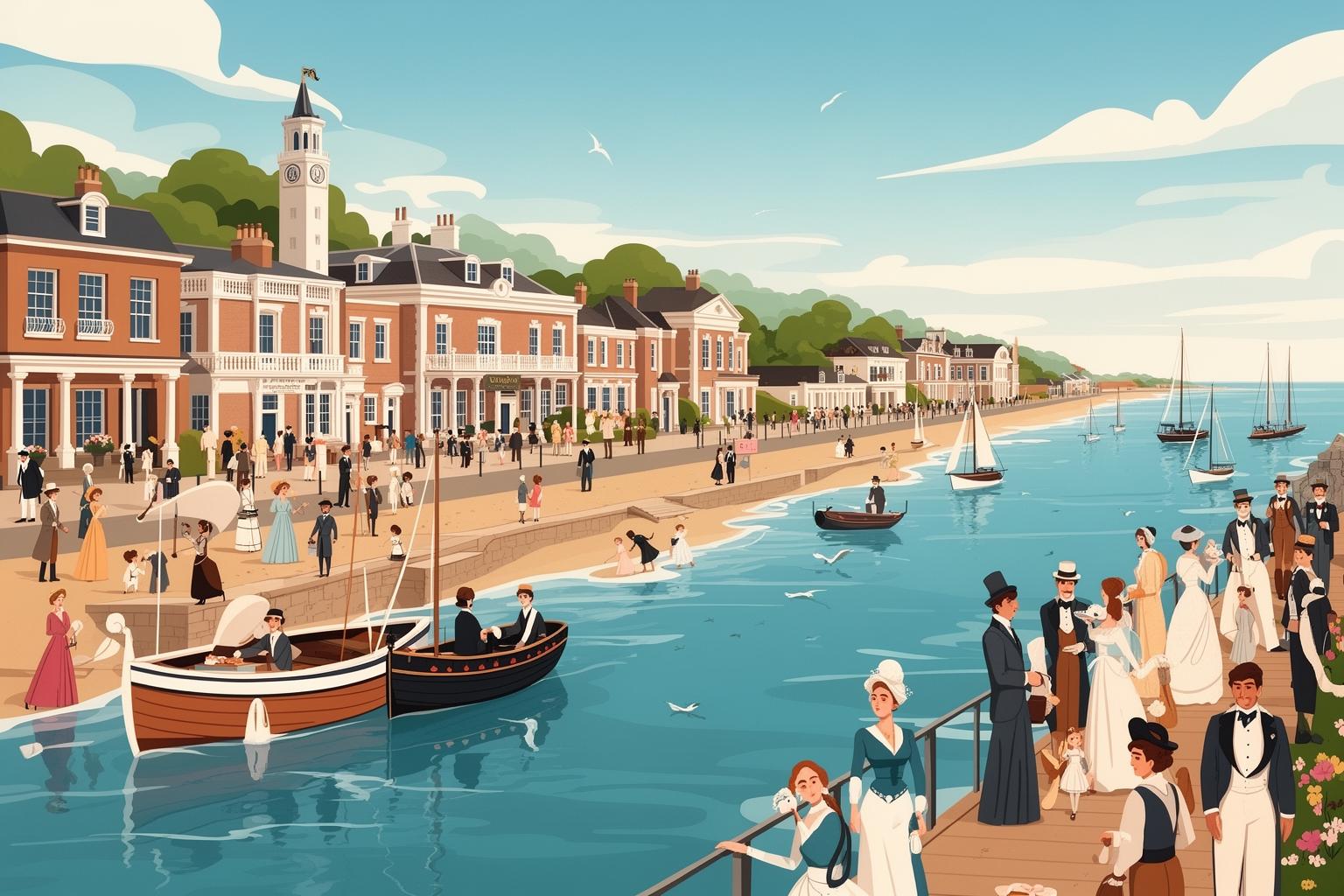
Following the profound loss of Reverend Austen and the resulting financial difficulties, Jane, her mother, and her sister Cassandra left Bath. They spent several years living with her brother Frank and his wife in Southampton, a bustling port city. This period is generally regarded as a somewhat unsettled and less joyful time in her life, marked by a creative quietude. Yet, this coastal chapter also includes visits to seaside resorts, notably Lyme Regis, a place that ignited her imagination and became the unforgettable setting for a key part of one of her greatest novels.
A Port City’s Influence
Southampton from 1806 to 1809 was a noisy, busy naval town, sharply contrasting with both the rural tranquility of Steventon and the refined sophistication of Bath. The Austens lived in a house with a garden stretching down to the old city walls, offering views of the water. Although Jane didn’t write any novels here, living in a naval hub undoubtedly deepened her understanding of the world her sailor brothers, Frank and Charles, inhabited. This insight later enriched Mansfield Park and Persuasion, adding authenticity and respect to her depiction of naval life and its characters.
Lyme Regis: Where Romance Meets the Sea
The true gem of this era is Lyme Regis in Dorset. Jane visited this charming and dramatic seaside town twice, in 1803 and 1804, and was completely captivated by it. And it’s easy to see why. Nestled in a cove along the stunning Jurassic Coast, Lyme Regis is a town of steep, winding streets, fossil-covered beaches, and a deeply romantic atmosphere. The air is infused with the scent of salt and the sound of crashing waves. It’s a place that feels wild and untamed, yet also rich in history.
The Setting for Persuasion
Lyme Regis is so vividly portrayed in Persuasion that the town itself takes on the role of a character. It is here that the melancholic and overlooked Anne Elliot begins to reclaim her spirit and hope. The town’s dramatic scenery perfectly reflects the emotional turbulence and blossoming romance of the story. The most famous spot is The Cobb, the town’s ancient, iconic stone pier curving out into the sea. This is the stage for the novel’s most dramatic scene, where the reckless Louisa Musgrove falls from the steps, an event that alters the course of everyone’s lives. Walking The Cobb today is a must; you can feel the wind whipping around you and see the very steps—known locally as “Granny’s Teeth”—where Louisa fell. Looking back at the town from the pier’s end reveals the same view Austen described, a view that “forms the most delightful picture.” It’s a moment of pure literary enchantment.
Exploring the Town
Beyond its Austen associations, Lyme Regis is a joy to explore. The town is a paradise for fossil hunters; you can spend hours searching for ammonites and belemnites along the shore, a reminder you are on a UNESCO World Heritage Site. The Lyme Regis Museum, situated on the site of Mary Anning’s former home—the famous pioneering fossil hunter—offers an engaging insight into the area’s rich geological and social history. Stroll through narrow streets, browse quaint independent shops, and find a cozy pub to enjoy fresh seafood. The atmosphere is both relaxed and invigorating. Visiting Lyme Regis allows you not only to walk in the footsteps of Anne Elliot and Captain Wentworth but also to experience the raw, natural beauty that so clearly inspired Jane Austen’s writing, proving that even during her more challenging years, her creative spirit was always ready to be kindled by the power of a special place.
The Productive Peace: Chawton Cottage
If Steventon was the birthplace of her talent and Bath a time of upheaval, then Chawton was the residence where her genius fully blossomed. In 1809, Jane’s wealthy brother, Edward Austen Knight, provided their mother and sisters with a permanent home on his Hampshire estate. This move to a modest, red-brick cottage in the village of Chawton marked the start of the most stable and productive period in Jane Austen’s life. It was here, in this serene and supportive setting, that she revised her early manuscripts and wrote her final three magnificent novels: Mansfield Park, Emma, and Persuasion. Without question, Chawton is the most significant destination for any Austen admirer—it is where the magic truly unfolded.
A Home of Her Own
Relocating to Chawton Cottage gave Jane something she had lacked for years: a sense of security and belonging. The cottage, though modest, was comfortable and provided the ideal environment for her to concentrate on her writing. She lived there with her mother, her sister Cassandra, and their friend Martha Lloyd, forming a close-knit female household. Life followed a quiet, domestic rhythm—managing the household, gardening, visiting neighbours, and, for Jane, writing. The atmosphere of Chawton today still embodies this sense of peace and purpose, feeling like a place where creativity could—and did—flourish.
Inside Jane Austen’s House
Today, Chawton Cottage is lovingly preserved as Jane Austen’s House, a museum that offers an intimate and moving glimpse into her daily life. Crossing the threshold feels like entering her home. The rooms are furnished with Austen family pieces, portraits, and personal belongings. You can see the dining parlour, the heart of the home where the family gathered. It is here, beside a window overlooking the bustling village road, that you’ll find the famous small, twelve-sided walnut table where Jane did all her writing. This humble piece of furniture witnessed the creation of monumental works. She wrote on small, easily concealed slips of paper, cautious of discovery by servants or visitors. The creaking parlour door served as her alarm, giving her just enough time to hide her work. You can also see the bedrooms she shared with Cassandra, her music book open at the pianoforte, and her beautiful pelisse coat on display. The entire house resonates with her presence, making it a deeply personal and unforgettable experience.
The Garden and Grounds
Equally important as the house is the garden. Jane was an enthusiastic amateur gardener, and she and Cassandra delighted in caring for their small plot. The cottage garden has been beautifully restored based on their letters and is planted with flowers and herbs familiar to them. It’s a charming and fragrant space, complete with a small donkey carriage Jane used for outings when her health began to decline. Sitting on a bench here, surrounded by the scent of old roses and the hum of bees, you can imagine Jane pausing from her writing to enjoy the fresh air. The garden offers a tangible connection to her daily routines and her love of the natural world, a theme ever-present in her novels.
The Great House: Chawton House
A short, pleasant walk from the cottage leads to the “Great House,” the magnificent Elizabethan manor owned by her brother Edward. Now called Chawton House, this impressive estate was a central part of Jane’s social life. She and her family often walked up to the main house to dine, use the extensive library, and socialize. Today, Chawton House is a renowned research center for early women’s writing, housing an extraordinary book collection. It is also open to the public, providing a perfect contrast to the humble cottage. Visitors can explore the grand rooms, stroll through the beautiful gardens and parkland, and gain deeper insight into the world of the landed gentry that Jane portrayed with such keen observation. Touring both the cottage and the Great House offers a comprehensive view of her life in Chawton—both the domestic, female-centered world of her home and the grander, patriarchal estate she so thoughtfully observed.
A Final Chapter: Winchester’s Hallowed Halls

Our pilgrimage ends in the ancient and historic city of Winchester, a place of great beauty yet marked by a poignant farewell. In May 1817, as her health rapidly deteriorated from what is now believed to have been Addison’s disease, Jane relocated to Winchester with Cassandra to receive care from a respected physician. It was a hopeful journey, but tragically, it would be her last. She died here just two months later, at the age of 41. Winchester is her final resting place, a revered destination for readers worldwide who come to pay their respects.
The Last Days
Jane and Cassandra stayed in a small house at 8 College Street, close to the magnificent Winchester Cathedral. The house, now a private residence marked by a plaque, sits in a quiet, charming lane steeped in history. One can imagine the sisters walking here, Cassandra supporting a frail Jane as they enjoyed the tranquility of the cathedral close. The street carries an atmosphere of solemn reflection. It was here, during her final days, that Jane wrote a humorous poem about the Winchester races, her wit and spirit undiminished by illness. This stands as a testament to the strength of her character.
A Resting Place in the Cathedral
The most notable site in Winchester is, of course, the cathedral itself. One of the largest in Europe, it is a truly awe-inspiring structure with a history spanning over a thousand years. It is here, in the north aisle of the nave, that Jane Austen was buried. Her interment in such a prestigious location reflected the respect her family held in the clergy, thanks to her father and brothers. To stand before her grave is a deeply moving experience. The sheer scale and grandeur of the cathedral, with its soaring stone arches and magnificent stained glass, offer a dignified and powerful setting for her final resting place.
The Modest Grave and the Grand Memorial
At her grave, you will find a large dark stone slab set into the floor. The original inscription, written by her brother James, is a tender tribute to her personal virtues—her Christian faith, the benevolence of her heart, and the sweetness of her temper. Notably, it makes no reference to her literary accomplishments. At the time of her death, her novels had been published anonymously, and her fame as an author was not yet established. This simple, personal epitaph is a moving reminder of how she was seen by those who loved her most: as a cherished daughter and sister. As her reputation grew in the 19th century, this omission was regarded as an oversight. In 1872, a brass plaque was added to the nearby wall, explicitly honoring her genius. Later, in 1900, a beautiful memorial window was dedicated to her, funded by public subscription, reflecting her enduring global appeal. Seeing these three memorials together narrates a powerful story of her transformation from a private, anonymous writer to a celebrated literary icon.
The Cathedral’s Atmosphere
Winchester Cathedral is a place of profound peace and reverence. Soft light filters through the ancient windows, illuminating centuries of history. After paying your respects at her grave, take time to explore the rest of this magnificent building. Visit the medieval choir stalls, the stunning retrochoir, and the Antony Gormley statue in the crypt, which often stands in water. The cathedral’s atmosphere invites quiet contemplation. It is the perfect setting to reflect on Jane Austen’s life, her remarkable contribution to literature, and the timeless appeal of her stories. It is a solemn, beautiful, and fitting conclusion to a journey through her world.
Beyond the Biography: Film Locations and Grand Estates
Tracing Jane Austen’s life story is a journey in itself, but the global admiration for her work has introduced an additional layer of pilgrimage: the breathtaking locations featured in the many beloved film and television adaptations of her novels. These adaptations have shaped our collective imagination, providing vivid, unforgettable images of her world. Visiting these sites offers the opportunity to step directly into your favorite scenes and see the real-life settings that brought the romance and drama of her stories to the screen. For today’s traveler and influencer, these places are not only historic but also remarkably photogenic and iconic.
Bringing Austen to the Screen
The English countryside and its stately country houses act as characters in Austen’s novels, and filmmakers have scoured the country to find perfect settings. These places, from grand stately homes to charming, preserved villages, have become tourist attractions themselves, drawing fans eager to experience the cinematic magic firsthand. This aspect of the journey celebrates how Austen’s legacy continues to evolve and inspire new artistic expressions.
The Real Pemberley: Lyme Park and Chatsworth House
Possibly no fictional estate is more renowned than Pemberley, Mr. Darcy’s magnificent property in Pride and Prejudice. Its depiction in the novel inspires awe, and discovering a real-life counterpart is a major challenge for filmmakers. The 1995 BBC adaptation, starring Colin Firth as Mr. Darcy, used Lyme Park in Cheshire for Pemberley’s exterior. The image of the house mirrored in its lake has become iconic. Visitors can tour the grand house and extensive grounds and relive that unforgettable moment. The 2005 film, featuring Keira Knightley, selected another stunning location: Chatsworth House in Derbyshire. A truly spectacular mansion, Chatsworth is often suggested as the estate Austen may have pictured when writing the novel. With its lavish interiors, world-renowned art collection, and magnificent Capability Brown gardens, Chatsworth epitomizes grandeur. Visiting either estate feels like stepping into Elizabeth Bennet’s shoes, glimpsing Pemberley for the first time and understanding its owner’s true nature.
Longbourn and Meryton
The modest, rural life of the Bennet family has also been vividly brought to life in picturesque locations. The village of Lacock in Wiltshire, almost entirely owned by the National Trust, represents a perfectly preserved vision of 18th-century England. Its charming, untouched streets have made it a popular filming location, serving as the village of Meryton in the 1995 Pride and Prejudice. Nearby Lacock Abbey was used for interior Cambridge scenes in the same production. For the 2005 film, Groombridge in Kent doubled as Meryton, while a moated manor called Groombridge Place portrayed Longbourn, the Bennet family home. Exploring these quaint villages with their timber-framed houses and cobblestone streets offers a genuine step back in time.
Other Notable Estates
The extensive list of beautiful filming locations spans much of southern England. The stunning landscape gardens of Stourhead in Wiltshire, with their lake, classical temples, and grottoes, set the scene for Mr. Darcy’s first rain-soaked proposal to Elizabeth in the 2005 film. Basildon Park in Berkshire stood in for Netherfield Park, Mr. Bingley’s residence, in the same movie. Ang Lee’s 1995 adaptation of Sense and Sensibility featured numerous striking locations, including Montacute House in Somerset as the Palmers’ residence, Cleveland House, and Wilton House near Salisbury, a perennial favorite for period dramas. Touring these estates allows visitors to appreciate the exquisite architecture and landscape design of the period, offering insight into the lavish lifestyle Jane Austen both observed and critiqued.
Planning Your Austen Pilgrimage
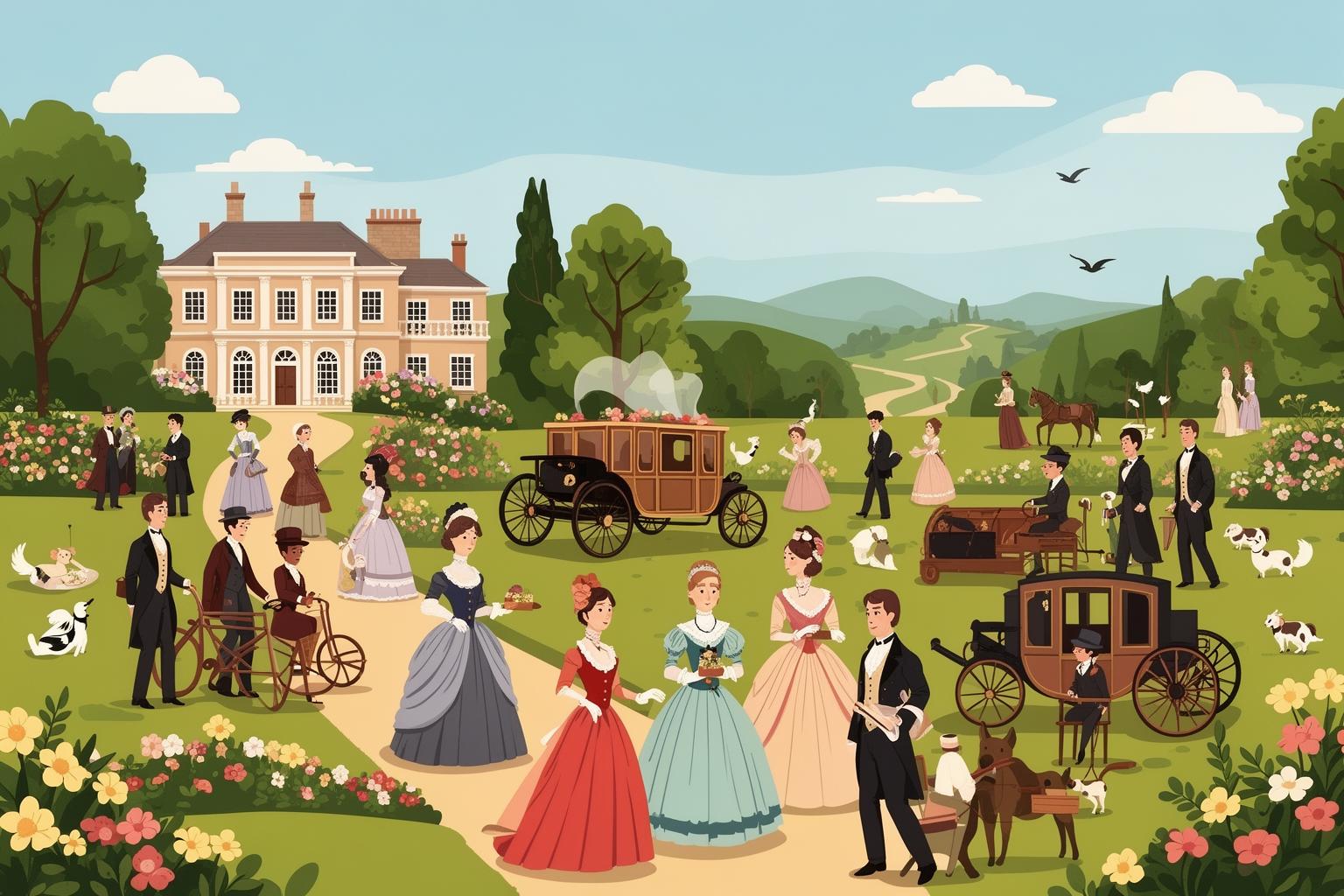
Embarking on a journey through Jane Austen’s England offers a truly special experience, and a bit of planning will help make it smooth and even more enjoyable. The key is to allow yourself enough time to fully savor each location, as this trip rewards a slower, more immersive pace. Here are some practical tips to help you craft your perfect literary adventure.
A Practical Itinerary
Most of Austen’s important sites are found in southern England, making it relatively simple to combine them into one trip. A sensible route would begin in London, a convenient international gateway. From there, you can form a loop: travel west to Bath, perhaps pausing at some film locations like Lacock along the way. Spend a few days exploring Bath before heading southwest to visit Lyme Regis on the coast. Then proceed east into Hampshire, the heart of Austen country. Base yourself in a central place like Winchester and take day trips to Chawton and the site of Steventon. This itinerary follows her life story in chronological order while minimizing travel time. One week offers a good overview, but ten days to two weeks is ideal for a more in-depth exploration.
Getting Around
Your mode of travel will depend on your comfort and plans. For maximum flexibility, particularly when visiting rural spots like Steventon or many of the grand estates used as film locations, renting a car is best. It lets you explore charming back roads and hidden villages at your own pace. However, driving in the UK, especially on narrow country lanes and historic city centers, can be challenging for those unfamiliar with it. A great alternative is the excellent British rail network. Mainline trains connect London to cities such as Bath, Salisbury (for Wilton House), and Winchester. From these hubs, you can use local buses or taxis to reach nearby attractions like Chawton. This option is more relaxing and lets you enjoy scenic views from the train window.
Best Time to Visit
England is beautiful year-round, but for an Austen-themed visit, late spring (May and June) and summer (July and August) are ideal. The weather tends to be warmer and sunnier, and gardens at stately homes and cottages will be in full, glorious bloom. It’s perfect for long country walks and enjoying a cream tea in a sun-dappled garden. However, these months are peak tourist season, so expect larger crowds and higher prices. For a quieter time, consider the shoulder seasons of early spring (April) or autumn (September and October). The countryside’s autumn colors can be especially stunning. A special highlight is Bath’s annual Jane Austen Festival in September, a ten-day celebration featuring costumed promenades, balls, and theatrical events. It’s a deeply immersive experience, but be sure to book accommodation and event tickets well in advance.
Essential Tips for the Modern Traveller
To ensure your trip goes as smoothly as a Regency ball, keep a few final tips in mind. First, always book in advance—this applies to accommodation, train tickets (which are cheaper when bought early), and entry to popular sites like the Jane Austen Centre in Bath or Chawton House. Comfortable shoes are essential, as you’ll be walking extensively on uneven cobblestones, grassy paths, and across large country estates. English weather is famously unpredictable, so pack layers and always bring a lightweight waterproof jacket or umbrella, even if the day starts sunny. Lastly, embrace the spirit of the journey. This is not a checklist to be hurried through. Take time to sit and read a chapter of Persuasion while gazing out at the sea in Lyme Regis, or write in a journal at the very spot where Jane Austen penned Emma. It’s these quiet, reflective moments that will truly connect you to her world and make your pilgrimage unforgettable.
This journey through Jane Austen’s England is much more than a simple sightseeing tour. It is a deeply personal and enriching experience connecting the page to the real world. Walking through the landscapes she knew and loved, standing in the rooms where she lived and wrote, offers a profound new appreciation for her life and extraordinary talent. You begin to grasp how the rhythms of country life, the social pressures of the city, and the beauty of the English coast all wove into her timeless stories. It’s a pilgrimage that touches the heart and sparks the imagination, leaving you with a renewed love for her novels and a lasting bond with the remarkable woman who created them. So step into the carriage and let the adventure begin—her world is waiting for you.