
Lisbon doesn’t just sit; it tumbles. It cascades down seven storied hills in a brilliant mosaic of pastel facades, terracotta roofs, and intricate azulejo tiles, all flowing toward the vast, shimmering expanse of the Tagus River. To truly understand this city, you can’t just walk it. You must feel its rhythm, its incline and descent, its sudden, breathtaking reveals. And there is no better way to sync your heartbeat with Lisbon’s than by climbing aboard its most iconic and soulful emissaries: the little yellow trams, the elétricos. These are not mere modes of transport; they are time machines, rumbling, screeching, swaying vessels that carry the stories of a century within their polished wooden interiors. They are the golden threads weaving through the ancient fabric of the city, connecting the high-perched miradouros of Alfama and Graça with the elegant, literary squares of Chiado and the quiet grandeur of Estrela. This journey is more than a tour; it’s an immersion, a rolling pilgrimage into the heart of a city that feels both ancient and vibrantly alive, a city that has inspired countless writers, artists, and filmmakers who found its melancholic beauty, its saudade, irresistible. We will follow these iron rails not just to see Lisbon, but to feel its pulse, to hear its secrets whispered on the breeze that rattles the tram’s windows, and to understand how these charming, anachronistic machines became the very soul of the city of seven hills.
For a different kind of journey that also explores the deep connection between place and narrative, consider a literary pilgrimage through Yoko Ogawa’s Japan.
The Legend of Tram 28: An Odyssey on Rails
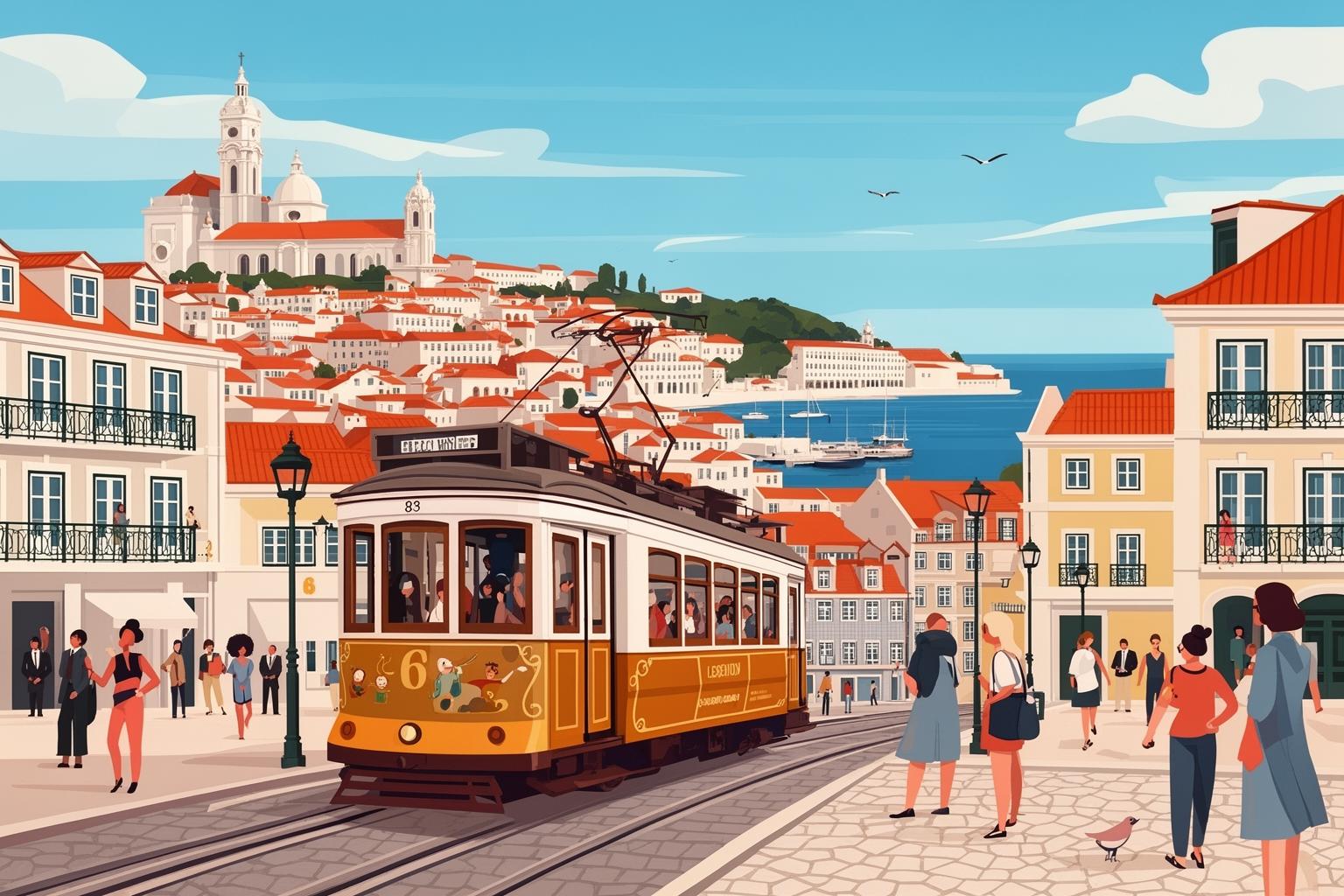
When people talk about Lisbon’s trams, they are often unknowingly referring to one in particular. The Remodelado tram, a design dating back to the 1930s, is the star attraction, with its most famous route being number 28. To call Tram 28 just a public transport line is like calling a masterpiece a simple painting. It is a cinematic experience, a full narrative unfolding as it rattles from Campo de Ourique in the west to Martim Moniz in the east, weaving through the very heart of historic Lisbon. This journey is not for those in a rush. It is a slow, deliberate performance, complete with the soundtrack of screeching wheels on impossibly tight turns, the cheerful ding of the driver’s bell, and the collective gasp of passengers as a panoramic city view suddenly appears where a narrow wall once stood. Boarding the 28 is like stepping into a living postcard, a mobile viewpoint offering an intimate and sometimes thrillingly close glimpse into the city’s soul.
The Western Start: Prazeres and the Echoes of Quiet Life
The journey often begins or ends near the Prazeres Cemetery, a surprisingly peaceful and beautiful city of the dead, filled with ornate mausoleums and towering cypress trees. This starting point in the Campo de Ourique neighborhood immediately sets a different tone. This is a genuine Lisbon neighborhood, with local markets, traditional shops, and families going about their day. It’s also known as a literary haven; it was the final home of the great poet Fernando Pessoa, and one can almost imagine his ghost boarding the tram here, notebook in hand, ready to observe the city he so intricately documented. As the tram starts its eastward route, it sways through the residential calm of Estrela, a district distinguished by its magnificent basilica.
Ascending to Estrela: Basilica and a Garden of Serenity
The Basilica da Estrela, with its massive rococo dome, is a landmark that marks your ascent. It’s one of Lisbon’s most impressive churches, a vision in white stone that seems to glow in the afternoon sun. If you choose to get off, you’re rewarded not only with its ornate interior but also with the Jardim da Estrela just across the street. This is one of Lisbon’s most beautiful public gardens, a true oasis filled with exotic plants, shaded benches, and a charming wrought-iron bandstand. It’s a place where locals bring their children to play and old friends gather beneath the canopy of ancient trees. The tram ride past this spot feels like a transition, leaving the quiet, stately part of the city and preparing for the denser, more chaotic history that lies ahead. Here, the tram seems less like a tourist attraction and more like the local bus it essentially is, carrying residents home with their groceries, adding an authentic layer to the ride.
Into the Labyrinth: Chiado, Baixa, and the City’s Beating Heart
After Estrela, the tram commences its steep descent followed by a climb into Lisbon’s cultural and commercial heart. The streets grow narrower, buildings rise taller, and the city’s vibrant energy becomes unmistakable. The screeching wheels intensify as the tram maneuvers turns that seem almost impossible for a vehicle of its size. This is where the charm of the Lisbon tram system shines through; these trams were designed for a city that existed long before cars, a city of medieval alleys and tight corners.
Chiado: The Literary Soul of Lisbon
The tram skirts the edges of Chiado, Lisbon’s elegant and bohemian center. This district is home to historic cafés, upscale boutiques, and theaters. It was once the playground of Portugal’s intellectual and artistic elite in the late 19th and early 20th centuries. The famous café A Brasileira, marked by its iconic bronze statue of Fernando Pessoa seated outdoors, is just a short walk from the tram line. It’s easy to imagine Pessoa himself riding this very tram, soaking in the urban poetry that inspired his work. Getting off here lets you explore streets named after famous writers, browse Bertrand, the world’s oldest operating bookstore, and soak in the creative energy that lingers in the air. The tram offers the perfect prelude to this neighborhood, its rhythmic clatter providing a steady pulse beneath the district’s sophisticated buzz.
The Baixa Grid: A Phoenix from the Ashes
From Chiado’s heights, the tram descends into the Baixa district. This flat, grid-patterned downtown was completely rebuilt in a grand neoclassical style after the devastating 1755 earthquake. The tram’s route here contrasts sharply with the winding hill alleys. It travels along wide, straight avenues bordered by imposing, uniform buildings. Passing the grand squares of Praça do Comércio, overlooking the river, and Rossio, with its wave-patterned cobblestones and monumental fountains, the tram’s journey is brief but significant. Its passage through Baixa serves as a moment of organized calm and grandeur before the tram faces its most dramatic climb into the ancient maze of Alfama. This stretch is a reminder of Lisbon’s resilience and capacity to rebuild and reinvent itself after near-total destruction.
The Climb to Alfama and Graça: A Medieval Dreamscape
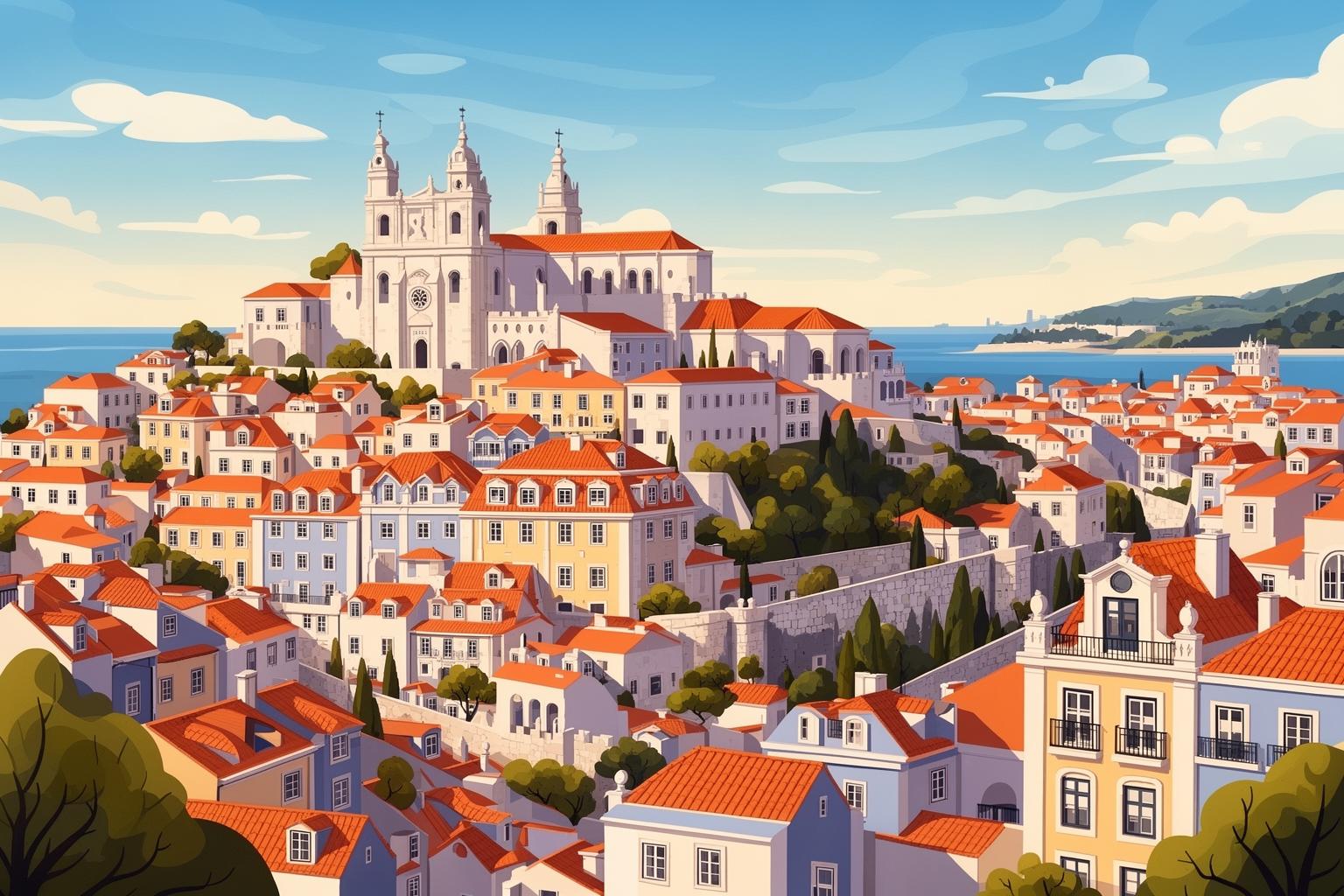
This is the most iconic and breathtaking segment of the Tram 28 journey. After departing from the orderly Baixa, the tram begins its ascent. And it is a genuine climb. The small yellow car groans and strains as it pulls itself up the steep slopes of Lisbon’s oldest hill, the birthplace of the city. The streets narrow so much that you can almost reach out and touch the tiled walls of nearby houses. Laundry lines stretch between balconies, fluttering like prayer flags mere inches from the tram’s windows. The ride becomes an intimate, almost intrusive, glimpse into the daily lives of Alfama’s residents.
Alfama: Echoes of Fado and Moorish Spirits
Alfama is a district that proudly displays its history. This is the Lisbon that endured the 1755 earthquake: a beautiful, bewildering maze of cobbled alleys, hidden courtyards, and steep staircases, once the city’s Moorish quarter. The tram route here is an engineering marvel, twisting and turning, scraping past corners with millimeters to spare. The driver handles not just a vehicle, but a finely tuned instrument, expertly navigating a path that seems to defy physics. Along the way, you pass the magnificent Lisbon Cathedral, the Sé—a fortress-like Romanesque church that has watched over the city for centuries. Further up, the tram offers fleeting views of the Castelo de São Jorge, the ancient Moorish castle crowning the hill. Yet, the true charm of the tram ride through Alfama lies in the small details: an elderly woman gazing from her window, the scent of grilled sardines drifting from a tiny restaurant, the mournful notes of a Fado guitar escaping an open doorway. The tram doesn’t just pass through Alfama; it invites you into its living, breathing story.
Miradouros of Light: Portas do Sol and Santa Luzia
Just as the climb feels almost claustrophobic, the tram emerges onto one of Europe’s most magnificent terraces. The Miradouro das Portas do Sol (Gateway to the Sun) bursts open into a panorama of light and space. The view is breathtaking: a sea of red rooftops tumbling down to the Tagus River, the dome of the National Pantheon, and the twin towers of the São Vicente de Fora Monastery. The tram pauses here, allowing passengers a moment to catch their breath and soak in the spectacle. A few steps away lies the Miradouro de Santa Luzia, a romantic terrace draped in bougainvillea with a beautiful azulejo panel depicting Lisbon before the earthquake. These viewpoints are more than just stops; they represent the emotional climax of the journey, a reward for the long, winding ascent. They have drawn artists for centuries, all eager to capture Lisbon’s unique quality of light.
Graça: The Highest Views and Local Charm
The tram continues climbing beyond Alfama into the neighboring district of Graça. This area feels more grounded and residential than tourist-filled Alfama, yet it holds what many consider the city’s best viewpoint. The Miradouro da Senhora do Monte (Our Lady of the Hill) stands as the highest point in central Lisbon, offering a sweeping panorama that includes the castle, downtown, the 25 de Abril Bridge, and the hills beyond. It is a quieter, more reflective spot compared to the busier viewpoints below. The tram stop is a short, steep walk from the miradouro, but the effort is richly rewarded. Riding the tram through Graça reveals the city’s verticality, providing a deep appreciation for why Lisbon is known as the City of Seven Hills. This final climb feels like a pilgrimage, a journey to the summit from which all of Lisbon stretches out at your feet.
More Than Just the 28: Exploring the Wider Tram Network
While Tram 28 rightfully enjoys famed status, it represents just one facet of Lisbon’s delightful tram and funicular network. To fully grasp the city’s special connection with its varied terrain, exploring the other routes is a must. Each line provides a distinct viewpoint, a unique story, and often a far less crowded journey.
The Short Loop: Tram 12
For those pressed for time or wishing to avoid Tram 28’s largest crowds, Tram 12 offers a shorter version of the Alfama experience. It follows a one-way loop beginning at Praça da Figueira, climbing through the Mouraria neighborhood before merging onto the Tram 28 tracks for the exhilarating ascent and descent through Alfama. Although briefer and quicker, it delivers all the key highlights: narrow streets, sharp turns, and breathtaking views. It’s an excellent way to sample the historic tram ride without committing to tram 28’s full cross-city route.
The Modern Route to Discoveries: Tram 15
In contrast to the vintage allure of the other lines, Tram 15 operates modern, articulated trams. While it may lack nostalgia, it serves an important and picturesque function. This line runs westward from the city center along the flat riverfront all the way to the historic Belém district. It’s the most efficient route to reach some of Lisbon’s most significant landmarks, including the Jerónimos Monastery, a Manueline architectural masterpiece, and the Belém Tower, the iconic coastal fortress symbolizing Portugal’s Age of Discovery. Riding Tram 15 is a journey through a different chapter of Lisbon’s history, from the medieval city core to the grand monuments of its imperial golden era. Naturally, no visit to Belém is complete without stopping at Pastéis de Belém to savor the original, legendary pastel de nata.
The Hill-Climbing Elevadores: Lisbon’s Vertical Wonders
Beyond the trams, Lisbon’s steepest slopes are scaled by three funiculars, or ascensores. These historic gems are designated National Monuments. Each provides a short but memorable ride—a near-vertical ascent that spares your legs while offering a unique glimpse of city life.
Elevador da Bica
Arguably the most photographed of the trio, the Elevador da Bica links the riverside near the Time Out Market with the bohemian Bairro Alto neighborhood. The street it climbs, Rua da Bica de Duarte Belo, is stunningly picturesque, featuring two yellow funicular cars passing each other amid colorful houses and a narrow view of the blue Tagus River below. The area at the top serves as a gateway to one of Lisbon’s liveliest nightlife districts.
Elevador da Glória
The Elevador da Glória tackles the steep hill connecting Restauradores Square in Baixa to the Miradouro de São Pedro de Alcântara. The ride is brief but ends at one of the city’s most spectacular viewpoints—a beautifully landscaped terrace offering panoramic vistas over Baixa toward the castle and Alfama. The walls along the funicular’s route have become an authorized street art gallery, making the journey a vivid and colorful experience.
Elevador do Lavra
The oldest of Lisbon’s funiculars, the Elevador do Lavra is also the most tucked-away and least touristy. It climbs the Calçada do Lavra, a quiet residential street, offering an authentically local experience. It connects the broad Avenida da Liberdade with the Jardim do Torel, a small elevated garden that is a hidden treasure providing lovely views in a peaceful setting. Riding the Lavra feels like uncovering one of Lisbon’s well-kept secrets.
A Filmmaker’s Muse: Lisbon Trams on the Silver Screen
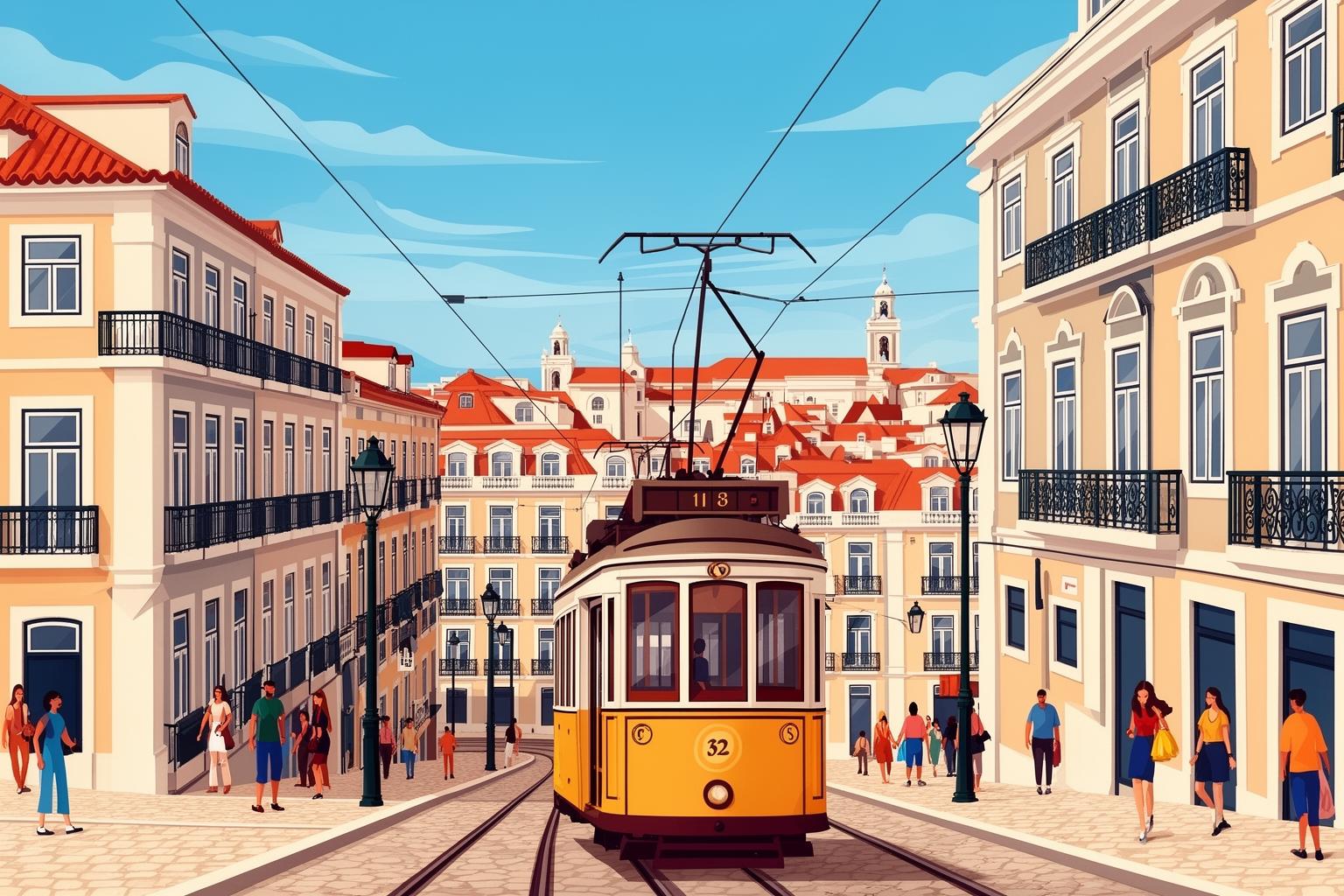
The atmospheric charm of Lisbon and its trams has not escaped the attention of filmmakers. The city’s distinctive light, its fading grandeur, and its soulful transit system have shaped it into a compelling character in its own right. Most notably, German director Wim Wenders captured the city’s spirit in his 1994 film Lisbon Story. The film’s protagonist, a sound engineer, roams the city recording its ambient sounds, with the tram serving as a constant presence. Its screeching, ringing bell, and rhythmic clatter become the defining sounds of the city. Wenders employs Tram 28 not merely as a backdrop but as a central narrative device—a vehicle of discovery that carries both the character and the audience deep into Alfama’s labyrinthine soul. Watching the film before or after a visit adds a profound new dimension of appreciation to the journey, transforming a simple ride into a cinematic pilgrimage. The tram becomes a moving soundstage, a mobile camera dolly capturing the intimate drama of the city streets. It reminds us that this journey is not purely visual; it is a rich auditory experience that shapes the very character of Lisbon.
Practical Wisdom for the Rails
Navigating Lisbon’s trams can be a delight, but having a bit of insider knowledge greatly enhances the experience, especially for first-time visitors. These trams are not merely tourist attractions; they serve as an essential part of the city’s public transport system, and understanding their unique characteristics is important.
Ticketing: Plan Ahead
Although you can purchase a ticket directly from the driver onboard, it is more costly and requires exact change. The most cost-effective and convenient option is to use a Viva Viagem card. This rechargeable card is available at metro stations and ticket machines. You can load it with credit (zapping) to pay per ride at a discounted rate or purchase a 24-hour pass that includes unlimited travel on trams, buses, metros, and funiculars. Simply tap your card on the reader when boarding. This not only saves money but also speeds up the boarding process for everyone.
Timing is Everything: Beat the Crowds
Tram 28, in particular, can get extremely crowded, especially during peak tourist season from late morning to late afternoon. Lines at popular starting points like Martim Moniz can be intimidating. For a more comfortable experience, try riding early in the morning (before 9 a.m.) or later in the evening. An early morning trip provides beautiful light and a chance to see the city come to life, with locals commuting to work. A late evening ride through Alfama has a special charm, as the warm streetlights illuminate narrow alleys and the sound of Fado music fills the air.
Ride the Whole Line (in Both Directions)
Many visitors ride just the most scenic stretch through Alfama and then get off. A more fulfilling experience is to travel the full route from Martim Moniz to Campo de Ourique (Prazeres) and back again. This journey reveals the striking contrasts between Lisbon’s diverse neighborhoods, from the vibrant immigrant hub of Martim Moniz to the historic center, and finally to the quiet residential west. Each direction offers a fresh perspective, with new views and details unfolding on the return trip.
A Word of Caution: Watch Your Belongings
Sadly, the crowded historic trams are common targets for pickpockets. This issue is well known, and warning signs are often posted onboard. Stay alert. Keep your bags zipped and in front of you, and be mindful of your surroundings, especially when the tram is packed. Don’t let this discourage you from enjoying the ride, but maintaining a reasonable level of vigilance is essential. It’s a small price to pay for such a unique and unforgettable experience.
The Soul of the City, Forged in Iron
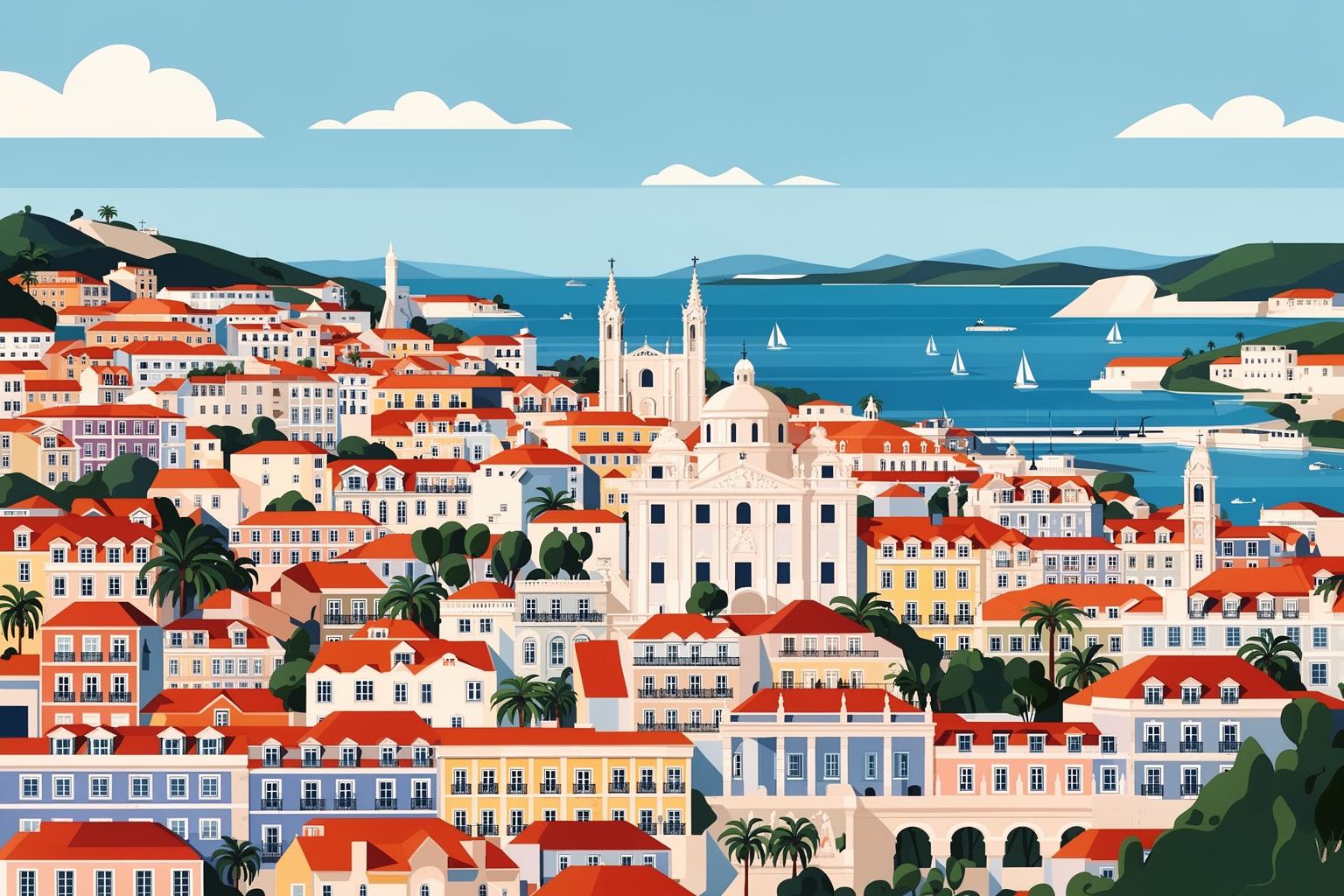
Riding Lisbon’s trams is like having a conversation with the city itself. These rumbling yellow vehicles are more than just a charmingly slow means of climbing a hill. They hold memories within their polished wooden benches and worn brass fittings, having witnessed decades of change, love, and daily struggle. They stand as a testament to a city that has chosen to preserve its character, embracing the difficult, winding path over the easy, straight road. The screech of wheels on a tight corner in Alfama is not a flaw; it is the city’s voice. The sudden jolt as it begins a steep climb is not a defect; it is the city’s powerful heartbeat.
As your journey ends and you step off the tram onto a sunlit square, the rhythmic clatter will linger in your ears for hours. You will have done more than just see the sights; you will have traced the city’s contours with your own body, felt its history in the vibrations beneath your feet, and realized that in Lisbon, the journey itself—slow, winding, and full of breathtaking surprises—is the true destination. The trams are not only the best way to explore the city of seven hills; they are the seven hills, brought to life in iron, wood, and electricity, forever rolling through the heart of Portugal.