Welcome to Medellín, the city of eternal spring, a place that blooms with a resilience as vibrant as the flowers that give it its nickname. Nestled in the Aburrá Valley of Colombia, this is a city that didn’t just rebuild; it reinvented itself. For anyone whose imagination is stirred by tales of transformation, by urban landscapes that feel pulled from a utopian sci-fi storyboard, Medellín offers a profound, real-world saga. And the heart of this story, the very circulatory system of its rebirth, is its public transportation. Forget just getting from point A to B. Here, the journey itself is the destination. The Medellín Metro and its sky-faring Metrocable gondolas aren’t just transit; they are a living, breathing testament to social innovation, a symbol of hope that connects communities not only physically but spiritually. It’s a network that has become the pride of its people, the paisas, and the main artery through which the city’s dynamic, creative, and forward-looking energy flows. Prepare to soar over a city that refused to be defined by its past, and instead, chose to build its future in the sky.
This urban transformation echoes the profound connection between place and narrative found in the literary worlds of Isabel Allende.
The Spine of the Valley: Understanding the Metro
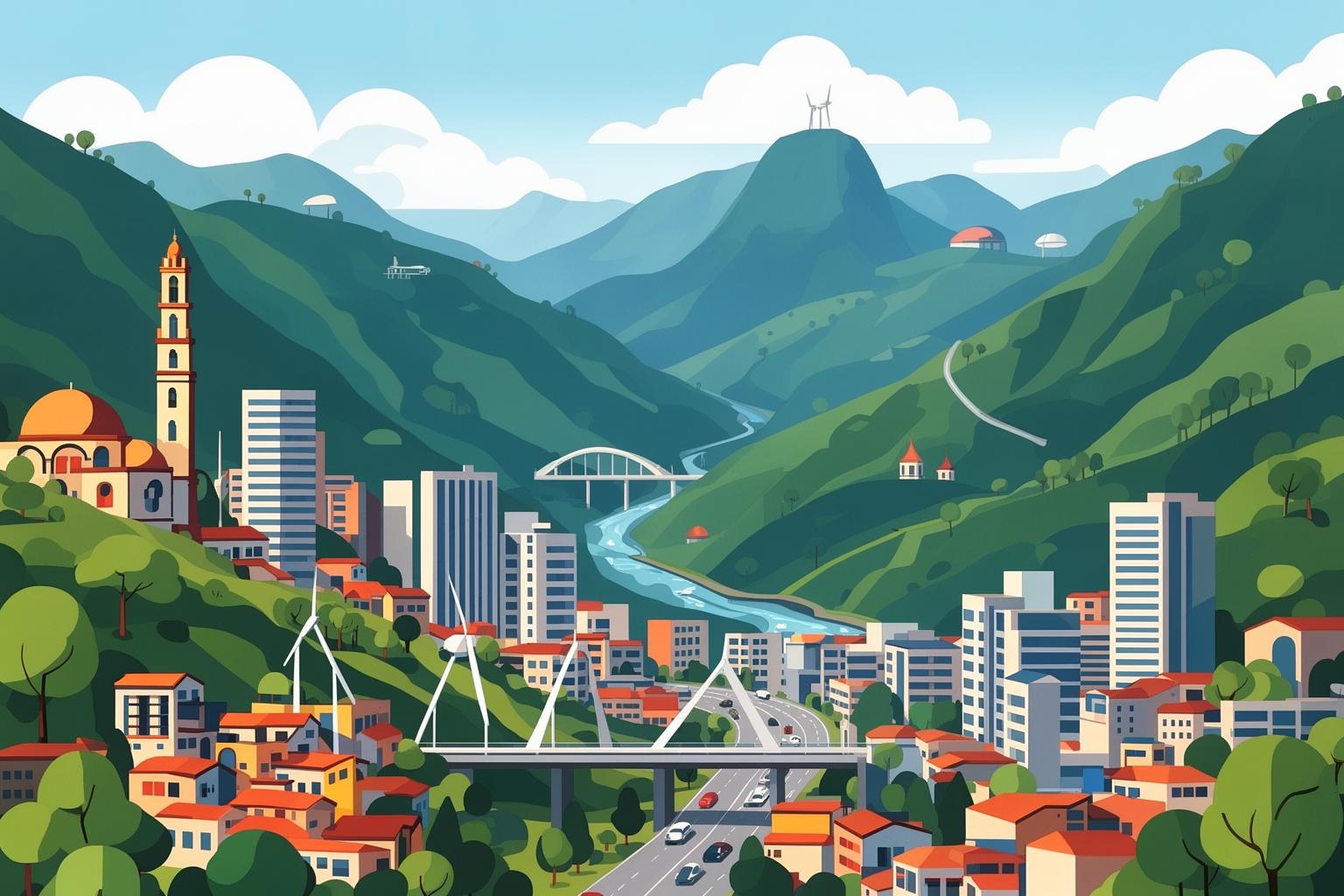
Before you can soar, you first need to understand the ground beneath you. In Medellín, that ground is covered by the Metro—a sleek, efficient train system that glides above the city streets, serving as the vital backbone of the entire public transit network. The moment you enter a Metro station, you sense it. There’s a quiet pride and a strong feeling of shared ownership. This is not the grimy, chaotic subway experience found in many other major cities. The platforms are immaculate. The cars are free of graffiti. People behave orderly, forming patient lines and offering seats to those in need. This is the embodiment of “Cultura Metro”—Metro Culture. It’s an unspoken social contract, a city-wide pact to cherish and safeguard this symbol of their progress. For visitors, this translates into an experience that is not only safe and efficient but genuinely enjoyable. It’s a place where the city’s true character shines through.
The Arteries: Lines A and B
The system is refreshingly straightforward. The main artery is Line A, running north to south along the Medellín River, linking the Bello municipality in the north with La Estrella in the south. This is the line most travelers will become well acquainted with. It serves as your conduit to the majority of the city’s key areas. Starting from the south, you reach the leafy, upscale neighborhood of El Poblado, known for its lively nightlife, world-class restaurants, and numerous cafés. The Poblado station is your gateway to this vibrant district. Traveling north on Line A, the cityscape shifts dramatically. Sleek high-rises give way to a dense, dynamic urban core. You’ll glide past the Industriales station, an important transfer hub, before arriving at the true heart of the city: Parque Berrío and San Antonio.
Parque Berrío station deposits you right into the controlled chaos of downtown, or El Centro. Here, you are just steps from the iconic Plaza Botero, an open-air museum filled with the voluminous, whimsical sculptures of Fernando Botero, Medellín’s most famous native artist. The impressive Rafael Uribe Uribe Palace of Culture, a striking Gothic Revival building, stands nearby. Just one stop further north is Prado, a neighborhood known for its historic mansions and a quieter, more architectural charm.
Line B is the shorter east-west line that intersects with Line A at the large San Antonio station. This line grants access to the western part of the city, ending at the crucial San Javier station. San Antonio itself is a spectacle—a sprawling, multi-level station acting as the system’s central hub. It’s the only station where you can transfer between Lines A and B, and its size reflects the immense volume of passengers the Metro moves daily. Traveling west on Line B takes you into the city’s more residential, working-class core, a prelude to one of Medellín’s most uplifting experiences.
The Currency of Movement: The Cívica Card
While single-use tickets (univiaje) are available, the real key to navigating the city is the Cívica card. This green, rechargeable smart card is your pass to the entire integrated system—Metro, Metrocable, Tranvía, and Metroplús buses. Getting one as a visitor used to be somewhat bureaucratic, but now it’s much easier. Often, you can obtain an “Eventual” or visitor card at specific ticket booths, such as those at San Antonio, Poblado, or Niquía stations, with just your passport. The small effort pays off enormously.
Using the Cívica is effortless. Simply tap it on the reader at the turnstile to enter and tap again when exiting, if required for a transfer. The real advantage lies in the cost savings and convenience. Rides are much cheaper with the card, and more importantly, it enables integrated transfers. You can ride the Metro, switch to a Metrocable, then board a feeder bus—all within a 90-minute window, often for the price of a single fare. Reloading the card is easy; just visit any ticket booth (taquilla), present your card and some cash. Carrying a Cívica card creates a genuine sense of belonging to the city’s daily rhythm. No longer are you a tourist fumbling with paper tickets; you become part of Medellín’s vibrant flow.
Ascending to the Comunas: The Metrocable Miracle
If the Metro is Medellín’s backbone, the Metrocable is its soul. Though not originally intended as tourist attractions, they have undoubtedly become some of the city’s most iconic experiences. More importantly, they serve as a lifeline. The Metrocable is a network of aerial cable cars, or gondolas, created to connect the steep, densely populated hillside communities—the comunas—to the main Metro line in the valley below. Before the Metrocable was built, residents of these neighborhoods faced grueling, hour-long climbs up hundreds of stairs and winding paths just to get home from the nearest bus stop. Now, that same journey is a smooth, silent, ten-minute flight through the air.
This is social urbanism at its most brilliant. By providing access, the city created opportunity. It connected people to jobs, education, and healthcare. It sent a clear message to the residents of these long-neglected areas that they, too, are an integral part of the city. Riding the Metrocable is a profoundly moving experience—a journey that offers not only breathtaking views but deep insight into Medellín’s story of transformation.
A Flight to Transformation: Line J to Comuna 13
The most famous journey begins at San Javier station, the final stop on Metro Line B. As you exit the train station and follow the signs for the Metrocable, the atmosphere changes. You enter a part of the city that was once the epicenter of its violent past. But today, San Javier bustles with life, serving as the gateway to the renowned Comuna 13. Boarding the red gondola of Line J, the ascent starts immediately.
Below you, the city unfolds like a stunning tapestry of red-brick homes, corrugated metal roofs, and a vibrant maze of streets and alleyways. Laundry lines stretch between buildings like colorful prayer flags. Children play soccer on concrete pitches. Dogs nap on sun-warmed rooftops. You glide silently over a thriving world, one that feels both intimate and epic from this vantage point. The gondola sways gently, the whir of the cable a soothing hum against the distant city sounds. Ahead, the famous outdoor escalators snake up the hillside—another innovative piece of the neighborhood’s infrastructure.
You may choose to disembark at La Aurora, the final station, but most visitors alight at intermediate stops to explore. The Metrocable doesn’t bring you directly to the main graffiti tour area; it delivers you to the heart of the community. From there, you can walk, catch a local bus, or grab a taxi to the escalators and the art-filled corridors that have made Comuna 13 a global symbol of resilience. The flight on Line J serves as the perfect prelude, granting a bird’s-eye view of the community’s geography and spirit before you immerse yourself in its streets.
The Green Escape: Lines K and L to Parque Arví
For a different kind of ascent, head north on Metro Line A to Acevedo station. Here, transfer to Line K of the Metrocable, the first line constructed—a true pioneer that set the stage for the system’s growth. It serves the northeastern hillside comunas, offering another stunning perspective of the city’s urban landscape. You’ll glide over the Santo Domingo Savio neighborhood, now home to the striking Biblioteca España, a library complex resembling three massive dark stones perched on the mountaintop, thanks to the Metrocable.
But the journey doesn’t end there. At the Santo Domingo station, signs point to Line L. This is a separate, tourism-focused Metrocable line requiring an additional fare—and it’s worth every peso. Boarding the Line L gondola feels like passing through a portal. You leave the dense cityscape behind and begin a long, serene ride over the canopy of a lush forest. The change is immediate and dramatic. The air cools. The urban buzz fades, replaced by the sound of rustling leaves and the wind. For fifteen minutes, you are suspended above a sea of green, with panoramic views of the entire Aburrá Valley stretching behind you. It is a meditative, breathtaking experience that feels worlds away from the city you left behind.
You arrive at Parque Arví, a vast ecological nature reserve and pre-Hispanic archaeological site. It is Medellín’s green lung, an extensive area of hiking trails, forests, and pristine nature. At the entrance, a small farmer’s market offers local fruits, crafts, and snacks. You can easily spend the day here hiking, picnicking, or taking guided nature tours. The journey on Lines K and L is the ideal day trip, showcasing Medellín’s incredible diversity—from urban core to untouched wilderness—all easily accessible through its visionary public transit system.
Weaving Through the Center: The Tranvía de Ayacucho
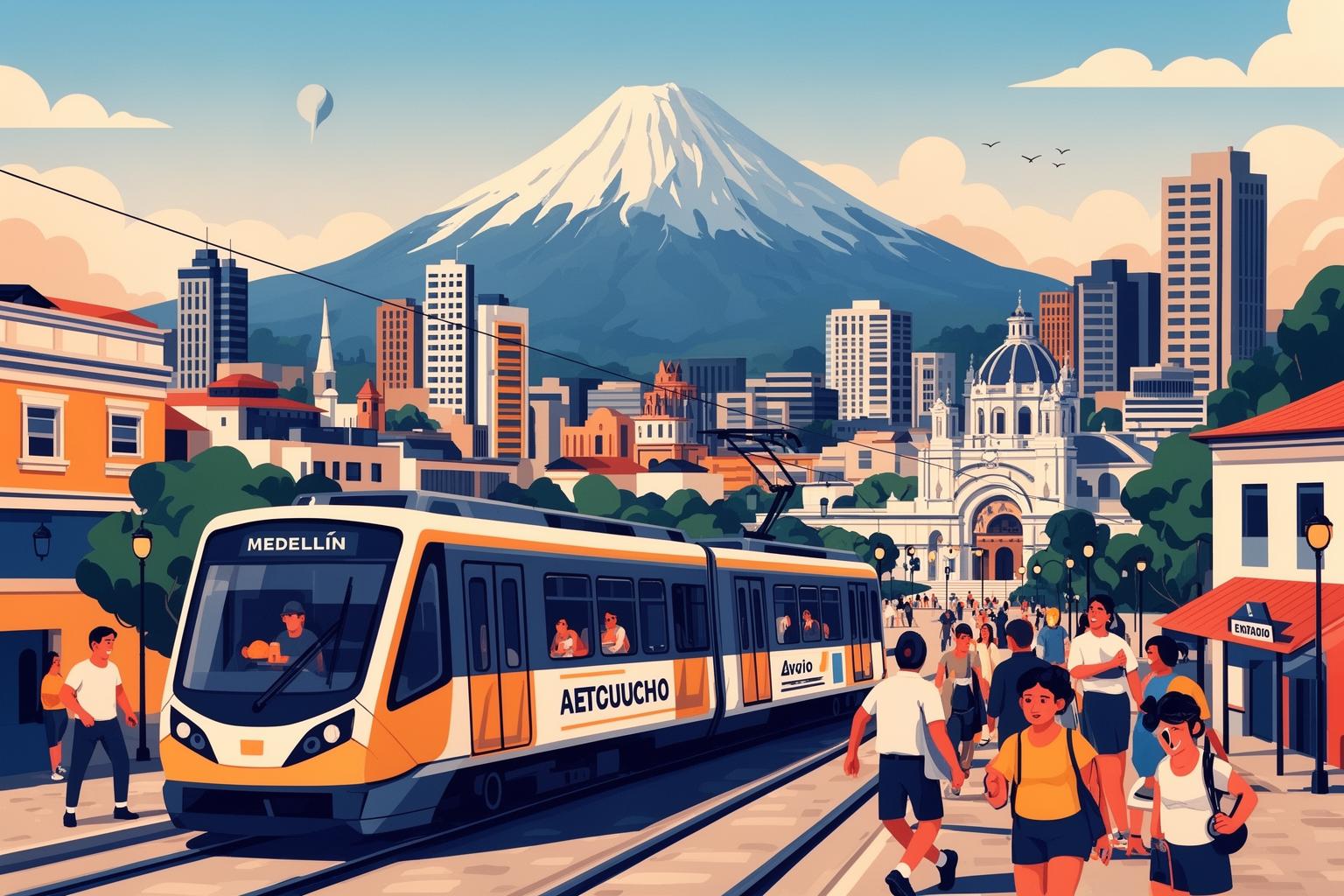
Medellín’s innovation extended beyond trains and gondolas. The city further integrated its transit system with the addition of the Tranvía, or tram line. The T-A line, known as the Ayacucho Tram, is a sleek, modern, and nearly silent tram that runs on wheels rather than traditional steel tracks, enabling it to navigate the steep inclines of the city center. It starts at the San Antonio Metro station, providing another seamless transfer point, and travels east through the heart of downtown.
Riding the Tranvía offers a unique experience. You are at street level, closely connected to the city’s vibrant energy. The tram glides along the revitalized Ayacucho corridor, a pedestrian-friendly street transformed by the tram’s arrival. It’s a journey through history, passing beautiful old buildings and lively commercial areas. The true magic of the Tranvía lies in its role as a feeder for the Metrocable, linking to two additional Metrocable lines, H and M, which climb the eastern slopes of the valley, granting access to even more neighborhoods.
An excellent way to experience it is to take the Tranvía to its final stop, Oriente, and then simply ride back. The trip highlights a part of the city that many visitors overlook, offering insight into the daily life of the central and eastern neighborhoods. It’s a smooth, comfortable ride, with large windows framing the vibrant street scenes outside perfectly. This is a testament to the city’s comprehensive approach to urban planning, where every new piece of infrastructure is designed not only for transport but also for urban renewal and community connection.
Practical Wisdom for the Urban Explorer
Navigating Medellín’s transit system is enjoyable, but having a bit of local insight can make your trip much smoother. First and foremost, pay attention to timing. Like any major city, Medellín experiences rush hours. The Metro can become extremely crowded between 7:00 AM and 9:00 AM, and again from 5:00 PM to 7:00 PM on weekdays. If you’re traveling with luggage or prefer a more comfortable ride, try to plan your trips outside of these busy periods. The Metrocable, especially the line to Parque Arví, can also have long lines, particularly on weekends and public holidays when locals visit the park. For the best experience, aim to visit Parque Arví on a weekday morning.
Safety, while always a factor when traveling, is a strong point of the Metro system. The stations and cars are well-lit, extensively monitored by cameras, and regularly patrolled by security staff. The system is impressively safe. However, as with any crowded public space, stay alert to your belongings. Keep your phone and wallet secure, and wear your backpack on your front when the cars are full. The Metro Culture helps maintain a respectful environment, but common sense remains your best guide.
When riding the Metrocable, a little etiquette is appreciated. The gondolas are shared spaces, often filled with local commuters. It’s courteous to keep your volume down and allow others to board and disembark without blocking the way. And although you’ll be tempted to take photos constantly, take a moment to simply observe. Watch the city unfold and absorb the stunning views and the context they offer. The system is efficient, but it’s not a race. Give yourself time to truly enjoy the journey.
Finally, don’t hesitate to ask for help. Metro staff are professional and accommodating, and the local paisas are famously friendly and proud of their city. If you look lost, it’s likely someone will offer assistance before you even ask. A simple “¿Dónde está la línea A?” (Where is Line A?) or a point on a map will almost always bring a warm smile and helpful directions. Embracing this openness is part of experiencing Medellín.
A City in Motion, A Future in Sight
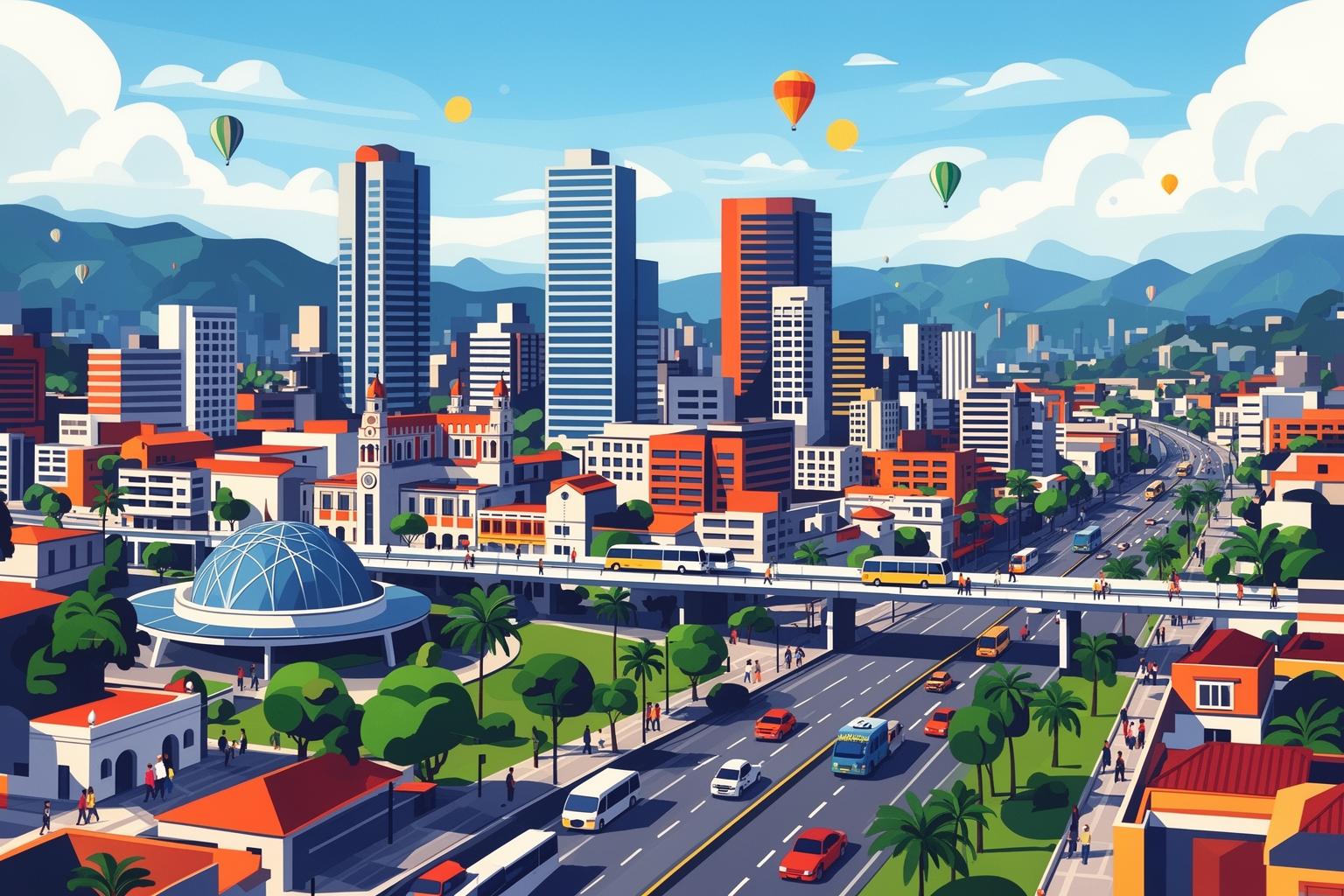
Traveling through Medellín on its public transit is like reading the city’s own story. It’s a tale of connection, of bridging divides both physical and social. Every smooth glide of the Metro train, every quiet ascent of a Metrocable gondola, composes a verse in an epic poem of urban transformation. This system was created not just through engineering, but through empathy. It was designed with the deep understanding that a city’s greatness is measured not by its monuments, but by the well-being and connectedness of its people.
As you stand in a glass gondola, suspended between a mountainside comuna and the lively valley below, you gain a perspective found nowhere else. You see how every part of the city is linked, how the fate of a family in the highest neighborhood is connected to the opportunities in the economic center below. You realize you are more than just a passenger on a clever transit system; you are a witness to a living, breathing miracle of social change. So come, get your Cívica card, and step aboard. Ride the rails, soar through the sky, and let the rhythm of Medellín’s hopeful heart carry you on an unforgettable journey.