There are moments in your life, as a planner of events and a seeker of spectacles, when you think you’ve seen the limits of what this world can conjure. You’ve witnessed fireworks that paint the Tokyo sky in neon dreams and festivals where ancient traditions roar to life. You believe you understand the shape of wonder. And then, you land on Socotra. The airplane door opens, and the air that greets you is different. It’s ancient, thick with the scent of salt, stone, and something else—something botanical and primeval. It’s the moment you realize you haven’t just traveled across the globe; you’ve traveled across reality itself. Socotra isn’t just a place on a map. It’s a page torn from a forgotten book of myths, a living gallery of evolution’s most whimsical and daring experiments. It’s an island that feels less like a part of our world and more like a beautifully orchestrated dream of another. This is the story of a journey to the Earth’s most alien island, a pilgrimage to meet the trees that bleed dragon’s blood and walk through a landscape that redefines the very meaning of life.
This journey to a place that feels like a beautifully orchestrated dream of another world is a profound reminder of how travel can evoke a deep sense of nostalgia.
The Legend Whispered in Crimson Sap: Meeting the Dragon’s Blood Trees
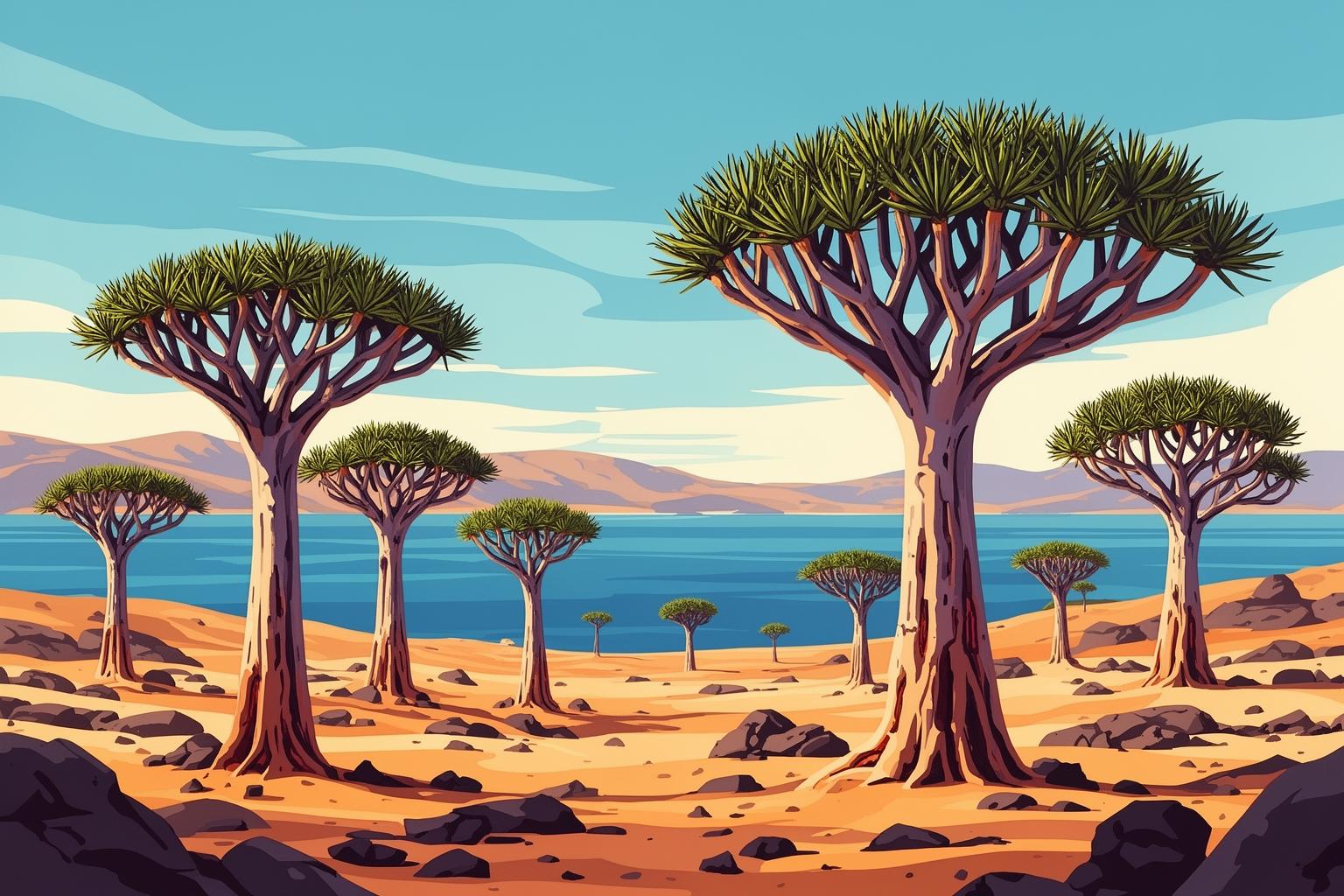
Before you see them, you sense their presence. The road from the island’s capital, Hadibo, begins to ascend, winding through a landscape of limestone and scrub. The air becomes thinner and cooler. Your local guide, a quiet man whose eyes carry the island’s history, will point toward the horizon. At first, they appear like a strange mirage, a collection of impossibly shaped umbrellas scattered along the ridgelines. But as you draw closer, the illusion solidifies into something breathtakingly real. This is the Dixam Plateau, one of the last great refuges of the Dragon’s Blood Tree, the Dracaena cinnabari.
A Forest from Another Age
Standing beneath a Dragon’s Blood Tree is a humbling experience. It is not a tree in the usual sense. There is no familiar trunk leading to a chaotic spray of branches. Instead, a thick, gnarled base, ancient as the stone it grows from, rises and then splits. It splits again, and again, and again, in a perfect, repeating fractal pattern, creating an intricate network of upward-reaching limbs. At the very top, this network supports a dense, perfectly round canopy of spiky, waxy leaves. It’s a marvel of natural engineering, a design refined over millions of years to capture moisture from the highland mist and channel every precious drop down its branches to the roots. The shape is so alien, so mathematically precise, it feels less like a natural creation and more like a sculpture crafted by a being with a profound grasp of geometry and survival. Beneath the canopy, the ground forms a mosaic of light and shadow, and the silence is profound, broken only by the whisper of wind rustling through the stiff leaves. It is a sound unlike any other, a dry, rustling hiss that seems to be the voice of the island itself. Walking through a woodland of these trees is like wandering through a petrified forest from a prehistoric era. You almost expect a dinosaur to peer over a limestone escarpment. The air is still, the world feels paused, and you are an intruder in a realm where time moves at a geological pace.
The Tree That Bleeds
The true magic of the Dracaena cinnabari, and the source of its name, lies hidden within its bark. A small, careful cut with a knife reveals the tree’s secret. A thick, dark red sap immediately begins to seep out, resembling blood. This crimson resin has been the lifeblood of the island’s myths and its economy for centuries. Ancient legends tell of a great dragon that came to the island to feast on elephants. After a tremendous battle, an elephant fell upon the dragon, crushing it, and their mingled blood seeped into the ground, giving rise to these strange trees. Holding the resin in your hand, you can almost believe the tale. It dries into a hard, crystalline substance that has been prized since the Roman Empire. It was used as a cure-all medicine, a vibrant pigment for pottery and varnish (it is said to have given Stradivarius violins their distinctive color), and as a potent ritual incense. The Socotri people have used it for generations, painting it on pottery, dyeing wool with it, and applying it as a remedy for everything from wounds to fevers. It is the island’s soul, a tangible piece of its history and magic, a treasure born from a fantastical battle between titans. The scent of the burning resin is earthy and slightly sweet, a fragrance that instantly transports you to a place of ancient rituals and deep connection to the land.
Beyond the Dragons: Socotra’s Gallery of Botanical Oddities
While the Dragon’s Blood Tree is unquestionably the star of Socotra, it is by no means the island’s only botanical wonder. The island itself is a stage for the extraordinary, where evolution, in its profound isolation, has crafted a cast of plant species that defy all expectations. Descending from the highlands of the Dixam Plateau to the coastal plains or rocky foothills unveils a completely different, yet equally fascinating, world.
The Bottle Trees of a Thirsty Land
Clinging to steep cliffs and scattered across the arid, rocky terrain are the Socotran Bottle Trees, Adenium obesum socotranum. These plants almost seem to possess a sense of humor. Their trunks are humorously swollen and bulbous, narrowing to a few spindly branches at the top, giving them the unmistakable shape of a bottle. These massive trunks, sometimes several meters around, act as reservoirs, storing water to endure the island’s prolonged and harsh dry seasons. They stand as a testament to the persistence of life. For much of the year, they resemble gray, swollen sculptures, nearly lifeless. Yet after the rains, they transform dramatically. The tips of their seemingly dead branches burst into a profusion of vibrant pink and white flowers, offering a delicate splash of beauty against the rugged landscape. Seeing a field of these trees in bloom is to witness a celebration—a joyful, almost whimsical scene that perfectly captures the spirit of Socotra: resilient, quirky, and surprisingly beautiful. They are the island’s cheerful survivors, thriving where few others can.
The Enigmatic Cucumber Tree and Other Strange Flora
The oddity doesn’t end with the Bottle Trees. Socotra is home to the world’s only species of tree in the gourd and cucumber family: the aptly named Cucumber Tree, Dendrosicyos socotranus. It features a soft, fibrous, swollen trunk resembling a pale, engorged carrot, topped with a small crown of large, prickly leaves. This is another of the island’s water-storing specialists, an evolutionary curiosity that puzzles botanists. Then there is the Socotran Frankincense tree, Boswellia socotrana, a smaller, more gnarled relative of its renowned Arabian and African cousins, producing a resin with a distinctive citrus-like scent. Giant aloes, with leaves as thick as a human arm, stand like guardians on the hillsides. Wild pomegranate trees grow too, their fruit smaller and tarter than the cultivated varieties. With every turn in the road and every hike into a new ravine, another plant emerges, as if plucked from the imagination of a fantasy writer. Socotra is not merely an island; it is a living library of unique genetic treasures, a precious and irreplaceable corner of our planet’s biodiversity.
Landscapes Carved by Wind and Time
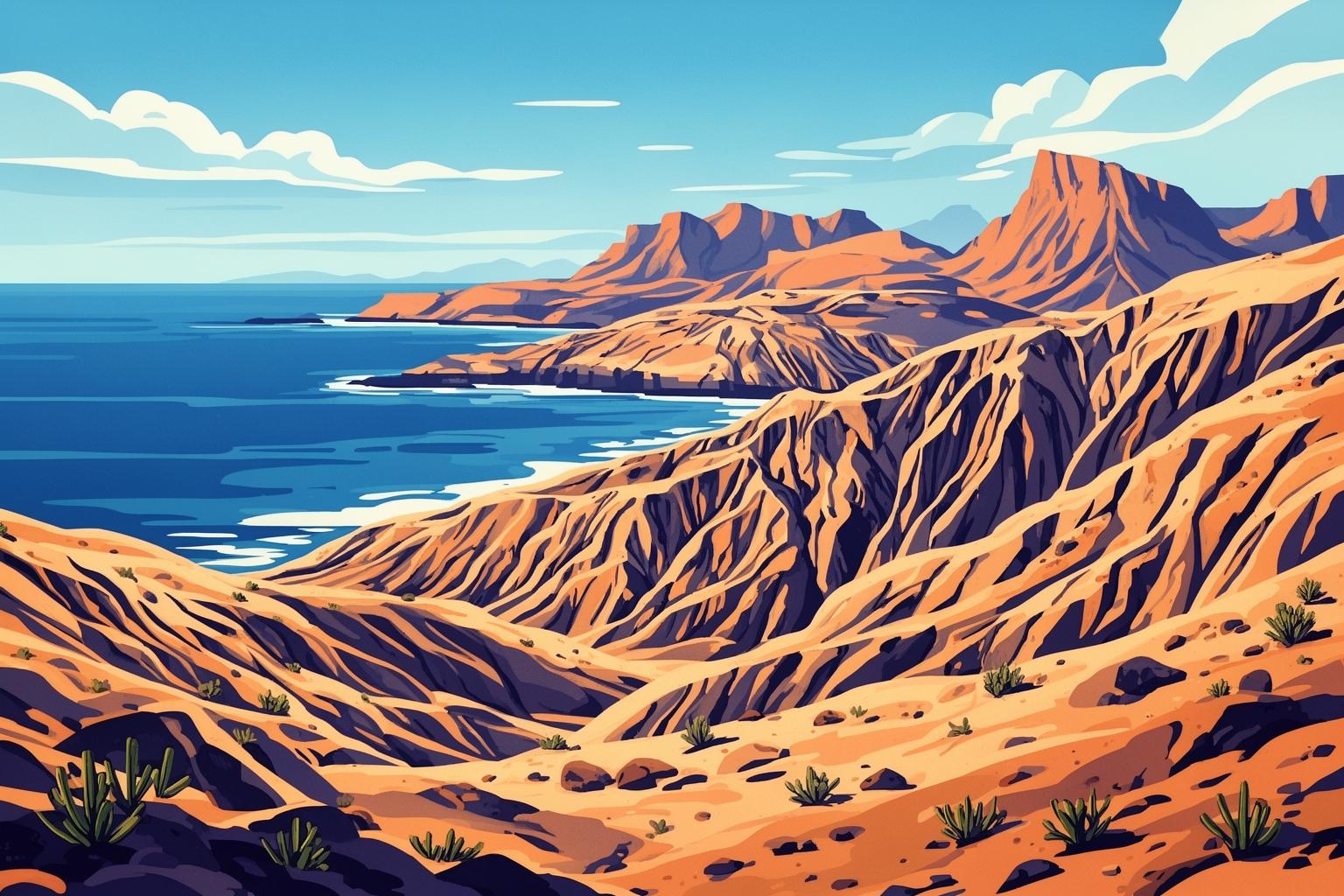
Socotra’s distinctive flora thrives against a backdrop of equally breathtaking and varied landscapes. The island itself is a masterpiece of natural sculpture, shaped by the relentless monsoon winds, the gradual work of water, and the slow rise of tectonic plates. From towering sand dunes to tranquil lagoons and jagged mountain peaks, the island’s geography is as enchanting as its plant life.
The Powdery Sands of Arher Beach
At the northeastern tip of the island lies a scene of such flawless, surreal beauty it seems like a dream. At Arher Beach, enormous mountains of pure white sand, swept in by the monsoon winds from the interior, have piled up against the dark granite cliffs bordering the shore. These dunes are massive, hundreds of feet tall, with sharp, wind-shaped crests that contrast brilliantly against the deep blue Indian Ocean. Climbing one of these dunes is a physical challenge that rewards you with an unforgettable view. With each step, your feet sink into the fine, cool sand as the wind hums, constantly reshaping the landscape around you. From the summit, the panorama is breathtaking. Below, turquoise waters crash against a pristine white beach. Behind you, the island’s rugged interior unfolds. A freshwater stream flows from the base of the cliffs, creating a small, lush oasis where you can cool off after your climb. Sitting atop an Arher dune at sunset, watching the sky ignite with color and the long shadows stretch across the sand, is a moment of pure, unfiltered peace. It is nature’s grandest theater.
The Crystalline Waters of Detwah Lagoon
On the island’s opposite side, the landscape softens into the serene paradise of Detwah Lagoon. This is a vast area of shallow, impossibly clear turquoise water, sheltered from the open ocean by a long, curving spit of white sand. The lagoon floor is a shifting mosaic of sandbanks, creating hues from the palest aquamarine to the deepest sapphire. Wading into the warm water feels like stepping into a liquid sky. The lagoon is an essential nursery for marine life. You can observe small rays gliding effortlessly over the sand, pufferfish hiding in the seagrass, and numerous other tiny creatures. Local fishermen still employ traditional methods to catch their daily meals here. A walk with a local guide can be magical; they can point out octopuses blending into the rocks and explain the lagoon’s intricate ecosystem. This is a place to slow down, disconnect, and simply exist in a state of wonder. The sense of isolation is complete, the beauty overwhelming. It is a perfect, untouched slice of coastal paradise.
Ascending into the Clouds: The Hajhir Mountains
The Hajhir Mountains form the island’s rugged backbone. These are not gentle hills but a striking range of sharp granite peaks soaring above 1,500 meters. This environment contrasts sharply with the sun-drenched coasts. Here, the air is cool and moist, with clouds often clinging to the highest summits. Hiking into the Hajhir is a journey into Socotra’s wild heart. The trails are steep and demanding, winding through terraced gardens, past small, remote settlements, and into dense woodlands of Dragon’s Blood Trees that flourish in this higher, wetter climate. The Skand region, deep within the mountains, holds what is considered the most pristine and magical Dragon’s Blood Tree forests on the island. The views from the mountain passes are staggering, looking down over the entire island from peaks to sea. Here, you can truly grasp Socotra’s vastness and isolation. It is a physically challenging trek, but the reward is a profound connection to the island’s ancient, untamed spirit. Amidst the granite and mist, you feel the full power and majesty of this lost world.
The Soul of the Island: Culture and Practicality
A journey to Socotra is as much about its people and logistical challenges as it is about its stunning landscapes. The island demands respect, thorough preparation, and a willingness to venture far beyond your comfort zone. Appreciating the human and practical aspects of Socotra is essential for a meaningful and successful expedition.
The Socotri People and Their Ancient Language
The inhabitants of Socotra are as distinctive as the island itself. Their unique cultural identity has been shaped over centuries of isolation. They are resilient, resourceful, and deeply tied to their land. Their heritage is a rich blend of Arab, Indian, and African influences. Traditional livelihoods for many are still centered on coastal fishing and herding goats and cattle inland. Their most remarkable cultural asset is the Socotri language, a pre-Arabic, ancient Semitic tongue that, until recently, had no written form. Passed down orally through generations, it serves as a living connection to the distant past. Hearing it spoken is like hearing an echo from antiquity. Engaging with the Socotri people requires a gentle and respectful demeanor. A smile and simple greeting can make a significant difference. Your guides and drivers are not merely employees; they are your hosts and vital links to understanding the island. Proud of their home, they often eagerly share its stories with those who show sincere interest.
Planning Your Expedition to the Lost World
Reaching and navigating Socotra is no simple feat. This destination is not for casual tourists—it demands careful coordination with professionals.
When to Journey
Choosing the right time to visit is crucial. The optimal period for traveling to Socotra is from October to April when the weather is generally dry and pleasant, and the seas are calm. From May to September, the island faces intense monsoon winds, making travel very difficult or impossible. Flights are frequently canceled, seas become too rough for boats, and constant winds turn camping and hiking into challenges. Planning your trip during the calm season is essential for safety and enjoyment.
The Gateway to Socotra
For the foreseeable future, access to Socotra remains limited and regulated. Independent travel is not viable. The only dependable way to visit is by booking a complete tour package through one of the few specialized agencies operating on the island. Currently, the most common and reliable route is a direct charter flight from Abu Dhabi in the United Arab Emirates. These flights are neither daily nor weekly, so your itinerary will revolve entirely around their schedule. The tour operator manages your flight, Yemen visa (Socotra being a Yemeni governorate), and all on-island arrangements, including a mandatory guide, driver, and 4×4 vehicle.
Life on the Island: What to Expect
Arrive in Socotra with the proper mindset—this is adventure travel, not luxury tourism. Accommodations are basic. While a few simple guesthouses and eco-lodges exist in Hadibo and other small towns, the most genuine and rewarding experience comes from wild camping. Your tour company will supply tents and cooking gear. Falling asleep to the sound of waves on a deserted beach and waking to a sunrise over the Hajhir mountains is an experience no hotel can replicate. Meals are simple yet fresh and flavorful, featuring freshly caught fish, goat, rice, vegetables, and excellent local flatbread cooked over an open fire. Infrastructure is minimal. Electricity is unreliable and mostly generator-powered. There are no ATMs on the island, so carry sufficient cash (preferably US dollars) to cover your entire trip, including tips and souvenirs. Internet and mobile service are very limited or often unavailable beyond Hadibo. Embrace this as a chance for a digital detox—a rare opportunity to disconnect from the outside world and truly engage with the remarkable surroundings.
A Traveler’s Diary: Moments That Define the Journey
Beyond the majestic landscapes and botanical wonders, a journey to Socotra is made up of small, perfect moments that imprint themselves on your memory forever. These are the soul’s snapshots that define the experience.
A Sunrise Over the Dixam Plateau
Waking in a tent on the Dixam Plateau feels surreal. The pre-dawn air is crisp and cold. You step out into a realm of silver and shadow. The Dragon’s Blood Trees stand as dark silhouettes against the gradually brightening sky. As the sun rises, it bathes the landscape in warm, golden light, igniting the morning mist that clings to the valleys below. The world shifts from gray to gold, then to brilliant blue. Silence reigns; there are no sounds of traffic or civilization, only the wind and the vast expanse of the plateau. It is a moment of primal beauty, offering a glimpse of what the world might have looked like at the dawn of time. It centers you, reminding you of your small yet beautiful place in the universe.
Swimming in a Wadi’s Emerald Pool
After a long, hot, dusty drive or hike, there is no greater reward than reaching one of Socotra’s wadis—deep canyons carved by seasonal rivers. At Wadi Dirhur or Kalisan, you follow a trail down into a breathtaking gorge where fresh, clear water has gathered into a series of deep, emerald-green pools. The water is cool and refreshing, sharply contrasting with the sunbaked rock around you. Diving into one of these pools is like a baptism. You can swim beneath small waterfalls, lie on sun-warmed rocks, and watch dragonflies dancing over the water’s surface. It is a moment of pure, simple joy—a reminder of water’s life-giving power in this arid land. An oasis in every sense, it offers rejuvenation for both body and spirit.
A Night Under a Billion Stars
Socotra’s complete absence of light pollution turns the night sky into a spectacle rivaling any of the island’s daytime wonders. After the sun sets and the campfire’s last embers fade, you gaze upward, confronted by the full, unfiltered glory of the cosmos. The Milky Way is no faint haze but a brilliant, thick river of light, so clear and detailed you can discern its dust lanes and clusters. Constellations shine sharp and bright, while shooting stars frequently streak across the vast, dark canvas. Lying on a mat in the sand, staring at that infinite display, is deeply moving. It connects you to something ancient and immense—the same sky by which travelers and sailors have navigated for millennia. It is a humbling and awe-inspiring close to a day spent in a land that truly feels out of this world.
A Gentle Farewell: Carrying Socotra in Your Heart
Leaving Socotra is a strange and bittersweet experience. You board the small plane, your skin warmed by the sun, your clothes dusted with a fine layer of island sand, and your mind filled with images that seem almost dreamlike. As the island fades beneath you, you realize it has transformed you. Socotra offers more than just unusual trees and stunning beaches; it reshapes your sense of wonder. It reminds you that our planet still harbors deep mysteries, places of profound magic and wild beauty far removed from the clamor of modern life. The island is a delicate treasure. Its unique ecosystem is fragile, and its survival depends on the care and respect of the few fortunate enough to visit. Traveling to Socotra means embracing the responsibility to be a guardian of its story and an advocate for its preservation. You leave a small piece of your heart on that remote island, but you carry with you a much larger part of its ancient, resilient, and utterly magical spirit, forever. It is a journey to the edge of the world that draws you closer to the core of your own soul.