London breathes a rhythm unlike any other city. It’s a place where history isn’t just in books; it’s in the worn cobblestones under your feet, the grand facades that line the Thames, and the hushed reverence of its public spaces. For a creative soul, a traveler, a pilgrim seeking inspiration, there’s a unique magic here. It’s the profound, almost unbelievable generosity of a world-class city offering up its greatest treasures for free. We’re not talking about small, local galleries; we’re talking about colossal institutions that hold the very fabric of human history, the bleeding edge of artistic expression, and the sprawling epic of the natural world. This journey is a pilgrimage to a trinity of London’s most revered free museums: the British Museum, a library of human civilization; Tate Modern, a cathedral of contemporary thought; and the Natural History Museum, a temple to life itself. Each one is a universe unto itself, a place to get lost and, in doing so, find a new piece of yourself. They are more than just buildings with stuff inside; they are portals. They are the sacred sites for anyone who believes in the power of stories, whether those stories are etched in stone, splashed on canvas, or fossilized in rock. Before we step through the first of these grand entrances, let’s get our bearings in this magnificent city that cradles them all.
To further explore the profound connection between place and artistic inspiration, consider the journey of Sesshu Toyo, whose landscapes were forged through pilgrimage.
The British Museum: Walking Through the Pages of History
The Grand Approach to a World Repository
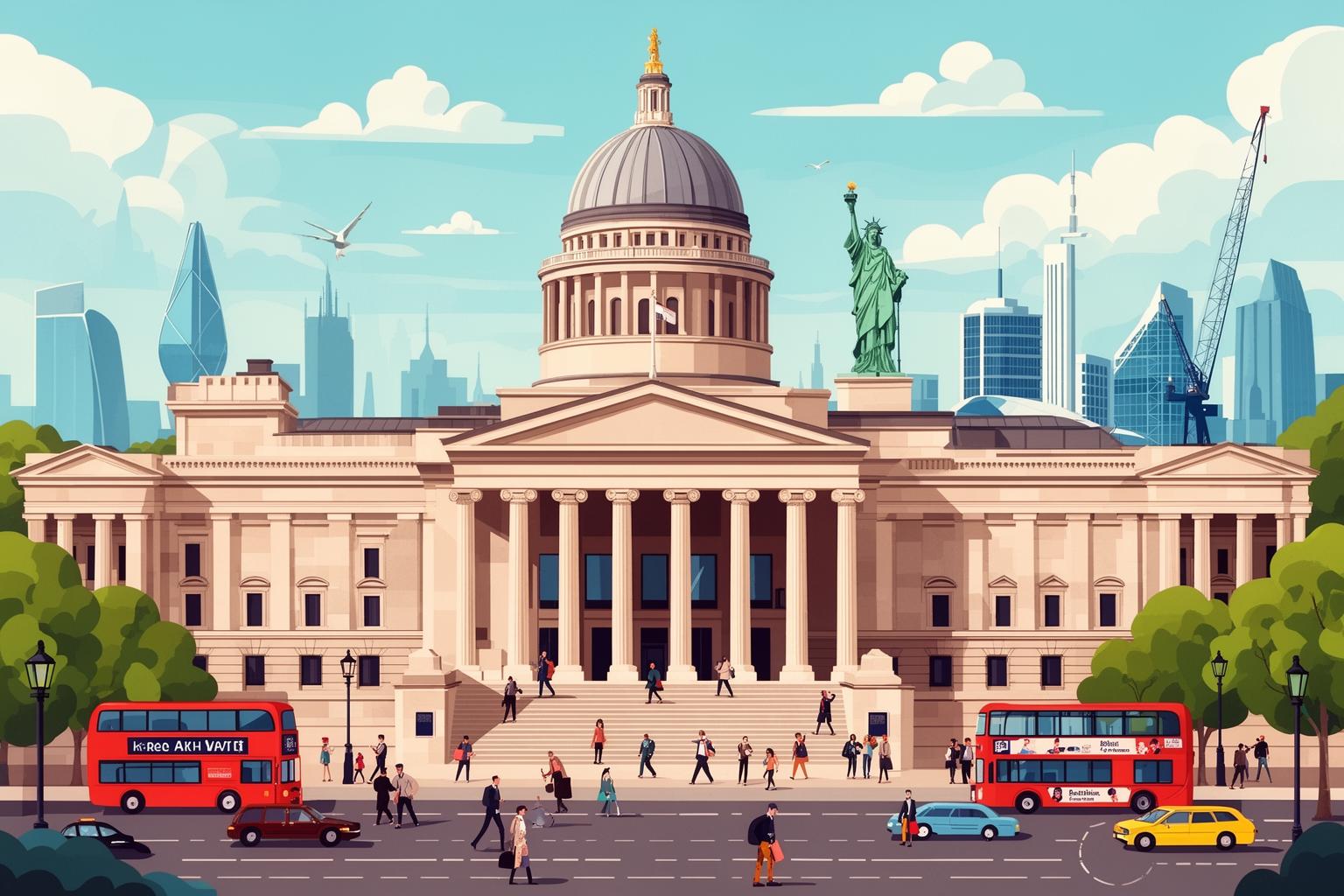
Your journey begins in Bloomsbury, a neighborhood of leafy squares and literary shadows. Virginia Woolf and the Bloomsbury Group once debated art and life on these very streets. As you near the British Museum, the monumental scale of the building prepares you for the enormity of what lies inside. The vast Ionic columns of the facade do more than support a roof; they bear the weight of history itself. Entering feels less like visiting a museum and more like stepping into a pantheon dedicated to human achievement and memory. The atmosphere changes as you pass between those columns. The city’s noise dims, replaced by a quiet anticipation—a collective breath held by thousands of visitors from across the globe, all eager to witness the stories held within.
Once inside, you don’t find a typical lobby. You enter the Queen Elizabeth II Great Court, where Norman Foster’s stunning tessellated glass roof stretches overhead, a dazzling, modern canopy sheltering the historic Reading Room at its center. It’s a space that feels both timeless and futuristic, perfectly embodying the museum itself. Sunlight pours down, illuminating pale stone and the steady flow of people moving in every direction. Here, a choice must be made: the British Museum cannot be conquered in one day. It demands surrender rather than dominance. You cannot see everything. Instead, follow your curiosity, letting it guide you across continents and millennia. My advice? Don’t hurry. Select a region, an era, or a single artifact, and allow its story to unfold fully.
Whispers from Ancient Worlds
Most visitors head straight to the museum’s star attraction: the Rosetta Stone—and for good reason. It sits in a climate-controlled case, always surrounded by a crowd, but the energy around it is undeniable. This slab of dark granodiorite is far more than just a rock inscribed with writing; it is the key that unlocked the civilization of ancient Egypt. Before it was found, hieroglyphs were beautiful but silent pictures. This stone, inscribed in three scripts—hieroglyphic, Demotic, and ancient Greek—gave scholars the ability to hear the pharaohs’ voices once again. Standing before it, you can almost sense the thrill of decipherment, the moment when a lost world began to speak anew. Study the intricate carvings and dense information carefully; it’s a testament to humanity’s urge to record, communicate, and ensure remembrance.
From there, the natural next step is the expansive Egyptian sculpture gallery. Here, you are dwarfed by colossal statues of pharaohs like Ramesses II. They are not only likenesses; they are symbols of divine power, carved with astonishing precision. Their stone gazes have witnessed empires rise and fall. Walking among them is a humbling experience, making you feel both small and transient. Nearby, the rooms with Egyptian mummies offer a more intimate—and perhaps unsettling—encounter with the past. Their ornate sarcophagi, painted with scenes from the Book of the Dead, were vessels for a journey into the afterlife. Seeing the carefully wrapped bodies reminds you these were real people, with lives, loves, and fears, who believed deeply in a world beyond this one. It’s a profound meditation on mortality and humanity’s search for lasting meaning.
The Controversial Beauty of the Parthenon Sculptures
Climbing the stairs, you reach the galleries devoted to ancient Greece, home to one of the museum’s most exquisite and debated collections: the Parthenon Sculptures, often called the Elgin Marbles. The long, sunlit Duveen Gallery was designed specifically for them. Here, the story is one of breathtaking artistry entwined with complex ethics. These friezes and sculptures once decorated the Parthenon in Athens, a temple to the goddess Athena. They depict mythological battles and civic processions with a fluidity and naturalism that transformed art. The bodies of gods and heroes seem to move beneath the marble drapery; horses rear with a muscular tension you can nearly feel. You witness the birth of Western artistic ideals. Yet, you also stand amid a heated cultural debate over the rightful home of these treasures. This conflict adds intellectual and emotional depth to the viewing experience, prompting reflection not only on the art but also on its journey here, issues of ownership, and the meaning of cultural heritage.
Journeys to the East and Beyond
Don’t let the draw of Egypt and Greece prevent you from venturing further. The museum’s collection spans the globe. The Japanese galleries offer a quiet, contemplative refuge. Here, you can admire the fierce elegance of samurai armor, its lacquered plates and silk cords a perfect blend of function and artistry. Lose yourself in the delicate lines of a Hokusai woodblock print, seeing the Great Wave not just as a famous image but as a masterwork of composition and color. These galleries evoke a world that treasures subtlety, precision, and a deep bond with nature.
Nearby, the Sutton Hoo treasure provides insight into the warrior culture of Anglo-Saxon England. Discovered in a buried ship in Suffolk, this hoard of gold, silver, and garnet artifacts is astonishing. The highlight is the iconic Sutton Hoo helmet, ornate and formidable enough to seem borrowed from a fantasy epic. Seeing its reconstruction, you can imagine the powerful chieftain who wore it and the world of mead halls and monsters he inhabited. It is a tangible connection to the myths and legends that underpin English literature, from Beowulf to Tolkien.
Practical Pilgrimage Notes for the British Museum
To truly savor the British Museum, plan your visit carefully. Arrive early, just before opening, to enjoy a rare few minutes in the Great Court before the crowds arrive. Alternatively, consider a Friday evening visit when the museum stays open late; the atmosphere relaxes, and the galleries feel more intimate under artificial light. Don’t treat the museum map like a checklist. Instead, download the audio guide to your phone or simply wander. Some of the most profound discoveries happen when you stumble into less-visited galleries—perhaps the quiet rooms of Roman Britain or the vibrant African textiles collection. For a moment of calm, the upper-level café offers decent coffee and a quieter atmosphere than the bustling Great Court. Most importantly, wear comfortable shoes. The museum is vast, and you will walk miles—not only across stone floors but through the corridors of time itself.
Tate Modern: A Power Plant for the Imagination
From Industrial Giant to Cultural Beacon
After exploring the ancient world, a stroll across the Millennium Bridge offers the perfect transition into the present. This sleek, futuristic structure leads directly to the imposing brick edifice of Tate Modern. The building itself is your first encounter with art. Formerly the Bankside Power Station, a grimy industrial giant that once supplied electricity to London, it now radiates a different kind of power: the raw, provocative, and exhilarating energy of modern and contemporary art. Its transformation symbolizes London’s ongoing evolution, a city that perpetually reinvents itself. The main chimney and the vast Turbine Hall remain integral, embracing their industrial past to create an art venue unlike any other in the world.
Stepping inside, you’re immediately struck by the overwhelming scale. You enter the Turbine Hall, a huge, sloping space that once housed enormous electricity generators. It stands five stories tall and could easily engulf a cathedral. This is where Tate Modern showcases its most ambitious large-scale installations—whether a giant sun, a swing playground, or a floor covered in millions of handcrafted porcelain sunflower seeds. The art here isn’t just observed; it’s experienced with your entire body. The hall reverberates with the footsteps and voices of thousands of visitors, composing a unique urban symphony. It’s a space that encourages curiosity, playfulness, and the chance to see the world from an entirely new perspective.
Navigating the Currents of Modern Art
Tate Modern’s layout is thematic rather than chronological. The galleries spread across the original building, the Natalie Bell Building, and the newer, twisting pyramid of the Blavatnik Building are linked by bridges and walkways, inviting a non-linear journey. Although this may disorient first-time visitors, it also liberates. Instead of a linear progression from Impressionism to Cubism, you might find a Claude Monet hanging beside a contemporary light installation, prompting fresh connections across time and style. The galleries bear titles like “In the Studio” or “Media Networks,” encouraging you to consider the process and context of art, not just its final form.
Here you’ll encounter the giants of the 20th century. Standing before Mark Rothko’s Seagram Murals, you grasp that abstract art is not about nothing; it encompasses everything. The deep, throbbing colors immerse you in a meditative, almost spiritual environment requiring stillness and silence. Turn a corner, and you confront the surreal dreamscapes of Salvador Dalí or the fractured portraits of Pablo Picasso. His “Weeping Woman” captures the raw anguish of the Spanish Civil War in jagged lines and acidic hues. The collection traces the movements that defied conventions: Cubism, Surrealism, Abstract Expressionism, Pop Art—a whirlwind tour of artists grappling with a world transformed by wars, new technologies, and shifting social norms.
The View from the Top and the Vibe of the South Bank
One essential experience at Tate Modern isn’t on the walls. Take the elevator to the viewing level atop the Blavatnik Building. Here, you’re rewarded with a stunning 360-degree panorama of London. The River Thames winds below, St. Paul’s Cathedral looms majestically opposite, and the modern spires of the City of London puncture the skyline. It’s a moment to pause and see the city as a living, breathing masterpiece. Trace the path you’ve walked, observe the bridges linking the city, and appreciate the incredible blend of old and new. The viewing platform is often breezy and bustling, filled with people snapping photos and pointing out landmarks. It’s a joyful, shared experience that reconnects you with the city after your immersion in art.
The area around Tate Modern—the South Bank—is a destination in its own right. It’s a vibrant, creative hub. Upon leaving the museum, you’re welcomed by street performers, food markets, the aroma of roasting nuts, and the sound of skateboarders at the iconic Undercroft. You can stroll along the river past Shakespeare’s Globe, a faithful reconstruction of the original theatre, and the lively Borough Market, a haven for food lovers. The atmosphere is inventive, slightly gritty, and always alive. Visiting Tate Modern isn’t just about the museum; it’s about diving into the cultural heart of contemporary London.
Tips for an Inspiring Tate Modern Visit
Given Tate Modern’s thematic arrangement, it’s best to abandon any plan to experience it chronologically. Instead, pick a map and seek out artists or movements that intrigue you. Even better, spend your first hour exploring without a map—wander freely and allow yourself to be surprised. The collection is so vast you’re bound to discover something that moves, challenges, or delights you. The museum can become very crowded, especially on weekends; a weekday morning offers a quieter, more contemplative visit. If you need a break, the coffee shops on the lower levels are decent, but the true gem is the Terrace Bar on level one of the Blavatnik Building, providing great views in a relaxed setting. Remember, much of the art here is meant to provoke a response. It’s okay if you don’t “get” everything—the goal is to look, think, and feel. That’s the energy this former power station now channels.
The Natural History Museum: A Cathedral to the Natural World
Architecture as an Exhibit
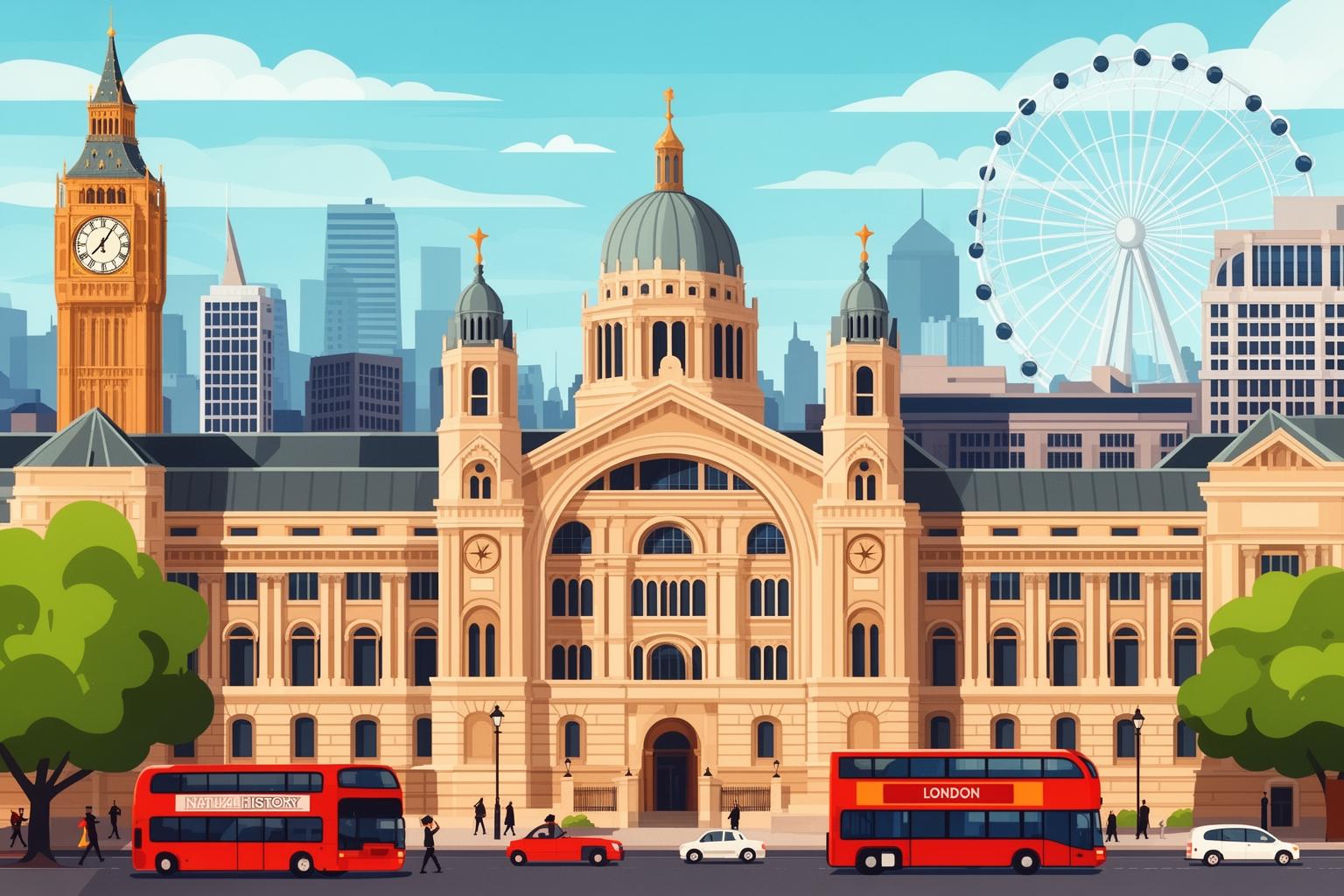
Our final pilgrimage brings us to South Kensington, a neighborhood known for its grand Victorian architecture and cultural landmarks. Here, the Natural History Museum is more than just a home for its collections; it is its very first and most striking exhibit. Designed by Alfred Waterhouse and opened in 1881, the building stands as a masterpiece of Romanesque architecture. Often described as a “cathedral to nature,” the comparison is apt. Its soaring arches, elaborate terracotta facades adorned with animal and plant reliefs, and towering spires evoke the feeling of a place of worship more than a scientific institution. Approaching the museum, you can’t help but notice the meticulous attention to detail—each pillar and archway serves as a lesson in biology and geology. This is a building that showcases its purpose outwardly, celebrating the diversity and beauty of the natural world before you even step inside.
This sense of awe intensifies upon entering Hintze Hall. This grand central nave is one of London’s most breathtaking interior spaces. For decades, it was dominated by “Dippy,” the beloved plaster-cast Diplodocus skeleton. Today, it is ruled by “Hope,” the enormous blue whale skeleton suspended from the ceiling, seemingly swimming through the air. The sight is truly stunning. This whale symbolizes both the grandeur of the natural world and the harm humanity has inflicted upon it, setting a powerful tone for your visit. Light streams through cathedral-like windows, illuminating the arches and the detailed monkey carvings that appear to climb the pillars. The space demands reverence and wonder, reminding visitors of Earth’s incredible story and their own modest place within it.
A Journey Through Earth’s Story
The museum is organized into colored zones, each highlighting a different facet of natural history. The Blue Zone, encompassing Hintze Hall, is home to the dinosaurs and serves as the main attraction for many. Entering the dinosaur gallery feels like stepping into a prehistoric world. The enormous Triceratops skull and the menacing animatronic Tyrannosaurus rex create a thrilling and humbling experience. The gallery wonderfully brings these extinct giants to life, exploring their evolution, environment, and eventual extinction. The sense of wonder extends far beyond just children—it captivates all ages.
In the Green Zone, the focus shifts to the story of life on Earth. Here, the Human Evolution gallery allows you to trace the journey of our species, coming face to face with reconstructed heads of ancient ancestors. It’s a powerful and occasionally unsettling reminder of our deep connection to hominids from hundreds of thousands of years ago. Other galleries in this zone explore insects, plants, and the fragile ecosystems that support life on our planet.
For a different kind of excitement, visit the Red Zone, which highlights Earth’s constant transformations. Experience the raw power of the planet firsthand in the popular earthquake simulator. The highlight of this zone is Earth Hall, reached by an escalator that ascends through a gigantic metallic globe, evoking a journey to the planet’s core. This area is dedicated to geology, featuring an impressive collection of gems and minerals that shimmer with an otherworldly glow. You’ll also encounter volcanic remnants and celestial objects, including meteorite fragments billions of years old—rocks predating Earth itself.
Hidden Gems and Quiet Corners
Like many major museums, the Natural History Museum can be overwhelming. To find respite from the crowds, seek out some of its quieter corners. The Treasures Gallery is a small, dimly lit room housing some of the museum’s most scientifically and historically significant items. Here you can view a first edition of Darwin’s On the Origin of Species, specimens collected by the naturalist himself, and the Archaeopteryx fossil—the crucial “missing link” that elegantly illustrates the evolution of dinosaurs into birds. It’s a tranquil space that invites reflection away from the roar of the T-rex.
Another peaceful spot is the Darwin Centre, a modern extension that functions as a scientific research facility where you can observe scientists at work. The Cocoon building preserves the museum’s extensive entomology and botany collections. Walking through its calm, white corridors, you can glimpse some of the millions of specimens stored in the archives. This behind-the-scenes look serves as a reminder that the museum is not just a display space but a vibrant center of ongoing research and discovery.
For a seasonal delight, visit during winter when an ice rink is set up on the museum’s east lawn. Skating in the evening with the magnificently illuminated facade as a backdrop offers one of London’s most enchanting winter experiences—a perfect way to conclude a day exploring natural wonders.
Navigating the Cathedral of Nature
The Natural History Museum is extremely popular, especially with families. To avoid long queues, it is advisable to book free timed-entry tickets online in advance, particularly during school holidays and weekends. Weekday visits tend to be much quieter. The museum is vast, so it’s best to focus your energy by choosing one or two zones to explore in depth rather than trying to see everything. The main T-Rex exhibit often attracts its own long line, so plan to visit it early if it’s a priority. The museum’s cafes and restaurants can become very busy, so consider bringing your own water and snacks or plan to dine in South Kensington after your visit. As you depart, take a final glance at the building’s facade—every carved creature, from the modest dodo to the fearsome saber-toothed cat, tells part of the epic narrative you’ve just witnessed: the story of life itself.
A Pilgrim’s Final Thought
A visit to these three institutions is more than just a tourist itinerary; it offers a profound education in what it means to be human. You begin at the British Museum, where you piece together the story of our species through the artifacts we crafted and the empires we built. Then you move on to Tate Modern, where you encounter the messy, brilliant, and often confusing tale of our inner lives and the modern world. Finally, you arrive at the Natural History Museum, where you are humbly reminded that the human story is but a brief, singular chapter in the vast, ancient narrative of the natural world. Experiencing all of this without paying a penny for admission is a true gift—an invitation to be curious, to be humbled, and to be inspired. So come, walk these revered halls, and let the stories seep into you. This pilgrimage costs nothing but your time and rewards you with a deeper understanding of the world and your place in it. London’s greatest treasures await, with their doors wide open.