There’s a certain kind of magic that clings to the pages of a beloved book, a whisper of a world so vividly rendered it feels more like a memory than a story. For readers of Orhan Pamuk, that world is almost always Istanbul. It’s a city he hasn’t just written about, but one he has breathed into existence, a sprawling, melancholic, beautiful character in its own right. To walk through Istanbul with his words echoing in your mind is to embark on a pilgrimage, a journey not just through streets and across bridges, but into the very soul of a place, into the heart of what he famously calls hüzün. This isn’t your typical tourist itinerary of grand mosques and bustling bazaars, though you will see them. This is a quest to find the city’s hidden poetry, to trace the footsteps of characters like Kemal and Füsun, to feel the weight of history in a crumbling waterside mansion, and to understand how a place can shape a person, a history, and a Nobel Prize-winning body of work. It’s about peeling back the layers of the modern metropolis to find the quiet, contemplative city of memories that Pamuk has so masterfully preserved in his prose. We’re about to step into the pages, to wander the labyrinth of his imagination, and to discover the living, breathing museum that is Orhan Pamuk’s Istanbul.
For another profound exploration of how a place can be shaped by artistic vision, consider the crystalline world of Colombia’s Salt Cathedral.
The Heart of Hüzün: Understanding Pamuk’s Soul of the City
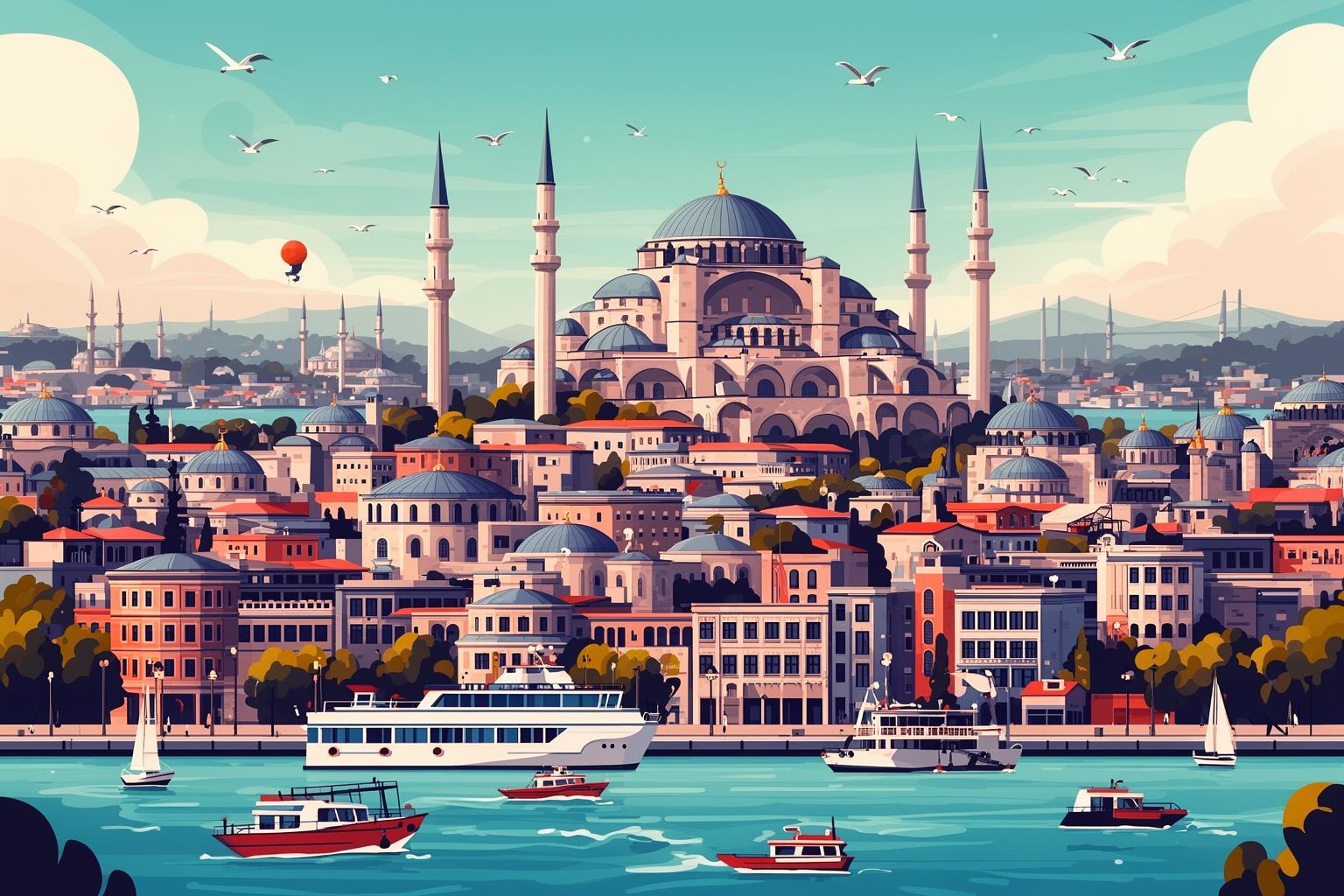
Before you set foot on the cobblestones, you must first grasp a single word. This word is the key to unlocking the entire city as Pamuk perceives it. The word is hüzün. He dedicates a whole chapter to it in his memoir, Istanbul: Memories and the City, and it means much more than the simple English translations of ‘melancholy’ or ‘sadness’. In Pamuk’s Istanbul, hüzün is a collective feeling, a shared, bittersweet spirit that lingers in the air like the morning fog over the Bosphorus. It’s the sensation evoked by watching a solitary ferry glide across grey waters, the sight of crumbling wooden yalis clinging to the shore, the black-and-white photographs of a lost era. It is not a negative emotion, but rather a deep, poetic recognition of loss, the fading splendor of the Ottoman Empire, and the poignant beauty found in imperfection and decay. It’s the smoke from countless chimneys blending with the winter sky, the call to prayer resonating through nearly empty alleyways, the quiet dignity in the faces of the city’s longtime inhabitants. To seek Pamuk’s Istanbul is to seek out hüzün. It means looking beyond the vibrant colors of the Spice Bazaar to notice the shadows in its corners. It means tuning in to the silence that lies between the city’s noise. This feeling will be your guide, leading you to the emotional core of the places you are about to explore. Embrace it, and the city will unveil its secrets to you—not as a tourist destination, but as a living poem.
Nişantaşı: The Bourgeois Cradle of a Nobel Laureate
Our journey begins where Pamuk’s own story started, in the upscale, European-style district of Nişantaşı. This is an Istanbul of broad avenues, Art Nouveau apartment buildings, and chic boutiques featuring international brands. It feels far removed from the winding streets of the old city, and in many ways, it truly is. This neighborhood was where Pamuk was raised, a world he carefully chronicles in Istanbul: Memories and the City. It is a landscape of family dinners, childhood games, and the early awakenings of an artistic spirit, all unfolding under the shadow of Western ambitions and a lingering Ottoman heritage.
The Pamuk Apartments and Childhood Streets
Walking through Nişantaşı is like stepping into the pages of Pamuk’s memoir. He recalls the Pamuk Apartments, the building where his extended family lived on different floors, reflecting the city’s evolving bourgeois lifestyle. Though you cannot enter, you can stand outside and picture a young Orhan gazing out the window, observing the neighborhood’s rhythms, and witnessing the first winter snows quietly covering the city. Stroll down streets like Valikonağı Avenue and Teşvikiye Street. Take in the elegant facades, heavy wooden doors, and intricate ironwork on the balconies. This forms the backdrop of his youth. The atmosphere exudes polished composure, yet if you look carefully, you detect the hüzün. It appears in an older building squeezed between modern glass structures, or in the gaze of an elderly woman peering from a window that has witnessed decades of change. Pamuk writes of his family’s collections—Western furniture and curiosities filling their homes—a motif that blossomed into his masterpiece, The Museum of Innocence. It all began here, in these rooms, on these streets.
Echoes of The Black Book
Nişantaşı also serves as the main setting for one of his most intricate and acclaimed novels, The Black Book. The protagonist, Galip, roams these same streets in a desperate search for his missing wife, Rüya. As you walk, imagine Galip’s journey. The neighborhood shifts from a simple residential area into a maze of signs, symbols, and memories. Every corner, apartment building, and mannequin in a shop window becomes a potential clue. Pamuk uses Nişantaşı to delve into profound themes of identity, memory, and storytelling. He describes the city’s ‘dark’ and ‘secret’ tunnels lying just beneath its modern, Westernized surface. When you’re here, try to see the neighborhood through Galip’s eyes. Slip into a side alley, glance up at the endless rows of windows, and sense the countless hidden stories unfolding behind them. The novel captures the feeling that even in the most familiar places, one can become utterly lost—not physically, but within a maze of meaning and memory.
A Practical Guide to Nişantaşı
Experiencing Pamuk’s Nişantaşı is less about sights and more about immersion. Begin your morning at a local café, perhaps one on Atiye Street, and order a traditional Turkish coffee. Watch the neighborhood awaken. This is a district of routines, where well-dressed residents walk their dogs and head to work. After your coffee, wander freely without a map. Allow yourself to get lost in the grid of streets behind the main avenues. Notice the details: the names of apartment buildings, faded signs of old tailor shops, how light filters through the leaves of plane trees. For a literary touch, find a quiet bookstore and browse its shelves. While the area is known for luxury shopping, the true treasure is the unique atmosphere of this Istanbul life—a place caught between European aspirations and its profound, undeniable history. This is the ideal place to begin your pilgrimage, grounding yourself in the author’s personal history before exploring the worlds he created.
Cihangir and Çukurcuma: The Shrine of Innocent Love
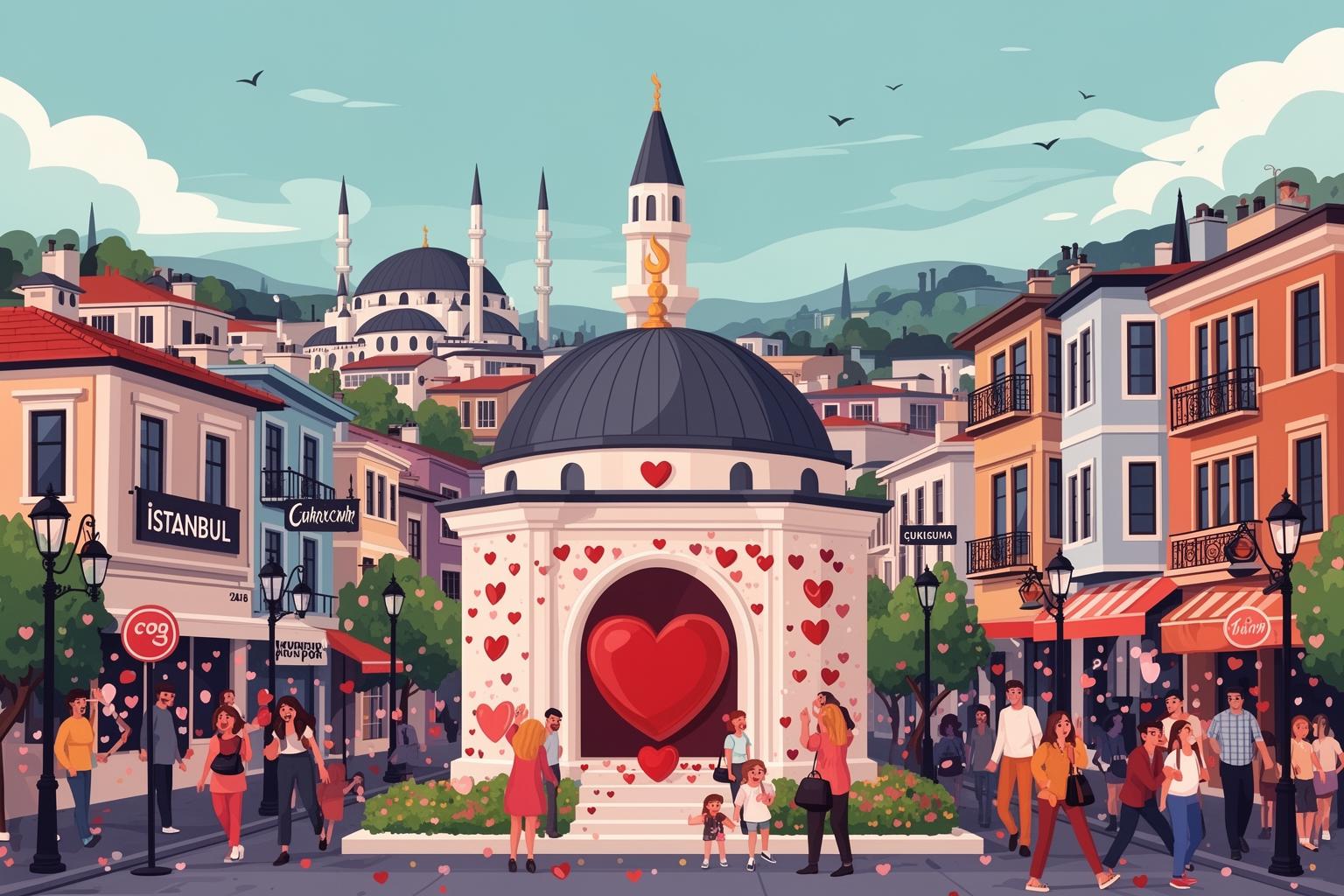
From the polished avenues of Nişantaşı, we descend into the bohemian core of Beyoğlu, to the intertwined neighborhoods of Cihangir and Çukurcuma. Here, the streets narrow, the buildings age, and the atmosphere shifts from upscale elegance to a beautifully artistic disarray. This is sacred ground for any admirer of The Museum of Innocence. It is here that Pamuk carried out his boldest literary feat: he created a real museum, a tangible realization of the one depicted in his novel, transforming a tale of obsessive love into a physical pilgrimage site.
The Museum of Innocence: Where Fiction Turns Tangible
Walking up the quiet, steep street of Dalgıç Çıkmazı and encountering the deep red facade of the Museum of Innocence blurs the boundary between reality and fiction. The experience is breathtaking. Before entering, it helps to know the premise: in the novel, the protagonist, Kemal, collects objects that remind him of his beloved, Füsun. Each item, from a single earring to thousands of cigarette butts, serves as a vessel of memory, a relic of their shared moments. After Füsun’s death, he exhibits them in a museum. And here it stands. The building itself is a narrow, beautifully preserved 19th-century house. Bring a copy of the novel, and your ticket is free; a stamp inside the book serves as your entry pass. This is Pamuk’s first rule: the book and museum are inseparable. Inside, the space is dimly lit and silent, like a sacred place. The collection is displayed in eighty-three vitrines, one for each chapter of the book. You don’t just observe the exhibits; you relive the story. You see Füsun’s yellow shoes, the Meltem Soda bottles they drank from, the cheap cinema tickets from their dates. The most overwhelming display is a vast wall covered with 4,213 cigarette butts smoked by Füsun, each pinned and dated by Kemal. It stands as a striking, almost terrifying tribute to obsession and love. The museum is no gimmick; it is a profound work of art, a meditation on memory, the power of objects to hold our stories, and the delicate, often painful nature of love. The hüzün here is palpable. It is the quiet sorrow of Kemal’s lifelong devotion, a sadness so deep and meticulously documented that it becomes beautiful.
Walking in Kemal’s Footsteps
After leaving the museum, the story continues in the streets outside. The neighborhood of Çukurcuma feels like an extension of the museum’s collection. Renowned for its antique shops, this is where Kemal would have searched for objects that Füsun had touched or seen. Spend hours wandering these streets. The shops are not tourist traps; they are dusty, cluttered treasure troves filled with the cast-off belongings of Istanbul’s past. You’ll find old photographs, forgotten furniture, porcelain dolls, tarnished silver, and countless other items, each whispering a silent story. It feels as if the entire neighborhood is a collective museum of memories. As you walk, you almost sense Kemal beside you, peering into shop windows, his heart aching with longing. The atmosphere is timeless. The pace is slow. Cats nap on windowsills, and shopkeepers sip tea, ready for a lengthy chat. This is not a place to rush; it’s a place to meander, to let curiosity lead you, and to experience the powerful link between objects and emotions at the heart of Pamuk’s work.
The Çukurcuma Experience
To fully enjoy your visit, set aside at least half a day for this area. Visit the Museum of Innocence in the late morning when it is quiet. Take your time with each vitrine; if possible, read the matching passages from the novel. After the museum, resist the urge to rush to a major landmark. Instead, find a small, local çay bahçesi (tea garden) or café. Sit down, order a glass of tea, and simply absorb the neighborhood’s atmosphere. Reflect on the story. Then, start exploring the antique shops. Don’t hesitate to go inside, even if you don’t plan to buy anything; the shopkeepers often have their own stories to share. This neighborhood also includes part of Cihangir, known for its large community of artists, writers, and intellectuals. It’s a place where conversations about art and politics spill from cafés onto sidewalks. In many ways, it is the contemporary cultural heart of the city, making it the perfect physical and spiritual home for Pamuk’s tribute to love and art.
The Bosphorus: The Silver Vein of a Divided City
The Bosphorus is more than just a strait separating Europe and Asia; in Orhan Pamuk’s world, it embodies the city’s soul, serving as its constant, ever-evolving lifeline. Its waters offer both beauty and profound hüzün. The surface reflects the sky, clouds, passing ships, and the city’s entire history of glory and decline. For Pamuk, who grew up in apartments overlooking this majestic waterway, the Bosphorus is a continuous presence—a character that influences the lives of all who reside along its shores.
A Ferry Ride Through Memory
There is no better way to grasp Pamuk’s Bosphorus than by boarding a public ferry. Skip the tourist cruises. Instead, take the local vapur, the city’s workhorse, and travel from Eminönü or Karaköy toward the Black Sea. Find a spot on the open-air deck, purchase a simit (a sesame seed bread ring) from a vendor on board, and simply watch. As the ferry departs the dock, the magnificent skyline of the old city reveals itself behind you. You feel the cool, salty spray on your face and hear the mournful cry of gulls overhead. This is the sensory experience Pamuk so often illustrates. He writes about the dark, turbulent waters in winter, the shimmering silver surface in summer, and the constant flow of tankers, fishing boats, and ferries crossing the strait. The ferry ride is a journey through time. You float on the same waters that once carried the armies of sultans, Venetian merchant ships, and lovers’ rowboats centuries ago. It is a place of transit and reflection—a spot where you are both within the city and observing it from afar, a perspective central to much of Pamuk’s writing.
The Melancholy of the Waterside Mansions
As the ferry heads north, pay close attention to the shorelines. You will see magnificent waterfront mansions called yalis. Some are meticulously restored, gleaming bright white in the sunlight. Yet many others—those that truly capture the essence of hüzün—are in a state of beautiful decay. Their wooden facades are weathered and grey, paint peeling away, sagging under the weight of memories. Pamuk regards these yalis as ghosts of the Ottoman past, symbols of a lost, more refined era. They embody wealth and power that has faded, leaving only a melancholic beauty behind. In Istanbul: Memories and the City, he describes the fires that occasionally ravaged these wooden homes, viewing them not merely as tragedies but as dramatic, theatrical farewells to a bygone time. Look upon them and imagine the lives lived inside, the secrets they keep, the generations that have watched the unchanging flow of the Bosphorus from their windows. Here, the city’s collective sadness is most visible—a grand history quietly crumbling at the water’s edge.
Navigating the Bosphorus Like a Local
For a genuine experience, take one of the main Şehir Hatları (City Lines) ferry routes. The ‘Long Bosphorus Tour’ is an excellent choice, but even a simple trip from Eminönü to Üsküdar on the Asian side offers a powerful sense of the strait’s significance. The best time to ride is late afternoon, during the golden hour. The setting sun casts a warm, ethereal glow on the water and the city’s domes and minarets, creating a truly magical scene. In winter, a ferry ride can feel even more evocative. Grey skies and chilly winds heighten the feeling of hüzün, and you’ll share the boat with locals wrapped in heavy coats, lost in their own thoughts. It becomes a moment of communal introspection—a shared experience of the city’s quiet, contemplative mood. Bring a camera, but also remember to put it down and simply be present. Feel the rhythm of the boat, listen to the water’s sounds, and let the expansive panorama of history and life wash over you.
The Historic Peninsula: Echoes of Sultans and Miniaturists
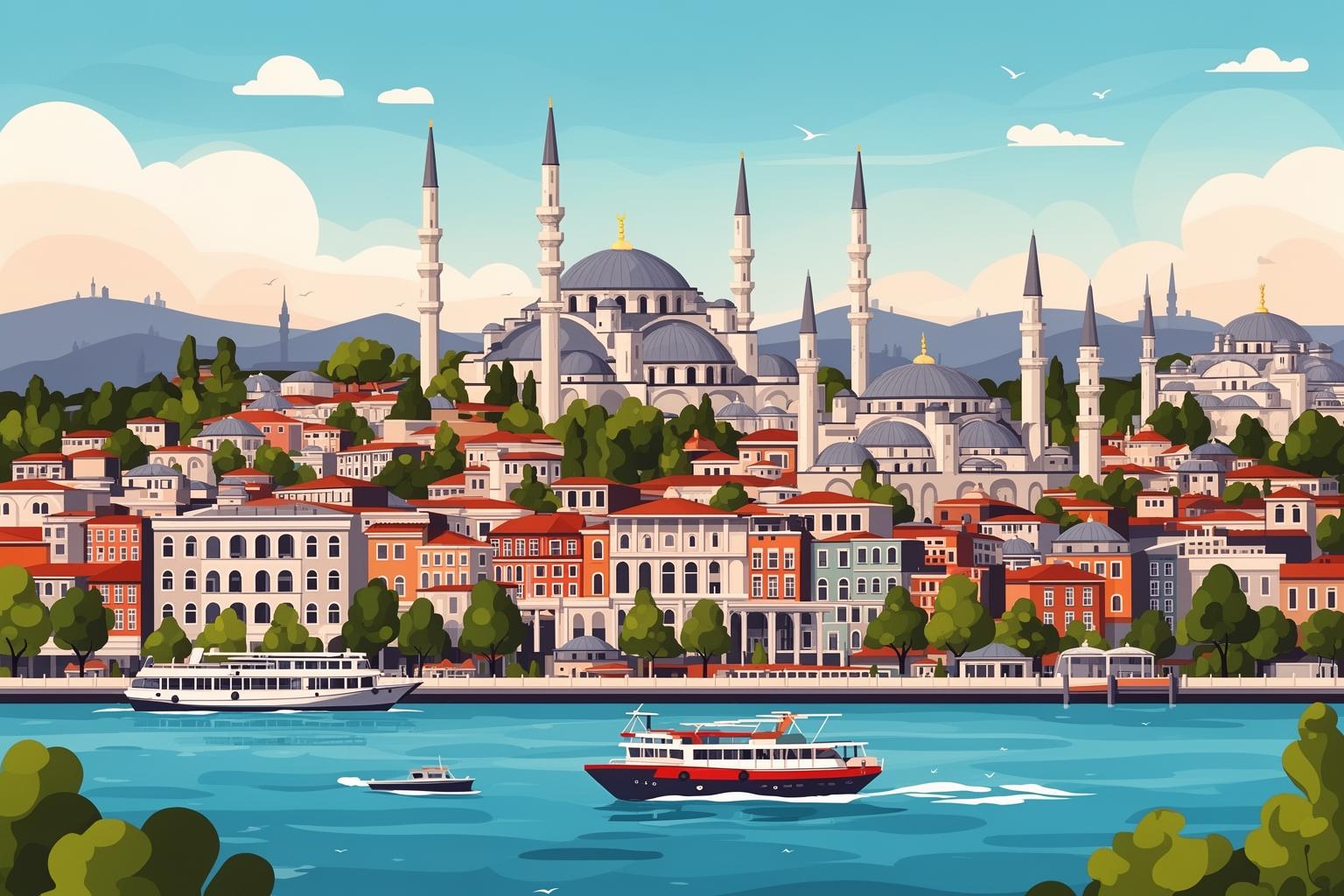
While Pamuk’s personal narrative is grounded in the more modern, European districts, his historical imagination truly comes to life in the ancient heart of the city—the Fatih peninsula, also known as Old Istanbul. This is the land of Topkapı Palace, the Blue Mosque, and the Hagia Sophia. For Pamuk, this area is far more than a tourist attraction; it is a profound reservoir of history, where the whispers of Ottoman ghosts linger in the courtyards, and where the intricate plots of his historical novels took shape.
My Name is Red: The Courtyards of Topkapı Palace
To enter the world of My Name is Red, Pamuk’s brilliant novel about a murder among the Sultan’s miniaturist painters in the late 16th century, you must visit Topkapı Palace. As you pass through its successive gates and into the lush, expansive courtyards, try to imagine it beyond the throngs of tourists. Picture it as a self-contained city, a hub of immense power, art, and deadly intrigue. The novel teems with philosophical debates on art, representation, and the clash between Eastern and Western painting styles. Stroll through the pavilions and envision artists at work in their studios, hunched over manuscripts, grinding pigments, fiercely guarding their secrets. The book’s atmosphere of paranoia and intellectual passion feels entirely credible within these walls. Explore the section housing the imperial treasury and sacred relics, but be sure to pay special attention to the library and the collection of illuminated manuscripts. Here you witness the very style of art for which the novel’s characters lived and died. The intricate detail, vibrant colors, and unique perspectives—a world without shadows—form the visual language of the story. Though the palace no longer serves as a seat of power, its transformation into a museum embodies a form of hüzün, commemorating a magnificent world that has vanished.
A Strangeness in My Mind: The Ancient Streets of a Modern Bozacı
Pamuk’s more recent epic, A Strangeness in My Mind, chronicles the story of Mevlut, a street vendor selling boza (a traditional fermented millet drink) and yogurt in Istanbul from the late 1960s through the 2010s. Mevlut’s journey takes him through the city’s forgotten neighborhoods, documenting its explosive and often chaotic growth. Following his path reveals a different side of the historic peninsula. Venture into the conservative district of Fatih and find the Vefa neighborhood, home to a true Istanbul institution: Vefa Bozacısı. Founded in 1876, this historic shop is an actual place featured prominently in the novel. Step inside and you are transported back in time. The interior remains nearly unchanged, with its tiled walls and marble counters. Order a glass of boza, a thick, mildly sweet and tangy drink traditionally served with a sprinkle of cinnamon and roasted chickpeas. As you sip, picture Mevlut walking the dark streets on a winter night, calling out, “Booo-zaaaa!” His story captures the tension between tradition and modernity, reflecting the struggles of an ordinary man trying to find his place in a city changing at a dizzying pace. Visiting Vefa Bozacısı is not merely about tasting a drink; it is about connecting with a tradition that has endured despite all odds—a quiet act of defiance against the relentless passage of time central to Pamuk’s work.
Exploring Old Istanbul with Pamuk’s Eyes
When visiting the historic peninsula, allow yourself to get lost. The main sites are stunning, but the true Pamukian experience lies in the backstreets. Wander away from Sultanahmet Square into the neighborhoods behind the Grand Bazaar and the Süleymaniye Mosque. Here, you’ll encounter craftsmen in tiny workshops, children playing football in cobbled alleys, and hidden courtyards with ancient trees. This is the living, breathing city that exists alongside monumental history. Pamuk is captivated by this contrast—the way epic history and everyday life intertwine. Look for the details he would notice: a beautifully tiled yet crumbling fountain, a lone cat perched atop the ruins of a Byzantine wall, steam rising from a street vendor’s cart. This is where the city’s hüzün resides, not in grand gestures but in the small, quiet moments of beauty and decay.
Beyond the Page: Living the Pamukian Experience
A pilgrimage through Orhan Pamuk’s Istanbul involves more than simply visiting sites; it requires embracing a particular way of seeing and experiencing the city. It means engaging all your senses and attuning yourself to the frequency of hüzün, memory, and the stories woven into the urban fabric.
The Cuisine of Memory: What to Eat on Your Pilgrimage
In Pamuk’s novels, food often connects to memory and tradition. For him, flavors evoke as much as objects or places do. As you explore, seek out the tastes that populate his world. Begin your day with a simple Turkish breakfast of cheese, olives, tomatoes, and fresh bread, a ritual grounding many of his characters. On the street, enjoy a warm simit while riding a ferry, just as countless Istanbulites have for generations. In the evening, visit a traditional lokanta, a tradesman’s restaurant, where hearty, home-cooked dishes like stewed beans (kuru fasulye) and rice are served. This food represents the everyday city and echoes the life of characters like Mevlut. And naturally, you must drink tea. Turkish tea, served in small, tulip-shaped glasses, fuels the city. It is the drink of conversation, contemplation, and waiting. Sitting in a tea house, watching the world pass by, may be the most Pamukian activity you can undertake. It is in these quiet moments of observation that the city truly speaks to you.
Capturing Hüzün: A Photographic Journey
Pamuk’s memoir Istanbul serves as much as a visual record as it does a written one, featuring black-and-white photographs by artists like Ara Güler. These images embody the visual essence of hüzün. As you travel, think like a photographer searching for this mood. Look for evocative light, especially in early morning or late evening. Fog and rain are not obstacles; they are gifts that transform the city into a Pamukian dreamscape. Focus on textures: peeling paint, crumbling stone, wet cobblestones. Frame solitary figures against the grand city backdrop—a lone fisherman on the Galata Bridge, a single passenger on a vast ferry. Consider shooting in black and white to remove color distractions and emphasize form, shadow, and emotion. Your aim is not to capture a perfect postcard but to convey a feeling—the deep, melancholic soul of the city that Pamuk has shared with the world.
The Sounds of the City
Close your eyes and listen. The soundscape of Pamuk’s Istanbul is a rich symphony. There is the five-times-daily ezan, the call to prayer echoing from minarets across the city, both a spiritual summons and a temporal marker. There are the deep, resonant horns of ferries and massive container ships moving along the Bosphorus, sounds that speak of travel, distance, and the city’s ties to the wider world. There is the clatter of backgammon pieces and the clinking of tea glasses in cafes. There is the murmur of a thousand conversations in numerous languages in the Grand Bazaar. Beneath it all lies a certain quietness, a hush found in a hidden courtyard or a deserted alleyway. Attuning yourself to these sounds adds another dimension to your experience, drawing you deeper into the world Pamuk so carefully portrays.
A Nobel Laureate’s Legacy: Pamuk’s Place in Modern Turkey
To understand Orhan Pamuk’s Istanbul fully, one must also grasp his often complex and courageous role as a public intellectual in modern Turkey. His work transcends mere nostalgia for the past; it offers a profound and frequently critical exploration of his country’s identity, politics, and its ongoing tension between tradition and modernity, East and West. Pamuk has never shied away from controversial subjects, which has earned him both international acclaim, including the 2006 Nobel Prize in Literature, and criticism from some in his homeland. His novels are more than simple stories; they serve as interventions in a national dialogue about history and memory. When visiting the Museum of Innocence, you are not merely viewing a collection of objects from a novel; you are witnessing a powerful statement on the significance of personal stories and memories in a nation where official histories often dominate. His work gives voice to the city’s melancholy, contradictions, and overlooked corners, challenging singular narratives and celebrating the rich, intricate fabric of individual lives. This pilgrimage, therefore, is also a journey into the core of contemporary Turkish culture, a culture still wrestling with the very questions of identity and soul that Pamuk so eloquently addresses in his art.
Final Reflections: Finding Your Own Istanbul Story
To explore Istanbul through the lens of Orhan Pamuk is to gain a fresh perspective. You start to perceive the city not merely as a collection of monuments, but as a vast, living archive of stories. You notice the hüzün in a rain-streaked window, the weight of history in a crumbling wall, and the enduring power of love in a group of seemingly ordinary objects. Yet, the real magic of this journey lies not only in visiting the places Pamuk described; it’s in what follows. It’s about using his viewpoint as a springboard to uncover your own connections to this remarkable city. Wander into a neighborhood he never mentioned. Chat with a shopkeeper in a small store. Sit by the Bosphorus and quietly watch the water, allowing your own thoughts and memories to arise. Pamuk’s greatest gift is that he teaches you how to see Istanbul, how to read its streets like a story, and how to cherish its deep, bittersweet beauty. You may have come seeking his narrative, but if you truly immerse yourself, you will depart with your own story—a personal memory of the city’s spirit that will linger long after you have left its shores.