In the grand tapestry of Japan, some cities resonate with the clang of samurai swords, while others pulse with the relentless energy of futuristic innovation. But Matsuyama, the serene capital of Ehime Prefecture on the island of Shikoku, offers a different kind of music. It’s a city that hums with the gentle rhythm of a turning page, a place where the echoes of literary giants linger in the steam of ancient hot springs and the rattle of old-fashioned streetcars. To journey here is to step not just into another city, but into a story—one penned over a century ago yet still vibrantly alive. This is the world of Natsume Soseki, one of Japan’s most celebrated novelists, and his seminal work, Botchan. It is a landscape where history isn’t just observed in museums; it’s felt in the warm waters of Dogo Onsen, seen from the majestic heights of Matsuyama Castle, and tasted in the sweet citrus that perfumes the air. For the literary pilgrim, the curious historian, or the traveler seeking a more profound connection with Japan’s Meiji era, Matsuyama is not merely a destination; it is a dialogue with the past, a pilgrimage to the heart of a story that has captivated a nation.
For those drawn to the literary echoes that imbue Matsuyama, Soseki’s literary legacy offers an enriching extension of the city’s time-worn charm.
The Grand Dame of Onsen: Dogo’s Living History
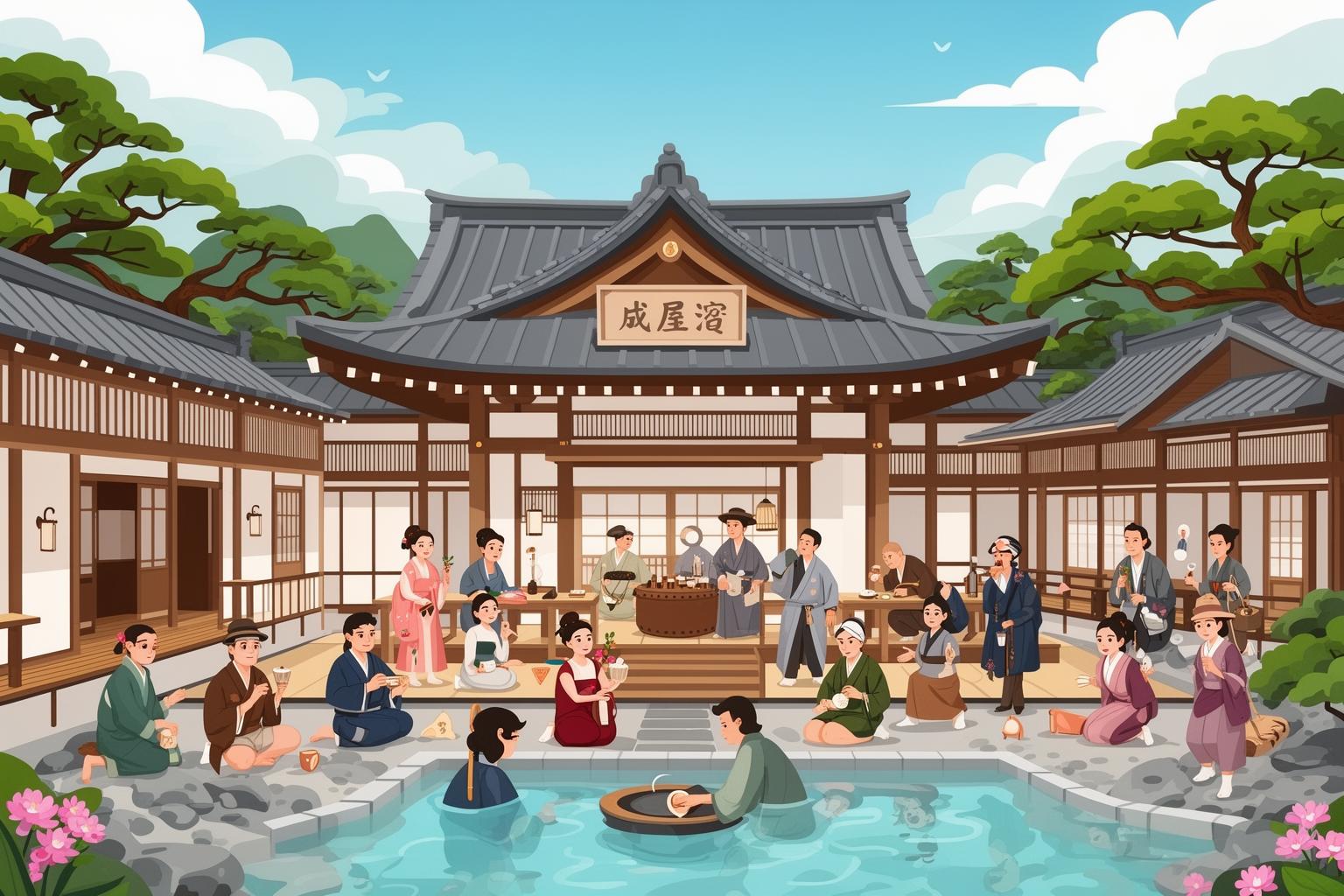
At the spiritual and literal core of Matsuyama stands Dogo Onsen, a name spoken with reverence across Japan. Its centerpiece, the Dogo Onsen Honkan, is more than just a public bathhouse; it is a national treasure, a labyrinthine wooden marvel of Meiji-era architecture that seems to have emerged straight from a folkloric story. With a history spanning over a thousand years, it is arguably the oldest hot spring in the nation, a place where legends of healing herons and ancient emperors blend with the rising steam. The current structure, a three-story wonder of interlocking passageways, steep staircases, and intricate woodwork, was completed in 1894 and quickly became a symbol of Japan’s modernization, fusing traditional aesthetics with a bold, almost chaotic grandeur. Crowning its roof, the Shinrokaku, a red-glass drum tower, chimes the time, its resonant tones marking the passage of moments within this timeless sanctuary. Its complex, multi-tiered design and deep balconies are so evocative that they are widely believed to have inspired the fantastical bathhouse in Studio Ghibli’s beloved film, Spirited Away. Standing before it, one can almost envision the spirits and gods from that animated world arriving for their celestial rest.
Entering the Honkan is to partake in a ritual honed through generations. After exchanging your modern clothes for a simple cotton yukata, you walk along polished wooden floors, following the gentle flow of bathers toward the pools. The main bathing hall, the Kami-no-Yu, or “Bath of the Gods,” is a grand space of carved granite and warm water, alive with the soft splashes and murmurs of its guests. For a more private experience, the Tama-no-Yu, or “Bath of the Spirits,” offers an intimate setting with walls clad in exquisite Aji stone. But the experience extends beyond the water. It is in the moments afterward, when you retreat to the communal tatami rest areas on the second or third floor. Here, with windows open to the breeze, you are served a simple cup of tea and a local sweet, often Botchan dango, a skewer of three colored mochi balls named after Soseki’s novel. It is in this tranquil pause, clad in your yukata and gazing out over the bustling town below, that you truly sense the spirit of Dogo Onsen—a place of rest, reflection, and deep connection to history.
In the Footsteps of ‘Botchan’: Soseki’s Matsuyama
While Dogo Onsen boasts an ancient history, its contemporary identity is deeply intertwined with Natsume Soseki. In 1895, Soseki arrived in Matsuyama to teach English at the local middle school. His experiences—the frustrations of a Tokyo intellectual in a provincial town, his conflicts with students and colleagues, and his frequent visits to Dogo Onsen—served as the foundation for his hugely popular 1906 novel, Botchan. The book offers a satirical, humorous, and affectionate portrayal of Meiji-era Japan, transforming Matsuyama into a literary landmark. Today, the city cherishes this heritage with playful and sincere admiration, inviting visitors to step directly into the story’s world.
A Journey Through Time on the Botchan Train
One of the most charming ways to connect past and present is a ride on the Botchan Ressha, or Botchan Train. A diesel-powered replica of the original light steam locomotives that once chugged through the city during Soseki’s era, this quaint train links the city center with the Dogo Onsen area. The journey feels theatrical. Conductors dressed in period uniforms operate the manually-run engine on a turntable at the route’s end, while the rhythmic clatter and sharp whistle evoke an era of significant societal change. Though brief, the ride sets the perfect scene, turning a simple trip into a narrative experience. By the time you reach Dogo Onsen station, you feel less like a tourist and more like a character stepping into Soseki’s world.
The Whimsical Heartbeat of Dogo
Just outside Dogo Onsen station, the Botchan Karakuri Clock stands as a playful homage to the novel. Every hour, this tall mechanical clock springs to life. As music swells, panels part and miniature figures from Botchan emerge, reenacting scenes from the story. The clock’s performance attracts delighted crowds of all ages, from young children to elderly residents. It is a testament to how deeply the novel permeates the city’s identity—not as a dusty classic, but as a vibrant, celebrated piece of local folklore. Nearby, the Dogo Hayakara Dori shopping arcade welcomes visitors with a variety of traditional souvenir shops offering local crafts and sweets, including the ever-popular Botchan dango, letting you literally savor the story.
A Friendship Forged in Ink: Soseki and Shiki
Soseki’s stay in Matsuyama was also marked by his close friendship with another literary great, Masaoka Shiki. A Matsuyama native, Shiki is honored as one of the four great masters of haiku and credited with revitalizing the form for the modern era. During Soseki’s year in the city, the two friends lived together briefly at a residence called Gudabutsu-an. Their time was filled with passionate literary discussions and creative collaboration. To fully understand Matsuyama’s literary spirit, one must appreciate this shared legacy. The Shiki Memorial Museum, a modern and comprehensive facility near Dogo Park, provides deep insight into his life, his battles with illness, and his profound influence on Japanese poetry. For a more personal glimpse, visitors can explore Sikido, a faithful reproduction of his family home, where the atmosphere is thick with the quiet intensity of poetic creation. Visiting these sites adds depth to the pilgrimage, revealing Matsuyama not just as the backdrop for one famous novel, but as a forge of Meiji-era literary innovation.
Beyond the Literary Trail: The Soul of a Castle Town
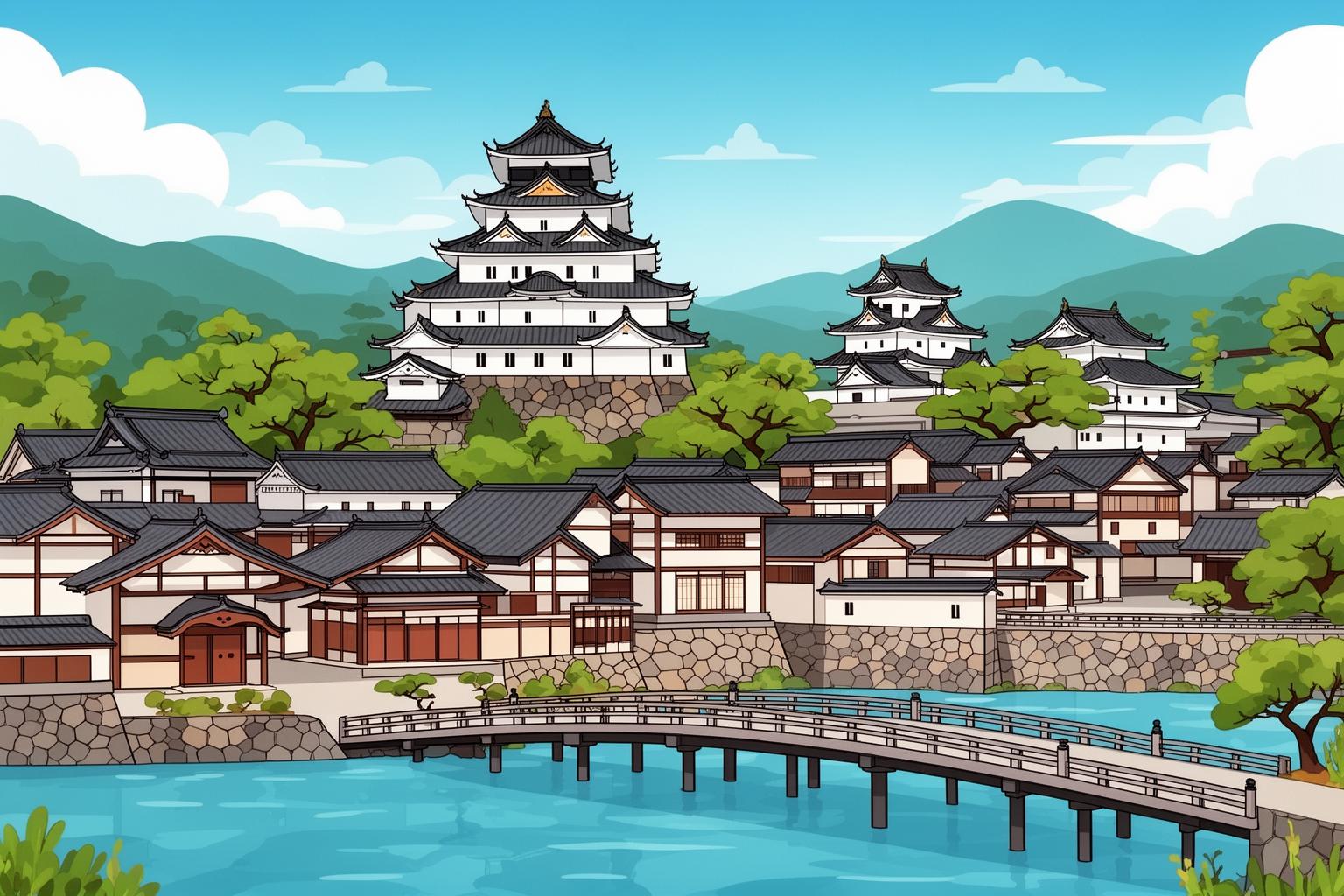
Matsuyama’s identity is multifaceted, and beneath its literary renown lies the stoic spirit of a feudal castle town. To truly appreciate the city, one must look upward—to the majestic keep of Matsuyama Castle, boldly perched atop Mount Katsuyama. This castle is one of only twelve in Japan to have preserved its original keep through the post-feudal era, making it a rare and invaluable architectural treasure.
The Unconquered Fortress: Matsuyama Castle’s Silent Watch
The journey up to the castle is an experience in itself. You can take a leisurely ride on a modern ropeway or choose the unique charm of a single-person chairlift, which gently glides you up the forested slope with your feet suspended just above the ground. Once inside the castle grounds, the fortification’s scale is striking. The sprawling complex of turrets, gates, and stone walls was built for defense, and its intricate design is a masterful example of feudal military architecture. The main keep, or tenshu, is an impressive three-story structure. Inside, its original wooden beams and steep staircases creak underfoot, whispering the history of the Matsudaira clan who ruled from this vantage for centuries. The climb to the top floor is rewarded with a stunning 360-degree view. From here, the entire city unfolds below, the Seto Inland Sea sparkles in the distance, and the Dogo Onsen district is nestled in a corner of the plain. This panorama offers a powerful sense of place and perspective, linking the city’s literary landmarks with its deeper feudal heritage.
The Flavors of Ehime: A Culinary Coda
A visit to Matsuyama is incomplete without savoring the flavors of Ehime Prefecture. The region is nationally renowned for its citrus, especially mikan (mandarin oranges), and the city abounds with shops offering fresh fruit, juices, and citrus-infused sweets. However, the region’s signature dish is tai-meshi, or sea bream with rice. The dish has two distinct regional variations. In central Ehime, including Matsuyama, it typically features a whole sea bream cooked with rice in an earthenware pot. The southern style uses fresh sea bream sashimi marinated in a flavorful sauce of soy, egg, and dashi, poured over hot rice. Sampling both is a delightful way to explore local culinary traditions. Another must-try snack is jakoten, a rustic, savory patty made from ground local fish and deep-fried. It offers a simple, authentic flavor of the Setouchi region.
A Traveler’s Guide: Getting Around Matsuyama
Reaching Matsuyama is easy. The city is served by Matsuyama Airport, with frequent flights from Tokyo and other major Japanese cities. Alternatively, it is accessible via the JR Yosan Line from Okayama on Honshu, the main island. Once in the city, the most charming and efficient way to get around is the extensive streetcar network operated by Iyo Railway. An all-day pass represents excellent value for visitors aiming to see the major sights. It’s important to note that the Dogo Onsen Honkan is currently undergoing a multi-year preservation and restoration project. While the main building remains partially open, access may be limited. However, this creates a wonderful chance to explore two striking annexes: the Dogo Onsen Asuka-no-Yu, a stunning modern bathhouse inspired by the Asuka period with open-air baths and replicas of ancient art, and Tsubaki-no-Yu, a more modest, beloved local bathhouse known for its serene atmosphere. Visiting both offers a richer appreciation of Dogo’s enduring onsen culture. The best times to visit are spring, when cherry blossoms frame Matsuyama Castle in vibrant pink, and autumn, when fall foliage provides a crisp, colorful backdrop for your explorations.
The Living Narrative of Matsuyama
Leaving Matsuyama feels like being let in on a secret. This city wears its history not as a monument, but as a cozy garment. Here, the past is never confined behind glass cases; instead, it is a story told and retold every day—in the cheerful chime of the Botchan clock, the hiss of steam at Dogo Onsen, and the rhythmic click-clack of trams running through the city’s veins. Although Natsume Soseki captured its spirit in Botchan over a century ago, Matsuyama’s story continues to be written by all who stroll its streets, climb its castle walls, and soak in its legendary waters. It is a city that beckons you to slow down, listen intently, and discover your own story within its gentle, enduring rhythm. For travelers seeking more than just sights, Matsuyama offers a rare and beautiful gift: the chance to step inside a living work of art that is vibrant and alive.