
To read Isabel Allende is to be swept away on a current of memory, magic, and monumental history. Her novels are not just stories; they are worlds, built from the vibrant soil of her own experiences, populated by ghosts of the past and resilient spirits of the present. Allende, a master weaver of tales, stitches together the personal and the political, the mundane and the magical, creating a literary tapestry that stretches across continents and generations. But these worlds, as fantastical as they sometimes seem, are deeply rooted in real places. They carry the scent of Chilean jasmine, the sting of political exile in Venezuela, and the cool, creative mist of the San Francisco Bay. To journey through the landscapes of Isabel Allende’s life is to walk through the pages of her books, to understand the very heart of her storytelling. This is more than a trip; it’s a pilgrimage for the soul, a chance to connect with the powerful forces of love, loss, and survival that she so brilliantly illuminates. We begin our journey in the country that is the undeniable soul of her work, the long, narrow stretch of earth that gave birth to the Trueba family and the enduring spirit of her most iconic characters: Chile.
This literary pilgrimage, connecting a writer’s life to their fictional worlds, is a journey you can also take by exploring the streets of Orhan Pamuk’s Istanbul.
The Soul of the Story: Santiago and the Chilean Heartbeat
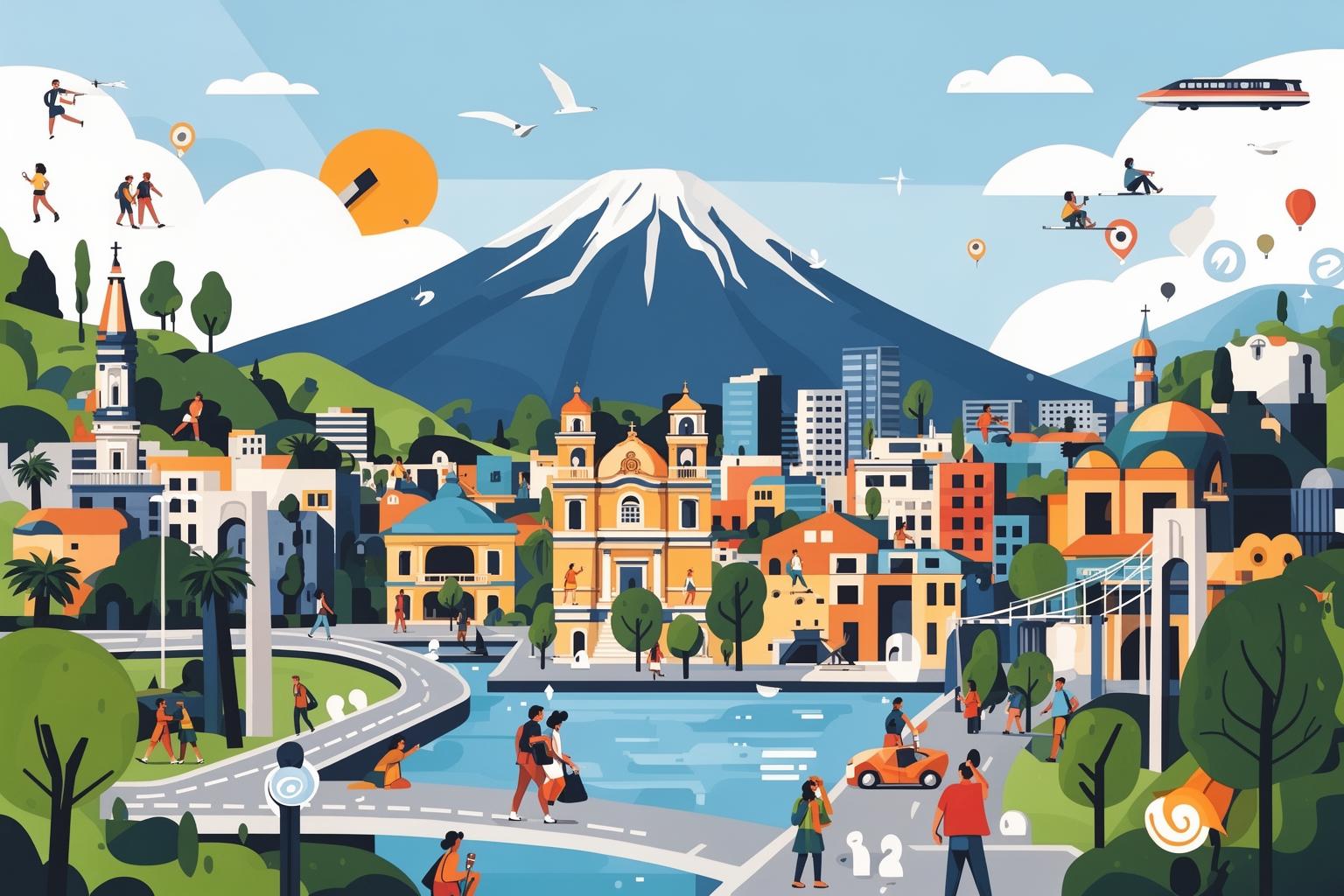
Every story has a heartland—a place of origin from which all narratives flow. For Isabel Allende, that heartland is unquestionably Chile. It serves as the backdrop for The House of the Spirits, the ghost that haunts her characters in exile, and the treasured memory she reconstructs with fierce, loving detail. To truly understand her work, one must first breathe in the air of Santiago, a city of contrasts nestled beneath the snow-capped Andes, where colonial elegance meets bustling modernity and the echoes of a turbulent political past resonate in every plaza.
Santiago’s Living Ghosts: Following the Footsteps of the Trueba Clan
Strolling through Santiago feels like stepping into a living, breathing Allende novel. The city itself seems like a character—proud, wounded, resilient, and full of secrets. You don’t need a specific address to sense the spirit of the Trueba family; their presence lingers in the grand, slightly faded architecture of the historic barrios and the passionate debates spilling out of cafes. It is a city where the past is never truly past, a central theme in Allende’s sagas.
The Elegant Echoes of Barrio París-Londres
Make your way to the small, cobblestoned triangle of Barrio París-Londres, a pocket of European grandeur tucked away from the city’s main thoroughfares. Here, the ornate facades, wrought-iron balconies, and quiet courtyards evoke the aristocratic world of Esteban Trueba’s political ambitions. The architecture feels cinematic, the perfect setting for the family’s dramatic rises and falls. It’s easy to picture a young, ethereal Clara del Valle drifting through these streets, her clairvoyant gaze fixed on a future only she could foresee. The neighborhood also carries a heavy history. During the Pinochet dictatorship, several buildings here were used by the secret police as detention and torture centers. This duality—beauty masking pain, elegance haunted by tragedy—is quintessential Allende. It embodies the essence of magical realism, where the beautiful and the terrible coexist, often within the very same space.
Plaza de Armas: The City’s Grand Stage
Every great family saga needs a public square, a place where personal destinies intersect with the sweeping arc of history. In Santiago, this is the Plaza de Armas. It is the city’s vibrant heart, a mosaic of life surrounded by the Metropolitan Cathedral, the Central Post Office, and the Royal Court Palace. Spend an afternoon here, and you’ll witness the city’s entire story unfolding. Elderly men play chess with intense focus, artists sell paintings of the vivid Chilean landscape, and families gather beneath the shade of palm trees. This is where revolutions were planned, victories celebrated, and national tragedies mourned. You can feel the heavy weight of history bearing down on Allende’s characters, a reminder that their individual lives are inseparably linked to the fate of their country. It’s a place to sit, observe, and absorb the complex soul of the city she so masterfully captures.
Valparaíso’s Poetic Chaos: A Muse of Magical Realism
While Santiago provides the historical and political foundation of Allende’s work, the coastal city of Valparaíso feels like the living embodiment of her magical, whimsical spirit. Just a short trip from the capital, this UNESCO World Heritage city is a chaotic, beautiful labyrinth cascading down steep hillsides toward the Pacific Ocean. It is a city beloved by poets—most famously Pablo Neruda—and its surreal, dreamlike quality deeply resonates with Allende’s narrative style.
Ascending the Cerros: A Maze of Color and Creativity
Valparaíso is not a city to be simply seen; it’s a city to be experienced. The best way to explore is to relinquish any sense of direction and embrace the joy of getting lost. Ride one of the historic ascensores (funiculars) that creak their way up the impossibly steep cerros (hills). As you ascend, the city reveals itself below in a riot of color. Houses painted in every imaginable hue cling to the cliffs, connected by a dizzying network of winding staircases, hidden alleys, and narrow footpaths. The air is heavy with the scent of sea salt and the sound of distant foghorns. Every turn unveils a new piece of vibrant street art, a quirky café, or a breathtaking view of the harbor. This is a city where the boundary between reality and imagination blurs. Its seemingly improbable construction—defying gravity—is a physical manifestation of magical realism. Here, you wouldn’t be surprised to see a green-haired woman fly by, a common image in Allende’s world.
The Port’s Gritty Soul
Down at the port, the atmosphere changes. The bohemian artistry of the hills gives way to the gritty, working-class energy of a bustling seaport. The clang of shipping containers, the calls of dockworkers, and the ever-present squawk of gulls compose a powerful, industrial symphony. This contrast between the ethereal, artistic world of the cerros and the raw, tangible reality of the port perfectly reflects the dynamic in Allende’s novels. Her characters are often dreamers and mystics, yet their lives are firmly rooted in the harsh realities of labor, poverty, and political struggle. Valparaíso contains both worlds—a city of poets and sailors, dreamers and workers—existing together in beautiful, chaotic harmony.
The Venezuelan Exile: Writing to Remember
In 1973, the military coup in Chile permanently changed the nation’s history as well as Isabel Allende’s life. With her family linked to Salvador Allende’s overthrown government, she found herself on a list of potential targets. Two years later, she fled with her family, embarking on a thirteen-year exile in Venezuela. This time of profound loss and displacement became the crucible in which her literary career was shaped. The physical distance from her homeland, paradoxically, enabled her to view it—and its stories—with renewed and powerful clarity.
Caracas: A City of Refuge and Longing
In the 1970s, Caracas was a bustling, oil-rich metropolis, a world apart from the politically fractured Santiago she had left behind. It provided safety and an opportunity to rebuild, but for Allende, it was also a place of deep sadness and a persistent, aching sense of being unmoored. She worked as a journalist and in school administration, yet the experience of being a desterrada—an exile—felt like a heavy burden. This emotional terrain—the sense of being an outsider looking in, the constant pull of a home she could not return to—is a strong undercurrent in much of her work, especially in characters adrift in foreign lands.
The Letter That Became a Legend
It was in Caracas, in 1981, that the defining moment of her literary journey took place. Upon learning that her beloved grandfather, still living in Chile, was dying, she began writing him a letter. She wrote to share the stories he had always cherished—the tales of their eccentric family, secrets and scandals, triumphs and tragedies. She wrote to preserve a world she feared was slipping away. However, the letter grew and grew, spilling out night after night at her kitchen table, fueled by memory, imagination, and a desperate need to reclaim her roots. The letter was never sent. Instead, it transformed into the manuscript for The House of the Spirits. Thus, Venezuela is not merely a footnote in her biography; it is the birthplace of her voice as a novelist. It was the quiet, distant space that allowed the noisy, vibrant, and painful memories of Chile to crystallize into a literary masterpiece. To understand Allende, one must grasp the profound power of exile—how it can turn nostalgia into art and longing into legacy.
A Northern California Renaissance: New Roots, New Stories
A trip to San Francisco in the late 1980s to promote her work opened an unexpected new chapter in Isabel Allende’s life. She fell in love, remarried, and made her home in Marin County, just across the Golden Gate Bridge. This transition from the passionate, politically charged environment of Latin America to the serene, progressive, and misty landscape of Northern California marked a profound change in both her life and writing. Here, she discovered a different kind of magic, a fresh sense of belonging, and the space to delve into deeply personal themes of love, loss, and healing.
Sausalito’s Bay Vistas: A Sanctuary for the Soul
Her longtime residence in Sausalito is a charming town that slopes down a hillside to meet the waters of Richardson Bay. It is a place of breathtaking views, where the San Francisco skyline glimmers in the distance and sailboats glide silently over the water. The atmosphere exudes creative calm, a refuge for artists, writers, and free spirits. This peaceful, misty setting provided a striking contrast to the turbulent landscapes of her earlier life and work.
The Creative Energy of the Waterfront
Strolling along the Sausalito waterfront, past art galleries, cozy cafés, and well-known houseboat communities, one senses calm and endless possibilities. The fog rolling in regularly from the Pacific, enveloping the hills and softening sound, enhances the town’s mystical aura. This environment nurtured some of her most introspective and personal works. It was here she wrote Paula, the poignant memoir about her daughter’s illness and passing. The quiet reflection offered by the bay, accompanied by the gentle lapping of water against the shore, forms a fitting backdrop for such a profound meditation on grief and memory. While her stories continued to feature spirits and strong women, the Californian setting introduced a new emotional depth to her prose, blending her Latin American roots with the introspective, nature-infused ethos of the West Coast.
The Isabel Allende Foundation in San Rafael: A Legacy of Love
A short drive from Sausalito, San Rafael hosts the Isabel Allende Foundation. This is not a typical tourist spot, but its presence is a powerful landmark in her personal geography. Established in honor of her daughter Paula, the foundation is devoted to supporting and empowering women and girls, echoing the central themes throughout her work. It embodies her belief in the strength and resilience of women. The foundation transforms the private sorrow detailed in Paula into public action, creating a legacy of hope and empowerment. Its location, nestled within the community she has called home for decades, adds another dimension to a literary pilgrimage, linking the fictional heroines of her novels with the real-world impact of her advocacy.
The Fusion of Cultures
The Bay Area is a global crossroads, a melting pot of cultures, ideas, and cuisines. This multicultural setting has influenced Allende’s later work. Novels such as The Japanese Lover and A Long Petal of the Sea seamlessly move between continents and communities, exploring themes of immigration, identity, and the forging of new homes in new lands. Her own experience as a Chilean immigrant in California gave her the insight to write with deep empathy about the challenges and beauty of cultural fusion. Exploring the Bay Area’s diverse neighborhoods—from the vibrant Mission District in San Francisco to the quiet suburbs of Marin—reveals the world that informs the broad, global perspective of her recent novels.
Fictional Worlds, Real Inspirations: A Traveler’s Guide to Allende’s Imagination
While Chile and California serve as the main anchors of her life, Isabel Allende’s literary landscape reaches far beyond her personal geography. Her boundless imagination, energized by careful research, transports readers to the depths of the Amazon rainforest, the dusty roads of colonial California, and the bustling streets of 19th-century New York. For the literary traveler, these settings present a unique chance: to explore real places seen through the enchanting lens of her storytelling.
The Amazon: Pursuing the City of the Beasts
In her young adult series starting with City of the Beasts, Allende immerses readers in the heart of the Amazon rainforest. This world is populated by mythical creatures, powerful shamans, and ancient traditions endangered by the modern world. Though the “People of the Mist” are imagined, the rainforest itself is vividly and authentically depicted. She conveys the overwhelming sensory experience of the jungle: the stifling humidity, the chorus of unseen animals, the sensation of being a small part of a vast, ancient ecosystem. To visit the real Amazon—in Brazil, Peru, or Ecuador—with Allende’s story in mind is to view the jungle not just as a natural marvel but as a realm of deep magic and mystery. A journey down the Amazon River becomes a quest for the elusive, giant sloth-like Beasts, where every shadow in the dense canopy might conceal a playful monkey or the wise gaze of a shaman.
Zorro’s California: The Origin of a Legend
Allende’s novel Zorro is a swashbuckling origin tale, a masterful reimagining of the legendary hero. To write it, she delved into the history of early 19th-century California, when the region was a remote frontier of the Spanish Empire. Her story unfolds amid colonial missions, vast ranchos, and a complex social order of Spanish aristocrats, native peoples, and mestizo workers. Today’s traveler can still connect with this history. Visiting the California Missions, especially in places like San Juan Capistrano or Sonoma, provides a tangible link to Zorro’s world. Walking through the adobe courtyards, one can almost hear a Franciscan friar’s whisper or the thunder of Tornado’s hooves. Her novel revitalizes these historic sites, turning them from static museums into vibrant stages for adventure, romance, and the struggle for justice.
Discovering the Settings of Her Later Novels
Allende possesses a remarkable talent for inhabiting places through research and making them uniquely her own. Ripper, a detective thriller, is set in her native Bay Area of San Francisco, transforming familiar streets and landmarks into a tapestry of mystery. The Japanese Lover carries readers from the elegant homes of Sea Cliff in San Francisco to the harsh realities of the Topaz War Relocation Center in Utah, a poignant reminder of a dark period in American history. Visiting San Francisco’s Japantown or the Topaz Museum in Utah becomes a richer experience after reading her work, which humanizes historical events. Her stories invite us to look more closely at the landscapes around us, uncovering hidden histories and forgotten voices lying just beneath the surface.
The Practical Pilgrim’s Almanac: Planning Your Journey

Setting out on a journey inspired by Allende calls for some planning, as her world stretches across two very different hemispheres. Whether you’re drawn to Chile’s passionate spirit or the creative tranquility of California, a few practical tips can help ensure your pilgrimage is smooth and meaningful.
When to Go and What to Expect
In Chile, the seasons are opposite to those in the Northern Hemisphere. The best times to visit are during the Chilean spring (September to November) or fall (March to May). The weather is mild, the landscapes are stunning, and you can avoid the summer’s intense heat. Santiago is a vast, modern city with an excellent metro system that makes getting around the central neighborhoods easy. Valparaíso is best explored on foot, so prepare for steep hills and many stairs—comfortable shoes are essential.
Northern California, on the other hand, enjoys a mild climate year-round. Still, spring and fall bring the most pleasant weather and fewer crowds than the summer tourist rush. Be ready for the famous fog, which can appear suddenly and bring a chill, especially near the coast. To fully explore Marin County and the wider Bay Area, renting a car is nearly indispensable. It offers the freedom to cross the Golden Gate Bridge, drive along scenic coastal highways, and visit the charming small towns scattered throughout the region.
Reading the Landscape: Essential Companions
To deepen your connection to the places you visit, try rereading key texts in their local settings. Sit in a café in Barrio Lastarria in Santiago while revisiting The House of the Spirits. Find a bench overlooking the bay in Sausalito and open Paula. Let her words serve as your guide, blending her fictional and emotional worlds with the surrounding reality. Beyond her own works, exploring Chilean history, especially the Allende and Pinochet eras, will provide important context for her early novels. A visit to Santiago’s Museo de la Memoria y los Derechos Humanos (Museum of Memory and Human Rights) is a moving and vital experience for understanding the trauma that shaped a generation and inspired much of her writing.
The Enduring House of Spirits
A journey through the world of Isabel Allende is ultimately a voyage into the essence of what it means to be human. Her landscapes are more than mere backdrops; they actively shape the lives of her characters. The Andes are not simply mountains; they stand as silent witnesses to history. The San Francisco Bay is more than water; it serves as a source of healing and renewal. To traverse these lands is to realize that our own stories are deeply intertwined with the places we inhabit, the homes we create, and the ground we are compelled to leave behind.
Visiting these places, you come to see that the “house of the spirits” is not just a solitary building in a novel. It is the collective memory of a nation. It embodies the quiet resilience of a woman rebuilding her life in a new country. It is the web of stories binding us all, across borders and generations. Allende shows us that as long as we share our stories and remember, nothing is ever truly lost. The spirits of the past continue to dance with us in the present—on the cobblestoned streets of Santiago, in the misty air of Sausalito, and, most importantly, on the vibrant, unforgettable pages of her books.