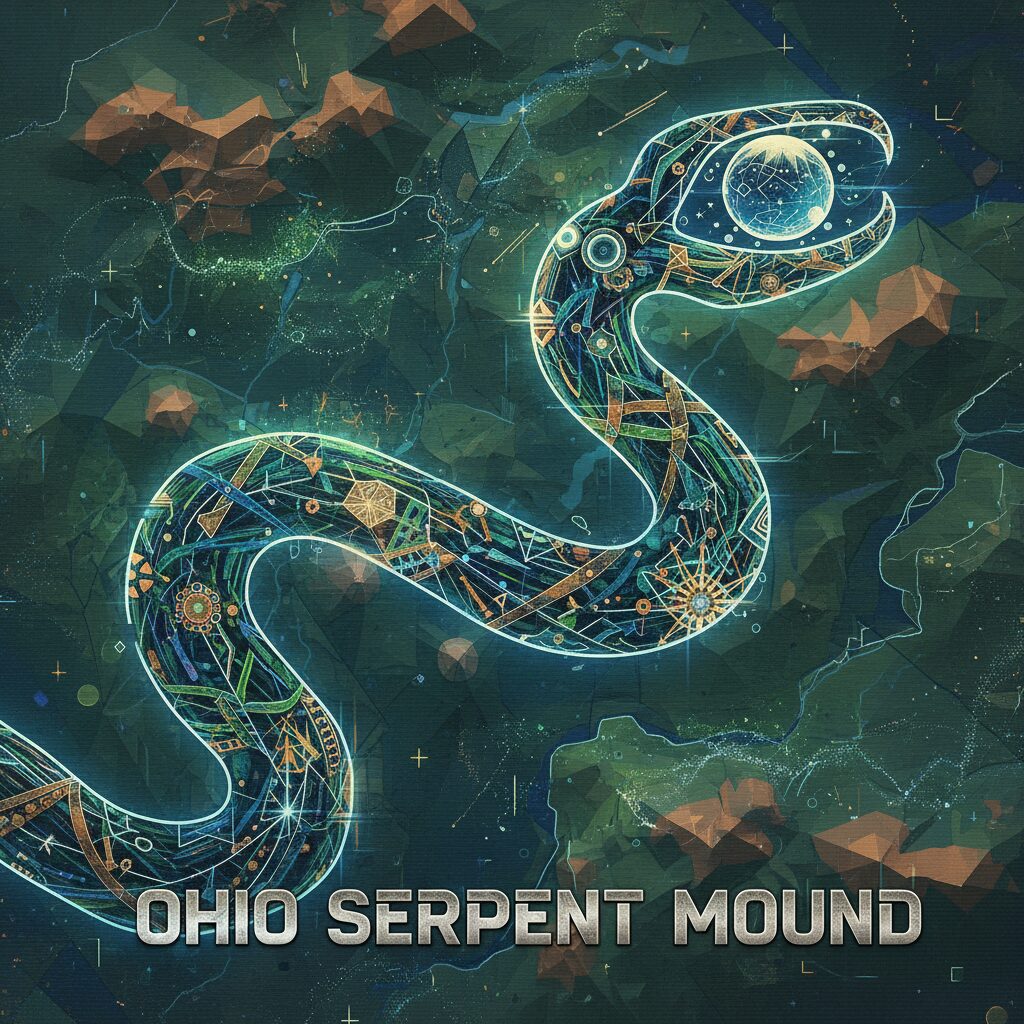
In the rolling, emerald heart of Southern Ohio, where the highways narrow into country lanes and the sky feels vast and ancient, lies a secret whispered by the land itself. It is a story not written in books, but sculpted from the very earth—a colossal, coiling serpent, its body rippling across a high plateau overlooking the serene waters of Brush Creek. This is the Great Serpent Mound, the largest prehistoric effigy mound in the world, a silent, powerful testament to a people who vanished long before modern history began. To visit this place is not merely to see a historical site; it is to step into a landscape charged with mystery, to walk a path cleared by unknown hands for reasons that still echo in the wind. It is a pilgrimage to the soul of a continent, a place where art, astronomy, and spirituality converge in a breathtaking earthen form. For anyone who feels the pull of ancient stories, who seeks the profound connection between humanity and the cosmos, the journey to the Great Serpent Mound is an essential passage into a deeper understanding of the world. It’s a place that reorients your sense of time, reminding you of the deep, enduring pulse of life that beats just beneath the surface of our modern world.
If you feel called to explore other profound destinations where landscape and spirit intertwine, consider a literary pilgrimage to Rio de Janeiro.
The First Approach: A Passage Through Time
The journey to Serpent Mound is a gradual shedding of the present moment. As you leave the interstate’s hum behind and venture deeper into Adams County, the landscape itself begins to reveal a story. The roads wind through dense forests of oak and hickory, pass weathered barns leaning against the Ohio sky, and cross stone bridges spanning creeks that carve their way through ancient bedrock. This is Appalachia, a region marked by profound natural beauty and deep-rooted history. The air changes, becoming richer with the scent of damp earth and wild blossoms. There is a palpable sense of moving backward in time, a release from the frantic pace of the 21st century. This slow, scenic approach is not merely a prelude to the destination; it is an essential part of the experience, preparing you for the quiet reflection the mound demands. You feel the modern world fading in the rearview mirror, replaced by growing anticipation for the ancient mystery that lies ahead.
Upon arriving at the park, the atmosphere is one of serene reverence. The site is managed gently, preserving the natural sanctity of the plateau. A modest museum and visitor center offer an introduction to understanding, but the true welcome happens outside. Stepping from your car, you are immediately struck by the silence—a deep, resonant quiet broken only by the rustle of leaves and the call of a distant hawk. The manicured lawns and pathways feel less like a park and more like a carefully tended sanctuary. You stand on a place regarded as sacred for millennia, sensing it in the very ground beneath your feet. Before you even glimpse the serpent, you realize you have entered a space set apart from the ordinary, a place where the veil between worlds feels thin.
Walking the Serpent’s Spine: An Intimate Encounter
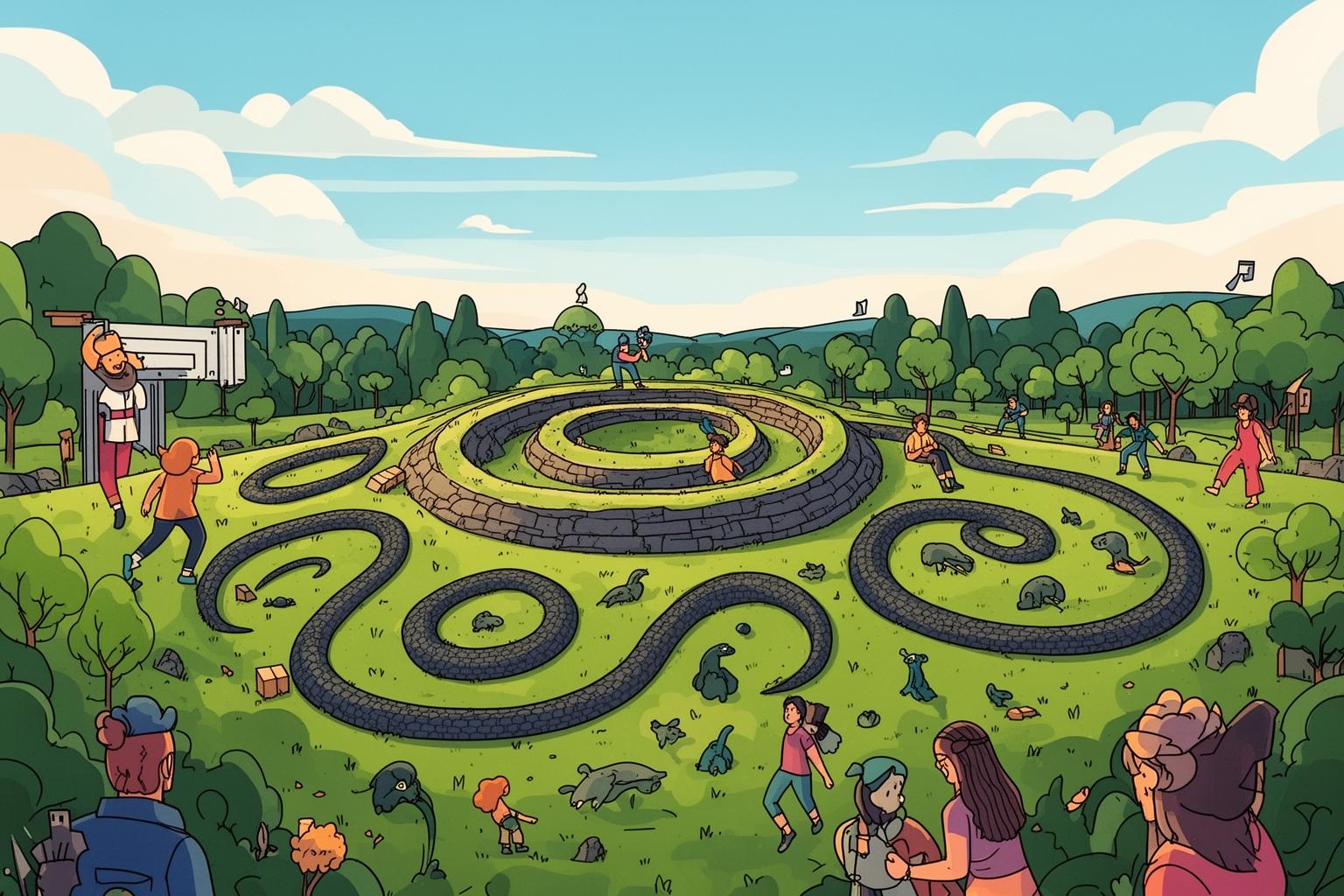
A smooth, paved pathway warmly beckons you to journey around the magnificent effigy. This walk becomes a meditation, a slow revealing of a grand design. The mound does not disclose itself all at once. From ground level, it appears as a series of gentle, grassy rises, their purpose and shape elusive. You start near the serpent’s coiled tail, a triple-looped spiral that seems to anchor the entire structure to the earth. As you follow the path, the creature’s body gradually unfurls before you. The flowing curves are graceful and rhythmic, a perfect portrayal of serpentine movement frozen in time and earth. Each curve and wave feels intentional, charged with a meaning we can only speculate about. Does it mimic the flow of Brush Creek below? Or does it represent a more cosmic, celestial motion?
Walking alongside its massive form—extending over 1,300 feet in length—you become aware of the immense scale of the endeavor. This was no mere burial mound; it was a monumental piece of landscape art, created by a people without beasts of burden, metal tools, only woven baskets and sheer human determination. You can almost hear echoes of their labor—the steady rhythm of digging and carrying, the shared effort of a community bringing a sacred vision to life. The path carries you onward, past the seven distinct coils of the serpent’s body, until you arrive at the dramatic head. Here, the mound opens into a wide, hollow oval, often interpreted as the serpent’s open mouth poised to consume an egg-like shape. Others see it as a watchful eye, gazing over the valley. Standing before this feature is a powerful experience. It is the focal point of the entire effigy, the culmination of its winding journey. You find yourself contemplating the symbolism: creation, destruction, the sun, the moon, the cycle of life and death. The serpent offers no easy answers, only profound questions that resonate deeply within the soul.
The View from Above: A Revelation in Green
While the ground-level walk provides an intimate, personal connection to the mound, its true form can only be fully grasped from a higher vantage point. A steel observation tower, standing respectfully near the effigy, offers this essential perspective. The climb up the metal stairs is filled with anticipation. With each step, the landscape broadens, and the subtle earth swells below begin to merge into a recognizable shape. When you reach the top platform, the revelation is breathtaking. There, displayed against the green tapestry of the plateau, lies the Great Serpent in its entirety. The elegant coils, the commanding head, the mysterious oval—it all comes together. It is a moment of profound clarity, a sudden understanding of the creators’ grand vision.
From this aerial view, the serpent’s relationship with the surrounding landscape becomes clear. You see how it is perfectly placed on a narrow, high spur of land, bordered by steep drop-offs on three sides. It dominates the terrain, a powerful guardian watching over the valley. The genius of its creators is revealed. They understood perspective and landscape in a way that is difficult to fathom. They built this masterpiece not for a human-level view, but for something or someone looking down from above—perhaps the spirits of the sky, the celestial bodies they so carefully observed, or a future generation that could finally behold it in full glory. Looking down from the tower, you are no longer just an observer; you become a participant in that ancient vision, seeing the world, if only for a moment, through their eyes. The wind whips around you, carrying whispers from a thousand years past, and the sheer, breathtaking audacity of this earthen sculpture leaves you humbled and in awe.
Echoes of the Mound Builders: Unraveling the Mystery
Who were the visionary artists and engineers behind the creation of the Great Serpent Mound? This is the intriguing question that has captivated archaeologists and historians for centuries. The truth is, we cannot say for certain. The mound remains an enigma, with its origin attributed to at least two, and possibly three, different prehistoric cultures. For many years, the Adena culture (circa 800 B.C. to A.D. 100) was believed to be the builder, as they were known for their conical burial mounds, some located nearby. The serpent’s elegant curves certainly reflect the artistic style seen in Adena artifacts. However, recent archaeological studies have challenged this longstanding assumption.
Advanced radiocarbon dating conducted in the 1990s on charcoal fragments within the mound provided a surprising date of approximately A.D. 1070. This timing points directly to the Fort Ancient culture, a later group known for their village-based agricultural way of life. This date also aligns with notable celestial events, such as the bright appearance of Halley’s Comet in 1066 and the arrival of light from the Crab Nebula supernova in 1054. Could the Great Serpent be a grand earthly tribute to one of these awe-inspiring cosmic occurrences, created to honor or appease celestial forces? This theory adds an exciting dimension to the mound’s narrative, linking it directly to the stars.
Yet the mystery grows deeper. Some scholars contend that the mound is much older, possibly constructed by the Hopewell culture (circa 200 B.C. to A.D. 500), renowned for their monumental earthworks, with the charcoal dated belonging to a later restoration or ceremonial event by the Fort Ancient people. This debate goes beyond academic interest; it reflects the complex and overlapping histories of cultures that flourished in this valley over millennia. The Serpent Mound is not the creation of a single moment but a sacred site likely significant to many generations. Its enduring mystery contributes to its power. It defies simple classification, compelling us to accept the unknown and honor a history that can never be fully uncovered. It stands as a silent tribute to the ingenuity and spiritual depth of North America’s earliest peoples.
The Celestial Serpent: An Ancient Observatory
The brilliance of the Great Serpent Mound goes beyond its artistic design, reaching into the very essence of the cosmos. This site is a marvel of archaeoastronomy—a celestial calendar carved into the earth. The serpent’s placement is deliberate, precisely aligned to track the sun’s movements, our most vital and life-giving celestial force. The most notable alignment occurs with the summer solstice. Standing at the serpent’s head and looking directly through the open jaws of the oval, your sightline perfectly matches the horizon point where the sun sets on the longest day of the year. Experiencing this is unforgettable: watching the fiery sun descend as if swallowed by the great earthen serpent. For the mound’s creators, this was likely a moment of great ceremonial significance, marking a turning point in the agricultural cycle and a profound connection between earth and sky.
However, the alignments extend further. The serpent’s coils and curves also appear to mark other important solar and lunar events. The head aligns with the winter solstice sunset, and various curves in the body correspond to the equinox sunrises. It functions as a complex, multi-purpose instrument for tracking time and seasons—vital for an agrarian society. Picture the ancient priests or shamans standing on this elevated plateau, observing the sky with a precision that now requires advanced technology. They used the land itself as their observatory, creating a sacred space where the earth’s rhythms mirrored those of the heavens. This astronomical purpose transforms the mound from a static sculpture into a dynamic, interactive tool—a living clock still ticking in harmony with the cosmos after a millennium. Visiting during a solstice or equinox offers an opportunity to engage with this ancient tradition, to stand where they once stood and witness the same celestial performance they honored, feeling an unbroken connection through the ages.
The Land Itself: A Place of Power
The tale of Serpent Mound is deeply tied to the unique geology beneath it. The plateau is not merely high ground; it rests on the edge of a vast, ancient impact structure known as the Serpent Mound Cryptoexplosion Structure. This 300-million-year-old crater, about five miles in diameter, likely resulted from the collision of a meteorite or comet. The landscape that emerged is a geological anomaly, characterized by faulted and fractured bedrock and a distinctive mineral composition. For ancient peoples, attuned to the land’s energies and peculiarities, this location would have been instantly recognized as special—a site of concentrated power.
It is no coincidence that they selected this particular spot for their most sacred effigy. The crater’s rim offers dramatic bluffs and commanding views over the valley. The ground here is different, charged with energy from a cosmic event long past. This geological context adds another profound dimension to the site’s significance. The serpent, a celestial emblem, was constructed upon the scar of a celestial impact. It is a monument that links the earth not only to the sun and moon observed today but also to the violent, creative forces that shaped our planet. As you walk the grounds, you can sense this unique energy. The air feels clearer, the colors more vivid. The landscape itself seems alive, a silent partner in the serpent’s enduring story. It serves as a reminder that the places chosen for sacred creations matter as much as the creations themselves, and that the most powerful art is born from a deep, meaningful dialogue with the natural world.
A Practical Guide for the Modern Pilgrim
Planning your visit to the Great Serpent Mound is a simple and rewarding experience. The site is easily accessible and well-maintained, ensuring a comfortable visit for people of all ages while maintaining its sacred ambiance. A bit of preparation can greatly enhance your connection to this remarkable location.
Reaching the Serpent’s Lair
The mound is situated in a rural area of Adams County, near the small town of Peebles, Ohio. The most typical way to get there is by car. It’s about a 90-minute drive from Cincinnati or Dayton, and roughly two hours from Columbus. The last part of the drive takes you off the major highways onto scenic state routes winding through the picturesque Appalachian foothills. Enjoy this segment of the journey; the peaceful countryside sets the tone for the calmness of the mound itself. Use a reliable GPS, as cell reception can be unreliable in some more remote spots. Ample parking is available on-site, just a short walk from the museum and the trailhead.
The Rhythm of the Seasons
The Great Serpent Mound presents a unique beauty in every season. Spring symbolizes renewal, with surrounding forests blooming with wildflowers and the mound lush and green. Summer brings long, warm days ideal for a leisurely stroll, with a full canopy of leaves creating a natural sanctuary. This season also features the dramatic summer solstice sunset alignment, drawing many visitors. Autumn may be the most striking season, as Ohio’s landscape bursts into vivid shades of red, orange, and gold. The crisp air and colorful foliage offer a stunning backdrop to the ancient earthwork. Winter holds its own stark charm; with bare trees and possible snow, the serpent’s contours become sharply defined against the landscape. It’s a quiet, reflective time to visit, often with the park nearly to yourself.
Enhancing Your Visit
To make the most of your visit, a few simple preparations are essential. First, wear comfortable walking shoes. The main loop around the effigy is paved and accessible, but comfort is important for exploring. The observation tower includes stairs, so prepare for a brief climb. Ohio’s weather can be changeable, so dressing in layers is advisable. Bring sunscreen and a hat for sunny days, as parts of the trail lack shade, and a light rain jacket if the forecast is uncertain. Carry a water bottle, especially during warmer months. Don’t forget your camera, but also take moments to put it away and simply take in the site with your own eyes. Binoculars are helpful for birdwatching in the nearby woods or for a closer view of the distant landscape from the tower. Before starting your walk, spend some time in the on-site museum. Its exhibits provide valuable insights into the history, archaeology, and theories about the mound, enriching your understanding and appreciation of what you are about to explore.
Beyond the Mound: Exploring the Ancient Ohio Valley
Although the Great Serpent Mound is a notable destination on its own, its importance is heightened when viewed as part of a broader sacred landscape. The Ohio Valley was once the center of mound-building cultures, and remnants of their extensive ceremonial and social networks are scattered across the region. Expanding your visit beyond the serpent can turn a simple day trip into a meaningful journey through North America’s ancient history.
Just a brief drive from Serpent Mound is the Edge of Appalachia Preserve System, a breathtaking natural area co-managed by The Nature Conservancy. Its rugged terrain, ancient forests, and rare plant species offer a window into the wilderness that the mound builders once experienced. Walking its trails, you can connect with the same wild beauty that inspired their impressive creations. For those intrigued by mound-building cultures, a visit to the Hopewell Culture National Historical Park near Chillicothe is a must. This UNESCO World Heritage site safeguards several massive geometric earthworks, including vast circles, squares, and octagons that are remarkable for their scale and precision. Viewing these sites enriches your understanding of the Hopewell civilization’s vastness and sophistication, giving deeper context to the artistic and spiritual traditions that culminated in the Great Serpent Mound.
Exploring the quaint, historic towns of Adams County also reveals a distinctive charm. Places like West Union and Peebles offer a glimpse of rural Appalachian life, with welcoming locals and cozy diners serving hearty meals. This broader exploration helps you see the serpent not as an isolated anomaly, but as the centerpiece of a region abundant in natural beauty and profound human history. It bridges the ancient past with the living present, demonstrating how the spirit of this land continues to influence those who call it home.
The Serpent’s Enduring Riddle
Departing from the Great Serpent Mound, you take with you more than just photographs and memories. You carry a profound sense of wonder and a deep connection to a past that feels both impossibly distant and intimately near. The serpent does not easily reveal its secrets. It remains a beautiful, frustrating, and inspiring mystery. Was it a symbol of a powerful spirit? A map of the stars? A memorial to a cosmic event? A place of healing? It was likely all of these and more. Its power lies not in one definitive answer, but in the lasting questions it raises.
Standing on that ancient plateau reminds us of the universal human urge to understand the world, to find our place within the vast cosmic dance, and to create something beautiful and enduring that resonates with the deepest parts of our spirit. The Great Serpent Mound is a message spanning time, a testament to humanity’s lasting creativity and spiritual depth. It whispers that even without written language, a people can leave a story carved into the earth so powerful it continues to captivate hearts and minds a thousand years later. The serpent sleeps, yet its spirit is alive, waiting for all who journey here to come and listen to its silent, earthen song.