
The story of Christopher McCandless, the young man who shed his name to become Alexander Supertramp, is a modern American myth etched into the very landscapes he traversed. It’s a tale of radical freedom, a rejection of societal norms, and a quest for a more authentic existence, captured first in Jon Krakauer’s haunting book, Into the Wild, and later immortalized in Sean Penn’s visually stunning film. For countless souls who have felt the pull of that same wild, restless spirit, McCandless’s journey isn’t just a story; it’s a map. It’s a pilgrimage route that winds through the sun-scorched deserts of the Southwest, across the golden plains of the heartland, and culminates in the vast, unforgiving wilderness of Alaska. This isn’t just about visiting filming locations; it’s about chasing an echo. It’s about standing in the places where a profound and tragic story unfolded, feeling the grit of the same dirt under your boots, and breathing in the air that filled his lungs in those final, solitary months. This guide is for the wanderers, the dreamers, the pilgrims who wish to follow that trail, not to replicate a tragedy, but to understand the powerful allure of the wild that called him home.
If you’re drawn to journeys that trace the footsteps of authors and their fictional worlds, consider embarking on a literary pilgrimage through the enigmatic landscapes of Kobo Abe’s Japan.
The Great Renunciation: Tracing the First Steps West
Every epic journey has a definitive starting point—a moment when the old world is left behind and the new one begins. For Christopher McCandless, that moment didn’t come in the wilderness but within the manicured suburbs of the American East. The pilgrimage truly begins not on a dusty trail, but with the spirit of his departure from a life of privilege and expectation.
An Educated Exit: Emory University, Georgia
The film beautifully conveys the symbolic significance of McCandless’s graduation from Emory University in Atlanta. It’s a scene filled with celebration, parental pride, and a future laid out like a blueprint. But for Chris, it marked the closing of a chapter. This was the place where he finalized his secret plans and made the deliberate decision to disappear. While no specific monuments mark his departure here, walking the leafy campus gives a tangible sense of what he was rejecting: a world of structure, academia, and material success. It was here that he quietly steeled his resolve, donated his life savings to charity, and set his sights westward, trading a promising career for the uncertainty of the unknown. Visiting the campus is less about pinpointing a particular location and more about feeling the weight of his choice—the profound divide between the life he was expected to live and the one he desperately needed to create for himself.
The Desert’s Baptism: Detrital Wash, Arizona
No symbol better represents McCandless’s transformation than his yellow Datsun, slowly engulfed by the sands of the Arizona desert. After a flash flood disabled the car in the Detrital Wash near Lake Mead, he didn’t view it as a setback but as a sign. It was a forced liberation. He burned his remaining cash, buried his license plates, and shed the last remnants of his former life. To visit this area today is to encounter a landscape both beautiful and brutal. The heat is intense, the air dry, and the silence broken only by the wind. It feels raw and elemental. This is where Alexander Supertramp was truly born. For the pilgrim, visiting the Lake Mead National Recreation Area isn’t about locating the precise spot where the Datsun was abandoned. It’s about immersing oneself in the environment that forced his hand. It’s about understanding how the harsh desert strips you down to your essence, leaving you with nothing but your own two feet and the will to move forward. The sun beats down with a clarity that sharpens the mind, and you can almost sense the exhilarating terror of taking those first steps into a life without a safety net.
A Tapestry of Encounters: Finding Family on the Road
Into the Wild is as much about the people Chris encountered as it is about the solitude he pursued. His trek across the American West was marked by powerful, brief encounters with fellow travelers and individuals living on the margins. These places are revered not solely for their natural beauty but for the human warmth that flourished there.
The Amber Waves of Carthage, South Dakota
Among all the people Chris bonded with, his relationship with Wayne Westerberg, the grain elevator operator in Carthage, South Dakota, was perhaps the most meaningful. Carthage stood as a kind of substitute home—a place of hard work, honest living, and unconditional acceptance. The film portrays the vast, rolling plains of the heartland, with towering grain elevators rising like cathedrals beneath an endless sky. Visiting Carthage today reveals a small town that still reflects that spirit. While the specific grain elevator featured in the film might be a composite, the essence of the place remains genuine. It’s found in the quiet hum of the town, the friendly nods from locals, and the immense agricultural landscape. The air carries the scent of earth and grain. This is a place that feels tangible and grounded, a stark contrast to the ethereal landscapes of the desert or Alaskan tundra. Standing there, you grasp what kept drawing Chris back repeatedly. It was a place where he could be both free and part of a community, where he found a father figure in Wayne and a sense of belonging he struggled to find elsewhere. It reminds us that even in the quest for ultimate solitude, the human heart longs for connection.
The Last Free Place: Slab City and Salvation Mountain
Deep in the California desert lies a place that defies easy description: Slab City. A sprawling, off-grid community of squatters, artists, and snowbirds, it stands as a living monument to radical self-reliance. Here, Chris, fully immersed in his Supertramp identity, met Jan Burres and Tracy Tatro, discovering a temporary family among misfits and dreamers. The film captures the vibrant, chaotic, and deeply communal spirit of the Slabs. Yet the true spiritual heart of this part of his journey lies a few miles away at Salvation Mountain. This monumental, hand-crafted artwork by Leonard Knight bursts with color and faith amid the desolate landscape. It testifies to one man’s unwavering devotion—a Technicolor vision of love and redemption painted onto the earth itself. Visiting Salvation Mountain is an overwhelming experience. The immense scale and intricate detail, the vivid blues, yellows, and reds beneath the harsh desert sun, feel almost otherworldly. It’s a place of pure, raw passion. It was here Chris met Ron Franz, an elderly man who came to love him like a grandson and even offered to adopt him. This meeting is one of the most touching moments of the story—a deep connection Chris ultimately had to leave behind to continue his journey north. Standing atop Salvation Mountain, gazing out over the endless desert, you sense the tension between human connection and the solitary call of the wild that defined Chris’s life.
The Great Alaskan Adventure: The Final Frontier
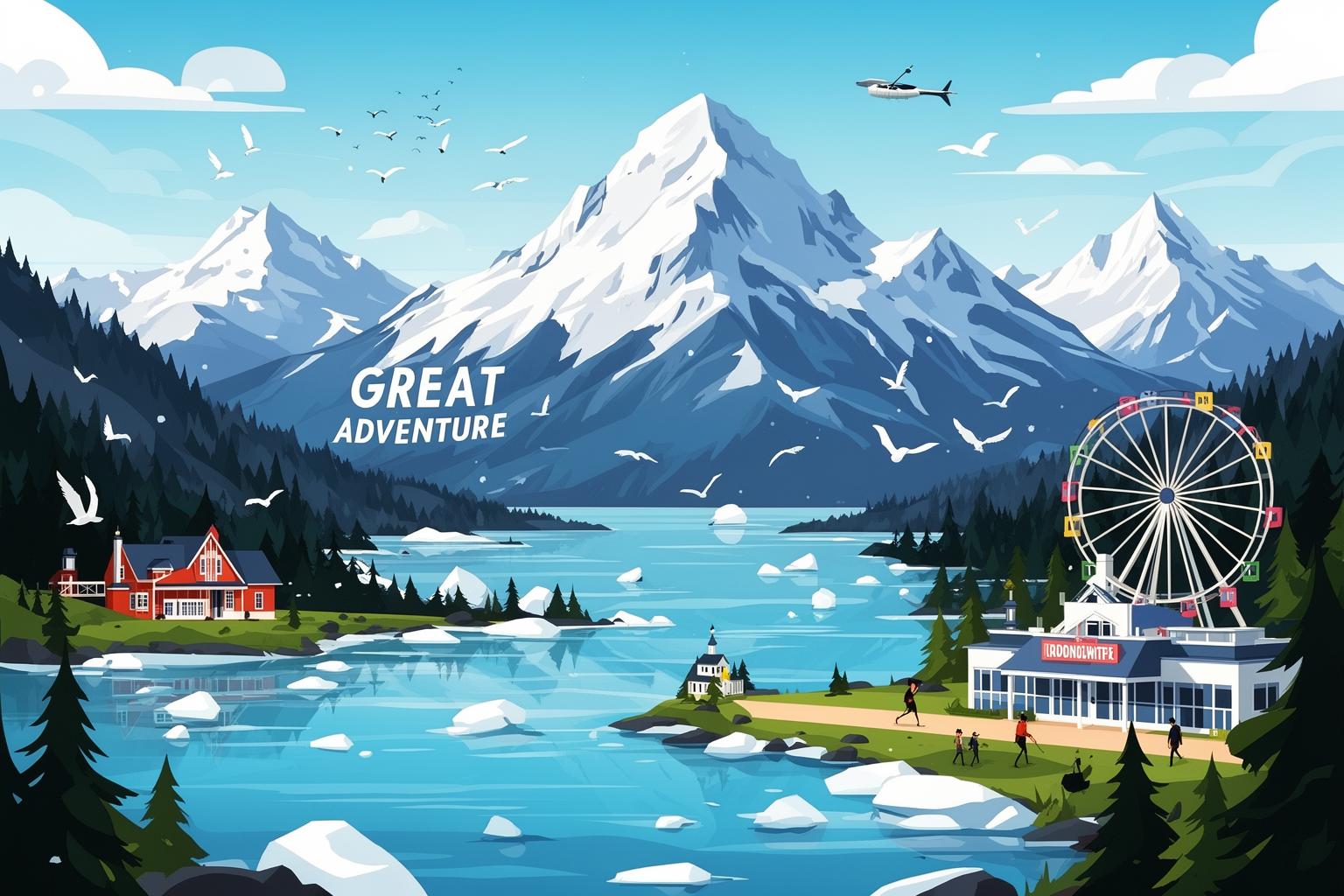
All paths for Alexander Supertramp led northward. Alaska was the ultimate destination, the “Great Alaskan Adventure” he described in his journals. It represented the final challenge, the uncharted area on the map where he hoped to discover the ultimate truth. This segment of the journey is the toughest, most profound, and commands the greatest respect from those who follow in his footsteps.
Gateway to the Wilderness: Fairbanks and Healy
Fairbanks is the last major city before the wilderness truly begins. It’s a busy, practical hub where people gather supplies and ready themselves for expeditions into the vast interior. For Chris, it was a brief but essential stop. He spent time at the university library researching edible plants and survival skills—a final preparation for the ultimate trial. From Fairbanks, he hitched a ride south to Healy, a smaller, rougher town that serves as the direct entrance to the Stampede Trail. Healy exudes the unmistakable spirit of a frontier town, surrounded by the rugged beauty of the Alaska Range, with Denali’s massive silhouette often visible on the horizon. Here, the pavement ends and the real journey commences. Visiting Healy, you sense a change in the air. The atmosphere is crisper and the wilderness feels nearer, more imposing. It’s a place of transition—the last outpost of civilization before entering a realm ruled solely by nature’s laws. From here, local electrician Jim Gallien gave Chris his final lift, dropping him off at the head of the Stampede Trail with a pair of rubber boots and a heart full of concern.
The Stampede Trail: A Passage into Deep Solitude
The Stampede Trail is not a scenic trek; it is a pilgrimage into the heart of a vast and indifferent wilderness. The trail itself is an old mining road, often overgrown and swampy, cutting deep into the Alaskan bush. It demands navigation skills, physical stamina, and a deep respect for the environment.
The Rubicon: The Teklanika River
A few miles along the trail, one faces the most significant obstacle of Chris’s journey: the Teklanika River. When he crossed in spring, the water was low, presenting a manageable challenge. But by late summer, as he prepared to return to civilization, the river had transformed. Swollen by glacial melt, it became a violent, impassable torrent. This was his fatal error. The river became his prison. For modern travelers on the trail, the Teklanika stands as a powerful and humbling reminder. Its conditions can shift suddenly. Crossing is perilous and should never be attempted lightly. Witnessing it firsthand, you grasp its might. The water is shockingly cold, the current deceptively strong. It embodies the barrier between the human world and the untamed wild.
The Magic Bus: An Icon Removed
For decades, the ultimate destination on the Stampede Trail was Bus 142. This abandoned Fairbanks City Transit bus, left over from a failed 1960s road project, became Chris McCandless’s shelter and, ultimately, his tomb. It was a refuge, a confessional, a place of profound discovery and tragic demise. For years, travelers worldwide undertook the dangerous trek to see the “Magic Bus,” to sit inside, read others’ journal entries, and feel a connection to his spirit. However, this pilgrimage exacted a heavy toll. The trail and river crossing proved perilous, prompting numerous search-and-rescue operations and, sadly, further loss of life. In June 2020, for public safety, the state of Alaska airlifted Bus 142 from its location on the Stampede Trail. It no longer remains there. This is crucial information for prospective visitors. The empty site where it once stood has become a different kind of memorial—a testament to the wild’s power to reclaim its territory.
The Bus’s New Home: A Safer Pilgrimage
The bus’s story did not end with its removal. Following careful restoration, Bus 142 now has a permanent, safe home. It serves as the centerpiece of an exhibit at the University of Alaska Museum of the North in Fairbanks. This is the new, responsible destination for Into the Wild pilgrims. Viewing the bus indoors, even behind climate-controlled glass, is a deeply moving experience. You can see the dents and rust, the makeshift repairs, and the very bunk where Chris spent his final days. The exhibit presents the bus with context and respect, narrating not only Chris’s story but also Alaska’s broader history and the complex relationship between humans and this wild land. It allows visitors to connect with this powerful symbol without endangering their lives, preserving both Alexander Supertramp’s legacy and the safety of future adventurers.
A Pilgrim’s Practical Guide: Journeying with Wisdom
To follow in Christopher McCandless’s footsteps is to embrace adventure, but it must be undertaken with the wisdom he sadly lacked. This journey is about honoring his spirit, not repeating his errors.
Respect the Seasons, Respect the Power
The landscapes of this journey are shaped by extreme seasons. The deserts of Arizona and California can reach deadly high temperatures in summer. The plains of South Dakota endure harsh winters with deep snow and biting winds. Alaska is a land of extremes. Summer brings the midnight sun, a burst of life, and swarms of mosquitoes—a brief, intense window of accessibility. Winter casts the land into darkness and severe cold, making backcountry travel a challenge for experts only. Understanding the seasons is the most vital first step in planning a safe pilgrimage. Always check local conditions, stay alert to river levels and avalanche risks, and never assume the weather will cooperate. Nature here is not a backdrop; it is the central presence.
Gear and Preparedness: The Modern Supertramp’s Kit
While Chris famously discarded most of his belongings, a modern pilgrim should take the opposite approach. Proper gear is not conformity; it is respect for the wilderness. This includes sturdy, well-broken-in hiking boots, layered clothing made from moisture-wicking fabrics, high-quality rain gear, and more food and water than you expect to need. Most importantly, reliable navigation tools are essential. Chris’s fatal mistake was traveling without a proper map. Today, there is no excuse—carry a physical map, a compass, and a GPS device with extra batteries. In Alaska, bear spray isn’t optional; it’s a necessity, and you must know how to use it. The aim is to be self-reliant and prepared for the worst.
The Ethic of the Trail: Leave No Trace
This pilgrimage passes through some of North America’s most pristine and delicate ecosystems. It is crucial to uphold the principles of Leave No Trace. Pack out everything you bring in, including all trash. Camp on durable surfaces. Observe wildlife from a distance. Never feed wild animals. Minimize campfire impacts. The goal is to leave these sacred places exactly as you found them, preserving their wild character for those who come after. This is the truest way to honor the spirit of a man who ventured into the wild seeking something pure and untouched.
The Enduring Call of the Wild
Why does this story continue to captivate us so deeply, even decades later? Why do people remain drawn to retrace the path of this complex, idealistic, and flawed young man? Perhaps it is because the spirit of Alexander Supertramp reflects a yearning present in many of us: a desire to break free from the clamor of modern life, to challenge our own boundaries, and to cultivate a more genuine and direct connection with nature. His story serves as a powerful warning about the perils of arrogance and unpreparedness, yet it is also a beautiful, soaring ode to the quest for truth. To journey to the Stampede Trail, to stand at the base of Salvation Mountain, or to feel the prairie wind in Carthage is to engage with that ode. It means understanding that ‘the wild’ is not merely a location on a map. It is a state of being. It is the courage to pose profound questions, the readiness to live with conviction, and the humility to accept that some of the deepest answers can only be discovered in the vast, beautiful, and intimidating silence of the wilderness. The greatest tribute we can offer to his journey is to embark on our own, equipped with his passion as well as the wisdom and respect needed to return and share our story.