
They say you never forget your first time in Paris. It’s a city that lives in our collective imagination long before we ever set foot on its cobbled streets. We’ve seen it in films, read about it in novels, and dreamed of it through the eyes of painters. From Tokyo, where the pulse of the future beats in neon and steel, Paris feels like stepping into a living, breathing history book, a place where every corner holds a story, and every monument sings a song of romance, revolution, and art. It’s a pilgrimage site not just for travelers, but for dreamers. Paris doesn’t just show you its beauty; it invites you to become a part of its ongoing masterpiece. It’s the thrill of seeing the Eiffel Tower sparkle for the first time, the quiet awe of standing before a masterpiece in the Louvre, the feeling that you’re walking in the footsteps of Hemingway, Monet, or Marie Antoinette. This isn’t just a trip; it’s a conversation with centuries of human creativity. It’s about finding the Paris that has been waiting for you, the one that exists just beyond the pages and screens, vibrant and utterly real. So, let’s begin our journey, not as tourists with a checklist, but as story-seekers, ready to uncover the soul of the world’s most enchanting city.
To truly embrace this spirit of discovery, consider how a literary pilgrimage to Colombia can similarly immerse you in a world woven from imagination and history.
The Iron Lady’s Embrace: Conquering the Eiffel Tower
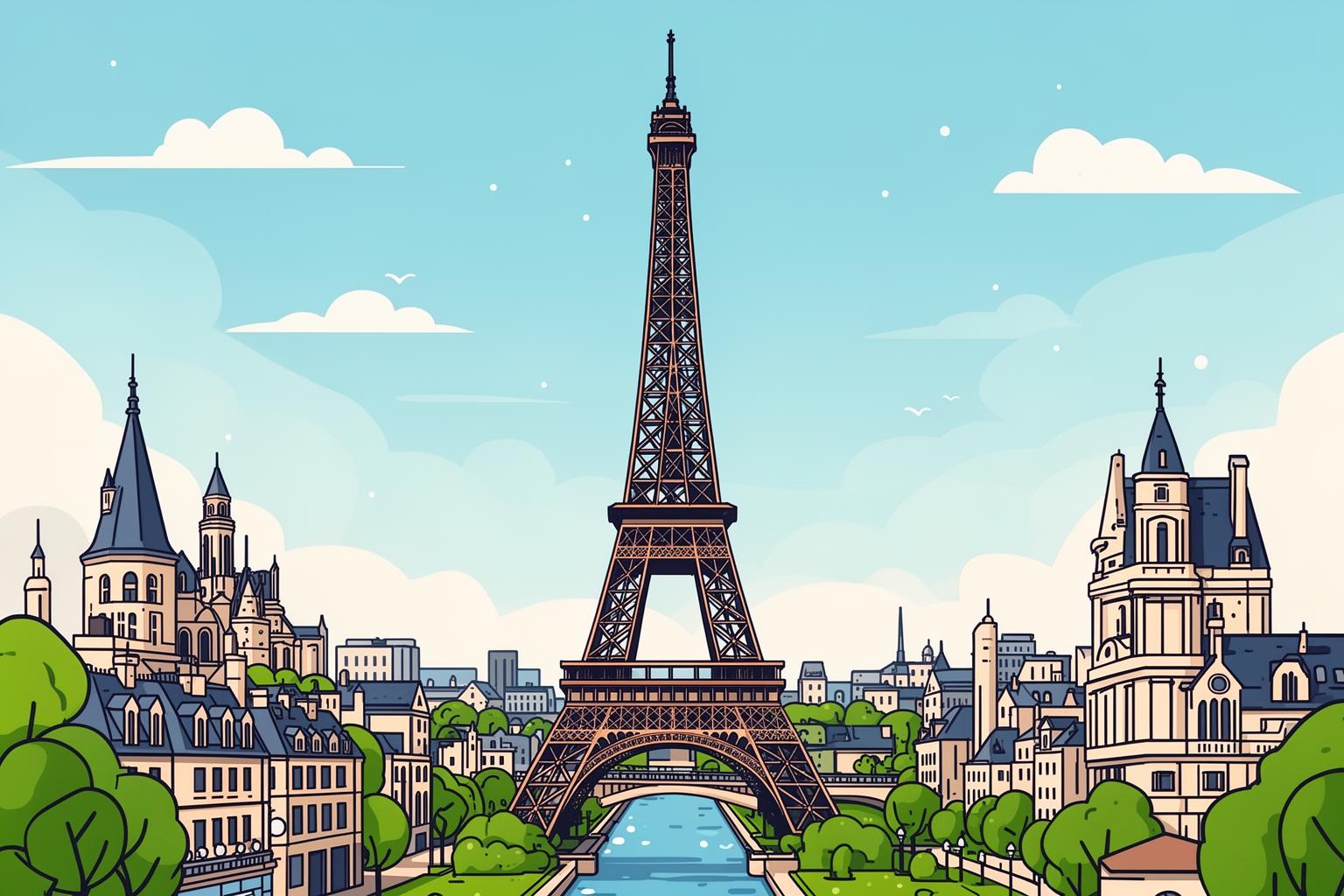
Few landmarks on Earth are as instantly recognizable as the Eiffel Tower. It stands as the very symbol of Paris, an outline of ambition and elegance that slices through the skyline. Witnessing it for the first time is a memory forever etched in your mind. Whether it’s a brief glimpse from a taxi window or the dramatic reveal as you step out of the Trocadéro metro station, its sight halts you in your tracks. It’s grander, more intricate, and more commanding than you ever imagined. The delicate iron latticework, which appears slender from afar, unveils itself up close as a monumental engineering marvel—a network of girders and rivets that feels both industrial and impossibly refined.
A Beacon of Light and Dreams
The tower wasn’t always cherished. When Gustave Eiffel’s masterpiece was constructed for the 1889 Exposition Universelle, many of Paris’s artistic elite condemned it as a monstrous factory chimney. Yet history has a curious way of turning opposition into admiration. Originally intended as a temporary marvel for the fair, it captured the world’s imagination and refused to be dismantled. It became an emblem of French innovation and modernity. Today, it stands not as a blemish on the landscape, but as its vibrant heart. The atmosphere around its base buzzes with pure exhilaration. You hear a chorus of languages, the click of cameras, and joyful gasps from visitors fulfilling lifelong dreams. It feels like the world’s crossroads, a place where everyone gathers to share a collective moment of wonder.
As daylight fades, the tower undergoes a transformation. The setting sun bathes it in golden and orange hues, and as night falls, it becomes a beacon of warm, golden light. But the true enchantment occurs every hour, on the hour, after sunset. For five breathtaking minutes, 20,000 flashbulbs sparkle, making the entire structure shimmer against the night sky. It’s a spectacle of pure joy, a citywide celebration of light. Finding a spot on the grassy Champ de Mars, perhaps with a bottle of wine and some cheese, to watch this hourly display is an essential Parisian ritual. It’s a shared moment of delight, where strangers smile at one another, captivated by the dazzling magic.
The Ascent: Choosing Your Journey
To fully appreciate the Eiffel Tower, you must climb it. You have two options to reach the second floor: elevator or stairs. The elevator is fast and efficient, whisking you upward with panoramic views through glass panels. It’s the best choice if you’re short on time or have mobility issues. But if you’re up for it, taking the stairs is incredibly rewarding. With 704 steps to the second floor, every step deepens your connection to the structure. You’re inside the iron framework, able to admire the intricate construction closely, with Paris unfolding beneath you in ever-expanding views. It’s a physical ascent mirroring the tower’s ambitious climb into the sky. You can pause at the first floor, home to a glass floor for the brave, along with restaurants and shops. The second floor is said to offer the best panoramic view, high enough to see everything yet close enough to recognize individual landmarks. From there, a final elevator ride is required to reach the summit. The top is a windswept, exhilarating platform where the city spreads out like an abstract map beneath you. On a clear day, visibility stretches for miles. It offers a humbling perspective, a reminder of Paris’s vastness and your small, wonderful place within it.
Practical Magic: Timing and Tickets
A tip for first-time visitors: book your tickets online well in advance, especially during peak season. On-site queues can be outrageously long, consuming precious hours in Paris. The official Eiffel Tower website is the best place to reserve your spot. When to visit depends on the experience you seek. Daytime visits offer crystal-clear views and the chance to spot landmarks across the city. Evening visits, however, are pure romance. Ascending just before sunset lets you watch the sun dip below the horizon, followed by the magical moment when city lights twinkle on one by one. Seeing Paris transform into the “City of Light” from this vantage point is unforgettable. Be sure to bring a jacket, as the summit can get quite windy, even on warm days.
The Champ de Mars and Trocadéro: Picture-Perfect Moments
Experiencing the Eiffel Tower extends beyond the monument itself. The two best spots for viewing and photographing it are the Champ de Mars, the long public park extending from its base, and the Jardins du Trocadéro across the Seine. The Champ de Mars is ideal for a relaxing picnic. Spread out a blanket, enjoy fresh baguette and camembert, and soak in the view. It’s a place where Parisians and visitors alike come to unwind and revel in the tower’s presence. The Trocadéro, with its grand esplanade and fountains, offers the quintessential, iconic postcard view of the tower. It’s often crowded, especially at sunset, but for good reason. The symmetry and scale of the view from here are unmatched. This is the spot featured in countless films, a sacred location for cinephiles trying to recapture moments from movies like Inception or A View to a Kill. For a slightly less crowded photo opportunity, walk down the steps from the main platform toward the carousel. The perspective here, with the charming vintage ride in the foreground, adds a whimsical touch to your photos.
A Palace of Whispers: Navigating the Louvre Museum
If the Eiffel Tower is the heart of Paris, then the Louvre is its soul. Situated in a former royal palace, it is far more than just a museum; it is an expansive city of art—a labyrinth of history safeguarding the treasures of human civilization. Its vastness is truly overwhelming. Walking through its halls is like traveling through time across continents, from ancient Egypt and Greece to the pinnacle of the Italian Renaissance and the splendor of French painting. The modern glass pyramid at its entrance, designed by I.M. Pei, provides a striking contrast to the palace’s classical architecture. It symbolizes the Louvre’s mission: to connect the past and present, making centuries of art accessible to today’s world.
More Than Just the Mona Lisa
For many first-time visitors, the Louvre means one thing: the Mona Lisa. While viewing Leonardo da Vinci’s enigmatic masterpiece is a rite of passage, paying homage to her small, bulletproof-glass-encased portrait is only the beginning of the Louvre’s story. Focusing solely on her is like missing the forest for one famous tree. The museum is divided into three main wings: Denon, Sully, and Richelieu, each a universe unto itself. Before you see a single painting, take a moment to appreciate the building. In the Sully wing, you can descend into the foundations of the original 12th-century medieval fortress, a testament to the Louvre’s rich and layered history. Look up to the ceilings, often masterpieces themselves, adorned with intricate frescoes and gilded carvings. The Apollo Gallery, home to the French Crown Jewels, dazzles with royal opulence and leaves visitors breathless. The atmosphere shifts throughout the wings: the grand halls of French painting feel regal and vast, while the Egyptian antiquities corridors evoke mystery and reverence, filled with sarcophagi and statues of gods that seem to guard ancient secrets.
Charting Your Artistic Voyage
With over 35,000 works on display, seeing everything in a single visit—or even several—is impossible. The key to a rewarding Louvre experience is to accept this fact. Instead of trying to see it all, select a few areas of interest and explore them deeply. Are you captivated by ancient civilizations? Spend your time in the Egyptian collection with the Great Sphinx of Tanis or in the Greek section, standing in awe before the Venus de Milo and the Winged Victory of Samothrace. The latter, dramatically poised at the top of a grand staircase, is arguably one of the most powerful sculptures ever created—a vision of triumph and motion frozen in marble. For painting enthusiasts, the Denon wing is essential. Here, alongside the Mona Lisa, you will find monumental works of French Romanticism such as Delacroix’s Liberty Leading the People and Géricault’s The Raft of the Medusa. The sheer scale and emotional intensity of these canvases are breathtaking. The Italian collection is equally stunning, featuring masterpieces by Raphael, Caravaggio, and Veronese, whose The Wedding at Cana—the largest painting in the Louvre—is a visual feast facing the much smaller Mona Lisa.
The Da Vinci Code and Beyond: The Louvre in Pop Culture
The Louvre’s cultural icon status has been solidified through its numerous appearances in literature and film, making it a pilgrimage destination for fans. The most famous contemporary example is Dan Brown’s The Da Vinci Code, which begins with a murder in the Grand Gallery. For fans of the book and movie, wandering these halls is like stepping into the story itself. You can follow the path of Robert Langdon, see the Arago medallions (though they are not part of any secret code!), and sense the mystery that lingers in the air. The museum has embraced this fame, offering guided tours highlighting key locations from the story. Beyond Dan Brown, the Louvre has served as the backdrop for countless films, from the classic Hollywood musical Funny Face, where Audrey Hepburn races down the Daru staircase past the Winged Victory, to the modern French thriller series Lupin, in which the charming gentleman thief orchestrates a daring heist. This cultural layering adds a further dimension to a visit—you’re not only seeing art but stepping onto a film set, part of cinematic history with its own tales to tell.
A First-Timer’s Strategy
To avoid the heaviest crowds, some planning pays off. The main entrance via the pyramid often has the longest security lines. Savvy visitors use the underground entrance through the Carrousel du Louvre shopping mall, which is frequently faster. Buying tickets online in advance is essential. Consider visiting on a Wednesday or Friday evening when the museum opens late; crowds usually thin out, and the galleries take on a more intimate, magical atmosphere. Upon entering, pick up a museum map available in many languages—these are indispensable for navigating the labyrinthine layout. Don’t hesitate to get a bit lost, though—some of the best discoveries come from wandering off the beaten path and finding a quiet gallery all to yourself. When you need a break, the Louvre offers several charming cafés. The Café Mollien, located in the Denon wing, has a terrace with a lovely view overlooking the Pyramid and the Tuileries Garden. After your visit, a stroll through this elegant garden is the perfect way to unwind and reflect on all the beauty you’ve experienced.
The Heartbeat of Paris: Notre-Dame and Île de la Cité
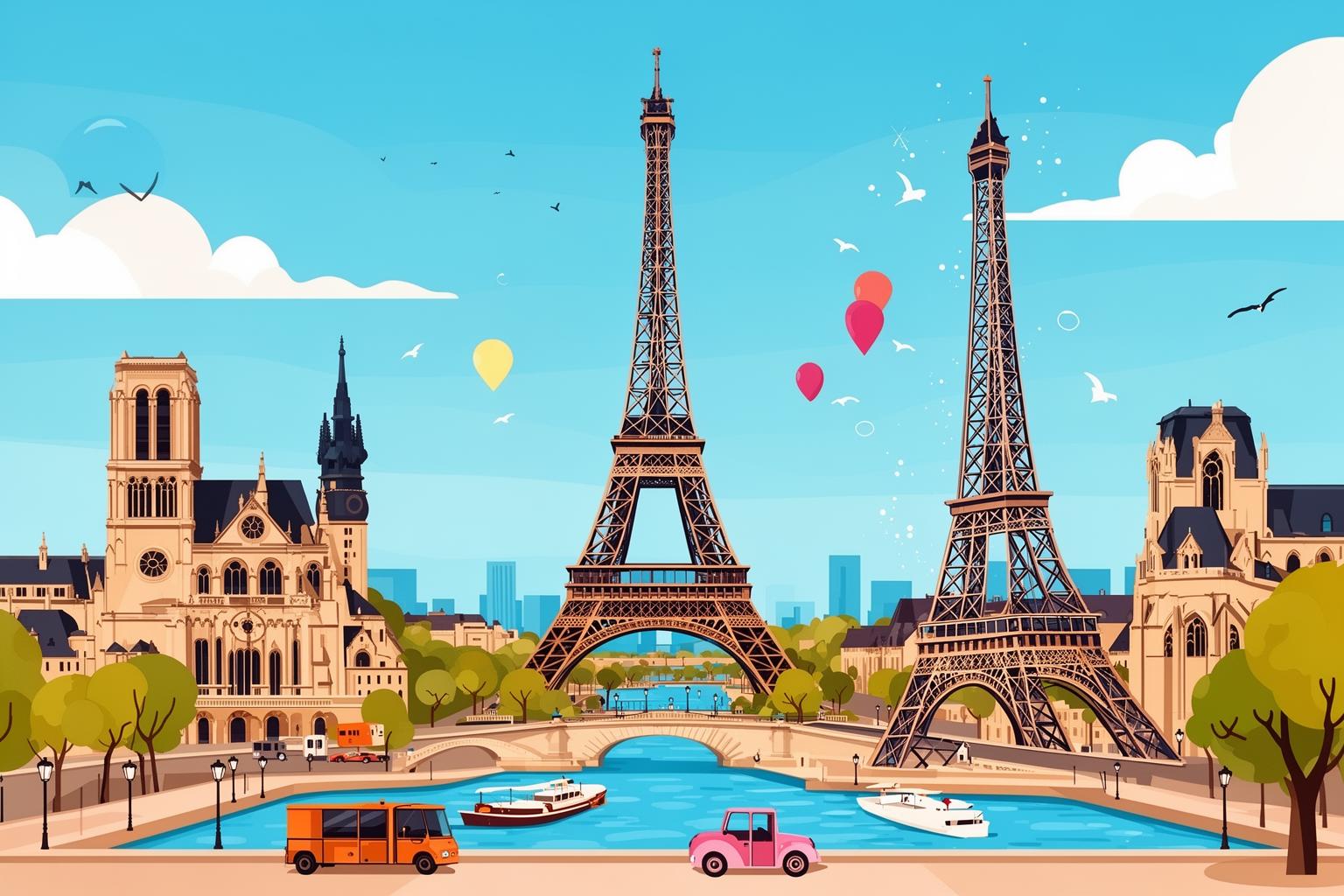
The Île de la Cité is the birthplace of Paris, the island at the heart of the Seine where the city originated. At its center stands the Cathédrale Notre-Dame de Paris, a monument that transcends being merely a church. It represents France, a masterpiece of Gothic architecture, and a character in one of the world’s most cherished tales. For centuries, its twin towers have guarded the city, its bells have marked the flow of time, and its flying buttresses have reached skyward, symbolizing faith and human creativity.
A Gothic Masterpiece of Endurance
The devastating fire of April 2019 saddened people worldwide. We watched in despair as the spire fell and the roof was engulfed in flames. Yet, since that day, Notre-Dame’s story has become one of remarkable resilience and hope. The ongoing restoration is a monumental endeavor, reflecting the deep love and determination to revive this icon. Although the cathedral cannot currently be entered, visiting the surrounding area remains a profoundly moving experience. You can admire the exterior from nearby squares and bridges, observing the meticulous work of artisans and craftsmen as they rebuild it piece by piece. The atmosphere is filled with reverence and anticipation. There is a tangible feeling of a city holding its breath, awaiting the day its great lady is restored. Walking along the perimeter, you can still marvel at the brilliance of its design—the detailed sculptures of the portals, the solemn stare of the gargoyles, and the delicate stonework of the rose windows. It stands as a powerful reminder that beauty endures even in the face of tragedy.
The Hunchback’s Sanctuary: A Literary Pilgrimage
For many, the first encounter with Notre-Dame is through Victor Hugo’s 1831 novel, Notre-Dame de Paris, or its well-known Disney adaptation, The Hunchback of Notre Dame. Hugo partly wrote the novel to protect the cathedral, which had fallen into neglect and faced demolition. His efforts were a huge success, reviving public interest and sparking a major restoration. For admirers of the story, the cathedral holds sacred significance. It is where the lonely bell-ringer Quasimodo found refuge, swinging from the rafters and speaking to the stone gargoyles. Standing before the actual cathedral, one can almost hear the echoes of his tale. You can envision Esmeralda dancing on the parvis (the square in front) and the sinister Frollo gazing down from the towers. The cathedral is more than just a backdrop in the novel; it is a living character, its stone façade embodying the enduring spirit of Paris. This literary bond turns a visit from a simple sightseeing stop into a profound pilgrimage, offering a chance to connect with a story that has captivated countless generations.
Discovering the Island’s Treasures
While Notre-Dame undergoes its restoration, the rest of the Île de la Cité offers many treasures to explore. Just a short stroll away is Sainte-Chapelle, another Gothic gem. Commissioned by King Louis IX in the 13th century to house his collection of Passion relics, its upper chapel is among the most stunning spaces in the world. On sunny days, the fifteen vast stained-glass windows, depicting over a thousand biblical scenes, dissolve the stone walls into a kaleidoscope of shimmering, ethereal light. It feels like standing inside a colossal jewel box, an experience of pure, overwhelming beauty. Nearby is the Conciergerie, a former royal palace turned infamous prison during the French Revolution. This is where Marie Antoinette spent her final days before her execution by guillotine. Visiting here is a chilling journey into one of France’s darkest historical chapters. For fans of the classic anime The Rose of Versailles, the site holds special significance, vividly bringing the tragic story of the French queen to life. You can see a recreation of her cell and sense the weight of history within its cold stone corridors.
Navigating the Present Day
When visiting today, it’s best to approach from bridges like the Pont au Double or the Petit Pont, which provide striking views of the cathedral and its restoration. The square in front, Parvis Notre-Dame, features an archaeological crypt you can explore, revealing the Gallo-Roman and medieval foundations of the city. The island also hosts one of the most beautiful flower markets in Paris, the Marché aux Fleurs Reine Elizabeth II. It’s a charming place to stroll and savor the colors and scents. For a perfect pause, find a seat on the benches at the Square du Vert-Galant, a serene park at the island’s western tip. From here, you can watch boats drift along the Seine and reflect on the timeless beauty of this historic island.
The Triumphant Vista: Arc de Triomphe and the Champs-Élysées
At the western end of Paris’s grandest avenue stands the Arc de Triomphe, a monumental tribute to French military triumph and national pride. Commissioned by Napoleon Bonaparte in 1806 to honor his Grande Armée, it serves as a powerful symbol of victory and remembrance. This landmark anchors the city’s historical axis—a series of monuments stretching from the Louvre, through the Tuileries Garden and the Place de la Concorde, up the Champs-Élysées. Positioned at the center of the Place Charles de Gaulle, formerly called the Place de l’Étoile (Square of the Star), the Arc is the hub from which twelve grand avenues radiate outward like the spokes of a wheel. The traffic circling its base performs a chaotic yet mesmerizing ballet, embodying modern Parisian life flowing around a stronghold of history.
A Monument to Glory and Remembrance
Viewed up close, the Arc de Triomphe is immense, its surfaces adorned with intricate sculptural reliefs illustrating scenes from Napoleon’s battles and key moments in French history. The most renowned is La Marseillaise, a dynamic and emotional depiction of volunteers marching off to defend the nation. Beneath the arch lies the Tomb of the Unknown Soldier from World War I, where an eternal flame is rekindled each evening in a solemn ceremony. This flame stands as a powerful and moving tribute to the countless soldiers who sacrificed their lives for France. Standing before it, one is enveloped in an atmosphere of sober reflection and profound respect. The monument not only celebrates victory but also solemnly honors sacrifice.
The View from the Top
While the Arc impressive from the ground, the rooftop terrace offers one of the most spectacular panoramas in Paris. To reach it, you climb 284 steps up a narrow spiral staircase (an elevator is available for those unable to manage the stairs). The climb adds to the anticipation until you emerge into open air. The view is breathtaking. Unlike the Eiffel Tower’s vantage point, which is offset to one side, the Arc de Triomphe sits at the heart of Haussmann’s grand urban design. From here, you can fully appreciate the city’s magnificent layout. The twelve avenues fan out below in perfect symmetry, with the Champs-Élysées forming a direct, triumphant line down to the Place de la Concorde and the Louvre far beyond. In the opposite direction, the modern skyscrapers of the La Défense business district rise, creating a striking contrast between old and new Paris. It’s a photographer’s dream, offering a unique and compelling perspective on the city’s geography and history.
Strolling the World’s Most Beautiful Avenue
The Avenue des Champs-Élysées is more than a street; it is a legend. Known as “the world’s most beautiful avenue,” a stroll along its wide, tree-lined sidewalks is a quintessential Parisian experience. The avenue is divided into two sections. The lower part, nearer the Place de la Concorde, is bordered by lovely gardens, fountains, and impressive buildings such as the Grand Palais and Petit Palais. The upper section, leading to the Arc de Triomphe, is a vibrant center of commerce and entertainment, dotted with luxury boutiques, flagship stores, cinemas, and cafés. Though often crowded and tourist-heavy, it pulses with undeniable energy. This is where Paris gathers for celebration—be it the Tour de France finale, the Bastille Day military parade, or a national victory. Immersing yourself in the atmosphere, perhaps pausing for coffee at an iconic yet overpriced sidewalk café, is essential—a prime spot for people-watching.
From Arc to Concorde: A Grand Walk
For an unforgettable experience, take a grand walk from the Arc de Triomphe all the way down to the Louvre. Begin by using the underground passage to safely access the Arc (never attempt to cross the busy roundabout on foot!). After your visit, descend the Champs-Élysées. Upon reaching its end, you will arrive at the Place de la Concorde, Paris’s largest square. This place bears a grim history; it was the site of the guillotine during the French Revolution and where King Louis XVI and Marie Antoinette were executed. Today, its violent past is hidden beneath elegant beauty, centered around the magnificent Luxor Obelisk—a 3,300-year-old gift from Egypt—and two grand fountains. From the square, you can continue into the Jardin des Tuileries, a perfect example of a formal French garden, which offers a beautiful green path all the way to the Louvre’s doors, completing your journey along the city’s historical axis.
An Impressionist’s Dream: Musée d’Orsay and the Left Bank Vibe
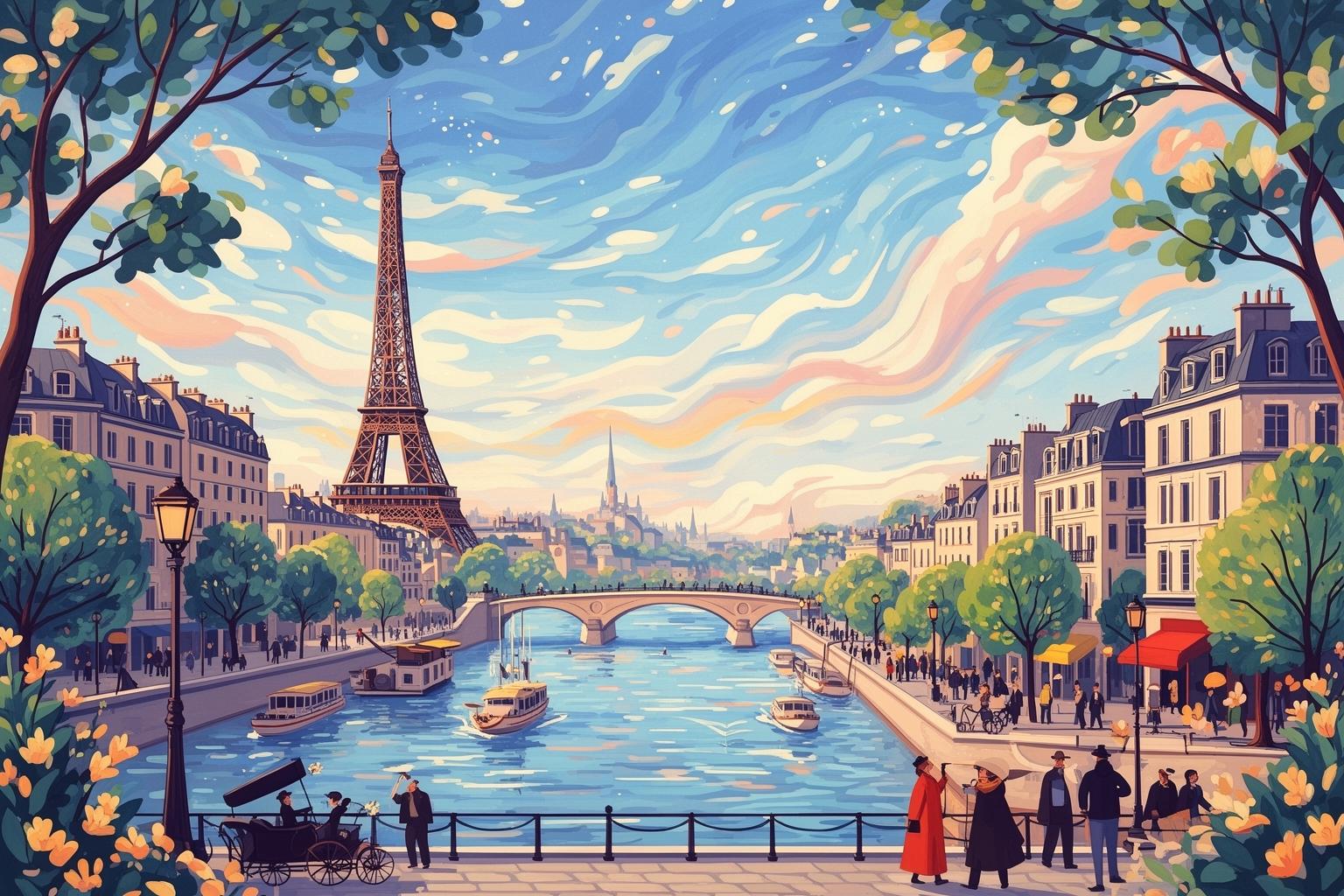
Situated across the Seine from the Louvre and housed in a magnificent former railway station, the Musée d’Orsay contrasts with the Louvre’s classical antiquity and royal grandeur by celebrating the revolutionary art of the 19th and early 20th centuries. Renowned as the world’s leading museum of Impressionist and Post-Impressionist art, it is a place filled with light, color, and a spirit of radical artistic freedom. The building itself is an artistic masterpiece, a stunning example of Belle Époque architecture that provides a dramatic and beautiful setting for the treasures inside.
Art in a Belle Époque Station
The Gare d’Orsay was constructed for the 1900 Exposition Universelle, the same world’s fair that saw the creation of the Grand Palais and Petit Palais. As trains grew longer, the station’s platforms became too short, leading to its eventual disuse. Scheduled for demolition, it was instead saved and brilliantly transformed into a museum in 1986. The conversion is a triumph: the grand, barrel-vaulted main hall where the tracks once lay is now a luminous sculpture gallery. Sunlight pours through the glass roof, illuminating the artworks below. One of the station’s most iconic features, the enormous clock, remains in its original place. From the museum’s upper level, looking through the clock face offers a unique and unforgettable view of the Seine and the Right Bank, framing the city within a circle of time.
A World of Light and Color
For any art lover, the Musée d’Orsay’s collection is a dream come true. It bridges the gap between the Louvre’s classical collections and the modern art of the Centre Pompidou. Here, you encounter the rebels and visionaries who broke from academic traditions to paint modern life as they experienced it. The top floor is devoted to the Impressionists, where you can immerse yourself in a world of shimmering light and fleeting moments. Stand before Monet’s Rouen Cathedral series, watching the light transform the stone’s color, or lose yourself in the dreamy, watery world of his Water Lilies. Admire Renoir’s vibrant and joyful Bal du moulin de la Galette, a scene of Parisian leisure, and Degas’s intimate portraits of ballet dancers. The Post-Impressionist collection is just as impressive, featuring Van Gogh’s emotionally charged Starry Night Over the Rhône and his self-portraits, Gauguin’s bold and exotic Tahitian landscapes, and Cézanne’s innovative structural paintings. The atmosphere is more intimate and less overwhelming than the Louvre, allowing a personal and emotional connection with these beloved artworks.
The Bohemian Heart: Saint-Germain-des-Prés
Located in the heart of the Rive Gauche (Left Bank), the Musée d’Orsay lies within a district long known as the center of Parisian intellectual and artistic life. After visiting the museum, take time to explore the nearby neighborhood of Saint-Germain-des-Prés, once home to the writers, philosophers, and artists of the 20th century. It is a pilgrimage destination for lovers of literature and philosophy. Visit the legendary cafés Les Deux Magots and Café de Flore, once favored by Jean-Paul Sartre, Simone de Beauvoir, Albert Camus, Ernest Hemingway, and James Joyce. Although now pricey tourist spots, sitting on their terraces with a coffee lets you soak up the history and imagine the brilliant conversations that once filled the air. The neighborhood also boasts fantastic art galleries, antique shops, and charming narrow streets that are a joy to wander.
Practical Tips for a Radiant Visit
Like the Louvre, the Musée d’Orsay is very popular, so booking tickets online in advance is highly recommended. The museum is closed on Mondays. To avoid large crowds, try visiting early in the morning when it opens or during its late hours on Thursdays. Its layout is more straightforward than the Louvre’s, but it’s still wise to take a map and plan a loose itinerary. Many visitors head straight to the top floor to see the Impressionists, but another approach is to start on the ground floor and move upward chronologically, tracing the artistic evolution that led to Impressionism. Don’t miss the stunning collection of Art Nouveau furniture and decorative arts on the middle level. For a break with a view, the museum’s restaurant, located in the station’s original, lavishly decorated dining room, is a treat. For a more casual option, the Café Campana on the fifth floor, with its quirky design and proximity to the giant clock, is an excellent choice.
The Artist’s Summit: Montmartre and the Sacré-Cœur
Rising above the city on its tallest hill lies the neighborhood of Montmartre. With its winding cobbled streets, charming ivy-covered houses, and sweeping views of Paris, it feels like a village apart from the busy metropolis below. For more than a century, Montmartre has been synonymous with artistic life—a bohemian haven attracting painters, writers, and musicians to its romantic and rebellious slopes. Topped by the gleaming white dome of the Sacré-Cœur Basilica, it is a place of pilgrimage for both the faithful and art lovers, a summit where the sacred and profane have always intertwined.
The White Basilica on the Hill
The Basilique du Sacré-Cœur is a relatively recent landmark, completed in 1914. Its Romano-Byzantine design, featuring bright white travertine stone that self-cleans with rain, stands in sharp contrast to the Gothic style of Notre-Dame. It symbolizes penance and hope, built after France’s defeat in the Franco-Prussian War. Inside, the mood is one of quiet reflection and spiritual reverence. The apse ceiling is adorned with one of the largest mosaics in the world, a breathtaking depiction of Christ in Majesty. Yet for many visitors, the true spiritual experience is found on the steps outside. Perched on its hill, the basilica offers one of the most magnificent panoramic views of Paris. It’s a favored spot to sit and watch the city unfold below. Street musicians often perform here, adding a soundtrack to the stunning vista. The atmosphere is communal and joyous, a shared moment of wonder at the city’s beauty.
A Pilgrimage to Place du Tertre
Just a short stroll from the Sacré-Cœur is the heart of bohemian Montmartre: the Place du Tertre. This lively, tree-lined square is filled with artists setting up their easels, offering to paint your portrait or sell landscapes of Parisian street scenes. Though it can feel busy and touristy, it is undeniably vibrant and steeped in history. This spot succeeds the artistic community that blossomed here at the turn of the 20th century. It was the stomping ground for artists such as Pablo Picasso, Amedeo Modigliani, and Maurice Utrillo. They lived in poverty, worked in makeshift studios like the famous Bateau-Lavoir, and transformed the art world. While today’s artists mainly cater to tourists, the square still holds the spirit of that creative energy. It’s a delightful place to wander, watch painters at work, and soak up the lively, carnival-like ambiance.
Winding Cobblestone Dreams
The true magic of Montmartre lies in wandering away from the crowded main square and losing yourself in its maze of side streets. Here you’ll find the authentic village atmosphere. Discover hidden staircases, tiny gardens, and quiet corners that feel worlds away from the city center. Seek out Paris’s last two remaining windmills, including the famous Moulin de la Galette, immortalized in Renoir’s painting. Explore the Montmartre Vineyard (Vigne du Clos Montmartre), a small, working vineyard producing a few hundred bottles of wine annually. Chance upon Le Mur des Je t’aime (The Wall of Love), a public art installation where “I love you” is written over 300 times in 250 languages—a perfect pilgrimage site for romantics. Every turn reveals a picturesque scene that seems lifted straight from a painting.
Montmartre on Screen: From Amélie to Moulin Rouge!
More than any other Parisian neighborhood, Montmartre has been immortalized on film, turning its streets into sacred ground for cinephiles. The most beloved example is Jean-Pierre Jeunet’s 2001 film, Amélie. Fans of the whimsical movie flock to Montmartre to follow the footsteps of its quirky heroine. You can visit the Café des Deux Moulins, the real café where Amélie worked (still looking much as it does in the film), and the Au Marché de la Butte grocery store. Walking these streets feels like stepping inside the film’s vibrant, color-rich world. Montmartre is also the backdrop for Baz Luhrmann’s spectacular musical, Moulin Rouge!. While the original cabaret remains at the bottom of the hill in Pigalle, its red windmill glowing as a beacon of nighttime entertainment, the whole neighborhood embodies the bohemian spirit of truth, beauty, freedom, and love celebrated in the film. This cinematic history adds a rich layer of narrative to the neighborhood, making a visit feel like entering a beloved dream.
A Final Note from the City of Light
Paris defies easy definition. It is both a grand monument and a quiet side street, a renowned painting and a simple croissant, a revolutionary past and a modern love story. It will meet your expectations and then surprise you in a thousand subtle ways. The landmarks serve as starting points, the anchors of your journey, but the real magic lies in the moments between—the stroll along the Seine at dusk, the discovery of a hidden courtyard, the taste of a perfect macaron. My advice for first-time visitors is this: see the icons, stand in awe of them, but also allow yourself to wander without a plan. Let the city lead you. Find a café, sit down, and simply watch the world go by. Paris is not a city to be conquered; it is one to be experienced, felt, and loved. It will capture your heart, and I promise, a piece of it will remain with you long after you return home.