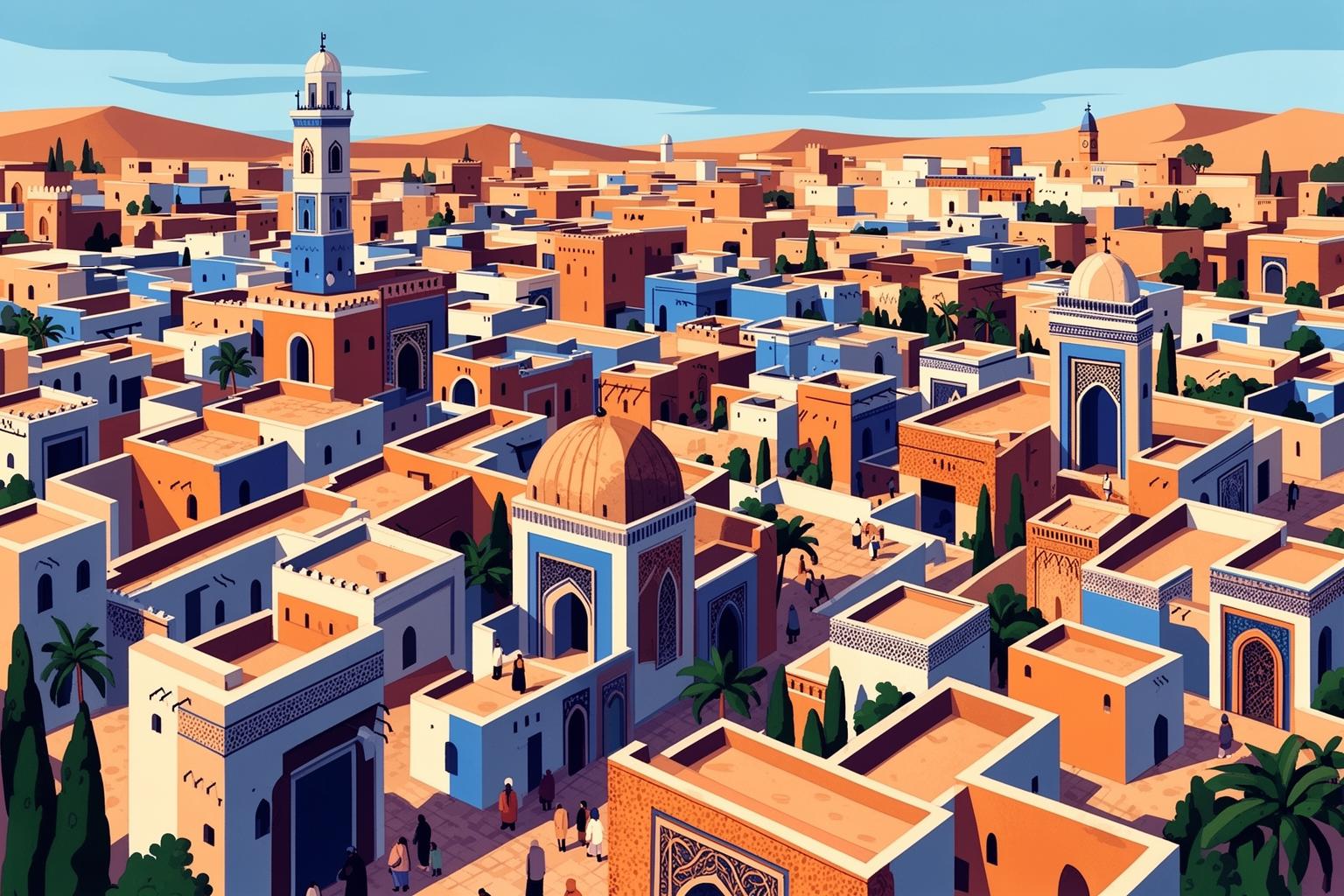
There are cities that you visit, and then there are cities that you experience with every atom of your being. Fes el-Bali is unequivocally the latter. It is not a place you simply see from the window of a tour bus; it is an immersive, living organism, a labyrinthine medieval world that breathes, clatters, and sings with the rhythms of a thousand years. To step through one of its ancient gates, like the magnificent Bab Bou Jeloud, is to leave the 21st century behind and plunge headfirst into a torrent of history, artistry, and raw, unfiltered life. This is not a relic preserved under glass; it is the world’s largest living medieval Islamic city, a UNESCO World Heritage site that functions not as a museum piece, but as a bustling home and workplace for tens of thousands of people. Its importance lies not just in its preserved architecture but in its unbroken chain of tradition, a place where crafts passed down through generations are practiced today just as they were in the 12th century. This is a pilgrimage for the soul that yearns for authenticity, a journey into a maze that promises not to trap you, but to show you the beautiful, chaotic heart of Morocco itself.
While Fes el-Bali offers a pilgrimage into a living medieval world, those drawn to literary labyrinths might also appreciate a journey through Elena Ferrante’s Naples.
Embracing the Glorious Chaos: Navigating the Medina
The first thing that captures your attention about Fes el-Bali, the old medina, is its incredible density. It’s a tapestry woven from over 9,000 alleyways, some so narrow you can touch both walls with outstretched arms. No cars are allowed here, nor any modern intrusions. The only traffic consists of a steady flow of people and the occasional donkey or mule carrying goods, their owners shouting “Balak! Balak!”—make way!—a sound that becomes the city’s unofficial soundtrack. Your senses are instantly overwhelmed, but in the most thrilling way. The air is rich with a symphony of smells: the warm, comforting aroma of baking bread from a communal oven, the sweet fragrance of spices like cumin and saffron heaped in vibrant pyramids, the earthy scent of leather from a nearby workshop, and the constant freshness of mint. Every turn reveals a new snapshot of daily life: children kicking a worn football against a mosaic-tiled wall, artisans hammering intricate patterns into brass trays, women carrying trays of dough to be baked, and the gentle, melodic hum of prayer drifting from a hidden mosque.
To navigate Fes is to surrender. Discard your map, tuck your phone away, and let the labyrinth lead you. The fear of getting lost is a Western notion here; in Fes, getting lost is the very purpose. It’s in the unplanned detours and dead-end alleys opening into sunlit courtyards that the city’s true magic unfolds. You might come across a tiny workshop where a man carefully carves cedar wood or discover a centuries-old fountain adorned with exquisite zellij tilework, its water still refreshing the neighborhood. The architecture itself serves as a guide. Notice the high, windowless walls lining the alleys; they hide opulent riads, traditional Moroccan homes with tranquil interior gardens and fountains, peaceful sanctuaries just steps from the bustling streets. Following the main routes, the Tala’a Kbira and Tala’a Sghira, will keep you on a fairly straight course through the heart of the souks, but the real adventure begins when you stray, drawn by a scent, a sound, or a flash of color down an unexplored path.
The Heart of the Craft: A Journey to the Tanneries
No trip to Fes is complete without experiencing the spectacle of its ancient tanneries, the most renowned of which is the Chouara Tannery. It is a sensory assault, a vivid scene that has remained largely unchanged for centuries. Before you even see it, you will smell it. The strong, ammonia-rich scent is unmistakable—a raw, earthy aroma that reflects age-old methods. As you draw near, local guides and shopkeepers will offer you a sprig of fresh mint to hold beneath your nose. Accept it kindly; this small gesture makes a significant difference. You don’t enter the tanneries at street level. Instead, you ascend a winding staircase into one of the many leather shops with terraces overlooking the remarkable view below.
And what a view it is. Before you lies a honeycomb of large stone vats filled with a spectrum of colors like an enormous artist’s palette. Men, often knee-deep in the dyes, work under the blazing Moroccan sun, moving between vats in a choreography honed over generations. The process is completely natural. The hides—from cows, sheep, goats, and camels—are first soaked in a blend of cow urine, quicklime, water, and salt to remove hair and soften them. They’re then placed in another set of vats containing water mixed with pigeon droppings, whose ammonia acts as a powerful softening agent. Finally, the hides go to the dyeing vats, where they’re colored with natural vegetable dyes: poppy for red, indigo for blue, henna for orange, saffron for yellow, and mint for green. Watching these men work with such strength and endurance, using techniques passed down through generations, is both humbling and deeply moving. It serves as a powerful reminder of the labor and craftsmanship behind the beautiful leather bags, babouches (slippers), and jackets found in the souks.
Finding the Best View
Although many leather shops provide views, the experience differs. Shopkeepers, naturally hoping you will buy something, can be quite persuasive. This is a fair trade for access to their prime vantage points. Take your time, browse their goods, and don’t feel rushed. A polite “no, thank you” or “la, shukran” is usually well respected. The quality of the leather here is often exceptional, and purchasing directly from these shops supports local artisans and helps preserve this incredible craft. For a lesser-known but equally captivating perspective, visit the Sidi Moussa Tannery on the medina’s opposite side. It is smaller than Chouara but offers a more intimate look at the tanning process with fewer crowds.
Sanctuaries of Knowledge and Beauty: The Medersas
Amid the beautiful chaos of the medina’s alleyways lie hidden sanctuaries of breathtaking beauty and serene contemplation: the medersas. These were once theological colleges, centers of learning where students from across the Islamic world gathered to study the Quran, as well as astronomy, mathematics, and medicine. Though they no longer function as active schools, they remain exquisite examples of Marinid architecture and artistry, open to visitors of all faiths. Stepping inside one transports you to a world of intricate detail and harmonious design.
One of the most stunning examples is the Bou Inania Medersa, founded in the mid-14th century. It is among the few religious buildings in Morocco that non-Muslims can fully enter. From the moment you cross its threshold, you are enveloped by masterful craftsmanship. Every surface appears adorned with beauty. Your eyes are drawn upward along walls decorated with elaborate zellij tilework in geometric patterns of cobalt blue, emerald green, and sunny yellow. Above the tiles, intricate stucco carved with the delicacy of lace gives way to massive cedar wood eaves and doors, darkened with age and covered in complex carvings. The central courtyard, with its marble fountain and tranquil atmosphere, feels worlds away from the noise of the street you just left. It is a space designed for quiet reflection, where you can almost hear the echoes of scholars debating theological points centuries ago.
Equally mesmerizing is the Al-Attarine Medersa, situated near the Al-Qarawiyyin Mosque and the spice souk. Though smaller than Bou Inania, its artistry is arguably even more refined. The courtyard’s balance, the precision of its tilework, and the sheer complexity of its plaster and wood carvings are astonishing. Look closely at the details—the calligraphy winding around the archways, the tiny, perfect shapes forming the larger patterns. It stands as a testament to the belief that beauty is an expression of the divine. Visiting these medersas offers more than an architectural tour; it provides profound insight into the cultural and intellectual history of Fes, a city that was once a beacon of knowledge in the medieval world.
The Great Mosque of Kairaouine
While exploring the area around the medersas, you will inevitably find yourself near the Kairaouine Mosque, also known as Al-Qarawiyyin. Founded in 859 AD by Fatima al-Fihri, it is not only a mosque but also the heart of one of the oldest continuously operating universities in the world. Its vast complex can accommodate over 20,000 worshippers. As a non-Muslim, you cannot enter the mosque itself, but you can catch tantalizing glimpses of its magnificent courtyard through one of the many open gates. Peering inside, you observe the expansive marble floor, the elegant archways, and the sheer scale of this ancient institution. The reverence the city holds for this place is palpable, and even from the outside, its historical weight and spiritual significance resonate deeply.
The Vibrant Arteries: Exploring the Souks
The souks of Fes el-Bali form the medina’s lifeblood—a vast, interconnected network of markets where commerce unfolds as a vibrant, theatrical art. Each souk traditionally specializes in a particular craft or product, creating distinct neighborhoods rich in sight, sound, and scent. Exploring them is an adventure in itself, offering a sensory journey into the heart of Fes’s economy and culture.
Begin your exploration at Souk el-Attarine, the spice market near the medersa of the same name. The air here is thick with the exotic aromas of countless spices. Sacks brim with fragrant cumin, turmeric, ginger, and paprika, while vendors expertly arrange pyramids of ras el hanout—the famous Moroccan spice blend. You’ll also encounter medicinal herbs, natural cosmetics like argan oil and kohl, and fragrant blocks of amber and musk. It’s a feast for both eyes and nose, an excellent place to find authentic flavors to take home.
Next, wander into the Nejjarine Souk, the workshop of the woodworkers. The rhythmic tapping of hammers and the sweet scent of cedarwood fill the air as artisans craft everything from ornate furniture and boxes to simple kitchen utensils. At the center of this area stands the Fondouk el-Nejjarine, a beautifully restored historic inn now home to the Museum of Wooden Arts & Crafts. Even if you don’t enter the museum, the building itself—with its stunning three-story courtyard and intricate carvings—is well worth a visit.
As you go further, you’ll arrive at Souk Henna, a charming square where you can buy henna for temporary tattoos along with traditional cosmetics like ghassoul clay and black soap. This relaxed and picturesque area centers around an ancient plane tree. Nearby, the clang of metal on metal will lead you to Seffarine Square, where coppersmiths and brassworkers hammer their creations into shape. The cacophony is striking—a raw, industrial symphony as they fashion gleaming trays, teapots, lamps, and cauldrons using age-old techniques. Watching these skilled artisans at work, their faces glowing from the sparks of their tools, is a mesmerizing sight.
A Note on Shopping
Shopping in the souks is an interactive experience. Bargaining is expected and is part of the culture, but should always be conducted with a smile and good humor. The initial price offered is rarely the final one. Have a clear idea of what you’re willing to pay and enjoy the friendly negotiation. It’s not about winning or losing but about human connection and mutual respect between buyer and seller. Never feel pressured to buy; if you’re only browsing, a simple “just looking, thank you” is perfectly acceptable. Shopkeepers are often wonderful sources of information and usually happy to share stories about their crafts and their city.
A Culinary Pilgrimage: The Tastes of Fes
Exploring Fes is incomplete without immersing yourself in its culinary scene. Fassi cuisine is celebrated throughout Morocco for its elegance, a reflection of the city’s imperial past. The cuisine is a flavorful fusion of Arab, Berber, Moorish, and Mediterranean influences, marked by subtle spice use and a delightful balance of sweet and savory tastes.
The iconic Moroccan dish, the tagine, reaches perfection in Fes. This slow-cooked stew is named after the conical earthenware pot it’s prepared in. The pot’s shape traps steam and recirculates condensed liquid back into the dish, producing tender meat and vegetables rich in flavor. Sample the classic lamb tagine with prunes and almonds, or try a chicken tagine with preserved lemons and olives. Another Fassi specialty to savor is pastilla (or b’stilla), a complex and tasty pie made with layers of paper-thin werqa pastry, stuffed with shredded pigeon or chicken, almonds, and spices like cinnamon and saffron, then dusted with powdered sugar and cinnamon. The blend of savory meat, crunchy nuts, and sweet topping delivers an unforgettable flavor experience.
For a more casual bite, explore the street food offerings. Look for stalls serving maakouda—crispy deep-fried potato cakes—or bissara, a warming fava bean soup often enjoyed at breakfast, topped with olive oil and cumin. Don’t miss trying a simple yet delicious sandwich from a small vendor, typically filled with grilled merguez sausage or flavorful kefta (minced meat). And naturally, no meal or social occasion is complete without mint tea. Nicknamed “Moroccan whiskey,” this sweet, aromatic drink is a hallmark of hospitality. It’s offered in shops, homes, and riads, and accepting it shows respect and friendship. Watching it being poured from a height into small, ornate glasses is a captivating ritual that aerates the tea and creates a frothy top.
For a truly unforgettable dining experience, seek out a restaurant with a rooftop terrace. As the sun sets and the call to prayer echoes across the city, sitting above the medina as it lights up is enchanting. The labyrinth that seemed chaotic by day transforms into a sparkling, mysterious vista, offering a moment of calm and reflection on your journey.
Practical Rhythms for the Fes Traveler
To make the most of your pilgrimage to Fes el-Bali, a bit of practical knowledge can be very helpful. Familiarizing yourself with the city’s rhythms and customs will enable you to fully immerse yourself in its remarkable culture.
When to Visit
The ideal times to visit Fes are in spring (April to June) and autumn (September to October). The weather during these seasons is mild and pleasant, perfect for wandering the medina’s narrow alleys. The summer months of July and August tend to be extremely hot, making daytime exploration difficult. Winter is cooler and may be rainy, but there are fewer tourists.
Where to Stay
For an authentic experience, consider staying in a riad inside the medina walls. These traditional houses, centered around a courtyard, provide peaceful and beautiful retreats. Waking up to the sound of a fountain and the aroma of a Moroccan breakfast being prepared is a unique experience. The hosts and staff are often very welcoming and can offer valuable local advice, from restaurant recommendations to arranging guides. Staying in a riad allows you to experience life at the pace of the old city, even if only for a short while.
Guides: To Hire or Not to Hire
Many first-time visitors wonder about this. Hiring an official, licensed guide on your first day can be an excellent way to get oriented. They can navigate the maze to key attractions, share insights about history and culture, and help you avoid getting lost initially. Official guides carry badges and can be booked through your riad or the local tourist office. After this initial overview, give yourself the freedom to explore independently. The charm of Fes is in personal discovery. Don’t hesitate to get lost; it is safe, and locals are usually helpful. If you need assistance, ask a shopkeeper for directions rather than young men or children offering their services for a fee, which can sometimes lead to awkward situations.
Respectful Travel
Morocco is a Muslim country, and Fes is known for its conservatism. It is essential to respect the local culture. Dress modestly, especially when walking through the medina—this means covering your shoulders and knees, for both men and women. Loose, breathable clothing suits the climate best. Be considerate when taking photographs; always seek permission before photographing people, and remember that photography is often prohibited inside mosques or religious sites. During the holy month of Ramadan, be especially sensitive, as many locals fast from sunrise to sunset. Although tourists are not expected to fast, it is respectful to avoid eating, drinking, or smoking in public during daylight hours.
The Echo of the Labyrinth
A trip to Fes el-Bali is far from a passive vacation; it is an active immersion in a world governed by its own ancient rhythms. This city challenges your sense of direction, sharpens your senses, and rewards you with moments of deep beauty and human connection. You will leave with your shoes dusted by medieval streets, your memory vivid with the vibrant hues of dye vats and the intricate designs of the medersas, and your senses still resonating with the sounds and scents of the souks. Though you may arrive fearing getting lost, you will depart realizing that in the labyrinth of Fes, losing your way is how you truly find yourself. It is a pilgrimage that lingers, a beautiful, chaotic, and unforgettable rhythm that will pulse in your heart long after you return home.