Out in the vast, deep blue expanse of the Atlantic, a secret is kept. It’s a secret whispered by the wind, carved into black volcanic cliffs, and sung in the ancient, booming voices of whales. This secret is the Azores, a mythic archipelago of nine islands, a verdant punctuation mark in the middle of the ocean. This isn’t a place you simply stumble upon; it’s a destination you seek, drawn by a primal call. It is a land forged by the planet’s inner fire and cradled by its mightiest ocean, a place where the dialogue between creation and life is a constant, thunderous, and beautiful reality. To journey here is to step into a living story, a saga of geological time and cetacean majesty. You come to the Azores not just to see, but to feel the pulse of the Earth itself, to witness the dance of giants in the abyssal depths, and to walk upon land that is still dreaming, still shifting, still becoming. It’s a place that recalibrates your sense of scale, reminding you of the immense, beautiful power that shapes our world, far from the hurried rhythms of continental life.
The Azores offer a profound pilgrimage for those seeking to walk upon land that is still dreaming, much like the experience of navigating the ancient medina in Fes el-Bali.
The Call of the Cetaceans: A Symphony in the Mid-Atlantic
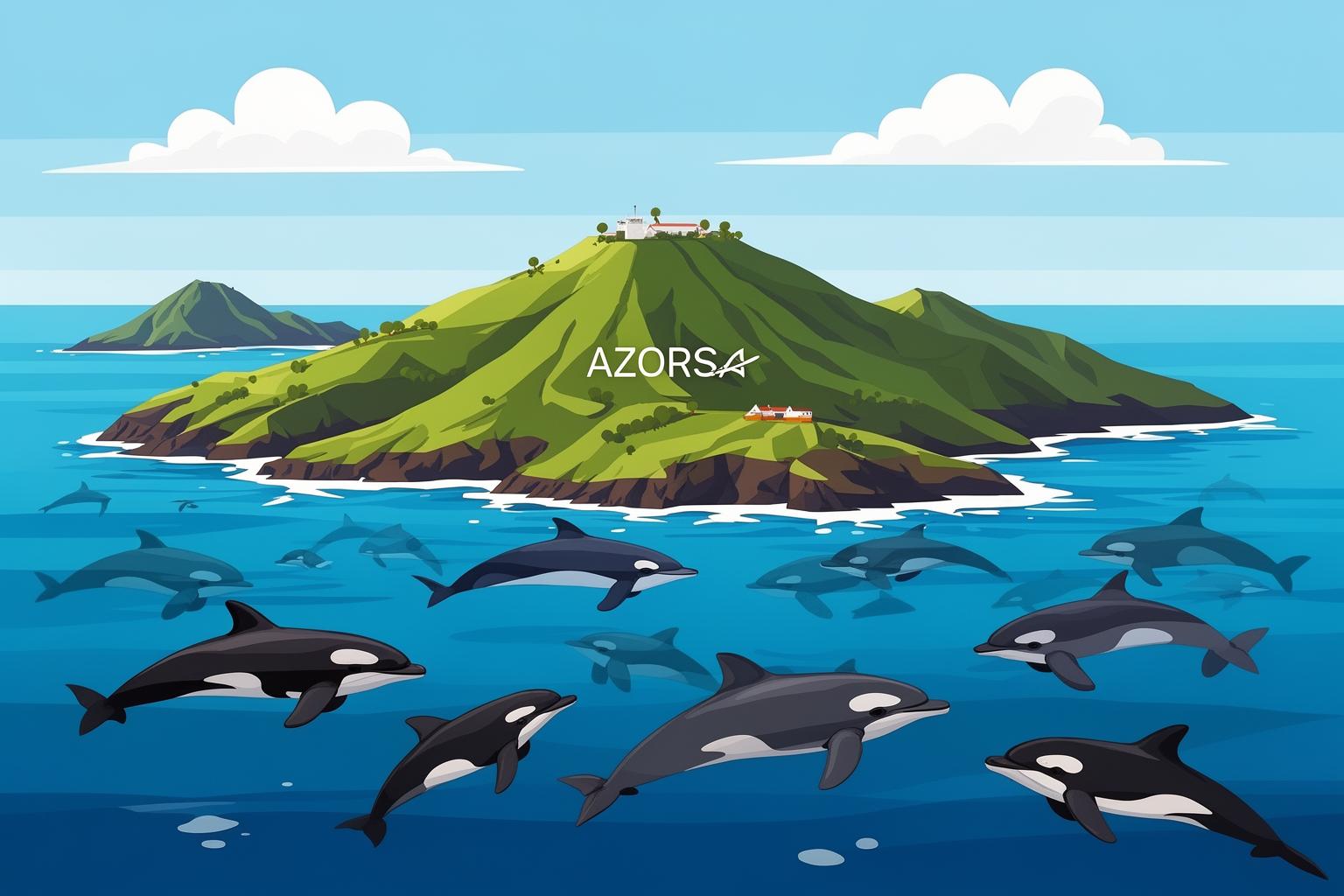
The story of the Azores is deeply intertwined with the great whales. For centuries, this relationship was marked by conflict, as Azorean men hunted these massive creatures in small wooden boats. Today, that legacy has shifted to one of respect and protection. The islands lie at a vital crossroads in the Atlantic Ocean, a meeting point for marine life. The Azores-Biscay Rise, an underwater mountain range, brings deep, cold, nutrient-rich waters to the surface, creating a rich feeding ground that draws a remarkable variety of cetaceans. This is not merely a place to spot whales; it’s one of the rare locations worldwide where you can truly sense their constant, powerful presence. More than twenty species of whales and dolphins either live here year-round or use these waters as an essential migratory route, turning every sea journey into an opportunity filled with immense possibility.
The Cast of Characters
Your oceanic adventure in the Azores introduces you to a revolving cast of magnificent creatures, each with its own story and rhythm.
The permanent residents, the giants of the deep, are the Sperm Whales. These are the whales of legend, the Moby Dick of our collective imagination. Observing a pod resting at the surface, their huge, block-shaped heads gently bobbing, is a deeply moving experience. They live in matrilineal societies, with females and their young forming close-knit family groups. The silence of the open ocean is broken by the sharp blast of their exhalations, a sound that carries across the water and through time. You watch, engine off, as they prepare for their next monumental dive, some lasting over an hour, plunging thousands of feet into the dark depths in search of giant squid. The final iconic image is the lifting of their broad tail flukes, a slow, deliberate wave goodbye as they disappear beneath, returning to a world beyond our understanding. The history of whaling is still felt here; the lookouts, or “vigias,” who once searched the horizon for sprays signaling the hunt, now use their powerful binoculars to guide tourist boats toward respectful encounters, their knowledge passed down through generations, their role beautifully redefined.
Then come the seasonal visitors, the true giants of our planet. From roughly March through early June, the Azores witness one of the most spectacular migrations on Earth. The great baleen whales, including the Blue Whale—the largest animal ever to live—pass through these waters. The sheer size of a Blue Whale is almost beyond comprehension. Its length exceeds that of three school buses, and its heart is the size of a small car. Seeing its mottled blue-grey back break the surface, followed by a blow that shoots thirty feet into the air, humbles like few other experiences. It’s a fleeting, breathtaking spectacle. You might also catch sight of Fin Whales, known as the “greyhounds of the sea” for their speed and streamlined form, or the sleek Sei Whales. These encounters rely on timing and fortune, powerful reminders of the planet’s vast, cyclical journeys far beyond human reach.
No Azorean sea tale would be complete without dolphins. They serve as the welcoming committee, the playful jesters of the sea. Large pods of Common Dolphins frequently race toward the boat, their yellow and grey hourglass patterns flashing as they leap from the water, riding the bow wave with what seems pure, unfiltered joy. Bottlenose Dolphins, larger and more robust, radiate calm intelligence, while the enigmatic Risso’s Dolphins, their bodies marked by white scars from social interactions and squid battles, resemble floating, carved stones. Their presence transforms the sea from a vast emptiness into a vibrant, lively, and playful stage.
The Experience of a Lifetime
A whale-watching trip in the Azores begins not on the water, but on land. In a small briefing room in Ponta Delgada, Horta, or Lajes do Pico, a marine biologist will guide you through the day’s possibilities. They speak with a passion rooted in profound respect for these animals, explaining the rules of engagement: how boats approach slowly and from the side, how engines are cut to reduce noise, and how a strict distance is observed. This is not a theme park; it is a pilgrimage into the wild.
Most tours use either sturdy RIBs (Rigid Inflatable Boats) or larger, more stable catamarans. RIBs offer a more intimate, exhilarating experience—you’re closer to the water, feeling each swell, sea spray misting your face. When a pod of dolphins surrounds you, you can almost meet their eyes. Catamarans provide more comfort, a higher vantage point, and amenities, ideal for those prone to seasickness or with young children. Both rely on the vital watch of the vigias, stationed in coastal towers, who scan the sea and communicate with the boats, guiding them across the vast blue expanse.
There is a moment on every trip, as the harbor fades behind and the island shrinks on the horizon, when the world seems reduced to water and sky. The engine hums, the boat cuts a white wake through the cobalt sea, and anticipation swells. Then, the radio crackles. The skipper changes course. The engine slows, then stops. In the ensuing silence, you listen. You watch. Everyone holds their breath. Then, a deep, resonant whoosh—the blow. A plume of vapor lingers in the air. A dark shape rises from the depths. Time seems to pause. It’s a moment of pure connection, a glimpse into another world, powerful, ancient, and utterly wild. It’s an experience that transforms you, leaving an unforgettable imprint on your soul.
Forged in Fire: Walking on the Bones of the Earth
The Azores are the visible peaks of vast underwater mountains, formed by the intense collision of the Eurasian, African, and North American tectonic plates. This is a land in flux, a geological infant continually shaped by tremendous forces beneath the surface. Exploring the islands is like wandering through a gallery of volcanic artistry, from tranquil crater lakes to steaming fumaroles and expansive fields of black, hardened lava. Each island showcases its own volcanic character, a distinct expression of the fire that smolders below.
São Miguel: The Fiery Heart of the Green Island
São Miguel, the largest and most populous island, offers a perfect introduction to the Azorean landscape. Its nickname, the “Green Island,” is well deserved, with rolling pastures and dense forests, yet this verdant cover hides a fiercely volcanic core.
The most iconic scene in the Azores is Sete Cidades. From the Vista do Rei (King’s View) viewpoint, you look down into a five-kilometer-wide caldera containing two remarkable lakes—one emerald green (Lagoa Verde) and the other sapphire blue (Lagoa Azul). Legend has it that these lakes were formed from the tears of a green-eyed princess and a blue-eyed shepherd, star-crossed lovers doomed to be apart. The scientific explanation involves variations in depth and light reflection, but the legend feels more real when you stand there. Hiking along the crater rim feels like walking the edge of the world, with the peaceful lakes on one side and the infinite Atlantic on the other. Driving down into the caldera and visiting the quiet village of Sete Cidades feels like stepping into a lost world, a tranquil community nestled inside the giant’s silent mouth.
Further east is Furnas Valley, where the Earth’s breath is visible. This is another huge caldera, but instead of calm lakes, it’s a landscape alive with geothermal activity. The air is heavy with a pungent yet strangely cleansing sulfur scent. At Caldeiras das Furnas, wooden boardwalks guide you past bubbling mud pots, steaming geysers, and vents exhaling volcanic gas. It feels prehistoric—a glimpse into the planet’s ancient past. Near the shores of the beautiful Lagoa das Furnas, mounds of earth release steam. Here, local restaurants prepare the famous Cozido das Furnas, a hearty stew of meats and vegetables cooked underground in large pots, slow-cooked by natural volcanic heat. Eating this meal is literally tasting the island’s energy.
For a truly immersive experience, visiting Terra Nostra Park is essential. This centuries-old botanical garden is a maze of exotic flora, with towering ferns, ancient trees, and vibrant camellias. Its centerpiece is a large, rust-colored geothermal pool. Rich in iron and minerals, the water stays at a soothing 35–40°C (95–104°F). Wading into the opaque orange water is surreal—you bathe in the warm, mineral-rich blood of the volcano, surrounded by a green paradise. It is both relaxing and invigorating, a ritual of renewal in the island’s elemental power.
Pico Island: The Dragon’s Spire
Pico is dominated by one awe-inspiring presence: Mount Pico. This perfectly conical stratovolcano, the highest point in Portugal, rises 2,351 meters (7,713 feet) above the Atlantic. It is the island’s soul and a constant landmark, its summit often crowned by clouds. Climbing Pico is a rite of passage for many. The ascent usually starts at night, with a line of headlamps winding up the dark, rugged path. You scramble over sharp volcanic rocks and tackle steep slopes beneath a star-studded sky far from city lights. The goal is to reach the summit crater and then the small cone inside it, Piquinho, in time for sunrise. As the first light ignites the horizon, you stand above a sea of clouds, gazing at the nearby islands of Faial and São Jorge floating like sister ships. It’s a moment of profound achievement and humble beauty—a feeling of standing on the Atlantic’s very rooftop.
Pico’s volcanic nature also underpins its famed wine production. The island’s northern coast is a UNESCO World Heritage site, a tribute to human ingenuity in a harsh environment. For centuries, locals have cultivated vineyards protected by thousands of small, rectangular basalt stone walls (currais). These walls shield the fragile vines from the salt-laden winds and absorb the sun’s warmth, radiating it back at night. Walking through this intricate black stone grid feels like strolling through living land art. The wine produced here, especially the white Verdelho, is crisp, dry, and mineral-rich—an expression of volcanic soil and salty air. Sampling it while gazing out at the sea connects you to the island’s history of resilience and perseverance.
Faial: Destruction and Renewal
Faial Island teaches a powerful lesson in volcanoes’ raw, creative, and destructive forces. On its western tip lies Capelinhos Volcano, a landform that did not exist before 1957. An eruption that began offshore and lasted more than a year created a new peninsula, burying the nearby lighthouse in ash and dust. Today, the landscape is stark, monochrome, and utterly captivating—like walking on the moon. The half-buried lighthouse stands as a poignant symbol of nature’s power to reshape the world. The excellent underground interpretation center tells the eruption’s story through compelling footage and exhibits, explaining the geological forces and the human impact, which spurred emigration to the United States. Capelinhos is not just a place of devastation—it’s a living laboratory of ecological colonization, where hardy pioneer plants are slowly reclaiming the grey ash with a fuzzy green carpet. It’s a place for quiet reflection on destruction and rebirth cycles.
Terceira: The Painted City and the Hollow Mountain
Terceira Island blends volcanic geology with a vibrant human history. Its capital, Angra do Heroísmo, is a UNESCO World Heritage Site, a charming city featuring colorful Renaissance buildings, cobbled streets, and lively plazas. Although the city was devastated by a 1980 earthquake, it was painstakingly restored, reflecting the people’s resilience in living on shaky ground.
Terceira’s most remarkable volcanic marvel lies inland: the Algar do Carvão. This is not a mountain to climb, but a volcano to descend into. It is an ancient, extinct vent—a vast hollow cavern plunging 90 meters underground. You descend steps into a cathedral-like space with walls glistening with moisture, adorned with lush mosses, ferns, and delicate silica stalactites sparkling like gems. At the bottom is a crystal-clear lake, its depth varying with the seasons. Looking upward, you see the sky framed by the volcano’s mouth—a perfect circle of blue or gray. The acoustics are ethereal, every sound echoing in the immense chamber. Standing inside Algar do Carvão feels like standing in the throat of the volcano—a place of profound stillness and awe. It is a sacred experience, a journey to the core of the island’s soul.
The Azorean Rhythm: Life Between Land and Sea
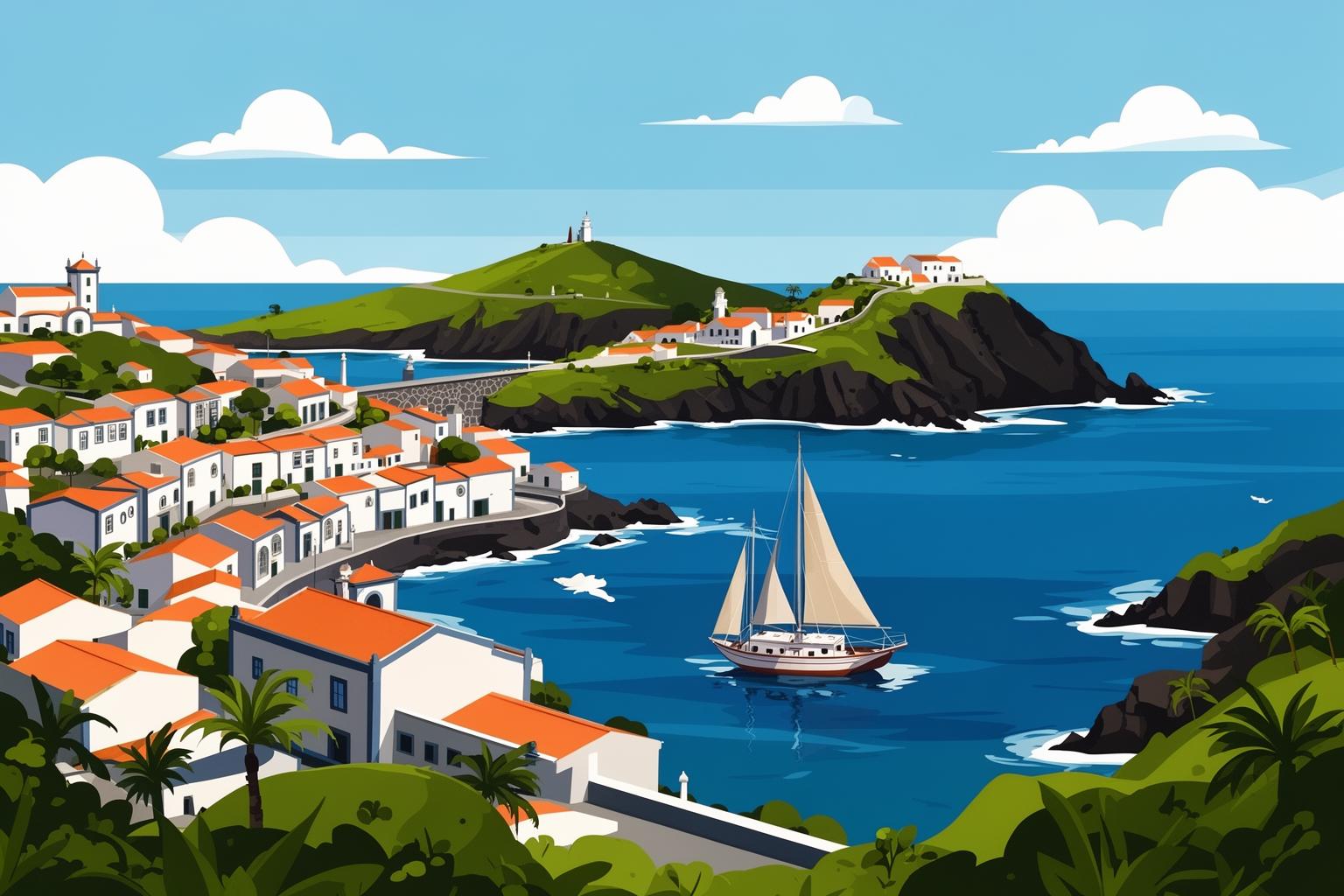
To truly grasp the essence of the Azores, you need to attune yourself to its distinctive rhythm. Life here is shaped by the weather, the sea, and the changing seasons. Isolation has fostered a strong sense of independence and community. The pace is slower and more intentional. People take the time to chat, lend a hand, and share a coffee. The frequent experience of “all four seasons in a day”—where sunshine suddenly gives way to fog rolling in from the sea, followed by a brief rain shower and then a vivid rainbow—imparts an important lesson in adaptability and savoring the present moment.
A Culture of Resilience
The Azorean people are molded by their environment: resilient, practical, and deeply tied to their land and sea. Their history reflects building a life amidst both stunning beauty and formidable challenges. This resilience is embedded in their culture, from lively religious celebrations such as the Holy Ghost Festivals with their parades and communal feasts, to their music, often imbued with saudade, the uniquely Portuguese feeling of longing and nostalgia. Each island boasts its own subtle dialect, traditions, and signature cheese. São Jorge is renowned for its robust, aged cheese; Graciosa is called the peaceful “White Island”; Flores and Corvo are remote, wild retreats of stunning natural splendor. Discovering the differences among the islands is part of the adventure.
The landscape is dotted with small, meticulously maintained farms, divided by walls of volcanic rock. Iconic Azorean dairy cows graze lush, vividly green pastures, their milk producing the region’s famous dairy products. Instead of billboards, the roads are flanked by large, blooming hedges of blue and purple hydrangeas, an invasive species that has nonetheless become a symbol of the islands’ rich beauty.
Tastes of the Archipelago
Azorean cuisine is straightforward, genuine, and richly flavorful, reflecting the bounty of its environment.
The ocean is at the heart of the menu. Dining at a seaside restaurant with waves crashing just steps away, you can enjoy whatever the fishermen have caught that day. Grilled limpets (lapas), served sizzling in garlic and butter, are a classic Azorean treat. Octopus, simmered until tender in red wine, is another staple. The fish—tuna, swordfish, forkbeard, parrotfish—is grilled to perfection and simply seasoned with salt, garlic, and pepper, allowing the freshness to shine.
From the land comes the hearty dishes that have nourished generations. São Miguel’s Cozido das Furnas is a must-try, featuring exceptionally tender and flavorful beef from free-range, grass-fed cattle. On Terceira, Alcatra is the signature dish, a pot roast slow-cooked in a clay pot with red wine, bacon, and spices until it melts in your mouth. São Jorge cheese, aged for months to develop a sharp, tangy flavor, is a delicacy cherished throughout Portugal and beyond. For something sweet, the pineapples grown in São Miguel’s greenhouses are famously sweet with low acidity.
The Azores also host Europe’s only commercial tea plantations. At the Gorreana and Porto Formoso estates on São Miguel, you can stroll through rolling fields of tea bushes—more commonly seen in Asia—tour 19th-century factories to observe historic machinery still in use, and sample the finished tea.
Practical Navigation for the Atlantic Voyager
Traveling to a remote archipelago takes some planning, but the rewards are truly priceless. Thinking ahead will help make your trip as smooth as the still surface of a crater lake on a windless day.
Getting There and Around
The Azores are more reachable than you might expect. The main entry points are the airports in Ponta Delgada (PDL) on São Miguel, Terceira (TER), and Horta (HOR) on Faial. There are direct flights from mainland Portugal, several other European cities, and even from the East Coast of North America (Boston, New York, Toronto).
Island hopping is a key part of the Azorean adventure. For longer trips, such as from São Miguel in the eastern group to the central or western islands, flying is the only practical means. SATA Air Açores operates these inter-island flights. For the central group islands of Pico, Faial, and São Jorge—familiarly known as the “Triangle”—the ferry service run by Atlanticoline is excellent. The trips are short, scenic, and frequent, especially during summer. It’s a delight to approach Mount Pico from the sea or sail into Horta’s vibrant, colorful marina. Booking flights and ferries well in advance is highly recommended, especially if you’re traveling in the busy months of July and August.
Where to Stay
Accommodations in the Azores suit every type of traveler. The larger cities of Ponta Delgada and Angra do Heroísmo provide a variety of modern hotels. For a cozier experience, seek out charming guesthouses or historic estates called quintas. The true charm often lies in rural tourism houses (Turismo Rural). These are typically renovated farmhouses or cottages where you can enjoy the peaceful countryside, waking up to cowbells and the fresh scent of earth. Staying in several different places, even on a single island like São Miguel, will deepen your appreciation of its varied landscapes.
What to Pack
When packing for the Azores, the key word is layers. The weather is famously unpredictable and can shift quickly. A warm, sunny morning can turn into a misty, windy afternoon. A waterproof and windproof jacket is essential year-round. Sturdy, waterproof hiking shoes are crucial for exploring volcanic trails that can be rough and muddy. Even during summer, bring a fleece or warm sweater for cooler nights and higher elevations. Sun protection is vital—the Atlantic sun can be strong, so pack a hat, sunglasses, and high-SPF sunscreen. Don’t forget your swimsuit, for both the ocean and the amazing geothermal hot springs. A pair of binoculars will greatly enhance your whale watching, and a reusable water bottle is a smart way to stay hydrated while reducing plastic waste.
A First-Timer’s Compass
For your first trip, it’s wise to avoid overambition. The Azores are meant to be savored, not rushed. Attempting to visit all nine islands in a week or two will lead to exhaustion. Instead, concentrate on one island group. Spending a week on São Miguel alone offers plenty to see and do. Alternatively, a week exploring the central “Triangle” of Pico, Faial, and São Jorge provides a wonderful, diverse experience.
Renting a car is the best way to get around. Public transport is limited, and having your own vehicle allows you to stop at every hidden viewpoint (miradouro), follow winding roads down to secluded fishing villages, and travel at your own pace. The roads are generally in great condition, though some can be narrow and steep.
Above all, remain flexible. Adopt the Azorean mindset. Your whale watching trip might be canceled due to rough seas. Your hike up Mount Pico might be shrouded in fog. A ferry could be delayed. These are all part of the experience of being on a small island in the vast ocean. Release rigid plans and welcome spontaneity. Often, it is in these unplanned moments—getting lost on a country road and finding a stunning waterfall, or sheltering from rain in a cozy café and chatting with locals—that the true magic of the Azores reveals itself.
An Echo in the Soul
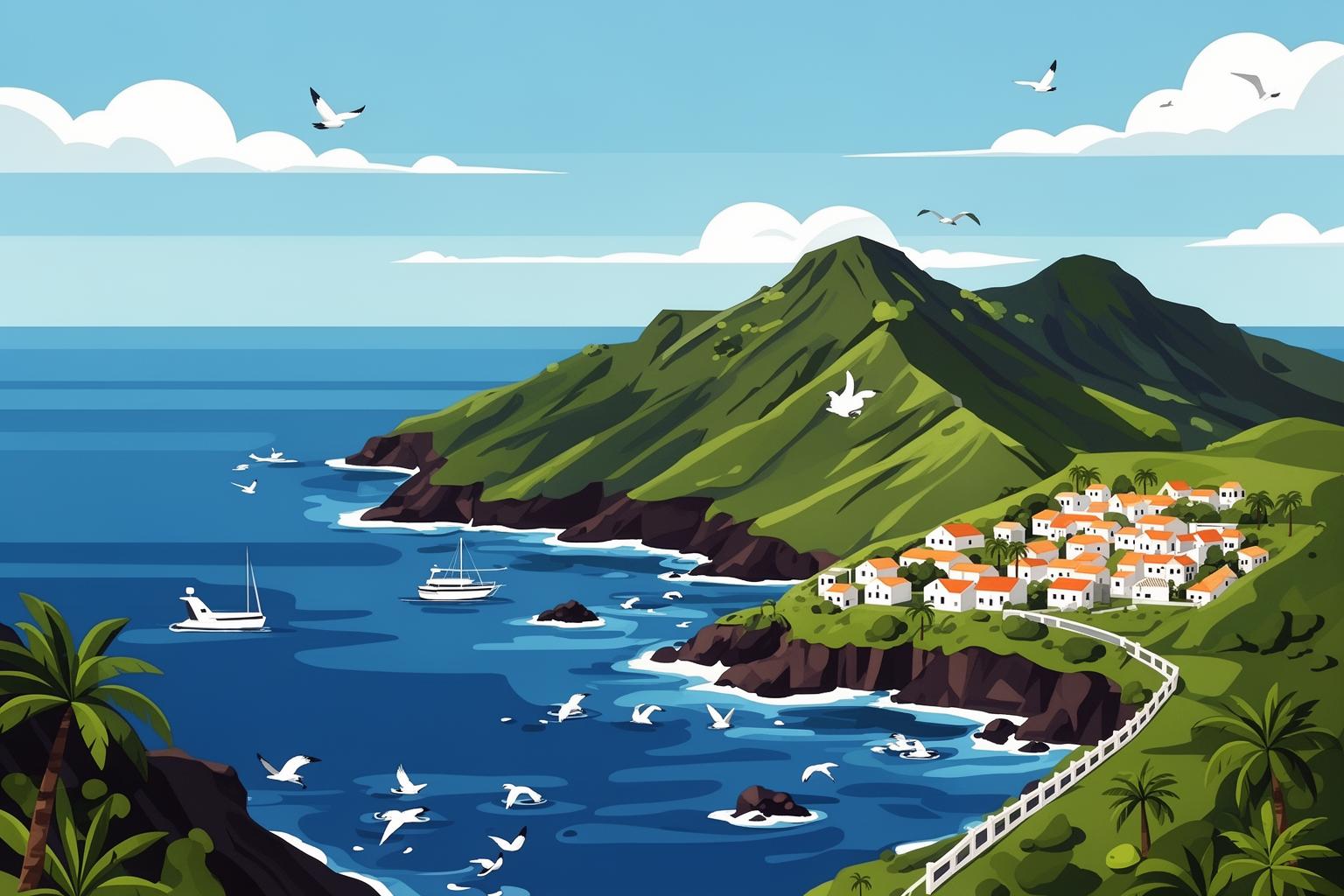
You leave the Azores with more than just photographs; you carry a feeling. It’s the sensation of a whale’s deep, resonant call vibrating through the hull of your boat. It’s the warmth of geothermal waters on your skin, the taste of salt on the breeze, and the mineral sharpness of wine nurtured by black volcanic rock. You depart with a renewed awareness of the Earth as a living, breathing entity—a planet of immense power, stunning beauty, and remarkable resilience.
The Azores serve as a reminder that some of the most breathtaking places in the world emerge from chaos. It’s a place that connects you to the vast stretches of geological time and the ancient rhythms of the ocean. The echoes of giants—the dormant volcanoes beneath your feet and the majestic cetaceans in the deep blue—linger long after you’ve returned to the mainland. This journey doesn’t just reveal a new destination; it reveals a new way of seeing the world, leaving a quiet yet profound echo within your soul.