Kyoto. The name itself whispers of a time gone by, a world of imperial grace, disciplined warriors, and artists who found the universe in a single brushstroke. This is not just a city; it is a living museum, the cultural heart of Japan, a place where every stone path and temple bell seems to echo with centuries of prayer and contemplation. To walk through Kyoto is to walk through history itself, but the true soul of this ancient capital reveals itself most profoundly in its sacred spaces—the sprawling temple complexes and the meticulously crafted gardens that serve as their tranquil heart. This is a journey not just to see sights, but to feel a rhythm, to understand an aesthetic that has shaped Japanese culture for over a thousand years. It’s an exploration of the profound relationship between humanity, nature, and the divine, a pilgrimage into a world of serene beauty where every detail holds a universe of meaning. From the radiant gleam of a golden pavilion to the silent poetry of a rock garden, Kyoto’s temples and gardens are not mere attractions; they are portals to a deeper understanding of a world where stillness speaks volumes and beauty is found in both grandeur and quiet imperfection. Prepare to leave the hurried pace of the modern world behind and step into a landscape designed for the soul.
For a different kind of pilgrimage that finds the divine in nature’s raw majesty, consider a journey into Yosemite’s granite heart.
The Northern Hills: A Realm of Gold and Stone
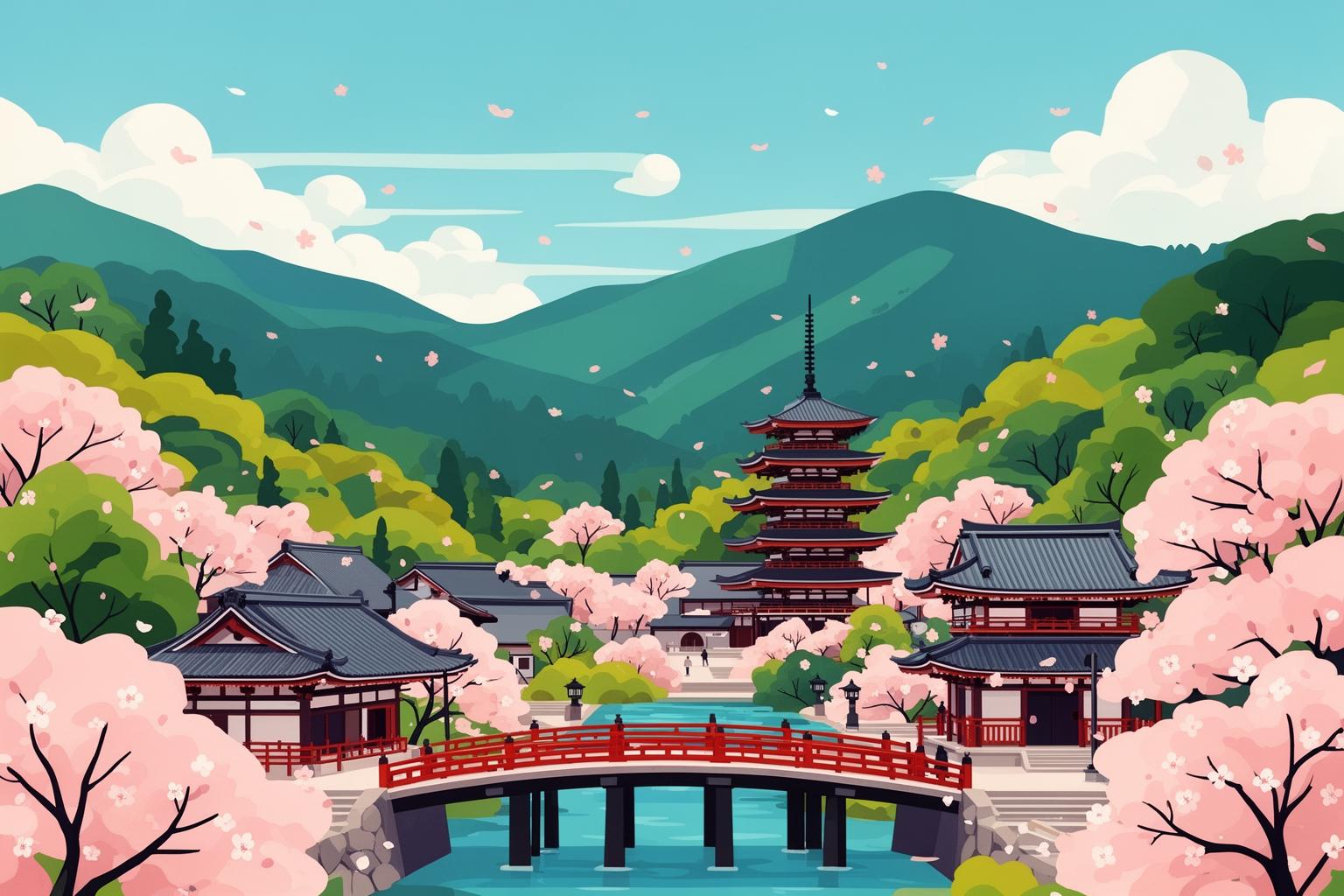
Our journey begins in Kyoto’s northern foothills, in the Kitayama area, where the air tends to be cooler and the mountains form a stunning backdrop to some of the city’s most iconic Zen masterpieces. This is a land of striking contrasts, where the lavish opulence of a golden shogun’s retreat coexists with the profound emptiness of a meditative rock garden. Exploring this district offers insight into the wide spectrum of Zen aesthetics, from the material to the metaphysical, all within just a few peaceful kilometers.
Kinkaku-ji: The Golden Pavilion’s Radiant Reflection
Few images of Japan are as universally recognized as Kinkaku-ji, the Temple of the Golden Pavilion. It appears on postcards, in travel guides, and in dreams of Japan. Yet, no photograph can truly prepare you for the moment when you round a corner and see it firsthand. It is a breathtaking, almost surreal sight. The top two floors are entirely covered in shimmering gold leaf, gleaming brilliantly against the lush green forest and vivid blue sky. Its perfect reflection is mirrored in the tranquil Kyōko-chi, or Mirror Pond, creating a sublime symmetry that feels almost otherworldly.
Originally built as a retirement villa for the powerful Shogun Ashikaga Yoshimitsu in the late 14th century, it was transformed into a Zen temple of the Rinzai sect after his death, as per his will. The structure you see today is a flawless reconstruction, meticulously rebuilt following a devastating arson in 1950 by a novice monk—an event immortalized in Yukio Mishima’s novel “The Temple of the Golden Pavilion.” The reconstruction was a national act of devotion, a refusal to allow such an emblem of beauty to be lost.
The pavilion’s design is a masterclass in syncretic architecture. Each of the three floors reflects a different style. The first floor, called the Chamber of Dharma Waters, is built in the shinden-zukuri style typical of Heian imperial palaces, with natural wood pillars and white plaster walls evoking grounded elegance. The second floor, the Tower of Sound Waves, adopts the buke-zukuri style of samurai residences. The third floor, known as the Cupola of the Ultimate, is fashioned after a traditional Chinese Zen Hall, gilded inside and out and housing sacred Buddhist relics. This architectural fusion narrates a story of power, spirituality, and artistic influence.
Visiting Kinkaku-ji involves following a prescribed path around the pond—which is less restrictive and more a form of masterful choreography. The garden’s designers intended visitors to view the pavilion from carefully composed angles. As you walk, the perspective shifts, revealing new facets of its brilliance. The ideal time to visit is on a clear, sunny day, either early morning when the light is soft, or late afternoon when it strikes the pavilion with fiery intensity. A visit on a calm day, when the reflection is glassy and perfect, offers an unforgettable experience. Even under cloudy skies, the gold emits a warm, soft glow that feels both comforting and vibrant. After passing the pavilion, the path leads up through the gardens behind it, past a small waterfall and a teahouse, allowing the initial awe to settle into a quieter appreciation of the landscape that embraces it.
Ryōan-ji: The Silent Poetry of a Rock Garden
From the dazzling material splendor of Kinkaku-ji, a short bus ride or pleasant walk brings you to its complete opposite: Ryōan-ji, the Temple of the Dragon at Peace. Here, ultimate beauty is found not in gold, but in absence. The temple is renowned worldwide for its kare-sansui, or dry landscape garden, a masterpiece of Zen minimalism that has both puzzled and captivated visitors for over 500 years.
Upon entering the temple grounds, you first stroll through a lovely park with a large pond—a gentle prelude to the main attraction. Yet nothing prepares you for the stark simplicity ahead. Before you lies a rectangular plot of raked white gravel, about the size of a tennis court, from which rise fifteen moss-fringed rocks of various sizes, grouped in five clusters. That is all. There are no trees, water, or flowers within this enclosure. The only color comes from the moss at the base of the stones and the weathered earthen wall framing the scene.
The genius of this garden is its profound mystery. From any seat on the wooden veranda, at least one of the fifteen stones is always hidden from view. It is said that only through attaining enlightenment can one see all fifteen simultaneously. The garden functions as a koan—a Zen riddle designed to transcend rational thought. What might it represent? A tiger and her cubs crossing a river? Islands scattered in a vast ocean? Constellations in the night sky? There is no single answer. The garden serves as a canvas for your own mind, reflecting your state of consciousness. Its power lies in what it evokes, not what it plainly depicts.
The atmosphere is one of deep, meditative silence. Visitors from around the world sit quietly on the steps of the Hojo, the head priest’s former residence, gazing thoughtfully at the rocks. There is an unspoken agreement to maintain this quietude—people don’t rush through with quick photos but instead sit, breathe, and contemplate. The act of viewing becomes a form of meditation. You notice the precise, wave-like patterns raked daily into the gravel by monks, and observe how shifting sunlight casts long, evolving shadows, giving the garden a subtle sense of life and motion. A visit to Ryōan-ji is an exercise in patience and perception. Avoid trying to “figure it out.” Instead, allow your mind to still and simply experience the profound peace of its silent, stony poetry. It embodies the Zen concept of “mu,” or emptiness, reminding us that sometimes what is omitted holds more power than what is included.
Ninna-ji: Imperial Grace and Late-Blooming Cherries
Not far from the Zen austerity of Ryōan-ji lies Ninna-ji, a temple radiating a very different character—imperial grandeur and refined elegance. Founded in the 9th century by Emperor Uda, who became its first head priest after abdicating the throne, Ninna-ji served for centuries as a residence for retired emperors and imperial princes who entered the priesthood. This legacy imparts a palatial atmosphere that distinguishes the complex.
Ninna-ji is an expansive site, featuring a towering five-storied pagoda, elegant prayer halls, and beautifully landscaped grounds. One of its most distinctive elements is the Goten, or palace building, relocated here from the Kyoto Imperial Palace in the 17th century. Walking through its polished wooden corridors, you can admire exquisite fusuma (painted sliding doors) depicting natural scenes and look out onto pristine inner gardens crafted exclusively for aristocratic viewing. The atmosphere here emphasizes courtly appreciation of cultivated beauty rather than solitary Zen contemplation.
However, Ninna-ji is perhaps best known for a unique natural feature: the Omuro cherry trees. This grove of late-blooming, shorter sakura trees is a local treasure. When cherry blossoms elsewhere in Kyoto have already peaked and begun to fall, Ninna-ji’s Omuro cherries burst into bloom, extending the sakura season by an extra week or two. Walking through the grove in full bloom is an immersive experience—the branches hang low, creating a fragrant canopy of white and pink blossoms at eye level, a striking contrast to the taller cherry trees found elsewhere. The sight of the temple’s five-storied pagoda rising above this sea of blossoms is one of Kyoto’s most beloved spring views. This connection to a distinct natural phenomenon gives Ninna-ji a vibrant seasonal pulse, making it a cherished destination for flower lovers and pilgrims alike.
Higashiyama’s Slopes: Walking Through History’s Embrace
We now turn to the eastern hills of Kyoto, known as the Higashiyama district. While Kitayama reflects the intellectual rigor of Zen, Higashiyama embodies its aesthetic soul and the seamless blending of sacred spaces with everyday life. This district is one of Kyoto’s best-preserved historic areas. Its narrow, stone-paved streets, traditional wooden architecture, and magnificent temple complexes evoke a journey back in time. Walking here means following in the footsteps of centuries of pilgrims, poets, and artists who have sought inspiration on these gentle slopes.
Ginkaku-ji: The Silver Pavilion’s Wabi-Sabi Essence
At the northern edge of Higashiyama, nestled at the mountain’s base, stands Ginkaku-ji, the Temple of the Silver Pavilion. Its name naturally invites comparison to the Golden Pavilion, yet it is a study in contrasts. Built by Shogun Ashikaga Yoshimasa, the grandson of Kinkaku-ji’s founder, this villa was meant to be his refuge from a turbulent world. Although plans existed to cover it with silver foil, they were never carried out. It is in this unfulfilled vision that the temple’s profound beauty truly lies.
Ginkaku-ji perfectly embodies the Japanese aesthetic of wabi-sabi—the appreciation of beauty that is imperfect, transient, and incomplete. The dark, unadorned wood of the pavilion does not demand attention; it softly whispers. It absorbs light rather than reflecting it, merging quietly with its natural surroundings. Instead of golden extravagance, there is a deep, restrained elegance.
The true gems here are the gardens. Immediately upon entering, you are welcomed by two remarkable sand sculptures. One is a large truncated cone called the “Moon Viewing Platform,” designed to catch moonlight. The other is the Ginshadan, or “Silver Sand Sea,” a vast spread of white gravel meticulously raked into precise lines. These stark, abstract shapes are both grounding and ethereal.
From this point, a path leads into one of Japan’s most exquisite moss gardens, a realm of endless shades of green. The moss, thick and velvety, carpets the forest floor, climbs over stones, and clings to the roots of ancient trees. The path gently ascends the hillside, offering shifting views. You cross rustic stone bridges over babbling streams and catch glimpses of the pavilion framed by maple and pine trees. From the hilltop viewpoint, you can gaze down on the entire temple complex and across Kyoto itself. The sensation is one of deep peace and harmony. Ginkaku-ji invites a different kind of appreciation—it encourages you to slow down, to notice the subtle textures, the play of light and shadow on the moss, and the quiet dignity of weathered wood. It serves as a powerful reminder that beauty need not be loud or flawless to be profoundly moving.
The Philosopher’s Path: A Reflective Walk
Just beyond Ginkaku-ji’s entrance begins one of Kyoto’s most cherished promenades: the Tetsugaku-no-michi, or Philosopher’s Path. This gentle stone walkway follows a narrow, tree-lined canal for about two kilometers, linking Ginkaku-ji in the north to the Nanzen-ji neighborhood in the south. It takes its name from Nishida Kitaro, one of Japan’s most important modern philosophers, who was said to walk this route daily as part of his meditation practice while teaching at Kyoto University.
It’s easy to see why he chose this path for contemplation. The walk itself is a journey, a smooth transition between the sacred and the mundane. The canal murmurs softly alongside the path, shaded by hundreds of cherry trees. In early April, this becomes one of the country’s most magical places, as the sakura burst into bloom, forming a breathtaking tunnel of pale pink flowers. Petals drift like snow, covering the path and floating on the water’s surface—a perfect, fleeting embodiment of Japanese aesthetics.
The path delights in every season. In summer, it serves as a cool, green oasis amid the city heat. In autumn, cherry and maple leaves blaze vibrant reds and golds. In winter, its quiet, austere beauty offers a different kind of calm. The walk is more than just a route from one place to another; it invites a slower pace. Along the way, charming cafes, craft shops, and small, nearly hidden temples beckon detours. One such treasure is Hōnen-in, a rustic and tranquil temple with a moss-covered thatched gate, just a short climb from the main trail. A stroll on the Philosopher’s Path is a quintessential Kyoto experience—a chance to clear one’s mind and absorb the gentle beauty of the city.
Kiyomizu-dera: The Temple Over the Sacred Waterfall
As the Philosopher’s Path curves southward, it leads into the bustling southern Higashiyama district, culminating in a dramatic arrival at Kiyomizu-dera, the “Pure Water Temple.” The approach enhances the experience. You climb the steep, lively streets of Sannenzaka and Ninenzaka, whose flagstones are worn smooth by millions of pilgrims over the centuries. The lanes bustle with traditional shops selling pottery, sweets, and crafts, filled with a lively energy.
Perched on Mount Otowa’s hillside, Kiyomizu-dera offers one of Kyoto’s most breathtaking views. Its most famous feature is the enormous wooden stage, a veranda that projects 13 meters beyond the main hall, hovering over the slope below. Astonishingly, this entire structure was built without a single nail—a testament to the extraordinary skill of traditional Japanese carpentry. The Japanese say “to jump off the stage at Kiyomizu” as an expression equivalent to “taking the plunge,” rooted in an Edo-period belief that surviving the jump would grant your wish.
Standing on that stage, with the city stretched out below and the lush forested hillside beneath you, is an exhilarating feeling. The atmosphere is especially magical during special evening illuminations in spring and autumn, when the temple is lit up and a single blue beam, symbolizing the compassion of the goddess Kannon, extends over the city. Below the main hall flows the Otowa Waterfall, the temple’s namesake. Three separate streams cascade into a pond where visitors use long-handled ladles to drink the water, believed to grant wishes. Each stream is said to bestow a different blessing—longevity, academic success, or a fortunate love life—though drinking from all three is considered greedy. Kiyomizu-dera feels vibrant and alive, a place of active worship and lively energy, where ancient faith and the hum of tourism blend into a uniquely powerful Kyoto experience.
Southern Kyoto: Gates to the Divine and Autumn’s Fiery Canvas
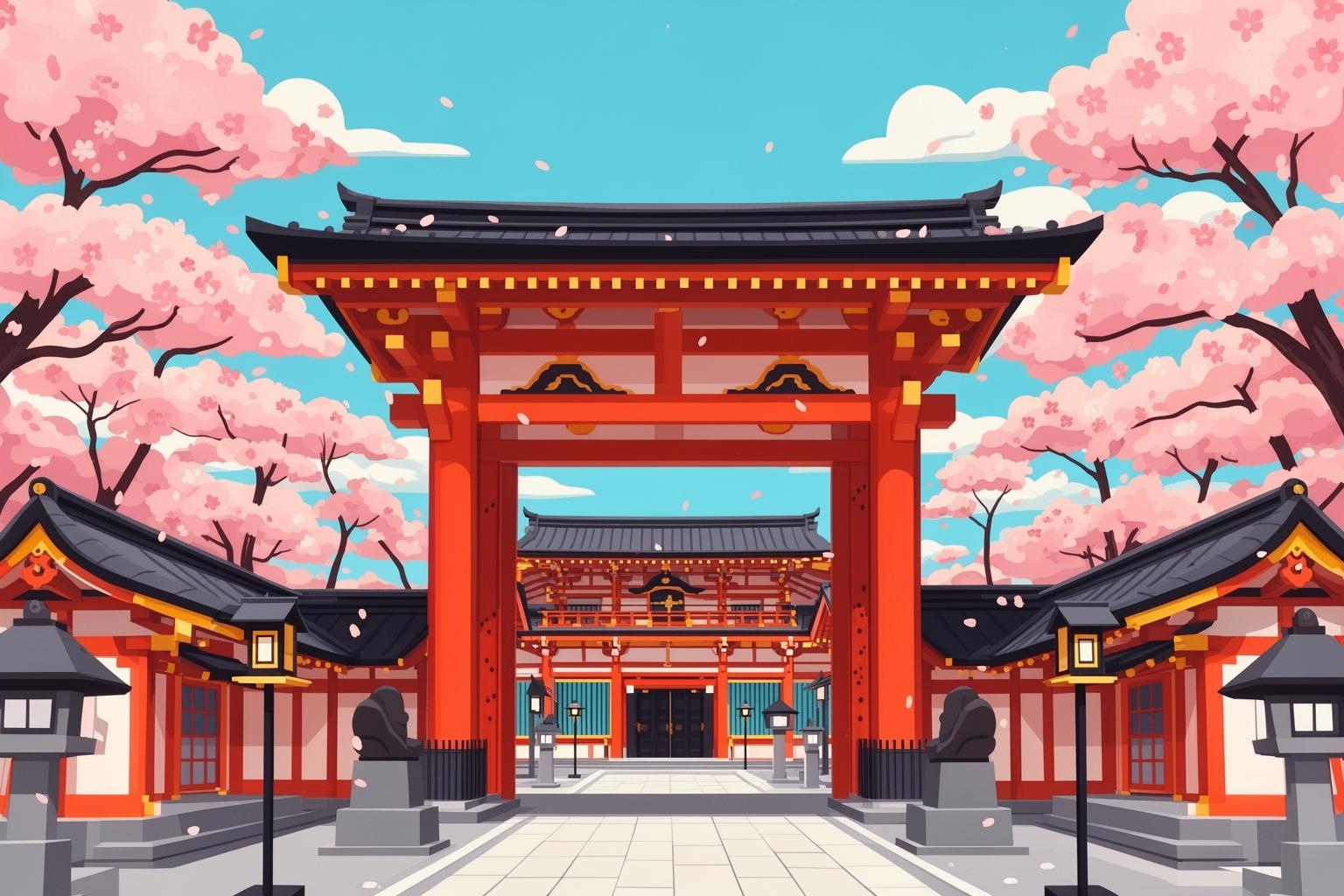
Heading south from Kyoto’s central core, the landscape begins to shift. Here lie two of the city’s most visually stunning and spiritually meaningful sites. One is a Shinto shrine of mesmerizing, endless beauty, embodying faith through vibrant colors. The other is a Zen temple renowned for epitomizing the breathtaking spectacle of Japanese autumn. Together, they reveal another dimension of Kyoto’s rich spiritual tapestry.
Fushimi Inari Taisha: A Journey Through a Thousand Vermilion Gates
Among Kyoto’s sacred sites, none is more instantly recognizable or photogenic than Fushimi Inari Taisha. Dedicated to Inari, the god of rice, sake, and business prosperity, this Shinto shrine is famed for its seemingly infinite rows of vivid vermilion torii gates. Known as the Senbon Torii, or “one thousand torii,” the actual number far exceeds this.
The journey begins at the foot of sacred Mount Inari, near the shrine’s grand main building. Yet the true pilgrimage unfolds as you pass beneath the first towering gate and enter the wooded mountain beyond. Instantly, you are surrounded by a tunnel of dazzling vermilion. The gates are so tightly packed they create a covered walkway, with sunlight filtering through, casting a warm, mystical glow along the path. The effect is hypnotic and deeply immersive.
Each gate is a gift from an individual or company, given in gratitude for success or hope for future prosperity. Donor names and dates are inscribed in black ink on the gates’ backs, forming a visual chronicle of centuries of devotion. The main route divides into two parallel tunnels of gates, forming the iconic image seen in countless photos. This area can be quite crowded, but Fushimi Inari’s magic lies in the continuing journey. The paths wind for four kilometers up the mountainside, a hike taking about two to three hours. The higher you climb, the fewer visitors you encounter. The gates thin out, and you enter tranquil forest, passing numerous smaller sub-shrines, atmospheric stone altars, and small graveyards. Along the way, you’ll spot hundreds of stone fox statues, as the fox (kitsune) is Inari’s divine messenger.
The atmosphere changes as you ascend. The tourist bustle fades into profound spiritual stillness. You can pause at viewpoints overlooking the city. Reaching the Yotsutsuji intersection halfway up yields a stunning panoramic view of Kyoto, an ideal resting spot. Those who continue to the summit are rewarded with a sense of accomplishment and a deep connection to the sacred mountain. Fushimi Inari is open 24 hours and free to enter. Visiting early morning or late evening offers a vastly different, more mystical experience, as lanterns lining the path cast long shadows and the forest feels ancient and alive.
Tofuku-ji: The Valley of Autumn Colors
While Fushimi Inari shines year-round, nearby Tofuku-ji Temple bursts into brilliance for a brief period each autumn. This large Zen temple is among Japan’s most celebrated locations for koyo, the viewing of autumn leaves. Its fame springs from the spectacular Sengyokukan valley, dense with hundreds of Japanese maple trees.
The prime viewpoint is the Tsutenkyo Bridge, a 100-meter covered wooden walkway linking the main hall to the Founder’s Hall. From here, you look down on a sea of fiery colors—crimson, scarlet, orange, and gold. The spectacle is so stunning that during peak season in mid to late November, crowds can be massive, with photography sometimes banned on the bridge to maintain flow. Yet despite the crowds, the view is undeniably worth it.
However, Tofuku-ji is much more than an autumn attraction. It ranks among Kyoto’s five great Zen temples and boasts a rich heritage. Its Sanmon Gate is a designated National Treasure and the oldest Zen main gate of its type in Japan. The temple also holds a fascinating secret for garden design enthusiasts. The Hojo gardens, surrounding the head priest’s quarters, were created in the 1930s by renowned modernist landscape architect Mirei Shigemori. He blended traditional Zen principles with a bold, contemporary twist. Four distinct gardens surround the building. The southern garden is a classic rock garden, but its rocks form a dynamic, powerful composition. The western garden features a unique checkerboard pattern of clipped azaleas and raked gravel, combining ancient feel with striking modernity. The northern garden is a simple, elegant checkerboard of moss and stone squares, softly melting into a green carpet. These Hojo gardens are a must-see for anyone interested in art and design, offering a fascinating conversation between tradition and innovation.
Arashiyama’s Riverside Charm: Where Nature and Zen Converge
Our final destination is Arashiyama, a district located on the western outskirts of Kyoto. Framed by the lush Arashiyama mountains and centered around the picturesque Hozugawa River with its iconic Togetsukyo Bridge, the area perfectly blends natural splendor with deep Zen culture. It feels like a gentle escape from the urban core, where temples and gardens unfold against the grand backdrop of nature.
Tenryū-ji: The Peaceful Dragon in its Garden
The highlight of Arashiyama is Tenryū-ji, the “Temple of the Heavenly Dragon.” Renowned as the foremost of Kyoto’s five great Zen temples, this UNESCO World Heritage site is a must-see. Although many of its buildings have been lost to fires over the centuries and have been rebuilt, its magnificent garden remains unchanged since the 14th century. It is this garden that truly captivates visitors.
The Sogenchi Teien (Sogen Pond Garden) is a landscape masterpiece crafted by the famous Zen master Muso Soseki. The garden’s centerpiece is a large pond that beautifully mirrors the surrounding maple and pine trees. Its true brilliance lies in the use of shakkei, or “borrowed scenery.” The garden extends beyond its physical borders by skillfully incorporating the distant Arashiyama mountains into its design, making them feel as if they belong to the garden. This creates an overwhelming sense of scale and a seamless blend between human creation and nature. Sitting on the veranda of the main hall, you can admire this flawlessly composed view—a living painting that shifts with light and seasons. A path circles the pond, offering multiple perspectives, from the dramatic stone arrangement resembling a waterfall on the far shore to the tranquil reflection of the sky on the water’s surface.
The Arashiyama Bamboo Grove: A Journey into Another Realm
Just outside the north gate of Tenryū-ji lies one of Kyoto’s most magical and famous attractions: the Arashiyama Bamboo Grove. A paved pathway winds for several hundred meters through a dense forest of towering bamboo stalks. Walking here is a total sensory immersion. The bamboo reaches tens of meters high, forming a vast green canopy overhead that blocks out the sky, filtering light into an ethereal green glow.
The sounds are just as enchanting as the sights. When the wind blows, the stalks gently knock against one another with a dry, hollow clatter, while the leaves rustle in a sound both calming and mysterious. It feels as though you have entered another world, a place of profound natural tranquility. To fully appreciate this, it’s best to avoid the crowds. From mid-morning to late afternoon, the path often becomes very crowded, disturbing the peaceful atmosphere. The best strategy is to visit early. Arriving just after sunrise, you may have the grove nearly to yourself. In the quiet morning light with mist lingering in the air, the experience is truly unforgettable—a walk through a living, breathing cathedral of nature.
Giō-ji: The Quiet Story of a Secluded Moss Garden
For those willing to explore further into the Arashiyama hills, away from the popular sights, a special gem awaits at Giō-ji. This small, tucked-away temple is famous for its exquisite moss garden and its touching, romantic history. Named after Giō, a 12th-century shirabyoshi dancer who captured the heart of the influential warlord Taira no Kiyomori, the temple became her retreat after she was abandoned for another dancer. Giō, along with her sister and mother, withdrew here to live out their days as Buddhist nuns.
This melancholic beauty pervades the temple. The garden is compact but a perfect emerald jewel. Nearly every inch of ground is covered by a thick, luxuriant carpet of moss, shaded by tall maple trees. The atmosphere is deeply intimate and serene. The simple thatched main hall, with a single round window, overlooks this sea of green. In autumn, the vivid red and orange maple leaves contrast stunningly with the moss below. During the early summer rainy season, the moss glows with an almost electric green. Giō-ji offers a moment of pure, tranquil serenity—a hidden corner of Kyoto where a sorrowful tale has blossomed into a place of quiet, lasting beauty.
Navigating Kyoto’s Sacred Spaces: A Traveler’s Guide
Embarking on a journey through Kyoto’s temples and gardens involves both logistical planning and a spiritual mindset. Knowing how to navigate the city and approaching its sacred sites with respect will greatly enrich your visit, enabling you to fully appreciate the surrounding beauty and tranquility.
Navigating Kyoto: Mastering the Transit System
Kyoto is a sprawling city, with temples dispersed across various districts. Although the subway is efficient, it does not cover all the important temple areas. The backbone of Kyoto’s public transportation is its city bus network, which is extensive and can get you within a short walk of nearly every major attraction. For visitors aiming to explore multiple sites in one day, a one-day bus pass is both economical and convenient. These passes can be purchased at subway stations, bus information centers, or directly from the bus driver. Remember to board through the rear door and exit from the front, paying upon departure.
For areas with a higher concentration of sights, such as Southern Higashiyama or Arashiyama, walking is the best way to explore. Strolling allows you to discover hidden alleys and small shops that might otherwise be missed. Another excellent option, especially in the flatter central parts of Kyoto or for a relaxing ride along the Kamo River, is renting a bicycle. It offers a sense of freedom and lets you cover more ground than walking while remaining fully immersed in the city’s ambiance.
Temple Etiquette: Following the Path of Respect
Visiting temples and shrines in Japan is a serene experience, and observing a few etiquette rules helps maintain that calmness for everyone. The overarching guideline is to be quiet and respectful—these are active places of worship, not just tourist destinations. Upon entering main temple buildings, you will almost always be asked to remove your shoes. Look for shoe racks or plastic bags near the entrance.
Most temples and shrines have a stone water basin with dippers, known as a temizuya, for ritual purification. The cleansing process is simple and graceful. First, take a dipper with your right hand and fill it with water. Pour water over your left hand to rinse it. Then switch the dipper to your left hand and rinse your right hand. Return the dipper to your right hand, pour a little water into your cupped left hand, and rinse your mouth. Do not drink directly from the dipper or swallow the water; discreetly spit it beside the basin. Finally, hold the dipper vertically to let the remaining water flow down the handle before returning it. Photography is often prohibited inside temple buildings, so always look for posted signs regarding the rules.
Timing Your Visit: Embracing the Four Seasons
Kyoto offers a unique ambiance with each season, and planning your trip according to the season can highlight different aspects of the city’s beauty.
Spring (late March to early April) is world-renowned for cherry blossoms. The city is adorned in shades of pink and white, creating a festive atmosphere. Ideal spots include the Philosopher’s Path, Maruyama Park, and Ninna-ji, famous for its late-blooming Omuro cherries. Be prepared for heavy crowds and higher prices during this peak period.
Summer (June to August) showcases lush greenery. Despite the hot and humid weather, the moss gardens at places like Ginkaku-ji and Giō-ji are especially stunning. The rainy season in June intensifies colors and adds a misty, ethereal quality to the temples.
Autumn (mid to late November) rivals spring in popularity. The city bursts into a fiery kaleidoscope as maple leaves turn vibrant reds, oranges, and golds. Autumn is perfect for visiting Tofuku-ji, Kiyomizu-dera (notably during evening illuminations), and Arashiyama. The crisp air and vivid foliage create breathtaking sights.
Winter (December to February) offers the quietest and most contemplative atmosphere. Crowds diminish, and bare trees form striking silhouettes. If you are fortunate enough to see snowfall, temples like Kinkaku-ji dusted in white present an image of serene, pure beauty.
The Echoes of Kyoto: Carrying the Garden Home
A journey through Kyoto’s temples and gardens is more than simply ticking off beautiful sights; it is an immersion in a worldview, a profound exploration of an aesthetic philosophy honed over centuries. You begin to perceive the world anew, noticing the deliberate placement of a single stone, the patient way moss embraces a surface, and how a garden path is designed to gradually reveal a view, evoking anticipation and discovery. You come to understand that in Japanese aesthetics, empty space holds as much significance as the object itself, and that nature is not to be dominated but embraced as a partner in creation.
Whether it’s the dazzling brilliance of Kinkaku-ji’s golden pavilion, the profound stillness of Ryōan-ji’s stones, the mesmerizing passage through Fushimi Inari’s vermilion gates, or the quiet melancholy of Giō-ji’s moss, each sacred site leaves a lasting impression in your memory. You carry with you more than just photographs; you hold a feeling—a sense of peace, a deeper appreciation for subtlety, and an understanding of beauty in transience. Kyoto teaches you to slow down, to look more closely, and to listen to the silent stories whispered by ancient wood and weathered stone. This is the true gift of a Kyoto pilgrimage: a serene garden within your heart, long after you have left the ancient capital behind.