
There are films that you watch, and then there are films that you live. Makoto Shinkai’s 2016 masterpiece, Your Name., or Kimi no Na wa., is decidedly the latter. It’s a celestial symphony of body-swapping, time-bending romance that shattered box office records and captured the hearts of a global audience. More than just an animated feature, it’s a poignant exploration of connection, memory, and the invisible threads that bind us across distance and destiny. The film’s emotional weight is anchored not only by its star-crossed lovers, Taki and Mitsuha, but also by its breathtakingly realistic world. Shinkai and his team painstakingly recreated real-world locations in Tokyo and the rural Gifu Prefecture, transforming them into a canvas for their story. This dedication to realism birthed a new wave of a phenomenon known as seichi junrei, or anime pilgrimage, where fans journey to the tangible places that brought their favorite stories to life. It’s a quest to bridge the gap between fiction and reality, to stand in the very spot where a beloved character stood and feel the same air, see the same sights. It’s a search for a feeling, a memory that isn’t quite your own but feels like it could be. This journey is not just about ticking off a checklist of photo spots; it’s about experiencing the contrasting rhythms of Japan that the film so brilliantly portrays—the electric, ceaseless pulse of Tokyo and the serene, timeless heartbeat of the countryside. It’s a pilgrimage to find the soul of the story, scattered across the beautiful landscapes of Japan.
For travelers enchanted by Japan’s cinematic landscapes, a Studio Ghibli pilgrimage offers a captivating glimpse into another realm of real-world magic.
Tokyo’s Urban Dreamscape: In Taki’s Footsteps
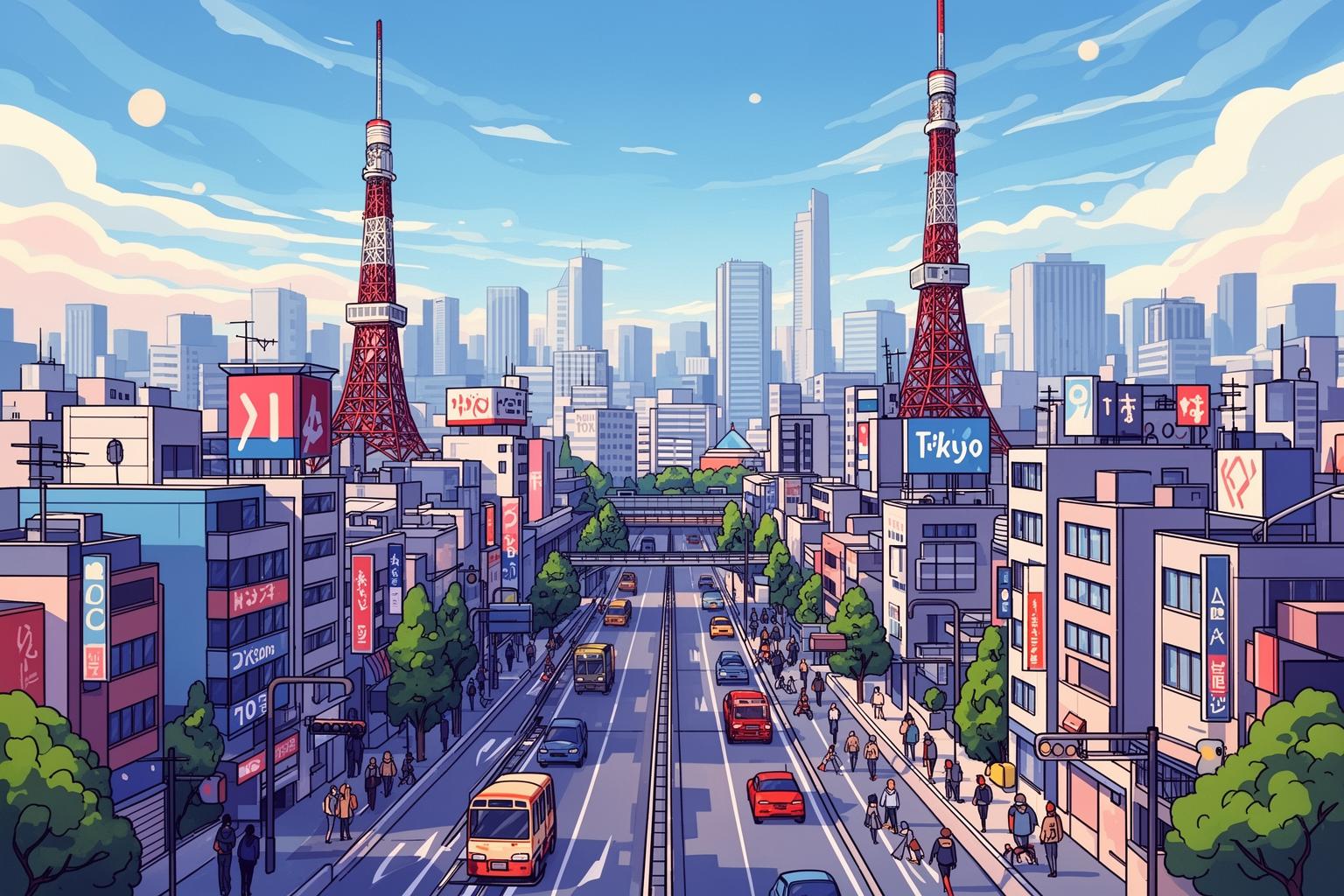
The story of Your Name. is a narrative bridging two worlds, with Taki’s world set in Tokyo. The city is depicted in stunning hyper-realistic detail—a vast metropolis of gleaming skyscrapers, intertwined train networks, and the ceaseless, vibrant energy of millions of lives converging. Exploring Tokyo in search of Taki’s landmarks allows you to see the city through his perspective—a place filled with ambition, friendship, and a yearning for a connection he cannot quite identify. Our journey begins here, in the concrete core of Japan, where everyday moments become suffused with cinematic wonder.
The Iconic Red Steps: Suga Shrine
This is the spot every fan of Your Name. holds dear: the striking red-railed staircase where, years after their memories fade, Taki and Mitsuha finally and fatefully reunite. Visiting these steps in person is truly surreal. Nestled in a quiet residential area of Yotsuya, just a short walk from Yotsuya-sanchome Station, Suga Shrine feels like a world apart from Shinjuku’s neon bustle. The walk to the shrine is part of the charm—you’ll meander through narrow lanes, past local shops and humble apartment buildings, as the city’s noise fades to a gentle whisper. Then, you’ll spot it: the road’s curve, the distinctive railings, the slope of the stairs—an exact recreation of the film’s climactic scene.
The atmosphere here is quietly reverent. It’s a living neighborhood and an active Shinto site, not a tourist attraction. Visitors often find fellow fans patiently waiting with cameras, sharing an unspoken bond tied to the emotional weight of this place. The best time to visit is during the late afternoon “golden hour,” when the setting sun casts long shadows and bathes the scene in warm, nostalgic light that perfectly echoes the film’s tone. Standing at the top looking down, or at the bottom looking up, it’s hard not to imagine the film’s score rising in your mind and to feel a thrill of anticipation. A small tip: while the stairs are the main draw, don’t miss visiting Suga Shrine itself at the summit. Offer a brief prayer, enjoy the tranquility, and remember this is a cherished local landmark. Be respectful of residents and worshippers, keep noise to a minimum, and soak in the deep sense of peace that fills this unforgettable Tokyo corner.
Crossings and Connections: Yotsuya and Shinjuku
Taki’s life is threaded through the bustling train stations and iconic cityscapes of central Tokyo. These aren’t grand monuments but everyday settings where life, love, and crucial moments take place. The film elevates these ordinary spaces, revealing the hidden beauty in the city’s intricate infrastructure.
Yotsuya Station’s Familiar Platform
Yotsuya Station is a key spot where Taki, inhabiting Mitsuha’s body, meets his crush, the elegant Okudera-senpai. The specific platform on the JR Chuo Line is instantly recognizable. Standing there amid the chorus of train announcements, the rush of commuters, and the rhythmic clang of arriving and departing trains, you feel the pulse of Taki’s daily life. Shinkai excels at capturing the unique light and mood of these transitional spaces. You can almost feel the nervous excitement of a teenager on a date. It’s a place in constant motion that, for a brief moment, serves as a fixed point in the story’s timeline. You don’t need to linger long; the magic lies in recognition. It’s a powerful reminder that extraordinary tales unfold in the most ordinary places. Just be careful of the platform edge and the flow of passengers; it’s a busy station.
Shinjuku’s Dazzling Panorama
Shinjuku pulses at the heart of Shinkai’s Tokyo. Its towering skyscrapers and weaving highways are recurring visuals throughout Your Name. One of the most recognizable spots is the pedestrian bridge near the Shinjuku police station. From here, you can see the distinctive cluster of buildings, including the Mode Gakuen Cocoon Tower, often framing the film’s cityscapes. This view conveys scale and one’s small place within a vast, interconnected network. Another key landmark is the NTT Docomo Yoyogi Building, whose clock-tower-like spire punctuates the skyline, silently witnessing the drama below. To fully appreciate Shinjuku in Your Name., visit at dusk. As the sky deepens from orange to indigo, the city ignites with light. Streets turn into rivers of headlights, buildings sparkle like constellations. It’s a moment of pure cinematic immersion, where the animated world and reality blur into a breathtaking scene. The energy is electric, sharply contrasting with the calm world of Mitsuha’s Itomori.
A Taste of Elegance: The National Art Center, Roppongi
Among the film’s most elegant locations is the restaurant where Taki works part-time as a waiter. This place is not a fictional creation; it’s the Salon de Thé ROND, a café perched atop a stunning inverted concrete cone inside The National Art Center in Roppongi. The building itself, designed by the renowned architect Kisho Kurokawa, is a glass-and-steel masterpiece with an undulating facade that plays dynamically with light and shadow. Upon entering, the scale and beauty of the atrium immediately impress. The café seems to float within this vast, light-filled space. It’s an ideal spot for pilgrims to pause and absorb the sophisticated urban atmosphere that reflects Taki’s more mature side. You can relax with a coffee or a slice of cake just as the characters did. Prices are typical for an upscale museum café, but the experience is worth it. It offers a quiet moment of reflection amid a busy pilgrimage. You don’t need a ticket to enter the museum’s atrium or visit the café and gift shop, making it an easily accessible stop. For art lovers, pairing your visit with one of the museum’s world-class rotating exhibitions is a wonderful way to spend an afternoon immersed in the creative energy that flows through this magnificent space.
Hida’s Timeless Nostalgia: Searching for Itomori
If Tokyo represents the film’s intellect, then the Hida region in Gifu Prefecture embodies its soul. This area inspired Itomori, Mitsuha’s fictional hometown—a place rich in ancient traditions, strong community bonds, and stunning natural beauty. Traveling here from Tokyo mirrors Taki’s journey, shifting from the hectic city pace to the calm, gentle rhythm of rural Japan. The air feels fresher, life slows down, and the scenery unfolds into rolling mountains and lush valleys. This is where the heart of the film’s mystery and its deepest emotional moments truly lie.
Gateway to Another World: Hida-Furukawa Station
When Taki and his friends arrive at Hida-Furukawa Station in search of Mitsuha, they step into a small, modest station that perfectly represents its real-life counterpart. Being here feels like entering the film itself. The station building, footbridge over the tracks, and waiting area are all faithfully recreated. A charming touch is the Hida-gyu mascot, a cartoon cow celebrating the region’s famous beef, which makes a brief but memorable appearance in the movie. Both the station staff and the town have warmly embraced their connection to Your Name. You’ll find posters and even a guestbook for visitors to sign. What stands out most is the atmosphere—quiet and peaceful, a stark contrast to the noise of Tokyo stations. Trains come rarely, and their arrivals and departures mark moments of calm. From the platform, you can gaze at the surrounding mountains and sense the isolation and tranquility that shaped Mitsuha’s life. This makes it the perfect starting point for exploring the Hida region, setting the tone and fully immersing you in the world Taki desperately tried to find.
The Search for Answers: Hida City Library
A key scene in the film unfolds in a library where Taki discovers the tragic truth about Itomori and the comet. This beautiful wood-paneled library really exists—it’s the Hida City Library, just a short walk from the station. This public facility has unexpectedly become a fan favorite. Its interior features warm wooden architecture, gracefully curved shelves, and large windows that bathe the space in soft natural light, just as seen in the film. Recognizing its significance, the library has a protocol for visitors: you must request permission at the front desk before taking photos. They provide a lanyard to wear, indicating you’ve been authorized. This small gesture of respect helps the library maintain its role as a quiet community space while welcoming fans. The corner where Taki sits, studying town records, is a popular photo spot. Surrounded by the scent of old paper and polished wood, you can feel the weight of his discovery—an intense, contemplative moment. The staff are friendly and proud of their library’s fame, reflecting the town’s welcoming nature. This visit is essential—not only for photos but to connect with the story’s pivotal moment in a serene, authentic setting.
Whispers of Itomori: Exploring Hida’s Landscape
Although Itomori is fictional, its spirit is pieced together from various spots around Hida and nearby areas. Exploring Hida-Furukawa and its surroundings lets you gather these fragments and form your own sense of Mitsuha’s hometown.
The Sacred Ground: Ketawakamiya Shrine
While not an exact replica, Ketawakamiya Shrine is widely considered the main inspiration for Miyamizu Shrine, the spiritual heart of Itomori and Mitsuha’s family home. Located a short walk from town center, this shrine is reached via a long, steep stone staircase that immediately calls to mind scenes of Mitsuha and her sister performing shrine maiden duties. The atmosphere here is ancient and tranquil. Towering cedar trees filter sunlight, and the air is thick with the scent of moss and earth. Unlike the busy Suga Shrine steps in Tokyo, this location is far less crowded, offering a more intimate and spiritual experience. As you climb, you can imagine Mitsuha’s complaints about her dull rural life—a feeling that fades when surrounded by such timeless beauty. It’s a place to reflect on the film’s themes of tradition, heritage, and the cycles of time.
A Taste of Tradition: Ajidokoro Furukawa
Recall the scene where Taki, Okudera, and Tsukasa sit down to eat, sampling local dishes while searching for clues? The restaurant they visit and the Goheimochi (grilled skewered rice cakes with sweet miso glaze) they enjoy can both be experienced at Ajidokoro Furukawa. This small local eatery has become a popular destination for fans seeking an authentic flavor of the region. Tasting the Goheimochi here is more than just enjoying a snack; it’s a direct sensory connection to the film. The savory, slightly sweet taste is a true flavor of Hida. It’s in moments like these—sharing the same food, walking the same streets—that the pilgrimage comes alive, turning passive viewing into an active, multi-sensory memory.
A Practical Guide for the Modern Pilgrim

Embarking on a seichi junrei for Your Name. is a truly rewarding adventure, though a bit of planning is essential, especially when traveling between the bustling city of Tokyo and the rural stretches of Gifu.
Planning Your Trans-Japan Journey
Traveling between Tokyo and the Hida region is an adventure in itself. The most efficient route is via the Shinkansen (bullet train). From Tokyo, take the Tokaido Shinkansen to Nagoya, then transfer to the JR Hida Wide View limited express train. This scenic journey offers stunning views, winding through mountains and following rivers, providing a perfect transition from Taki’s world to Mitsuha’s. For international visitors, a Japan Rail Pass can be an economical choice if you plan additional long-distance travel. The ideal time to visit is in spring (April-May) or autumn (October-November), when the weather is mild and the scenery shines with cherry blossoms or vibrant fall foliage. While in the Hida region, consider staying in Takayama. Larger than Hida-Furukawa, it offers more accommodation and dining options, alongside a beautifully preserved old town. It makes an excellent base for exploring Hida-Furukawa and other nearby attractions.
Etiquette for the Respectful Fan
It’s important to remember that these locations are not movie sets but real communities where people live, work, and worship. The success of an anime pilgrimage depends on the mutual respect between fans and locals. When visiting shrines like Suga Shrine or Ketawakamiya Shrine, maintain silence and show respect. Stay on designated paths and avoid disturbing worshipers. In residential areas, keep your voice low and refrain from intrusive photography of private homes. At Hida City Library, always ask permission before taking photos. By being a courteous and considerate visitor, you help keep these places welcoming for future pilgrims. This simple respect is the best way to honor both the film and the beautiful communities that inspired it.
Beyond the Film: Embracing the Hida Region
While the Your Name. sites are a major attraction, don’t miss the chance to explore more of what this remarkable region offers. Takayama, often called “Little Kyoto,” is known for its historic streets lined with traditional wooden merchant houses, sake breweries, and vibrant morning markets. It’s an ideal place to stroll and immerse yourself in the atmosphere of old Japan. The region is also famous for its cuisine, especially Hida beef—a wagyu rivaling Kobe beef in quality. Enjoying a meal featuring Hida beef, whether a premium steak or a simple skewer from a street vendor, is a must. By venturing beyond the specific pilgrimage locations, you’ll gain a richer appreciation for the culture and landscape that inspired Makoto Shinkai to create the unforgettable world of Itomori.
The Resonance of a Place
Completing a pilgrimage for Your Name. is an experience that stays with you. It’s more than just retracing scenes from the film; it’s about feeling the story on a deeper, more tangible level. It’s standing on a train platform in Tokyo and sensing Taki’s urban anonymity. It’s breathing the mountain air in Hida and experiencing Mitsuha’s longing for a different life. You come to realize that the magic of the movie lies not only in its fantastical plot but also in its deep love for the real Japan—its bustling cities, its quiet towns, its modern wonders, and ancient traditions. Standing on the Suga Shrine steps as the sun sets, you might not be waiting for a destined reunion, but you are connecting with a story that has touched millions. You are standing at an intersection of memory—the film’s, your own, and those of countless other fans who have been there before you. In that moment, you understand that some connections, like the red thread of fate, are invisible yet undeniably real.