
There are cities that are collections of buildings, and then there are cities that are collections of stories. Kyoto belongs, unequivocally, to the latter. It is Japan’s former imperial capital, a city spared the ravages of war that leveled so many others, and in its preservation, it has become something more than a historical treasure. It is a living, breathing stage, a landscape of the soul where centuries of art, faith, and power have carved themselves into the very geography. This is the Japan that haunts the global imagination—a world of vermilion gates stretching into mystical forests, of silent bamboo groves that seem to sway with unspoken secrets, and of lantern-lit alleys where the ghosts of samurai and courtesans feel impossibly close. For the modern pilgrim, this journey isn’t just about seeing history; it’s about walking through the frames of the stories that have shaped our understanding of Japan. From the silver screen to the pages of celebrated novels and the vibrant cells of anime, Kyoto serves as both a backdrop and a character, its timeless beauty a constant source of inspiration. It’s a place where you can stand in the footsteps of a fictional geisha, feel the quiet contemplation of a wandering swordsman, or see the same moon that hung over the poets and emperors of old. This is a guide to that Kyoto, a city where the past is not just remembered, but perpetually reborn in narrative. Prepare to step through the screen and into the scene, to discover the tangible magic of a city that has mastered the art of the story.
Kyoto’s captivating blend of ancient lore and modern narrative mirrors the way legendary films shape travel experiences, inviting visitors to explore its cinematic allure as they journey through history.
The Crimson Path of a Thousand Prayers: Fushimi Inari-taisha
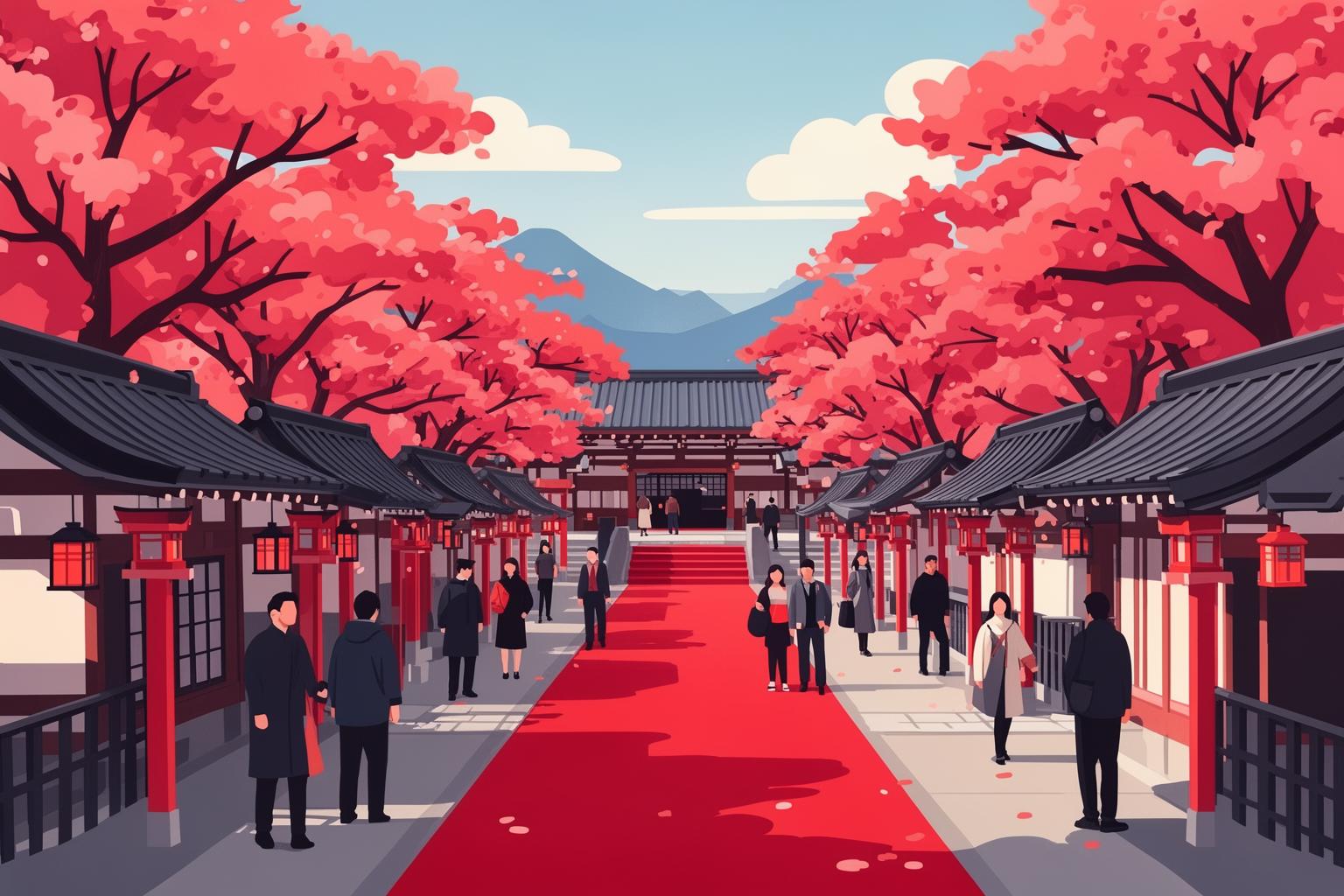
Your first encounter with Fushimi Inari-taisha is less about visual observation and more about immersion. Upon arriving at the base of Mount Inari, you find a sprawling, vibrant complex of shrine buildings, yet the true pilgrimage commences once you pass beneath the initial towering torii gate. From that point onward, you follow a path defined by an apparently endless corridor of vermilion. These are the renowned Senbon Torii, or “one thousand torii gates,” a figure that seems like a dramatic understatement once you are surrounded by them. The atmosphere shifts here. Sunlight filters through the narrow spaces between the gates, casting patterned bands of light and shadow along the stone pathway. This creates a mesmerizing, almost cinematic experience, a continuous forward motion drawing you deeper into the mountain’s sacred embrace. The outside world, with its noise and rush, fades into a faint murmur, replaced by the soft crunch of gravel beneath your feet and the occasional toll of a distant prayer bell.
From a historian’s viewpoint, this striking walkway exemplifies the intimate connection between faith and commerce in Japan. The shrine, established in the 8th century, serves as the head shrine for approximately 30,000 Inari shrines nationwide. Inari Okami is the Shinto deity of rice, sake, and prosperity, revered as the patron of merchants, artisans, and businesses. Each of the thousands of torii gates lining these tunnels has been donated by either an individual or a company, as a prayer for success or in gratitude for blessings received. The black inscriptions on the back of each gate narrate a story, listing the donor’s name and the date of the offering. It stands as a visual ledger of hopes and dreams, a public testament of faith that has, over centuries, shaped one of the most breathtaking religious landscapes in the world.
This profound visual impact has made Fushimi Inari-taisha a cultural icon. Its most famous cinematic portrayal is undoubtedly in the 2005 film Memoirs of a Geisha. The scene in which a young Chiyo, desperate yet hopeful, runs through the vermilion corridors is etched in the memories of an entire generation of viewers. The camera follows her swiftly, capturing the flickering light and the overwhelming sensation of being in a place both sacred and otherworldly. The film captures the essence of the shrine—a space of transition, passage, and a fervent plea to the gods. However, its influence reaches far beyond just one movie. The distinctive imagery of the torii tunnels appears in numerous anime, ranging from school-life comedies featuring field trips to supernatural fantasies where the gates signify a boundary between the human and spirit realms. It has become visual shorthand for sacred, traditional Japan, instantly recognizable and richly atmospheric.
For first-time visitors, a few pieces of advice are important. The main Senbon Torii path near the entrance is often crowded, with everyone competing for that perfect shot without people. Be patient, or better yet, continue walking. The path extends four kilometers up the mountain, taking two to three hours to complete. As you ascend, the crowds thin, and the gates grow more weathered and spaced farther apart. Here, the shrine’s true atmosphere reveals itself. You will encounter smaller sub-shrines, moss-covered stone altars, and miniature torii left as offerings. Stone fox statues, or kitsune, considered divine messengers of Inari and often holding keys to rice granaries in their mouths, are scattered along the way. The hike is a pilgrimage itself, and the view over Kyoto from the Yotsutsuji intersection midway up is a magnificent reward. To fully experience the magic, consider visiting at dawn, when morning light streams through the gates in golden beams, or in the late afternoon, as dusk sets in and stone lanterns cast a warm, mysterious glow. At these moments, the path feels yours alone, and the whispers of a thousand prayers seem almost tangible in the mountain air.
Whispers in the Verdant Canopy: Arashiyama’s Bamboo Grove
On the western edge of Kyoto lies Arashiyama, a district that feels like a purposeful, gentle retreat from the city center’s vibrant energy. At its core is a place that captivates the senses like few others: the Arashiyama Bamboo Grove. Stepping into the grove is akin to entering a natural cathedral. The outside world falls silent, replaced by a deep, almost reverent stillness. The visual impact is immediate and overwhelming—tens of thousands of thick, green bamboo stalks stretch skyward, their tops interwoven to form a dense canopy that softens the sunlight into a delicate, ethereal glow. The path winds through this forest like a ribbon, creating a corridor of green that seems to extend endlessly.
Yet the true enchantment of Arashiyama lies in its sounds. When a breeze moves through the grove, it generates a sound entirely unique. It isn’t the rustling of leaves but a deep, resonant creaking as the hollow stalks gently knock against one another, mingling with the soft, whispering sigh of the feathery leaves above. The Japanese Ministry of the Environment has recognized this soundscape as one of the “100 Soundscapes of Japan,” honoring its cultural and aesthetic significance. The sound is both calming and haunting, a reminder of nature’s subtle yet powerful music. The grove invites you to slow down, listen, and simply be present amid such overwhelming natural beauty.
Bamboo holds deep cultural significance in Japan and East Asia. It symbolizes strength and resilience, bending with the wind but never breaking. Its clean lines and upright growth represent purity and integrity. This cultural reverence is why the bamboo grove feels more than just a beautiful forest; it feels like an intentional, cultivated space for contemplation. This aesthetic has been captured by storytellers for centuries. While the grove itself is a popular filming location, its essence has been translated into a potent visual archetype. It features in samurai films as the stage for tense, dramatic duels, with the towering stalks concealing combatants and creating a natural maze of suspense. Consider the iconic bamboo forest fight in Crouching Tiger, Hidden Dragon—though filmed in China, it utilizes the same cinematic language that Arashiyama has mastered. In animation, the grove serves a similar role. It is the setting for the classic Japanese folktale The Tale of the Bamboo Cutter, beautifully adapted into Studio Ghibli’s The Tale of the Princess Kaguya. The grove is portrayed as a place of magic and mystery, where a celestial being emerges from a glowing bamboo stalk. For any creator, it is an instantly evocative setting, capable of conveying tranquility, mystery, or tension through subtle shifts in light or sound.
To fully appreciate a visit to Arashiyama, it’s best to view the grove not as a single destination but as the centerpiece of a wider exploration. The main bamboo path often becomes crowded, especially by mid-morning. The secret, like with many of Kyoto’s gems, is to arrive early. At sunrise, you might have the path nearly to yourself, allowing you to enjoy the soundscape without the distraction of a thousand tourists. The path starts just beyond the north gate of Tenryu-ji Temple, a magnificent Zen temple with a sublime garden that is a UNESCO World Heritage site. It’s highly recommended to visit the temple first, letting its tranquil atmosphere prepare you for the bamboo walk. After leaving the grove, continue to the picturesque Togetsukyo Bridge—the “Moon Crossing Bridge”—which offers breathtaking views of the Katsura River and the forest-covered mountainsides. The entire Arashiyama area is a joy to explore, with smaller temples, charming shops, and even the Iwatayama Monkey Park, a short uphill hike where you can encounter Japanese macaques and enjoy another panoramic view of Kyoto. Renting a bicycle near the station is an excellent way to cover more ground and discover quieter corners of this enchanting district.
The Floating World Preserved: Gion’s Timeless Alleys
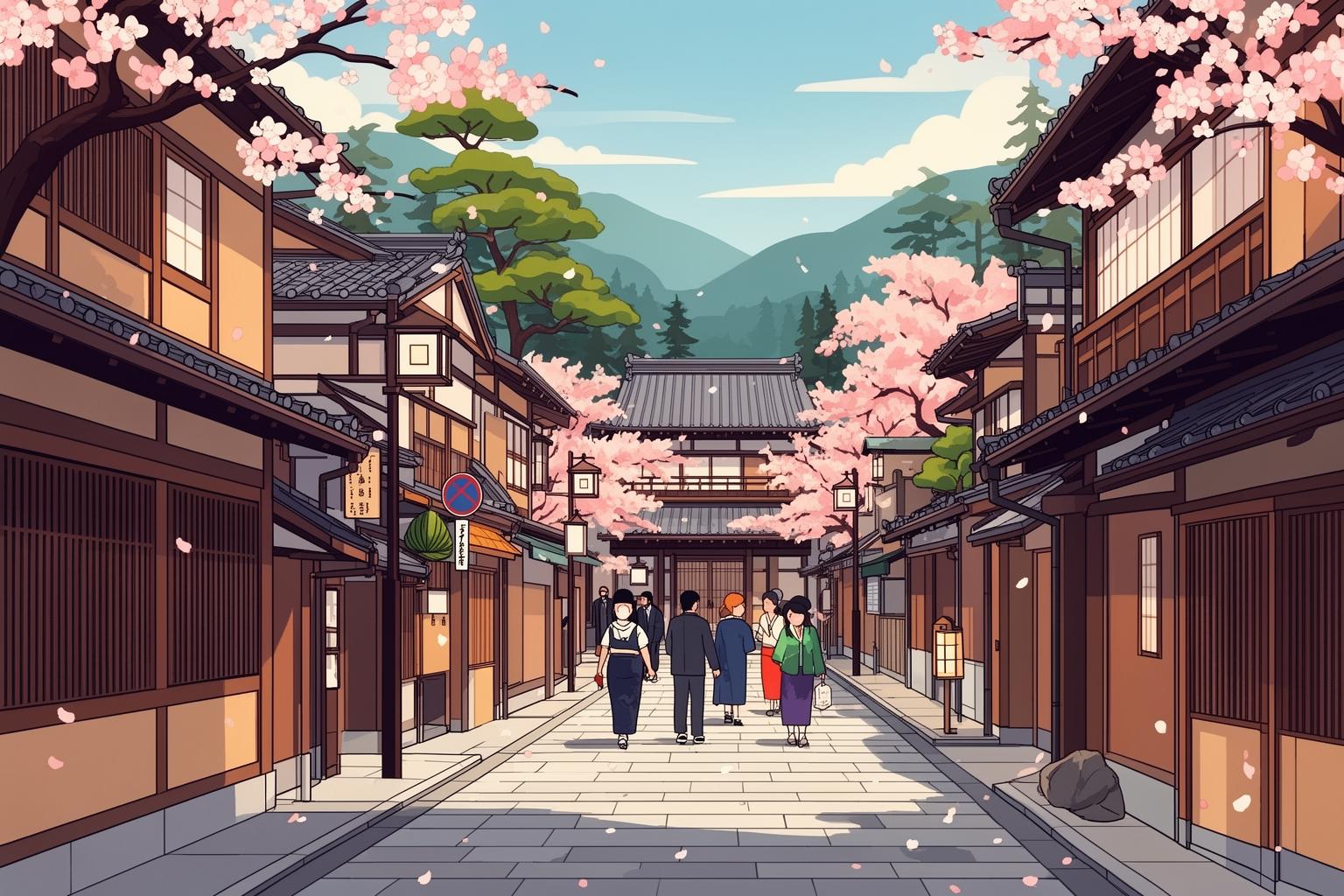
As daylight begins to wane over Kyoto, a different kind of magic stirs in the Gion district. This is the city’s most renowned hanamachi, or “flower town,” the traditional home of Japan’s geisha. Strolling here at dusk feels like the fabric of time thinning. The dominant colors transition from the greens of bamboo and the vermilions of shrines to the warm, golden glow of paper lanterns and the dark, rich wood of the machiya, the traditional townhouses lining the streets. The main street, Hanamikoji, or “Flower Viewing Lane,” is beautiful but often bustling. Yet, the true spirit of Gion lies in its quieter, maze-like side alleys and along the willow-fringed Shirakawa Canal.
Here, the atmosphere is steeped in history. The air is still, carrying the faint, sweet scent of incense from a hidden temple or the distant sound of a shamisen practiced behind a slatted wooden window. Every architectural detail, from low-hanging eaves to intricate latticework, speaks of a world crafted with subtlety and elegance. This is the “floating world,” a term originally used to describe the fleeting pleasures of theatre, teahouses, and courtship, and in Gion, that world feels remarkably preserved. The greatest thrill, naturally, is the fleeting, almost ghostly sight of a geiko or maiko. A geiko is the Kyoto term for a geisha—a professional artist and entertainer—while a maiko is her apprentice, identified by her more elaborate kimono, dangling kanzashi hair ornaments, and distinctive makeup. Seeing one move gracefully down a cobblestone street, her silk kimono a whisper of color at twilight, is an unforgettable vision of Kyoto.
This very image was brought to life worldwide by Arthur Golden’s novel Memoirs of a Geisha and its film adaptation. Gion is not merely the story’s setting; it is its heart. Readers and viewers can follow the protagonist Sayuri’s footsteps. Standing on Tatsumi Bridge over the Shirakawa Canal—a place so picturesque it seems filmic—you can envision the scenes that took place there. Walking down Hanamikoji, you can imagine the secretive world of the okiya, the geisha houses where the women lived and trained. While fictionalized and romanticized, the book and film opened a window into a culture largely unknown outside Japan. They captured the aesthetics, rituals, and hidden human dramas of the hanamachi, cementing Gion’s image as a place of romance and intrigue in the Western imagination. This, in turn, has inspired countless other storytellers, with Gion’s atmospheric streets serving as the backdrop for historical anime, samurai dramas, and mystery novels.
However, this fame also brings responsibilities for visitors. It is essential to approach Gion with respect. The geiko and maiko you might see are not tourist spectacles; they are working women on their way to appointments, often at exclusive teahouses or ochaya, where they entertain select clientele. In recent years, a rise in tourism has led to problems with visitors aggressively chasing them for photos, behavior that is intrusive and unwelcome. The local community has posted signs and discourages this strongly. The best way to appreciate their art is through official channels. Some upscale hotels can arrange private dinners, or you can attend public performances such as the Miyako Odori, a spectacular dance series held every April. For a more casual experience, Gion Corner offers a condensed showcase of traditional Japanese arts, including a maiko dance. For respectful travelers, the true joy of Gion lies in soaking up its atmosphere—ducking into a traditional sweet shop, enjoying a cup of matcha at a quiet cafe, or dining at one of the many exquisite restaurants overlooking the Kamo River. Explore Yasaka Shrine at the district’s edge, beautifully illuminated at night. Let Gion unveil its secrets gradually, and you will be rewarded with an experience far richer than any blurry photograph.
The Golden Pavilion and the Philosopher’s Path: Zen, Samurai, and Solitude
In the northern hills of Kyoto, two of the city’s most renowned sites present a striking contrast, reflecting the dual essence of Japanese aesthetics and the philosophical influences shaping its culture. One is a dazzling display of power and perfection; the other, a serene tribute to imperfection and contemplation. Together, they weave a captivating narrative.
First, there is Kinkaku-ji, the Temple of the Golden Pavilion. Few sights in Japan are as instantly breathtaking. After passing through a beautiful yet modest temple garden, you turn a corner and behold a three-story pavilion, its upper two floors entirely clad in gold leaf, shimmering in the sunlight and casting a flawless, rippling reflection in the mirror pond before it. The effect is almost otherworldly—a vision of pure, unblemished beauty. Historically, this building conveys a story of power. Constructed in the late 14th century as a retirement villa for the shogun Ashikaga Yoshimitsu, a man at the pinnacle of political and cultural authority, each floor embodies a distinct architectural style—the first as a palace, the second as a samurai residence, and the third as a Zen hall—symbolizing his dominion over all aspects of society. Following his death, it was transformed into a Zen temple according to his wishes.
However, this emblem of perfection carries a dark and compelling history that has inspired intense literary interest. The pavilion standing today is not the original from the 14th century. In 1950, the historic structure was destroyed by fire, set alight by a troubled young novice monk. This act of destructive obsession inspired Yukio Mishima’s acclaimed 1956 novel, The Temple of the Golden Pavilion. Mishima’s work explores the complex psychology of the arsonist, delving into themes of beauty, alienation, and the unbearable burden of perfection. The protagonist, burdened by a stutter and haunted by the war, becomes so consumed by the pavilion’s flawless beauty that he believes the only way to possess it is to destroy it. The novel elevates Kinkaku-ji from a mere historical landmark to a potent literary symbol, a stage where the human conflict with overwhelming beauty unfolds dramatically. Visiting the impeccably reconstructed pavilion today with this story in mind adds a profound intellectual and emotional dimension to the experience.
Not far from Kinkaku-ji, a vastly different aesthetic philosophy is expressed. Ginkaku-ji, the Temple of the Silver Pavilion, was built several decades later by another Ashikaga shogun, Yoshimasa, in emulation of his predecessor’s golden villa. The name is somewhat misleading; the intended silver leaf covering was never applied. Yet in this “failure” lies its true brilliance. Ginkaku-ji epitomizes wabi-sabi, the Japanese aesthetic that finds beauty in imperfection, transience, and simplicity. The unadorned, weathered wood of the pavilion, the refined and understated architecture, and its carefully raked sand garden—including a large, truncated cone known as the “Moon Viewing Platform”—all invite quiet contemplation. This is a place that honors subtlety over spectacle, stillness over splendor.
From Ginkaku-ji extends one of Kyoto’s most cherished walkways: the Philosopher’s Path, or Tetsugaku no Michi. This pleasant, two-kilometer stone path winds beside a narrow canal lined with hundreds of cherry trees. It is named after Kitaro Nishida, one of Japan’s foremost modern philosophers, who was known to walk this route daily for meditation while serving as a professor at Kyoto University. The path itself is simple, yet its ambiance is deeply peaceful, encouraging a slower pace and a wandering mind. In spring, it transforms into a stunning tunnel of pale pink sakura blossoms, arguably one of the most beautiful sights in the city. In early summer, fireflies flicker above the canal at night. In autumn, the surrounding trees blaze with vibrant colors. The path connects several small, quiet temples and shrines, inviting spontaneous detours. It is the perfect physical embodiment of the contemplative spirit championed by Ginkaku-ji—a place not of grand declarations but of quiet reflection. For storytellers, it symbolizes the journey, both literal and intellectual—the space where ideas take shape and emotions unfold, a familiar and cherished motif in introspective Japanese narratives.
Navigating the Ancient Capital: A Traveler’s Compendium
Kyoto is a city that gradually reveals itself to the patient traveler. Unlike Tokyo, with its efficient, color-coded subway map, Kyoto’s treasures are more dispersed, and exploring the city becomes an integral part of the experience. The public transport system consists of subways, trains, and, most notably, buses. The extensive city bus network can bring you closer to most temples and shrines than the subway lines. A rechargeable IC card such as ICOCA or Suica is invaluable, allowing you to tap on and off easily without searching for change. For first-time visitors, bus routes may appear intimidating, but apps like Google Maps offer real-time, accurate transit information. If you plan to sightsee extensively, a day pass for the bus can be cost-effective. Another excellent option, especially for exploring flatter areas like central Kyoto or Arashiyama, is renting a bicycle, which lets you explore side streets and uncover hidden gems at your own pace.
The timing of your visit to Kyoto will significantly influence your experience. The city is stunning in every season, yet spring and autumn are popular for good reason. From late March to early April, the city bursts into soft pinks and whites of cherry blossoms, presenting a fleeting yet unforgettable spectacle. Between mid-November and early December, maple and ginkgo trees display fiery reds, oranges, and yellows, creating a vibrant scene. However, these peak seasons also bring crowds and higher costs, with accommodations and train tickets often booked months ahead. Summer, from June to August, is hot and humid but lush and green, marked by numerous local festivals, or matsuri. Winter is the quietest season; though cold with shorter days, the crisp air, smaller crowds, and the chance to see temples dusted in snow offer a peaceful and magical experience.
Where you stay also shapes your journey. For convenience, modern hotels are concentrated around the futuristic Kyoto Station. For a richer cultural experience, consider a ryokan, a traditional Japanese inn. Staying in a ryokan usually involves sleeping on tatami mats, relaxing in a communal bath (onsen or sento), and enjoying a multi-course kaiseki dinner and traditional breakfast, all delivered with impeccable hospitality. Another distinctive option is renting a restored machiya, a traditional wooden townhouse, offering a glimpse into historic Kyoto life combined with modern comforts.
Finally, exploring Kyoto is a culinary pilgrimage. The city is celebrated for Kyo-ryori, its refined and elegant cuisine that often highlights seasonal ingredients and subtle flavors. Don’t miss trying yudofu (simmered tofu) at a temple restaurant, especially in Arashiyama. Wander through Nishiki Market, known as “Kyoto’s Kitchen,” a lively, narrow street filled with vendors selling everything from fresh seafood and local pickles to exotic snacks. Of course, Kyoto is the spiritual home of matcha, found in many forms—from traditional whipped green tea in ceremonial settings to soft-serve ice cream, lattes, and various sweets. Experiencing Kyoto’s culinary culture is as vital as visiting its temples; it offers another way to engage with the city’s profound artistry and tradition.
Kyoto is more than just a destination; it represents a dialogue between past and present. It is a city where a centuries-old Zen garden peacefully coexists beside a bustling modern street, and where ancient traditions are actively practiced, not merely preserved. Walking its streets is to follow in the footsteps of countless artists, poets, novelists, and filmmakers who have sought to capture its elusive spirit. The magic of Kyoto lies in its invitation for you to become part of that legacy. It provides a stunning backdrop, rich history, and tangible atmosphere, gently encouraging you to find your own story within its timeless setting. Whether you seek the excitement of a cinematic chase, the calm of a reflective stroll, or the elegance of a floating world, this city offers the perfect frame, waiting for you to fill it.