There’s a certain frequency to Tokyo, a hum you feel deep in your bones, that shifts and changes depending on where you stand. In the world of Haruki Murakami, that frequency is tuned to a station playing late-night jazz, broadcasting tales of talking cats, mysterious women, and wells that lead to other worlds. His Tokyo is not just a city of neon and steel; it is a sprawling, breathing entity, a labyrinth of memory and possibility where the ordinary sidewalk can suddenly curve into the surreal. For readers who have journeyed through his pages, the city becomes a character in itself, a silent narrator whispering stories from its quiet alleyways, sun-drenched parks, and dimly lit basement bars. To walk through Tokyo with Murakami as your guide is to seek out not just places, but feelings. It’s a pilgrimage into a landscape where loneliness is a tangible presence, where the search for connection is the ultimate quest, and where the mundane is always just one step away from the magical. This journey isn’t about finding exact film sets or historical plaques. It is about immersing yourself in the atmosphere that birthed these stories, standing on a street corner in Shinjuku or a quiet residential lane in Suginami and feeling the echo of a narrative you know so well. It’s about finding your own parallel world, hidden just beneath the surface of the world’s greatest metropolis. Prepare to wander, to get lost, and to see a Tokyo that exists somewhere between reality and a dream.
For those intrigued by the layered textures of Murakami’s portrayal of Tokyo, exploring Tokyo blues can reveal even more of the city’s hidden cadence.
The Shinjuku Labyrinth: Echoes of ‘Norwegian Wood’ and ‘1Q84’
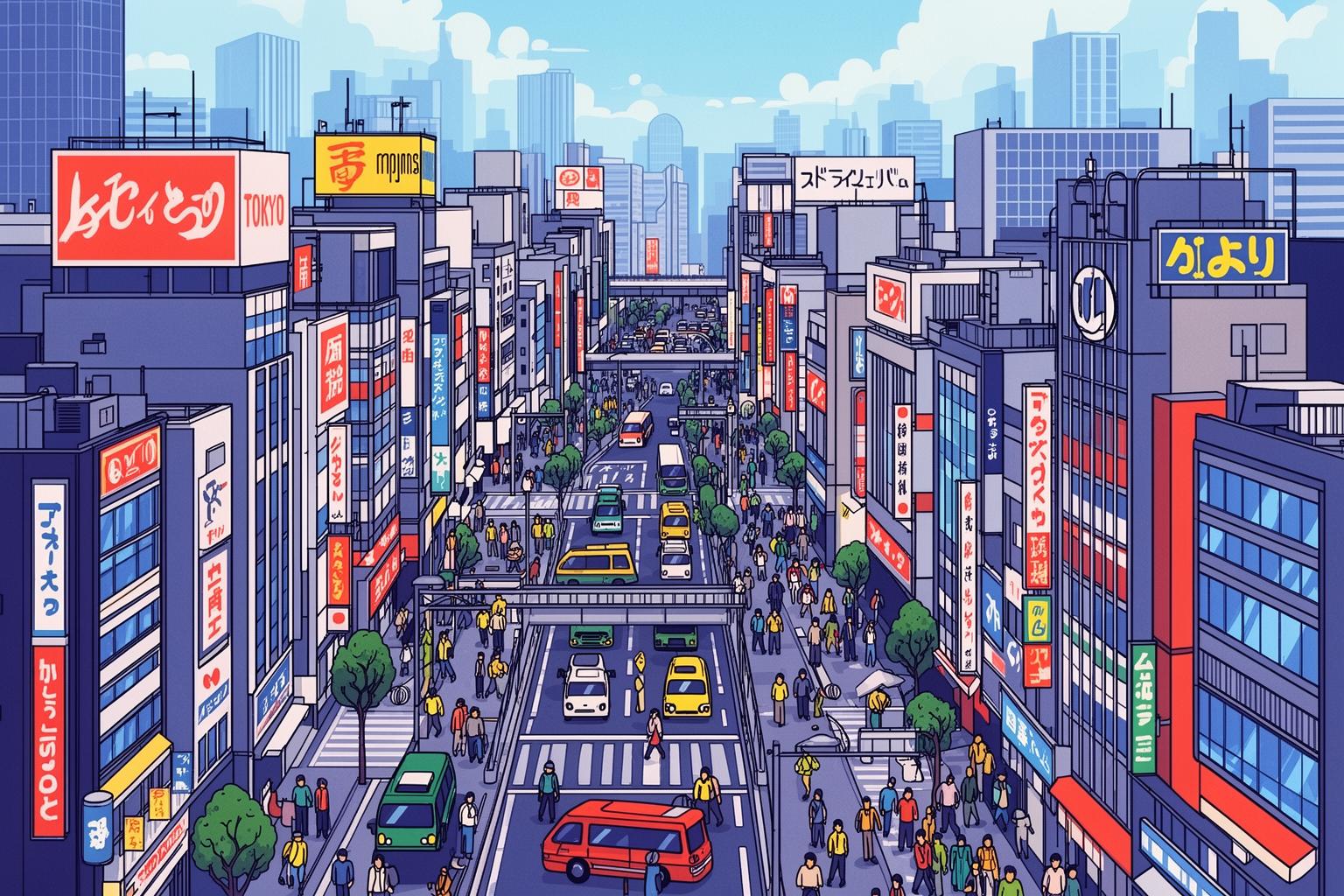
Shinjuku is unquestionably the vibrant core of Murakami’s Tokyo, a chaotic yet beautiful contradiction. By day, it’s a district filled with gleaming skyscrapers and vast department stores; by night, it transforms into a glowing constellation of neon lights, where salarymen, students, and seekers of meaning converge. This dual nature provides the perfect backdrop for the deep loneliness and transient connections that shape his characters. It’s a place where anonymity in a crowd of millions is palpable—a sensation that both Toru Watanabe from Norwegian Wood and Aomame from 1Q84 would intimately recognize. To wander through Shinjuku is to follow their unseen trails, to sense the weight of their stories in the very atmosphere.
Shinjuku Gyoen National Garden: A Sanctuary of Memory
Step inside Shinjuku Gyoen, and the urban roar fades into a gentle murmur. This is more than just a park; it’s a carefully designed world of peaceful ponds, manicured English gardens, and traditional Japanese landscapes. While Murakami’s characters often find solace in parks, Shinjuku Gyoen personifies the spirit of these urban refuges. It is a place for reflection—a vast green retreat where a character’s inner world can unfold. Picture sitting on a bench, observing the changing seasons—the fiery maples of autumn, the delicate cherry blossoms in spring—and feeling the quiet melancholy that permeates much of his work. This is the kind of place where deep conversations might unfold, or where a character might sit for hours, wrestling with a lingering memory. The contrast between the park’s serene beauty and the towering skyline beyond the trees perfectly symbolizes the tension between inner calm and external chaos that his characters continually face. Walking its meandering paths evokes a sense of timelessness, as if the park itself guards countless untold tales, silently witnessing the subtle dramas of everyday life.
Golden Gai and the Jazz Bars of Memory
As night falls over Shinjuku, a different kind of enchantment stirs in the labyrinthine alleys of Golden Gai. This preserved enclave of post-war Tokyo, with its six narrow streets packed with over two hundred tiny bars, seems like a direct gateway into Murakami’s universe. Each bar is a world unto itself, some barely big enough to hold five or six patrons. The air is charged with echoes of past conversations, the scent of aged wood and spilled drinks. Here, and in the legendary jazz kissa scattered throughout Shinjuku, the heart of his musical passion beats strongest. Seek out Dug, a basement jazz bar spinning vinyl since the 1960s and known to be one of the author’s favorites. Descending its steps feels like stepping back in time. The darkness comforts, the music takes center stage, and the listeners hold a reverent stillness. You can easily imagine a young Murakami, and later his characters, sipping whiskey and letting the sounds of John Coltrane or Miles Davis wash over them, finding solace and meaning in intricate improvisations. This is not a place for loud talk; it’s a sanctuary for listening, for feeling, for letting the music carry you away. Strolling through Golden Gai, peering into the glowing doorways, you feel like a protagonist on a nocturnal journey, aware that any threshold might lead to a fateful meeting or profound insight.
Kinokuniya Bookstore: A Universe of Stories
For many of Murakami’s characters, books are more than mere escape; they serve as anchors, tools for understanding the world, and sometimes portals to other realms. The Shinjuku main branch of Kinokuniya Bookstore is a literary cathedral, a towering multi-level sanctuary housing seemingly endless worlds. Its vastness is both overwhelming and inspiring. You could easily spend hours here, drifting from the Japanese literature floors to the extensive foreign language sections, just as his characters frequently do. The simple act of browsing, of trailing a hand over countless spines, is a meditative ritual in his novels. Picture Toru Watanabe from Norwegian Wood searching for a copy of The Great Gatsby, or Kafka Tamura discovering a book that seems written specifically for him. The smell of paper and ink, the soft rustling of pages turning, the focused energy of hundreds of readers lost in their own worlds—it’s an ambiance quintessentially Murakami. It’s a reminder that amid Shinjuku’s chaos, countless sanctuaries of quiet contemplation exist, and that sometimes the greatest adventures are found between the pages of a book.
Westward Bound: The Suginami Line and the Search for Self
If Shinjuku is the bustling, often overwhelming heart of Murakami’s city, then the areas to the west embody its quieter, more reflective soul. The JR Chuo Line, an orange steel ribbon extending from the city center, serves as an artery, ferrying his characters away from the noise into the residential labyrinths of Suginami ward. This is their home—where they listen to records in modest apartments, prepare simple pasta dishes, and wait for the phone to ring. Traveling westward is an inward journey, into the landscape of everyday life, where the surreal frequently makes its most unexpected appearances. Neighborhoods such as Koenji and Asagaya focus less on grand landmarks and more on a subtle, lived-in ambiance that feels both comforting and oddly mysterious.
Koenji: The Counter-Culture Heartbeat
Featured in 1Q84, Koenji has long served as a stronghold of Tokyo’s counter-culture. It’s a neighborhood moving to its own beat, a vibrant mosaic of vintage clothing shops, independent record stores, tiny live music venues, and cozy, unpretentious eateries. Strolling through its covered shotengai shopping arcades feels like peeling back layers of time. The energy here contrasts sharply with Shinjuku’s corporate shine; it’s more creative, bohemian, and slightly rough around the edges. This is the kind of place where a character like Aomame could easily vanish, her unusual life blending effortlessly into the neighborhood’s eclectic fabric. One can spend a whole day wandering here, exploring second-hand shops in search of a perfect forgotten treasure, much like a Murakami protagonist hunting for a lost record or a significant object. The quiet residential streets branching off the main roads are lined with small, two-story apartment buildings, and you can nearly hear the faint sound of a classical record drifting from an open window. Koenji captures a spirit of quiet rebellion and individuality—a perfect backdrop for characters who live by their own rules, just outside the mainstream.
Asagaya: The Quiet Residential Maze
Just one stop down the Chuo Line from Koenji lies Asagaya, a neighborhood that reflects the mundane, domestic world anchoring Murakami’s fantastical elements. It’s a place of tranquil streets, small local parks, and a charming, tree-lined shopping arcade named Pearl Center. This is the Tokyo where people truly live their daily lives, and it’s precisely this normalcy that makes the intrusion of the surreal so striking in his stories. Moving away from the station, the streets become a maze of houses and low-rise apartments—a type of place where a character might reside for years, their life a study in routine, until a mysterious phone call or a missing cat disrupts everything. Asagaya is also noted for its jazz scene, with intimate bars tucked away in side streets, emphasizing the ever-present role of music as a backdrop to life. Exploring Asagaya is an exercise in appreciating the beauty of the ordinary. It’s about noticing the small details: a carefully tended bonsai tree on a balcony, the sound of children playing after school, the warm glow spilling from a local izakaya. It’s in these quiet moments, within this unpretentious setting, that the potential for magic feels strongest, lurking just around the corner, waiting for the right moment to emerge.
Aoyama and Harajuku: Where Style, Solitude, and Parallel Worlds Collide
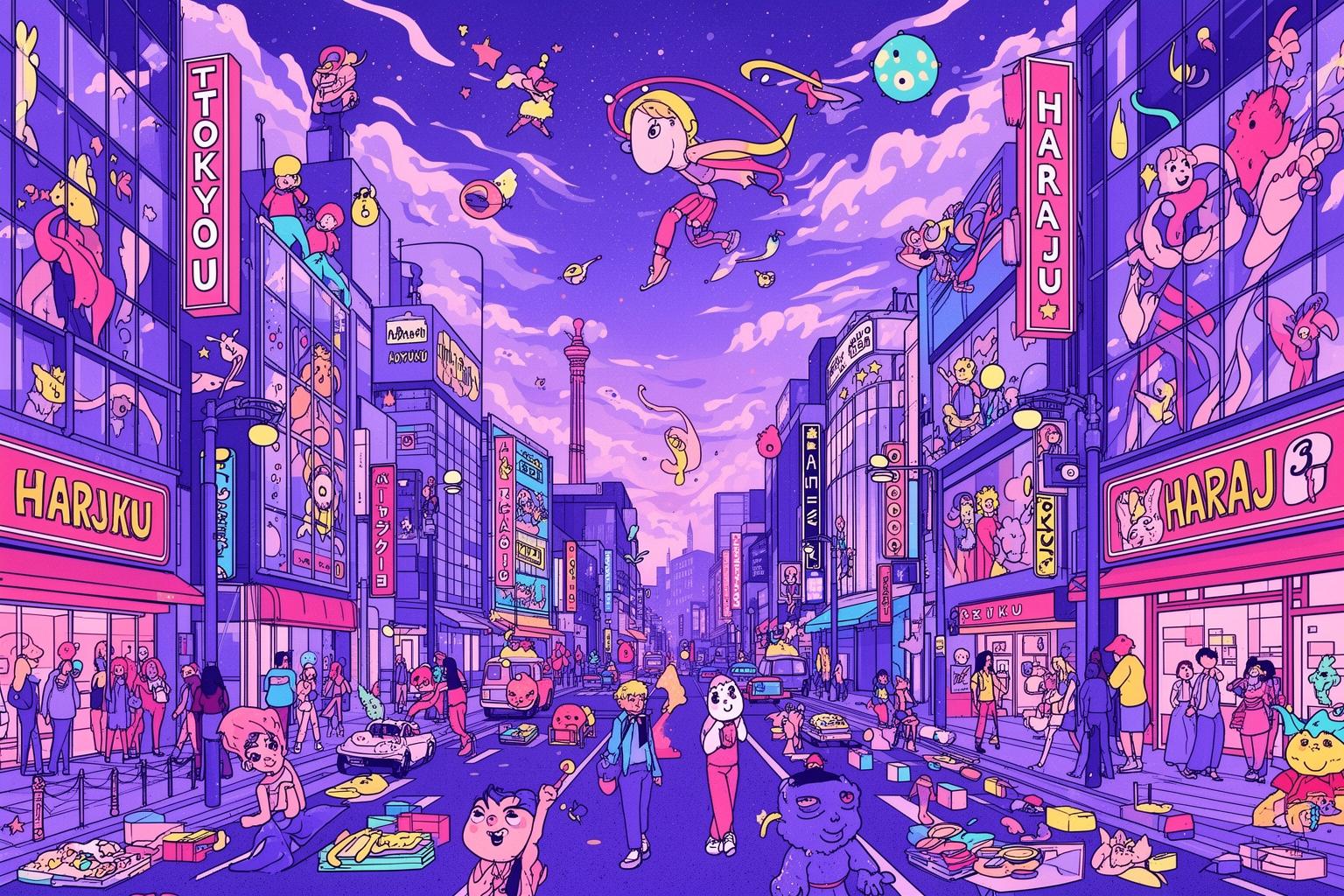
Straddling the line between manic energy and refined calm, the neighboring districts of Harajuku and Aoyama reveal another side of Murakami’s Tokyo. Harajuku, centered around its globally renowned Takeshita Street, is a chaotic burst of youth culture, fashion, and sensory intensity. In contrast, Aoyama acts as its elegant elder sibling, featuring high-fashion boutiques, architectural wonders, and tranquil, tree-lined boulevards. This stark juxtaposition generates an intriguing tension—a space where characters can shift between worlds, from the loud and performative to the quiet and introspective. It is in this intersection of style and solitude that the clean, minimalist aesthetic of Murakami’s prose finds its tangible counterpart, where the boundaries between different realities feel especially thin.
The Aoyama Cemetery: A Walk with the Past
In Murakami’s world, cemeteries are seldom places of fear. Rather, they serve as peaceful, reflective spaces for connecting with memory and history. The expansive Aoyama Cemetery exemplifies this. It is a vast, tranquil green island amid the city’s hustle. Walking along its wide avenues, lined with cherry and camphor trees, you experience a profound sense of calm. The noise of Aoyama’s traffic recedes, replaced by the crunch of gravel beneath your feet and the whisper of wind through the leaves. It is a place to think, wander aimlessly, and let your mind drift. One can easily picture a character visiting here, not out of somber duty, but as a quiet conversation with someone lost—a theme deeply resonant in novels like Norwegian Wood. The cemetery is beautiful in every season but especially in spring, when cherry blossoms form a breathtaking, fleeting canopy over weathered headstones, poignantly reminding us of life’s beauty and transience.
The Nezu Museum and Its Garden
Tucked away on a quiet street in Aoyama, the Nezu Museum is a modern architectural gem housing an exquisite collection of Japanese and East Asian art. Yet, for a Murakami pilgrim, the true treasure lies beyond its glass walls: a splendid traditional Japanese garden that unfolds across a small valley. Descending the stone steps into the garden feels like entering another realm. Winding paths lead past stone lanterns, teahouses, and tranquil ponds filled with koi fish. The garden is a living artwork, designed as a space for meditation and escape. It’s the kind of hidden sanctuary where a character might experience a pivotal encounter or a moment of deep clarity. The atmosphere evokes the private library in Kafka on the Shore—a place removed from the ordinary world, governed by its own rules of beauty and time. Sitting quietly in one of the garden’s secluded corners, listening to the gentle flow of a stream, it’s easy to sense the boundary between reality and imagination beginning to blur.
The Spiral Building: A Portal of Modernity
Along Aoyama Dori, the main thoroughfare, stands the Spiral Building, an architectural landmark designed by Fumihiko Maki. Featuring a distinctive spiral ramp winding through a multi-story atrium, the building is more than a structure; it is a vibrant space embodying the clean, cool, and slightly detached modernism of Murakami’s world. Housing art galleries, design shops, and a cafe, it functions as a hub of creativity and commerce where various cultural aspects converge. The building’s complex geometry and seamless blending of public and private space serve as a physical metaphor for the layered realities in his novels. It is the kind of place where a character with a keen appreciation for aesthetics and design might meet for coffee, their conversation unfolding amid contemporary art. The Spiral Building represents a forward-thinking, sophisticated Tokyo unafraid of abstraction—a perfect reflection of the literary universe Murakami has so carefully constructed.
Practical Pilgrim’s Notes: Navigating Murakami’s World
Setting out on a Murakami-inspired journey through Tokyo is less about following a strict itinerary and more about embracing a particular mindset. It’s about mastering the art of wandering, welcoming serendipity, and noticing the subtle nuances of the city. To truly enter his world, you need to adopt a different tempo, letting the city’s rhythm guide you. Here are some tips to help you attune to that distinctive frequency.
Best Times to Wander
Tokyo’s atmosphere changes dramatically with the seasons, each offering a unique perspective on Murakami’s world. Autumn may be the most fitting season. The crisp air, the late afternoon’s golden light, and the turning leaves add a melancholic, introspective mood to the city, perfectly echoing the tone of many of his novels. Spring, with its fleeting cherry blossoms, evokes a sense of beauty and transience, another key Murakami theme. Beyond the seasons, consider the time of day. Early morning, when the city is just stirring awake, provides a rare quiet and solitude. The late afternoon, known as the ‘golden hour’ to photographers, casts long shadows and bathes the city in warm, nostalgic light. And, of course, nightfall is when jazz bars come alive, neon lights in Shinjuku paint the streets with surreal hues, and the city feels like a place of endless, mysterious possibilities.
Getting Around: The Rhythm of the Rails
Trains are Tokyo’s lifeblood and a constant presence in Murakami’s stories. His characters often ride the rails, using travel time to read, listen to music, or gaze out the window as the landscape blurs by. To navigate his Tokyo, you must embrace the train system. The JR Chuo Line serves as your main artery for exploring western suburbs like Koenji and Asagaya, while the extensive Tokyo Metro and Toei Subway networks connect you everywhere else. Get a rechargeable IC card such as a Suica or Pasmo; it makes travel seamless and feels like your personal key to the city. Pay attention to the journey itself. Notice the unique jingles at each station, the orderly flow of commuters, and the quiet etiquette inside the train cars. The rhythmic clatter of the train on the tracks is the city’s heartbeat, and riding it is an essential part of the pilgrimage.
A Traveler’s Mindset: What to Bring
The most important things to bring on this journey aren’t material—they are curiosity, patience, and a readiness to get a little lost. Still, a few physical items can enhance the experience. First and foremost, wear comfortable walking shoes. You’ll cover many miles on foot, and often the best discoveries come from wandering alleys and side streets that maps don’t reveal. Second, carry a book—ideally, a Murakami novel. Find a quiet café, a park bench, or a seat in a jazz bar, and read a few pages. Reading his words in the very city that inspired them creates a powerful, immersive connection. Finally, consider bringing a small notebook or journal. You don’t need to be a writer, but having a place to jot down observations, feelings, or interesting details helps you process the experience. This journey is about discovering the poetry in everyday life, and sometimes writing it down helps you see it more clearly.
Your journey through Haruki Murakami’s Tokyo is ultimately a personal one. It’s not about ticking off sights but about connecting with the atmosphere that fuels his remarkable imagination. It’s about sitting in a quiet bar, listening to a jazz record, and feeling the profound comfort it brings. It’s about strolling through a park and sensing the weight of unspoken memories in the air. Seen through his eyes, this city becomes more than just a place; it transforms into a state of being, a vast dreamscape where the boundary between this world and another is always a little blurred. So go, wander its streets, follow your intuition, and perhaps, just perhaps, you’ll discover a mysterious well or encounter a talking cat of your own. You will leave with more than photographs; you will leave with the feeling that you, too, have stepped through the pages of a story, and that the magic is, and always has been, real.