Floating serenely in the Seto Inland Sea, between Japan’s main islands of Honshu and Shikoku, lies a place where the world of contemporary art dissolves into the timeless rhythms of nature. This is Naoshima, an island that has transformed itself from a fading industrial hub into a global pilgrimage site for lovers of art, architecture, and profound beauty. Here, art is not confined to gallery walls; it breathes in the salty air, rises from the tranquil beaches, and embeds itself within the very fabric of the island’s quiet villages. The journey to Naoshima is more than a trip—it is an immersion into a landscape where every curve of a concrete wall, every beam of natural light, and every splash of color against the blue sea has been placed with intention. It is a testament to the power of creativity to revitalize a community and to forge a unique, harmonious dialogue between humanity and the environment. Prepare to have your perceptions challenged and your senses awakened, for Naoshima is not a place you simply see; it is a place you feel, a living installation that continues to evolve with every passing season and every visitor who walks its shores.
For travelers enchanted by the fusion of art and history, a visit to Takehara offers a complementary journey through cultural transformation.
Chichu Art Museum: A Dialogue with the Earth
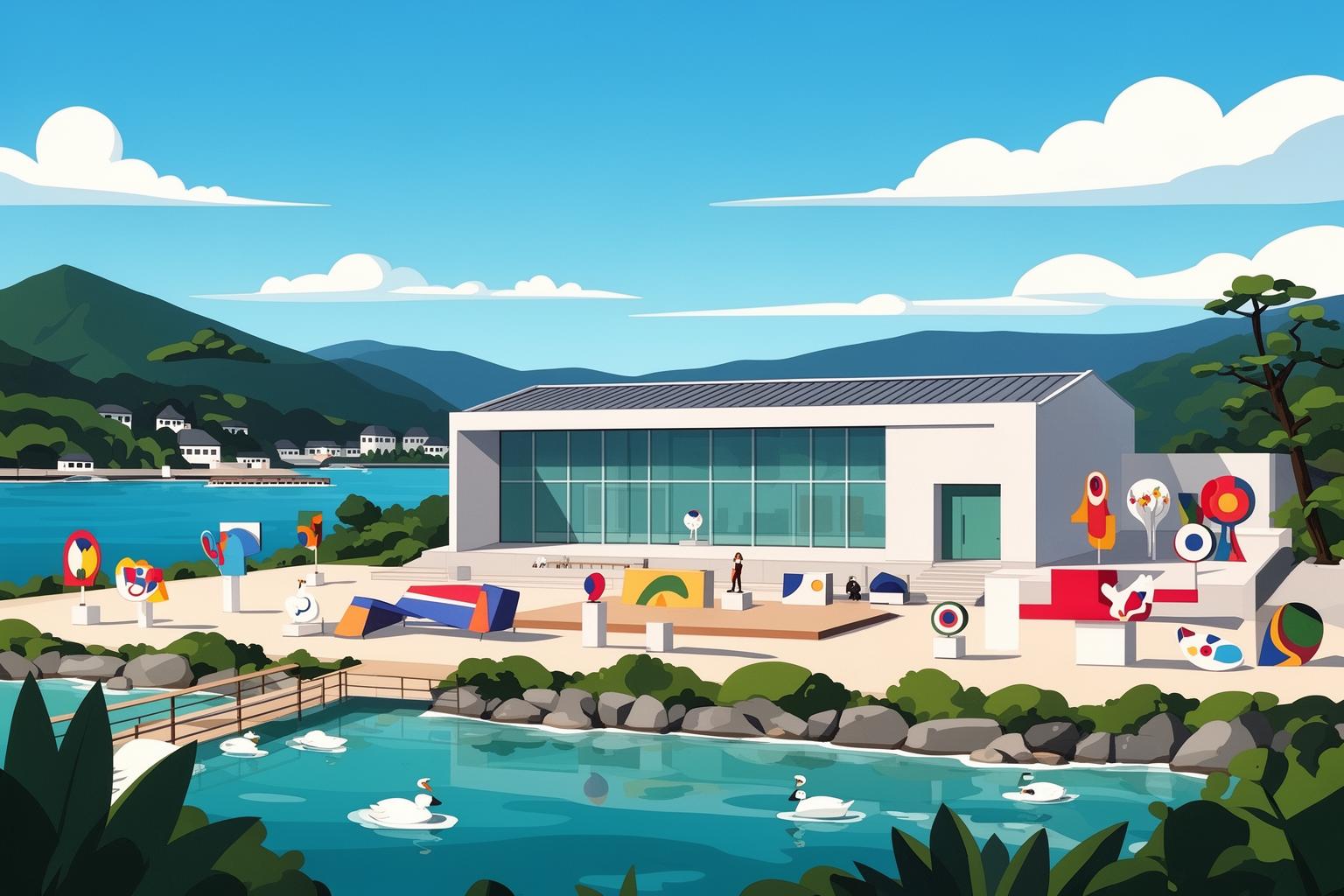
Your pilgrimage on Naoshima truly begins and culminates at the Chichu Art Museum. The name itself, meaning “in the earth,” perfectly captures its architectural brilliance. Designed by Tadao Ando, a master of concrete and light, the museum is almost entirely underground, nestled into one of the island’s southern hills. This building does not dominate the landscape; rather, it harmoniously blends with it, preserving the natural beauty of Seto Inland Sea National Park. The experience begins long before you view the art. After presenting your timed-entry ticket—a reservation that must be secured weeks, if not months, in advance—you are led along a pristine concrete path bordered by a carefully curated garden that pays tribute to the artist whose work awaits inside: Claude Monet. The air is still, the sounds hushed, preparing you for a meditative encounter.
Inside, Ando’s genius becomes apparent. There are no grand foyers or flashy signs. Instead, you move through a series of geometric courtyards, ramps, and corridors carved from smooth, cool concrete. The building itself is a sculpture, designed to interact with the one element that shapes the entire experience: natural light. Throughout the day, sunlight streams through carefully placed skylights and openings, shifting shadows, highlighting textures, and transforming the spaces within. The museum intentionally limits its collection to works by just three artists, encouraging a deep, contemplative engagement with each. This is not a place for passive viewing; it demands your full presence and attention.
Monet’s Dream in Concrete: The Water Lily Room
The first major installation you encounter is a space dedicated to five paintings from Claude Monet’s “Water Lilies” series. Calling it a room feels insufficient—it is a sanctuary. Before entering, you are asked to remove your shoes and slip on soft slippers, a simple gesture that immediately grounds you and sharpens your senses. You then step into a vast chamber where the walls, ceiling, and even the floor are bathed in a soft, ethereal light. The floor is made up of an astonishing 700,000 tiny Carrara marble cubes, their edges rounded to form a gentle, yielding surface underfoot. Light floods in from a diffused skylight, casting a shadowless, ambient glow that mimics the outdoor conditions Monet painted under. On the clean white walls hang the monumental canvases, their swirling blues, purples, and greens creating a dreamscape of water and flora. Freed from traditional gilded frames, the paintings breathe. Ando has crafted the perfect container for Monet’s art, a space where these impressionistic masterpieces are not just seen but deeply felt, inviting you to lose yourself in their infinite depth.
Turrell’s Perception: The Realm of Pure Light
From Monet’s painterly light, you move into the pure, unfiltered light of James Turrell, an artist who uses light itself as his medium. Naoshima hosts three of his works, each designed to challenge and expand your perception of space and reality. In “Afrum, Pale Blue,” you enter a dark room to observe what appears to be a glowing blue geometric shape projected onto a corner. As your eyes adjust and you approach, you realize it is not a projection but a precisely shaped void filled with light, creating an illusion of solidity that is both bewildering and captivating. The most interactive piece is “Open Field.” Led by staff into what seems like a pitch-black room, you are invited to ascend a short flight of stairs toward a glowing violet rectangle on the far wall. As you climb, the simple instruction is to step into the light. The moment of hesitation is tangible, but upon crossing the threshold, your senses realign completely. Now inside the rectangle, you inhabit a room filled with a soft, formless haze of color where walls and floor seem to vanish. It’s a profoundly disorienting and deeply moving experience. The final work, “Open Sky,” is a large, open-roofed chamber with angled walls framing a perfect square of sky above. Seating surrounds the perimeter, inviting you to sit and watch as clouds drift or the sky shifts from daylight blue to twilight indigo during special sunset viewings. Turrell reveals that the sky itself is the ultimate canvas.
De Maria’s Eternity: Time, Timeless, No Time
The final chamber at Chichu holds its most monumental work: Walter De Maria’s “Time/Timeless/No Time.” As you ascend a grand, temple-like staircase, anticipation builds. You enter a vast hall where sheer scale is breathtaking. Dominating the center is a massive, perfectly polished granite sphere, two meters in diameter. Along the walls, twenty-seven gilded wooden sculptures are arranged in geometric patterns. Natural light filters down from skylights running the length of the ceiling, moving throughout the day to catch the golden sculptures and reflect off the flawless sphere. The installation evokes a powerful sense of permanence and eternity. The sphere resembles an ancient celestial body, the golden totems sacred relics. It is a space for quiet contemplation on time’s nature—a fitting and profound conclusion to the journey through the Chichu Art Museum.
Benesse House Museum: Where Art and Hospitality Converge
Another key element of the Naoshima experience, also designed by Tadao Ando, is Benesse House. This groundbreaking concept combines a world-class contemporary art museum with a luxury hotel in a seamless way. By merging these two, it eliminates the usual separation between art and everyday life, letting guests live amidst the masterpieces. The complex is divided into four distinct zones—Museum, Oval, Park, and Beach—each providing a unique view of the island’s landscape and the art it hosts. The main Museum building, situated on a cliff overlooking the sea, is an impressive structure made of concrete, glass, and wood, featuring large windows that frame the surrounding natural beauty as if it were part of the artwork.
The collection is impressive, showcasing works by internationally acclaimed and Japanese artists such as Andy Warhol, David Hockney, Cy Twombly, Jean-Michel Basquiat, and Yasumasa Morimura. What makes the experience truly special is the freedom granted to overnight guests. Once daytime visitors have left, the museum transforms into a private gallery. You can stroll quietly through the halls late at night with a glass of wine, sharing an intimate, solitary moment with a Gerhard Richter painting. Or you can rise early to watch the sunrise illuminate a sculpture by Kan Yasuda. This exceptional access turns art viewing into a personal and unforgettable experience. The art isn’t limited to indoors either. The grounds feature dozens of outdoor sculptures that invite interaction. You might come across Niki de Saint Phalle’s colorful, playful animal sculptures on the lawn or witness George Rickey’s kinetic sculptures moving gracefully in the sea breeze. This ongoing presence of art, both inside and outside, ensures your entire stay is an immersive aesthetic journey.
Art House Project: Weaving Art into the Fabric of a Village
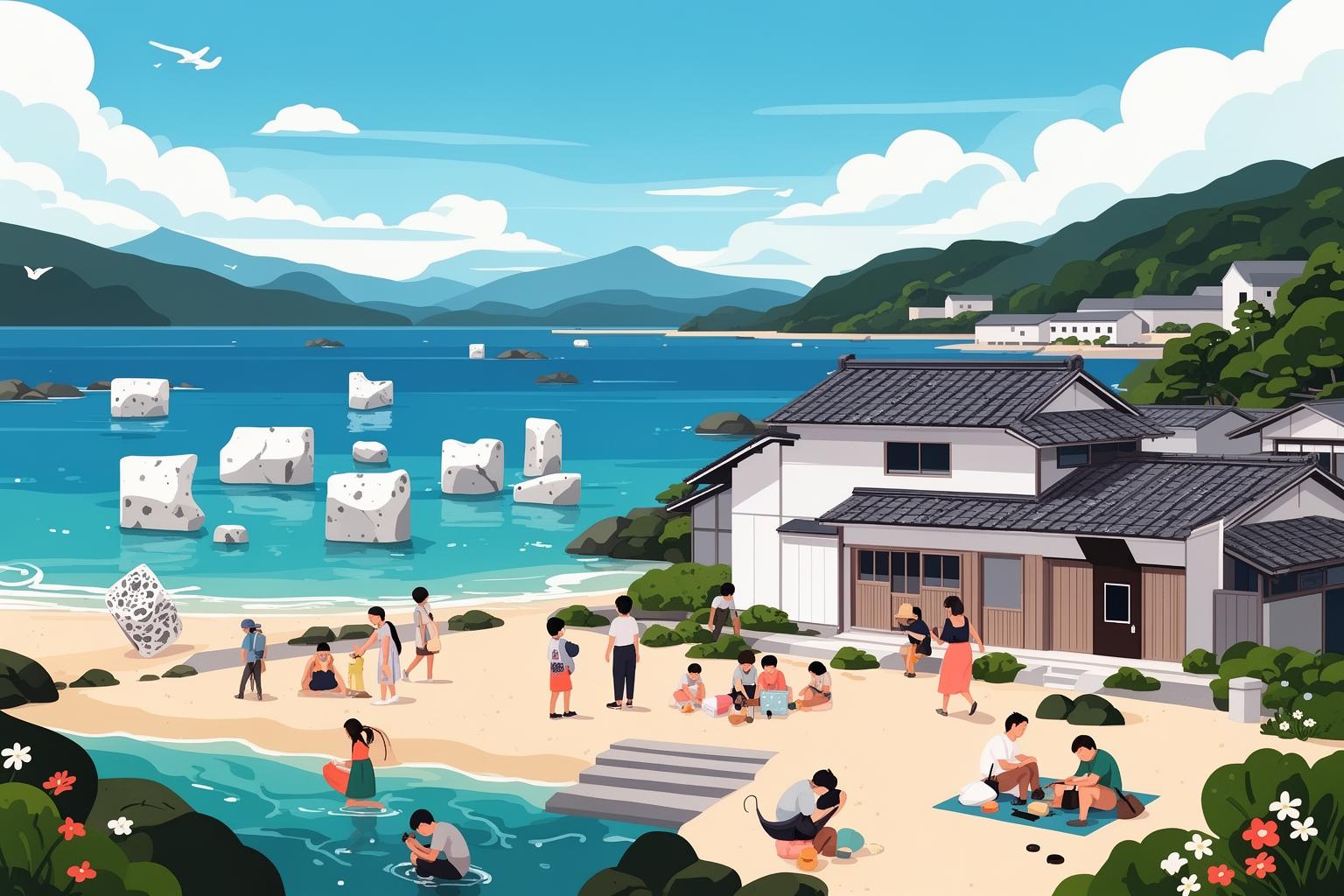
While museums showcase a carefully curated, architectural interpretation of art, the Art House Project in the Honmura district presents something completely different. It embodies the island’s philosophy of community integration. Instead of placing art in new buildings, it is intricately woven into the fabric of a centuries-old village. The project repurposes empty, often dilapidated traditional Japanese houses into permanent art installations, each a distinctive collaboration between the artist and the spirit of the existing structure. As you wander through the narrow, winding lanes of Honmura, there is a sense of discovery, as if on a treasure hunt where contemporary art is hidden behind weathered wooden facades. With a multi-site ticket and map in hand, you embark on a journey through the living history of the town.
Minamidera: Embracing the Abyss with James Turrell
Perhaps the most striking and sought-after experience in the Art House Project is Minamidera. Erected on the former site of a temple, this new wooden building, also designed by Tadao Ando, appears deceptively simple from the outside. Inside, it houses a masterwork of perception by James Turrell, titled “Backside of the Moon.” Visitors enter in small groups into a space of total, impenetrable darkness where you cannot see your hand in front of your face. For several minutes, you sit in this sensory void, your eyes straining to detect a single photon of light. The experience can be disorienting, even unsettling. Yet slowly and miraculously, a faint, distant rectangle of light begins to emerge from the blackness. As your pupils fully dilate, the shape sharpens and seems to move closer, its soft glow revealing the scale of the room. The piece offers a profound meditation on sight and perception, illustrating that seeing is not solely a physical act but also a cognitive one. The wait outside for your timed-entry is always worthwhile; the memory of that slowly materializing light lingers long after.
Go’o Shrine: Ascending from Earth to Sky
The Go’o Shrine beautifully exemplifies how the project honors and reimagines history. Artist Hiroshi Sugimoto transformed an existing Edo-period shrine, creating a work that links the earthly realm with the divine, and the past with the present. While the main hall and worship hall have been meticulously restored, the most striking feature is a pristine glass staircase descending from the front of the main hall into the earth below. Crafted from optical glass blocks, this staircase appears to capture and hold light, glowing with an ethereal energy. It connects the world above to a subterranean stone chamber, accessible via a narrow tunnel from the side. Looking up from the chamber, you see light filtering down through the glass steps, forming a symbolic bridge between two worlds. By linking the shrine to the underground cavern, Sugimoto connects human worship with the ancient, elemental forces of the earth, creating a space that feels both sacred and intensely modern.
Kadoya: The Digital Pulse of Time
Kadoya was the first house completed for the project and remains a poignant, beautiful installation. Artist Tatsuo Miyajima restored the 200-year-old building, creating a dark room centered around a shallow pool of water. Submerged within are 125 colorful LED counters, each blinking at a different pace, counting from 1 to 9 before going dark and starting again. The captivating element of this piece, titled “Sea of Time ’98,” is that each counter’s speed was set by a resident of Naoshima. It acts as a digital reflection of the community itself—a collective pulse where each light represents an individual’s rhythm of life. Sitting in the quiet darkness, watching the numbers flash and shimmer on the water’s surface, you feel a deep connection to the island’s people and the unstoppable, yet deeply personal, flow of time.
Icons and Encounters: The Soul of the Island Shore
Beyond the organized spaces of museums and art houses, Naoshima’s essence is perhaps most vividly expressed by the iconic artworks adorning its coastline, standing as vibrant, hopeful guardians against the backdrop of sea and sky.
Yayoi Kusama’s Pumpkins: Guardians of the Shoreline
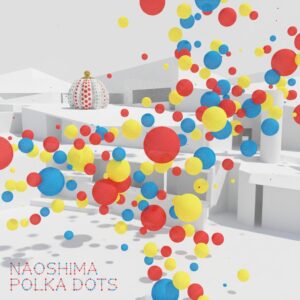
No image is more closely associated with Naoshima than Yayoi Kusama’s enormous, polka-dotted pumpkins. They have become emblematic of the island’s artistic character. The most renowned is the Yellow Pumpkin, located at the end of a small pier near the Benesse House. Its bright yellow surface, covered in a captivating pattern of black dots, forms a surreal and cheerful contrast with the blue sea and the green hills around it. It invites engagement and is one of the most photographed artworks in Japan. Experiencing it firsthand, feeling the sea breeze while standing beside it, is truly memorable. At the island’s main port, Miyanoura, visitors are welcomed by another Kusama piece: the Red Pumpkin, or “Akakabocha.” Larger and hollow, this vivid red and black pumpkin greets guests as they disembark from the ferry. You can even enter it, with its circular cutouts offering playful portholes framing views of the harbor.
I Love Yu: A Bathhouse Transformed into Art
For a genuinely unique and immersive art experience, the I Love Yu public bathhouse, or sento, is a must-visit. Designed by artist Shinro Ohtake, it functions as a fully operational bathhouse while doubling as a wildly eclectic, scrapbook-like art installation. The exterior is a vibrant mix of neon signs, repurposed objects, and colorful tiles, while the interior is equally whimsical—from the collaged walls of the changing rooms to the tile murals lining the hot baths. It’s a place where locals and visitors alike can relax side by side, breaking down the formal boundaries often found in the art world. It’s lively, fun, and perfectly captures the idea that art can and should be part of daily life. Don’t forget your towel, or you can purchase a beautifully designed souvenir one on-site.
The Practical Canvas: Navigating Your Naoshima Journey
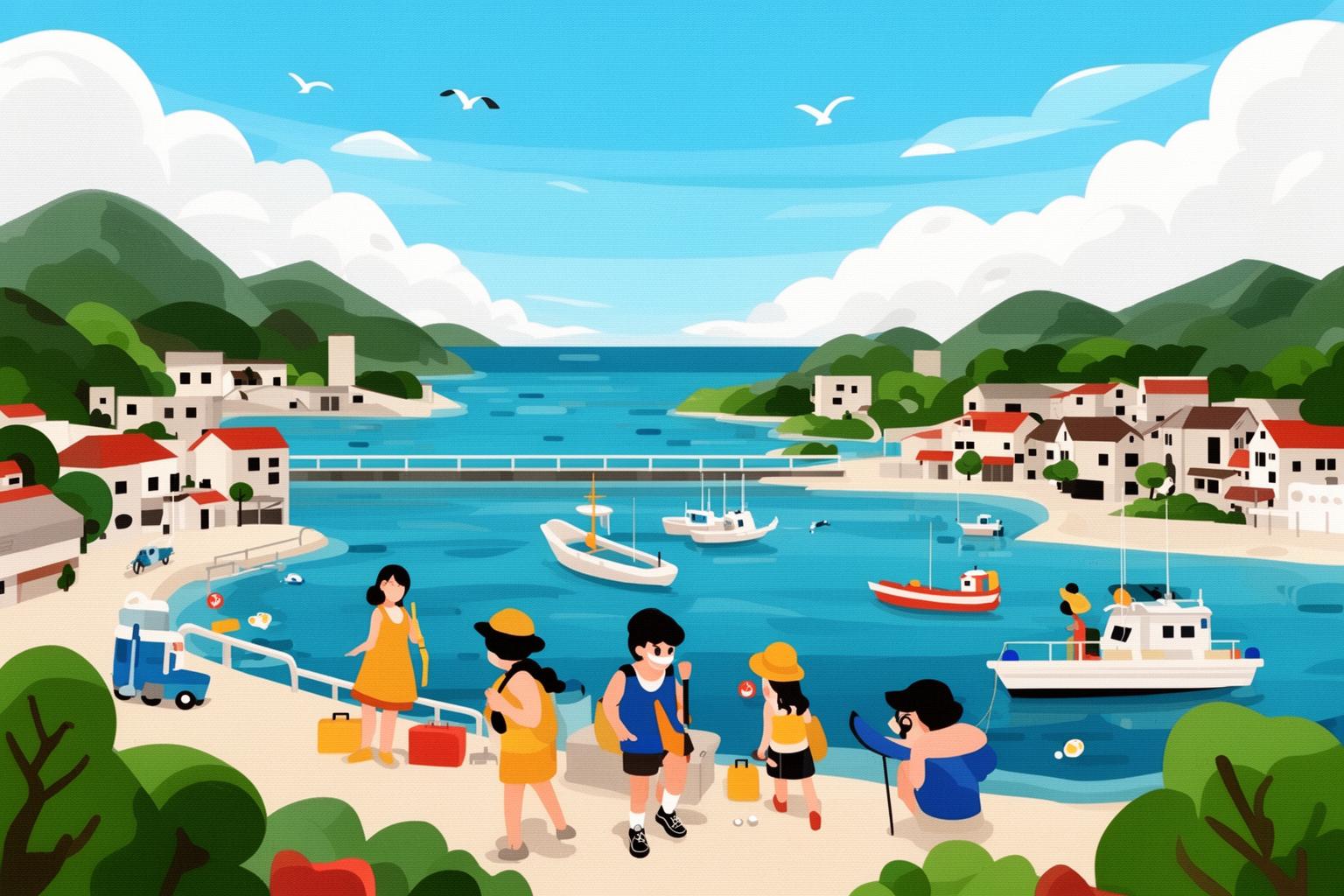
While Naoshima feels like a world away, reaching the island and getting around it is quite straightforward with a bit of prior planning. The island is mainly reached by ferry, a pleasant trip that sets the tone for the peaceful experience ahead.
Charting Your Course: Access and Arrival
The two primary entry points to Naoshima are Uno Port in Okayama Prefecture on Honshu, Japan’s main island, and Takamatsu Port in Kagawa Prefecture on the island of Shikoku. Both ports are easily accessible via Japan’s excellent train system. From Uno, the ferry ride is a brief and scenic 20 minutes to Miyanoura Port, the main hub of Naoshima. Ferries from Takamatsu take around 50 minutes, offering lovely views of the small islands scattered across the Seto Inland Sea. It’s important to check ferry schedules in advance, as service can be limited, particularly in the off-season. Buying tickets is straightforward and can be done at the ferry terminals just before departure.
Island Rhythms: Mastering Transportation
Once on the island, there are several ways to get around. The town bus circulates between Miyanoura Port, the Honmura district (home to the Art House Project), and the museum area. The bus schedules are coordinated with ferry arrivals and provide a reliable means to visit the main attractions. However, buses can be crowded, and their schedule requires some planning. For more flexibility and the chance to explore at your own pace, renting a bicycle is the best option. Given the island’s surprisingly hilly terrain, especially near the museum area, an electric-assist bicycle is highly recommended. It makes climbing the hills easy and lets you fully enjoy the stunning coastal scenery without tiring yourself out. Rental shops are conveniently situated right near Miyanoura Port. If your focus is a single area, like the Art House Project in Honmura, the village is compact and best experienced on foot.
The Art of Planning: A First-Timer’s Guide
A trip to Naoshima is not something that can be done entirely on a whim. The island’s popularity, along with the limited capacity of its main attractions, means that careful planning is not only recommended but absolutely essential for a smooth and enjoyable visit.
The Golden Rule: Book Everything in Advance
If there is one crucial piece of advice, it is this: reserve your ticket for the Chichu Art Museum online as soon as they become available. Tickets are for a specific date and time slot and are released gradually, often one to two months ahead. They sell out very quickly, especially on weekends and during peak seasons. Without a reservation, entry is simply not possible. Likewise, accommodation on the island is limited and fills up well in advance. Whether you hope to stay at the luxurious Benesse House or a cozy local guesthouse (minshuku), securing your lodging should be your top priority once you finalize your travel dates.
Timing is Everything: Best Seasons and Days to Avoid
Naoshima is stunning throughout the year, but spring (April-May) and autumn (October-November) offer the most comfortable weather for exploring the island by bike or on foot. These seasons also tend to have fewer crowds compared to the busy summer months of July and August. Keep in mind that most museums and art houses are closed on Mondays. If your itinerary includes a Monday, you could be quite disappointed. Always consult the official Benesse Art Site Naoshima calendar online when planning your visit. Every three years, Naoshima hosts a central venue for the Setouchi Triennale, a large art festival spanning a dozen islands. Visiting during the Triennale offers an incredible experience with many extra artworks and events but also brings much larger crowds and greater challenges in securing tickets and accommodation.
Naoshima’s Lasting Impression: More Than a Museum
A visit to Naoshima remains vivid in your memory long after you have boarded the ferry to depart. It is the sight of a yellow pumpkin set against an endless sea, the transition from absolute darkness to faint light, the sound of digital numbers blinking in a silent pool. But beyond that, it is the prevailing sense of harmony that endures. This island demonstrates that art need not be a detached commodity; it can be a living, breathing force that rejuvenates a landscape, nurtures a community, and enriches the lives of everyone who experiences it. Naoshima encourages you to slow down, observe more closely, and appreciate the profound beauty found in the intentional and thoughtful fusion of human creativity and the natural world. It is a masterpiece painted on the vast canvas of an entire island, waiting to be discovered.