

There are stories that stay with you, long after the credits roll. They weave themselves into the fabric of your memory, their colors as vivid as a dream you can’t quite shake. Makoto Shinkai’s masterpiece, Your Name (Kimi no Na wa), is one of those stories. It’s a breathtaking tapestry of fate, connection, and the shimmering, transient beauty of youth, painted against a backdrop so real, so tangible, you can almost feel the Tokyo humidity on your skin or the crisp mountain air of Itomori. For millions around the world, the film was more than just an animation; it was an experience. And the most magical part? That experience doesn’t have to end on the screen. The world of Taki and Mitsuha is waiting for you, etched into the very streets and landmarks of modern-day Tokyo. This is not just a tour; it’s a pilgrimage, a seichi junrei, a journey to bridge the gap between fiction and reality. It’s a chance to walk in the footsteps of two souls tied together by a red string of fate, to see the world through their eyes, and to feel the powerful, unspoken emotions that resonate from these very real places. From the iconic red-railed staircase where a question hangs in the air to the bustling urban landscapes that Taki called home, we are about to embark on a journey to rediscover the heart of Your Name, one unforgettable location at a time. This is your guide to chasing comets in the heart of Japan.
Immerse yourself in the film’s vibrant legacy by exploring the captivating Tokyo steps that bring its timeless journey to life.
The Heart of the Connection: The Suga Shrine Stairs
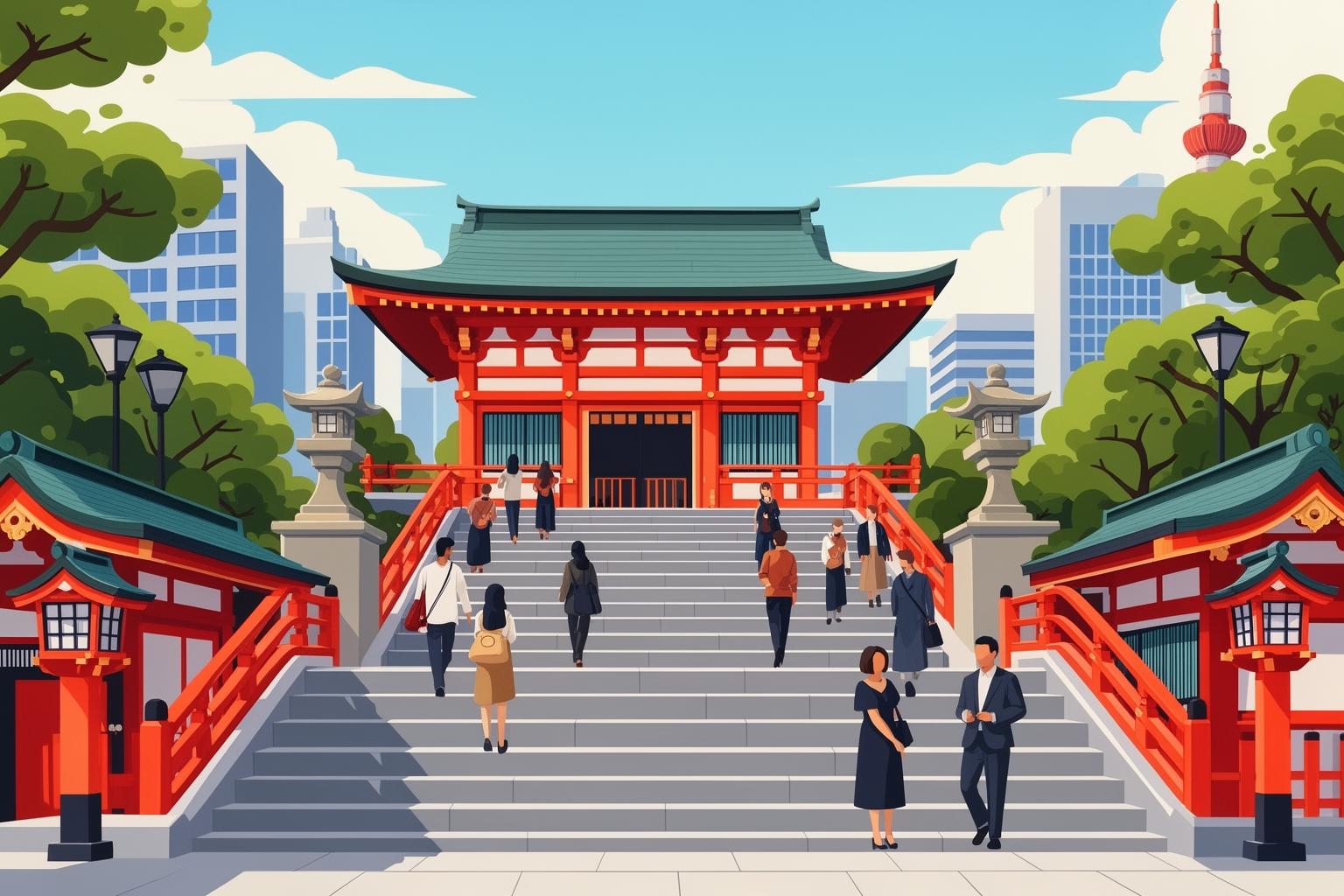
Every great story features a climax—a single moment where all the narrative threads come together. In Your Name, this moment isn’t a dramatic explosion or an intense confession but a quiet, breathtaking encounter on a simple staircase. The final scene, where Taki and Mitsuha finally, finally meet, is etched into the memory of every fan. It’s a scene filled with hope, relief, and the gentle question, “Your name is?” This crucial moment doesn’t occur in a fantasy world; it takes place on the stone steps leading to the Suga Shrine, tucked away in a peaceful residential area of Yotsuya, a neighborhood that feels worlds apart from the neon-lit heart of central Tokyo. Here is where our pilgrimage begins, at the emotional heart of the entire film. The journey to these stairs is a journey to the story’s core, and standing there is more than sightseeing—it’s about feeling the weight of their long search and the lightness of their final discovery.
Finding the Iconic Steps
Getting to the Suga Shrine stairs is a small adventure in itself. The easiest way starts at Yotsuya Station, a convenient stop on the JR Chuo Line and the Tokyo Metro Marunouchi Line. From the station, a pleasant ten to fifteen-minute walk takes you away from the main road, where the city’s noise gradually fades, replaced by a deep and welcome calm. The streets narrow, lined with modest apartment buildings, neat homes, and the occasional charming local shop. This is the genuine, everyday Tokyo that many tourists never see. The atmosphere is peaceful, almost meditative. There are no glaring signs or crowds here, only the gentle rhythm of local life. The final approach is unpretentious: you round a corner, and the stairs come into view. The reality is both startling and perfect. The stairs are smaller, more intimate than Shinkai’s sweeping cinematic vision, but they are undeniably the same. The iconic red handrail shines in the sunlight, and the curve of the road at the bottom mirrors the film’s frame exactly. It’s a surreal moment, standing at the edge of a memory that feels like your own. The air hangs still, and you can almost hear the faint echo of their nervous footsteps, their quickened breaths, and the question that changed everything.
Capturing the Perfect Moment
For many visitors, the aim is to capture that one perfect photo—a personal recreation of the movie poster. Achieving this takes some patience and a good eye. Lighting is crucial here. To truly evoke the film’s nostalgic, golden-hour mood, plan your visit for late afternoon. As the sun begins to set, it casts long shadows and bathes the scene in a warm, ethereal glow that feels deeply cinematic. This is the tasogare-doki, or twilight hour, a motif central to the movie’s magic. The classic shot of Taki looking up from the bottom of the stairs is taken from the street corner, gazing upward, while Mitsuha’s viewpoint is from the top landing, looking down. Try different angles to see what feels right to you. But it’s essential to remember where you are. This isn’t a film set—it’s a quiet residential neighborhood. Locals use these stairs daily. Be considerate and respectful. Speak softly, avoid blocking the path for long periods, and embrace the area’s tranquility instead of disturbing it. The real magic isn’t just in the photograph but in the feeling of being there. It’s the quiet murmur of the city, the gentle breeze rustling the nearby leaves, and the overwhelming sense of peace and resolution that washes over you as you stand on those sacred steps.
Taki’s World: The Urban Pulse of Shinjuku
If the stairs at Suga Shrine symbolize the quiet, emotional core of the story, then the expansive, vibrant district of Shinjuku embodies its lively, pulsating heartbeat. This is the world of Taki Tachibana—a dazzling jungle of concrete and neon that perfectly captures the energy of his urban life. The film skillfully presents Shinjuku not merely as a setting but as a living, breathing character. Its towering skyscrapers stand as silent observers of the body-swapping chaos, its crowded crosswalks symbolizing the millions of intersecting lives, and its glittering nighttime skyline constantly reminds us of the distance between Tokyo and Mitsuha’s rural Itomori. To truly grasp Taki’s character, one must understand Shinjuku. Exploring these places means stepping directly into his everyday life, seeing the city through his eyes, and sensing the exhilarating, sometimes overwhelming, rhythm of life in one of the world’s most densely populated metropolises. From the immense billboards to the sophisticated art galleries, Shinjuku offers a unique kind of pilgrimage—one imbued with the spirit of creativity, ambition, and youthful dreams.
A View from the Top: The Shinjuku Yunika Vision
One of the film’s most iconic establishing shots is the view of the Shinjuku Yunika Vision. Situated just outside the east exit of the sprawling Shinjuku Station, this enormous, three-screen digital billboard stands as a landmark of the area. In the film, it functions as a visual anchor—a blinking, ever-present element of Taki’s urban surroundings. Experiencing it in person is a captivating sensory event. Its sheer scale impresses, with high-definition ads and music videos playing in a continuous, hypnotic loop. The sounds from the screens blend with the hustle of the station, the murmur of the crowds, and the rumble of passing trains, creating an urban symphony. For the best vantage point, stand on the pedestrian deck or near the station entrance. You’ll be immersed in a flowing river of people—commuters, shoppers, and travelers—all moving with purpose. Here, you truly feel the immense scale of Tokyo. It’s easy to imagine Taki weaving through this very crowd on his way to school or work. This spot perfectly captures the sensation of being a small part of a vast, interconnected whole, a central theme woven throughout the film.
The National Art Center, Tokyo: A Date with Modernity
Leaving behind the raw energy of Shinjuku Station, we follow Taki to a place of refined elegance: The National Art Center in Roppongi. This is the setting for his highly anticipated date with his coworker, the cultured and kind Okudera-senpai. It’s significant that the date occurs here—this is not a casual café but a temple of modern art and architecture. The building itself is a masterpiece. Designed by the acclaimed architect Kisho Kurokawa, its flowing glass facade resembles a giant, frozen wave shimmering in the daylight. Inside, you are welcomed by a soaring, light-filled atrium. The vast sense of space and brightness is awe-inspiring. The atmosphere exudes calm and intellectual curiosity. It stands in stark contrast to the hectic pace of Taki’s usual life and represents a step into a more grown-up, cultured realm, one he tries to navigate to impress his love interest. Choosing this location highlights his aspirations and artistic nature, often overshadowed by the film’s larger cosmic storyline. It reminds us that beneath the extraordinary events, Taki is still a young man finding his way in the world.
Dining in Style: Salon de Thé ROND
Nestled within the art center is the specific spot featured so prominently in the film: Salon de Thé ROND. This stylish café is dramatically perched atop one of the center’s massive inverted concrete cones, offering diners a unique, elevated view of the atrium below. It’s here where Taki and Okudera-senpai share cake and coffee. Discovering the café feels like uncovering a secret. You can actually visit the very same café, order a delicate pastry and coffee, and reenact the scene yourself. Bathed in natural light filtering through the glass curtain wall, the atmosphere is serene and elegant. It’s a perfect place to pause your pilgrimage, rest your feet, and contemplate the journey. Sitting there, you’ll appreciate the subtle character development in the scene—the awkwardness, gentle humor, and the slow realization by both Taki (as Mitsuha) and Okudera-senpai that something isn’t quite right. The real-life experience matches the stylish and memorable on-screen portrayal, though it’s wise to expect queues, especially on weekends. Visiting on a weekday afternoon may provide a quieter, more authentic experience.
The Shinjuku Scramble and Beyond
Shinjuku holds a treasure trove of smaller but equally recognizable locations featured in the film’s montages of Taki’s life. Near the station’s west exit stands the distinctive ring-shaped intersection in front of the Shinjuku Police Station, a unique urban design that receives a brief, clear spotlight. Close by is the iconic “LOVE” sculpture by Robert Indiana, a popular gathering spot and photo opportunity seen in countless Tokyo-based films and TV shows. Roaming the west Shinjuku area, with its towering skyscrapers, you’ll find the Tokyo Metropolitan Government Building, whose free observation decks offer panoramic views that Taki would have undoubtedly admired daily. These spots might not be central to the narrative, but they weave the fabric of Taki’s everyday existence. Exploring them adds depth and authenticity to your pilgrimage. A quick tip for navigating: Shinjuku Station is one of the busiest in the world, and it can be overwhelming. Plan your exits ahead of time, use a map app, and don’t hesitate to ask for directions. Embracing the initial sense of being lost is part of the Shinjuku experience—a rite of passage that connects you more deeply with Taki’s bustling world.
A Breath of Fresh Air: Shinjuku Gyoen National Garden
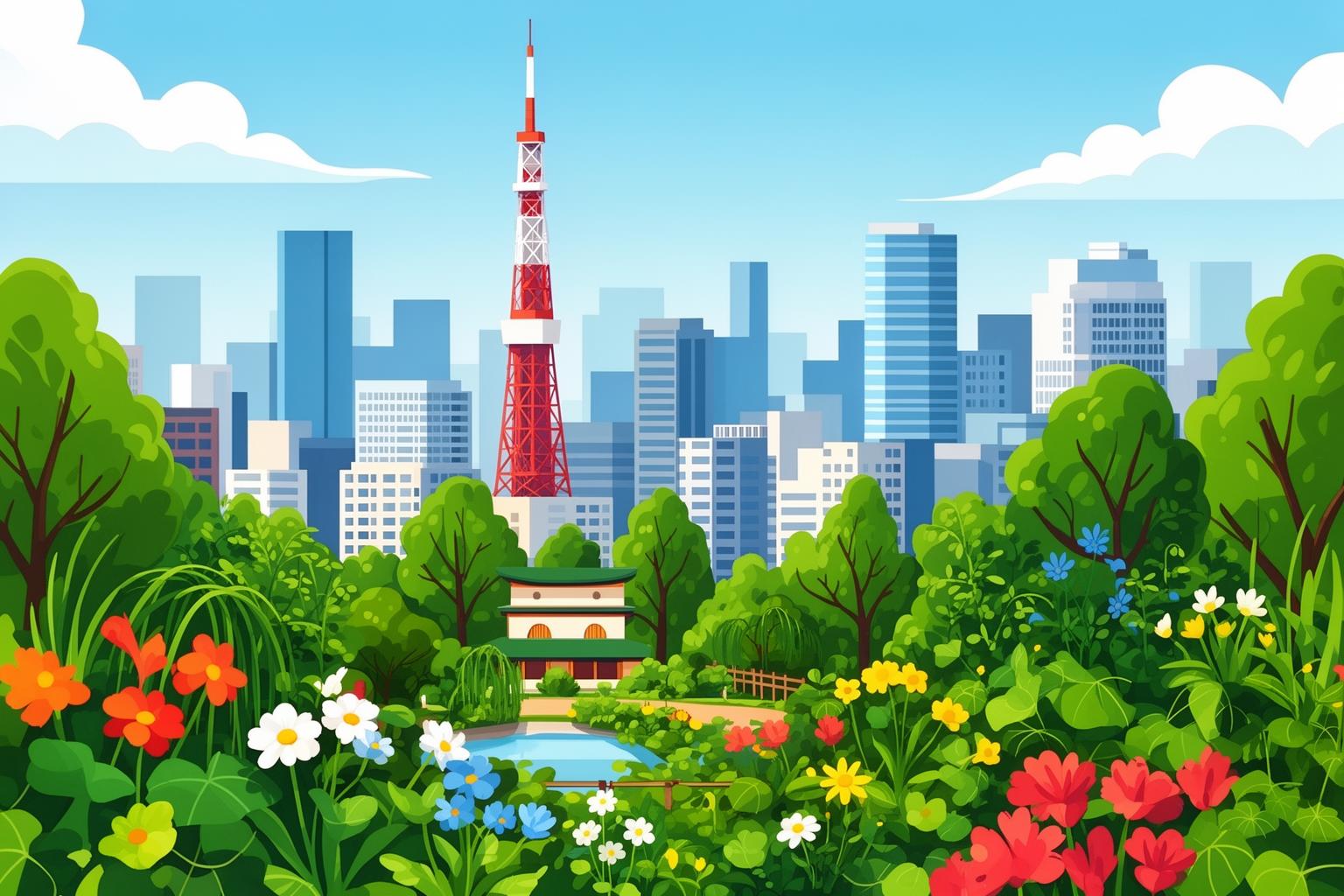
Just a short stroll from the relentless bustle of Shinjuku Station lies an urban oasis, a haven of peace and natural beauty: Shinjuku Gyoen National Garden. This expansive park plays a subtle yet symbolically important role in Your Name. It serves as a place of transition, a liminal space where the urban world of Taki shifts into a more natural, reflective environment. The film uses the lush greenery and tranquil ambiance of a cafe here to highlight a crucial moment of revelation for Taki. It is in this serene setting that the strangeness of his experiences begins to take shape, where he sketches the landscape of Itomori from a memory that isn’t his own. Visiting Shinjuku Gyoen offers a much-needed break for the tired pilgrim and provides a deeper connection to the film’s quieter, more introspective scenes. It reminds us that even in the heart of the world’s largest metropolis, moments of calm and profound beauty can be found, reflecting the balance between Taki’s urban life and Mitsuha’s rural world.
A Garden of Many Faces
Shinjuku Gyoen is more than just a single garden—it is a masterful collection of several distinct landscape styles, making a walk through its grounds feel like a journey across continents and eras. Upon entering, you can choose your path. You might find yourself strolling through a classic Japanese Landscape Garden, complete with carefully pruned pines, tranquil ponds filled with koi carp, and traditional wooden pavilions, including the beautiful Kyu Goryo Tei (Taiwan Pavilion). This area exudes an ancient and deeply spiritual atmosphere. A short distance away, the scenery shifts dramatically to a French Formal Garden, featuring symmetrical flowerbeds, perfectly aligned plane trees, and a grand, romantic vibe. Continuing further, you enter the wide-open lawns and gently rolling hills of an English Landscape Garden. This diversity is what makes the park so special—the atmosphere changes with every twist of the path. One moment you are quietly contemplating a pond, the next you are basking in the sun on a vast lawn, with Shinjuku’s skyscrapers peeking over the treetops—a constant, beautiful reminder of the contrast that defines Tokyo. The garden’s character also shifts vividly with the seasons. It is one of Tokyo’s most celebrated spots for cherry blossom viewing in spring, a lively canvas of reds and golds in autumn, and a lush, green retreat in summer.
Finding the Film’s Greenhouse
For fans of Your Name, a key attraction within the park is the large, modern greenhouse. While the cafe that Taki visits is fictional, its design and atmosphere clearly draw inspiration from the spaces inside and around this structure. The greenhouse itself is a marvel—a warm, humid environment filled with tropical and subtropical plants. As you step inside, the sounds of the park fade, replaced by the gentle drip of water and the rustle of giant leaves. The air is thick with the scent of damp earth and exotic blooms. It feels like entering another climate, another country. This feeling of being transported to a different world perfectly mirrors the film’s themes of crossing boundaries. Wandering through its carefully curated ecosystems, from arid desert plants to lush jungle flora, it’s easy to imagine Taki sitting nearby, lost in thought, trying to piece together the fragmented memories of a life that isn’t his own. To fully enjoy the garden, be sure to check its opening hours and note the modest entrance fee, which is well worth the cost for the hours of peace it offers. It’s an ideal spot to sit down, perhaps with your own sketchbook, and let the film’s magic and the beauty of the surroundings wash over you.
Weaving the Threads: Practical Tips for Your Pilgrimage
Embarking on an anime pilgrimage is an immensely rewarding experience, and a bit of preparation can elevate a good trip into an unforgettable one. Connecting the various locations of Your Name throughout Tokyo takes some planning, but it’s much less intimidating than it may appear. With the city’s exceptional public transportation and a few insider tips, your journey will be smooth and enjoyable, letting you fully absorb the atmosphere of each treasured spot. Consider this your practical guide to linking the red string of fate between each location, ensuring your personal journey is as seamless and magical as the one portrayed on screen.
Crafting Your Itinerary
Though the sites are scattered across several neighborhoods, they can be comfortably explored in a single, well-paced day. A logical and efficient route would begin your morning in Yotsuya. The residential area around Suga Shrine is at its most tranquil early in the day, providing a reflective start to your pilgrimage. After spending time at the iconic stairs, head to the Shinjuku area. Shinjuku forms the core of your tour, featuring Shinjuku Gyoen, the Yunika Vision, and various smaller landmarks. You could easily spend several hours here, taking a break for lunch at one of the thousands of restaurants available. I recommend visiting Shinjuku Gyoen in the early afternoon for a leisurely stroll before immersing yourself in the vibrant energy of the station area as evening draws near. Finally, as the afternoon light softens, take a brief subway ride to Roppongi to explore The National Art Center. The center’s atrium is especially stunning at sunset, and you can conclude your day with an elegant cake set at the Salon de Thé ROND—a perfect, full-circle ending to your journey following in Taki’s footsteps.
Navigating Tokyo’s Transit
Tokyo’s train and subway system is the city’s lifeline, and mastering it is essential for a successful pilgrimage. The complexity of the network can be overwhelming, but it is remarkably punctual, clean, and user-friendly, with ample English signage. For this itinerary, you’ll mainly utilize the JR Lines (such as the Chuo Line for Yotsuya and the Yamanote Line for Shinjuku) along with the Tokyo Metro subway lines. The most valuable tool you can have is a prepaid IC card, like a Suica or Pasmo. These cards can be bought at any major station. Simply load them with yen, and then tap in and out of ticket gates without worrying about fare calculations for each ride. This seamless experience saves significant time and hassle. Additionally, apps like Google Maps or Japan Transit Planner are indispensable for showing real-time train schedules, platform numbers, and the fastest routes, turning what could be a confusing journey into a straightforward, step-by-step process.
A Woman’s Perspective on Safety
As a woman who often travels alone, safety is always a priority for me. I can say with confidence that Tokyo is among the safest major cities worldwide. You can walk around most areas, even at night, with a security rarely found elsewhere. However, it’s wise to practice basic safety precautions. Crowded spots like Shinjuku Station attract pickpockets everywhere, so keep your bag zipped and valuables secure. Also, be mindful of the last train times, usually around midnight, to avoid getting stranded. For easy navigation and peace of mind, I highly recommend renting a pocket Wi-Fi device or getting a travel SIM card upon arrival at the airport. Having constant access to maps and information on your phone is an invaluable safety tool, ensuring you never feel truly lost. Ultimately, the best advice is to carry yourself confidently, stay aware of your surroundings, and embrace the incredible freedom and safety that traveling in Tokyo offers.
This pilgrimage is more than a checklist of filming locations. It’s an emotional journey that deepens your appreciation for a genuinely remarkable film. Standing on the Suga Shrine stairs as the sun sets, or gazing up at the glittering screens in Shinjuku, you’ll find the line between the world on screen and the world at your feet begins to blur. The fictional story of Taki and Mitsuha intertwines with your own real-life adventure in Tokyo. It’s a powerful reminder that the magic we seek in stories can often be found in the tangible beauty of the world around us, waiting to be uncovered. So go ahead, chase that comet, and discover your own connection in the heart of this incredible city.








