
There are stories that stay with you, long after the credits roll. They weave themselves into the fabric of your memory, their colors bleeding into the real world until you start to see them everywhere. Makoto Shinkai’s masterpiece, Your Name (Kimi no Na wa), is one such story. It’s a breathtaking tapestry of fate, time, and connection, tied together by a single, shimmering red thread. The film captured the hearts of millions not just with its stunning animation and poignant narrative, but with a world that felt tangibly real. That’s because, in many ways, it is. From the dizzying urban canyons of Tokyo to the tranquil, mist-shrouded mountains of the Hida region, the world of Taki and Mitsuha exists, waiting to be discovered. This is more than a simple location tour; it’s a pilgrimage, a journey known in Japanese as seichi junrei. It’s a chance to walk in the footsteps of the characters, to feel the same air on your skin, and to experience the powerful concept of musubi—the invisible ties that connect people, places, and time. This journey is about finding the magic of fiction in the concrete reality of a train station, a quiet shrine, or a simple flight of stairs. It’s about understanding that the beautiful, impossible world of Your Name is just a train ride away, a testament to the profound beauty of Japan itself. As we embark on this path, we’re not just looking for photo opportunities; we’re searching for the feeling, the atmosphere, the very soul of the story that moved us so deeply. We are chasing the memory of a comet, and the echoes of a love that transcends every barrier.
For travelers who seek to extend this soulful exploration into the embrace of nature, a Yakushima hike offers an intimate encounter with Japan’s enchanting wilderness.
Tokyo’s Concrete Heartbeat: Taki’s World
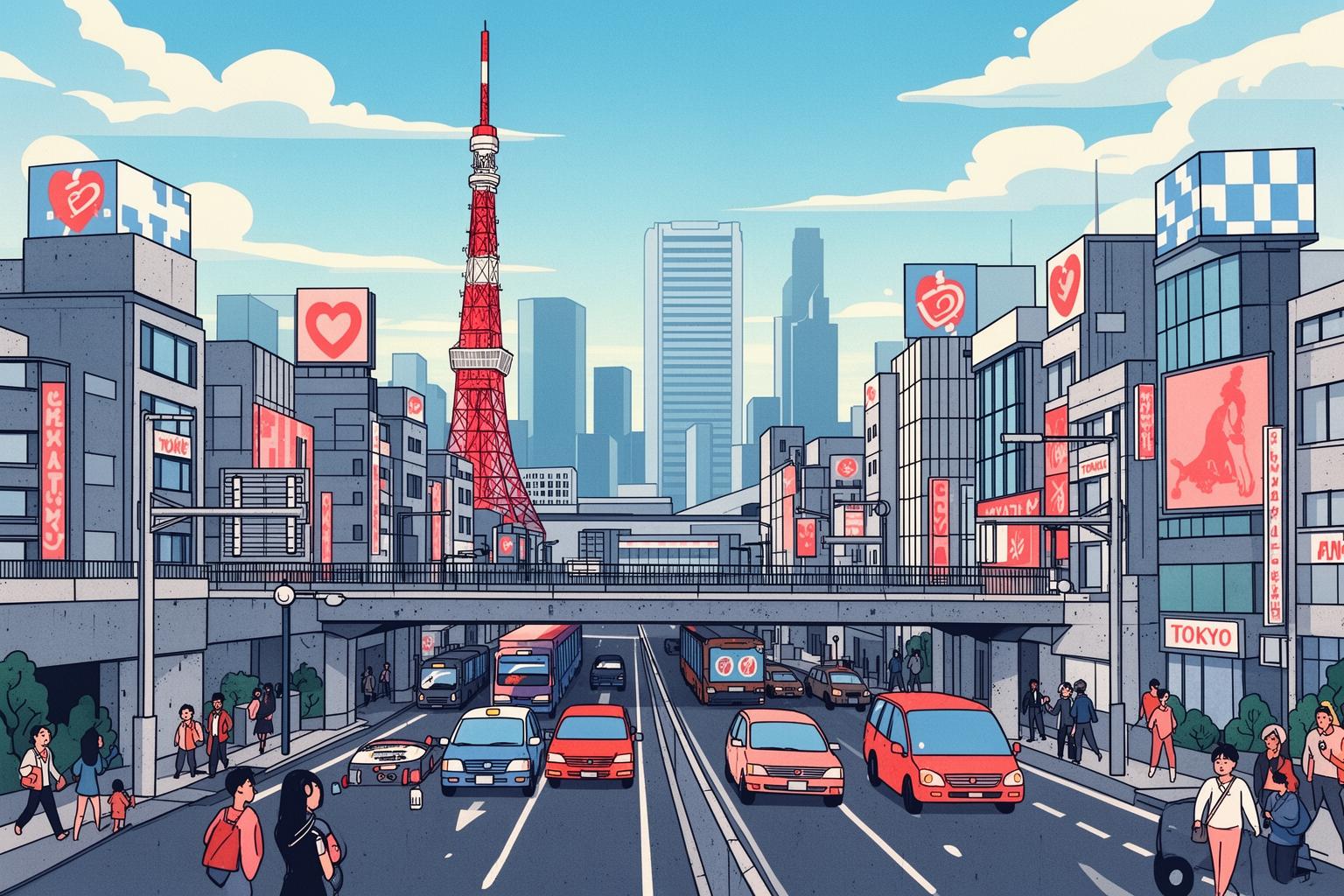
Our journey begins where Taki’s does, amidst the relentless, rhythmic heartbeat of Tokyo. The city in Your Name is more than just a backdrop; it acts as a character in its own right. It’s a space of ambition, fleeting moments, and millions of lives crossing paths without truly connecting. To discover the film’s essence here, you must seek the quiet spaces nestled between skyscrapers, the everyday pockets where the story truly breathes.
The Crossroads of Yotsuya and Shinanomachi
The adventure begins near Yotsuya Station, a major hub on the JR Chuo and Tokyo Metro Marunouchi lines. Upon exiting, the urban symphony envelops you—the chimes of train signals, murmurs of the crowd, and the distant hum of traffic. This is Taki’s daily reality. The film perfectly captures the overwhelming scale of the city, the way sunlight filters between towering buildings, casting sharp lines of light and shadow on the pavement. The artists at CoMix Wave Films recreated this area with such devotion that walking here feels like stepping into an animation cell. You can almost see Taki hurrying to his part-time job or deftly navigating the complex web of train lines like a local.
A short walk from Yotsuya leads to Shinanomachi Station, home to another important location. Here stands the pedestrian bridge where Taki and his elegant coworker, Okudera-senpai, part ways after their date. It’s an unassuming piece of urban infrastructure, arching over a busy road. Yet, standing on it evokes a distinct sense of melancholy. Below, cars stream past like rivers of light, their headlights and taillights painting long streaks in the evening air. The distant view of the NTT Docomo Yoyogi Building, a landmark often featured in Shinkai’s works, anchors the scene. It’s a moment of quiet introspection—a place of goodbyes and unspoken feelings, perfectly capturing the bittersweet ache permeating much of the film’s first half. For the best experience, visit late in the afternoon as the sun sets, when the sky softens and city lights begin to twinkle, mirroring the film’s gentle, reflective mood.
The Iconic Steps of Suga Shrine
This is the moment every pilgrim anticipates. The location etched into the memory of anyone who has seen the film. The red-railed stairs where, against all odds, Taki and Mitsuha finally find each other. Nestled in a quiet residential neighborhood of Yotsuya, the walk to Suga Shrine is a journey in itself. You leave the main roads behind, winding through narrow streets lined with homes and small shops. With every turn, a palpable sense of anticipation grows. Then, you see it. The view from the top of the stairs, looking down the gentle slope with the curved railing and cityscape perfectly framed between buildings, is breathtakingly familiar. It’s an exact replica of the movie’s iconic final shot.
Standing here is an oddly emotional experience. Other visitors, fans from around the world, take turns capturing the perfect photo, some even dressed as characters. There’s a quiet, shared understanding among everyone present—we all made this journey for the same reason. The place is charged with the collective hope and emotion of millions of viewers. The atmosphere is peaceful and respectful. You hear the rustling leaves from the shrine’s trees, distant city sounds, and your own heartbeat. Climb the stairs, and at the top, you find the quaint and tranquil Suga Shrine itself. It’s a charming local Shinto shrine, a pocket of serenity. Offer a prayer, perhaps for your own musubi, the connections in your life. When you turn to leave and glance down the stairs one last time, you can’t help but hear their voices in your mind: “Kimi no namae wa?” It’s a powerful, unforgettable moment where fiction and reality seem to dissolve entirely.
A Moment of Sophistication at the National Art Center
Not all of Taki’s life is hectic. For a glimpse into his more refined side and the site of his date with Okudera-senpai, a visit to The National Art Center, Tokyo, in Roppongi is essential. The building, designed by the legendary Kisho Kurokawa, is a masterpiece of glass and steel, an undulating wave of light and form. You don’t need a ticket for a specific exhibition to enter the main atrium, which is exactly where you want to be.
Inside, the scale is immense. Sunlight floods through the glass facade, illuminating the vast, open space. You’ll immediately recognize the cafe where Taki and Okudera sat: the Brasserie Paul Bocuse Le Musée, perched atop a massive, inverted concrete cone. You can enjoy coffee or a meal at one of the other ground-floor cafes while admiring this iconic structure. The atmosphere exudes quiet contemplation and creativity. It feels mature and refined—a world away from high school life. It’s easy to imagine Taki feeling both slightly intimidated and inspired here. It’s the perfect place to reflect on the journey so far, sit with a sketchbook or journal, and soak in the artistic pulse of the city that shaped one half of our beloved duo.
The Journey Through Time: From Urban Sprawl to Mountain Whispers
Leaving Tokyo behind marks a significant shift in the story, just as it did for Taki. The best way to experience this transition is by train. Riding the Tokaido Shinkansen, you’ll see the dense urban sprawl blur and gradually transform into suburbs, then fields, and ultimately the grand mountains of central Japan. The journey’s second segment—the Limited Express Hida Wide View train from Nagoya to Takayama—is where the true enchantment unfolds. True to its name, the train features large panoramic windows that present stunning vistas. It winds through deep valleys alongside the emerald-green Hida River. The scenery captivates, with towering cedar trees, traditional farmhouses, and mist drifting over the mountainsides. This is the route Taki took, equipped only with his sketches and fading memories. As you venture farther into the heart of Gifu Prefecture, a peaceful calm settles in. The air shifts, growing cleaner and crisper. You leave Taki’s world behind and enter Mitsuha’s.
The Soul of Itomori: Exploring Hida-Furukawa
The fictional town of Itomori, known for its rich traditions and breathtaking natural scenery, is not based on a single place but is instead a blend of several locations. However, the town that primarily influences its architectural style and ambiance is Hida-Furukawa, a beautifully preserved town just a short train ride from the better-known city of Takayama.
An Arrival at Hida-Furukawa Station
Stepping off the train at Hida-Furukawa Station creates one of those surreal moments when a film seems to come to life. The platform, the overhead walkway, and the station building’s design are all exactly as Taki experienced on his journey. You can almost sense his anxiety and resolve. The station is small, and the rhythm of life here immediately feels slower and more relaxed than in Tokyo. Across the tracks, you might even spot the charming Hida-gyu mascot figure that Taki and his friends ask about. The town of Hida-Furukawa has warmly embraced its connection to Your Name. Posters and maps at the station and the nearby tourist information center guide visitors to the key locations. The welcome is genuine and heartfelt, reflecting the positive impact the film has had on this quiet community.
In Search of Truth at the Hida City Library
One of the most remarkable spots in Hida-Furukawa is the Hida City Library, which inspired the setting where Taki ultimately discovers the heartbreaking truth about Itomori. The library is a stunning example of modern architecture that harmoniously integrates with its traditional environment, featuring a beautiful wooden interior with a distinctive lattice ceiling and large windows overlooking the town.
This is more than just a photo opportunity; it functions as a public library, and the staff have been gracious in accommodating the influx of fans. Visitors are welcome, but it is important to be respectful of the locals who use the space. You can request permission to take photographs at the main counter, where you’ll be given a pass and asked to remain quiet and discreet. Walking through the aisles, surrounded by the soft rustling of pages and the aroma of aged paper and polished wood, creates a deeply immersive atmosphere. You can find the exact table and chairs where Taki sat, and looking out the window, you can fully enter his moment of revelation. This place symbolizes the quest for knowledge and the reconstruction of a fractured past, a central theme in the film.
The Spiritual Heart: Ketawakamiya Shrine and Hie Shrine
Mitsuha’s role as a shrine maiden, or miko, is central to her character and the story’s spiritual themes. Although the Miyamizu Shrine in Itomori is fictional, it draws inspiration from two real shrines. In Hida-Furukawa, you can visit Ketawakamiya Shrine. It is a small, local shrine, but the stone steps ascending through a grove of trees will feel familiar. It is a quiet, humble place of worship that reflects the community’s spiritual life.
For a more dramatic and majestic experience, visit Hie Shrine in nearby Takayama. Approaching this shrine involves climbing a long, steep stone staircase flanked by towering ancient cedar trees, making the resemblance to Miyamizu Shrine unmistakable. The air grows cooler and heavier beneath the dense foliage, and moss covers the stone lanterns. The shrine itself, with its impressive wooden construction, feels timeless and powerful. This is a place seemingly detached from the modern world, where the boundary between the physical and spiritual realms feels thin. Standing here, it’s easy to imagine Mitsuha and Yotsuha performing their ceremonial duties and creating kuchikamizake as an offering to the gods—an essential ritual in the story. This place is a profound reminder of the deep Shinto beliefs that permeate Your Name—the reverence for nature, faith in local deities, and the sanctity of tradition.
The View from Twilight: Lake Suwa
While Hida served as the inspiration for the townscape of Itomori, the most breathtaking visual—the shimmering crater-like lake around which the town is built—lies in a completely different prefecture. Welcome to Lake Suwa in Nagano. This vast and beautiful lake, when seen from above, perfectly mirrors the lake that was home to Mitsuha. To capture the quintessential view, you need to visit Tateishi Park, which sits high on a hillside overlooking the lake and the surrounding city.
The panorama from the observation deck is truly stunning and will leave you speechless. The vast water, the curve of the shoreline, and the town nestled beside it—all are present. It represents the Goshintai, the sacred body of the shrine’s deity, made tangible. Though beautiful at any hour, the ultimate pilgrimage is to be here during kataware-doki—twilight. This magical time, as the film explains, blurs the boundary between worlds. As the sun sets behind the mountains, the sky bursts into a riot of colors—orange, purple, and deep blue. The lake reflects this fiery display while city lights begin to twinkle along its edge. The wind stirs, whispering through the trees. In this moment, you can feel the film’s climax deep within you. It is a moment of overwhelming beauty and profound emotion, perfectly culminating the entire journey. You can almost hear the soundtrack swelling as you gaze at the landscape, sensing the powerful connection across time and space between Taki and Mitsuha. This is a view that will remain with you forever.
A Pilgrim’s Practical Guide

A trip of this scale calls for some careful planning. When traveling between Tokyo and the Hida region, the Japan Rail Pass is a highly cost-effective choice, covering both the Shinkansen to Nagoya and the Limited Express Hida train. Accommodations in Hida-Furukawa and Takayama range from contemporary hotels to traditional ryokan (inns), providing an opportunity to enjoy Japanese hospitality with tatami mats and onsen baths. The ideal seasons to visit are spring and autumn. In spring, you may see cherry blossoms in Tokyo, while autumn showcases stunning fall colors in the mountains around Hida and Lake Suwa. Winter brings heavy snow to the Hida region, turning it into a magical, serene wonderland, though traveling can be more difficult. Remember to be a respectful visitor. At shrines, observe proper etiquette by bowing before the torii gate and cleansing your hands at the water basin. In libraries and residential areas, keep your voice low. This journey is a privilege—a chance to enter a cherished world—and treating these places and their residents with kindness and respect is an essential part of the experience.
The Red Thread of Musubi
Traveling through the world of Your Name means more than simply seeing the sights. It means experiencing the film’s central theme: musubi. It is the tying of threads, the flow of time, and the bonds that connect us. You sense it in the shift from Tokyo’s frantic energy to the serene calm of Hida. You witness it in the shared enthusiasm of fans gathered on the steps of Suga Shrine. You grasp it while gazing at the twilight sky above Lake Suwa. This pilgrimage acts as its own red thread, linking a fictional story to real locations and connecting you, the traveler, to the emotional core of the film. You arrive as a fan, but depart with a deeper appreciation for Japan’s landscapes, culture, and quiet beauty. Though the comet was a fleeting visitor, the memories you create on this journey—and the connections you forge—will endure a lifetime.