There’s a certain kind of magic that lives only in the space between the emerald green of the land and the impossible blue of the sea. It’s a feeling, a rhythm, a gentle pull on the soul that tells you you’ve arrived somewhere special. For fans of P.A. Works’ breathtakingly beautiful anime, The Aquatope on White Sand, that place has a name: Nanjo City, Okinawa. This is more than just a backdrop for the heartfelt story of Kukuru Misaki and Fuuka Miyazawa; it is the story’s very heartbeat. The series paints a portrait of southern Okinawa so vivid and so deeply felt that to watch it is to feel the warm sea breeze on your skin and hear the distant crash of waves against ancient coral reefs. It’s a love letter to a place where time moves differently, where the modern world coexists with traditions that stretch back to the dawn of the Ryukyu Kingdom, and where the line between the mystical and the mundane is as thin as a shimmering water surface. This is a journey into that world, a pilgrimage to the sun-drenched shores and quiet coastal towns that gave life to Gama Gama and Tingarla. It’s an invitation to step through the screen and discover the real magic that inspired Kukuru’s unwavering dream, a magic that awaits every traveler willing to seek it out on these southern islands of Japan. Here, we’ll explore the tangible locations that you can walk, see, and feel, connecting the dots between animation and reality, and finding the soul of the aquatope on the white sands of Okinawa.
This pilgrimage to Okinawa is a profound example of how anime can connect us to a place, much like the experience of an anime pilgrimage through the world of Oregairu in Chiba.
The Heart and Soul: Gama Gama Aquarium
Finding a Fictional Treasure in a Real-World Setting
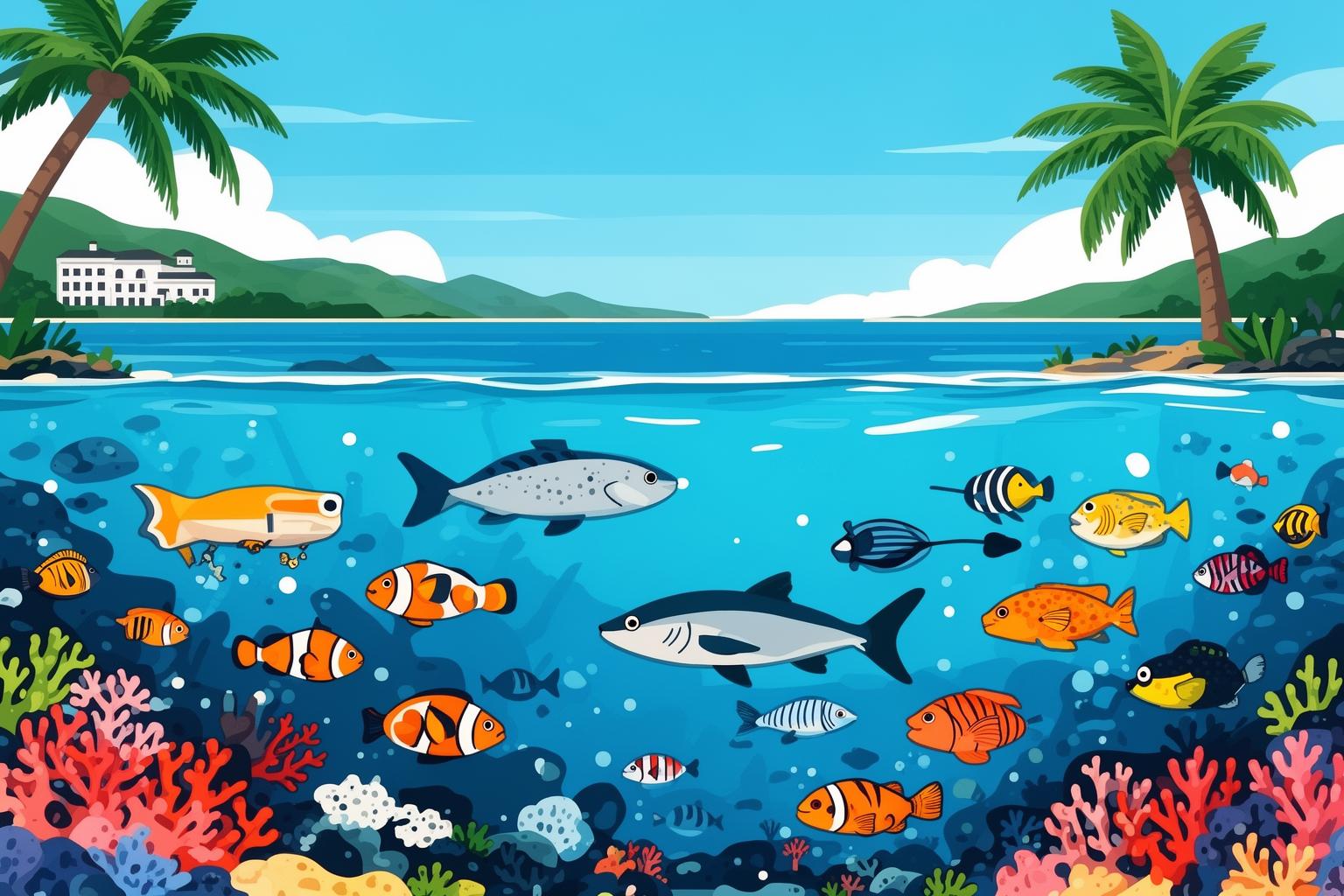
Every pilgrimage has its sacred heart, its ultimate destination, and for any fan of The Aquatope on White Sand, that place is the Gama Gama Aquarium. It’s the small, slightly worn-down, yet endlessly charming aquarium that Kukuru strives so passionately to preserve. It symbolizes home, legacy, and a profound love for the ocean’s creatures. Entering the anime’s world begins with locating this iconic spot, which leads you to the sunlit coast of the Azama district in Nanjo. There, right beside the dazzling white sands of Azama Sun-Sun Beach, you’ll discover a simple, unpretentious building: the beach’s administrative office. This is it. This is the real-world inspiration for Gama Gama.
At first sight, it may appear modest. There are no fish tanks, no penguin exhibits, no glowing jellyfish displays. It’s a practical structure, meant to manage beach activities and provide amenities for visitors. Yet, the similarity is striking and immediate. The building’s form, its position right on the edge of the sand, the distinctive blue-tiled roof, and the gentle slope leading up to it are all drawn directly from the anime’s design. Standing in front of it, you can almost imagine the hand-painted Gama Gama sign hanging above the entrance. You can picture Kukuru sweeping the steps in the early morning light, the humidity already thick in the air, and hear the distant, cheerful calls of her grandfather from inside. The sensation is electric for anyone who cherishes the story. It’s a powerful moment of fusion, where the world you’ve only seen on screen becomes a tangible place beneath your feet.
The Atmosphere of a Dream
The magic of this spot doesn’t lie solely in the building itself, but in the entire surrounding ambiance, which the anime captured with remarkable accuracy. Azama Sun-Sun Beach is a pristine crescent of sand meeting a calm, turquoise sea. The water here is shielded by an offshore reef, making it gentle and ideal for swimming—just like the peaceful cove before Gama Gama. Take a moment to stroll along the shoreline. Feel the fine, soft sand between your toes. The Okinawan sun is strong but kind, and the constant sea breeze carries the salty scent of the ocean along with the faint, sweet fragrance of tropical plants from nearby greenery. This is the sensory world of Kukuru’s everyday life.
You can easily imagine the small, colorful fish that she and Fuuka cared for swimming just a few feet from the shore. Look out toward the horizon, and you’ll see the distant, hazy outline of Kudaka Island, the sacred “Island of the Gods,” a place deeply intertwined with the anime’s spiritual themes. The entire area feels infused with a sense of calm and a gentle, unhurried pace. Local families play in the shallows, while small fishing boats bob softly in the nearby marina. It’s an idyllic coastal scene that perfectly reflects the close-knit community spirit surrounding Gama Gama. Although the real-world site isn’t an aquarium, it carries the same essence: a profound connection to the sea and a feeling of being a beloved local treasure. Visiting this place is about more than snapping a photo of a building; it’s about soaking in the environment that shaped the story’s emotional heart.
A Gleaming Future: The Tingarla Aquarium
A Monument to Modern Marine Science
If Gama Gama symbolizes the past, nostalgia, and a treasured dream, then the Tingarla Aquarium embodies its dazzling, ambitious, and somewhat overwhelming future. In the anime, this cutting-edge facility represents both a career opportunity and a looming threat to Gama Gama’s very existence. Its real-world counterpart is equally impressive: the DMM Kariyushi Aquarium. Situated just south of Naha Airport in the city of Tomigusuku, it’s a short drive from the main pilgrimage sites in Nanjo and an essential stop to complete the aquatope experience.
From the moment you arrive, the contrast with Gama Gama’s model is immediately evident. The DMM Kariyushi Aquarium is a sleek, modern building, part of the larger Iias Okinawa Toyosaki shopping complex. It lacks the quaint, handmade charm of Gama Gama; instead, it radiates professionalism and grand scale. This is the world into which Fuuka and Kukuru eventually step – a realm of advanced technology, expansive exhibits, and a different kind of passion for marine biology, one fueled by education and spectacle. Visiting DMM Kariyushi mirrors the characters’ journey from the intimate and personal to the vast and corporate.
An Immersive Ocean Experience
Inside, the aquarium is a triumph of design. It presents itself as a new type of entertainment aquarium, merging real marine life with cutting-edge digital art and spatial design. The experience is thoroughly immersive. Visitors walk through dim corridors where stunning digital projections of ocean waves crash against the walls and floor. You enter a lush, humid recreation of a subtropical forest, complete with real trees, cascading waterfalls, and free-roaming creatures, before descending into the deep blue ocean exhibits.
The main tank is a breathtaking centerpiece. A massive acrylic wall holds back a vibrant world of coral, swirling schools of silver fish, graceful rays, and even imposing sharks. You can sit on tiered steps before it and simply get lost, much like the characters in the anime who often found solace during their breaks or moments of reflection. The renowned jellyfish exhibit, which played a key role in several of the show’s most visually stunning sequences, is a highlight. A room filled with cylindrical tanks, each illuminated by shifting, ethereal colors, showcases dozens of jellyfish species pulsing gracefully in the current. It’s mesmerizing and deeply calming, a real-life version of the scenes that so captivated the anime’s fans. Exploring the DMM Kariyushi Aquarium offers a new appreciation for the challenges and wonders Kukuru faced in her new role. You witness the scale of the operation, the precision required, and the unique magic a modern facility can create.
Weaving Through Kukuru’s World: The Landscapes of Nanjo City
The Iconic Drive: Nirai Kanai Bridge
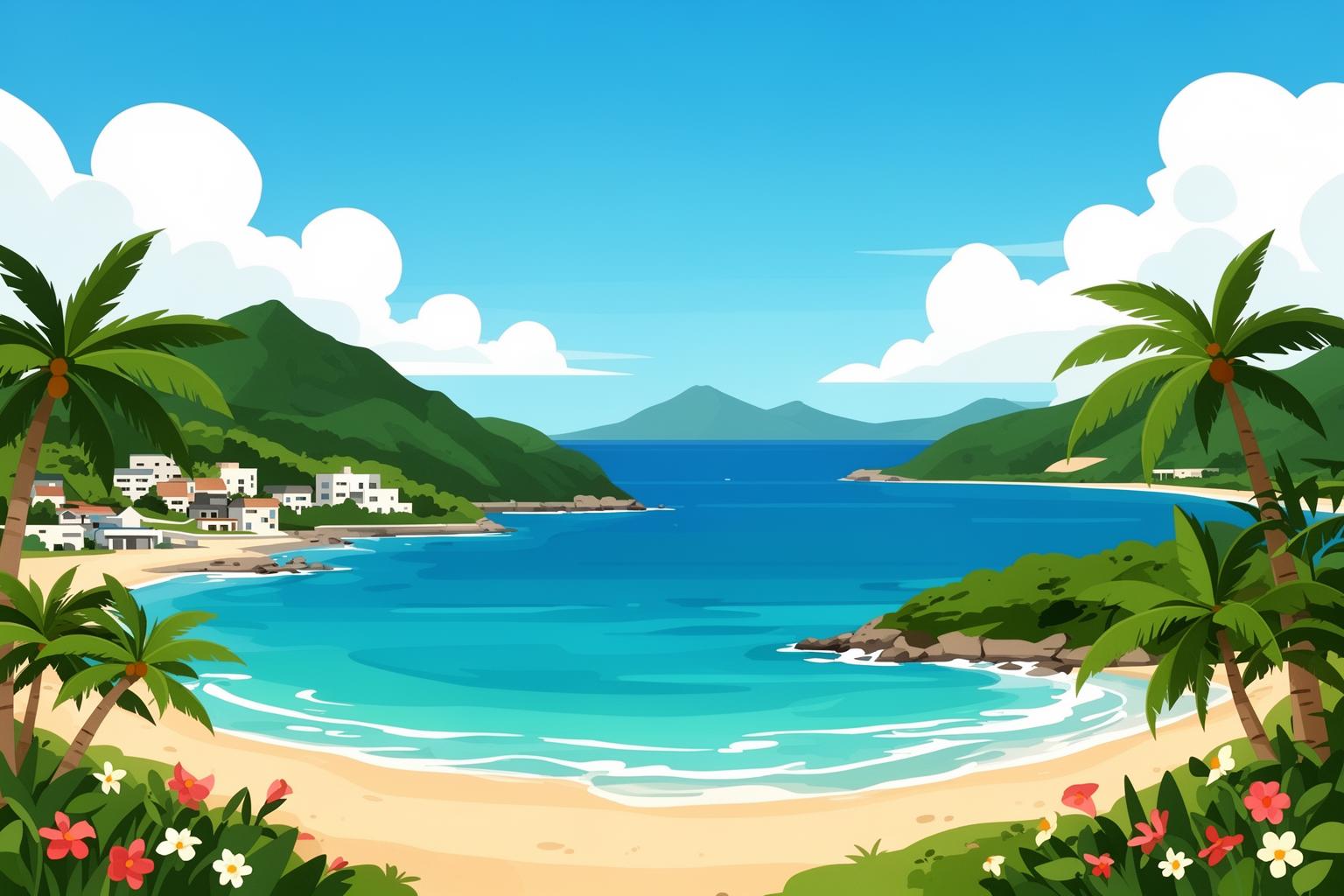
Few images from The Aquatope on White Sand are as unforgettable as the sweeping, panoramic scene of a character driving along a vast, curving bridge that descends toward an endless blue ocean. This is the Nirai Kanai Bridge, and it is just as breathtaking in reality as it is in the anime. Its name comes from Okinawan mythology, referring to the mythical paradise beyond the sea where all life begins. It’s a perfectly fitting name for a bridge that feels like a portal to another world.
To fully appreciate it, you must approach from the inland side, heading toward the coast. As you pass through a tunnel, you suddenly emerge into the open air, and the view bursts forth before you. The bridge forms a wide, elegant arc, suspended high above the hillside, with the Pacific Ocean stretching out to the horizon. The colors are almost surreal—the deep green of coastal foliage, the vibrant aquamarine of shallow reefs, and the profound sapphire of the deep sea. It’s a view that compels you to stop at the observation deck at the summit. From there, you can see the entire structure and the coastline it frames. For fans of the anime, this is a signature visual, a recurring motif that symbolizes journeys, transitions, and the overwhelming beauty of Kukuru’s home. Driving down its slope, windows down and sea breeze rushing in, feels like flying straight into the heart of the anime.
A Place for Contemplation: Cape Chinen Park
Located on a scenic bluff not far from Nirai Kanai Bridge is Cape Chinen Park, or Chinen Misaki Koen. This lovely public space, with its manicured lawns, walking paths, and pavilions, frequently appears in the anime as a spot where characters go to reflect, converse, and gaze out at the sea. It’s a place of quiet contemplation, serving the same purpose in reality.
The park offers some of the most stunning coastal views in southern Okinawa, stretching nearly 270 degrees. On a clear day, you can see the white sands of Azama Sun-Sun Beach to your left, the sacred Kudaka Island directly ahead, and the endless Pacific Ocean to your right. The atmosphere here is one of vast openness and calm. The wind is a gentle, constant presence, rustling palm trees and offering relief from Okinawa’s heat. You can sit on a bench beneath a red-tiled gazebo, just as the characters do, watching the ocean’s colors shift with passing clouds. It’s the ideal place to process the emotional depth of the story or simply appreciate the natural beauty that inspired it. The park feels like a sanctuary—a place where nature’s grandeur helps put personal worries into perspective—a theme that echoes throughout the series.
The Fabric of Daily Life: Walking the Streets of Nanjo
The anime masterfully captures the small details of life in a rural Okinawan town: winding, narrow roads; traditional houses with distinctive red-tiled roofs; guardian shisa statues perched on gates and rooftops; and endless fields of sugarcane swaying in the breeze. To truly immerse yourself in Kukuru’s world, you need to leave the car behind and explore these streets on foot.
The areas around Azama and Chinen are ideal for this. Park your car near a landmark and just wander. Soon, you’ll find yourself in a maze of narrow alleys flanked by stone walls called gusuku. Many homes are built in the traditional Ryukyuan style—single-story structures designed to withstand typhoons and allow natural ventilation. Look closely at the shisa, the lion-dog guardians that are iconic symbols of Okinawa. They always come in pairs; one with its mouth open to ward off evil spirits, and one with its mouth closed to keep good spirits in. These small, authentic details abound, just as they do in the anime’s background shots. You can almost hear cicadas buzzing in the afternoon heat and imagine Kukuru riding her scooter down these very lanes. This is where the animated world feels most alive, where the fictional setting is firmly rooted in a vibrant, living culture.
Echoes of the Ryukyu Kingdom: The Spiritual Landscape
The Most Sacred Ground: Sefa-Utaki
The Aquatope on White Sand is not merely a story about marine life; it is also deeply entwined with the spirituality and mythology of Okinawa. The anime frequently references local deities, sacred rituals, and the mystical power of the natural world. To fully appreciate this dimension of the story, a visit to Sefa-Utaki is indispensable. This site is more than just a tourist attraction; it is a UNESCO World Heritage site and the most sacred place in the indigenous Ryukyuan religion. It served as the spiritual heart of the Ryukyu Kingdom, a place of worship and major state ceremonies conducted exclusively by women.
Visiting Sefa-Utaki calls for a respectful attitude. Before entering, visitors watch a brief video that explains its historical and cultural importance. The path then leads into a lush, subtropical forest where the air becomes cooler and quieter, filled with the sounds of nature. Sefa-Utaki is not a constructed building but a collection of natural rock formations and clearings that function as places of worship, or iburi. You will walk along a stone-paved trail, passing several significant locations.
The most renowned and visually impressive among these is the Sangui, two massive triangular rocks leaning against each other to form a grand archway. Passing beneath this natural gate feels like entering another realm. The area radiates a palpable sense of peace and ancient energy. It’s easy to see how this environment inspired the anime’s more mystical scenes and Kukuru’s profound, intuitive bond with her homeland and its unseen powers. Remember to be silent and respectful here—this remains an active place of worship for many Okinawans, and visitors are guests in a sacred space.
The Island of the Gods: Kudaka Island
Kudaka Island, visible from nearly every coastal viewpoint in Nanjo, is a long, slender strip of land that holds great significance in Ryukyuan mythology. It is believed to be the place where the creator goddess, Amamikyu, first descended to Earth to begin forming the Ryukyu Islands. The entire island is regarded as sacred ground. In the anime, it is mentioned with reverence and visually appears on the horizon, serving as a constant reminder of the spiritual world underlying everyday life.
A 15-minute journey on the high-speed ferry from Azama Port to Kudaka feels like stepping back in time. The island is quiet, lightly inhabited, and exudes a deeply peaceful atmosphere. The best way to explore is by renting a bicycle near the port. You can cycle along narrow paved roads that pass small villages, forest patches, and stunningly pristine beaches. Numerous sacred sites, or utaki, are scattered across the island; many are marked but should not be entered. The reverence for this land is evident everywhere. It’s a place to slow down, breathe deeply, and connect with the raw, untouched nature that the anime celebrates. Visiting Kudaka offers valuable cultural context for the series, greatly enriching the viewing experience.
A Practical Guide for Your Okinawan Pilgrimage

Navigating the Southern Shores
Okinawa is an archipelago, and while Naha features a convenient monorail system, the core of the Aquatope pilgrimage is found in the more rural areas of Nanjo City and its surroundings. The most efficient and enjoyable way to explore these spots is by renting a car. The freedom to travel at your own pace, stop at scenic viewpoints, or take spontaneous detours down promising side roads is invaluable. Driving in Japan is on the left side, and an International Driving Permit is required for many nationalities. Okinawa’s roads are generally well-maintained and less busy than those on the mainland, making for a pleasant driving experience. Rental car GPS systems are excellent and can be set to English, simplifying navigation.
If renting a car isn’t an option, many of these sites are still accessible via public transportation, though it requires more planning. A network of buses departs from the Naha Bus Terminal, allowing you to reach Nanjo City and then use local buses or taxis to get to places like Azama Sun-Sun Beach and Cape Chinen. However, bus schedules can be infrequent, so be sure to check timetables ahead of time.
When to Visit and Where to Stay
Okinawa’s subtropical climate makes it a great destination year-round, but some seasons are preferable. Spring (March to May) and autumn (October to November) are often considered ideal, with warm, pleasant weather, less intense sun than summer, and a lower risk of typhoons. Summer (June to September) is hot and humid, ideal for beach activities, but it is also peak typhoon season, which can sometimes disrupt travel plans. Winter (December to February) is mild and cooler, though the ocean may be too chilly for swimming for most visitors.
For a truly immersive experience, consider staying in Nanjo City itself, where there are several small hotels, guesthouses (minshuku), and vacation rentals offering a more local, relaxed atmosphere compared to the larger city hotels in Naha. Waking up to the sound of the ocean and being just minutes from key pilgrimage sites can make your trip especially memorable. Alternatively, staying in Naha provides more options for dining and shopping and serves as a convenient base for day trips to the southern areas.
Savoring the Tastes of the Ryukyus
One of Okinawa’s great pleasures is its unique and delicious cuisine, which differs markedly from mainland Japanese food. Be sure to visit local Okinawan restaurants, called shokudo. A classic dish to try is Okinawa soba, a hearty noodle soup with rich broth and tender stewed pork ribs. Another favorite is goya champuru, a stir-fry made with bitter melon, tofu, egg, and pork. Don’t be put off by the bitter melon; when cooked well, its bitterness offers a refreshing balance to the other ingredients. For a snack, visit Ojima Island, a small island connected by a bridge that appears in the show and is renowned for its tasty tempura. You can buy freshly fried fish and vegetable tempura from small stalls and enjoy it by the sea, perhaps while making friends with the many resident cats. And naturally, no meal is complete without a glass of the local Orion beer, a crisp, refreshing drink perfect for a warm Okinawan day.
The Journey’s End, A New Beginning
Traveling through Nanjo City and its surrounding coast offers a profound understanding of what makes The Aquatope on White Sand so impactful. The anime tells a story about finding your place in the world, coping with the pain of losing something dear, and the bravery required to pursue a new dream. These universal themes are rooted in a setting that serves as a character itself—a place of stunning natural beauty, rich spiritual history, and a warm, resilient community. Walking along Azama Sun-Sun Beach, you don’t just see the inspiration for Gama Gama; you feel the love for home that motivated Kukuru. Standing before the enormous tanks of the DMM Kariyushi Aquarium, you don’t just see Tingarla; you sense the weight of the future and the thrill of a new challenge. Gazing from Cape Chinen, you experience the same peace and perspective the characters sought during their moments of doubt. This pilgrimage blurs the boundary between fiction and reality, leaving you with memories intimately connected to the story you cherish. You leave Okinawa not merely with photos of anime locations, but carrying the warmth of the sun on your skin, the taste of sea salt in the air, and a deeper appreciation for the simple yet profound magic of a place where the aquatope truly shimmers on the white sand.