
There are places in this world that feel unstuck from the linear march of moments. They exist as a superposition of past, present, and a thousand imagined futures. Akihabara, Tokyo, is one such place. It’s a district that breathes neon and exhales the hum of servers, a concrete canyon where the river of time seems to eddy and pool. For countless souls across the globe, this vibrant heart of otaku culture is more than just a destination; it is a sacred ground, the tangible, walkable, and utterly electric reality of Steins;Gate. To walk these streets is to trace the footsteps of Okabe Rintaro, to feel the phantom vibrations of a worldline shift with the passing of a Yamanote Line train. This isn’t just a tour of filming locations. This is a pilgrimage to the Future Gadget Laboratory’s ground zero, an exploration of the nexus point where fiction bled into reality and created a legend. We will peel back the layers of this city, moving beyond the screen to touch the very pavement where Hououin Kyouma defied the world. Prepare to engage the Reading Steiner, for our journey into the heart of Akihabara begins now. The choice of Steins Gate has been made.
If you’re inspired to explore more anime locations that blur the line between fiction and reality, consider embarking on a Tamako Love Story pilgrimage to Kyoto’s Usagiyama Shopping Arcade.
The Crossroads of Causality: Akihabara Station and Radio Kaikan
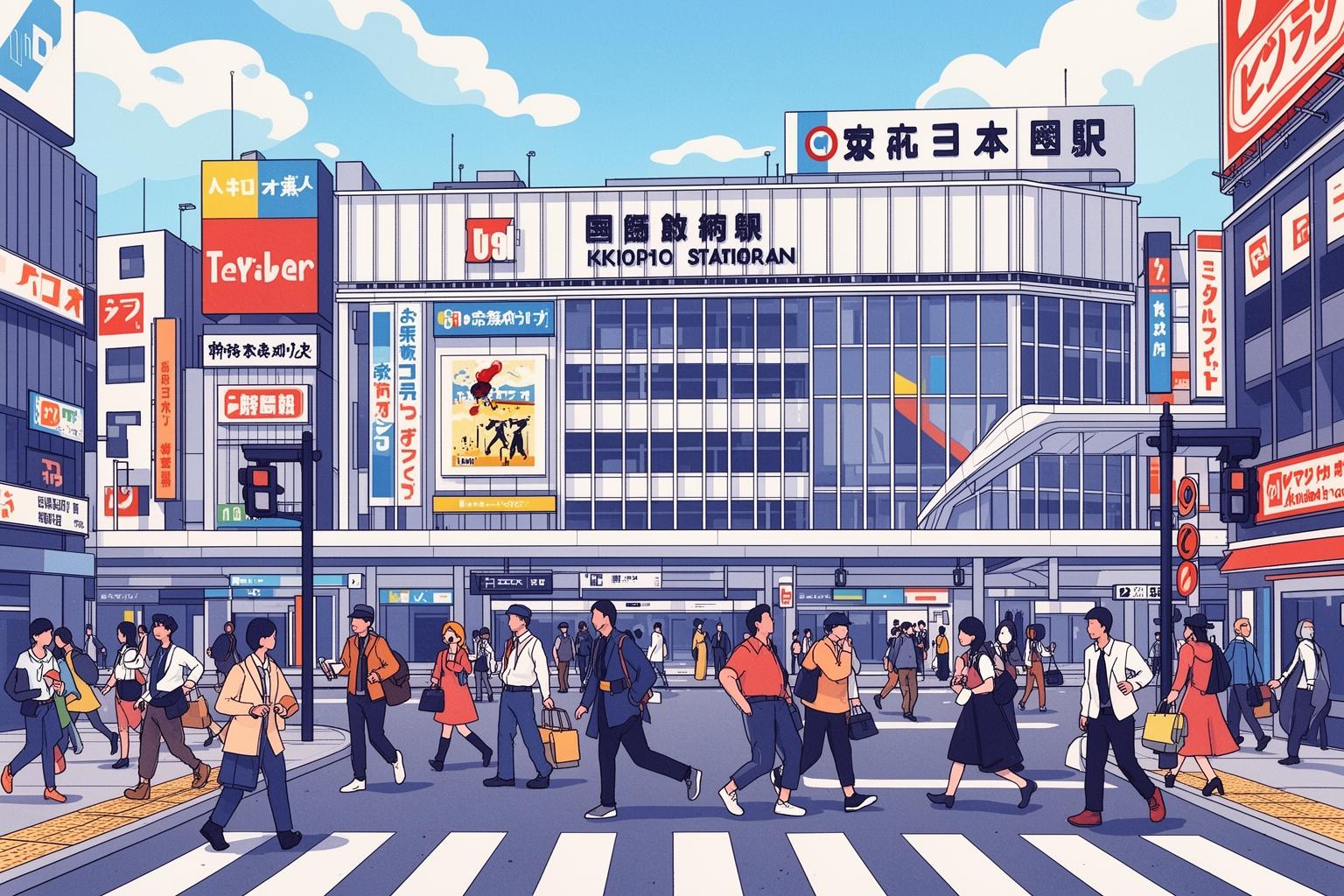
Every journey, whether through the vastness of space or the turbulent currents of time, begins at a point of origin. For our Steins;Gate pilgrimage, that origin is undeniably Akihabara Station. As you step off the train, the station itself serves as a sensory overture to the adventure that lies ahead. The rhythmic announcements, the melodic chimes marking departures, and the constant flow of people—it’s the heartbeat of Tokyo, a steady pulse against which Okabe’s frantic struggle against fate unfolds. Take the Electric Town Gate exit. The moment you step outside, the world shifts. The air thickens with the energy of countless stories unfolding simultaneously. This is the stage, the very epicenter from which the Steins;Gate narrative erupts.
The Epicenter of the Anomaly: Akihabara Radio Kaikan
Your gaze will be immediately drawn to it, a towering landmark that stands as both a beacon for the district and the story’s dramatic opening scene: the Akihabara Radio Kaikan. In the anime’s unforgettable first episode, it is here that a satellite—or perhaps a time machine—crashes into the upper floors, ripping a hole not only in the building but in the very fabric of reality. Standing before it, you can almost hear the ghostly echo of the impact, feel the collective gasp of the onlookers, and see Okabe Rintaro staring up in bewildered awe. This single event is the stone cast into the pond of causality, whose ripples define everything that follows.
The real Radio Kaikan carries its own dramatic history that parallels the show’s themes. The building featured in the original 2011 anime was the old Radio Kaikan, a beloved maze of tiny electronics shops and hobbyist stalls that had stood since 1962. It was a vertical marketplace of wonders, filled with the scents of solder and aged cardboard, where anything from vacuum tubes to rare anime figures could be found. It embodied the very soul of Akihabara. However, due to concerns about its age and earthquake safety, this iconic structure was demolished shortly after the anime aired. For a time, the landmark lived only in memory and within the world of Steins;Gate.
In its place now rises the new, modern Akihabara Radio Kaikan, opened in 2014. Sleeker, brighter, and larger, it carries forward the legacy of its predecessor. Inside, ten floors overflow with stores selling anime merchandise, trading cards, figures, and dolls—a treasure trove for any fan. While the nostalgic charm of the original building is gone, the new one stands as a testament to Akihabara’s continual evolution—a worldline shift manifested in the physical world. For the pilgrim, visiting the new Radio Kaikan is a bittersweet experience. You stand on the site of a pivotal moment, though the stage has been rebuilt. It offers a powerful, tangible lesson about the nature of time and change, a central theme of the very story you have come to honor. Spend time on the pedestrian bridge linking to the station; it provides the perfect vantage point to frame the building’s facade just as it appears in the anime, inviting contemplation of the layers of reality and fiction that intersect at this extraordinary place.
The Sanctuary of Science: The Future Gadget Laboratory
From the grand stage of Radio Kaikan, our journey leads us into quieter backstreets, away from the bustling main thoroughfare of Chuo Dori. Here is where the true heart of Steins;Gate beats. The search for the Future Gadget Laboratory is a pilgrimage within a pilgrimage, demanding a sharp eye and a spirit of adventure much like Okabe himself. The building that inspired the lab is a modest, unassuming structure nestled in a quiet alley, far removed from the neon glare. This real-life building is known as the Koibuchi Building.
Finding the Hidden Headquarters
Making your way to the Koibuchi Building feels like following a secret map. You pass small shops, residential apartments, and the gentle hum of air conditioners. Then, it comes into view: the narrow staircase clinging to the building’s side, the distinct window arrangement, and the slightly weathered old facade. While the ground floor hosts a business, the upper floors, in our imagination, are where the magic unfolded. This is where Okabe, Daru, and Mayuri crafted inventions from spare parts and dreams. It’s where the PhoneWave (name subject to change) first whirred to life, its accidental ingenuity unlocking the mysteries of time travel.
Standing in this quiet alley, the air is thick with a sense of secret discovery. You can almost see Okabe bursting through the door, phone pressed to his ear, laughing maniacally as he describes his latest clash with the “Organization.” You might imagine the faint glow of CRT monitors filtering through the second-floor window late at night. The real building carries a tangible sense of history; it feels lived-in and part of the city’s fabric, making its fictional counterpart all the more grounded and believable. It is not a grand monument, but a simple, functional building — which is exactly why it works so well. The greatest discoveries and most world-changing events often happen not in gleaming corporate towers, but in forgotten corners, fueled by passion and instant ramen.
For the visitor, this is a moment for quiet reflection. Unlike Radio Kaikan, this place isn’t a commercial hub. It offers a chance to stand, observe, and let the story wash over you. Notice the texture of the walls, the design of the staircase railings, and the way light falls in the narrow space between buildings. These are the details the anime creators meticulously recreated, and seeing them in person forges a powerful connection to the narrative. Please be respectful, as this is a private building with businesses and possibly residents. This pilgrimage is about bearing witness, not intrusion. This humble building is the sanctum sanctorum of our tale, the birthplace of miracles and tragedies, and its quiet authenticity is perhaps the most profound location on our journey.
A Haven of Tranquility: Yanagimori Shrine
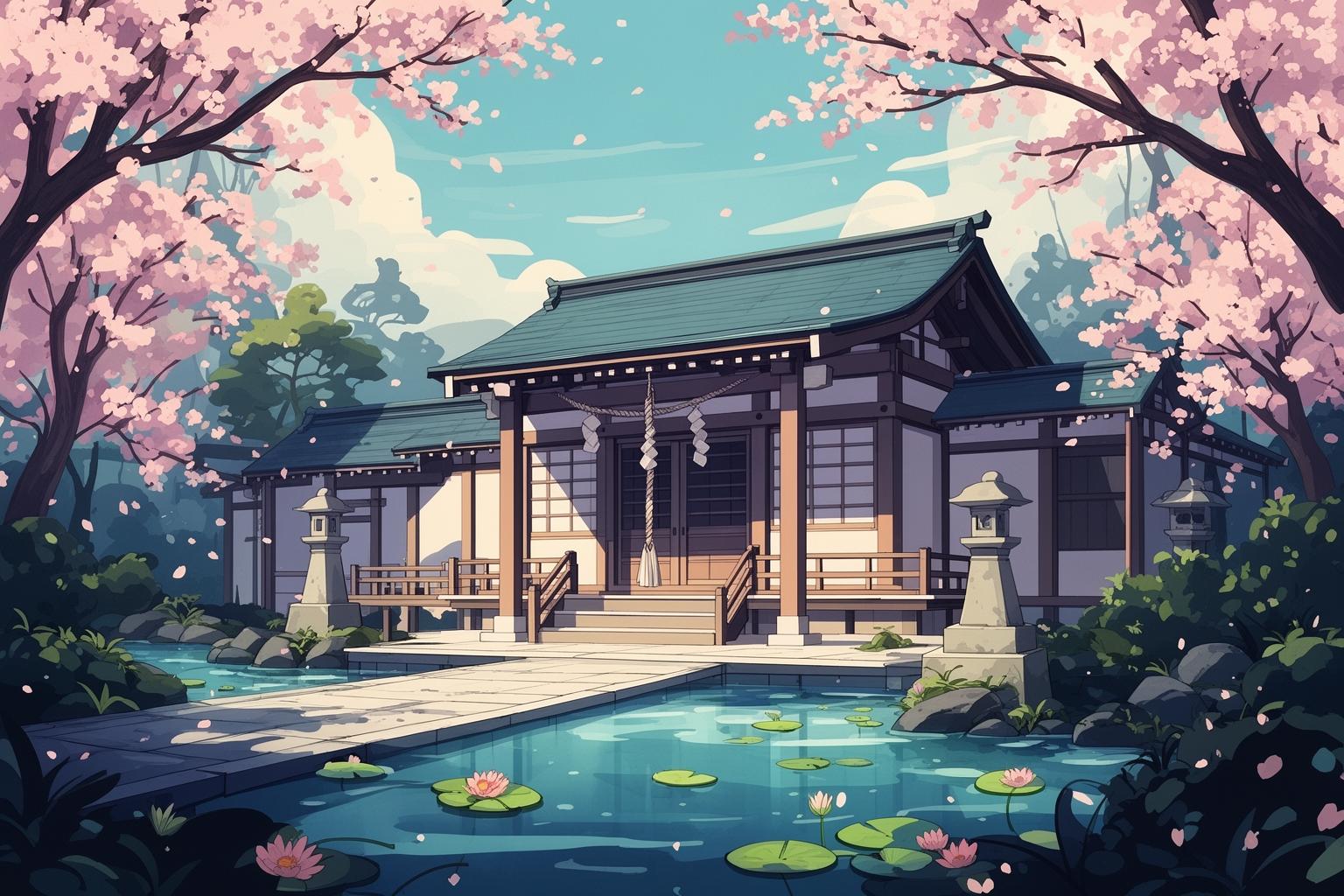
Following the intellectual intensity of the Future Gadget Lab, our journey leads us to a place of tranquil reflection—a quiet oasis amidst the urban expanse. Yanagimori Shrine, the real-life inspiration for Urushibara Ruka’s family shrine, offers a striking yet serene contrast to Akihabara’s vibrant energy. Reaching it involves a short walk away from the bustling center, crossing the Kanda River. This brief excursion serves as a transition itself, as the city’s noise dims, replaced by a peaceful residential atmosphere.
The World of the Shrine Maiden
Stepping through the torii gate of Yanagimori Shrine, you immediately sense a noticeable change in the ambiance. While the shrine grounds are modest in size, they carry a deep historical and spiritual significance. Ancient trees, their leaves filtering sunlight, form a gentle canopy overhead. The air is cooler and quieter here. This is the environment that shaped Ruka, the kind and devoted shrine maiden whose identity struggles form one of the most touching subplots of the series. You can see the chōzuya, the water pavilion used for ritual purification, where characters often paused for conversation. The main hall, the haiden, is also visible—where Ruka would have practiced her swordsmanship and performed her duties.
In Steins;Gate, the shrine serves as a sanctuary. It is where the lab members go to clear their minds and hold quiet conversations away from the frantic atmosphere of their workshop. It symbolizes tradition, spirituality, and a connection to a past stretching far beyond the invention of the cathode-ray tube. Standing on the shrine grounds, it becomes clear why. The carefully preserved space, the scent of aged wood and incense, the quiet dignity of the site—all invite introspection. It’s here that Okabe wrestles with the heavy moral burden of his actions, especially the repercussions of changing Ruka’s past.
Visitors are encouraged to take their time here, noticing the small details: stone lanterns, the intricate carvings on the shrine buildings, and the ema wooden plaques where visitors write their wishes and prayers. Many fans of the series leave their own ema adorned with artwork and messages related to Steins;Gate, creating a heartfelt and organic tribute to the show. This stands as a testament to how deeply this location resonates with people. Yanagimori Shrine is a vital reminder that Akihabara is not merely a hub of modern pop culture; it is a district rich with history, where the hyper-modern and deeply traditional coexist, often just around the corner from one another. The shrine acts as the soul’s counterpart to the city’s technological mind, providing the balance that gives the world of Steins;Gate its remarkable depth.
Echoes in the Concrete Jungle: The Streets of Akiba
While the major landmarks provide the framework of our pilgrimage, the true essence of the Steins;Gate experience lies in wandering the streets of Akihabara itself. The series captured the spirit of this district not only through its iconic buildings but also its anonymous alleys, bustling sidewalks, and distinctive urban atmosphere. To genuinely connect with the world of the show, one must embrace the chaos and explore with an open heart and keen eyes.
Chuo Dori: The Main Artery
On a weekend afternoon, the main street, Chuo Dori, closes to traffic and transforms into a pedestrian haven, or hokōsha tengoku. This is Akihabara at its liveliest and most overwhelming. Crowds flow like a river amid towering buildings adorned with massive advertisements for the latest anime, manga, and video games. The soundscape is a blend of competing J-pop tunes, arcade noises, and calls from maids inviting you into their themed cafes. This vibrant backdrop features in many of the show’s establishing shots and transitions. It’s where Mayuri joyfully window-shops, where Kurisu and Okabe share their fateful meetings, and where the dense human presence feels both thrilling and isolating. Stand in the center of this street, turn fully around, and soak in the sensory overload. It’s a dizzying, unforgettable experience that immerses you completely in the anime’s world.
The Search for the IBN 5100: The Coin Lockers
A key MacGuffin in the early story is the IBN 5100, a vintage computer needed to hack into SERN. Its whereabouts are mysterious at first but eventually traced to a bank of coin lockers near Akihabara Station. Although the exact set from the anime is a fictional composite, numerous lockers are found beneath and around the train tracks. The hunt for the IBN 5100 provides a perfect reason to explore this station area’s hidden underbelly. These transitional spaces are practical, often overlooked, yet hum with quiet stories of countless travelers. Walking through rows of grey metal doors, you can sense Faris and Okabe’s tension, the feeling of uncovering a forgotten secret hidden in plain sight. It’s a small detail, but finding a bank of these lockers and imagining the legendary computer inside one is a thrill for any devoted fan.
The View from the Top: Akihabara UDX
The large, modern complex with a wide plaza in front is Akihabara UDX, the real-life model for the UPX building in the anime, the site of the time travel conference in the first episode. The plaza is a popular meeting place and often hosts events and collaborations. However, for a pilgrim, the true importance of this location is the view it offers. From UDX’s pedestrian decks and upper floors, you get a stunning panoramic vista of Akihabara, including the train tracks and the iconic curve of Chuo Dori. This perspective is frequently used in the show to convey scale and to show Okabe observing the city from above. It’s from these vantage points that he delivers some of his most memorable soliloquies into his phone. Finding one of these spots, gazing down at the controlled chaos below, and watching the trains glide past like silver snakes is a deeply cinematic moment. It makes you feel like the protagonist of your own story, surveying the worldline you now inhabit.
Living the Lab Mem Life: The Culture of Akihabara
A pilgrimage is more than mere sightseeing; it’s about full immersion. To truly complete the Steins;Gate journey, you need to experience the culture that the characters lived and breathed every day. Akihabara is a vibrant ecosystem of hobbies, passions, and subcultures, and diving into it is an essential part of the adventure.
The Taste of Defiance: In Search of Dr. Pepper
Okabe Rintaro’s drink of choice, the “intellectual drink for the chosen ones,” is Dr. Pepper. Finding it in Japan can sometimes be a small adventure itself, though it has become more common in recent years. The quintessential way to enjoy it, however, is from a vending machine. Akihabara is renowned for its streets lined with countless vending machines offering a wide array of hot and cold beverages. Make it your mission to find one that stocks Dr. Pepper. The simple act of inserting a coin, hearing the clunk of the can dropping, and cracking it open on a street corner is a small but deeply satisfying ritual. It’s a taste of the everyday life of the lab members—the fuel for their late-night experiments and world-saving endeavors.
May Queen Nyan-nyan and the Maid Cafe Experience
Mayuri’s part-time job at the maid cafe, May Queen Nyan-nyan, is a key element of her character and a central location in the series. While the specific cafe is fictional, it draws inspiration from the very real and prominent maid cafe culture of Akihabara. For those unfamiliar, visiting a maid cafe can be a curious and entertaining experience. You’ll be greeted with enthusiastic calls of “Welcome home, Master!” (Okaerinasai, goshujin-sama!). Maids in elaborate costumes serve food and drinks, often decorated with cute drawings made with ketchup or chocolate sauce. They might perform songs, play games, and engage in cheerful conversation. It’s a form of escapist entertainment uniquely Akihabara. To understand Mayuri’s world, stepping into a maid cafe is essential. It offers a glimpse into the innocent, cheerful side of Akiba that she represents—a stark contrast to the dark conspiracies Okabe battles.
The Arcade Labyrinth: A Gamer’s Paradise
Itaru Hashida, or Daru, the super-hacker, would feel right at home in Akihabara’s arcades. These are no longer the dimly lit arcades of the past; they are multi-story palaces of sound and light. Buildings like the iconic SEGA (now GiGO) arcades are landmarks in their own right. Each floor is dedicated to a different type of game: claw machines with a dizzying array of prizes on the ground floor, rhythm games featuring dedicated dancers on another, intense fighting game competitions on a third, and classic retro games tucked away in a corner. The energy is overwhelming and infectious. You don’t have to be a pro gamer to enjoy it. Spend a few hundred yen trying your luck on a claw machine to win a prize for your own Mayuri, or test your skills on a Taiko drumming game. The arcades are the vibrant, digital heart of Akihabara’s recreational life, and a place where the spirit of Daru thrives.
Practical Advice for the Time-Traveling Pilgrim
Exploring Akihabara is an adventure, but a few practical tips can help make your journey across worldlines a smooth one.
Access and Orientation
Akihabara Station is a major transportation hub served by multiple lines, making it highly accessible. The JR Yamanote Line, JR Chuo-Sobu Line, and JR Keihin-Tohoku Line all stop here, as does the Tokyo Metro Hibiya Line. As noted, the Electric Town Gate is your main exit for this pilgrimage. Upon arrival, the first thing to do is get your bearings. The station itself is the central point. Radio Kaikan is immediately to your right as you exit. Chuo Dori, the main street, lies straight ahead. The backstreets, home to the Future Gadget Lab and other hidden treasures, are to the west of Chuo Dori. While a map on your phone is helpful, allow yourself to get a little lost—wandering the alleys is part of the discovery.
The Best Time to Visit
Akihabara shows two distinct faces: weekday and weekend. On weekdays, it is somewhat calmer. Shops are open, but crowds are lighter, making it easier to navigate and photograph specific spots without throngs of people in the way. This is ideal for a focused pilgrimage where you aim to check off locations. On weekends, especially Sunday afternoons when Chuo Dori becomes a pedestrian-only zone, Akihabara bursts into full festival mode. The energy is turned up to eleven. It’s crowded, chaotic, and utterly brilliant. This is the perfect time to soak up the district’s atmosphere and enjoy people-watching. For the complete experience, consider visiting twice: once on a weekday for the pilgrimage, and once on a weekend for cultural immersion. Don’t overlook Akihabara at night either. When darkness falls, the neon signs come alive, illuminating the streets in vibrant shades of pink, blue, and green. The city transforms into a futuristic landscape that perfectly evokes the show’s sci-fi aesthetic.
Pilgrim’s Etiquette
As you embark on your journey, keep in mind that you are a visitor in a living city. When photographing key locations like the Koibuchi Building (Future Gadget Lab), remember these are private properties and active businesses. Be quiet, respectful, and avoid lingering too long or blocking pathways. The same applies to Yanagimori Shrine, a place of worship. Follow proper etiquette, speak softly, and respect those who are there to pray. Inside shops, it’s courteous to ask permission before photographing merchandise. Akihabara warmly welcomes fans and tourists alike, and reciprocating that hospitality with courtesy and respect helps keep it a wonderful place for everyone.
The Choice of Steins Gate

Walking through Akihabara as a fan of Steins;Gate is to encounter a strange and beautiful resonance. It’s a sensation of déjà vu, like seeing a place you’ve never visited but know deeply. The line between the world on the screen and the world beneath your feet becomes delightfully, thrillingly thin. You are no longer merely a spectator; you become a participant, a fellow time traveler retracing a story that has turned into a modern myth. You stand where they once stood, see what they once saw, and for a brief moment, the fiction feels like a memory.
This pilgrimage is more than just ticking off a list of locations. It is a journey into the heart of a story that brilliantly weaves science fiction with profound human emotion. It is an exploration of a city that itself acts as a character—a place of endless possibility, where past and future constantly converse. As you board the train to leave Akihabara, carrying bags packed with souvenirs and a phone full of photos, you’ll take away something far more valuable: a deeper connection to the world of Okabe Rintaro and the Future Gadget Laboratory. You have witnessed the convergence of worldlines, and you have made your choice—the choice of Steins Gate. El Psy Kongroo.