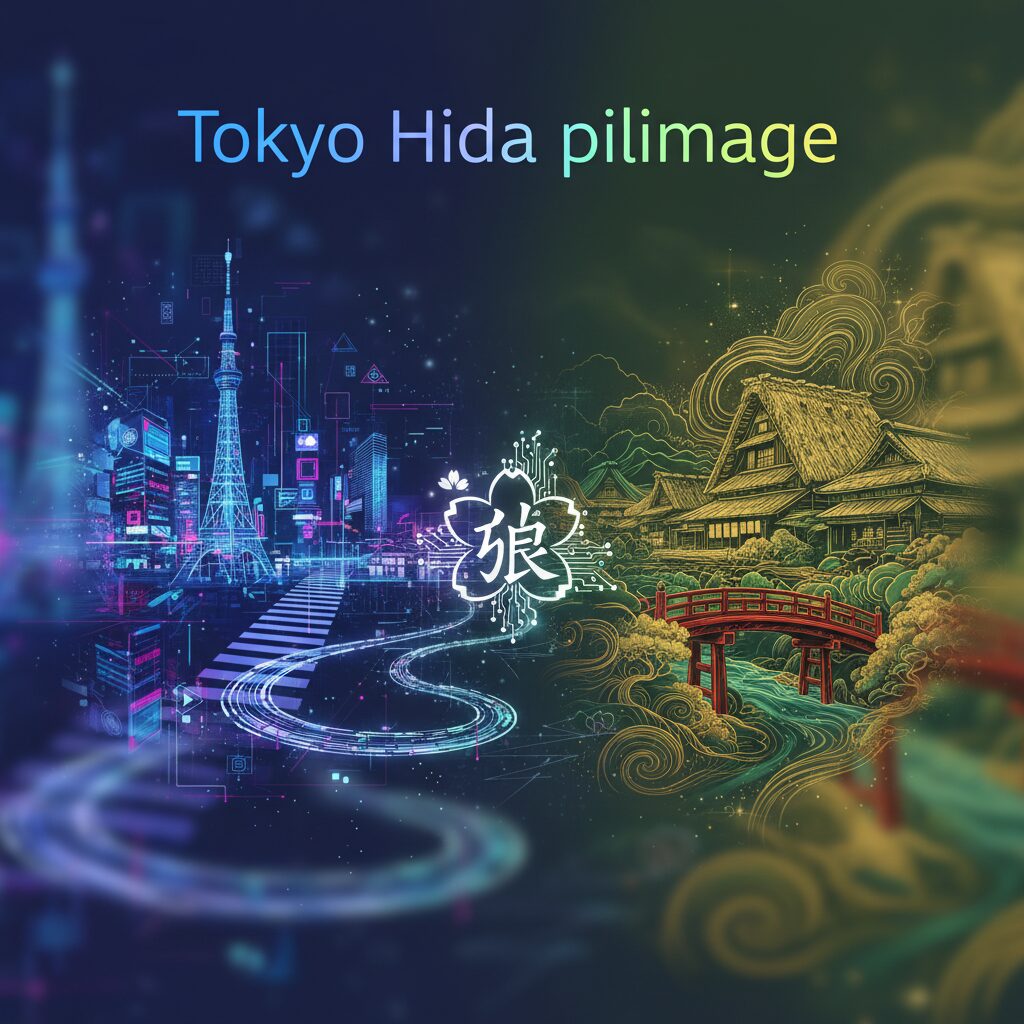
There’s a feeling that lingers long after the credits roll on Makoto Shinkai’s masterpiece, ‘Kimi no Na wa’ or ‘Your Name.’ It’s a delicate, shimmering thread of emotion—a blend of breathtaking wonder, profound longing, and the dizzying idea that somewhere, someone is inextricably connected to you. This film didn’t just tell a story; it painted a world so vivid and emotionally resonant that it felt real. It sparked a desire not just to rewatch it, but to step inside it. Welcome to the world of ‘seichi junrei,’ or anime pilgrimage, where fiction and reality beautifully intertwine. This journey is a chance to walk in the footsteps of Taki and Mitsuha, to feel the pulse of their two disparate worlds, and perhaps, to find a connection of your own. Our pilgrimage will trace the film’s iconic heartbeats, from the electric, sprawling metropolis of Tokyo to the tranquil, tradition-steeped mountains of Hida. It’s a tale of two Japans, one of neon-drenched futures and another of timeless, whispered pasts, both waiting to be discovered. Before we take our first step, let’s get our bearings and see the path that fate has laid out for us across the map of Japan.
Embracing the magic beyond cinematic footprints, a walk through Yakushima’s ancient woods unveils a contrasting journey into Japan’s timeless natural beauty.
The Urban Heartbeat: Tokyo’s Living Canvas
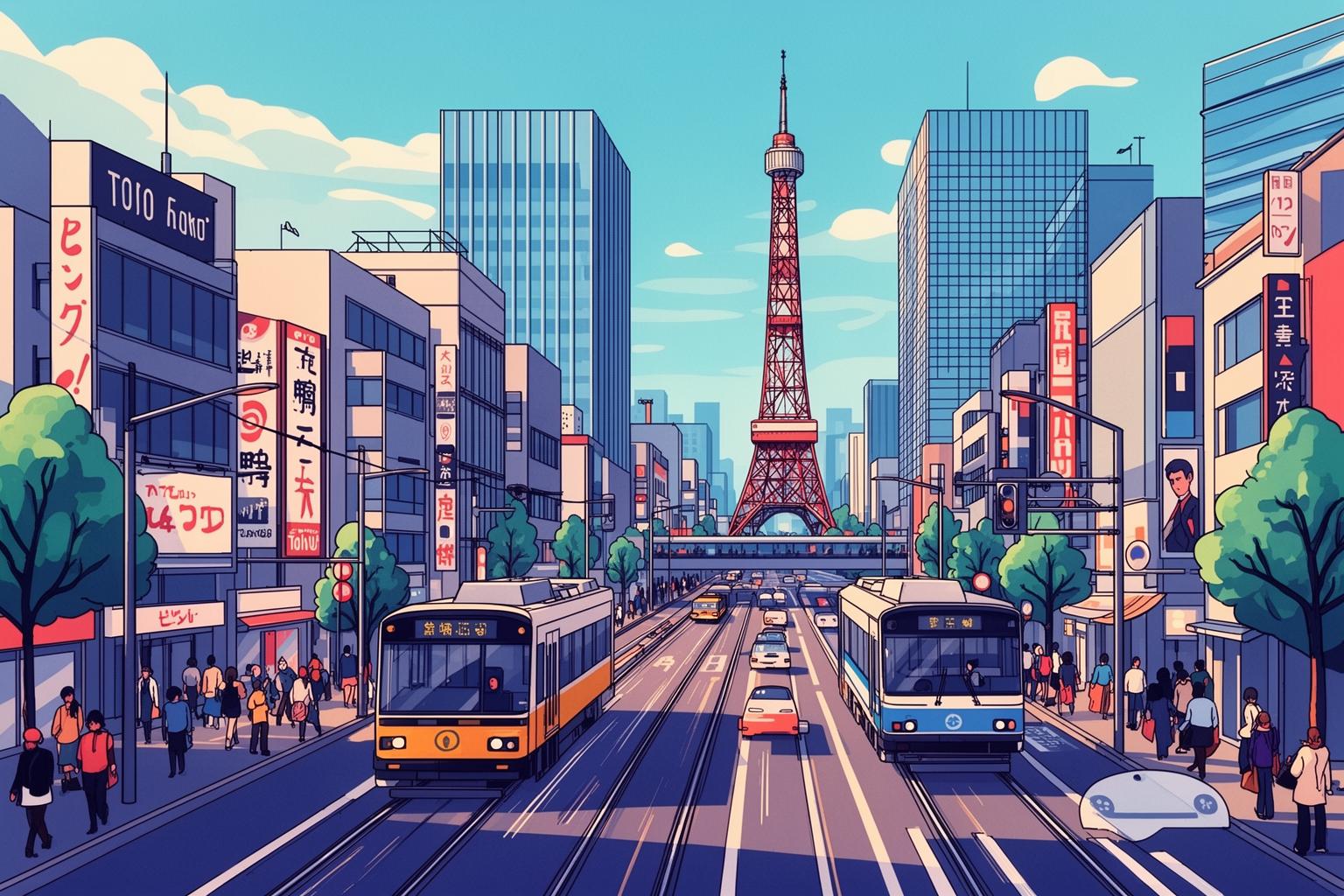
Tokyo is more than just a city; it’s a living, breathing organism, a vast network of stories unfolding simultaneously. This is the world of Taki Tachibana. It’s a place of towering skyscrapers that pierce the clouds, trains gliding like silver serpents through a concrete jungle, and millions of lives converging at Shibuya’s famous scramble crossing. Upon arrival, the first thing that strikes you is the immense scale of it all. The energy is tangible, a constant pulse vibrating through the soles of your shoes. Yet, amid this magnificent chaos, there are pockets of stillness—moments of quiet reflection that Shinkai so expertly captured. Our journey begins here, tracing the specific coordinates of Taki’s life, where the city’s mundane architecture is infused with cinematic magic. We’re not merely sightseeing; we’re chasing the ghost of a feeling, the echo of a conversation, the memory of a sky that seemed to promise everything.
The Suga Shrine Steps: A Fateful Encounter
The air in Yotsuya carries a unique quality. Just steps away from the train station’s rhythmic hum, the world softens. The frantic speed of central Tokyo fades, replaced by a gentle, residential calm. Streets narrow, lined with modest homes and the occasional sleepy storefront. It’s here, in this humble corner of the city, that you find the Suga Shrine steps. They rise with quiet dignity, framed by vibrant red railings cutting through the urban greenery. This is more than just a staircase; it’s a stage. It’s the backdrop for one of modern cinema’s most anticipated reunions, a place charged with the invisible energy of hope, longing, and the breathtaking relief of rediscovery. Standing at the bottom and looking up, or at the top and looking down, you can almost hear their voices carried on the breeze: “Kimi no namae wa?” The view is surprisingly ordinary—a simple street, telephone poles, apartment buildings—but through the lens of the film, it becomes extraordinary. To truly feel the atmosphere, visit during the late afternoon, when ‘kataware-doki,’ or twilight, begins to paint the sky in tones of orange and purple. The light filters through leaves, casting long shadows, and for a moment, the boundary between worlds feels fragile. As a first-time visitor, remember this is a cherished residential neighborhood and a sacred shrine space. Approach with respect. Take your photos, but also take a moment to simply stand, breathe, and absorb the weight of the story that transformed this simple staircase into an international landmark for dreamers.
Shinjuku’s Symphony: Taki’s Concrete Playground
If Yotsuya is the heart, Shinjuku is the city’s roaring, electric soul. This is the setting of Taki’s daily routine, his part-time job, and his frantic search for a town that existed only in his dreams. Stepping out of Shinjuku Station plunges you into a symphony of sensory overload. Giant screens flash dazzling advertisements, crowds move like a tidal wave, and the density of buildings forms canyons of light and shadow. The film captures this overwhelming scale perfectly, making Taki’s personal journey feel both epic and intimately small amidst the vastness of his surroundings. One of the most recognizable landmarks is the unique ring-like intersection in front of the Shinjuku Police Station. Standing there, you can see the precise angles Shinkai used to convey the city’s ceaseless motion. Nearby, the iconic red ‘LOVE’ sculpture by Robert Indiana, a popular meeting spot, makes a memorable appearance as Taki and his friends embark on their quest. While the film’s ‘Cafe La Bohéme’ is fictional, the real restaurant of the same name in Shinjuku Gyoen serves as its perfect spiritual counterpart. It was here that Taki worked his part-time job, and you can almost picture him hurrying between tables. For a breathtaking panoramic view that mirrors the film’s city shots, head to the Tokyo Metropolitan Government Building. The observation decks on the 45th floor are free to the public and offer a god-like perspective of the urban sprawl stretching to the horizon. Gazing out, you’ll grasp the world Taki inhabited—a world of infinite possibilities and crushing anonymity, the ideal place to feel profoundly alone or deeply connected.
The National Art Center, Tokyo: A Study in Light and Glass
Our final stop in Tokyo is a modern architectural masterpiece that seems plucked from the future: The National Art Center in Roppongi. Its undulating glass façade ripples like a massive wave, creating a dynamic interplay of light and shadow within its cavernous atrium. This is the setting for Taki’s date with his coworker, Okudera-senpai. Their lunch conversation takes place in the Salon de Thé Rond, a café dramatically perched atop a huge concrete cone inside the building. The scene is a visual feast, testifying to Shinkai’s fascination with light. Sunlight pours through the glass walls, refracting and reflecting to create a dreamlike atmosphere that perfectly matches the awkward, hopeful tension of their date. Visiting the art center is an experience in itself. Designed by famed architect Kisho Kurokawa, the building is a destination even without the world-class exhibitions it hosts. You don’t need a ticket to enter the main atrium, browse the gift shop, or visit the cafés. For fans of the film, sitting in the Salon de Thé Rond is essential. While you may not secure the exact table, the feeling is unmistakable. It’s a moment of refined calm, a bubble of artistic tranquility floating above the city’s relentless energy. It represents a different facet of Taki’s life—his aspirations, his appreciation for beauty, and his first tentative steps toward adulthood. Take your time here. Wander through sun-drenched halls, feel the vastness of the space, and appreciate how a real-world location can transform into a vessel for storytelling.
The Soul of Itomori: Hida’s Timeless Landscape
Leaving Tokyo behind feels as dramatic as the body-swapping in the film. The Shinkansen bullet train swiftly carries you away from the concrete and neon, heading toward the heart of the Japan Alps. As the urban sprawl melts into rolling hills and then majestic mountains, the pace of life seems to slow. We are bound for the Hida region in Gifu Prefecture, the spiritual home of Mitsuha Miyamizu and her fictional town, Itomori. While Itomori itself is a creation of Shinkai’s imagination, its essence is deeply rooted in the landscapes, traditions, and atmosphere of this stunningly beautiful, rural area of Japan. Here, the air is crisp, the canal waters clear, and history isn’t confined to museums—it’s engraved in the dark wood of old merchant houses and whispered in the rustling leaves of ancient cedar trees guarding the local shrines. This is a world governed by nature’s cycles, centuries-old festivals, and a strong, palpable sense of community. This is Mitsuha’s world, and stepping into it feels like stepping back in time.
Hida-Furukawa Station: The Arrival Point
Your entrance to Mitsuha’s world is the charming, modest Hida-Furukawa Station. As you step off the local train, a sense of déjà vu immediately greets you. This very platform is where Taki and his friends arrived, filled with nervous anticipation, on their quest to find a phantom town. The film meticulously recreated the station, from the platform sign designs to the pedestrian overpass that offers the perfect vantage point for that iconic shot of the train pulling away. Across the tracks, you’ll even spot the small, whimsical mascot of a ‘Hida-gyu’ (Hida beef) cow, just as it appears in the movie. The station itself is a quiet hub, a stark contrast to Tokyo’s bewildering labyrinths. The pace here is slower, the staff friendlier, and the entire atmosphere welcoming. This is where the reality of the journey sinks in. The search is no longer fantasy; it’s real. From here, you can feel the story pulling you toward the heart of the town. Pause on the overpass. Watch a train arrive or depart on the JR Takayama Main Line. As it snakes through the valley, you’ll sense the same flicker of hope and uncertainty that Taki must have felt standing in a place he had only ever seen in dreams.
The Hida City Library: Uncovering the Past
A short, pleasant walk from the station brings you to another key location pivotal to the film’s plot: the Hida City Library. This is where Taki, Tsukasa, and Okudera-senpai painstakingly searched for records of Itomori, piecing together the devastating truth of the town’s history. From the outside, the library is a handsome, modern building that harmonizes with the town’s aesthetic. Inside, it’s a sanctuary of knowledge and quiet reflection. Warm wooden interiors, high ceilings, and rows upon rows of books create an atmosphere of scholarly calm. The filmmakers’ attention to detail is remarkable here. You can find the exact corner where the characters sat, the specific desks and chairs, and the distinct circular window designs. The library staff are well aware of their building’s fame and warmly welcome visitors. There’s a guestbook for ‘Your Name’ fans to sign, and with a simple request at the front desk, you are often permitted to take photographs—an uncommon privilege in Japanese libraries. Standing in the very spot where the film’s central mystery unraveled is a powerful experience. You can almost feel the desperation and dawning realization of the characters. It’s a testament to the power of stories and the importance of preserving history, themes deeply woven throughout the film. Remember to be a respectful visitor; this is a functioning public library, so maintain quiet as you soak in the atmosphere and connect with a crucial piece of the ‘Your Name’ puzzle.
The Spirit of Itomori: Shrines and Scenery
Though no single shrine served as the exact model for Mitsuha’s Miyamizu Shrine, its spirit is scattered throughout the Hida region. The most visually similar location is often cited as Hie Shrine in nearby Takayama, with its steep stone steps winding through a forest of towering cedar trees. Walking those steps, you can easily imagine Mitsuha and her sister Yotsuha in their shrine maiden attire, carrying out their sacred duties. However, right in Hida-Furukawa, Ketawakamiya Shrine offers a more local and intimate experience. Here, the town’s famous Furukawa Festival, a UNESCO Intangible Cultural Heritage event, takes place. The shrine embodies the deep spiritual roots of the community—the very traditions Mitsuha felt both bound and defined by. Exploring these sacred spaces reveals the Shinto beliefs permeating the film. The concept of ‘musubi’—the mysterious, interconnecting force that binds people, time, and events—is a core Shinto idea. Standing before the ancient wooden structures, surrounded by nature, you can sense that connection. The film’s ‘kuchikamizake’ ritual, where Mitsuha creates sacred sake as an offering to the gods, draws from these ancient practices. Beyond the shrines, the entire town of Hida-Furukawa evokes the essence of Itomori. Wander along the Setogawa Canal, where vivid koi swim in crystal-clear mountain water. Admire the preserved ‘shirakabe dozogai,’ streets lined with old white-walled warehouses. This is the Japan Mitsuha knew—a world where every corner holds a story and tradition lives as a vibrant part of daily life.
Planning Your Pilgrimage: A Practical Guide
Embarking on a ‘seichi junrei’ is more than just a trip; it’s an immersive experience that calls for some thoughtful planning to make it smooth and magical. The journey from Taki’s Tokyo to Mitsuha’s Hida covers both geography and atmosphere, and bridging that gap seamlessly is essential to fully appreciate the story’s striking contrast. Consider this not as a checklist, but as a friendly guide from one fan to another, packed with tips to help you create an adventure as personal and memorable as the film itself. From navigating Japan’s world-class train system to picking the ideal season to visit, these insights will help you spend less time on logistics and more on the magic of discovery.
Crafting Your Itinerary
To truly honor this journey, avoid rushing. A well-paced itinerary lets you absorb the unique vibes of each place. A comfortable timeframe is five to six days. Set aside at least two full days for Tokyo. This allows ample time to explore Shinjuku, Yotsuya, and Roppongi without feeling pressured, and even leaves room for spontaneous adventures. Tokyo is vast, and while public transportation is efficient, it still takes time to get around. The heart of the pilgrimage lies in traveling between the two worlds. The trip from Tokyo to the Hida region is an experience in itself. The most scenic and efficient way is taking the Tokaido Shinkansen to Nagoya, a fast and comfortable ride under two hours. From Nagoya, transfer to the JR Hida Wide View Express train, where the magic truly begins. This legendary train ride offers stunning views of deep gorges and pristine rivers, climbing into the Japan Alps. Make sure to grab a window seat. For the Hida portion of your trip, plan two to three days. This lets you spend one day exploring key sites in Hida-Furukawa and another potentially visiting nearby Takayama, with its beautifully preserved old town and the Hie Shrine. Taking it slow lets you savor the countryside’s tranquility, enjoy local cuisine, and perhaps stay in a traditional ‘ryokan’ (inn) for an authentic experience. For international travelers, the Japan Rail Pass can be a cost-effective option, covering travel from Tokyo to Hida-Furukawa and back.
When to Visit
The landscapes of ‘Your Name’ are breathtaking in every season, and your choice of when to visit will color your journey differently. Autumn, from late October to November, is often the most iconic time. The Hida region bursts into vivid reds and golds, mirroring the film’s rich palette and evoking its nostalgic, slightly melancholic mood. The crisp air is perfect for exploring on foot. Spring, from late March to April, features classic cherry blossoms. Picture the steps of Suga Shrine framed by delicate pink petals—a truly picturesque sight. The mild weather makes it another excellent season for travel. Summer, June through August, brings lush, vibrant greens to Hida’s mountains. Days are long, but it can get hot and humid, especially in Tokyo. It’s also festival season (‘matsuri’), offering lively cultural experiences. Winter turns Hida into a peaceful, snow-covered landscape. Towns are quiet and serene under white blankets. Though beautiful, winter demands more preparation for cold weather and possible travel delays from snow. If possible, try to coincide your trip with the spring or autumn Takayama Festivals, or the Furukawa Festival in April. These grand celebrations showcase the region’s rich culture and are unforgettable to witness.
Beyond the Screen: Experiencing Hida’s Culture
While visiting the filming locations is the goal, the true magic of Hida lies in immersing yourself in its local culture. This is your chance to taste, feel, and experience the world that shaped Mitsuha. The region is renowned for Hida beef, a type of ‘wagyu’ famous for its marbling and melt-in-your-mouth texture. You can enjoy it as deluxe steaks or casual street foods like beef buns and skewers. Be sure to try other local specialties too, such as ‘mitarashi dango’ (grilled rice dumplings glazed with sweet soy sauce) and ‘gohei mochi’ (grilled rice cake coated in a savory miso-walnut sauce). For a truly memorable stay, consider spending a night in a ‘ryokan’. These traditional inns offer much more than lodging—you’ll sleep on ‘tatami’ mats, bathe in communal ‘onsen’ (hot springs), and enjoy elaborate multi-course ‘kaiseki’ dinners featuring local seasonal ingredients. It’s the perfect way to relax after a day of exploration and connect more deeply with Japanese hospitality. Take time to wander the old streets of Hida-Furukawa and Takayama. Visit a sake brewery for a tasting—the craft of sake-making is closely tied to the region’s pure water and history, directly connecting to the ‘kuchikamizake’ in the film. By engaging with the local culture, you’re not just touring sights—you’re understanding the soul of the place that inspired Itomori.
More Than a Movie: Finding Your Connection
As your journey comes to an end and you board the train to leave behind the quiet mountains of Hida and return to the pulse of the modern world, you’ll realize this pilgrimage was about more than simply matching scenes from a film. It was about experiencing the very duality that makes ‘Your Name’ so touching. You’ve wandered through the dizzying, futuristic canyons of Shinjuku and stood in the silent, sacred groves of an ancient shrine. You’ve felt the rush of countless commuters and the patient calm of a town where koi swim through the streets. For a few days, you have lived in the worlds of both Taki and Mitsuha. The journey brings the film’s central theme of ‘musubi’ to life. It’s about the connections—between city and country, modernity and tradition, between a fictional story and the real, tangible world that inspired it. Standing on the steps of Suga Shrine is not just about recreating a photo; it’s about sensing the invisible thread of a story that has touched millions across the globe, linking you to them all. This adventure leaves you with more than just pictures; it leaves you with a feeling— a sense of wonder at the beauty of the Japanese landscape, a deeper appreciation for the traditions that ground its culture, and a renewed belief in the beautiful, mysterious, unseen connections that shape our lives. You came chasing a comet, but you leave having found a piece of your own story woven into Japan’s timeless tapestry.