
There’s a feeling the Japanese call natsukashii—a gentle, nostalgic ache for something you may have never truly experienced. It’s the phantom scent of rain on summer asphalt, the distant echo of a festival bell, the heart-wrenching certainty that you are searching for a person or a place you can’t quite name. It is this very feeling, this beautiful, bittersweet longing, that director Makoto Shinkai masterfully wove into the global phenomenon, Your Name. (Kimi no Na wa). The film touched a universal nerve, reminding us of the invisible threads that connect us across time, space, and memory. But what if you could walk through that memory? What if you could step out of the theater and into the very frame of the film? In Tokyo, you can. The city, so often portrayed as a cold, futuristic megalopolis, serves as the vibrant, breathing backdrop for half of the film’s soul-stirring narrative. This journey is more than a simple location-scouting tour; it’s a pilgrimage, a chance to trace the footsteps of Taki and Mitsuha through the bustling wards of Shinjuku and the quiet, sloping streets of Yotsuya. It’s an opportunity to feel the pulse of their world beneath your own feet and to explore the film’s central theme of musubi—the intricate knot of fate, time, and connection. As someone who has long been fascinated by the shared philosophies that ripple across East Asia, the concept of musubi feels like a cousin to the Chinese belief in yuánfèn (缘分), the binding force of destiny. Here, in the heart of Tokyo, that abstract idea becomes a tangible map. Let’s follow it together, and perhaps, find a piece of our own forgotten story.
Embrace a deeper exploration and uncover your name film locations that echo the bittersweet tapestry of fate woven through Tokyo’s streets.
The Overture at Yotsuya Station: Where Worlds Collide

Our journey begins not at a majestic temple or a famous tower, but at a transit hub—the everyday crossroads of movement: Yotsuya Station. This is where the ordinary first intertwines with the extraordinary in the film. Here, Taki, nervous and somewhat awkward, meets his graceful coworker, Okudera-senpai, for their date. The station itself emerges as a quiet character, its distinctive red-brick facade and busy platforms framing Taki’s urban existence. Standing here, you are immediately immersed in the city’s rhythmic symphony—the chime of a departing train, the murmur of countless conversations, the light percussion of footsteps on polished floors. Shinkai captures this sensory experience with stunning accuracy, turning a routine commute into a dance of intersecting lives.
Echoes on the Platform
To fully appreciate the scene, find a spot on the JR Chuo-Sobu Line platform. Watch as yellow and orange trains arrive and depart in a steady flow, carrying a stream of people embarking on their individual journeys. This is the magic of Tokyo, a city of millions where lives run parallel, occasionally intersecting in moments of unexpected significance. It’s easy to picture Taki standing here, checking his phone, his thoughts still tangled with vague memories of life in the mountains. For first-time visitors, Tokyo’s vast train system can be overwhelming, but stations like Yotsuya act as essential anchors. They are more than mere points on a map; they function as the city’s circulatory system, breathing life into each district. To reach this spot, you can take the JR Chuo or Chuo-Sobu lines, or the Tokyo Metro’s Marunouchi or Namboku lines, making it an exceptionally convenient starting point. Once you arrive, use the main exit to view the curved, brick-covered exterior that features prominently in the film. This architecture feels warm and time-honored, a striking contrast to the glass-and-steel modernity defining other parts of the city.
A Neighborhood Frozen in Time
Moving away from the station, the atmosphere changes immediately. Yotsuya isn’t the glittering, neon-lit Tokyo often imagined. It’s a neighborhood with a quieter, more grounded character. This is the true backdrop of Taki’s everyday life. The streets are lined with a mix of small offices, universities, inviting ramen shops filling the air with savory steam, and residential apartments. As you walk toward our final destination, Suga Shrine, you become fully immersed in this setting. The air hums with the subdued energy of city life rather than the roar of Shinjuku. You might hear the distant clang of a railway crossing, the laughter of students on lunch break, the gentle buzz of a vending machine dispensing a cold drink. It’s this grounded reality that heightens the impact of the film’s fantastical elements. The story isn’t set in a distant fantasy world; it unfolds right here, on these very streets. This preservation of distinct neighborhood character is something I deeply admire about Tokyo. It feels like a living museum where different eras and energies coexist harmoniously—a quality that resonates with the layered history and modernity of cities like Beijing or Shanghai.
The Path to Revelation: Walking Toward Suga Shrine
The walk from Yotsuya Station to Suga Shrine is an essential part of the pilgrimage. While it takes about fifteen minutes, the journey steadily builds anticipation with every step. You leave behind the main streets and wander through a maze of narrow residential lanes. The urban scenery gradually softens, revealing more greenery, small family homes, and the occasional quiet temple peeking out from behind stone walls. This shift tells its own story, reflecting Taki’s frantic search as he moves from uncertainty toward a moment of deep recognition. The path isn’t a straight line; you’ll need a map, but getting slightly lost is part of the experience, a subtle echo of Taki’s own disoriented quest.
The Journey is the Destination
As you make your way through the tranquil streets, keep an eye out. Many intersections and street corners will feel strangely familiar, as if pulled directly from the film’s meticulously crafted backgrounds. Shinkai and his team excel at photorealism, and you’ll find yourself pausing to compare the view on your phone with the real scene, often gasping in recognition. The slope of a certain road, the design of a guardrail, the placement of a utility pole—it’s all there. This walk offers a chance to slow down and appreciate the details that form the fabric of a Tokyo neighborhood. It’s worlds apart from the tourist-heavy areas, providing a glimpse into the peaceful, everyday lives of its residents. Here, the story’s emotional weight truly begins to settle in. You’re not just a visitor; you’re a participant, retracing a path marked by hope, desperation, and the faint glimmer of a forgotten promise.
The Crossroads of Destiny
Before reaching the final destination, you’ll come across a key intersection where Taki runs during his search. It’s a visually distinct spot with a Y-shaped fork and a large, cylindrical postbox. Standing there, you can almost sense the phantom rush of Taki’s movement, his heart pounding with a question he hasn’t yet found words for. This makes a fantastic photo spot, but it remains an active street. A small tip for fellow pilgrims: be patient and mindful of traffic. Wait for a clear moment to take your shot, and respect the daily lives of the locals. The best time to visit is in the late afternoon, during the famous “magic hour,” when the sunlight softens and turns golden, bathing the scene in a warm glow that perfectly mimics the film’s emotional and visual tone. This light, so central to Shinkai’s style, transforms the ordinary into the sublime, making you feel as if you’ve stepped into an animated cel.
The Final Ascent: The Iconic Red Steps
And then, there it is. After a final turn, the view opens up, revealing the steps of Suga Shrine. The sight is genuinely breathtaking, especially for fans of the film. The steep stone staircase is bordered by vibrant red handrails on one side and a lush wall of greenery on the other, creating a striking visual contrast that is instantly recognizable. This is the sacred site of the film’s climax, where Taki and Mitsuha, strangers connected by fate, finally meet. The reality of the place is surprisingly modest and incredibly quiet. It’s not a grand monument but a simple neighborhood fixture, which makes its cinematic significance even more powerful. You’ll likely find other fans here, standing at the top or bottom, cameras in hand, sharing a silent, mutual understanding. There’s a quiet reverence in the air, an unspoken acknowledgment that this is a special place. As I stood there, I couldn’t help but think of the red string of fate, the hóng xiàn (红线) from Chinese mythology, said to be tied by the lunar matchmaking god Yue Lao, linking those destined to meet. The brilliant red of the handrails feels like a deliberate, tangible symbol of this invisible thread—a bold line of destiny cutting through the muted tones of the city. It’s a masterful piece of environmental storytelling, where the location itself becomes the film’s most significant symbol.
A Moment of Serenity: Inside Suga Shrine
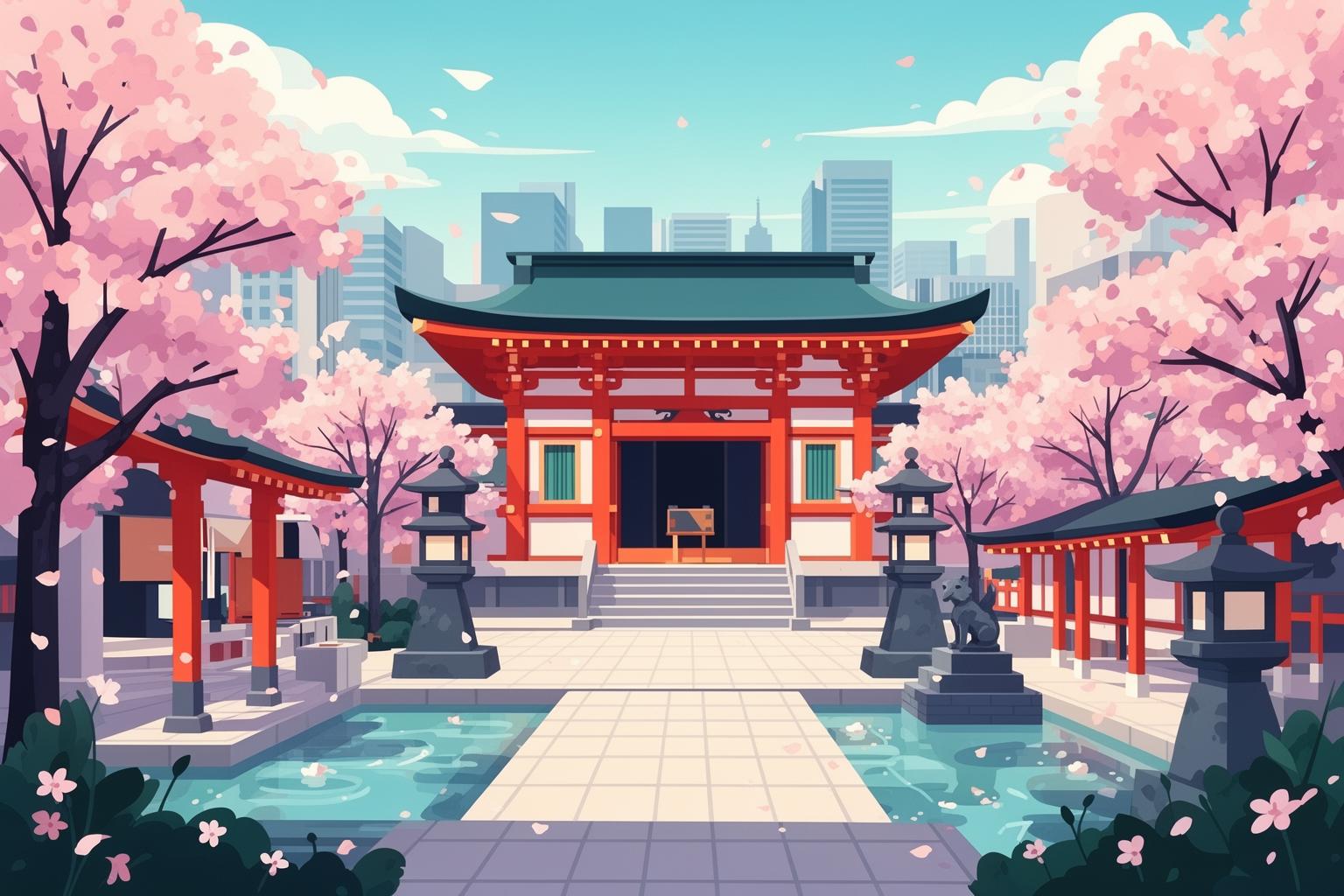
Once you’ve taken in the iconic view and perhaps recreated the famous scene, the journey doesn’t end there. At the top of the stairs stands Suga Shrine itself, a serene and active place of worship. It is important for all pilgrims to keep this in mind. We are visitors here, stepping from a world of fiction into a realm of genuine faith and community. The atmosphere within the shrine grounds exudes profound tranquility, offering a welcome respite after the emotional climax of the ascent. The air is calm, broken only by the soft rustling of leaves and the occasional coo of a pigeon. It’s a modest, local shrine—unassuming and deeply soothing.
Beyond the Silver Screen
Take a moment to explore the grounds. You’ll find the traditional features of a Shinto shrine: a temizuya water basin for purification, where you can rinse your hands and mouth to cleanse yourself before approaching the kami, or deities. The main hall, or haiden, is where visitors may offer a prayer. The customary practice is to bow twice, clap your hands twice, offer your prayer silently, and then bow once more. Even if you are not religious, participating in this simple ritual can be a meditative experience, a way to show respect and connect with the spirit of the place. One of the most touching discoveries for fans is the collection of ema, small wooden plaques on which visitors write their wishes or prayers. Look closely, and you will see many adorned with beautiful, hand-drawn illustrations of Taki and Mitsuha, heartfelt messages of gratitude for the story, and wishes for finding one’s own destined partner. It stands as a beautiful, living testament to the film’s lasting impact, a fan-created gallery of hope.
Finding Your Own Musubi
Suga Shrine offers an ideal space for quiet reflection. After the excitement of the pilgrimage, it provides an opportunity to contemplate the film’s themes in a peaceful setting. What does connection mean to you? What invisible threads link you to the people and places in your life? The shrine, with its timeless serenity, seems to invite this kind of introspection. Before you leave, consider purchasing an omamori, or protective charm. Shrines often offer a variety of charms, for health, success, or safe travels. In the context of your visit, a charm for relationships or for finding something lost (en-musubi) feels especially fitting. It is a small, tangible keepsake of your pilgrimage, a reminder of the connections you’ve sought and the quiet moment of peace you discovered at the top of that fateful staircase.
Taki’s Metropolis: Exploring the Shinjuku Connection
After the calm of Yotsuya, it’s time to explore the other side of Taki’s world: the vibrant, high-energy district of Shinjuku. If Yotsuya embodies his peaceful residential life, Shinjuku serves as the backdrop for his ambitions, social interactions, and the overwhelming scale of the city he calls home. The shift between these two wards feels like flipping a switch, moving from a gentle hum to a full-blown symphony of light, sound, and motion. This stark contrast is key to understanding the world Taki inhabits.
The Concrete Jungle Where Dreams Are Made
As you head to Shinjuku, keep an eye on the skyline. You’ll likely notice the NTT Docomo Yoyogi Building, a skyscraper with a distinctive clock tower. While not a direct setting from Your Name., it is a hallmark in nearly all of Shinkai’s Tokyo-centered films, a recurring motif that acts as a visual anchor for his portrayal of the city. It symbolizes the towering, almost impossibly grand scale of the metropolis. Shinjuku is a land of giants, where skyscrapers graze the clouds and video screens span multiple stories. It’s a landscape full of immense possibility and, at times, overwhelming anonymity—the ideal place to feel lost, and the perfect place to seek a single, missing soul.
A Landmark of LOVE
Our first destination in Shinjuku is an iconic piece of public art briefly featured in the film: Robert Indiana’s “LOVE” sculpture. Situated in front of the Shinjuku I-Land Tower in West Shinjuku, this bright red sculpture is a cherished landmark and a popular meeting spot. Its simple, bold message contrasts strikingly with the cool glass and steel of the surrounding office towers. In the film, it provides a subtle visual hint, another thread of connection and romance woven into the urban fabric. It’s an easy pilgrimage point to visit, just a short walk from the west exit of Shinjuku Station. It’s also a delightfully optimistic and universal symbol, making it a perfect photo opportunity to mark your journey.
A Taste of Taki’s Life: The Cafe Experience
One of the most immersive ways to connect with Taki’s story is to stop by the real-life restaurant that inspired the Italian cafe where he worked part-time, “Il Giardino Delle Parole.” This inspiration is widely believed to be Cafe La Bohème Shinjuku Gyoen. Inside, the resemblance is remarkable. The restaurant features a stylish, elegant interior with high ceilings, dramatic chandeliers, and large arched windows offering a stunning view of the nearby Shinjuku Gyoen National Garden. It’s a slice of European charm in the heart of Tokyo. Visiting for lunch or afternoon coffee is highly recommended. Beyond the excellent food, sitting here lets you vividly imagine Taki weaving through tables, balancing plates, and handling the daily dynamics of his workplace. It adds a wonderfully tangible layer to his character. The cafe is quite popular, so consider booking ahead or visiting during off-peak weekday hours to avoid long waits. It’s the ideal spot to rest and recharge before the final leg of your pilgrimage.
Shinjuku’s Panoramic Views
Your Name. abounds with stunning panoramic views of Tokyo’s cityscape, highlighting the vast world separating Taki and Mitsuha. To experience this scale firsthand, there’s no better place than the Tokyo Metropolitan Government Building. A short walk from Cafe La Bohème and the LOVE sculpture, this architectural marvel offers free admission to observation decks on the 45th floor. From here, you can gaze over an endless urban sea stretching to the horizon. On a clear day, you may even catch a glimpse of Mount Fuji, a sight that connects Tokyo’s sprawling cityscape with the natural world of Mitsuha’s hometown. Looking down at the city, with its millions of lights and countless lives, you can fully appreciate the incredible odds Taki and Mitsuha overcame. It’s a humbling and awe-inspiring view, providing the perfect cinematic end to a day spent walking through a living animated masterpiece.
A Pilgrim’s Practical Guide
Setting out on this journey is simple, but a bit of planning can make the experience smoother and more rewarding. Tokyo is a city that truly rewards exploration on foot, and this pilgrimage is best savored at a relaxed pace, allowing for unexpected discoveries along the way.
Planning Your Day
A sensible and enjoyable plan would be to begin your day in the vibrant core of Shinjuku. Arrive in the morning and visit the Tokyo Metropolitan Government Building to take in that stunning bird’s-eye view before the midday haze rolls in. From there, it’s a short walk to the LOVE sculpture for a quick photo opportunity. Afterwards, indulge in a well-earned lunch at Cafe La Bohème Shinjuku Gyoen. Later in the afternoon, take the brief train ride on the Marunouchi Line from Shinjuku-Gyoenmae Station to Yotsuya Station. This timing is perfect, as it lets you start your walk toward Suga Shrine as the afternoon light softens, arriving at the iconic steps during the enchanting golden hour, just before sunset. As for what to wear, comfort is essential. You will be covering quite a bit of ground, so comfortable footwear is a must. For your gear, a fully charged camera or smartphone is indispensable, along with a portable battery pack. It’s also smart to have some key screenshots from the film saved on your phone for instant comparisons, adding a fun, treasure-hunt aspect to the day.
Cultural Etiquette and Respect
Although this journey is inspired by fiction, the places are real and deserve our respect. This is especially important at Suga Shrine and the nearby residential area. Please remember that the shrine is an active site of religious worship, and the streets are home to local residents. Keep a quiet and respectful demeanor at all times. Avoid loud conversations, especially on the steps themselves, allowing everyone a peaceful, personal experience. Follow basic shrine etiquette, such as bowing once before passing through the torii gate at the entrance and refraining from eating, drinking, or smoking on the grounds. When walking around the neighborhood, stay on the sidewalks, do not trespass on private property, and be careful not to block driveways or entrances when taking photos. One wonderful aspect of anime pilgrimages is that they show us a new side of Japan, and by being considerate and respectful visitors, we help keep these places welcoming to fans for years to come.
Our journey through the Tokyo of Your Name. is more than just ticking off locations. It is an emotional and sensory experience that bridges the gap between the screen world and the world beneath our feet. Walking the same paths as Taki—from the bustling chaos of Shinjuku Station to the quiet reverence of the Suga Shrine steps—allows us to feel the story’s heartbeat in a deeply personal way. We sense the vastness of the city that separated them and the gentle magic of the place that ultimately brought them together. This pilgrimage reminds us that stories, like people, have a physical presence in the world, leaving their echoes in the places they touch. Perhaps the true magic of this journey is that it encourages us to see our own cities, our own neighborhoods, with fresh eyes. It inspires us to find beauty in the ordinary, connection in the crowd, and the invisible threads that might just link our own story to someone else’s, somewhere out there, waiting to be discovered.