
There are stories that never leave you. They weave themselves into the fabric of your memory, their colors as vivid years later as they were upon first sight. Hayao Miyazaki’s Spirited Away is one such story, a cinematic masterpiece that floats between a dream and a cautionary tale, a luminous journey into a world of gods, spirits, and forgotten names. For countless admirers around the globe, the film is more than just an animated feature; it’s a destination, a place the soul longs to visit. This desire has given birth to a modern form of pilgrimage, known in Japan as seichi junrei, where fans travel to the real-world locations that inspired their favorite fictional worlds. While the enigmatic Miyazaki and Studio Ghibli have often remained elusive about direct inspirations, the threads of reality are woven too deeply into the fantasy to be ignored. Two places, in particular, hum with the unmistakable energy of Spirited Away: the ancient Dogo Onsen in Matsuyama, Japan, and the lantern-lit mountain town of Jiufen, Taiwan. They are not mere filming locations, but spiritual cousins to the film’s unforgettable landscapes. This is a journey to those places, a quest to walk through the looking glass and find the faint, beautiful echoes of Chihiro’s world shimmering in our own. It’s a chance to breathe the air, feel the steam, and understand how reality can birth the most profound magic.
For those inspired to embark on their own cinematic journey, a similar sense of discovery awaits on a pilgrimage to the real-world locations of “Your Name.”
The Grand Dame of Dogo: Stepping into the Aburaya Bathhouse
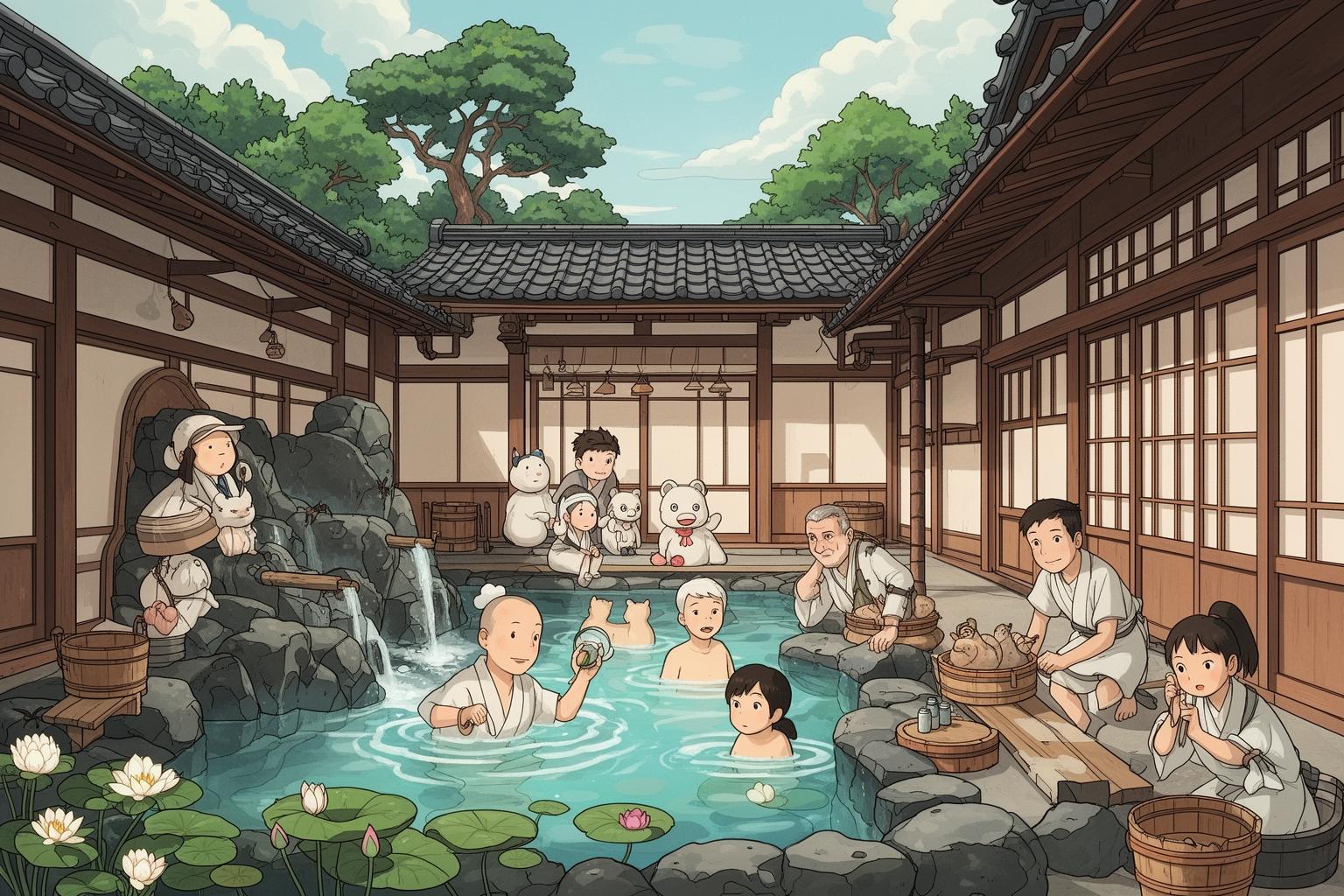
Our first destination is the island of Shikoku, in the city of Matsuyama, home to one of Japan’s oldest and most cherished hot springs. Here stands the Dogo Onsen Honkan, an impressive, multitiered wooden bathhouse that looks as if it were lifted straight from Miyazaki’s imagination. Approaching it, the building’s striking architectural presence is breathtaking. Rather than a single, monolithic structure, it is a stunning, intricate blend of Meiji-era design, featuring layered roofs, elaborate latticework, and delicate paper-screened windows. The similarity to the Aburaya, the grand bathhouse for the gods in Spirited Away, is immediate and powerful. One can almost envision soot sprites scurrying in the boiler room and hear the lively chorus of spirits arriving for their nightly purification. As an Important Cultural Property of Japan, the Honkan serves as a living museum, a tribute to an era when bathing was more than cleanliness—it was a communal and spiritual ritual.
A Legacy Carved in Wood and Steam
Dogo Onsen’s history spans over a thousand years, being referenced in ancient records and frequented by emperors and literary figures alike. The current Honkan was completed in 1894, a marvel of its day, built without using a single nail in its main structure. Its labyrinthine interior is like a character itself. Narrow wooden staircases creak beneath your feet, leading through a maze of corridors, tatami-matted lounges, and bustling changing rooms. This complex, almost organic design evokes a strongly Ghibli-esque feeling. The film’s bathhouse was a world unto itself, a sprawling entity of hidden passages and endless floors, and wandering through the Honkan offers a palpable sense of that scale and mystery. Atop the main roof sits the Shinrokaku, a tower crowned by a red glass cupola, from which a taiko drum is struck three times daily. This feature, called the Toki no Kane or “Time Bell,” is yet another haunting echo from the film—a rhythmic heartbeat that seems to govern the flow of time in this enchanted place. Even if unfamiliar with the movie, the building exudes an aura of deep history and whispered tales, a place where the barrier between worlds feels especially thin.
The Sensory Experience: Beyond the Facade
To fully grasp Dogo Onsen’s essence, you must enter and engage in the ritual. The air carries the rich scent of cypress wood mixed with the faint, mineral tang of the hot spring water. The sounds create a gentle symphony: murmuring voices, the soft splash of water upon stone, the shuffle of feet clad in yukata. The main public bath, the Kami no Yu or “Bath of the Gods,” is a grand room with high ceilings and a large central granite basin. Soaking in its famously soft, alkaline waters offers a revitalizing experience, dissolving modern worries. For a more intimate experience, there is the Tama no Yu, the “Bath of the Spirits,” smaller and more elaborately adorned. The true heart of the Honkan’s mystique, however, is the Yushinden, a private bathing area built in 1899 solely for the Imperial Family. Though bathing there is not permitted, the area is open for tours, and its lavish design—adorned with gold leaf and exquisite carvings—provides a glimpse into a realm of ultimate luxury and reverence. After bathing, tradition calls for ascending to one of the public tatami lounges on the upper floors. Wearing a rented yukata, you can recline, sip hot tea, and enjoy a local treat, Botchan dango, a sweet skewer of three colored mochi balls. It is in this quiet moment of reflection, gazing through the screened windows at the town below, that you feel most connected to the timeless spirit of this place—a temporary inhabitant of a world out of sync with your own.
Navigating Matsuyama: The Pilgrim’s Practical Guide
Getting to this part of Shikoku is itself an adventure. Matsuyama is reachable via a short flight from Tokyo or Osaka, or by combining Shinkansen and local express trains. From JR Matsuyama Station, the most atmospheric way to reach the onsen district is aboard the “Botchan Train,” a charming diesel-powered replica of the original steam locomotives that once ran through the city, named after Natsume Soseki’s famed novel, Botchan. The journey feels like a passage back in time. The ideal visiting periods are spring or autumn, when weather is pleasant and the surrounding scenery is at its peak beauty. Note that the Dogo Onsen Honkan is currently undergoing a multi-year preservation and repair project, but it remains partially open for bathing—an enduring testament to its significance to the community. For a complete experience, consider staying overnight at one of the many traditional ryokan near the Honkan. In the evening, the district comes alive. Visitors stroll through the covered Dogo Shotengai shopping arcade in yukata and geta sandals, their wooden clogs echoing on the pavement. A short walk away lies Isaniwa Shrine, with its steep stone steps, and Ishite-ji, a prominent temple on the 88-temple Shikoku Pilgrimage. Exploring these surrounding landmarks deepens the sense that Dogo is a place layered with history, spirituality, and art.
Jiufen’s Lantern-Lit Alleys: Wandering Through a Ghost Town’s Dream
Leaving the shores of Japan, our pilgrimage takes us across the sea to the island of Taiwan, to a small town precariously perched on a mountainside overlooking the Pacific. This is Jiufen, a place whose visual symphony of cascading red lanterns, narrow stone stairways, and rustic teahouses has become inseparably linked with the fantastical food stall district that Chihiro first wanders into. Although Studio Ghibli has gently denied that Jiufen was a direct model, the atmospheric similarities are so strong that for millions of fans, this town is the spirit world brought to life. The moment you step onto its main artery, Jishan Old Street, the connection is immediate. It’s a place that delights the senses in the most enchanting way—a beautiful, chaotic dream you can stroll through.
From Gold Rush to Ghost Town to Ghibli Inspiration
Jiufen’s story is as dramatic as any fantasy. Once a sleepy, isolated village, it was transformed by the discovery of gold in the late 19th century, sparking a massive gold rush under Japanese rule. The town flourished, earning the nickname “Little Shanghai” for its wealth and vibrant entertainment scene. But after World War II, as the gold veins were exhausted, Jiufen’s prosperity declined. The mines closed, people moved away, and it became a forgotten ghost town, slowly being reclaimed by mountain mists. Its revival began not with anime, but with film director Hou Hsiao-hsien’s 1989 masterpiece, A City of Sadness, which used Jiufen’s melancholic beauty as its backdrop. This put the town back on the map, but it was the immense popularity of Spirited Away that ultimately turned it into an international tourist destination. This layered history gives Jiufen its unique character; it is a place of boom and bust, memory and rediscovery, where the ghosts of its past feel a constant presence among the bustling crowds.
A Feast for the Senses in the Red-Lantern Maze
To fully experience Jiufen’s magic, you should arrive in the late afternoon and stay past sunset. During the day, it’s a bustling market, filled with people navigating the narrow, covered alleys of Jishan Old Street. The air is rich with a blend of aromas: the pungent, earthy scent of stinky tofu, the sweet steam rising from vendors selling taro ball soup, the nutty fragrance of peanut ice cream rolls, and the deep aroma of oolong tea. But as dusk falls, the town undergoes a transformation. One by one, hundreds of red paper lanterns lining the buildings flicker to life, casting a warm, otherworldly glow on the cobblestones. This is when Jiufen truly mirrors the world Chihiro steps into. The highlight for visitors is Shuqi Road, a steep stone staircase descending the mountainside. Lined with traditional teahouses, souvenir shops, and food stalls, the glowing lanterns here create the iconic image of Jiufen. At the heart of this scene is the A-Mei Tea House, a sprawling wooden building whose facade and ambiance are often cited as the main inspiration for the Aburaya. Securing a table on its balcony as night falls is an essential experience. As you sip fragrant, high-mountain tea and gaze upon the sea of lights from fishing boats in the harbor below, it’s easy to imagine No-Face silently waiting just around the corner or a dragon boy soaring overhead. The atmosphere is thick with possibility, a tangible magic lingering in the humid air.
Practical Magic: Making the Most of Your Jiufen Visit
Jiufen is usually visited as a day trip from Taipei, with several travel options available. The most common is the public bus, offering a direct and scenic, though sometimes crowded, journey. Alternatively, you can take a train to the nearby town of Ruifang, followed by a short bus or taxi ride up the mountain. Hiring a private driver is also popular, often combined with visits to nearby attractions like Shifen Waterfall or the Houtong Cat Village. Timing is key to a successful visit. Weekends tend to be overwhelmingly crowded, so a weekday trip is highly recommended. Aim to arrive around 3 or 4 PM to allow enough time to explore in daylight, catch the stunning sunset over the ocean, and then experience the enchanting glow of the lanterns after dark. Don’t hesitate to explore beyond the two main streets. The quieter side alleys offer a more authentic slice of Jiufen life: hidden temples, tiny artisan workshops, and homes with cats napping on stoops. A visit to the historic Shengping Theater, Taiwan’s first cinema, provides another nostalgic glimpse into the town’s golden age. Jiufen is not a place to rush; it’s a place to get lost in, wander freely, and let its cinematic atmosphere envelop you.
The Spirit of the Place: Why These Locations Resonate

Why do these two places—one a historic Japanese onsen and the other a Taiwanese mountain town—resonate so deeply with a work of animated fiction? The answer lies not merely in architectural resemblance but in a shared emotional wavelength. Both Dogo Onsen and Jiufen evoke a strong sense of nostalgia, what the Japanese term natsukashii—a gentle, bittersweet yearning for a past, even if you never personally lived through it. This sentiment is central to Miyazaki’s work. His films often take place in worlds where old traditions, spirits, and ways of life are fading under the pressure of relentless modernity. The Aburaya itself symbolizes this concept, serving as a sanctuary for ancient gods increasingly forgotten by humanity. Dogo Onsen Honkan, with its centuries-old history and steadfast commitment to bathing rituals, stands as a real-world embodiment of that sanctuary. Jiufen, with its narrative of decline and renewal, also taps into this current of nostalgia. Its winding alleys feel like a passage into collective memory, a beautifully preserved relic of a bygone era revived through the lens of art.
The Pilgrim’s Mindset: Beyond a Mere Photo Opportunity
Visiting these places is about more than just recreating scenes from a movie. It’s a chance to connect with the film’s themes on a deeper level. Spirited Away is a story about remembering one’s name and identity in a world that seeks to erase them. It’s about courage, perseverance, and discovering beauty and friendship in the most unexpected places. To approach a visit to Dogo or Jiufen as a pilgrim rather than a tourist means arriving with an open heart, prepared to absorb the atmosphere instead of simply capturing it. This involves taking the time to simply be present. In Dogo, it means lingering in the tatami room after your bath, feeling the steam on your skin, and tuning into the rhythms of the building. In Jiufen, it means putting the camera aside for a moment while sitting in a teahouse, watching lanterns sway in the evening breeze and fog roll in from the sea. It also means traveling with respect. These are not film sets; they are vibrant, living communities. Dogo Onsen is a treasured public bathhouse regularly used by locals, and Jiufen is home to residents who gracefully navigate the influx of tourists. By moving through these spaces with mindfulness and gratitude, you honor both the locations and the spirit of the art that brought you there.
Crafting Your Own Ghibli-Inspired Journey
A pilgrimage to the lands of Spirited Away can serve as the centerpiece of a much wider adventure, acting as a gateway to discovering the rich cultures that inspired the film. These places are not isolated marvels but integral parts of a broader, captivating tapestry. A visit to Dogo Onsen can easily be included in a larger exploration of Shikoku, Japan’s smallest main island. Renowned for its rugged natural beauty and the ancient 88-temple pilgrimage route, Shikoku offers a quieter, more traditional glimpse of Japan, far removed from the bustle of Tokyo and Kyoto. You might explore the lush Iya Valley, witness the Naruto whirlpools, or cycle along the scenic Shimanami Kaido. Likewise, a trip to Jiufen can be incorporated into an unforgettable journey throughout Taiwan. The island nation boasts breathtaking landscapes, from the marble gorges of Taroko National Park to the tranquil charm of Sun Moon Lake, all enriched by one of the world’s most vibrant food scenes in Taipei.
Final Thoughts from a Fellow Wanderer
Whether Hayao Miyazaki sketched Dogo Onsen Honkan in a notebook or simply absorbed its essence subconsciously, whether the lantern-lit alleys of Jiufen served as a direct inspiration or merely a beautiful coincidence, ultimately, it doesn’t matter. The magic of these places is undeniable. They are tangible connections to a story that has touched millions — physical spaces that evoke the same wonder, nostalgia, and mystery that make Spirited Away an enduring masterpiece. To walk the creaking floors of the Honkan or to lose oneself in Jiufen’s red-glowing maze is to realize the spirit world is not as distant as we might believe. It lives in the steam rising from ancient waters, in the glow of a paper lantern on a misty night, and in the power of a story to guide us on a pilgrimage—not just to a point on a map, but back to a part of ourselves we thought was forgotten. The journey awaits, and its echoes are calling.