
There are stories that stay with you, that braid themselves into your memory so tightly you can’t tell where they end and you begin. Makoto Shinkai’s masterpiece, Kimi no Na wa—Your Name.—is one of those tales. It’s a celestial romance painted with hyper-realistic cityscapes and dreamlike countrysides, a story of connection that transcends time, distance, and even memory itself. It left millions of us around the globe with a profound sense of longing, a bittersweet ache for a person we’ve never met, a place we’ve never been. But what if you could go? What if you could step through the screen and walk the same streets as Taki, feel the same mountain air as Mitsuha, and stand on the very spot where their two worlds finally, miraculously, collided? This is not just a tour; it’s a pilgrimage. A journey to find the tangible heart of a story that captured ours, weaving between the electric pulse of Tokyo and the serene, ancient soul of rural Japan. It’s a chance to discover if that feeling, that thread of connection, is waiting for you, too, in the real world.
To begin this journey, you can explore the real-life Takayama, which served as the inspiration for Mitsuha’s rural hometown.
The Heart of the Metropolis: Tracing Taki’s Steps in Tokyo
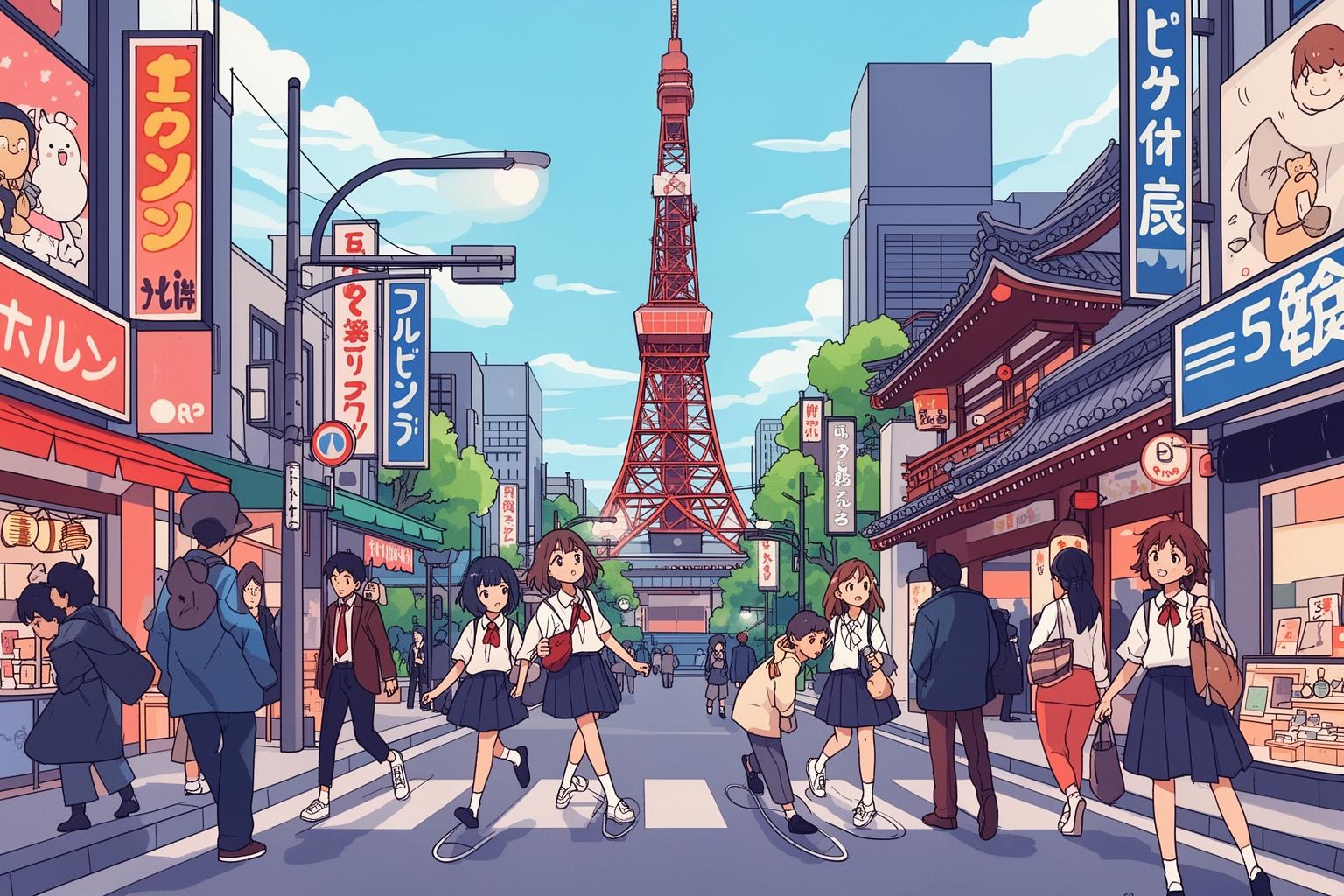
Our journey starts where Taki’s tale is deeply rooted: in the vast, sprawling, and endlessly captivating urban expanse of Tokyo. This city is more than just a setting in Your Name.; it stands as a character itself. Its towering skyscrapers symbolize Taki’s ambitions, its complex train network represents the intertwined threads of fate, and its constant motion mirrors the restless energy of a boy yearning for a life just beyond his reach. To walk here is to sense the city’s rhythm—a symphony of millions of lives crossing paths in fleeting moments.
The Iconic Staircase: Suga Shrine in Yotsuya
The emotional peak of the film, etched into the memory of every fan, is the red-railed staircase where Taki and Mitsuha finally meet. This revered pilgrimage site lies in a surprisingly quiet, modest residential neighborhood in Yotsuya. The journey to get there is part of the experience. After passing through the controlled bustle of Yotsuya Station, you’ll find yourself wandering narrow streets lined with humble apartments and small local shops. The city’s roar dims to a soft murmur. With every step, there’s a tangible anticipation—a feeling that you’re drawing near to something meaningful.
And then, there it is: the stairs of Suga Shrine. They look exactly as they do in the anime—a cinematic moment brought to life. Standing at the foot and looking up, or at the top and gazing down, you feel a striking sense of déjà vu. The curving road, the buildings framing the view, the vibrant red handrails—it’s all precisely as depicted. It’s a powerful moment that can genuinely give you goosebumps. You’ll likely spot other fans, phone in hand, trying to perfectly recreate that iconic movie poster shot. There’s a quiet camaraderie among them, a shared understanding of why this simple staircase feels so monumental.
For the best experience, try visiting on a weekday morning. The light is soft and beautiful—ideal for photography—and the crowds are light. You can take your time, soak in the atmosphere, and let the emotion of the scene wash over you without feeling hurried. As a solo traveler, I found this time especially peaceful, providing a moment of quiet reflection. Remember, this is a residential area, so be mindful of the locals. After capturing your photos, pause to climb the stairs and visit Suga Shrine itself. It’s a small, charming shrine where you can offer a prayer, perhaps for your own meaningful connections. Being present and respectful transforms the experience from a simple photo opportunity into a genuine pilgrimage.
Shinjuku’s Dazzling Labyrinth
If Yotsuya embodies the story’s fated, tranquil moments, Shinjuku represents its chaotic, vibrant core. This is Taki’s world of part-time jobs, awkward dates, and the overwhelming scale of his everyday life. Stepping out of Shinjuku Station—the world’s busiest transport hub—is a sensory overload. You’re instantly swept up in a tide of people, surrounded by towering screens flashing neon ads and the relentless noise of a city that never sleeps.
Many key locations from the film are scattered throughout this electric district. The pedestrian bridge near the Shinjuku Police Station, where Taki and his friends walk, offers an excellent vantage point of the Cocoon Tower and the surrounding urban canyon. It’s a place to pause briefly and watch the ceaseless flow of traffic and people below, feeling like a part of Tokyo’s grand cinematic tapestry.
The restaurant where Taki worked, the fictional “Il Giardino delle Parole,” is widely believed to be inspired by Cafe La Bohème Shinjuku Gyoen. Visiting this stylish Italian restaurant, with its high ceilings and elegant interior, feels like stepping into one of Taki’s shifts. It’s an ideal spot to rest your feet and enjoy a meal, imagining him rushing between tables. Gazing out the large windows at the greenery of Shinjuku Gyoen National Garden gives a sense of the small oases of calm that exist within this concrete jungle.
One of the most distinctive features of Taki’s Tokyo skyline is the NTT Docomo Yoyogi Building, with its iconic clock tower. It appears from countless angles in the film and acts as a steady landmark—a silent witness to the unfolding story. Seeing it in person, soaring into the sky, helps anchor the animated world in a very real, very tall reality.
As a woman exploring Shinjuku alone for the first time, a little mindfulness goes a long way. The station is a maze, so allow extra time to avoid rushing, and watch your belongings carefully in dense crowds. A small crossbody bag worn at the front is always a wise choice in such busy environments. While Japan is incredibly safe, the sheer number of people means it’s smart to stay aware of your surroundings, just as in any major city. Embrace the energy without letting it overwhelm you. Find a rooftop café, look down upon the city, and see it as Taki did: a world full of infinite possibilities and hidden connections.
Echoes of Itomori: Discovering Mitsuha’s World in Rural Japan
Leaving behind the dazzling intensity of Tokyo, our pilgrimage undergoes a profound change, both in scenery and spirit. We journey toward the world of Mitsuha Miyamizu—a realm of ancient traditions, sacred nature, and a deep yearning for something beyond. Though the town of Itomori is fictional, its essence is woven from real and beautiful locations in central Japan. This part of the journey is about exchanging the city’s symphony for the gentle whispers of the wind in the mountains.
The Mystical Waters: Lake Suwa, Nagano
The most stunning visual counterpart to Itomori can be found in Nagano Prefecture: the magnificent Lake Suwa. Especially when viewed from a high vantage point, the resemblance to the Goshintai crater lake that defines Itomori is unmistakable and breathtaking. The journey itself—a comfortable ride on the Azusa Limited Express train from Shinjuku—is a graceful transition, as the dense cityscape slowly gives way to suburbs, then rolling hills, and finally the majestic mountains of the Japanese Alps.
To truly capture the film’s magic, you must visit Tateishi Park. Though it’s a bit of a climb from the main town around the lake, reached by a winding road, the effort is rewarded many times over. From the park’s observation deck, the entire expanse of Lake Suwa unfolds before you. The town of Suwa embraces its shores, mountains cradle it on all sides, and the sky stretches endlessly above. It is undoubtedly the real-life setting of the kataware-doki (twilight) scene, where time shatters and Taki and Mitsuha finally meet on the crater’s edge.
Visiting in the late afternoon is crucial. As the sun descends, the light transforms—the sky fades into shades of orange, pink, and purple, and the lake’s surface becomes a mirror reflecting this celestial spectacle. The air stills, and a profound peace settles over the landscape. It feels sacred. In that moment, it’s easy to believe the boundaries between worlds grow thin and that a voice might call your name on the wind. It is an intensely emotional experience, connecting you directly to the film’s core themes of memory, loss, and reunion.
Beyond the park, the Lake Suwa region is steeped in rich history and mythology, much like Itomori. The lake is home to Suwa Taisha, one of Japan’s oldest and most significant shrine complexes. Exploring its four shrines encircling the lake adds depth to the pilgrimage, linking Mitsuha’s role as a shrine maiden to the region’s profound spiritual heritage.
Whispers of Tradition: Exploring the Hida Region
While Lake Suwa provides the breathtaking visuals of the lake, the atmosphere of Mitsuha’s town—the traditional wooden houses, the charming local station, the sense of a tight-knit community—is chiefly inspired by the Hida region in neighboring Gifu Prefecture. The towns of Hida-Furukawa and Takayama, in particular, offer a tangible glimpse into Itomori’s daily life.
Hida-Furukawa Station is a precise match from the film. It’s the station where Taki and his friends arrive to begin their search for Mitsuha. Standing on the platform and seeing the familiar footbridge and waiting area for the Hida express train creates one of those surreal moments where fiction feels real. You can almost picture Taki looking around, clutching his hand-drawn sketch of the town.
A short walk from the station leads to the Hida City Library, another important location. The filmmakers famously requested and received permission to replicate its interior for the scenes where Taki researches Itomori’s history. The library staff warmly welcome visitors, and seeing the familiar wooden columns and study areas feels like uncovering a crucial clue in the story’s mystery. This attention to detail is what makes Shinkai’s worlds so believable.
Wandering through Hida-Furukawa, with its canals teeming with colorful koi fish and streets lined with historic sake breweries and artisan shops, you grasp the beauty and tranquility of Mitsuha’s life—a world apart from the frenzy of Shinjuku. You also come to understand her longing for Tokyo’s excitement. Here, you can sample local treats like Gohei Mochi, a grilled rice cake with sweet miso sauce, the very snack Mitsuha and her grandmother enjoy. Tasting the local cuisine, breathing the fresh mountain air, and embracing the slower pace of life connects you to Mitsuha’s character on a deep, sensory level.
A Journey of Connection: Weaving Your Own Story

Embarking on a pilgrimage for Your Name. involves more than simply ticking off filming locations; it is an immersive journey that deepens your connection to the story. It invites you to grasp the profound duality of Japan itself—the seamless coexistence of the ultra-modern and deeply traditional, the vibrant city and the peaceful countryside. This trip offers a chance to explore the film’s core theme of musubi—the invisible bonds linking people, places, and time.
The Art of the Pilgrimage: Beyond Taking Photos
While capturing the perfect shot at Suga Shrine or Tateishi Park is a fulfilling part of the experience, I urge you to occasionally set the camera aside. Take moments to simply be present in these spaces. At Suga Shrine, listen to the rustling leaves and the distant hum of the city. Near Lake Suwa, feel the shift in air temperature as the sun dips below the horizon. In Hida-Furukawa, admire the detailed woodwork on the old merchant homes. These sensory experiences transform a trip into a lasting memory, allowing you to truly sense the spirit of the film.
Immerse yourself in the local culture. Write your own wish on an ema (a wooden prayer plaque) at a shrine. Taste sake from a local brewery in Hida. Savor a cup of coffee at a fashionable café in Tokyo. By engaging in the everyday life of these places, you move beyond being a mere observer to weaving your own thread into the rich cultural tapestry. This journey becomes a dialogue between you, the film, and real Japan.
Practical Itineraries and Travel Tips
For those wishing to follow this route, a well-organized itinerary is essential. I recommend setting aside at least four to five days for the full experience. Spend two days in Tokyo to thoroughly explore the Shinjuku and Yotsuya locations at a relaxed pace. From Tokyo’s Shinjuku Station, take the JR Azusa Limited Express to Kami-Suwa Station (near Lake Suwa), a trip of about two and a half hours. Spend a night in a hotel or traditional ryokan by the lake to fully enjoy the sunset and sunrise.
From Suwa, continue by train to the Hida region. This leg requires several transfers—usually through Matsumoto and Toyama—making for a longer travel day, but the scenic train journey through the Japanese Alps is a highlight in itself. Allocate a day or two to explore Hida-Furukawa and nearby Takayama before returning to a major city. For extensive train travel like this, a Japan Rail Pass can offer a cost-effective and convenient option.
From a style perspective, packing should be adaptable. For Tokyo, opt for chic, comfortable layers. Expect plenty of walking, so stylish sneakers are essential. In the mountainous areas of Nagano and Gifu, weather conditions can shift rapidly. Bring a light, waterproof jacket and warmer layers, particularly if you plan to be outdoors at sunset in Tateishi Park, where it can get cold. A practical yet stylish backpack will be invaluable for carrying essentials like a portable charger, water bottle, and any souvenirs you collect along the journey.
Beyond the Frame: The Lasting Magic of Place
Completing a pilgrimage to the real-life locations of Your Name. transforms the way you perceive the film forever. The next time you watch it, the scenes will be colored by your own memories. You’ll recall the sensation of the wind at Tateishi Park during the kataware-doki scene. You’ll remember the ambient sounds of the city as Taki walks through Shinjuku. The story acquires a new dimension, a new depth. It becomes personal.
Yet this journey offers more than just a deeper appreciation for an anime, no matter how beloved. It presents a beautifully curated path through the heart of Japan, guiding you from the heights of modern urban life to the tranquil core of its ancient traditions. You experience the country through a narrative lens, uncovering its beauty, culture, and quiet magic at your own pace. You set out seeking the world of a movie, and in the end, you discover the breathtaking reality of Japan itself. You arrived seeking a connection to a story, and you leave with a bond to a place, forever linked by the invisible, unbreakable threads of memory.