
There’s a certain kind of magic that lives inside a Studio Ghibli film, a feeling that’s hard to put into words. It’s a whisper of nostalgia for a childhood summer you never had, the scent of rain on ancient cedar trees, the warmth of a bakery in a town perched by the sea. These worlds, crafted with breathtaking artistry by Hayao Miyazaki, Isao Takahata, and their team, feel impossibly real. They breathe with a life of their own, full of texture, history, and soul. What if I told you that a piece of that soul exists right here, in our world? That the cobblestone streets, mystical bathhouses, and primeval forests that captured your imagination weren’t just born from fantasy, but were inspired by tangible places you can actually visit. This isn’t just about finding a real-life movie set; it’s about a pilgrimage. It’s a journey to discover the currents of magic that flow from our world into Ghibli’s, and back again. It’s about standing in a place and feeling that spark of recognition, that quiet gasp of, “I’ve been here before,” even if only in a dream. Prepare to blur the lines between animation and reality, to walk the paths that inspired the masters, and to find that the wonder you felt watching these films is waiting for you, woven into the very fabric of these incredible locations across Japan and beyond. This is your map to stepping through the screen and into the heart of the story.
Experience the tangible magic behind these cinematic inspirations by journeying to the Tomonoura port town where real-world charm meets Ghibli’s timeless allure.
The Spirited Away Symphony: Chasing Phantoms in Japan’s Timeless Towns
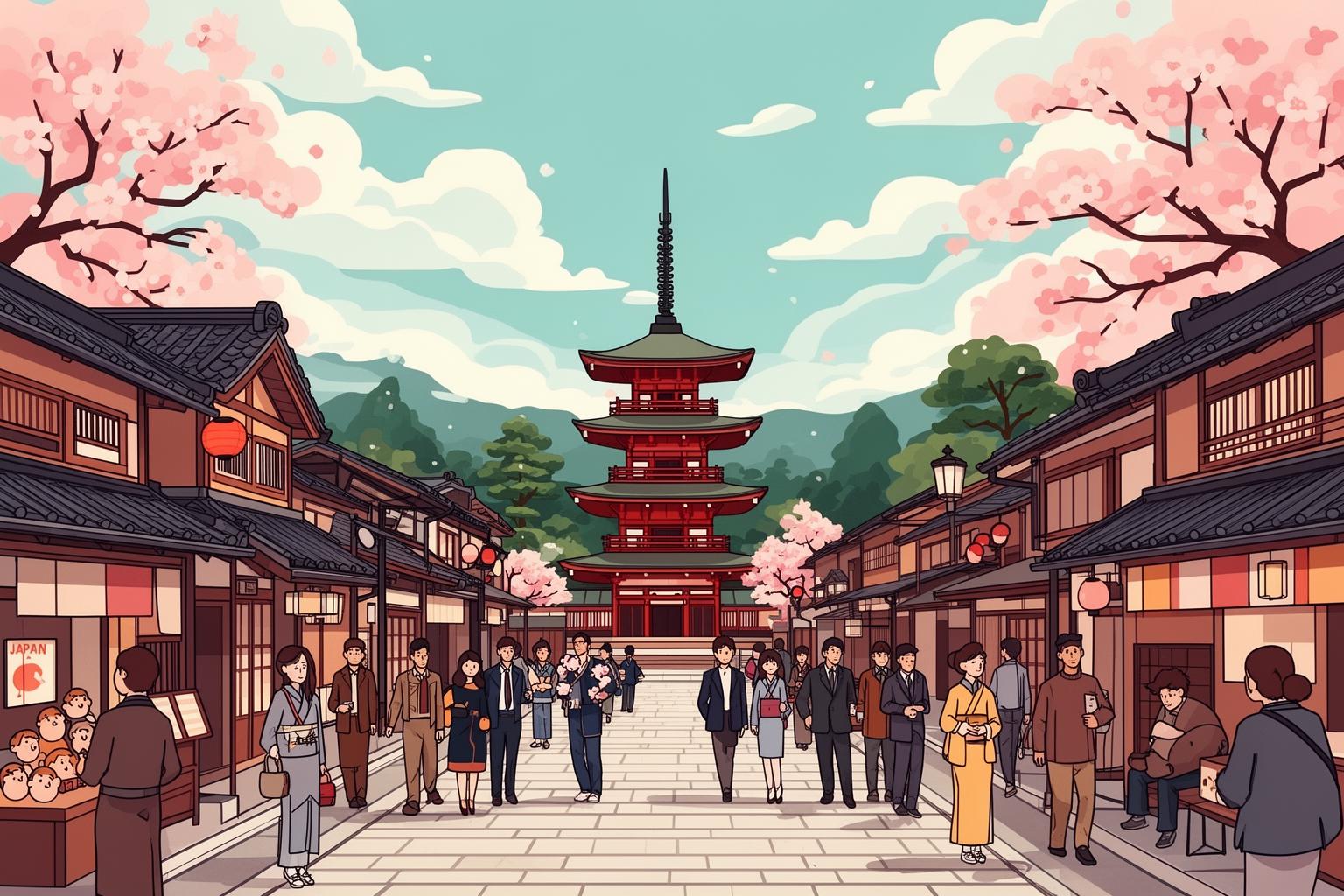
No film captures the bewildering, beautiful, and sometimes frightening world of Japanese spirits quite like Spirited Away. Its setting—a chaotic and vibrant town centered around the Aburaya bathhouse—feels like a character in its own right. This place pulses with the energy of gods, ghosts, and forgotten traditions. To discover its real-world inspiration, we must follow echoes through several key locations in Japan, each adding its own distinct note to the film’s unforgettable symphony.
Dogo Onsen: The Grandeur of Aburaya
The most famous and visually stunning model for Aburaya is undoubtedly the Dogo Onsen Honkan in Matsuyama, Ehime Prefecture. This is one of Japan’s oldest and most revered hot springs, with a history spanning over a thousand years. The moment you see its intricate, multi-tiered wooden structure, with its complex maze of roofs, windows, and passageways, the connection becomes immediate and unmistakable. It’s the grand and imposing presence of Yubaba’s bathhouse brought vividly to life.
Feeling the Atmosphere
Strolling through the streets around Dogo Onsen is like stepping back in time. Visitors in traditional yukata robes meander between the main building and its annexes, as the faint sulfuric scent of the healing waters mingles with the murmur of relaxed conversations. The Honkan is a labyrinth of narrow wooden staircases and tatami rooms. As you make your way through its halls, you can almost hear the bustling frog foremen and the shuffling yu-na attendants. The building creaks and breathes with age, each polished floorboard steeped in centuries of stories. The main bathing areas, separated by gender, are magnificent, featuring high ceilings and exquisite stone tubs. It’s a place that feels both public and deeply sacred—a perfect counterpart to the Aburaya, where all kinds of spirits come to cleanse themselves.
A Visitor’s Guide
Visiting Dogo Onsen is an experience in itself. You buy a ticket for a particular bathing course, ranging from a simple dip in the main Kami no Yu (Bath of the Gods) to a more elaborate package that includes access to the Tama no Yu (Bath of the Spirits) and a private resting room upstairs, where tea and sweets are served. For the full Spirited Away immersion, exploring the upper floors is essential. You can even tour the Yushinden, a special bathing area built exclusively for the Imperial Family in 1899, showcasing exquisite craftsmanship. The best time to visit is on a weekday evening when the lanterns are lit, casting a magical glow over the building’s facade and the crowds are lighter than on weekends.
Edo-Tokyo Open Air Architectural Museum: A Walk Through Kamaji’s World
While Dogo Onsen provides the grand exterior, much of the soul of the bathhouse’s interior and the surrounding spirit town draws from another place: the Edo-Tokyo Open Air Architectural Museum in Koganei, western Tokyo. Hayao Miyazaki frequently visited during Spirited Away’s production, sketching and soaking up the atmosphere of bygone eras. The museum is a captivating collection of historical buildings rescued from demolition and relocated to the park grounds.
Discovering the Details
Wandering through the museum’s “downtown” zone, the feeling is uncanny. You find yourself face-to-face with storefronts and interiors seemingly lifted directly from the film. The most striking example is “Kodakara-yu,” a former public bathhouse. Step inside, and you’ll see the towering wall of small wooden drawers where patrons stored belongings—a perfect match for the one in Kamaji’s boiler room, where he keeps his herbal ingredients. You can almost picture the soot sprites scurrying about. Another building, a stationery shop called “Takei Sanshodo,” with tall wooden shelving, also evokes the unmistakable ambiance of Kamaji’s domain. The entire street, with its old-fashioned facades and vintage advertisements, feels exactly like the mysterious town Chihiro first stumbles upon with her parents.
Planning Your Visit
The museum is easily reachable from central Tokyo via the JR Chuo Line. It’s a large park, so allow at least half a day to explore fully. Unlike a traditional museum, this is an interactive experience. You can enter most buildings, touch the worn wooden counters, and sit on the tatami floors. This tactile connection to the past makes it a powerful source of inspiration, allowing you to feel the history rather than just observe it—precisely what makes Ghibli’s worlds feel so authentic.
Shima Onsen and the Not-So-Secret Tunnel
Another crucial piece of the Spirited Away puzzle is found in Gunma Prefecture at the Sekizenkan ryokan in Shima Onsen. This traditional inn boasts a striking red bridge leading to its entrance, strongly reminiscent of the iconic bridge Chihiro crosses to enter the spirit world. The ryokan itself, one of Japan’s oldest, has a charming, old-world atmosphere contributing to the film’s aesthetic.
Crossing the Bridge
Standing before the red bridge at Sekizenkan is a powerful moment for fans. The way it connects the ordinary world to the magical, ornate realm of the inn serves as a perfect physical metaphor for Chihiro’s journey. At night, when the inn is illuminated, the resemblance grows even stronger. It feels as though you should hold your breath, just in case you vanish. The Shima Onsen town is a quiet, peaceful mountain retreat—a wonderful place to relax and soak in the atmosphere that inspired such an enchanting film.
Practical Notes
Shima Onsen is somewhat more remote than the other spots, typically reached by bus from Nakanojo Station. A visit here is best paired with an overnight stay at a local ryokan, allowing you to fully experience onsen culture and see the Sekizenkan bridge in its full evening glory. It’s a journey rewarding those willing to venture off the beaten path—much like Chihiro’s own adventure.
The Mononoke Mythos: In the Realm of Forest Gods
Princess Mononoke is a sweeping tale of the conflict between humanity and nature, set against a backdrop of ancient forests, animal gods, and powerful spirits. The film’s most stunning character is the forest itself—a vast, mystical, and primeval wilderness that seems to transcend time. To wander in this forest is to enter the realm of the Shishigami, the Deer God, an experience that can be found on Yakushima, the southern Japanese island.
Yakushima Island: The Heart of the Shishigami’s Realm
Yakushima, situated in Kagoshima Prefecture and designated a UNESCO World Heritage site, served as the main inspiration for the film’s lush, verdant world. The island is famous for its dense forests of ancient cedar trees, called yakusugi, some of which are thousands of years old. Its unique climate creates nearly constant moisture, covering everything—from the forest floor to the twisted branches—with a thick, vivid layer of moss. Hayao Miyazaki and his team of artists spent considerable time here, and the island’s spirit pervades every frame of the film.
The Shiratani Unsuikyo Ravine Journey
The most renowned and easily accessible spot to experience the Mononoke-hime no Mori, or “Princess Mononoke’s Forest,” is the Shiratani Unsuikyo Ravine. Once you step onto the trail, the modern world fades away. You are immediately surrounded by an impossible green. Sunlight filters softly through the dense canopy, casting mottled light on moss-covered rocks and tangled roots below. The air is cool, fresh, and heavy with the scent of damp earth and wood. Silence reigns, interrupted only by the gentle sounds of flowing streams and the occasional birdcall. The tiny, mischievous faces of the Kodama, the tree spirits, seem to peer out from every gnarled knot of wood and patch of moss. It’s not just a visual resemblance; the feeling of the place, its ancient and sacred energy, perfectly mirrors what the film conveys.
The Experience of Walking Here
Hiking in Shiratani Unsuikyo is less about physical effort and more about spiritual absorption. You find yourself moving slower, breathing more deeply, and focusing on small details—the way water droplets cling to a spider’s web, the myriad shades of green within a single patch of moss, the colossal yakusugi trees rising overhead. Deep within the ravine, there is a specific spot, officially nicknamed “Princess Mononoke’s Forest,” where the moss is so dense and the scenery so perfectly reminiscent of the film that it feels as though you’ve stepped into an animation cel. It is a humbling and awe-inspiring moment connecting you directly to the film’s powerful message about the sacredness of nature.
Exploring the Primeval Wilderness
Although Shiratani Unsuikyo is the most famous destination, the entirety of Yakushima offers a wealth of natural wonders. For more experienced hikers, trails lead to some of the oldest trees on Earth, such as the Jomon Sugi, estimated to be between 2,000 and 7,200 years old. These hikes are demanding but provide an even deeper bond with the island’s wild, untamed spirit.
Ideal Times to Visit
The best times to explore Yakushima are in spring (March-May) and autumn (October-November), when the weather is mild and the foliage at its most stunning. Summer brings heavy rains and typhoon season, though it is also when the moss flourishes most vividly—the locals joke it rains “35 days a month.” Visiting during the rainy season can be a truly magical experience, provided you come well-prepared.
Necessary Gear and Respect
Proper equipment is crucial. Sturdy, waterproof hiking boots are essential since the trails are often wet and slippery. Rain gear is also a must, even if the forecast looks clear, because Yakushima’s weather can change suddenly. When visiting, remember you are a guest in a sacred place. Stay on marked trails, carry out all your trash, and show reverence for the environment. This isn’t merely a tourist site; it’s the living, breathing heart of Princess Mononoke.
Ponyo’s Port: Finding Magic on the Seto Inland Sea
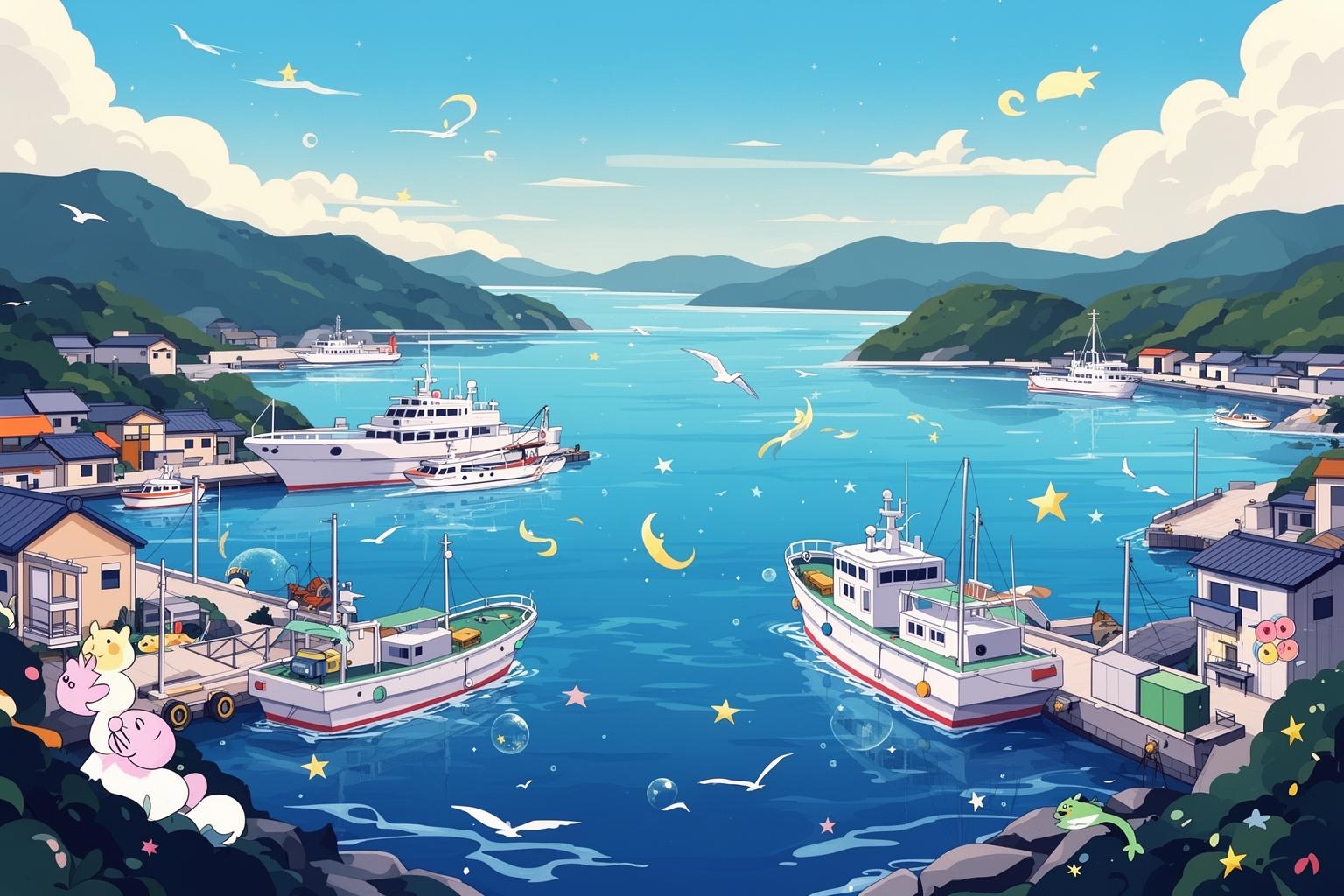
Unlike the grand epics of Spirited Away and Princess Mononoke, Ponyo tells a sweet, gentle tale about childhood love and the magic hidden just beneath the surface of the everyday world. The film’s setting—a charming, sleepy port town—is as important to the story as its characters. That picturesque town has a perfect real-world counterpart in Tomonoura, a historic port located in Hiroshima Prefecture.
Tomonoura: The Town that Time Holds Still
Situated in a cove on the Seto Inland Sea, Tomonoura boasts a beautifully preserved atmosphere that seems untouched by the pace of modern life. Its layout, featuring narrow, winding streets, traditional wooden houses, and a picturesque harbor, served directly as the model for Sosuke’s hometown. Miyazaki and his team actually stayed in Tomonoura for several months, absorbing the town’s gentle rhythm and meticulously sketching every detail.
Sosuke’s World by the Water
As you explore Tomonoura, the world of Ponyo comes alive around you. You’ll spot the small, colorful boats bobbing in the harbor, the curved seawall where Sosuke might have played, and the tightly clustered houses perched on the hillside. Though Sosuke’s house on the cliff was created for the film, you can climb the steps to the Ioji Temple for a panoramic harbor view nearly identical to the one seen from his home. The iconic Joyato Lighthouse, a stone lantern that has guided ships since the Edo period, stands silently in the harbor, symbolizing the town’s lasting bond with the sea.
Soaking in the Local Pace
The true magic of Tomonoura lies in its atmosphere. Life here moves slowly and unhurriedly. You can watch local fishermen mending their nets, browse family-run shops offering local crafts and delicacies, and simply sit by the harbor, observing the ebb and flow of the tide. It’s this strong sense of a close-knit community living in harmony with the sea that Miyazaki so beautifully captured in Ponyo. It’s easy to imagine Ponyo in her bucket, bobbing just offshore, or Granmamare gliding gracefully through the calm bay waters.
A Taste of Tomonoura
Tomonoura is also renowned for its distinctive local culture and cuisine. One of its most famous traditions is Homeishu, a medicinal liqueur crafted with 16 different herbs, produced here for centuries. Visitors can explore historic distilleries to learn about its background and sample the liqueur. The local seafood, naturally, is exceptional. Finding a small restaurant overlooking the harbor to enjoy fresh fish is an essential part of the Tomonoura experience.
Tips for a Day Trip
Tomonoura is conveniently reachable by a short bus ride from Fukuyama Station, which is on the Shinkansen bullet train line. This makes it an ideal day trip from cities like Hiroshima or Okayama. A few hours suffice to see the main sights, but to fully absorb the town’s relaxed ambiance, consider an overnight stay in a local ryokan. Walking through the quiet streets in the early morning or late evening, after the day-trippers have left, is when the town’s—and Ponyo’s—magic is most deeply felt.
A Neighbor Named Totoro: The Nostalgia of Rural Japan
My Neighbor Totoro is arguably the most cherished of all Ghibli films, a tender tribute to the wonder of childhood, the beauty of nature, and the gentle magic of rural Japan. The film’s setting—a landscape of rice paddies, forested hills, and old farmhouses—evokes a strong feeling of natsukashii, a Japanese term expressing deep, sentimental nostalgia. This world exists just beyond the urban sprawl of Tokyo, in the Sayama Hills.
The Sayama Hills: Walking Through Totoro’s Forest
Sitting on the border of Tokyo and Saitama Prefecture, the Sayama Hills are a treasured remnant of satoyama, the traditional mosaic of farmlands and forests that once covered much of Japan. This area, affectionately called “Totoro’s Forest,” was where Hayao Miyazaki once lived and found inspiration for the film. In the 1990s, when development posed a threat to the region, a nationwide campaign led by Miyazaki himself raised funds to purchase and protect parts of the forest, safeguarding it for future generations.
The Kurosuke Connection
At the core of this area stands the Kurosuke House, or “Totoro’s House,” an old wooden building serving as a visitor center for the Totoro no Furusato Foundation. Approaching this house is like stepping straight into the film. Inside, a large Totoro plush sits by the hearth, ready to welcome guests. The house is filled with memorabilia and information about the forest and its preservation. It perfectly captures the rustic, slightly worn charm of Satsuki and Mei’s new home. You can almost sense the presence of susuwatari, or soot sprites, lurking in the attic’s shadowy corners.
A Seasonal Stroll
The greatest joy here is simply following the trails weaving through the hills. These paths lead you through thick woodlands, past serene wetlands, and alongside small vegetable farms. In spring, the area bursts with fresh green growth and birdsong. In summer, the rice paddies shine vivid green, and the air buzzes with cicadas. In autumn, the leaves blaze in rich reds and golds. Each season brings its own enchanting atmosphere. Walking beneath the tree canopy, it’s easy to imagine a giant, furry creature resting just out of sight or to expect a Catbus bounding over the next hill.
Embracing the Simplicity
A visit to Totoro’s Forest isn’t about grand vistas or dramatic scenery. It’s about appreciating the small, simple wonders—the way sunlight filters through leaves, the shape of an ancient tree, the sound of wind rustling through bamboo. It’s about reconnecting with the childlike awe Mei feels when she first discovers Totoro’s hiding spot. It’s a reminder that magic isn’t always found in fantastical places; sometimes, it’s right in our own backyard.
Accessing the Magic
The Sayama Hills are most easily reached from Seibu-Kyujo-mae Station. From there, it’s a pleasant walk to the Kurosuke House and the various forest trails. Make sure to check the opening days and hours for the Kurosuke House, as it is usually open only on select days of the week. Bring comfortable walking shoes and a spirit of adventure, and get ready to be enchanted by the quiet, lasting magic of Totoro’s world.
European Canvases: Howl’s and Kiki’s Continental Charm
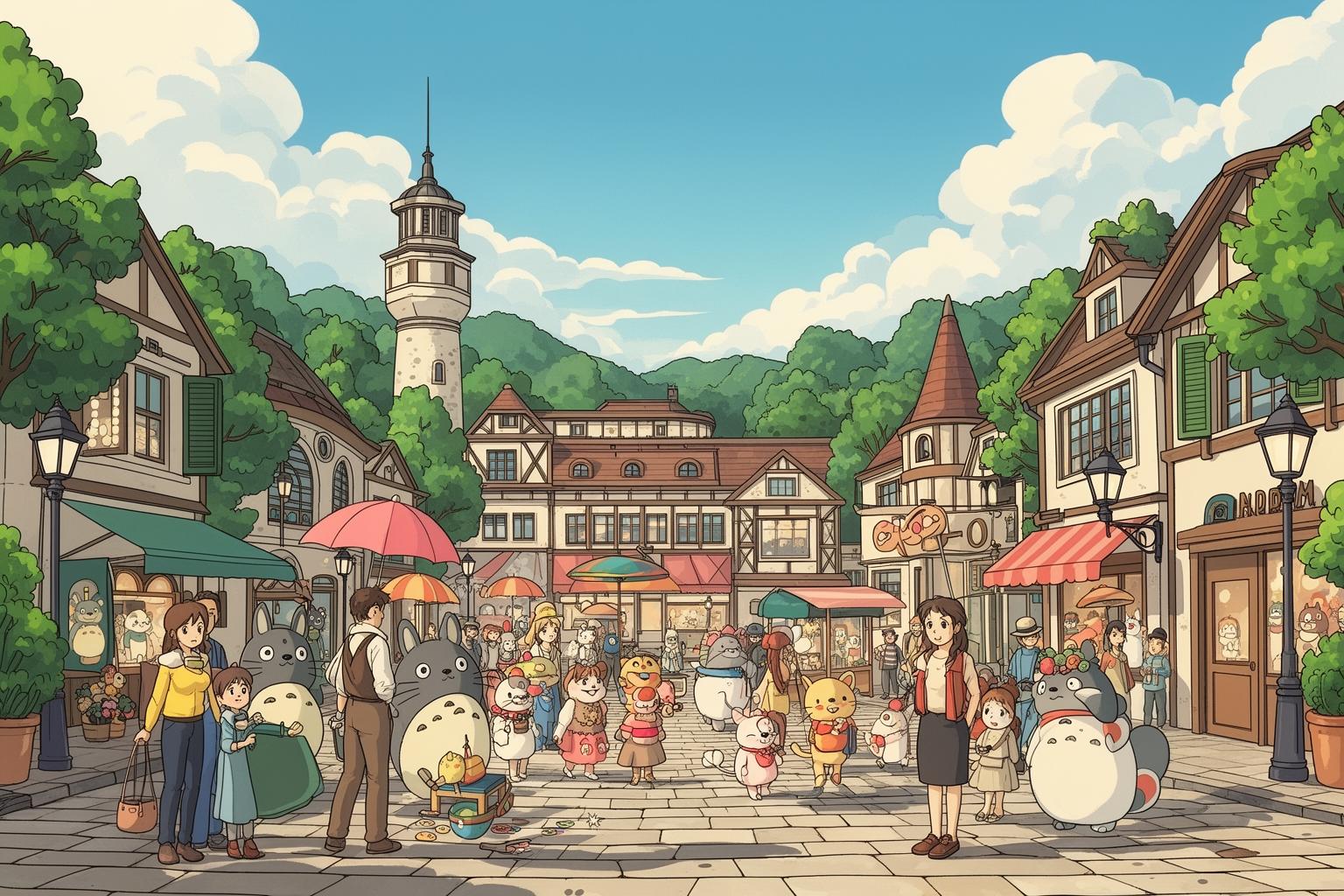
While Studio Ghibli is deeply rooted in Japanese culture, its imaginative reach extends far beyond borders. Many of its most captivating films take place in distinctly European settings, drawing inspiration from the continent’s fairytale towns and coastal cities. These backdrops bring a unique flavor to the Ghibli world, merging Japanese storytelling with the charm of European architecture.
Howl’s Moving Castle: The Fairytale Streets of Colmar, France
The whimsical, war-torn kingdom in Howl’s Moving Castle beautifully blends various European influences, with the town of Colmar in France’s Alsace region serving as its main visual inspiration. With its vibrant half-timbered houses, flower-lined canals, and cobblestone streets, Colmar seems like a storybook come to life. Miyazaki’s visit to the town left him enchanted by its distinctive mix of French and German architectural styles.
A Storybook Setting
Strolling through Colmar’s old town offers an immersive Ghibli experience. The Pfister House, a well-preserved Renaissance building, is believed to have directly inspired the design of Sophie’s hat shop and neighboring structures. The area called “Petite Venise” or Little Venice, with its canals and quaint waterside houses, evokes the lively market towns in the film. The colors, textures, and slightly crooked, irresistibly charming buildings make it feel as though you’ve stepped into a scene from the movie. You can almost picture the castle itself lumbering over the nearby hills.
Living the Fantasy
Colmar beckons for slow, unhurried exploration. The best way to enjoy it is by wandering aimlessly through its maze-like streets. Stop by small bakeries, browse artisan shops, and take a boat ride along the canals. The town becomes especially enchanting during the Christmas market season, when twinkling lights and festive decorations heighten its storybook atmosphere. Visiting Colmar reveals the European soul of Howl’s Moving Castle and showcases how Ghibli transforms the magic of a real place into its own unique fantasy.
Kiki’s Delivery Service: The Baltic Breezes of Sweden
Koriko, the picturesque port city where Kiki launches her delivery service, epitomizes idyllic seaside living. With its red-tiled roofs, iconic clock tower, and sparkling blue waters, it feels simultaneously dreamlike and authentic. This perfect coastal town draws inspiration from two Swedish locales: Stockholm and the island of Visby.
Koriko’s Coastal Counterparts
Stockholm’s Old Town, Gamla Stan, with its narrow, winding alleys and warm-colored buildings, provides Koriko’s general ambiance and architectural style. Viewpoints there offer breathtaking panoramas of the rooftops and waterfront, closely resembling the vistas Kiki enjoys from her broomstick. Yet, it is the walled medieval city of Visby on Gotland island that truly captures the coastal magic. Its seaside setting, fortified walls, and historic ruins give the town the distinctive character seen in the film. The charming, sloping streets and views of the Baltic Sea are quintessential Kiki’s Delivery Service. The clock tower central to the film’s climax is a composite inspired by multiple towers, including those at Stockholm’s City Hall and Visby Cathedral.
Capturing Kiki’s Spirit
A visit to Stockholm and Visby means embracing the spirit of independence and adventure that defines Kiki. It’s about finding a bench overlooking the water and watching the ferries pass, savoring a fika (a Swedish coffee and pastry break) in a cozy cafe, and feeling the fresh sea breeze on your face. The experience is less about pinpointing exact locations and more about capturing the essence of a young witch discovering her place in a new city. It’s a journey that sparks optimism and the courage to venture out on one’s own.
The Journey Home: Carrying the Ghibli Spark With You
A pilgrimage to these locations is more than just a sightseeing excursion. It’s an experience of connection. It’s the excitement of standing on a moss-covered rock, knowing that Miyazaki stood there too, sensing the same ancient energy he later channeled into Princess Mononoke. It’s the quiet delight of wandering down a narrow alley in Tomonoura, seeing the world through the innocent eyes of Ponyo and Sosuke. These journeys deepen our appreciation of the films, adding a tangible layer to their fantastical worlds. They reveal that the magic Ghibli creates isn’t conjured out of thin air; it’s drawn from the rich wells of history, culture, and natural beauty that surround us. The greatest souvenir you’ll bring back from these places isn’t a trinket or a photograph but a new perspective. You’ll begin to notice Ghibli moments everywhere—in the twisted roots of a tree in your local park, in the nostalgic charm of an old building downtown, in the kindness of a stranger. You’ll realize the barrier between their world and ours is thinner than you ever imagined, and you’ll carry that spark of magic with you long after the journey ends.