
There are stories that feel like a dream you can’t quite shake, long after you’ve woken up. They linger in the quiet moments of your day, a faint echo of profound emotion, a beautiful, bittersweet ache. Makoto Shinkai’s masterpiece, ‘Your Name’ (Kimi no Na wa), is one such story. It’s a celestial symphony of crossed destinies, a tale of two souls—Taki, a high school boy navigating the dizzying pace of Tokyo, and Mitsuha, a girl yearning for a life beyond her tranquil mountain town—who find themselves inexplicably linked. The film captured the world’s imagination not just with its breathtaking animation and heart-wrenching plot, but with the tangible reality of its world. Every frame, from the sun-drenched stairways of Tokyo to the serene, traditional landscapes of rural Japan, feels impossibly real. And that’s because, in many ways, it is. The world of Taki and Mitsuha isn’t just a fantasy; it’s a mosaic crafted from actual locations scattered across Japan, waiting to be discovered. This journey, this act of stepping into the frames of an animated world, is known in Japan as ‘seichi junrei,’ or anime pilgrimage. It’s more than just sightseeing; it’s a way to deepen your connection to a story that moved you, to feel the same air the characters breathed, and to stand in the very spots where their lives unfolded. This guide is your map to that dream, an invitation to trace the invisible red thread of fate that connects the urban heart of Tokyo with the soulful whispers of the Hida region. It’s a journey from the neon pulse of the city to the quiet rhythm of the countryside, a chance to find your own connection in the real-world settings of ‘Your Name.’
For travelers captivated by the tangible magic of Japan’s real-world settings, embarking on a Yakushima pilgrimage can add an extraordinary dimension to the journey beyond ‘Your Name.’
Echoes in the Metropolis: Tracing Taki’s Steps in Tokyo
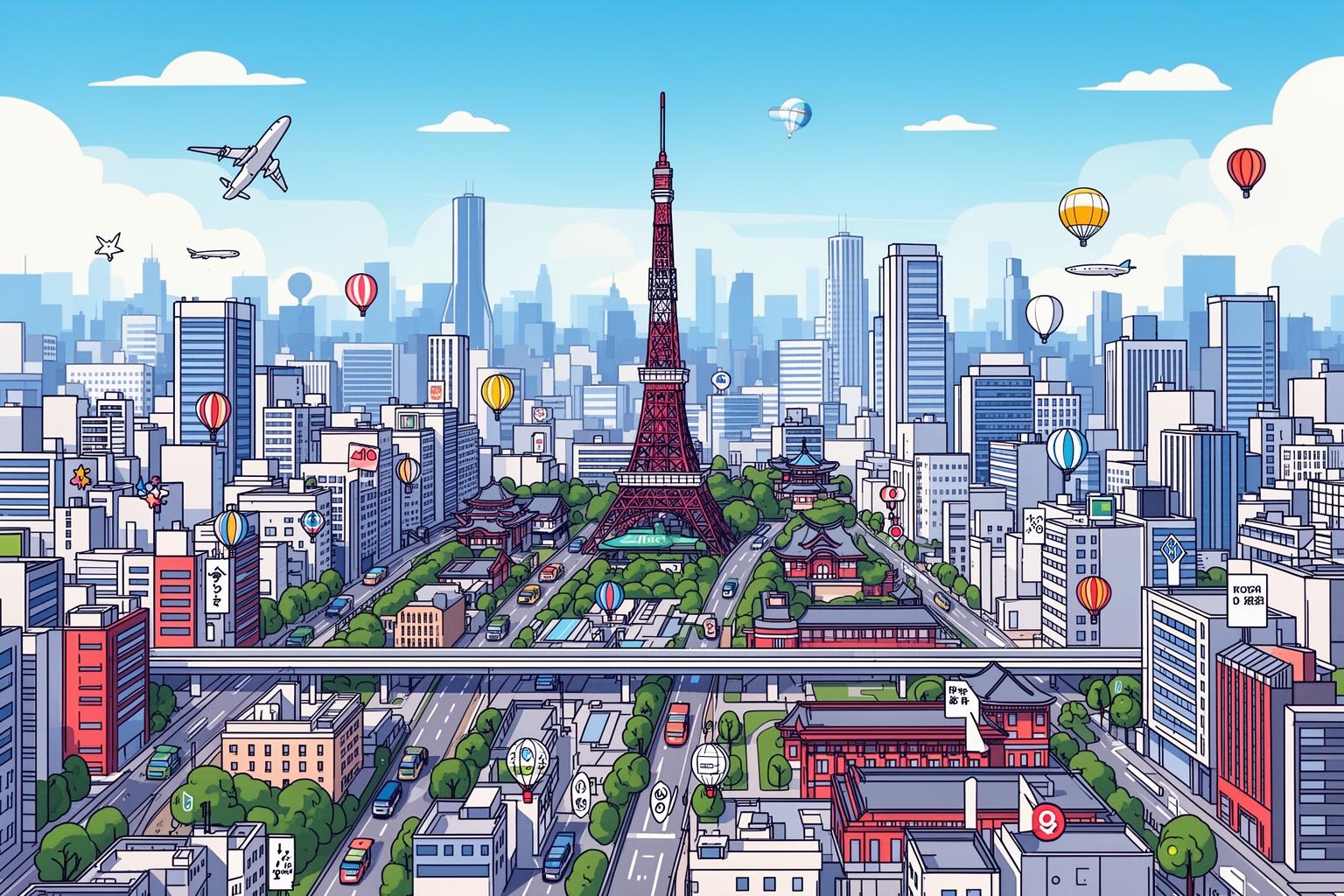
Tokyo is a city of constant, enchanting motion. It’s a place where ancient temples rest quietly beneath the gleaming shadows of skyscrapers, and where millions of personal stories intertwine each day in a complex, dazzling dance. This is Taki’s world—a vast, vibrant, and occasionally lonely landscape that shapes his very identity. Exploring his Tokyo means seeing the city not as a tourist, but as a resident, discovering the quiet, poignant moments nestled between rushing crowds and towering buildings. It’s a journey into the heart of modern Japan, where the film’s emotional essence finds its urban grounding.
The Iconic Red Staircase: Suga Shrine in Yotsuya
This is the spot. The place cherished by every ‘Your Name’ fan. The setting of the film’s cathartic, breathtaking climax. The red-railed stairs leading to Suga Shrine are arguably the most revered location of this modern pilgrimage. Finding them feels like a special discovery. You step out from the relative calm of Yotsuya Station, a short train ride from Shinjuku’s frenzy, and wander through a quiet, unassuming residential neighborhood. The streets are tidy, the houses modest, and the ambiance distinctly local. You may start to doubt if you are in the right place. Then, you turn a corner, and there it is. The view aligns so perfectly with the movie’s final scene that it delivers a genuine shock of recognition. The curve of the road, the buildings framing the sky, and the twin staircases meeting at a landing—it’s animation brought to vivid, three-dimensional life.
Standing at the bottom looking up, or at the top looking down, it’s impossible not to replay the scene in your mind. The frantic search, the near-misses, and finally, the hesitant, hopeful question: ‘Kimi no na wa?’ The air here is thick with the lingering energy of that moment. What’s surprising is the calm. Despite its fame, the location isn’t a bustling tourist trap. It remains a peaceful neighborhood spot. You’ll likely encounter other fans, instantly recognizable by their careful photo framing and respectful silence. It’s a shared, unspoken understanding. To best capture the magic, try visiting on a weekday morning or late afternoon when the light is soft and golden, casting long shadows just as in the film. The golden hour here is truly enchanting, painting the scene with a nostalgic, dreamlike glow. An important tip for visitors: remember this is a residential area. People live here. The beauty of this pilgrimage is honored by respect—speaking softly, not blocking the stairs for locals, and cherishing the serene reality without disturbance.
A Moment of Connection: The Shinjuku Pedestrian Bridge
Tokyo is a city of layers, a vertical world of crisscrossing train lines, highways, and walkways. One of the film’s most visually striking motifs is its portrayal of this urban tapestry, and nowhere is this clearer than the pedestrian bridge near the Shinjuku Police Station. This spot appears in many of the movie’s promotional images and transitional scenes, perfectly symbolizing the countless intersecting paths in the vast city. On screen, it’s a backdrop of twinkling lights and speeding cars, representing the beautiful anonymity of Taki’s world. In reality, the feeling is exactly the same. The bridge itself is ordinary city infrastructure, but the vantage point is extraordinary.
To find it, navigate the labyrinthine exits of Shinjuku Station, heading toward the cluster of skyscrapers that form the business district. On the bridge, you are surrounded by the rhythm of Tokyo. Below, a river of red and white taillights flows endlessly. Around you, glowing signs and office windows create a sea of light. The place feels most alive at night, when the city dons its electric cloak. Here, you can truly sense the scale of Taki’s environment. He was just one person among millions, walking these same paths. It’s a spot for contemplation, a pause amid the urban rush to feel the immense, interconnected energy of the city. For photographers, this is prime territory for long-exposure shots of light trails, yielding images that look lifted straight from Shinkai’s canvas.
A Glimpse into Taki’s Life: Shinjuku and Shibuya
Beyond these iconic sites, the broader districts of Shinjuku and Shibuya provide the general backdrop of Taki’s daily life. These areas pulse with the heartbeat of modern Tokyo, and wandering through them offers deeper insight into his world.
The National Art Center, Tokyo (The Cafe Date)
One of the film’s most memorable moments in the first half is Taki’s slightly awkward but endearing date with his coworker, Okudera-senpai. Their lunch takes place in a stunning, futuristic café perched atop a giant concrete cone inside a glass-walled building. This is the Salon de Thé ROND, on the second floor of The National Art Center, Tokyo, in the Roppongi district. Designed by the legendary architect Kisho Kurokawa, the building is a masterpiece of undulating glass waves. Stepping inside feels like entering the future. The atrium is vast, flooded with natural light, and the suspended circular platform of the café is just as impressive in person as onscreen. You can actually sit there and enjoy a meal or a cup of tea. It’s an incredible experience to order coffee and cake while gazing over the art-filled atrium, imagining the conversation Taki and Okudera shared. The center also hosts world-class exhibitions, so it’s well worth spending a few hours exploring galleries before or after your café visit. Access is easiest from Nogizaka Station, which connects directly to the building. This spot perfectly exemplifies how the film weaves real, culturally significant locations into its narrative, deepening both the story and the viewer’s appreciation for the city.
Shinjuku Station and the Scramble
Shinjuku Station is a universe unto itself. As the world’s busiest train station, it’s a roaring, overwhelming, and utterly electrifying confluence of humanity. This is the hub of Taki’s daily commutes, where his journey begins and ends each day. The film captures this controlled chaos flawlessly. Experiencing it helps you understand the environment that shaped Taki’s city-smart personality. Navigating the station is a challenge, but losing yourself amid its tunnels, shops, and platforms is part of the Tokyo experience. Nearby, although not explicitly featured in ‘Your Name,’ the Shibuya Scramble Crossing offers a similar vibe on a grander scale. Watching thousands cross the intersection from all directions at once is a quintessential Tokyo moment, embodying the scale and energy Mitsuha dreamed of. These places aren’t mere backdrops; they are active characters in Taki’s story, symbolizing both opportunity and anonymity in city life.
Cafe La Bohème Shinjuku Gyoen (Taki’s Part-Time Job)
The charming Italian restaurant where Taki works part-time, ‘Il Giardino delle Parole’ (a nod to Shinkai’s other film, ‘The Garden of Words’), is inspired by the real Cafe La Bohème, near the beautiful Shinjuku Gyoen National Garden. The restaurant’s opulent, vaguely European interior—with high ceilings, large windows, and theatrical décor—is instantly recognizable. Fans can book a table and dine in the very atmosphere where Taki juggled orders while navigating his crush on Okudera-senpai. It’s a wonderfully immersive experience. The menu features classic Italian dishes, making it a perfect spot for lunch or dinner after a day exploring Taki’s Tokyo. Due to its film connection, it can get busy, so reserving ahead is wise. It’s a delicious way to step directly into a scene, turning a simple meal into a memorable part of your pilgrimage.
Whispers of Tradition: Discovering Mitsuha’s Itomori in Hida
If Tokyo represents the film’s mind, then the Hida region embodies its soul. To discover the inspiration behind Mitsuha’s fictional town of Itomori, you must leave behind the city’s electric buzz and embrace the gentle murmur of mountain rivers and the whispering wind through ancient trees. The journey itself—a picturesque train ride winding through misty valleys and along crystal-clear streams—serves as the perfect transition. You can sense the world slowing down, with the air becoming cleaner and cooler. You are entering Mitsuha’s realm, a place rich in tradition, natural beauty, and profound, quiet spirituality. These real-life locations are mainly around the city of Hida, especially the beautifully preserved town of Hida-Furukawa in Gifu Prefecture.
The Heart of the Town: Hida-Furukawa Station
Your entry point into Mitsuha’s world is Hida-Furukawa Station, a near-exact replica of the station where Taki and his friends first arrive during their search for her in the film. As you step off the train onto the platform, the overwhelming sense of déjà vu is immediate. The wooden footbridge spanning the tracks, the design of the station building, and the expansive view of the surrounding mountains—it’s all authentic. You can almost picture Taki there, sketching the scenery in his notebook. The station staff are well aware of their station’s fame and have fully embraced it; you’ll often see posters and even a life-sized standee of the characters. Be sure to look out for Hidakuro, the ox-like mascot, a charming local detail featured in the film. From this station, the town of Hida-Furukawa unfolds—a place that invites lazy, wandering strolls. Streets lined with traditional wooden buildings featuring distinctive white-plaster walls and picturesque canals filled with enormous, colorful koi fish run alongside old merchant houses. The whole town feels like a living museum, exuding a peaceful atmosphere and a deep sense of history, sharply contrasting with Taki’s Tokyo.
Weaving Threads of History: The Hida City Library
One of the film’s most emotionally charged scenes shows Taki, desperate for answers, searching for records of Itomori in a local library. That library exists. It is the Hida City Library—a modern, bright, and inviting public space that has become an essential destination for any fan. Entering feels surreal. The arrangement of desks, the design of the wooden chairs, and the large windows overlooking the town are all exactly as depicted in the movie. You can find the very spot where Taki sat, poring over documents. The library has gracefully embraced its newfound celebrity. Photography is allowed but only after obtaining permission at the front desk and receiving a special pass. Visitors are asked to remain quiet and avoid disturbing local patrons who come to study, read, and work—an important point of etiquette. The library functions first and foremost as a cherished community resource, and an anime location second. Respecting this primary role is the best way to show appreciation. Sitting quietly among the books, surrounded by the soft rustle of turning pages, fosters a contemplative connection to Taki’s desperate quest for truth.
The Taste of Itomori: Local Life and Flavors
The charm of Itomori lies partly in its vibrant local culture, from festivals to cuisine. In Hida, you can experience these traditions firsthand, adding an additional sensory dimension to your pilgrimage.
Gohei-mochi and Regional Specialties
In the film, characters enjoy local snacks. One of the most famous regional treats found throughout Hida is Gohei-mochi. This is not the sweet, round mochi you may be used to—it’s pounded rice shaped flat on a skewer, grilled over an open flame, and generously coated with a savory-sweet sauce made from miso, soy sauce, and often walnuts or sesame. The smoky, slightly charred aroma is irresistible, and the flavor embodies rustic comfort food. Small shops and street vendors sell it across Hida-Furukawa. Tasting it is like savoring the region itself—a simple, delicious connection to the daily life portrayed in the film. The area also boasts renowned Hida beef and high-quality sake, thanks to the pure mountain water. Exploring local cuisine is a vital part of the Hida experience.
The Art of Kumihimo (Braided Cords)
The braided cord, or ‘kumihimo,’ that Mitsuha crafts is a central symbol in Your Name. It signifies connection, tradition, the passage of time, and the unseen threads linking people. This is not just a fictional element; kumihimo is a real and ancient Japanese craft. In Hida, shops sell these beautifully intricate cords, and some even offer workshops where you can sit at a traditional wooden stand called a ‘marudai’ and make one yourself. The process is meditative and rhythmic, involving the crossing of weighted silk bobbins. As you weave your own cord, you develop a deep appreciation for the craftsmanship and meaningful symbolism woven throughout the film. It makes the perfect souvenir—a tangible piece of the story’s central theme that you have crafted with your own hands.
The Spiritual Core: Hie Shrine and Ketawakamiya Shrine
The Miyamizu Shrine, the spiritual heart of Itomori and Mitsuha’s family home, is a blend of several real shrines. Two primary inspirations are believed to be Hie Shrine in nearby Takayama and Ketawakamiya Shrine in Hida-Furukawa. Hie Shrine, with its towering, ancient cedar trees and long stone stairway, strongly evokes the forested shrine in the film. Its atmosphere is solemn and deeply spiritual; walking those stairs surrounded by the scent of damp earth and aged wood, you can easily envision the setting of Itomori’s ancient rituals. Ketawakamiya Shrine, situated in Hida-Furukawa, is another key site. It hosts the Furukawa Festival, one of Japan’s most famous “naked festivals,” reflecting the vibrant community traditions Mitsuha was part of. The shrine itself is a beautiful, tranquil place that feels very much a community hub. Visiting these shrines offers a glimpse into the Shinto beliefs woven into the film—the reverence for nature, the honoring of local deities, and the connection between the physical and spiritual worlds.
Planning Your ‘Your Name’ Journey

Embarking on a ‘seichi junrei’ for ‘Your Name’ is a story of two cities, requiring some planning to connect the gap between Taki’s bustling urban landscape and Mitsuha’s tranquil mountain retreat. Yet, the journey itself is part of the adventure, reflecting the film’s theme of linking two distinct worlds.
Traveling Between Tokyo and Hida
The most efficient way to get from Tokyo to Hida-Furukawa is by train, taking around four to five hours. The usual route involves boarding the Tokaido Shinkansen (bullet train) from Tokyo to Nagoya—an impressive display of speed and efficiency. From Nagoya, you transfer to the JR Hida Limited Express train, where the scenery shifts dramatically. The train leaves the city behind and ascends into the mountains, following the stunning Hida River with views of emerald waters, dramatic gorges, and forested hillsides. It’s an ideal moment to play the film’s soundtrack as the landscape of Mitsuha’s world unfolds before you. While day trips from cities like Nagoya or Takayama to Hida are possible, spending the night in Hida or nearby Takayama is highly recommended to fully absorb the peaceful atmosphere and explore at a relaxed pace.
When to Visit: Experiencing Two Seasons
‘Your Name’ highlights Japan’s distinct and beautiful seasons, meaning your experience changes significantly depending on when you visit. Spring (late March to April) in Tokyo is breathtaking, with cherry blossoms draping the city in soft pinks and whites—imagine the Suga Shrine stairs with sakura petals gently falling around you. Summer brings heat and humidity but also vibrant greenery and lively festivals. Autumn (October to November) is arguably the most spectacular season in the Hida region, as the mountains blaze with fiery reds, oranges, and yellows, creating a stunning backdrop for your pilgrimage. The crisp, clean air is perfect for walking and sightseeing. Winter (December to February) casts a different kind of charm. Hida becomes a snow country, and Furukawa’s snow-covered streets offer a serene, almost melancholic beauty that mirrors the film’s quieter, more reflective moments. Choose the season that resonates most with you, as each offers a unique perspective on these cherished locations.
A Note on Etiquette and Respect
The most important aspect of any ‘seichi junrei’ is to remember that you are a guest. These places are not movie sets; they are real communities where people live, work, and worship. The residents of Yotsuya and Hida have warmly welcomed fans from around the globe. The best way to show appreciation is by being a respectful visitor. In residential areas near Suga Shrine, keep your voice low and avoid photographing private homes. At Hida City Library, observe the rules and be mindful of students and locals using the space. At shrines, show respect to worshippers and observe proper etiquette, like bowing at the torii gate. By treating these sites with care and reverence, you help keep them welcoming for future visitors and deepen your own connection to their spirit.
This journey goes beyond merely ticking off photo locations. It’s an opportunity to walk where characters we’ve connected with once did, to see the world from their perspective, and to feel the powerful bond between story and place. Standing on that Tokyo staircase or beside Hida’s quiet canals, you might find the line between the screen’s world and your own begins to fade. The story becomes part of your journey—a memory entwined with your travels. You came searching for Taki and Mitsuha’s world, and in doing so, you may discover a piece of yourself, linked by an invisible thread to a story, a place, and a feeling that will linger long after you return home.