There are places on this earth that feel older than memory, where the air itself seems to hum with a forgotten frequency. Yakushima is one such place. It is an island adrift in the turbulent waters south of Kyushu, a fist of granite punching through the ocean’s surface, cloaked in a verdant, dripping fleece of ancient cedar and a thousand shades of moss. For many, its name is a whisper, a half-remembered echo from a film that shaped a generation’s understanding of the delicate, and often violent, dance between humanity and nature. This is the soul of Studio Ghibli’s masterpiece, Princess Mononoke, rendered not in ink and paint, but in living, breathing, rain-soaked reality. To step onto Yakushima is to walk through the celluloid and into the very heart of Hayao Miyazaki’s vision, a pilgrimage to a world where gods still wander the deep woods and the trees themselves hold the wisdom of millennia. This is more than a destination; it’s an immersion into a primeval world, a challenge to the body and a balm for the spirit. It’s a place that demands respect, rewards perseverance, and leaves an indelible, moss-green imprint on your soul. Before you can hike its trails, you must first find it, a remote jewel in the Japanese archipelago, waiting to share its ancient secrets.
Many travelers find that surrendering to the soul of Yakushima opens a gateway to nature’s timeless, transformative magic.
The Whispering Woods of Hayao Miyazaki
The connection between Yakushima and Princess Mononoke goes beyond mere inspiration; it is a deep spiritual bond. When Hayao Miyazaki and his team of artists searched for a landscape that could capture the raw, untamed power of the Deer God’s forest, they discovered it here. They spent weeks immersed in the island’s embrace, sketching the gnarled roots of the Yaku sugi (ancient cedars), feeling the constant dampness of the moss-covered ground, and listening to the symphony of water that serves as the island’s ever-present soundtrack. The outcome is a film that feels less like fantasy and more like a documentary of a world just beyond our own. As you walk through the Shiratani Unsuikyo ravine, the film’s main muse, the boundary between reality and animation fades into a misty blur. Every twisted branch, every stone lantern cloaked in a thick emerald mantle, every crystal-clear stream cascading over granite boulders feels strikingly familiar. You find yourself scanning the shadows, half-expecting to see the silent, rattling heads of the Kodama, the tree spirits, turning to watch your passage. This island serves as the film’s anchor to the real world, tangible proof that such powerful, magical places still exist, hidden away from the relentless advance of modernity.
An Island Forged by Granite and Time
To grasp the unique magic of Yakushima, one must first appreciate its geology and climate. The island is essentially the summit of a vast granite mountain rising from the ocean floor. This granite core, uplifted over millions of years, imparts the landscape with its striking, rugged features. Often called the “Alps of the Ocean,” the mountains draw moisture from clouds rolling in from the Pacific, resulting in legendary rainfall. A local saying humorously claims it rains “35 days a month,” an exaggeration that nonetheless highlights the island’s defining characteristic. This continual moisture sustains the forest, nurturing the world’s most vibrant moss carpets and feeding ancient cedars that have stood for thousands of years. Yakushima’s terrain creates an impressive variety of microclimates, ranging from subtropical shores to subarctic mountain peaks, all within a compact 500 square kilometers. This remarkable vertical vegetation zoning was a key factor in the island’s 1993 designation as a UNESCO World Heritage Site.
The Heartbeat of a Living World Heritage Site
Yakushima’s World Heritage status is more than just a label; it is a living commitment. This protection preserves the primeval forest, home to the Yaku sugi, some estimated to be over 7,000 years old. These ancient trees are more than timber; they are living monuments to endurance. They have withstood typhoons, logging threats, and the relentless passage of time. Their resin-rich wood resists decay, allowing them to reach such great ages. The island’s ecosystem is a delicate network, with Yaku monkeys (a subspecies of Japanese macaques) and Yaku shika deer roaming freely and often spotted on trails, reinforcing the sense of walking into a realm where nature, not humans, governs. The deep respect for this natural harmony is tangible among the island’s inhabitants and forms a core aspect of the visitor experience. Here, you are not merely a tourist but a temporary guest in a sacred, ancient cathedral of nature.
A Climate Like No Other: A Month of Rain
On Yakushima, rain is not a nuisance; it is the centerpiece. It is the artist sculpting the landscape and painting it in countless shades of green. Visiting the island means embracing the rain. The most favorable times to visit are often spring (April-May), when new growth and rhododendrons bloom, and autumn (October-November), offering crisp air, clearer skies, and more stable weather. Summer brings intense heat, humidity, and the peak rainy season, tsuyu, in June and July. This time can be challenging, with heavy downpours swelling rivers and closing trails, but it is also when the forest is at its most mystically lush. Winter is quiet and reflective, with snow dusting the high peaks, providing a distinct yet equally stunning view. No matter when you visit, the weather is unpredictable. A sunny morning can easily shift to a misty afternoon. Preparing for rain is not optional; it is essential for any journey into the island’s core.
Journey into the Mossy Heart: Shiratani Unsuikyo Ravine
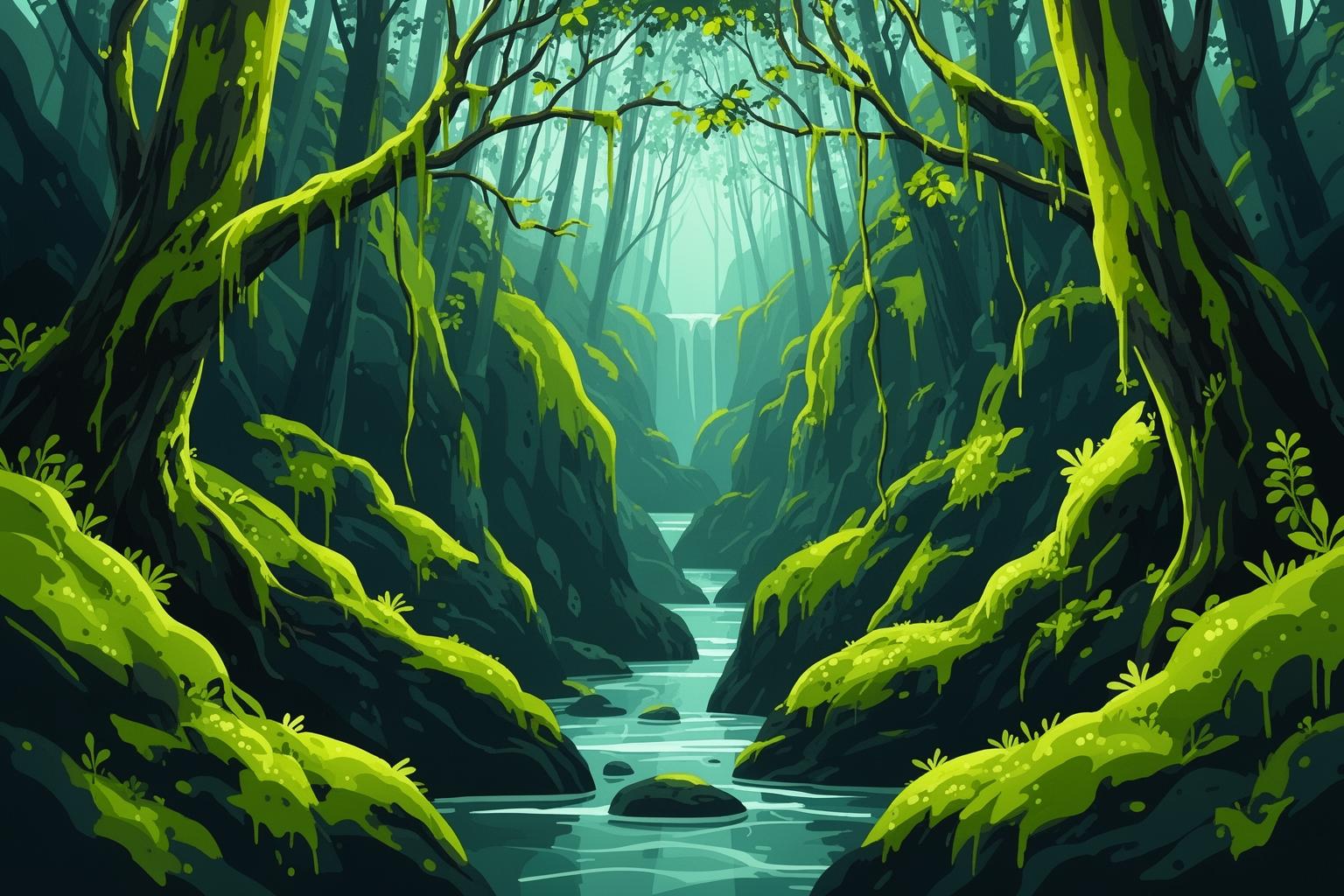
If there is one place that truly embodies the spirit of Princess Mononoke, it is Shiratani Unsuikyo. This ravine, whose name means “White Valley Cloud Water Gorge,” is an accessible yet profoundly otherworldly network of trails. Here, the boundary between our world and the spirit world feels most fragile. The instant you step onto the path from the trailhead, the noise of the outside world fades away, replaced by the soft percussion of dripping water and the rush of the river below. The air becomes cool and heavy with the scent of damp earth and decaying wood, the fragrance of life and death entwined in a continuous, fertile cycle. The forest floor, fallen logs, standing trees, and even the rocks themselves are blanketed in a layer of moss so dense and lush it seems to pulse with life.
The Trail to the Spirit World
Shiratani Unsuikyo offers a variety of routes, suitable for different fitness levels. A brief, hour-long walk brings you through stunning scenery, but the real pilgrimage is the longer loop leading to the renowned “Moss Forest” (Kokemusu-no-mori), the exact location Miyazaki confirmed as the direct inspiration for his film’s landscapes. The path alternates between well-kept wooden walkways and rugged, root-filled dirt trails. You cross crystal-clear streams via simple wooden bridges, scramble over enormous granite boulders, and crouch beneath the low-hanging branches of ancient trees. The trail eventually climbs to Taikoiwa Rock, a massive granite monolith that offers a breathtaking panoramic view of the island’s mountainous interior. Standing on that rock, with the vast sea of green stretching out before you, is a moment of profound clarity and perspective. You feel both infinitesimally small and intimately connected to the immense power of nature.
A Photographer’s Dream in Fifty Shades of Green
For photographers, Shiratani Unsuikyo is a place of endless wonder. The challenge lies not in finding something beautiful to capture but in conveying the overwhelming sensory experience. The light is constantly shifting. On sunny days, shafts of light pierce the dense canopy, spotlighting patches of moss like actors on a stage. On overcast or rainy days, the forest takes on a completely different mood. Colors become saturated, greens deepen, and a soft, diffused light produces an ethereal glow. A polarizing filter is essential here to cut through glare on wet leaves and rocks, revealing the true richness of the colors. A tripod is equally important, allowing for long exposures that smooth the flowing water of streams into silky ribbons and capture the forest’s stillness in low light. The true artistry, however, lies in capturing the essence of the place—the quiet reverence, the ancient atmosphere, and the feeling that every corner holds a secret.
Capturing the Kodama
Although you won’t find literal tree spirits, you can capture their essence. Focus on the details: a single droplet clinging to the tip of a moss frond, the intricate bark patterns of a thousand-year-old cedar, the gnarled roots gripping the earth like ancient claws. These small vignettes tell the larger story of the forest. Experiment with macro photography to explore the miniature worlds thriving on a single fallen log. Use a wide-angle lens to convey the scale of massive trees and the enclosing nature of the canopy. The spirit of the forest reveals itself not in grand gestures but in the infinite, patient complexity of its smallest parts. It is in these quiet moments of observation that you truly feel the magic of Yakushima—the very magic that so enchanted Miyazaki and his team.
The Ancient Guardian: The Quest for Jomon Sugi
While Shiratani Unsuikyo is the centerpiece of the Ghibli pilgrimage, the essence of Yakushima’s ancient power is embodied by a single, gigantic tree: Jomon Sugi. Named after Japan’s Jomon period, its age is both scientifically debated and steeped in local legend, with estimates ranging from 2,000 to over 7,200 years. To stand before it is to confront a living witness to the rise and fall of countless civilizations. However, this encounter is no casual affair; reaching Jomon Sugi requires an arduous, ten-hour round-trip trek that is as much a test of endurance as it is a journey of reverence.
A Pilgrimage on Foot
The path to Jomon Sugi begins along the old Anbo Forest Railway, a logging track from a bygone era. For the initial hours, you walk on wooden planks set over the tracks in a rhythmic, meditative passage through a forest that is less dense but still beautiful. This part is deceptively easy, lulling you into a comfortable pace before the true challenge begins. Once you leave the tracks, the trail becomes a steep, relentless ascent up the mountainside. You navigate through a maze of giant roots, wooden staircases, and muddy slopes. The air grows thinner and your muscles burn, but every step takes you further back in time. Along the way, you pass other magnificent cedars, such as Meoto Sugi (the “husband and wife” trees, joined at the branch) and the massive, hollowed-out Wilson’s Stump. Peering up from within this cavernous remnant reveals the sky framed perfectly in a heart shape, a moment of unexpected poetry amid the grueling hike.
Standing Before Eternity
After hours of climbing, you finally reach your destination. Jomon Sugi does not reveal itself at once. Rounding a corner, there it stands on a protected ridge, viewed from a specially constructed platform designed to preserve its delicate root system. It may not be the tallest tree in the forest, but its presence is overwhelming. Its trunk is a gnarled, twisted monument of bark, hollowed and weathered by millennia of typhoons and lightning. It resembles less a tree and more a sculpture carved by time itself. A palpable silence surrounds it as fellow hikers, breathless from the climb, simply stand in awe. It is a deeply humbling experience; in its presence, the worries of our fleeting modern lives seem utterly insignificant. It serves as a powerful reminder of nature’s endurance, a living link to a past so distant it borders on myth. The long, exhausting walk back down is filled with a quiet sense of achievement and a profound new perspective.
Beyond the Forest: The Rhythms of Yakushima Life
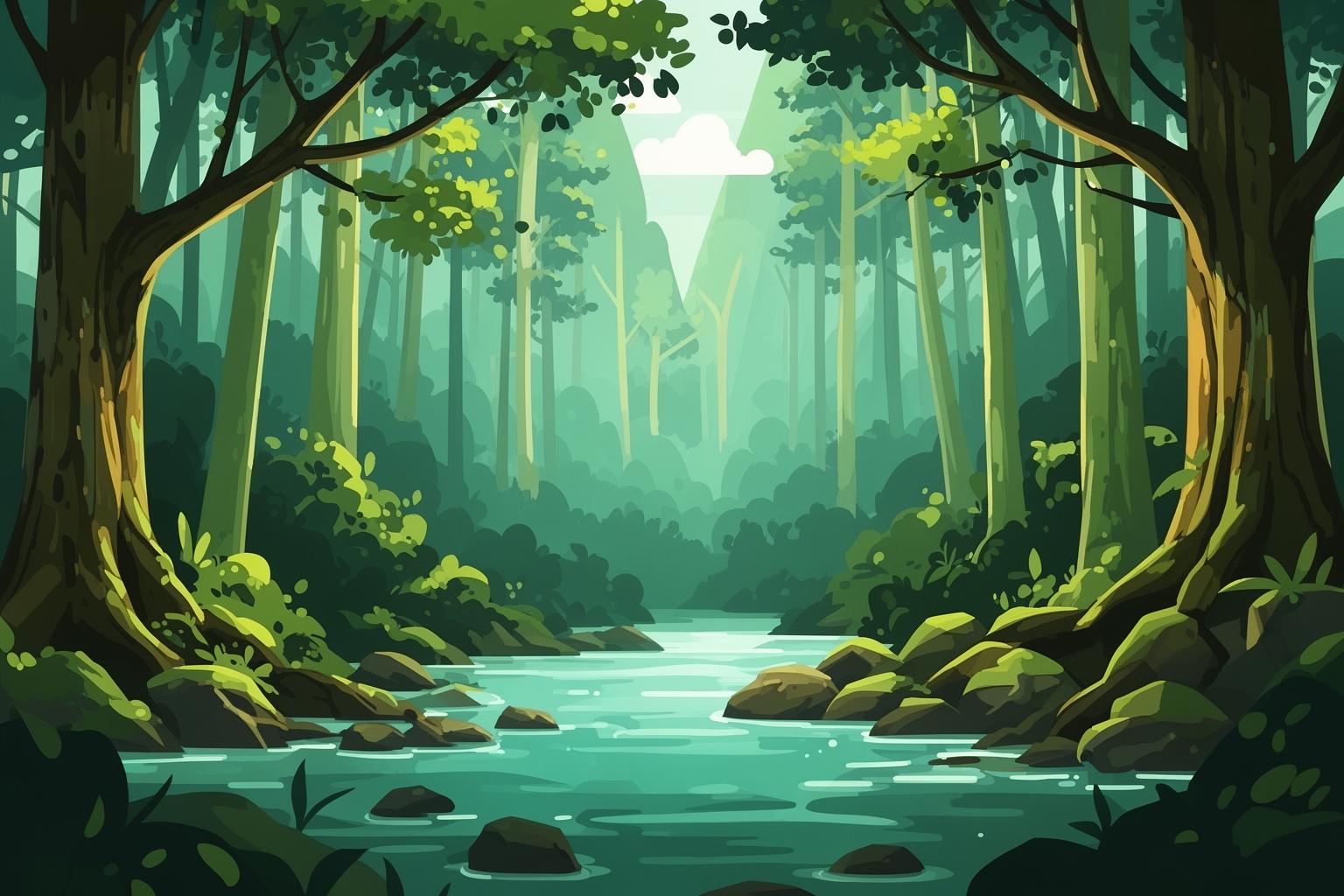
While the ancient forests are the island’s primary attraction, the life that unfolds along its coastal ring road provides a different, yet equally enriching experience. Yakushima is not a museum; it is a thriving community of about 13,000 residents who have adapted to the island’s distinctive rhythms. Exploring the small towns of Miyanoura and Anbo, you’ll discover cozy guesthouses, inviting restaurants, and shops selling local crafts made from the fragrant wood of fallen Yaku sugi.
Coastal Wonders and Ocean Life
The island’s coastline presents a striking contrast to its forested interior. Rugged cliffs meet crashing waves, and hidden coves offer peaceful retreats. One of the most enchanting experiences is visiting Nagata Inaka-hama beach on the northwest coast between May and August. This golden sandy stretch serves as a major nesting ground for loggerhead and green sea turtles. Joining a guided nighttime observation tour lets you witness the humbling spectacle of a mother turtle pulling herself ashore to lay her eggs, a ritual as ancient as the cedars themselves. The island also boasts natural seaside hot springs, or onsen. At Hirauchi Kaichu Onsen, pools appear from the rocky shoreline only at low tide, offering the chance to soak in geothermally heated water while gazing out at the Pacific Ocean—a truly unforgettable experience.
The Taste of the Island
Yakushima’s cuisine directly reflects its environment. Seafood is a staple, with the local specialty being tobiuo, or flying fish, often served fried whole with fins extended like wings. You can also savor fresh sashimi, mackerel, and other treasures from the surrounding Kuroshio Current. The island’s pure mountain water is the key ingredient in its other famous product: shochu. Visiting a local distillery to sample brands like Mitake offers a great way to experience another facet of the island’s culture. Many local restaurants and minshuku (family-run inns) take pride in serving dishes made with island-grown ingredients such as tankan oranges and fresh shiitake mushrooms, providing a true taste of Yakushima’s bounty.
Planning Your Pilgrimage: A Practical Guide
A trip to Yakushima demands more preparation than a visit to a major Japanese city, but the rewards make the effort worthwhile. Thorough planning is essential for a safe and enjoyable experience in this wild and unpredictable environment.
Reaching the Enchanted Isle
Your journey to Yakushima will most likely start in Kagoshima, the southernmost major city on Japan’s main island of Kyushu. From there, you have two main options. The quicker way is by plane. Japan Air Commuter operates several daily flights from Kagoshima Airport to Yakushima Airport, a brief 40-minute flight that offers stunning aerial views of the island on clear days. The more affordable and scenic alternative is the ferry. The high-speed jetfoil, called the “Toppy” or “Rocket,” takes about two to three hours and is a popular choice. For travelers on a tighter budget with extra time, the slower car ferry takes roughly four hours but is much cheaper and allows you to bring a vehicle. It is highly recommended to book flights and ferries well in advance, especially during peak seasons like Golden Week in May and Obon in August.
Getting Around: The Freedom and the Challenge
Once on the island, transportation is your next concern. The island is surprisingly large, and its main attractions are spread out. Public transport consists mainly of a bus service that circles the island, but schedules can be infrequent, particularly in more remote areas. For the greatest flexibility and freedom, renting a car is by far the best choice. This lets you travel at your own pace, stop at scenic viewpoints, and easily reach trailheads and restaurants. Several rental agencies operate near the Miyanoura and Anbo ports as well as at the airport. Be sure to reserve your car well ahead of time, and keep in mind you will need an International Driving Permit. If you’re not comfortable driving, you can rely on the bus service, but it requires careful planning to fit your itinerary around its schedule. Alternatively, hiring a private guide who provides transportation can be an excellent way to see the highlights without the logistical hassle.
What to Pack for the Primeval Forest
Packing properly for Yakushima is absolutely essential. The simple rule is: prepare for rain and be ready for serious hiking. Even if the forecast is clear, mountain weather can change suddenly.
The Essential Gear
High-quality, waterproof gear is a must. This includes a reliable rain jacket and waterproof pants. An umbrella will not suffice on the trails. Sturdy, waterproof hiking boots with good ankle support and traction are the single most important items to bring. The trails are frequently wet, muddy, and slippery, with uneven ground and numerous exposed tree roots. You should also carry a backpack with a waterproof cover to protect your belongings. A refillable water bottle is crucial since the mountain streams offer famously pure and safe drinking water—a rare and wonderful treat. Pack layers of clothing, as temperatures can vary greatly between the coast and mountain peaks. Quick-drying synthetic fabrics outperform cotton, which remains damp and cold. Finally, bring enough cash, as ATMs can be scarce outside the main towns, and not all places accept credit cards. With the right equipment, you can comfortably and safely immerse yourself in the island’s wild beauty, whatever the weather may bring.
A Parting Word from the Forest’s Edge
Leaving Yakushima feels like emerging from a vivid dream. Returning to the concrete and noise of the modern world can be startling after days spent in the profound silence of the ancient forest. Yet, the island remains with you. You carry the memory of the deep, vibrant green, the sensation of cool, misty air on your skin, and the awe-inspiring sight of a tree that has stood since the dawn of civilization. It is a place that recalibrates your sense of time and your place in the world. It stands as a powerful testament to what our planet can become when left to its own magnificent devices. Whether you visit as an anime fan, an avid hiker, a nature photographer, or simply a soul seeking stillness, Yakushima offers a journey not only to a physical place but deep into the heart of the world, and perhaps, a little deeper into yourself. The forest gods may be fictional, but the spirit that inspired them is very real, and it awaits you on that rain-soaked island in the south.