
There are stories that feel like they belong to the world, and then there are stories that feel like they were whispered directly to you. Makoto Shinkai’s masterpiece, Your Name (Kimi no Na wa), is one of the latter. It’s a film that captures a universal ache—the search for a connection you can’t quite name, the memory of a person you’ve never met, the haunting beauty of twilight when the world seems to hold its breath. This feeling, this intangible thread, has pulled millions of us into its orbit, and for many, watching the film is only the beginning. The next step is a journey, a modern-day pilgrimage known in Japan as seichi junrei, to walk the same streets, climb the same stairs, and breathe the same air as the characters we love. This is a journey to find the tangible soul of an animated world, to trace the intertwined destinies of Taki Tachibana and Mitsuha Miyamizu across the landscapes of Japan. It’s a tale of two vastly different places: the electric, sprawling heart of Tokyo and the quiet, tradition-steeped mountains of Gifu Prefecture. Our path will follow Taki’s desperate search, leading us from the pulsing neon of the world’s biggest metropolis to the serene, almost forgotten, beauty of the countryside. This is more than just a sightseeing tour; it’s a quest to understand how a place can shape a story, and how a story can transform a place into something sacred. It’s about finding the magic of musubi—the intricate knot of time, tradition, and connection—in the real world. Before we embark, let’s pinpoint the heart of where this story of fate and connection reaches its iconic crescendo.
To fully appreciate the urban half of this intertwined destiny, one can explore the modern-day pilgrimage sites in Tokyo that served as Taki’s world.
The Heartbeat of Tokyo: Taki’s Urban World
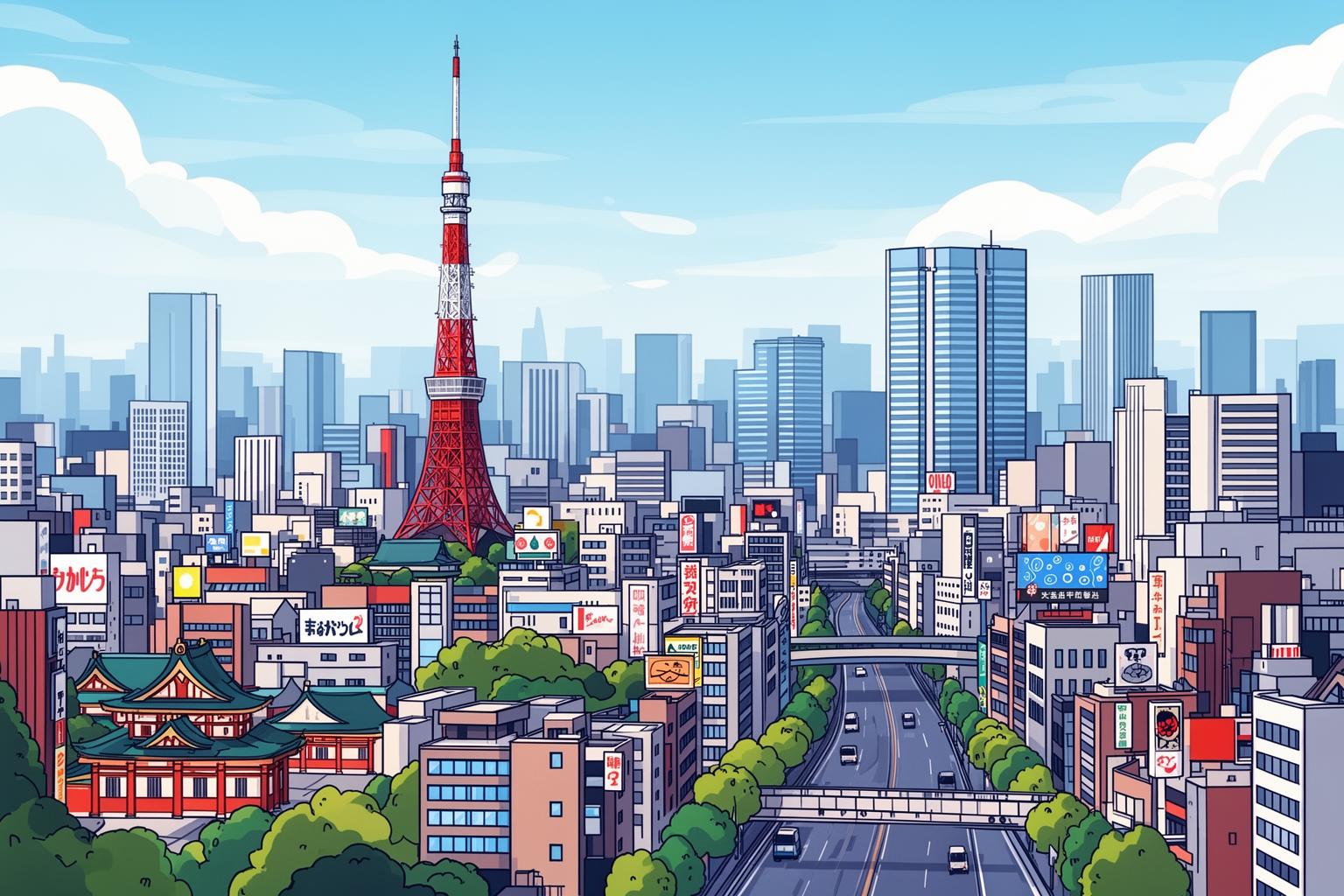
Tokyo isn’t merely a place that exists; it pulses with life. It is a living, breathing organism composed of concrete, glass, and light—a city where thirty-seven million stories unfold all at once. To truly understand Taki, you must understand his world—a vertical landscape of ambition, anonymity, and endless possibility. Standing among the canyons of Shinjuku, the city’s rhythmic hum resonates deep within you. It’s a symphony of train announcements, the murmur of countless conversations, and the silent ascent of elevators reaching skyward. This serves as the backdrop to Taki’s life: a high school student balancing classes, a part-time job at a busy Italian restaurant, and the bewildering experience of waking up in someone else’s body. The city is both his playground and cage—a place where you can feel connected to everything and everyone, yet deeply alone. For the pilgrim, Tokyo represents the opening chapter, an immersion into the kinetic energy that shapes the soul of the film’s first half. It’s about navigating the same crowded crossroads, gazing up at the same towering skyscrapers, and experiencing the same mixture of excitement and yearning that defines Taki’s urban existence.
The Iconic Red Steps of Suga Shrine
Few images are as emblematic of Your Name as the moment two people, separated by time and fate, finally unite on a staircase. This staircase exists in reality, serving as the emotional heart of the pilgrimage. Nestled in a quiet residential pocket of Yotsuya—a district that feels worlds away from the neon frenzy of nearby Shinjuku—is the stairway leading to Suga Shrine. The journey itself is part of the experience. Emerging from Yotsuya Station, you enter a neighborhood of narrow streets, quaint shops, and an enveloping calm. With each step, anticipation builds until suddenly, there it is. The gentle curve of the road, a red railing on one side, and a wall of lush green trees on the other—astonishingly, breath-takingly true to the film. Standing either at the bottom looking up or at the top looking down, you become physically immersed in the film’s final, poignant moments. It’s a uniquely powerful sensation. Around you, other visitors share a quiet, unspoken connection. They capture photos, recreating the scene with deep reverence. The atmosphere here is different—charged with the emotional weight of the story. For an optimal visit, come in the late afternoon. As the sun dips, the light softens, casting long shadows and creating the magical “kataware-doki,” or “magic hour” glow. At this time, when the veil between worlds feels thin, you can almost hear Taki and Mitsuha’s lingering question: “What’s your name?” A word of caution: this is a residential area. Its magic lies in its quiet authenticity, so please be respectful of those who live here—speak softly, tread lightly, and savor the moment.
A View from the Top: The National Art Center, Tokyo
Tokyo is a city of grand statements, and its architecture reflects this spirit. The venue where Taki goes on a date with his elegant coworker, Okudera-senpai, perfectly exemplifies this. The National Art Center, Tokyo, situated in the fashionable Roppongi district, is a masterpiece of modern design. Its flowing glass facade ripples like a wave, bathing the interior in natural light. Even if art isn’t your passion, the building itself stands as the main attraction. In the film, Taki and Okudera-senpai share time in the Salon de Thé ROND, one of the center’s cafes, perched atop a vast inverted concrete cone within the grand atrium. Finding this spot feels like stepping directly through the screen. You can sit at a table, order a coffee, and look out at the same stunning architectural scene. It perfectly symbolizes the sophisticated adult world Taki aspires to join. This location sharply contrasts with Mitsuha’s rural upbringing, with its clean lines, artistic flair, and urban elegance. Visiting the art center makes for a wonderful afternoon. You can explore world-class exhibitions on rotation or simply relax in the atrium, soaking in the atmosphere. It is a calm, contemplative oasis amid the city’s bustle—a place to appreciate Tokyo’s creative spirit and a crucial element in Taki’s journey toward maturity and self-discovery.
Crossing Paths at Shinjuku Station
If the red steps at Suga Shrine embody the film’s emotional climax, Shinjuku Station represents its chaotic, pulsating heart. As the world’s busiest train station, with over three and a half million daily commuters, it symbolizes the countless lives intersecting, diverging, and running parallel throughout Tokyo. The station is a vast, overwhelming maze of platforms, tunnels, and exits—a sea of humanity. Taki navigates this maze every day, with many brief, atmospheric shots in the film highlighting the station’s iconic features: sweeping pedestrian bridges, views of the NTT Docomo Yoyogi Building reminiscent of a futuristic clock tower, and the endless tide of commuters. Experiencing this site is key to grasping the scale of the world Taki inhabits. Rather than ticking off specific spots, the aim is to absorb the station’s energy. Cross the Shinjuku Southern Terrace bridge for some of the film’s most recognizable views. Watch the trains—the city’s lifeblood—arrive and depart in their perfectly choreographed rhythm. Here, you truly appreciate the miracle that two people found one another amidst millions—the improbable nature of their connection. A tip for first-time visitors: don’t attempt to master the entire station at once. Getting lost is part of the experience. Choose an exit, like the South or West Exit, and explore the neighborhood nearby. Embrace the beautiful chaos; it’s an essential part of the Tokyo pilgrimage.
Journey to the Countryside: In the Footsteps of Mitsuha
The journey from Tokyo to the Hida region of Gifu Prefecture is as striking as the experience of body-swapping itself. Boarding the Shinkansen, Japan’s renowned bullet train, you gradually feel the grip of the city ease. The dense urban sprawl transitions into suburbs, then fields, and finally, mountains rising like ancient, dormant giants. The second part of the trip, aboard the Hida Wide View Express, is where the enchantment truly begins. The train winds through deep valleys, following the course of a turquoise river. With each tunnel you pass, it feels as if you are leaving the modern world behind and entering a land rich in myth and tradition. The air that greets you upon stepping off the train is different—cleaner, cooler, and scented with pine and damp earth. This is the world of Mitsuha Miyamizu, governed by the seasons, ancient rituals, and the steady rhythm of rural life. Although Itomori, the town from the film, is fictional, its spirit vibrantly lives on in the towns and landscapes of Hida. This leg of the pilgrimage is a journey back in time, offering a chance to connect with the deep cultural roots that anchor the film’s fantastical elements in tangible reality.
Hida-Furukawa: The Real-Life Itomori
Though Itomori is a composite creation, the town of Hida-Furukawa served as its main inspiration, and arriving here feels like coming home. The town is immediately recognizable, characterized by preserved wooden merchant houses, canals teeming with koi fish, and a profound atmosphere of tranquility. It embodies everything Itomori represented before the comet—a beautiful, idyllic mountain town.
The Station and the Search
Hida-Furukawa Station is the first point of contact. This is where Taki and his friends arrive as they search for Mitsuha, and the real station matches the film’s depiction perfectly, down to the platform details and the small taxi stand outside. Inside, a warm nod to fans appears in the form of a panel featuring the town’s mascot, Hidakuro, a cheerful cow character. Standing on this platform, you can vividly imagine Taki’s mixture of hope and anxiety as he began his search. From the station, the town unfolds before you, and a short walk leads to one of the film’s most faithfully recreated locations.
Hida City Library
Visiting the Hida City Library is a must. When Taki and his friends research the comet’s history, they do so in a beautifully crafted library with striking wooden interiors—the exact location in reality. Visitors are warmly welcomed; the staff understand the library’s fame and have even created a small section for Your Name fans. You can sit at the same tables where the characters pieced together the town’s tragic story. The library remains a functioning space, so maintaining silence is important, but simply being there is deeply moving. It feels less like a film set and more like a sacred text brought to life. Taking a moment to sit and reflect here provides a powerful connection to the story’s deeper themes—the importance of memory, history, and the records people leave behind.
The Spirit of the Shrine
Although Mitsuha’s Miyamizu Shrine is fictional, its inspiration lies in the local Keta Wakamiya Shrine. A walk through town will bring you to its stone steps, ascending into a quiet, wooded area. Climbing these steps, you sense the same reverence and timelessness that envelop Mitsuha’s family traditions. The shrine itself is peaceful, a space for quiet reflection. It represents the spiritual core of the community and the traditions of sake-making rituals and ancient dances central to Mitsuha’s identity. Here, you begin to grasp the concept of musubi not merely as a narrative device but as a genuine cultural belief in the unseen threads that link people, places, and time.
The Taste of a Pilgrimage: Local Delights
To truly experience a place, you must taste it. As Taki and his friends explore the region, they enjoy Goheimochi, a local specialty made from pounded rice grilled with a sweet and savory miso sauce. Finding a vendor selling freshly grilled Goheimochi is an essential part of the Hida experience. The smoky, slightly charred flavor embodies the taste of the mountains—a simple, rustic treat that instantly connects you to local culture. The Hida region is also renowned for its world-class Hida beef, prized for its remarkable marbling and tenderness. Sampling Hida beef, whether from a street vendor’s skewer or as part of an elegant meal in a local restaurant, is a culinary highlight. Of course, the region’s pure mountain water and high-quality rice make it ideal for brewing sake, a nod to the kuchikamizake ritual pivotal to the film’s plot. Engaging with local food culture is not just about nourishment; it’s about participating in the very traditions that shaped Mitsuha’s world.
The Mystical Heart: Lake Suwa and the Crater

The final piece of the geographical puzzle lies not in Hida, but a journey away in the neighboring Nagano Prefecture. While Hida-Furukawa served as the model for Itomori’s townscape, the stunning view of the crater lake that defines the town’s landscape drew inspiration from Lake Suwa. Seeing this lake for the first time is one of those rare moments where fiction and reality merge into something truly magical. The lake is a vast caldera-like body of water encircled by mountains, and from the perfect vantage point, it unmistakably represents the real-world counterpart to the film’s iconic setting.
A View from Tateishi Park
For the definitive view—the one that matches the sweeping animated shots of Itomori—you need to travel up the winding road to Tateishi Park. The overlook here offers a breathtaking, panoramic vista of the entire lake and the towns sprinkled along its shores. The effect is awe-inspiring. Spread out before you is the landscape that cradled Mitsuha’s entire world. The best time to make this trip is undoubtedly late afternoon. As the sun begins to slip below the mountain ridges, the sky bursts into shades of orange, pink, and purple, while the town lights below start to twinkle. This is kataware-doki, the twilight hour, when the world’s edges soften and the line between the visible and invisible feels fragile. Standing there, witnessing the shifting sky, you can almost sense Taki and Mitsuha’s presence on the crater’s rim, meeting for the first and last time in that enchanting, fleeting moment. Reaching Tateishi Park can be tricky without a car, but a taxi from nearby stations such as Kami-Suwa is well worth the cost for the incredible reward of this view. It stands as the visual and emotional climax of the entire pilgrimage.
Echoes of Tradition and Time
The region around Lake Suwa is rich with its own profound history, adding an additional layer of meaning to the journey. It is home to the Suwa Taisha, one of Japan’s oldest and most significant shrine complexes. These ancient shrines predate much of recorded history and are dedicated to gods of wind, water, and valor. Exploring them connects you to the same deep-rooted, animistic traditions that the Miyamizu family practiced in the film. The history of this place, with its powerful clans and ancient beliefs, resonates with the film’s themes of time, memory, and the enduring strength of tradition. It reinforces the idea that the story of Your Name, though fantastical, is intricately woven from Japan’s very real cultural and spiritual heritage.
A Pilgrim’s Practical Guide: Tying It All Together
Embarking on a journey of this magnitude requires some planning to ensure a smooth and rewarding experience. Think of it as preparing the thread before weaving your own story into these remarkable landscapes.
Planning Your Itinerary
To comfortably explore the key destinations in both Tokyo and the countryside, plan for a trip lasting at least four to five days. A good strategy is to allocate two days to Tokyo, allowing ample time to visit locations in Yotsuya, Shinjuku, and Roppongi without feeling hurried. On the third day, take the morning train to the Hida region. Spend the afternoon and evening discovering Hida-Furukawa, possibly staying overnight in nearby Takayama, which offers more accommodation options and features its own charming historic district. On the fourth day, travel from Takayama to the Lake Suwa area. Though this will be a day primarily devoted to travel, it culminates in the stunning evening view from Tateishi Park. From there, you can conveniently connect to major train lines to return to Tokyo or continue your journey throughout Japan. For international travelers, the Japan Rail Pass is an invaluable resource for this itinerary, covering the costly Shinkansen rides and subsequent JR line travel, making the entire trip significantly more affordable.
What to Pack and When to Go
Besides the usual travel essentials, comfortable walking shoes are a must, as you will walk extensively—from navigating Tokyo’s vast train stations to exploring mountain towns. A high-quality camera is essential for capturing the breathtaking scenery, and a portable power bank will be indispensable in keeping your phone charged for navigation and photos. The timing of your visit can greatly influence the experience. Spring brings cherry blossoms that beautifully frame Suga Shrine’s steps and Lake Suwa. Summer offers lush greenery, though it can be hot and humid. Autumn is arguably the most striking season, with the mountains around Hida and Suwa bursting into vivid reds, oranges, and golds, perfectly complementing the film’s nostalgic color palette. Winter covers the region in snow, creating a serene, magical ambiance, but be prepared for cold weather and possible travel delays.
Etiquette for the Modern Pilgrim
It is important to remember that this pilgrimage passes through real communities. These are not theme parks but places where people live, work, and pray. When visiting residential areas like those around Suga Shrine, keep a low profile. Speak softly and avoid blocking driveways or streets. Inside shrines and the Hida City Library, a respectful and quiet atmosphere is expected. Always ask permission before photographing people or the interiors of shops. One of the best ways to show respect is to support the local economy by purchasing snacks from local vendors, buying souvenirs from small shops, or dining at family-run restaurants. This act of reciprocity completes the experience, making you not just a visitor, but a welcomed participant in the life of these places.
Beyond the Film: The Enduring Magic of Musubi

To explore the world of Your Name is to realize that the film’s magic goes beyond its stunning animation or gripping story. Its true strength lies in how deeply it is anchored in the authentic landscapes, culture, and spirit of Japan. Completing this pilgrimage involves more than merely capturing scenes in photos. It’s about experiencing the striking, beautiful contrast between Tokyo’s relentless forward drive and the quiet, enduring traditions of the mountains. It’s about recognizing that both realms, in their unique ways, are vital to the country’s soul. You begin to see the concept of musubi everywhere—in the complex rail networks that connect the nation, in the ancient shrine rituals linking present and past, and in the shared, unspoken bond among fellow fans gathered at the top of a staircase. This journey leaves you with more than just memories; it imparts a sense of connection, a deeper appreciation for the threads that tie us to stories, places, and, if fortunate, to one another. You start the trip chasing the shadow of a cherished film, and you finish it having discovered a piece of Japan’s heart, and perhaps a part of your own.