
There’s a feeling that resonates deep within the soul, a faint yet persistent hum of searching for something—or someone—you can’t quite name. It’s the beautiful, aching heart of Makoto Shinkai’s global phenomenon, Your Name. (Kimi no Na wa.), a film that captured the world with its breathtaking animation, star-crossed romance, and profound exploration of connection, or musubi. The story of Taki, a boy from the electric heart of Tokyo, and Mitsuha, a girl from the serene, tradition-steeped countryside, transcends the screen. It spills into the real world, inviting us to walk the same streets, feel the same city air, and stand in the very spots where their intertwined destinies unfolded. This is the magic of seichi junrei, the anime pilgrimage, where fiction and reality blur, transforming the familiar cityscape of Tokyo into a living, breathing movie set. For fans, it’s more than just sightseeing; it’s a journey to find the tangible pulse of a story that touched them, to feel the echoes of Taki and Mitsuha’s search in the urban labyrinth. From the bustling avenues of Shinjuku to the quiet, unassuming corners of Yotsuya, we will trace their steps, rediscovering the film’s magic not on a screen, but under the vast Tokyo sky.
Explore Tokyo’s urban secrets further by visiting real-life your name filming spots that bring the film’s magic into vivid reality.
The Heart of the Story: Yotsuya’s Suga Shrine Steps
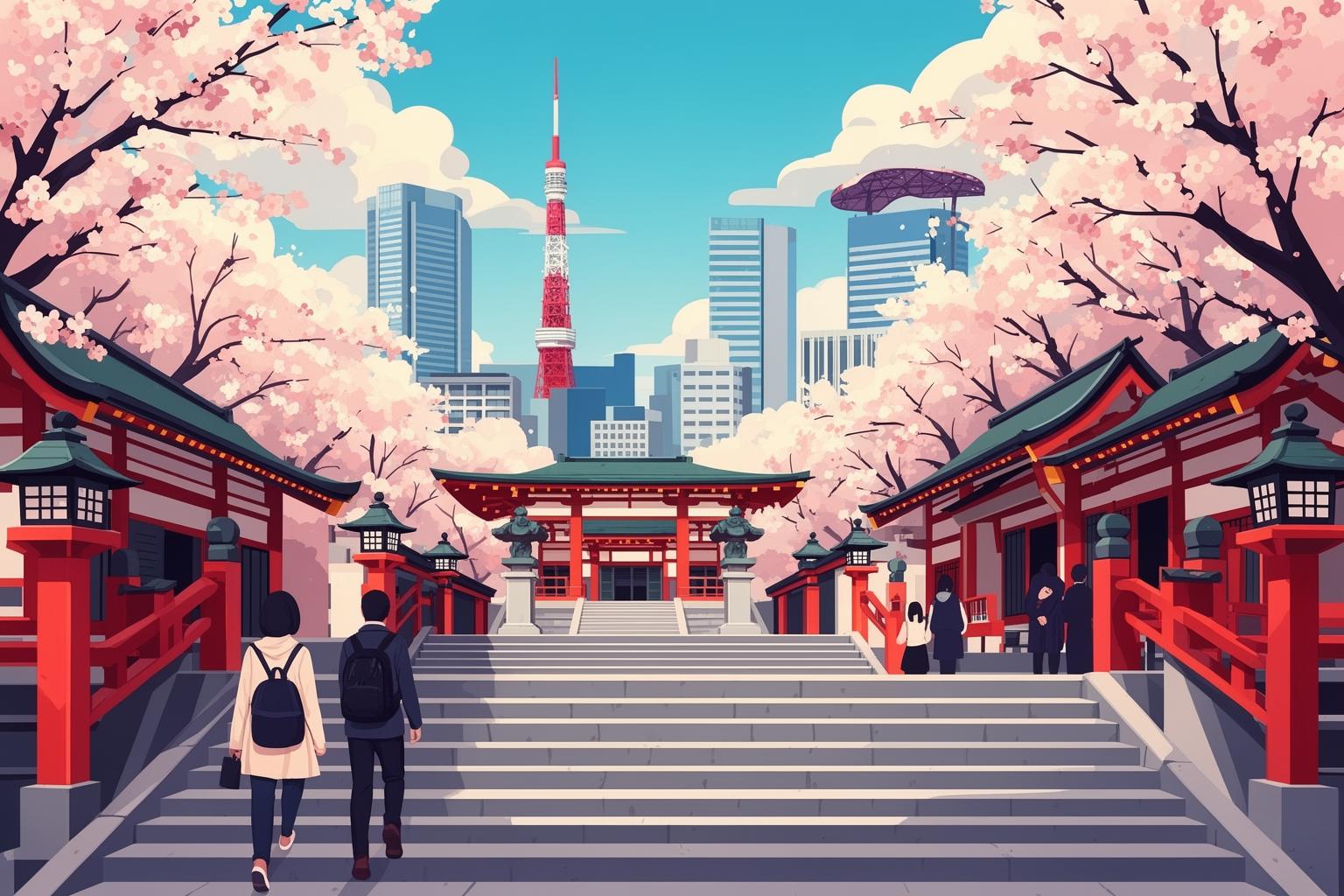
Every pilgrimage has its sacred center, its emotional heart, and for the journey into the world of Your Name., it is undeniably the iconic red-railed staircase leading to Suga Shrine. Nestled in a quiet residential area of Yotsuya, this seemingly ordinary stairway forms the backdrop for the film’s breathtaking, cathartic climax. It is here, after years of searching, that Taki and Mitsuha finally, miraculously, find one another. The journey to this place feels like a pilgrimage in itself. As you leave behind the steady buzz of the main streets and wander into the labyrinth of narrow alleys, the city’s noise softens. You pass small, well-kept homes, hear the distant ring of a bicycle bell, and feel a gentle sense of calm anticipation growing with each step. The air here feels different—softer, more intimate. It’s a world apart from the neon glare of Shinjuku, and you begin to grasp how such a quiet yet powerful moment can exist within this vast metropolis.
The Final Scene’s Emotional Climax
And then, you see it. The gentle incline, the twin stairways divided by a simple handrail, and the vivid red railings on the outer edges—a striking, beautiful contrast to the muted grays of concrete and the deep greens of the surrounding foliage. Standing at the bottom looking up, or at the top looking down, the scene is instantly recognizable. The composition is perfect, like a real-life movie poster waiting to be captured. Yet beyond visual familiarity, it’s the emotional power that truly takes your breath away. You can almost hear the film’s score swelling, feel Taki and Mitsuha’s racing hearts as they pass each other, the spark of recognition, the tentative turn, and the wonderfully simple, world-changing question: “Kimi no namae wa?” (“What’s your name?”). It’s a place charged with narrative energy. Fans often linger here—some quietly snapping photos, others sitting in contemplation, lost in their own reflections on the film’s themes of memory, loss, and reunion. It stands as a powerful reminder of how a physical place can become a vessel for a fictional story’s deepest emotions.
Finding Your Own Cinematic Moment
To fully appreciate this pivotal stop, timing is key. The magic hour in late afternoon, when the sun hangs low and bathes the scene in warm, golden light, is especially cinematic, echoing the ethereal quality of Shinkai’s animation. Early mornings offer a different kind of enchantment—a quiet, reflective stillness with fewer visitors, allowing a more personal connection to the space. The steps are easily reached by foot from either Yotsuya-Sanchome Station on the Tokyo Metro Marunouchi Line or Yotsuya Station on the JR Chuo-Sobu Line. As you plan your visit, a vital tip from a fellow traveler: remember this is a cherished neighborhood for its residents. The true beauty lies in its quiet authenticity. Keep your voice low, be considerate of people passing by, and avoid blocking the staircase with lengthy photoshoots. The spirit of this pilgrimage is one of respect. After your moment on the steps, take time to walk to the top and visit Suga Shrine itself. It’s a small, tranquil Shinto shrine—a perfect spot to offer a quiet prayer or simply enjoy the peace before returning to the city’s bustling rhythm.
Taki’s World: The Urban Pulse of Shinjuku
If the steps of Suga Shrine serve as the heart of the story, then Shinjuku is its pulsating, vibrant bloodstream. This is Taki’s home ground, a district full of dazzling contrasts where towering skyscrapers scrape the sky and narrow, lantern-lit alleys murmur tales from a bygone era. The film skillfully uses Shinjuku’s energetic landscape to anchor Taki’s life in an intense, awe-inspiring urban reality. Passing through Shinjuku Station, one of the busiest transit hubs globally, you instantly sense the overwhelming, exhilarating energy Taki faced daily. It’s a sensory feast in the most thrilling sense: a symphony of train announcements, the constant shuffle of countless commuters’ feet, a mosaic of flashing advertisements, and the unstoppable flow of humanity. Within this controlled chaos, Taki’s part of the story breathes and lives, and exploring its key locations feels like stepping straight into his world.
The Shinjuku Pedestrian Bridge
One of the most evocative, though somewhat understated, spots is the pedestrian bridge near the Shinjuku Police Station. This circular, multi-level crossing appears in several montages, often shown through stunning time-lapses that capture the relentless stream of cars and pedestrians. Standing on this bridge, especially at dusk as the city lights begin to sparkle, you witness the film’s visual storytelling come alive. The long-exposure shots of car headlights streaking like comets, the silhouetted pedestrians crossing against glowing office towers—it’s all vividly present. This spot perfectly embodies the urban experience: being part of a vast, interconnected network while simultaneously feeling completely anonymous. It’s a place of transition and fleeting moments, beautifully reflecting the characters’ sense of connection yet physical distance. It’s an excellent location for photography, letting you capture the kinetic energy of Tokyo that Shinkai so masterfully animated. Just be aware of the commuters and cyclists who regularly use the bridge; find a safe spot off to the side to set up your shot and absorb the view.
A Date with Okudera-Senpai: The National Art Center, Tokyo
Moving from Taki’s everyday life to a key moment in his story, we head to Roppongi for his date with his coworker, Okudera-senpai. Their afternoon meeting takes place at the stunning National Art Center, Tokyo. Even if it weren’t an anime pilgrimage site, this structure is an architectural wonder worth seeing. Designed by Kisho Kurokawa, its flowing glass facade resembles a giant frozen wave, creating a spectacular play of light and shadow inside its expansive atrium. The moment you step in, the scene becomes familiar. The film carefully recreates the soaring interior, especially the two enormous inverted concrete cones housing the cafes. The exact spot is the Salon de Thé ROND, a chic café atop the second cone. Sitting at one of its tables, gazing through the glass wall, you find yourself literally inside an anime frame. It’s a surreal and elegant experience. You can order coffee and a slice of cake just like the characters, watching the world move by from this elevated perch. It’s a moment of refined calm amid the city’s bustle and offers a glimpse into Tokyo’s more grown-up, artistic side that Taki begins exploring. The art center regularly hosts world-class exhibitions, so be sure to check what’s on. Access is very convenient from Nogizaka Station, with a dedicated exit leading directly into the museum.
Capturing the View from Above: Tokyo City View
The date continues at another iconic Roppongi spot: the Tokyo City View observation deck atop the Roppongi Hills Mori Tower. This is where Taki and Okudera-senpai take in the vast cityscape as day shifts to night. The view here is breathtaking. On a clear day, you can see the entire Kanto Plain, with landmarks like Tokyo Tower, Tokyo Skytree, and even the distant silhouette of Mount Fuji marking the horizon. The film perfectly conveys the awe this place inspires—the overwhelming scale of human civilization spread out below. As sunset turns the city into a glittering quilt of lights, it’s easy to share the same sense of wonder and melancholy the characters feel. The millions of lives unfolding below, each a tiny light with its own story, make you think of Taki and Mitsuha—two souls apart yet connected by fate—existing somewhere within that vastness. It’s a deeply moving experience that adds an existential layer to the pilgrimage. For an even more immersive visit, consider the open-air Sky Deck (weather permitting). Feeling the breeze as you gaze out over the endless city is an unforgettable moment that truly connects you to the film’s sweeping, grand visuals.
Echoes of Itomori: Glimpses of Tradition in the Metropolis
While Tokyo serves as the setting for Taki’s story, the essence of Mitsuha and her hometown Itomori—with its rich traditions and Shinto beliefs—forms the film’s heart. The idea of musubi—the invisible bonds connecting people, time, and events—is interwoven throughout the narrative, symbolized by Mitsuha’s braided cord. Though the fictional town of Itomori cannot be visited, its spiritual and natural beauty can be felt in several places right in Tokyo. These locations, though not actual filming sites, echo the film’s core themes, offering a more contemplative aspect to the pilgrimage and a deeper appreciation of the cultural background shaping the story.
The Red Thread of Fate at Meiji Jingu
There is no better place to experience the presence of musubi than Meiji Jingu. Dedicated to the deified spirits of Emperor Meiji and Empress Shoken, this shrine is more than a historical monument; it stands as a vibrant center of Shinto spirituality. To reach it, you first pass through a towering wooden torii gate that serves as a threshold, separating the secular world of Harajuku from the sacred precincts inside. Walking along the broad gravel path, lined with a dense, man-made forest of over 100,000 trees, instantly calms the mind. The noise of the city fades, replaced by the crunch of footsteps and the rustling of leaves. At the main shrine complex, visitors pray, leave wooden ema plaques inscribed with their wishes, and tie omikuji (paper fortunes) to tree branches. Here, the practice of tying knots to form a bond with the divine is a visible, tangible tradition. One can see reflections of Mitsuha’s role as a shrine maiden and the significance of ritual and connection in her life. It’s a place to contemplate the invisible threads in your own life, making it a spiritually meaningful stop on a Your Name. journey.
Finding a Quiet Corner: Shinjuku Gyoen National Garden
Makoto Shinkai’s films are celebrated for their breathtaking portrayals of nature, often using tranquil, dappled green spaces to contrast the city’s harsh contours. Though Shinjuku Gyoen is not specifically highlighted as a key location in Your Name., it embodies this theme perfectly in real life. Just a short stroll from the bustling Shinjuku Station, this expansive garden is a peaceful sanctuary. It artfully blends three distinct styles: a traditional Japanese garden with serene ponds and teahouses, a formal French garden with symmetrical flowerbeds, and a sprawling English landscape garden with broad lawns. Wandering through these varied sections feels like passing through different realms. One can find a quiet bench beneath cherry blossoms in spring, admire the vivid autumn maples, or lie back on the grass and gaze at the sky framed by the distant Shinjuku skyscrapers. It’s a space for introspection, much like the quiet reflective moments the characters experience in the film. This garden offers a necessary pause, a place to absorb the story’s emotional depth and the city’s sensory intensity, and to appreciate the delicate balance between urban life and nature that is so central to Shinkai’s artistic vision.
A Traveler’s Guide to the Pilgrimage
Embarking on a seichi junrei is an adventure, and like any great adventure, a bit of planning goes a long way. Navigating Tokyo may seem overwhelming, but its public transportation system is remarkably efficient, making it easy to hop between these iconic spots. Creating a flexible itinerary will help you maximize your time, allowing you to fully engage with the experience instead of stressing over logistics. The key is to balance the specific aim of visiting the film’s locations with the joy of exploring the distinct character of each neighborhood along the route.
Crafting Your Itinerary
A logical and emotionally meaningful way to organize your day is by following the story’s progression. I recommend beginning your morning in Yotsuya. Visiting the Suga Shrine steps first, when the light is gentle and the crowds are minimal, lets you have a powerful, personal moment with the film’s climax uninterrupted. From Yotsuya, take a short subway ride on the Marunouchi Line to Shinjuku. Here, you can spend most of your day exploring Taki’s world—feel the pulsating energy of the station, find the pedestrian bridge, and perhaps stroll through nearby Shinjuku Gyoen for a tranquil lunch break. As the late afternoon nears, head to Roppongi. Arrive at the National Art Center in time for an afternoon coffee at Salon de Thé ROND, then visit the Roppongi Hills Mori Tower to watch the sunset from the Tokyo City View observation deck, ending your day with the same stunning panorama that Taki and Okudera-senpai shared. This itinerary creates a natural story arc, moving from quiet reflection to urban vitality, culminating in a grand, contemplative view. Carry a Suica or Pasmo IC card; it’s a rechargeable card that makes tapping in and out of train stations and even paying at convenience stores effortless.
Beyond the Screen: Savoring the Neighborhoods
While the main goal is to visit the Your Name. locations, the true magic lies in allowing yourself to explore the spaces in between. Each district boasts a rich identity beyond its role in the film. Yotsuya, with its serene residential charm, is dotted with small, family-run ramen shops and traditional sweet stores. Take a side street detour and see what you discover. Shinjuku is like a city within a city. After exploring the film locations near the station’s west exit, venture to the east side to experience the vivid, neon-lit chaos of Kabukicho or the nostalgic, intimate vibe of the tiny bars in Golden Gai. Roppongi is not just about art and skyscrapers; it’s a global hub renowned for its nightlife and diverse international cuisine. While the pilgrimage offers a wonderful framework, the most memorable moments often come from spontaneous exploration. Let the story guide you, but allow your curiosity to create its own subplot.
A Note on Etiquette and Respect
As a traveler, especially a pilgrim visiting these cherished places, it’s important to proceed with mindfulness and respect. The Suga Shrine steps are part of a living community. Residents live nearby, children play in the area, and everyday life continues. Be a considerate visitor. Avoid loud noises and be mindful not to block pathways for locals. When visiting shrines like Meiji Jingu, follow the simple customs: bow lightly before passing through the torii gate, both entering and exiting. At the purification fountain, use the ladle to rinse your hands and mouth, but never drink directly from it or return used water to the source. These small acts of reverence demonstrate respect for the culture and enrich your experience. In a busy city like Tokyo, spatial awareness is crucial. Stand on the left side of escalators (in Tokyo; it’s the right side in Osaka) to let others pass. On trains, keep your voice low and avoid eating or drinking. These simple courtesies help make your journey smoother and more pleasant for everyone.
Your journey through the world of Your Name. is more than a typical sightseeing tour; it’s an emotional and immersive dive into a story that has touched millions. It’s about feeling the heartbeat of Taki’s Tokyo, seeking the quiet spirit of Mitsuha’s traditions, and standing on a humble staircase where their two worlds finally, beautifully converged. The city itself becomes a character in your personal retelling of the story. As you gaze out over the boundless Tokyo skyline from a skyscraper, you’ll realize the film’s message is true: we are all searching, all connected by invisible threads, all part of a vast, intricate, and often mysterious design. Let this pilgrimage remind you of the magic in everyday moments, the beauty in the connections we forge, and the enduring hope of finding what—or who—we seek, even in the busiest of places.