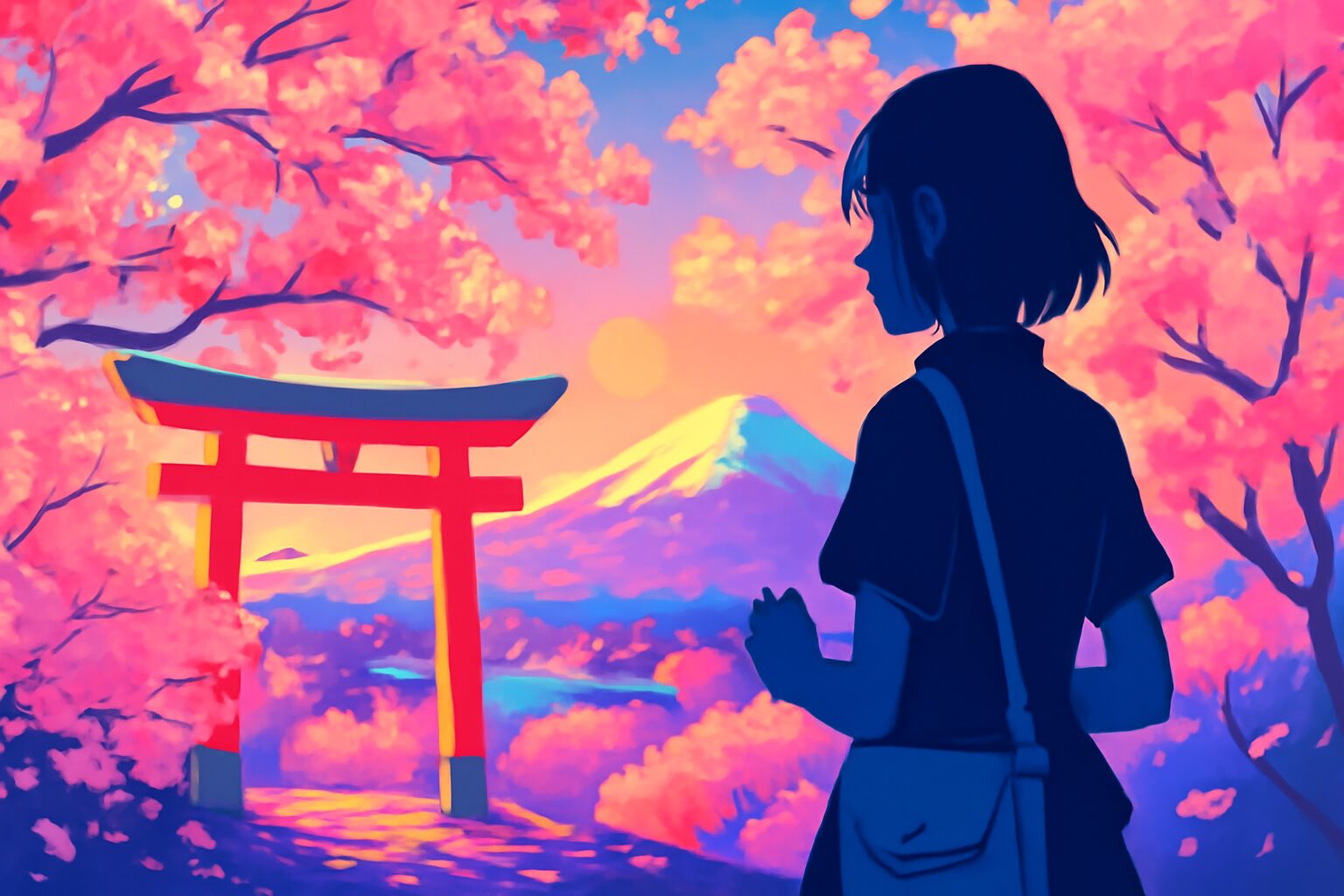
A newly released travel guide for spring 2026 is set to redefine the Japanese travel experience by strategically merging the country’s world-famous cherry blossom season with the burgeoning trend of “anime pilgrimage” tourism. This guide offers fans a unique opportunity to step into the worlds of their favorite anime, creating itineraries that are both culturally rich and deeply personal.
The Rise of Anime Tourism: A Cultural Phenomenon
“Anime pilgrimage,” or seichi junrei in Japanese, is the act of visiting real-world locations that have been featured in anime, manga, or video games. This practice has grown from a niche fan activity into a significant driver of tourism, actively promoted by local governments and organizations like the Anime Tourism Association, which curates an annual list of “88 Anime Spots” to visit.
The appeal of this travel style is backed by data. Even before the pandemic, a 2019 survey by the Japan National Tourism Organization (JNTO) revealed that 4.8% of tourists from Europe, the US, and Australia traveled to Japan with the specific purpose of visiting film or anime locations. As international travel rebounds, this segment is expected to grow, fueled by the global streaming boom that has made anime more accessible than ever. This new guide capitalizes on that trend, offering a structured way for international visitors to engage with this pop culture phenomenon.
What the Spring 2026 Guide Highlights
The guide’s brilliance lies in its fusion of modern fandom with timeless tradition. By aligning anime locations with the sakura season, it elevates a simple location visit into a magical, immersive experience.
Takayama City: Where ‘Hyouka’ Meets Tradition
One of the star destinations is Takayama City in Gifu Prefecture, the picturesque setting for the popular mystery anime series ‘Hyouka.’ The guide encourages travelers to visit during the Takayama Spring Festival (Sanno Matsuri), one of Japan’s most beautiful festivals. This allows fans to not only walk the same streets as the characters but also to experience a vibrant piece of Japanese heritage, creating a powerful connection between the fictional narrative and the living culture of the region.
Tokyo’s Nerima Ward: The Scenery of ‘Your Lie in April’
For fans of the poignant music-themed anime ‘Your Lie in April,’ the guide points towards Tokyo’s Nerima Ward. The area’s parks and residential streets, which served as inspiration for many of the anime’s most memorable scenes, are famously lined with cherry blossom trees. A spring visit allows fans to see the scenery burst into the same pink and white hues that framed the story’s emotional journey, making for a deeply moving and highly photogenic pilgrimage.
Future Outlook and Economic Impact
This targeted approach to tourism is poised to have a significant and lasting impact on Japan’s travel landscape.
A Boon for Regional Economies
Anime tourism is a powerful tool for regional revitalization. It directs tourist traffic and spending away from the saturated “golden route” of Tokyo-Kyoto-Osaka and into smaller cities and rural areas that might otherwise be overlooked. This influx of visitors supports local inns, restaurants, and shops, creating a sustainable economic boost. While current figures are still recovering, a 2018 study by the Kadokawa Ascii Research Laboratories estimated the economic impact of domestic and international anime pilgrimages at over 20 billion yen annually—a number that is projected to climb as international fanbases expand.
Shaping Japan’s Global Image
By weaving pop culture into its traditional tourism narrative, Japan is crafting a more dynamic and multifaceted international image. This trend fosters a deeper appreciation for Japanese culture, as fans who are initially drawn by anime often develop an interest in the local history, food, and customs of the locations they visit. However, this will also require a focus on sustainable tourism. Local communities and officials will need to manage the flow of visitors to ensure that these cherished “sacred spots” are preserved and that the relationship between fans and residents remains positive.
For travelers, this guide represents a new, exciting way to explore Japan. It moves beyond generic sightseeing, offering a pathway to connect with the country through the stories they love. As spring 2026 approaches, Japan is preparing to welcome not just tourists, but pilgrims on a journey to find where fiction and reality beautifully intersect under a canopy of cherry blossoms.